Analysis Of 1 May 2026 Republic Of Cuba-Focused Executive Order From The White House: What It Means, Could Mean, May Not Mean

The Trump-Vance Administration’s (2025-2029) decisions relating to the Republic of Cuba are more representative of incrementalism than “shock and awe” to achieve specified, or unspecified, results. 

There is substantive distance between the headlines- the announcement of decisions, and the implementation of the headlines. 

The timeline is more reflective of pouring ketchup rather than from the impact of a fire hose. 

Whatever are the commercial, economic, financial, military, political, and societal changes implemented by the government of the Republic of Cuba, the implementers will be a combination of individuals currently serving in appointed and elected positions along with individuals new and renewed. 

For the Republic of Cuba, government (regime) change will be defined by changing the behavior of the government (regime) rather than changing, in totality, those who serve in the government (regime).   

Since 20 January 2025, the beginning of the Trump-Vance Administration, the government of the Republic of Cuba has continued to announce changes.  Thus far, they have announced more changes than they have implemented changes. 

Statements from officials continue to reflect the overall theme of what is desired by the Trump-Vance Administration.  Not perfectly aligned, but not in opposition.   

There continue to be statements emulating from the upper floors of the Palacio de la Revolucion from which The White House can declare victory- anything said by Havana since 20 January 2025 can be considered a response to Washington DC- where there is a new political sheriff in town. 

The 2,143-word Executive Order of 1 May 2026 is the political version of a storm cloud.  In this instance, a storm cloud measuring the length and width of the archipelago that is the Republic of Cuba with baby storm clouds distributed toward other countries- particularly those with connectivity to the government of the Republic of Cuba. 

As written, the Executive Order is designed to inflict on a global scale as much apprehension, confusion, fear, and uncertainty as possible.  It accomplished this goal. 

On Monday, compliance officers within financial institutions, general counsels at companies, and government bureaucrats will begin to dissect each of the 2,143 words to determine if and how they may impact their operations and the operations of their employees, employers, and constituents. 

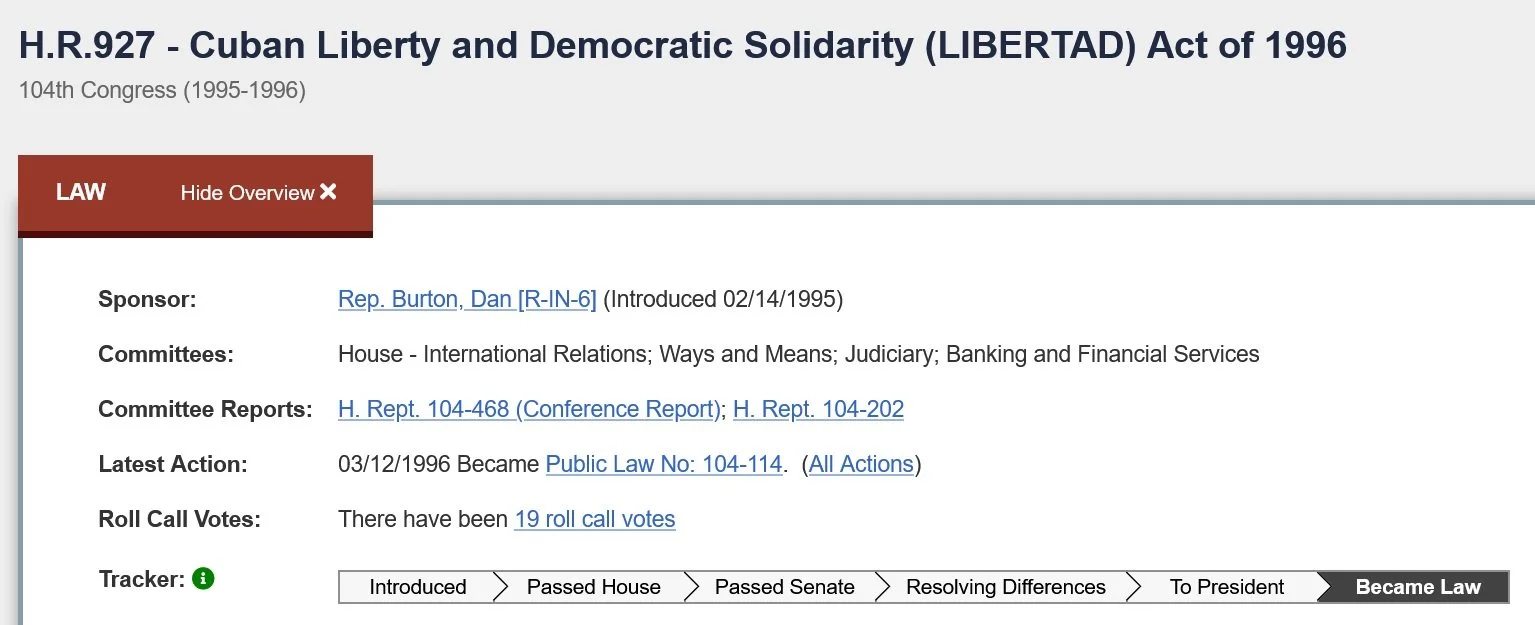
The weakest link in the responsive chain will, as it has most recently since the Trump-Pence Administration (2017-2021) on 2 May 2019 made operational Title III of the Cuban Liberty and Democratic Solidarity Act of 1996 (known as “Libertad Act”), be the Brussels, Belgium-based leadership of the twenty-seven-member country European Union (EU). 

In 2019, the EU publicly said it would issue a Request for Proposal (RFP) to retain legal counsel in the United States for any EU-based defendant.  That never happened. 

Thus, The White House will believe, correctly, that it has nothing to fear in terms of retaliation for its Executive Order of 1 May 2026, as well as, previously Republic of Cuba-related Executive Orders.  There will likely be statements in opposition- but the current occupant of the Oval Office fuels from statements opposing his decisions. 

The country at most risk is EU-member and NATO-member Spain, where Prime Minister Pedro Sanchez is squarely in the political nightscope, rangefinder, and telescopic sight of Donald Trump, President of the United States (2017-2021 and 2025-2029). 

If, and this remains a capitalized IF, the United States Department of the Treasury and United States Department of State decide to implement provisions of the Executive Order issued on 1 May 2026, then Palma de Mallorca, Spain-based Melia Hotels International SA, along with Spain-based financial institutions, are the most likely targets. 

Not necessarily because Spain-based entities would be legitimately in contradiction to provisions of the Executive Order issued on 1 May 2026, but because of the satisfaction President Trump would receive from targeting Prime Minister Sanchez. 

In June 2026, the G7 Leaders’ Summit will be hosted by Emmanuel Macron, President of France.  Tradition has the government of Spain represented despite not being a member of the G7.  In 2025, Spain’s GDP would rank 14th or 15th. 

President Trump will be relishing, drooling at the prospect of a confrontation with Prime Minister Sanchez.   

LINK TO COMPLETE ANALYSIS IN PDF FORMAT

David Pakman-YouTube

"President Donald J. Trump Imposes Sanctions on Cuban Regime Officials Responsible for Repression and Threats to U.S. National Security and Foreign Policy"

The White House
Washington DC
1 May 2026


Fact Sheets

Fact Sheet: President Donald J. Trump Imposes Sanctions on Cuban Regime Officials Responsible for Repression and Threats to U.S. National Security and Foreign Policy

IMPOSING SANCTIONS ON THE CUBAN REGIME: Today, President Donald J. Trump signed an Executive Order imposing new sanctions on the Cuban regime, protecting U.S. national security.

The Order broadens the existing sanctions on Cuba to include new restrictions under the International Emergency Economic Powers Act.

The Order imposes new sanctions on entities, persons, or affiliates that support the Cuban regime’s security apparatus, are complicit in government corruption or serious human rights violations, or are agents, officials, or material supporters of the Cuban government.

The Order also authorizes new sanctions on covered persons, entities, or financial institutions that have conducted or facilitated transactions with persons or entities sanctioned under the Order.

COUNTERING CUBA’S MALIGN INFLUENCE: The President is addressing the national security threats posed by the communist Cuban regime by taking decisive action to hold the Cuban regime, and those that perpetuate it, accountable for its support of hostile actors, terrorism, and regional instability that endanger American security and foreign policy.

The Cuban regime aligns itself with countries and malign actors hostile to the United States, going so far as to facilitate their military and intelligence operations. For example, Cuba hosts foreign adversary facilities focused on targeting and exploiting sensitive national security information from the United States.

Cuba maintains close ties to other major state sponsors of terrorism, including the Government of Iran, and provides safe haven for transnational terrorist groups, including Hezbollah.

The regime persecutes and tortures political opponents, denies its citizens free speech rights, and actively spreads communist ideology across the region while repressing its populace.

Cuba’s corrupt regime continues to drive migration towards the United States, with more than 850,000 migrants arriving in America between 2022 and the fall of 2024.

Cuba provides a permissive environment for hostile foreign intelligence, military, and terrorist operations less than 100 miles from the American homeland.

These actions constitute an unusual and extraordinary threat to U.S. national security and foreign policy, requiring immediate response to protect American citizens and interests.

PUTTING AMERICA FIRST: President Trump has consistently confronted regimes that threaten U.S. security and interests, delivering where others have failed to hold adversaries accountable.

President Trump is continuing efforts from his first term to stand with the Cuban people and hold the regime accountable.

In his first term, President Trump implemented a robust policy toward Cuba, reversing the Obama Administration’s one-sided deal that eased restrictions without securing meaningful reforms for the Cuban people. Relying on decades of evidence, President Trump’s first Administration properly designated Cuba as a State Sponsor of Terrorism.

In June 2025, President Trump strengthened the United States’ policy pressure on Cuba through a National Secuirty Presidential Memorandum, ensuring that engagement between the United States and Cuba advances the interests of the United States and the Cuban people, including promoting human rights, fostering a private sector independent of government control, and enhancing national security.

In January 2026, President Trump signed an Executive Order declaring a national emergency and establishing a process to impose tariffs on goods from countries that sell or otherwise provide oil to Cuba, protecting U.S. national security and foreign policy from the Cuban regime’s malign actions and policies.

President Trump continues to demonstrate his commitment to directly addressing national security threats from abroad.

Operation Absolute Resolve captured Venezuelan dictator and indicted narcoterrorist Nicolas  Maduro and his wife to face American justice.

Operation Southern Spear eliminated 186 narcoterrorists in strikes against fentanyl-trafficking vessels, stemming the deadly flow of drugs into America.

In Operation Midnight Hammer, President Trump decisively eliminated Iran’s nuclear weapons capability via targeted military strikes, escalated sanctions, and intelligence operations.

Operation Epic Fury successfully completed all of its military objectives in less than six weeks. Iran no longer poses the nuclear and terror threat it did, and no longer has the nuclear ambitions it held before. Now, the U.S. naval blockade and Operation Economic Fury have dissipated Iran’s economy.

United States Department of the Treasury
Washington DC
1 May 2026


Issuance of Executive Order Imposing Sanctions on Those Responsible for Repression in Cuba and for Threats to United States National Security And Foreign Policy

Today, the President has signed a new Executive Order, "Imposing Sanctions on Those Responsible for Repression in Cuba and for Threats to United States National Security and Foreign Policy."

Link To Executive Order In PDF Format

Executive Order
May 1, 2026


By the authority vested in me as President by the Constitution and the laws of the United States of America, including the International Emergency Economic Powers Act (50 U.S.C. 1701 et seq.) (IEEPA), the National Emergencies Act (50 U.S.C. 1601 et seq.) (NEA), section 212(f) of the Immigration and Nationality Act of 1952 (8 U.S.C. 1182(f)), and section 301 of title 3, United States Code, and in order to take further steps with respect to the national emergency declared in Executive Order 14380 of January 29, 2026 (Addressing Threats to the United States by the Government of Cuba), I hereby determine and order: 

Section 1. Policy. The policies, practices, and actions of the Government of Cuba, as described in Executive Order 14380, continue to constitute an unusual and extraordinary threat, which has its source in whole or substantial part outside the United States, to the national security and foreign policy of the United States. Not only are these policies, practices, and actions designed to harm the United States, but they are also repugnant to the moral and political values of free and democratic societies. 

Sec. 2. Sanctionable Conduct. (a) All property and interests in property that are in the United States, that hereafter come within the United States, or that are or hereafter come within the possession or control of any United States persons of the following persons are blocked and may not be transferred, paid, exported, withdrawn, or otherwise dealt in: 

(i) any foreign person determined by the Secretary of State, in consultation with the Secretary of the Treasury; or by the Secretary of the Treasury, in consultation with the Secretary of State: 

(A) to operate in or have operated in the energy, defense and related materiel, metals and mining, financial services, or security sector of the Cuban economy, or any other sector of the Cuban economy, as may be determined by the Secretary of the Treasury, in consultation with the Secretary of State; 

(B) to be owned, controlled, or directed by, or to have acted or purported to act for or on behalf of, directly or indirectly, the Government of Cuba or any person whose property or interests in property are blocked pursuant to this order; 

(C) to own or control, directly or indirectly, any person whose property or interests in property are blocked pursuant to this order; 

(D) to have materially assisted, sponsored, or provided financial, material, or technological support for, or goods or services to or in support of, the Government of Cuba or any person whose property or interests in property are blocked pursuant to this order; 

(E) to be or have been a leader, official, senior executive officer, or member of the board of directors of the Government of Cuba or an entity whose property or interests in property are blocked pursuant to this order; 

(F) to be a political subdivision, agency, or instrumentality of the Government of Cuba; 

(G) to be responsible for or complicit in, or to have directly or indirectly engaged in or attempted to engage in, serious human rights abuse in Cuba; 

(H) to be responsible for or complicit in, or to have directly or indirectly engaged or attempted to engage in, corruption related to Cuba, including corruption by, on behalf of, or otherwise related to the Government of Cuba, or a current or former official at any level of the Government of Cuba, such as the misappropriation of public assets, expropriation of private assets for personal gain or political purposes, or bribery; or 

(I) to be an adult family member of a person designated pursuant to this order. 

(b) The prohibitions in subsection (a) of this section apply except to the extent provided by statutes, or in regulations, orders, directives, or licenses that are issued pursuant to this order, and notwithstanding any contract entered into or any license or permit granted prior to the date of this order; except that this subsection shall not apply to activities authorized by, and shall not affect the validity of, any license issued pursuant to part 515 of chapter 31 of the Code of Federal Regulations. 

(c) Except to the extent required by section 203(b) of IEEPA (50 U.S.C. 1702(b)), or provided in regulations, orders, directives, or licenses that are issued pursuant to this order, and notwithstanding any contract entered into or any license or permit granted prior to the date of this order: 

(i) any transaction or dealing by United States persons or within the United States in property or interests in property blocked pursuant to this order is prohibited, including but not limited to the making or receiving of any contribution of funds, goods, or services to or for the benefit of those persons whose property or interests in property are blocked pursuant to this order; 

(ii) any transaction by any United States person or within the United States that evades or avoids, or has the purpose of evading or avoiding, or attempts to violate, any of the prohibitions set forth in this order is prohibited; and 

(iii) any conspiracy formed to violate any of the prohibitions set forth in this order is prohibited. 

(d) I hereby determine that the making of donations of the type specified in section 203(b)(2) of IEEPA (50 U.S.C. 1702(b)(2)) by United States persons to persons determined to be subject to subsection (a) of this section would seriously impair my ability to deal with the national emergency declared in Executive Order 14380, and I hereby prohibit such donations. 

(e) For those persons determined to be subject to subsection (a) of this section who might have a constitutional presence in the United States, I find that, because of the ability to transfer funds or assets instantaneously, prior notice to such persons of measures to be taken pursuant to this order would render these measures ineffectual. I therefore determine that, for these measures to be effective in addressing the national emergency declared in Executive Order 14380, there need be no prior notice of a listing or determination made pursuant to subsection (a) of this section. 

Sec. 3. Travel. (a) I hereby find the unrestricted immigrant and nonimmigrant entry into the United States of aliens determined to meet one or more of the criteria in section 2(a)(i) of this order would be detrimental to the interests of the United States, and I hereby suspend entry into the United States, as immigrants or nonimmigrants, of such persons, except where the Secretary of State, or the Secretary of State’s designee, determines that the person ‘s entry is in the national interest of the United States. Such persons shall be treated in the same manner as persons covered by section 1 of Proclamation 8693 of July 24, 2011 (Suspension of Entry of Aliens Subject to United Nations Security Council Travel Bans and International Emergency Economic Powers Act Sanctions). 

Sec. 4. Foreign Financial Institutions. (a) The Secretary of the Treasury, in consultation with the Secretary of State, is hereby authorized to impose on a foreign financial institution one or more of the sanctions described in subsection (b) of this section upon determining that the foreign financial institution has conducted or facilitated any significant transaction or transactions for or on behalf of any person whose property or interests in property are blocked pursuant to this order. 

(b) With respect to any foreign financial institution determined to meet the criteria set forth in subsection (a) of this section, the Secretary of the Treasury, in consultation with the Secretary of State, may: 

(i) prohibit the opening of, or prohibit or impose strict conditions on the maintenance of, correspondent accounts or payable-through accounts in the United States; and 

(ii) block all property and interests in property that are in the United States, that hereafter come within the United States, or that are or hereafter come within the possession or control of any United States person of such foreign financial institution, and provide that such property and interests in property may not be transferred, paid, exported, withdrawn, or otherwise dealt in. The prohibitions described in this subsection shall include the making of any contribution or provision of funds, goods, or services by, to, or for the benefit of any person whose property or interests in property are blocked pursuant to this subsection; and the receipt of any contribution or provision of funds, goods, or services from any such person. 

(c) The sanctions described in subsection (b) of this section apply except to the extent provided by statutes, or in regulations, orders, directives, or licenses that may be issued pursuant to this order, and notwithstanding any contract entered into or any license or permit granted before the date of this order; except that this subsection shall not apply to activities authorized by, and shall not affect the validity of, any license issued pursuant to part 515 of chapter 31 of the Code of Federal Regulations. 

(d) I hereby determine that the making of donations of the types of articles specified in section 203(b)(2) of IEEPA (50 U.S.C. 1702(b)(2)) by, to, or for the benefit of any person whose property or interests in property are blocked pursuant to subsection (b) of this section would seriously impair my ability to deal with the national emergency declared in Executive Order 14380, and I hereby prohibit such donations. 

Sec. 5. Delegation. Consistent with applicable law, the Secretary of State and the Secretary of the Treasury are directed and authorized to take all actions necessary to implement and effectuate this order — including through temporary suspension or amendment of regulations or through notices in the Federal Register and by adopting rules, regulations, or guidance — and to employ all powers granted to the President, including by IEEPA, as may be necessary to implement this order. The head of each executive department and agency (agency) is authorized to and shall take all appropriate measures within the agency’s authority to implement this order. The head of each agency may, consistent with applicable law, including section 301 of title 3, United States Code, redelegate the authority to take such appropriate measures within the agency. 

Sec. 6. Reporting Directives. The Secretary of the Treasury, in consultation with the Secretary of State, is hereby authorized and directed to submit recurring and final reports to the Congress on the national emergency declared in, and authorities exercised by, Executive Order 14380, consistent with section 401 of the NEA (50 U.S.C. 1641) and section 204(c) of IEEPA (50 U.S.C. 1703(c)). 

Sec. 7. Definitions. For the purposes of this order: 

(a) the term “entity” means a partnership, association, trust, joint venture, corporation, group, subgroup, or other organization; 

(b) the term “Government of Cuba” means the Government of Cuba, any political subdivision, agency, or instrumentality thereof, including the Central Bank of Cuba, and any person owned, controlled, or acting for or on behalf of, the Government of Cuba; 

(c) the term “person” means an individual or entity; 

(d) the term “United States person” means any United States citizen, lawful permanent resident, entity organized under the laws of the United States or any jurisdiction within the United States (including foreign branches of such entities), or any person in the United States; and 

(e) the term “foreign financial institution” means any foreign entity that is engaged in the business of accepting deposits; making, granting, transferring, holding, or brokering loans or credits; purchasing or selling foreign exchange, securities, futures, or options; or procuring purchasers and sellers thereof, as principal or agent. It includes but is not limited to depository institutions; banks; savings banks; money services businesses; operators of credit card systems; trust companies; insurance companies; securities brokers and dealers; futures and options brokers and dealers; forward contract and foreign exchange merchants; securities and commodities exchanges; clearing corporations; investment companies; employee benefit plans; dealers in precious metals, stones, or jewels; and holding companies, affiliates, or subsidiaries of any of the foregoing. The term does not include the international financial institutions identified in 22 U.S.C. 262r(c)(2), the International Fund for Agricultural Development, the North American Development Bank, or any other international financial institution so notified by the Office of Foreign Assets Control. 

Sec. 8. General Provisions. (a) Nothing in this order shall be construed to impair or otherwise affect: 

(i) the authority granted by law to an executive department or agency, or the head thereof; or 

(ii) the functions of the Director of the Office of Management and Budget relating to budgetary, administrative, or legislative proposals. 

(b) This order shall be implemented consistent with applicable law and subject to the availability of appropriations. 

(c) This order is not intended to, and does not, create any right or benefit, substantive or procedural, enforceable at law or in equity by any party against the United States, its departments, agencies, or entities, its officers, employees, or agents, or any other person. 

(d) The costs for publication of this order shall be borne by the Department of State. 

DONALD J. TRUMP
THE WHITE HOUSE
May 1, 2026

Cuba Reports Issues With Repairing Power Plant Previously Updated By General Electric After Purchasing Divisions Of Alstom

CubaHeadlines (25 April 2026)

“Vicente de la O Levy, Cuba's Minister of Energy and Mines, criticized the United States on Wednesday during a segment on Cuban television's Mesa Redonda, accusing the U.S. of directly hindering repair efforts at several of the country's power plants.  “We had to complete the repair of Céspedes Four (a power plant generation unit) without the necessary software because the United States denied us access to the application needed to fine-tune and start the unit.”  The minister attributed Cuba's energy crisis to the U.S. embargo, highlighting the island's technological vulnerabilities and its reliance on international resources and services to maintain electric generation.

Internal Solutions and Technological Challenges

In the case of the Carlos Manuel de Céspedes power plant in Cienfuegos, the minister highlighted the resort to domestic solutions, involving multiple state entities.  “We had to collaborate with the military industry, the Ministry of Industry, colleagues from the Electronics Group, and the Electrical Union to come up with a national solution.  It was time-consuming due to the complexity of the technologies,” he detailed, emphasizing the improvisation that often serves as a response to Cuba's structural deficiencies.

Technical and Logistical Hurdles

The minister also addressed issues at the Antonio Guiteras power plant, one of Cuba's most significant facilities.  He pointed out that following the acquisition of companies in the U.S. linked to the plant's construction, new technical and logistical challenges have emerged.  He further alleged that foreign technical staff have been withdrawn amid ongoing work at other plants due to presumed U.S. pressure.  “Technicians who were actively engaged in units like Felton received phone calls, packed up their toolkits, and left,” he recounted, highlighting the instability in international technical support.”

The Lidio Ramón Pérez Thermoelectric Power Plant (CTE) is located in the town of Felton located in the municipality of Mayari in Holguín Province, Republic of Cuba.

Beginning in December 2017, then Boston, Massachusetts-based General Electric (2017 revenue approximately US$1118 billion), which has since divided into three publicly-held companies, including Cambridge, Massachusetts-based energy-focused General Vernova (2025 revenue approximately US$38 billion) delivered from the United States to the Republic of Cuba “parts for steam turbines” valued at more than US$21 million.  Some of the parts traveled from Atlanta, Georgia, to Port Everglades, Florida, then to Port Mariel in the Republic of Cuba.  GE is the largest (by revenue) United States-based industrial company to have engaged with the Republic of Cuba.  Although GE has not issued a media release relating to the project in the Republic of Cuba, in 2017 the government of the Republic of Cuba confirmed in a PowerPoint presentation used by the Embassy of the Republic of Cuba in Washington DC that the company was providing parts and equipment for a power plant.  The total value of the project has not been reported. The Obama Administration first authorized the transactions by GE as primarily advancing benefit to the citizens of the Republic of Cuba rather than to the government of the Republic of Cuba.  This type of transaction was and remains licensable (general or specific) through the OFAC and BIS. In November 2015, GE purchased for approximately US$10.6 billion the power and grid division of Paris, France-based Alstom (2018 revenues approximately US$8 billion).  In 2016, GE commenced a power generation project in the Republic of Cuba resulting, in part, from a relationship between Alstom and the Republic of Cuba prior to the 2015 acquisition by GE of the power and grid division of Alstom, which had exported products to the Republic of Cuba.  On 31 March 1971, GE certified a claim against the Republic of Cuba in the amount of US$5,870,436.86 through the United States Foreign Claims Settlement Commission (USFCSC) within the United States Department of Justice.  Interest accrued at 6% per annum from the respective date(s) of loss to the date of settlement.

Economic Eye On Cuba
28 March 2005
 

ALSTOM OF FRANCE RENOVATING POWER PLANT- Paris, France-based Alstom, (2001 revenues approximately US$20 billion) is the contractor for a US$25 million overhaul of the Antonio Guitereas thermoelectric plant in Matanzas Province, 100 kilometers east of the city of Havana.  The plant is being adapted to use Republic of Cuba-produced high sulfur oil.  Alstom S.A., considered to be the world’s second-largest power turbine manufacturer, is one of the non-Republic of Cuba-based companies to participate in a plan valued in the hundreds of millions of U.S. Dollars to make the Republic of Cuba energy independent. The plan includes US$167 million to modernize eleven then-U.S.S.R.-constructed 100-megawatt generators and three then-Czechoslovakia-built 125-megawatt generators.  The 330-megawatt Antonio Guitereas plant, opened in 1988, is the final plant to be adapted to burn local fuel and was the country’s largest until the 500-megawatt Felton thermoelectric plant located in Mayari, Holguin Province (734 kilometers northeast of the city of Havana) became fully operational in 2001.  The 330-megawatt facility has a capacity to burn more than 3 million barrels of oil annually.  Alstom, which “supplies equipment, systems, and services in the energy, transmission and distribution, transport, industrial, marine, and local contracting markets,” has reported the following subsidiary activity with respect to the Republic of Cuba:     

Alstom Subsidiary and Location Of Republic Of Cuba Representative
Alstom Transport- Saint Quen Cedex, France
Alstom Sales Network Inc.- Mississauga, Ontario, Canada
Alstom Protection & Control- Lima, Peru
Alstom Transmission and Distribution- Panama City, Panama
  

New York City, New York-based The Bank of New York, Inc. (2001 assets exceeding US$50 billion) is the depository for American Depository Receipts (ADR’s) for Alstom S.A. listed on the New York Stock Exchange.  Alstom has operations throughout the United States, including: Hawthorne, New York-based Alstom USA Inc.; Bellevue, Washington-based Alstom ESCA Corporation; Pittsburgh, Pennsylvania-based Alstom Power Conversion; Windsor, Connecticut-based Alstom Power Inc.; and Knoxville, Tennessee-based Alstom Power Inc. (Environmental Systems Division). 

Other companies that have participated in the modernization of the Republic of Cuba’s thermoelectric plants  include: Iberdrola Ingenieria y Consultoria (a subsidiary of Madrid, Spain-based Iberdrola S.A.); Paris, France-based Babcock Enterprise; Paris, France-based Davexport (affiliated with the government of France and which specializes in obtaining supplies for large construction and investment projects), Czech Republic-based CKD Energy, and Czech Republic-based Skodaexport. 

The 500-megawatt Felton thermoelectric plant, which cost a reported US$500 million and has a generating capacity equal to 15% of the Republic of Cuba’s total current generating capacity, became fully operational with the completion of a second generator in 2001.  The first generator was completed in 1997. The generators for the Felton thermoelectric plant were constructed by Prague, Czech Republic-based CKD Energy and sold by Prague, Czech Republic-based Skodaexport, which also provided technical assistance for the construction of the Felton thermoelectric plant.  Construction of the Felton thermoelectric plant commenced before the collapse of the then-U.S.S.R.

 LINK TO COMPLETE ANALYSIS IN PDF FORMAT

Most Effective Weapon Trump-Vance Administration Can Use In Cuba Does Not Have Bullets.  It Has Capital, Checkbooks, Owners, And Shareholders 

Most Effective Weapon Trump-Vance Administration Can Use In Cuba Does Not Have Bullets.  It Has Capital, Checkbooks, Owners, And Shareholders 

President Trump’s “honor of taking Cuba in some form 

Does President Trump Want Cuba “as is” Or After Improvements And Reimbursements? 

5,913 U.S. Certified Claimants Are Like Bondholders And Preferred Shareholders 

U.S. Certified Claimants Owed US$1.9 Billion.  Does That Make Them Debtor In Possession For Cuba’s Political Chapter 11? 

Cuba Has 10 Million Shareholders.  Do They Get A Vote? 

The most effective use of force by the Trump-Vance Administration (2025-2029) to influence commercial, economic, financial, military, political, and societal change within the Republic of Cuba can be delivered from United States-based companies rather than from the United States Department of Defense (War). 

The goals of the Trump-Vance Administration for the Republic of Cuba are not dissimilar from the goals of the Trump-Vance Administration for the Islamic Republic of Iran. 

For Iran, the Trump-Vance Administration wants to correct what it believes were deficiencies in the 2015 Joint Comprehensive Plan of Action (JCPOA) negotiated during the Obama-Biden Administration (2009-2017).  The JPCOA was executed by the government of Iran and the P5+1 (United Nations Security Council members- China, France, Russia, United Kingdom, United States, plus Germany) and the twenty-seven-member country Brussels, Belgium-based European Union (EU).  The goal of the JPCOA was to limit the nuclear program of the Iran in exchange for relief from sanctions.  The White House believes the government of Iran gained too much, obtained too much, and retained too much while giving too little.   

For the Republic of Cuba, the Trump-Vance Administration wants to correct mistakes by its predecessors:   

First, deficiencies in the 2014-2017 decisions by the Obama-Biden Administration to re-engage with the Republic of Cuba.   

The perspective of The White House is there were insufficient quid pro quos for what was provided by the government of the United States to what was received by the government of the Republic of Cuba.   

United States-based companies were not authorized by the government of the Republic of Cuba to re-engage in a meaningful way.  Other than one hotel management contract (which was to have included three properties), three cruise lines delivering passengers for day-trips, six airlines expanding their operational footprint and adding destinations, increased number of visitors, and expanded access to Wi-Fi and applications, there remained constraints. 

Proposals by United States-based companies for assembly (including tractors), management (additional hotel management contracts), manufacturing, retail, service (including accounting firms and law firms), wholesale, and vehicle ferries, along with authorization to hire Republic of Cuba nationals directly and pay them directly, were denied.   

From the perspective of The White House, an egregious dereliction was for the United States Department of State to not condition re-engagement with an agreement to compensate the 5,913 claimants for the US$1.9 billion certified by the United States Foreign Claims Settlement Commission (USFCSC) within the United States Department of Justice (DOJ).  During the Obama-Biden Administration and during the Trump-Pence Administration (2017-2021) there were settlement proposals presented to the government of the Republic of Cuba both on behalf of and directly by certified claimants.  Those settlement proposals were rebuffed by the government of the Republic of Cuba. 

Link To USFCSC Cuba Program: https://www.justice.gov/fcsc/claims-against-cuba 

Toronto, Canada-based Sherritt International Corporation whose executives have been subject to since 1996 to Libertad Act Title IV provisions (no travel visas), has an opportunity to create a foundation for a settlement with certified claimants as it has products of value to United States-based companies.  Sherritt International Corporation has nickel and cobalt operations in the Republic of Cuba on property owned by Moa Bay Mining Company and Cuban American Nickel Company

Second, deficiencies by the Biden-Harris Administration (2021-2025) not necessarily in what decisions were implemented, for example expanding engagement with the re-emerging private sector in the Republic of Cuba including authorizing the first direct investment in and direct financing to a privately-owned company owned by a Republic of Cuba national located in the Republic of Cuba.  The problem was the refusal of the Diaz-Canel-Valdes Mesa Administration (2019- ) in Havana to issue regulations for the delivery of direct investment and direct financing.  Due to decisions in 2026 by The White House, the government of the Bolivarian Republic of Venezuela ceased commercial, economic, and financial support to the government of the Republic of Cuba.  Donald Trump, President of the United States (2017-2021 and 2025-2029), believes this provides leverage to coerce, convince, and force the government of the Republic of Cuba to implement what was refused during the Biden-Harris Administration, along with additional changes, specifically to banking. 

Links To Related Analyses 

The Trump-Vance Administration is increasingly concerned about governments including Brazil, Canada, China, Mexico, Russia, and Spain, along with the collective twenty-seven-member country Brussels, Belgium-based European Union (EU), providing lifelines to the government of the Republic of Cuba that result, as those efforts have previously, in not furthering expansion of liberties (commercial, economic, financial, political, societal), but in continuing constriction and delay and limitation of liberties.  The White House believes third-party support will provide the government of the Republic of Cuba with resources to then avoid implementing structural changes required for its population of approximately ten million to have an opportunity to thrive rather than survive. 

Cuba opened its economy.  It was a decision made by the Cuban government a few weeks ago.  They had opened up certain sectors, such as tourism, but now they have decided to further open up the economy.  This means that there may be investments in Cuba from private companies or through cooperation with joint ventures.”  Claudia Sheinbaum, President of Mexico 

We certainly discussed economic issues at all meetings in Havana, it was among the main topics.  The issue of ensuring the island's energy security is a priority.  But it's too early to say what the next steps will be.  It is well known that we generally do not limit ourselves to the supply of that batch of oil that has already arrived on the island on the tanker Anatoly Kolodkin… practical cooperation - providing the island with hydrocarbons and stabilizing its energy system - is of particular importance…. This is significant in terms of the intensity of our contacts.  I want to note the extremely businesslike nature of our conversations.  We don't focus on protocol, on decorative aspects in our relations, but purely on the specifics of the tasks that we face.  This is what our leaders are aiming at, and the Cuban president was as specific as possible in today's conversation… [I]s obvious to many in the international community, and not only Russia is concerned about this issue.  I think that those who understand that international law and the sovereign equality of states is not a slogan or an empty phrase should perceive the current situation as a task that needs to be solved in practical terms.  That is, to act and help Cuba by standing guard over these principles.”  Sergey Ryabkov, Deputy Minister of Foreign Affairs of the Russian Federation 

LINK TO COMPLETE ANALYSIS IN PDF FORMAT

www.leAtherology.com

U.S. Foreign Claims Settlement Commission Issues Statement About Certified Claims Against Cuba

“The Foreign Claims Settlement Commission of the United States (FCSC) is a quasi-judicial, independent agency within the Department of Justice which adjudicates claims of U.S. nationals against foreign governments, under specific jurisdiction conferred by Congress, pursuant to international claims settlement agreements, or at the request of the Secretary of State. Funds for payment of the Commission's awards are derived from congressional appropriations, international claims settlements, or liquidation of foreign assets in the United States by the Departments of Justice and the Treasury.”

LINK: https://www.justice.gov/fcsc

Heinz Ketchup Pours Faster... President Of Cuba Talks “Can” And “Are” And “Have” Yet Printed Regulations For Direct Investment/Direct Financing Into Private Sector “Is” MIA For Nearing Four Years

President Of Cuba Talks “Can” And “Are” And “Have

Yet Printed Regulation Authorizing Direct Investment And Direct Financing Into Re-Emerging Private Sector “Is” MIA For Nearing Four Years

Anticipation Of A Droplet Of Heinz Ketchup Does Not Take This Much Time

Mistake For Havana To Believe It Can Extract Something From Washington By Implementing Regulations That Should Have Been Implemented Four Years Ago

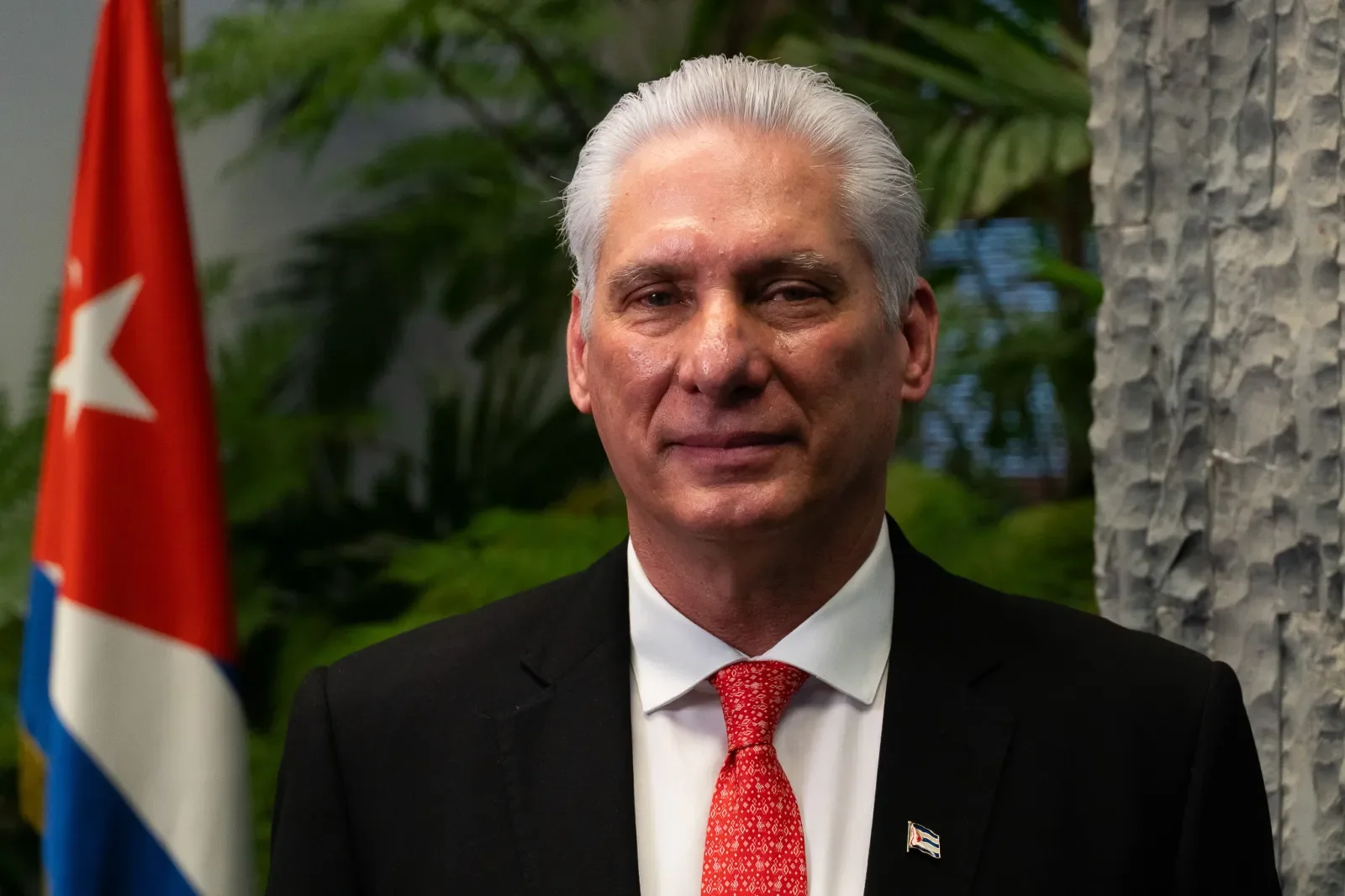
Miguel Diaz-Canel, President of the Republic of Cuba (2019- ), is the latest official of the government of the Republic of Cuba to offer statements about receiving direct investment and direct financing into the re-emerging private sector in the Republic of Cuba. 

He joins Oscar Pérez-Oliva Fraga, Deputy Prime Minister of the Republic of Cuba and Minister of Foreign Trade and Investment of the Republic of Cuba, Carlos Fernández de Cossío, Deputy Minister of Foreign Affairs of the Republic of Cuba, and Lianys Torres Rivera, Charge d’Affaires of the Embassy of the Republic of Cuba in Washington DC.

Unfortunately, the now quartet of voices is rehashing the same lyrics rather than writing new lyrics for new songs.

Newsweek
7 April 2026
Washington DC

Excerpts (3 April 2026) 

“But I do believe that we can engage in dialogue and negotiations for agreements.  We can reach agreements on issues such as migration, security, the environment, science and innovation, trade, education, culture and sports.  We can also have investments from U.S. firms in Cuba, and we can develop trade between both countries.”  

“We have updated and eased the regulations for foreign direct investment in Cuba.  We are encouraging closed-loop funding schemes for foreign currency.  We have opened new avenues for the participation of Cubans residing abroad in our socio-economic development program.  We are refining the appropriate relationships that must exist between the state and non-state sectors of the economy.”  

“We are driving a profound energy transition oriented toward renewable energy sources.  We are boosting food production in the country to achieve food sovereignty, improving our banking and financial system and always with a focus on how we address vulnerabilities and how we reduce and mitigate any existing social inequalities without, moreover, renouncing solidarity-based assistance, collaboration and cooperation with other countries.”  

Since 10 May 2022, when the Biden-Harris Administration (2021-2025) authorized the delivery of direct investment and direct financing into a privately-owned company owned by a Republic of Cuba national residing in the Republic of Cuba, the words are, can, and have when deployed by officials of the government of the Republic of Cuba have the same meaning- nothing implemented. 

The Diaz-Canel-Valdes Mesa Administration (2019- ) in 2022 did not need the government of the United States to do anything prior to it doing something.   

The Palacio de la Revolución in the city of Havana failed to respond to an initiative (which it previously maintained it wanted and welcomed) from The White House in the city of Washington DC.   

Did not have to await the arrival of the Trump-Vance Administration (2025-2029) to publish a Know Your Customer (KYC) document (any financial institution can provide it) that management of a privately-owned company owned by a Republic of Cuba national residing in the Republic of Cuba would present to a Republic of Cuba-based financial institution to document the origin of the financing and/or investment.  

The absence of a regulation does not only legally prevent the delivery of direct financing and direct investment from the United States into the re-emerging private sector in the Republic of Cuba.  The absence of regulation impacts all countries.  Including friends of the government of the Republic of Cuba- China, Mexico, Russia, Spain, and Vietnam. 

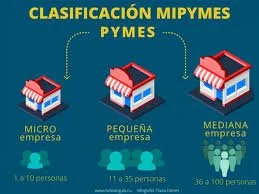
Severely limited self-employment was authorized in the mid-1990’s and then expanded further in 2010.  In 2021, the first micro, small, and medium-size enterprises (MSME’s) were authorized by the government of the Republic of Cuba.  There are today a reported approximately 10,000 MSMEs operating in the Republic of Cuba. 

Funding for the self-employed and PYMES (Spanish language acronym) has arrived in the Republic of Cuba absent authorization.  Most of the funding has its origin in the United States.  Specifically in the State of Florida where approximately one million individuals of Cuban descent reside.  

Not institutionalizing the process for the delivery of direct investment and direct financing into the re-emerging private sector in the Republic of Cuba does provide the government of the Republic of Cuba will a convenient means of enforcement- preventing the arrival of all funding because none of it is authorized.  If there were regulations in place, the process of disruption would be cumbersome, and publicly so. 

A monumental mistake in judgement for the Diaz-Canel-Valdes Mesa Administration to believe it can use as a bargaining chip with the Trump-Vance Administration the institutionalizing of the authorization of direct investment and direct financing into the re-emerging private sector in the Republic of Cuba.  Not only a monumental mistake in judgement.  It would be diplomatic malpractice.  And just stupid.  The government of the Republic of Cuba is not going to be rewarded for doing today what it could have and should have done four years ago.  

Not implementing a simple KYC regulation for the delivery of direct investment and direct financing into the re-emerging private sector in the Republic of Cuba, along with not authorizing (encouraging) Republic of Cuba government-operated financial institutions to actively seek correspondent account relationships with United States-based financial institutions, will only deliver one result.   

The remaining approximately ten million residents of the Republic of Cuba will suffer further, and the re-emerging private sector, which is the viable pathway for commercial, economic, and financial recovery in the Republic of Cuba, will continue to be constrained and impeded, and nowhere near its potential. 

The Diaz-Canel-Valdes Mesa Administration should expect more, deliver more, and want more for its shareholders- its ten million residents. 

End use of the words are, can, and have and transition promptly to writing and implementing non-burdensome regulations. 

LINK TO COMPLETE ANALYSIS IN PDF FORMAT

U.S. Ag/Food Exports To Cuba Decreased 36.6% In February 2026. Year-To-Year Down 29.3%. US$162.1K Gasoline; US$2.2 Million Light Fuel Oils; US$9.3 Million Vehicles/Parts; US$17.4 Million Donations

ECONOMIC EYE ON CUBA©
April 2026

February 2026 Ag/Food Exports To Cuba Decrease 36.6% -
Year-To-Year Decrease 29.3%
51st Of 215 February 2026 U.S. Food/Ag Export Markets- 2
Year-To-Year Ranking 50th Of 215 U.S. Ag/Export Markets- 2
Re-Emerging Private Sector Exports Continue To Increase – 3
Trump-Vance Administration Fuels Authorization- US$2,573,594.00
February 2026 CDA Healthcare Product Exports US$0.00 - 6
February 2026 Humanitarian Donations US$17,410,898.00 – 7
U.S. Port Export Data- 20

FEBRUARY 2026 AG/FOOD EXPORTS TO CUBA DECREASE 36.6%- Exports of food products and agricultural commodities from the United States to the Republic of Cuba were US$30,187,420.00 in February 2026 compared to US$47,636,633.00 in February 2025 and US$27,204,788.00 in February 2024. 

US$65,831,522.00 thus far in 2026 compared with US$93,168,816.00 thus far in 2025 representing a decrease of 29.3% year-to-year.

Since 2022, when the first BIS license was issued for the export of vehicles to Republic of Cuba nationals and to private companies in the Republic of Cuba, the cumulative export value of the initiatives in place during the Obama-Biden Administration, Trump-Pence Administration, Biden-Harris Administration, and Trump-Vance Administration exceeds US$416 million of which electric and gasoline-powered new and used vehicles, bicycles, trucks, motorcycles and mopeds, and parts, exceeds US$243 million (Year 2026: US$16,238,357.00; Year 2025: US$149,413,031.00; Year 2024: US$67,241,234.00; Year 2023: US$10,546,419.00; Year 2022: US$89,848.00), and purchases (equipment and products) for use by the re-emerging private sector in the Republic of Cuba driving the growth.

The data contains information on exports from the United States to the Republic of Cuba- products within the Trade Sanctions Reform and Export Enhancement Act (TSREEA) of 2000, Cuban Democracy Act (CDA) of 1992, and regulations implemented (1992 to present) for other products by the Office of Foreign Assets Control (OFAC) of the United States Department of the Treasury, Bureau of Industry and Security (BIS) of the United States Department of Commerce, and United States Department of State.

The TSREEA re-authorized the direct commercial (on a cash basis) export of food products (including branded food products) and agricultural commodities from the United States to the Republic of Cuba, irrespective of purpose. The TSREEA does not include healthcare products, which remain authorized and regulated by the CDA.

The data represents the U.S. Dollar value of product exported from the United States to the Republic of Cuba under the TSREEA, CDA, and other regulations, specifically including products exported from the United States to the re-emerging private sector in the Republic of Cuba.

The data does not include transportation charges, bank charges, or other costs associated with exports; the government of the Republic of Cuba reports unverifiable data that includes transportation charges, bank charges, and other costs.

LINK TO COMPLETE REPORT IN PDF FORMAT

LINK TO U.S. PORT EXPORT DATA (Update Soon)

LINK TO COMPLETE LIST OF PRODUCTS IN 2025 EXPORTED FROM THE UNITED STATES TO CUBA

LINK TO COMPLETE LIST OF PRODUCTS IN 2024 EXPORTED FROM THE UNITED STATES TO CUBA

LINK TO COMPLETE LIST OF PRODUCTS IN 2023 EXPORTED FROM THE UNITED STATES TO CUBA

U.S. Ag/Food Exports To Cuba Decreased 21.7% In January 2026. Year-To-Year Down 21.7%. US$88,746.00 Gasoline; US$6,393.00 Blood. US$6.8 Million Vehicles/Parts; US$20.8 Million Donations

ECONOMIC EYE ON CUBA©
April 2026

January 2026 Ag/Food Exports To Cuba Decrease 21.7% -
Year-To-Year Decrease 21.7%
53rd Of 207 U.S. Food/Ag Export Markets- 2
Year-To-Year Ranking 53rd Of 207 U.S. Ag/Export Markets- 2
Re-Emerging Private Sector Exports Continue To Increase – 3
Trump-Vance Administration Fuels Authorization- US$87,746.00.00
January 2026 CDA Healthcare Product Exports US$65,018.00 - 6
January 2026 Humanitarian Donations US$20,814,794.00 – 7
U.S. Port Export Data- 20


JANUARY 2026 AG/FOOD EXPORTS TO CUBA DECREASE 21.7%- Exports of food products and agricultural commodities from the United States to the Republic of Cuba in January 2026 were US$35,644,102.00 compared to US$45,532,183.00 in January 2025 and US$45,168,873.00 in January 2024. 

US$35,644,102.00 thus far in 2026 compared with US$45,532,183.00 in 2025 representing a decrease of 21.7% year-to-year.

Since 2022, when the first BIS license was issued for the export of vehicles to Republic of Cuba nationals and to private companies in the Republic of Cuba, the cumulative export value of the initiatives in place during the Obama-Biden Administration, Trump-Pence Administration, Biden-Harris Administration, and Trump-Vance Administration exceeds US$402 million of which electric and gasoline-powered new and used vehicles, bicycles, trucks, motorcycles and mopeds, and parts, exceeds US$234 million (Year 2026: US$6,854,726.00; Year 2025: US$149,413,031.00; Year 2024: US$67,241,234.00; Year 2023: US$10,546,419.00; Year 2022: US$89,848.00), and purchases (equipment and products) for use by the re-emerging private sector in the Republic of Cuba driving the growth.

The data contains information on exports from the United States to the Republic of Cuba- products within the Trade Sanctions Reform and Export Enhancement Act (TSREEA) of 2000, Cuban Democracy Act (CDA) of 1992, and regulations implemented (1992 to present) for other products by the Office of Foreign Assets Control (OFAC) of the United States Department of the Treasury, Bureau of Industry and Security (BIS) of the United States Department of Commerce, and United States Department of State.

The TSREEA re-authorized the direct commercial (on a cash basis) export of food products (including branded food products) and agricultural commodities from the United States to the Republic of Cuba, irrespective of purpose. The TSREEA does not include healthcare products, which remain authorized and regulated by the CDA.

The data represents the U.S. Dollar value of product exported from the United States to the Republic of Cuba under the TSREEA, CDA, and other regulations, specifically including products exported from the United States to the re-emerging private sector in the Republic of Cuba.

The data does not include transportation charges, bank charges, or other costs associated with exports; the government of the Republic of Cuba reports unverifiable data that includes transportation charges, bank charges, and other costs.

LINK TO COMPLETE REPORT IN PDF FORMAT

LINK TO U.S. PORT EXPORT DATA (Update Soon)

LINK TO COMPLETE LIST OF PRODUCTS IN 2025 EXPORTED FROM THE UNITED STATES TO CUBA

LINK TO COMPLETE LIST OF PRODUCTS IN 2024 EXPORTED FROM THE UNITED STATES TO CUBA

Flaticon

Two Members Of The United States House Of Representatives Visit Cuba

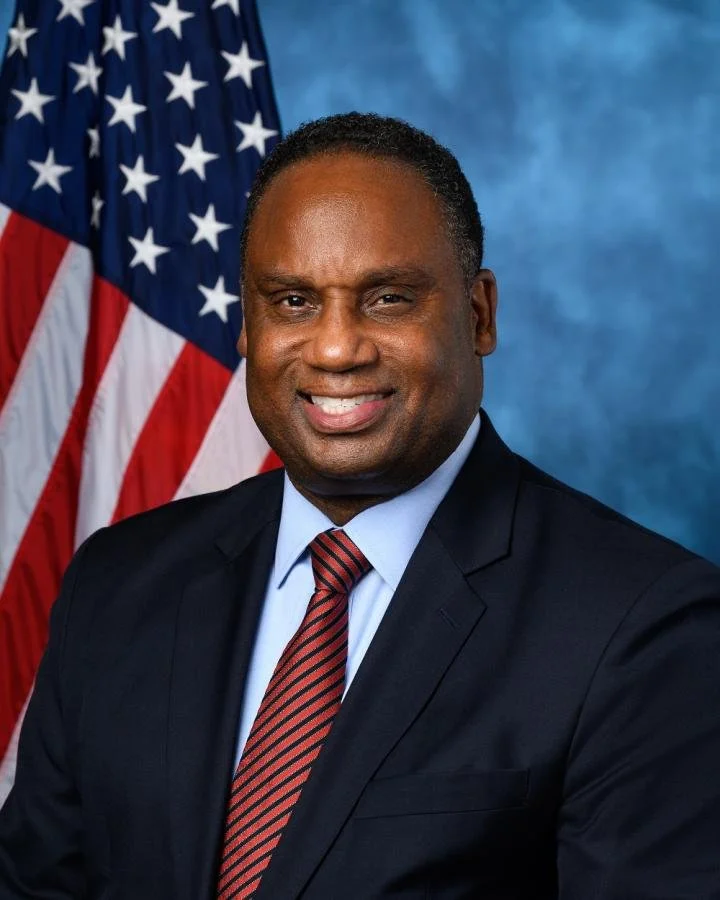
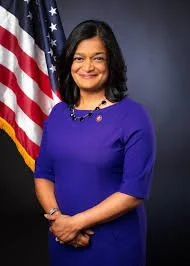
Three of the 435 members of the United States House of Representatives visited the Republic of Cuba from 1 April 2026 to 5 April 2026. Jonathan Jackson (D- Illinois 1st) and Pramila Jayapal (D-Washington 7th).

Another Cuban Official Engaging In Political Looping: Becoming Tedious. Stop Talking And Start Doing. Cuba’s “Open For Business” Sign Is Useless If The Door Remains Locked

Another Cuba Government Official Engaging In Political Looping: Becoming Tedious 

Stop Talking And Start Doing 

Cuba’s “Open For Business” Sign Is Useless If The Door Remains Locked 

Officials Obfuscating On Steroids And Untruthful Discussing Realities Of United States Private Sector Commercial Engagement With Cuba- Government And Re-Emerging Private Sector 

Likely No Quo From Washington DC In Advance Of Quid From Havana 

Political Orgasm Meter Maxing Out 

We’re Prepared To Let Our People Suffer.  Are You Prepared To Let Our People Suffer?” 

Delusional for the government of the Republic of Cuba to adhere to a proposition where the Trump-Vance Administration (2025-2029) will suspend Title III and not enforce Title IV of the Cuban Liberty and Democratic Solidarity Act of 1996 (known as “Libertad Act” and “Helms-Burton”), remove the Republic of Cuba from the list of State Sponsors of Terrorism, and eliminate the Cuba Restricted List (CRL), absent from the government of the Republic of Cuba first some combination of commercial, economic, financial, political, and societal changes not announced, not considered, not planned, but implemented by policy, regulation and statute.  Likely no quo from Washington DC in advance of quid from Havana

The latest addition to the list of officials of the government of the Republic of Cuba sharing what the Diaz-Canel-Valdes Mesa Administration (2019- ) has been open to do, is open to do, can be open to do, and may be open to do is Lianys Torres Rivera, the Charge d’Affaires of the Embassy of the Republic of Cuba in Washington DC. 

  • So, the U.S. wants to be engaged in the economic transformation in Cuba?  Let’s do it.”  And, “U.S. companies are welcome in Cuba.  Cuban Americans are welcome in Cuba to invest or to trade.” (USA Today 31 March 2026

Ambassador Torres now makes three members of a verbal political pantheon from the government of the Republic of Cuba: Oscar Pérez-Oliva Fraga, Deputy Prime Minister of the Republic of Cuba, and Carlos Fernández de Cossío, Deputy Minister of Foreign Affairs of the Republic of Cuba, messaging the government of the Republic of Cuba is “open for business” yet continually delaying and failing to implement regulations required for their statements to be true. 

  • Cuba is open to having a fluid commercial relationship with U.S. companies and also with Cubans residing in the United States and their descendants.  This extends beyond the commercial sphere.  It also applies to investments- not only small investments, but also large investments, particularly in infrastructure.  The blockade deprives us of access to financing, access to technology, access to markets, and in recent years, it has specifically been aimed at depriving our country of access to fuel.”  Oscar Pérez-Oliva Fraga, Deputy Prime Minister of the Republic of Cuba  

On 10 March 2022 the Biden-Harris Administration (2021-2025) directed the Office of Foreign Assets Control (OFAC) of the United States Department of the Treasury to issue the first license authorizing direct investment in and direct financing to a privately-owned company in the Republic of Cuba owned by a Republic of Cuba national.  

Link: Biden Administration Believes Important To Discuss Immigration With Cuba. Should Also Discuss Engagement With Private Sector, Expanding Commerce, Settlement Of Certified Claims. April 19, 2022

Link: Biden-Harris Administration Approves First Equity Investment Since 1960 In A Private Cuban Company May 10, 2022 

Link: With U.S. Government Authorization For First Direct Equity Investment Into A Private Company In Cuba, Here Is Important Context And Details.  About The Parties; About The Message. May 16, 2022  

Link: Now The Hard Part For Cuba: Implementing Quickly Transparent, Equal-For-All, MSME Investment & Financing Regulations. No Limitations. No Selectivity. No Orwellian Process. August 04, 2022   

Nearing four years later, the government of the Republic of Cuba has yet to publish regulations (basically a single Know Your Customer (KYC) document to be filed with a Republic of Cuba-based financial institution) to authorize the delivery of direct investment and direct financing to the re-emerging private sector in the Republic of Cuba while officials maintain publicly, wrongly- and they know it, the United States Government does not permit direct investment and direct financing into the re-emerging private sector in the Republic of Cuba.   

Link: Cuba Government Delaying Private Company Investment/Financing Regulations Is Costing Earning Potential For U.S. And Other Country Sources. Success Should Not Be Feared. September 25, 2023

Link: Four Years Late: Do Not Get Orgasmic About Cuba Government Private Sector Announcements March 16, 2026 

The delay not only impacts direct investment and direct financing into the re-emerging private sector in the Republic of Cuba, much of which is sourced from the United States, but sourcing from all countries, including Canada, China, European Union, Mexico, Russia, Spain, and Vietnam.  For many years, capital for use by the re-emerging private sector in the Republic of Cuba has arrived informally, absent official authorization.   

  • “But he did say there were plenty of topics of mutual interest, including trade between the two countries that has been severed by the comprehensive U.S. economic embargo against Cuba.  He also mentioned longstanding economic compensation that each country ⁠seeks. Cuba ​has claims against the United States for damages caused by the embargo, while there ​are 5,913 claims from Americans whose properties were nationalized in Cuba after the 1959 revolution that brought Fidel Castro to power.  “These are very complex issues that can be discussed, but ​they require dialogue.  They require sitting down and are legitimate matters.”  Carlos Fernández de Cossío, Deputy Minister of Foreign Affairs of the Republic of Cuba    

Link: Why Is Cuba Deputy Foreign Minister Lying, Misleading, And Misstating Commercial Relationship With U.S.? Isn’t He Supposed To Encourage, Nurture, And Support It? November 24, 2024

Link: Mr. de Cossio At MINREX In Cuba Not Quite Accurate With His Comments About Biden-Harris Administration Efforts With MSMEs And Remittances  December 20, 2022 

Link: Sorry, Cuba Deputy Foreign Minister- Chewing Gum Is Candy And Candy Is Exported From U.S. To Cuba- Along With Sugar, Chocolate, Puddings, Cookies, Waffles, Ice Cream, Peanut Butter, Tequila, Pet Food November 26, 2024

Link: Cuba: Acknowledging Impact Was Not Necessarily A Shrewd Political Statement. For Biden Administration, If It's Working, Why Change It? For Plaintiffs, Libertad Act Doing What It Was Designed To Do. October 03, 2023

Link: Misunderstanding? Cuba Government: Cuban-Americans' PYME Financing, Yes.  PYME Investment, Yes.  PYME Ownership, No.  PMYE Need For Direct Banking With United States, Not Necessary. September 29, 2023

Link: Cuba Minister Of Foreign Affairs Said That Only U.S. Vessels Are Permitted For U.S. Exports To Cuba. That Was Inaccurate. August 23, 2023 

Mr. de Cossio shared the government of the Republic of Cuba has claims against the government of the United States.  He conflates assets expropriated without compensation from United States citizens- companies and individuals, with the internal impact of financial decisions adopted by successive governments of the Republic of Cuba.  One issue is not connected with the other issue. 

Absent resolving the 5,913 certified claims, the government of the Republic of Cuba will continue constrained- and now increasingly so given the focus by the Trump-Vance Administration (2025-2029) with attracting direct foreign investment, export opportunities, and import opportunities.  The United States Government will not entertain claims of economic harm presented by the government of the Republic of Cuba. 

The Diaz-Canel-Valdes Mesa Administration (2019- ) needs to focus upon what is doable rather than what may satisfy the aspirational and the inspirational.  There was an opportunity to engage about settling the certified claims during the Obama-Biden Administration (2009-2017) and Biden-Harris Administration.  Neither Havana nor Washington DC did anything. 

There are 8,821 claims of which 5,913 awards valued at US$1,902,202,284.95 were certified by the United States Foreign Claims Settlement Commission (USFCSC) and have not been resolved for nearing sixty years (some assets were officially confiscated in the 1960’s, some in the 1970’s and some in the 1990’s).  The USFCSC permitted simple interest (not compound interest) of 6% per annum (approximately US$114,132,137.10); with the approximate current value of the 5,913 certified claims is approximately US$9.2 billion.  

The first asset (along with 382 enterprises the same day) to be expropriated by the Republic of Cuba was an oil refinery on 6 August 1960 owned by White Plains, New York-based Texaco, Inc., now a subsidiary of San Ramon, California-based Chevron Corporation (USFCSC: CU-1331/CU-1332/CU-1333 valued at US$56,196,422.73).  Link To Libertad Act Title III Filing Statistics 

From the certified claim filed by Texaco: “The Cuban corporation was intervened on June 29, 1960, pursuant to Resolution 188 of June 28, 1960, under Law 635 of 1959.  Resolution 188 was promulgated by the Government of Cuba when the Cuban corporation assertedly refused to refine certain crude oil as assertedly provided under a 1938 law pertaining to combustible materials.  Subsequently, this Cuban firm was listed as nationalized in Resolution 19 of August 6, 1960, pursuant to Cuban Law 851.  The Commission finds, however, that the Cuban corporation was effectively intervened within the meaning of Title V of the Act by the Government of Cuba on June 29, 1960.” 

The largest certified claim (Cuban Electric Company) valued at US$267,568,413.62 is controlled by Boca Raton, Florida-based Office Depot, Inc.  The second-largest certified claim (International Telephone and Telegraph Co, ITT as Trustee, Starwood Hotels & Resorts Worldwide, Inc.) valued at US$181,808,794.14 is controlled by Bethesda, Maryland-based Marriott International; the certified claim also includes land adjacent to the Jose Marti International Airport in Havana, Republic of Cuba.  The third-largest certified claim valued at US$97,373,414.72 is controlled by New York, New York-based North American Sugar Industries, Inc.  The smallest certified claim is by Sara W. Fishman in the amount of US$1.00 with reference to the Cuban-Venezuelan Oil Voting Trust. 

The two (2) largest certified claims total US$449,377,207.76, representing 24% of the total value of the certified claims.  Thirty (30) certified claimants hold 56% of the total value of the certified claims.  This concentration of value creates an efficient pathway towards a settlement.   

Link: 2025 Report: US$490 Million Is 3rd Highest To Cuba Since 2001; US$173.6 Million (See List) In PYME/Cuban Citizen Exports Including Vehicles- US$148.3 Million. Donations Up 116.7% To US$147 Million Feb 26, 2026  

United States agricultural commodity and food product exports in 2025 were US$490,111,943.00 compared to US$433,662,216.00 in 2024 representing an 13.0% increase year-to-year. The year 2025 represents the third-highest US Dollar value in exports since the first TSREEA exports in December 2001. 

Since 2022, when the first license was issued by Bureau of Industry and Security (BIS) of the United States Department of Commerce for the export of vehicles to Republic of Cuba nationals and to private companies in the Republic of Cuba, the cumulative export value of the initiatives in place during the Obama-Biden Administration, Trump-Pence Administration, Biden-Harris Administration, and Trump-Vance Administration exceeds US$394 million of which electric and gasoline-powered new and used vehicles, bicycles, trucks, motorcycles and mopeds, and parts, exceeds US$227 million (Year 2025: US$149,413,031.00; Year 2024: US$67,241,234.00; Year 2023: US$10,546,419.00; Year 2022: US$89,848.00), and purchases (equipment and products) for use by the re-emerging private sector in the Republic of Cuba driving the growth.

LINK TO COMPLETE ANALYSIS IN PDF FORMAT 

President Trump Has Carrots & Sticks To Influence Cuba. Making It Better? He Gets To Correct What Biden And Obama Could Not And Did Not Make Happen. And Time For Our Man In Havana.

Trump-Vance Administration Has Carrots And Sticks To Influence Diaz-Canel-Valdes Mesa Administration  

Making It Better? President Trump Can Correct What President Obama Failed To Understand And Force Government Of Cuba To Implement What President Biden Could Not 

The Lord [President] giveth, and the Lord [President][can] taketh away.” 

Libertad Act Permits President Trump Elasticity For Carrots 

President Trump Should Appoint An Ambassador 

Donald Trump, President of the United States (2017-2021 and 2025-2029), has featured elasticity as a hallmark, perhaps even trademark of his style of governance.  This is particularly true in his management of bilateral relationships with governments- both allies and foes.  He defines and redefines in real time similar to Artificial Intelligence (AI) algorithms. 

There are carrots and sticks available to the Trump-Vance Administration (2025-2029) for deployment to influence and impact the Diaz-Canel-Valdes Mesa Administration (2019- ) in the Republic of Cuba.  

Important for United States-based companies that a United States Embassy to have an ambassador extraordinaire and plenipotentiary.  In this instance, an individual in the Republic of Cuba who is the personal representative of the president of the United States.  President Trump can do what his most recent two predecessors did not do.  The United States Senate will confirm his nominee.   

Installing a United States Ambassador to the Republic of Cuba is an important operational tool for the Trump-Vance Administration to manage the bilateral relationship with the United States.  The presence of an ambassador elevates the on-the-ground connectivity with citizens of the Republic of Cuba.  For the re-emerging private sector in the Republic of Cuba, interacting with an ambassador projects gravitas that a Charge d’Affaires does not possess.  An ambassador visiting the team at a privately-owned company is a big deal- this is the representative of the president.  It gets attention.

A bank-shot result could be support by other governments for those carrots and sticks, particularly those with commercial, economic, financial, military, political, and societal connectivity with the government of the Republic of Cuba and its approximately ten million residents. 

  • The reason why Cuba is a disaster is because their economic system doesn’t work. It’s a nonsensical system and the people of Cuba are suffering because of the decisions, because of the unwillingness of the people who govern that country to make the changes that need to be made so they can join the 21st century.  You need to change the people in charge.  You need to change the system that runs the country, and you need to change the economic model that it’s following.  That’s the only way forward if Cuba wants a better future.”  Marco Rubio, United States Secretary of State 

For President Trump, the two carrots most attractive, most easily achievable, and most consequential are focused upon commerce.  

What makes two carrots politically catnip-like is the Trump-Vance Administration can correct initiatives the Obama-Biden Administration (2007-2017) and Biden-Harris Administration (2021-2025) failed to either implement or have the government of the Republic of Cuba accept.

For the government of the Republic of Cuba, accepting the two carrots do not present an existential threat as each carrot has already been either partially authorized and implemented, or verbally accepted.  Each would require Havana to commercially dot the i and cross the t for statements already in the public domain.

The Obama-Biden Administration famously (more accurately, infamously) authorized United States-based financial institutions to have correspondent accounts with Republic of Cuba-based financial institutions, but refused to permit Republic of Cuba-based financial institutions to have accounts with United States-based financial institutions. 

The result continued a payment system which enables third-country financial institutions to receive a fee for each transaction from the United States to the Republic of Cuba and from the Republic of Cuba to the United States.

For perspective, since December 2001 when the first agricultural commodities were exported from the United States to the Republic of Cuba using the cash-in-advance payment requirement of the Trade Sanctions Reform and Export Enhancement Act (TSREEA) of 2000, third-country financial institutions have received fees on more than US$8.3 billion.

Requiring the government of the Republic of Cuba to use correspondent accounts will result in transactions for United States-based companies that are more cost-effective, more efficient, and most importantly, more transparent as Republic of Cuba-based financial institutions are subject to United States-standard certified audits and requirements to implement and maintain Know Your Customer (KYC) procedures.

In 2022, the Biden-Harris Administration authorized United States-based companies to provide direct investment in and direct financing to privately-owned companies in the Republic of Cuba owned by Republic of Cuba nationals. 

This precedent-setting initiative, in response to entreaties from United States-based companies, had the potential to create the re-emerging private sector landscape in the Republic of Cuba embraced by the Trump-Vance Administration, and thus far visibly supported through its fuel export authorization.  Creating opportunities for United States-based companies to engage with the re-emerging private sector in the Republic of Cuba.

Unfortunately, nearing four years later, the government of the Republic of Cuba has not issued the regulations authorizing direct investment in and direct financing to privately-owned companies in the Republic of Cuba owned by a Republic of Cuba nationals.  The Trump-Vance Administration could condition further changes in policies and regulations focused upon the re-emerging private sector in the Republic of Cuba to the issuance of the regulations.

  • “The Support for the Cuban People (SCP) License Exception, outlined in Section 740.21 of the Export Administration Regulations (EAR), is a key mechanism. Managed by the Bureau of Industry and Security (BIS) within the Department of Commerce, it permits exporting non-controlled items (classified as EAR99) to Cuba for purposes like improving living conditions, supporting independent economic activity, strengthening civil society, and facilitating free information flow.  These licenses typically stipulate that exported goods must be designated for the Cuban people, cannot be re-exported, should not primarily generate income for the Cuban government, and cannot be sold directly to the government.”

  • Sec. 109 of the Cuban Liberty and Democratic Solidarity (Libertad) Act of 1996 “[a]uthorizes the President to furnish assistance and other support for individuals and independent nongovernmental organizations to support democracy-building efforts for Cuba.”

Libertad Act Opportunities

The Cuban Liberty and Democratic Solidarity (Libertad) Act of 1996 provides the Trump-Vance Administration with carrots and sticks to encourage the government of the Republic of Cuba to implement commercial, economic, financial, military, political, and societal changes and to re-engage with international financial institutions and regional political organizations.

While the statue text has requirements, it provides the executive branch with opportunities that should be attractive to the government of the Republic of Cuba.  Even if those opportunities are not received fulsomely in Havana, governments with connectivity to the Republic of Cuba, particularly those whose companies and taxpayers are owed substantial sums by the government of the Republic of Cuba and Republic of Cuba government-operated companies may become advocates and allies of the Trump-Vance Administration.  The message to Havana would be simple: Do what is necessary to pay what is owed.

President Trump has the authority to define and redefine “transition” relating to the government of the Republic of Cuba.  And if he does make a determination which commences certain changes to statutes, regulations, and policies relating to the Republic of Cuba, he can always reverse course. 

In some respects, providing the government of the Republic of Cuba with the taste of a deal could provide the type of flexibility preferred by President Trump- matching action with action and inaction with inaction; and preserving punishment: “the Lord [President] giveth, and the Lord [President] can] taketh away.”

  • (Sec. 204) Authorizes the President to take steps to: (1) suspend the U.S. economic embargo and application of certain other action against Cuba upon determining to the appropriate congressional committees that a transition government is in power in Cuba;

The Trump-Vance Administration could also support the return of the government of the Republic of Cuba to programs managed by the World Bank Group, the International Monetary Fund (IMF), International Finance Corporation (IFC), and membership in the Organization of American States (OAS).  Each opportunity would require the government of the Republic of Cuba to re-engage with accountability and transparency.

  • Authorizes the Secretary to instruct the U.S. executive directors of the international financial institutions to support loans or other assistance to Cuba only if it will contribute to a stable foundation for a democratically-elected government there.

  • (Sec. 104) Directs the Secretary to instruct the U.S. executive directors of the international financial institutions to oppose the admission of Cuba as a member of such institutions until the President determines that a democratically-elected government is in power in Cuba. Urges the President to support Cuba's application for membership in such institutions during the period that a transition government is in power, subject to the membership's taking effect after a democratically-elected government is in power.

  • (Sec. 105) Urges the President to instruct the U.S. Permanent Representative to the Organization of American States (OAS) to oppose and vote against any termination of the suspension of Cuba from the OAS until the President determines that a democratically-elected government is in power there.

Libertad Act Text (italic and bold added)

Cuban Liberty and Democratic Solidarity (LIBERTAD) Act of 1996 - Title I: Strengthening International Sanctions Against the Castro Government - Expresses the sense of the Congress that: (1) the acts of the Castro government, including systematic human rights violations, are a threat to international peace; (2) the President should instruct the U.S. Permanent Representative to the United Nations to seek within the Security Council a mandatory international embargo against the Cuban Government; (3) efforts by any independent state of the former Soviet Union to make operational any nuclear facility in Cuba, and any continuation by such state of intelligence activities from Cuba targeted at the United States and its citizens, will have a detrimental impact on U.S. assistance to such state; and (4) the completion of any nuclear facility, or the political manipulation of the desire of Cubans to escape that results in mass migration to the United States, will be considered an act of aggression against the United States which will be met with an appropriate response.

(Sec. 102) Reaffirms a provision of the Cuban Democracy Act of 1992 that states that the President should encourage foreign countries to restrict trade and credit relations with Cuba. Urges the President to take steps to apply sanctions described by such Act against countries assisting Cuba. 

Requires the President to instruct the Secretary of the Treasury and the Attorney General to enforce the Cuban Assets Control Regulations.

Amends the Trading with the Enemy Act to repeal the exemption from its civil penalties for news gathering, research, export and import of informational materials, certain educational or religious activities, and certain activities of human rights organizations.

Expresses the sense of the Congress that the President should instruct the Secretary of State and the Attorney General to enforce existing regulations that deny visas to Cuban Government employees or Cuban members of the Communist Party of Cuba.

Amends the Cuban Democracy Act of 1992, with respect to sanctions against a country that provides assistance to Cuba, to include as such assistance any exchange, reduction, or forgiveness of Cuban debt owed to a country in return for a grant of an equity interest in a property, investment, or operation of the Cuban Government or a Cuban national (debt-for-equity swap).

Declares that nothing in this Act shall be construed to authorize investment (including donations and loans) by any U.S. person in the domestic telecommunications network in Cuba. Requires the President to report semiannually to the Congress with respect to payments made to Cuba by any U.S. person as a result of the provision of telecommunications services.

(Sec. 103) Prohibits any U.S. national, permanent resident alien, or U.S. agency from knowingly extending any loan or other financing to any person in order to finance transactions involving property confiscated by the Cuban Government, the claim to which is owned by a U.S. national. Excepts from this prohibition any financing by the owner of the claim for a transaction permitted by U.S. law. Authorizes the President to terminate such prohibition upon: (1) installation of a transition government in Cuba; or (2) termination of the economic embargo of Cuba. Sets forth penalties for violation of such prohibition.

(Sec. 104) Directs the Secretary to instruct the U.S. executive directors of the international financial institutions to oppose the admission of Cuba as a member of such institutions until the President determines that a democratically-elected government is in power in Cuba. Urges the President to support Cuba's application for membership in such institutions during the period that a transition government is in power, subject to the membership's taking effect after a democratically-elected government is in power.

Authorizes the Secretary to instruct the U.S. executive directors of the international financial institutions to support loans or other assistance to Cuba only if it will contribute to a stable foundation for a democratically-elected government there. Requires the Secretary to withhold U.S. payments for specified portions of the increase in their capital stock from institutions that approve assistance to Cuba over U.S. opposition.

(Sec. 105) Urges the President to instruct the U.S. Permanent Representative to the Organization of American States (OAS) to oppose and vote against any termination of the suspension of Cuba from the OAS until the President determines that a democratically-elected government is in power there.

(Sec. 106) Directs the President to report to the appropriate congressional committees on progress towards the withdrawal of personnel of any independent state of the former Soviet Union from the Cienfuegos nuclear facility.

Amends the Foreign Assistance Act of 1961 to make ineligible for assistance (except assistance under the secondary school exchange program administered by the United States Information Agency (USIA)) any independent state that is providing assistance for, or engaging in nonmarket based trade with, Cuba.

Expresses strong disapproval of Russia's extension of credits equivalent to $200 million in support of the intelligence facility at Lourdes, Cuba.

Directs the President to withhold from assistance provided for an independent state of the former Soviet Union an amount equal to the assistance and credits provided by such state in support of intelligence facilities in Cuba, including the one at Lourdes. Authorizes the President to waive the requirement to withhold such assistance if specified conditions are met, including certification that the Russian Government is not sharing with the Cuban Government intelligence data collected at Lourdes.

Requires the President to report to the appropriate congressional committees on the intelligence activities of Russia in Cuba.

(Sec. 107) Requires the Director of the USIA to convert television broadcasting to Cuba under the Television Marti Service to ultra high frequency (UHF) broadcasting. Repeals the Television Broadcasting to Cuba Act and the Radio Broadcasting to Cuba Act upon the election of a democratically-elected government in Cuba.

(Sec. 108) Directs the President to report annually to the appropriate congressional committees on commerce with, and assistance to, Cuba from other foreign countries.

(Sec. 109) Authorizes the President to furnish assistance and other support for individuals and independent nongovernmental organizations to support democracy-building efforts for Cuba.

Directs the President to take steps to encourage the OAS to create a special emergency fund for the purpose of deploying human rights observers, election support, and election observation in Cuba. Urges the President to instruct the U.S. Permanent Representative to the OAS to encourage other OAS member states to join in calling for the Cuban Government to allow the immediate deployment of independent OAS human rights monitors throughout Cuba and on-site visits to Cuba by the Inter-American Commission on Human Rights. Urges the President to provide not less than $5 million of the U.S. voluntary contribution to the OAS solely for the purposes of the special fund. Requires the President to ensure that no assistance be provided to the Cuban Government.(Sec. 110) Declares that the Congress notes: (1) the prohibition on the entry of, and dealings outside the United States in, Cuban-origin merchandise; (2) that the U.S. accession to the North American Free Trade Agreement (NAFTA) does not alter the U.S. sanctions against Cuba; and (3) that the Food Security Act of 1985 requires the President not to allocate any of the sugar import quota to a country that is a net importer of sugar unless that country can verify to the President that it does not import Cuban sugar for re- export to the United States.

(Sec. 111) Directs the President to withhold the allocation of assistance, with specified exceptions, for any country in an amount equal to the sum of assistance and credits, if any, provided by such country in support of the completion of the Cuban nuclear facility at Juragua, near Cienfuegos, Cuba. 

(Sec. 112) Expresses the sense of the Congress with respect to conditions for the reinstitution of general licenses for family remittances and travel to Cuba. 

(Sec. 113) Directs the President to instruct all U.S. Government officials who engage in official contacts with the Cuban Government to raise on a regular basis the extradition of or rendering to the United States all persons residing in Cuba who are sought by the U.S. Department of Justice for crimes committed in the United States. 

(Sec. 114) Authorizes the President to establish an exchange of news bureaus between the United States and Cuba if certain conditions exist. 

(Sec. 115) Declares that nothing in this Act prohibits any lawfully authorized investigation, protective, or intelligence activity of a U.S. law enforcement agency or intelligence agency. 

(Sec. 116) Condemns the act of terrorism by the Castro Regime in shooting down the Brothers to the Rescue aircraft on February 24, 1996. Extends Congress' condolences to the victims' families. Urges the President to seek an indictment in the International Court of Justice for this act of terrorism by Fidel Castro. 

Title II: Assistance to a Free and Independent Cuba - Requires the President to develop a plan for providing economic assistance to Cuba at such time that a transition government or democratically- elected government is in power. Limits assistance for a transition government to humanitarian assistance, assistance essential to the successful transition to democracy, and military adjustment assistance. Expands assistance to include development and agricultural assistance and export financing (as well as other specified assistance) when a democratically-elected government is in power. 

(Sec. 202) Requires the President to take steps to obtain the agreement of other countries, international financial institutions, and multilateral organizations to provide comparable assistance to Cuba. Requires the President, upon transmittal to specified congressional committees of a determination that a democratically- elected government is in power, to report on: (1) Cuban acts, policies, and practices which constitute barriers to, or distortions of, U.S. trade or foreign direct investment with Cuba; (2) U.S. policy objectives regarding trade relations with a democratically-elected government in Cuba; (3) specific U.S. trade negotiating objectives with Cuba, including specific objectives of NAFTA; and (4) proposed actions to be undertaken to achieve such policies and objectives. 

(Sec. 203) Requires the President, upon determining that a democratically-elected government is in power in Cuba, to designate a United States-Cuba Council to: (1) ensure coordination between the U.S. Government and the private sector in responding to change and promoting market-based development in Cuba; and (2) establish periodic meetings between the U.S. and Cuban private sectors for the purpose of facilitating bilateral trade. 

Requires the President, once he has sent the Congress a determination that a transition or a democratically-elected government is in power in Cuba, to report to appropriate congressional committees on the assistance provided to Cuba. 

(Sec. 204) Authorizes the President to take steps to: (1) suspend the U.S. economic embargo and application of certain other action against Cuba upon determining to the appropriate congressional committees that a transition government is in power in Cuba; and (2) terminate the embargo when a democratically-elected government is installed. Declares that any suspension or termination of the embargo shall cease to be effective upon enactment of a joint resolution disapproving such action. 

(Sec. 205) Sets forth conditions under which a government in Cuba will be considered transitional or democratically-elected. 

(Sec. 207) Directs the Secretary of State to report to appropriate congressional committees an assessment with respect to settlement of outstanding U.S. claims to confiscated property in Cuba. Expresses the sense of the Congress that the satisfactory resolution of such property claims by Cuba remains a condition for the resumption of economic and diplomatic relations between the United States and Cuba. 

Title III: Protection of Property Rights of United States Nationals - Makes any person that traffics in property confiscated by the Cuban Government on or after January 1, 1959, liable for money damages to any U.S. national who owns the claim to such property. Grants U.S. district courts jurisdiction over such actions where the amount in controversy exceeds $50,000. 

(Sec. 303) Requires district courts to accept as conclusive proof of ownership a certification of a claim to ownership that has been made by the Foreign Claims Settlement Commission pursuant to the International Claims Settlement Act of 1949. 

Amends such Act to authorize district courts, for fact-finding purposes, to refer to the Commission questions of the amount and ownership of a claim by a U.S. national resulting from the confiscation of property by Cuba, whether or not the U.S. national qualified as such at the time of the confiscation. 

(Sec. 304) Bars certain ineligible U.S. nationals (including eligible nationals who fail to file timely claims), or Cuban nationals, from having a claim to or participating in the compensation proceeds or nonmonetary compensation paid or allocated to a U.S. national by virtue of a claim certified by the Commission.

 (Sec. 305) Sets forth a two year statute of limitations for an action under this title. 

Title IV: Exclusion of Certain Aliens - Directs the Secretary of State to deny a visa to, and the Attorney General to exclude from the United States, aliens (including their spouses, minor children, or agents) involved in the confiscation of property, or the trafficking in confiscated property, owned by a U.S. national. Provides for a case-by-case waiver of this exclusion for medical reasons or for purposes of litigation of a claim.

LINK TO COMPLETE ANALYSIS IN PDF FORMAT
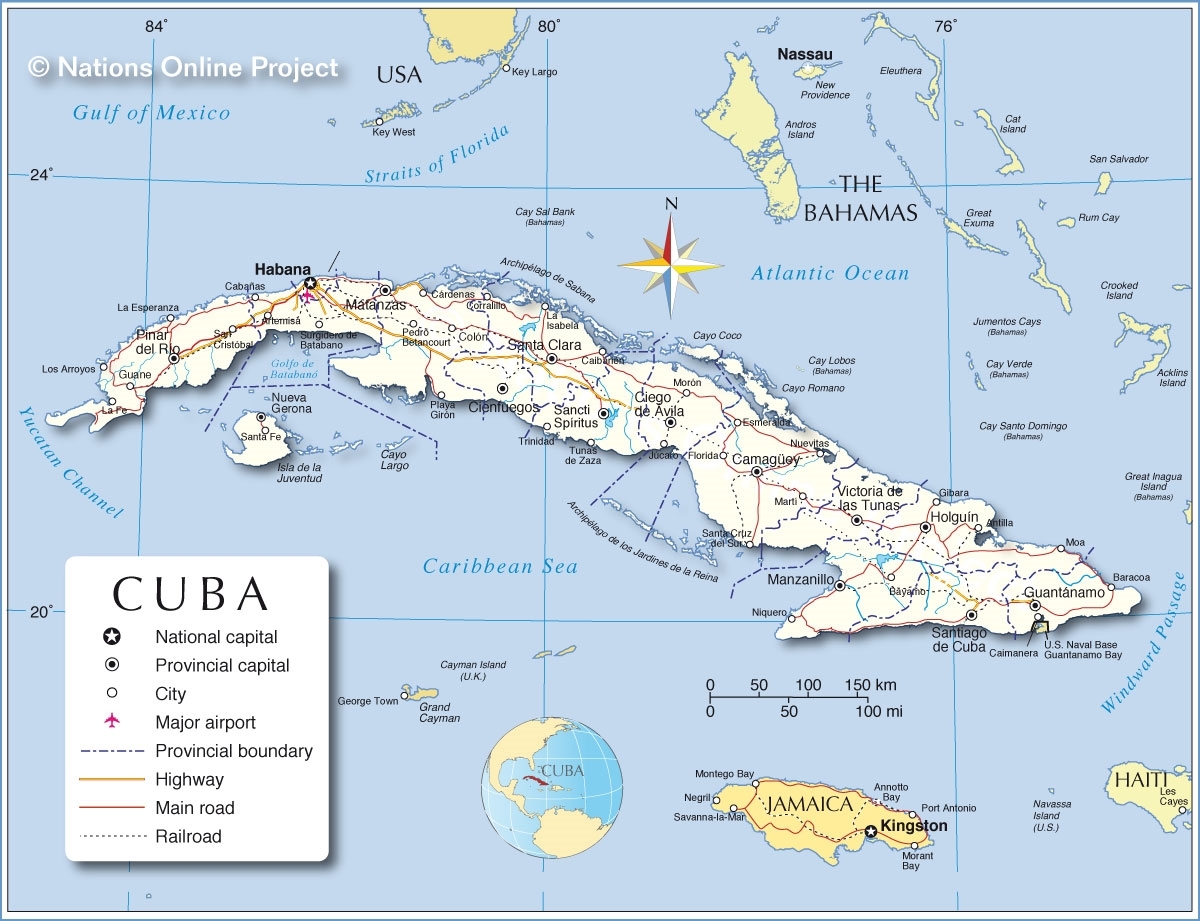
Six Sigma Business solutions

Why Former OFAC Investigator Misleads “Not A Close Call” About What U.S. Companies Can Do In Cuba? Why Would Member Of The U.S. Congress Deny Reality Of His District?

Why Former OFAC Investigator Misleads “Not A Close Call” About What United States Companies Can Do In Cuba?

Why Would Member Of The United States Congress Deny Reality Of His District?

Astonishing for a partner in a law firm who is a former sanctions investigator Office of Foreign Assets Control (OFAC) of the United States Department of the Treasury to share misleading statements about authorization for United States-based companies to provide direct investment into privately-owned companies owned by Republic of Cuba nationals residing in the Republic of Cuba.

Astonishing too for a member of the United States House of Representatives in the United States Congress to deny reality about unofficially-delivered direct investment into and unofficially-authorized direct financing to privately-owned companies owned by Republic of Cuba nationals residing in the Republic of Cuba.  It’s been a reality for nearly thirty years.

The goal of the United States business community is to shift from what is unofficial, thus unauthorized, to official, thus authorized and transparent.  The focus today must be toward the government of the Republic of Cuba since the United States government did its part- nearing four years ago.

  • It’s kabuki theater.  They’re [government of the Republic of Cuba] signaling to the U.S. government.  They’re not signaling to potential investors in Miami because they know- I know that they know- that those investments are not allowed under U.S. law… U.S. law is no where near authorizing those investments.  I mean, it’s just not even- it’s not a close call.  The Executive Branch is very limited in what it can do.”  Jeremy Paner, a former sanctions investigator at the OFAC

On 10 March 2022, the Biden-Harris Administration (2021-2025) instructed the Office of Foreign Assets Control (OFAC) of the United States Department of the Treasury to issue a license authorizing the first direct investment in and direct financing to a privately-owned company owned by a Republic of Cuba national and located in the Republic of Cuba. 

“The Support for the Cuban People (SCP) License Exception (Section 740.21 of the Export Administration Regulations (EAR)) is managed by the Bureau of Industry and Security (BIS) within the Department of Commerce.  Exporting non-controlled items (classified as EAR99) to the Republic of Cuba for purposes including improving living conditions, supporting independent economic activity, strengthening civil society, and facilitating free information flow.  The licenses usually stipulate exported goods must be designated for the Republic of Cuba nationals, cannot be re-exported, should not primarily generate income for the government of the Republic of Cuba, and cannot be sold directly to the government of the Republic of Cuba or to Republic of Cuba government-operated entities.

In 2021, the first micro, small, and medium-size enterprises (MSME’s) were authorized by the government of the Republic of Cuba.  Severely limited self-employment was authorized in the mid-1990’s and then expanded further in 2010.  There are today a reported approximately 10,000 MSMEs operating in the Republic of Cuba.

Since 2022, when the first license was issued by Bureau of Industry and Security (BIS) of the United States Department of Commerce for the export of vehicles to Republic of Cuba nationals and to private companies in the Republic of Cuba, the cumulative export value of the initiatives in place during the Obama-Biden Administration (2009-2017), Trump-Pence Administration (2017-2021), Biden-Harris Administration (2021-2025), and Trump-Vance Administration (2025-2029) exceeds US$394 million of which electric and gasoline-powered new and used vehicles, bicycles, trucks, motorcycles and mopeds, and parts, exceeds US$227 million (Year 2025: US$149,413,031.00; Year 2024: US$67,241,234.00; Year 2023: US$10,546,419.00; Year 2022: US$89,848.00), and purchases (equipment and products) for use by the re-emerging private sector in the Republic of Cuba driving the growth.

If you’re crazy, go ahead, invest in Cuba… There is NOTHING the regime has that the United States wants.  There will be ZERO investment from the US unless there is MAJOR political change on the island.”  Carlos Gemenez, United States House of Representatives (R- 28th Florida) 

2025 was the third-highest US Dollar value in exports since the first Trade Sanctions Reform and Export Enhancement Act (TSREEA) of 2000 deliveries in December 2001. 

United States agricultural commodity and food product exports in 2025 were US$490,111,943.00 compared to US$433,662,216.00 in 2024 representing an 13.0% increase year-to-year.   

For 2025, the Republic of Cuba ranked 49th of 222 global agricultural commodity and food product export markets for United States-based companies.

Since the first exports using TSREEA, more than US$8.3 billion has been received by United States-based companies, on a cash-in-advance basis as required by the TSREEA. 

As to the legitimacy of the re-emerging private sector in the Republic of Cuba, the Trump-Vance Administration delivered critically-timed messages to owners and employees of privately-owned companies located in the Republic of Cuba and to management of United States-based companies.

The OFAC authorization for the export of fuels from the United States to the Republic of Cuba was issued as a general license.  Meaning no application is required.  The transactions are based upon the honor system.  The requirements are published by the OFAC, and both the United States-based exporter and Republic of Cuba-based importer must voluntarily adhere to those requirements. 

By issuing a general license, the message to the re-emerging private sector in the Republic of Cuba was they are legitimate, they are relevant, the United States government wants to support them, and the government of the Republic of Cuba should not constrain them. 

By issuing a general license, the message to United States-based companies was similar- the United States government recognizes the legitimacy of the re-emerging private sector in the Republic of Cuba, supports engagement with it, and trusts United States-companies to adhere to the requirements.  The trust component is critical because it further normalizes the transaction process- which means an increase in interest.

Link To Complete Analysis In PDF Format

Cmkc.cu

More Untruths? Will NBC’s Meet The Press Interview With Deputy Foreign Minister Of Cuba Be An Unhelpful Repeat Of NBC News Interview With Deputy Prime Minister Of Cuba?

More Untruths? Will NBC’s Meet The Press Interview With Deputy Foreign Minister Of Cuba Be A Repeat Of NBC News Interview With Deputy Prime Minister Of Cuba?  

Both Have Been Untruthful When Discussing The Realities Of United States Private Sector Commercial Engagement With Cuba- Government And Re-Emerging Private Sector 

On 10 March 2022, the Biden-Harris Administration (2021-2025) authorized the Office of Foreign Assets Control (OFAC) of the United States Department of the Treasury to issue a license authorizing the first direct investment in and direct financing to a privately-owned company owned by a Republic of Cuba national and located in the Republic of Cuba. 

Nearing four years later, the government of the Republic of Cuba has yet to publish regulations (basically a single Know Your Customer (KYC) document to be filed with a Republic of Cuba-based financial institution) which would permit the delivery of that direct investment and direct financing while maintaining, wrongly, the United States Government does not permit direct investment and direct financing.   

The delay not only impacts direct investment and direct financing into the re-emerging private sector in the Republic of Cuba, which is sourced from the United States, but sourcing from all countries, including Canada, China, European Union, Mexico, Russia, and Vietnam.  For many years, capital for use by the re-emerging private sector in the Republic of Cuba has arrived informally, absent official authorization.   

In a recent televised interview with NBC News, Pérez-Oliva Fraga, Deputy Prime Minister of the Republic of Cuba, said “Cuba is open to having a fluid commercial relationship with U.S. companies and also with Cubans residing in the United States and their descendants.  This extends beyond the commercial sphere.  It also applies to investments- not only small investments, but also large investments, particularly in infrastructure.  The blockade deprives us of access to financing, access to technology, access to markets, and in recent years, it has specifically been aimed at depriving our country of access to fuel.”  

He was not truthful.  He knew he was not truthful. 

In a recent interview with Thomson Reuters, Carlos Fernández de Cossío, Deputy Minister of Foreign Affairs of the Republic of Cuba “But he did say there were plenty of topics of mutual interest, including trade between the two countries that has been severed by the comprehensive U.S. economic embargo against Cuba.  He also mentioned longstanding economic compensation that each country ⁠seeks. Cuba ​has claims against the United States for damages caused by the embargo, while there ​are 5,913 claims from Americans whose properties were nationalized in Cuba after the 1959 revolution that brought Fidel Castro to power.  “These are very complex issues that can be discussed, but ​they require dialogue.  They require sitting down and are legitimate matters.”  

He was not truthful.  He knew he was not truthful. 

United States agricultural commodity and food product exports in 2025 were US$490,111,943.00 compared to US$433,662,216.00 in 2024 representing an 13.0% increase year-to-year. The year 2025 represents the third-highest US Dollar value in exports since the first TSREEA exports in December 2001. 

Since 2022, when the first license was issued by Bureau of Industry and Security (BIS) of the United States Department of Commerce for the export of vehicles to Republic of Cuba nationals and to private companies in the Republic of Cuba, the cumulative export value of the initiatives in place during the Obama-Biden Administration, Trump-Pence Administration, Biden-Harris Administration, and Trump-Vance Administration exceeds US$394 million of which electric and gasoline-powered new and used vehicles, bicycles, trucks, motorcycles and mopeds, and parts, exceeds US$227 million (Year 2025: US$149,413,031.00; Year 2024: US$67,241,234.00; Year 2023: US$10,546,419.00; Year 2022: US$89,848.00), and purchases (equipment and products) for use by the re-emerging private sector in the Republic of Cuba driving the growth. 

Certified Claims 

Mr. de Cossio shared the government of the Republic of Cuba has claims against the government of the United States.  He conflates assets expropriated without compensation from United States citizens- companies and individuals, with the internal impact of financial decisions adopted by successive governments of the Republic of Cuba.  One issue has is not connected with the other issue. 

Absent resolving the 5,913 certified claims, the government of the Republic of Cuba will continue constrained- and now increasingly so given the focus by the Trump-Vance Administration (2025-2029) with attracting direct foreign investment, export opportunities, and import opportunities.  The United States Government will not entertain claims of economic harm presented by the government of the Republic of Cuba. 

The Diaz-Canel-Valdes Mesa Administration (2019- ) needs to focus upon what is doable rather than what may satisfy the aspirational and the inspirational.  There was an opportunity to engage about settling the certified claims during the Obama-Biden Administration (2009-2017) and Biden-Harris Administration.  Neither Havana nor Washington DC did anything. 

There are 8,821 claims of which 5,913 awards valued at US$1,902,202,284.95 were certified by the United States Foreign Claims Settlement Commission (USFCSC) and have not been resolved for nearing sixty years (some assets were officially confiscated in the 1960’s, some in the 1970’s and some in the 1990’s).  The USFCSC permitted simple interest (not compound interest) of 6% per annum (approximately US$114,132,137.10); with the approximate current value of the 5,913 certified claims is approximately US$9.2 billion.  

The first asset (along with 382 enterprises the same day) to be expropriated by the Republic of Cuba was an oil refinery on 6 August 1960 owned by White Plains, New York-based Texaco, Inc., now a subsidiary of San Ramon, California-based Chevron Corporation (USFCSC: CU-1331/CU-1332/CU-1333 valued at US$56,196,422.73).  

From the certified claim filed by Texaco: “The Cuban corporation was intervened on June 29, 1960, pursuant to Resolution 188 of June 28, 1960, under Law 635 of 1959.  Resolution 188 was promulgated by the Government of Cuba when the Cuban corporation assertedly refused to refine certain crude oil as assertedly provided under a 1938 law pertaining to combustible materials.  Subsequently, this Cuban firm was listed as nationalized in Resolution 19 of August 6, 1960, pursuant to Cuban Law 851.  The Commission finds, however, that the Cuban corporation was effectively intervened within the meaning of Title V of the Act by the Government of Cuba on June 29, 1960.” 

The largest certified claim (Cuban Electric Company) valued at US$267,568,413.62 is controlled by Boca Raton, Florida-based Office Depot, Inc.  The second-largest certified claim (International Telephone and Telegraph Co, ITT as Trustee, Starwood Hotels & Resorts Worldwide, Inc.) valued at US$181,808,794.14 is controlled by Bethesda, Maryland-based Marriott International; the certified claim also includes land adjacent to the Jose Marti International Airport in Havana, Republic of Cuba.  The third-largest certified claim valued at US$97,373,414.72 is controlled by New York, New York-based North American Sugar Industries, Inc.  The smallest certified claim is by Sara W. Fishman in the amount of US$1.00 with reference to the Cuban-Venezuelan Oil Voting Trust. 

The two (2) largest certified claims total US$449,377,207.76, representing 24% of the total value of the certified claims.  Thirty (30) certified claimants hold 56% of the total value of the certified claims.  This concentration of value creates an efficient pathway towards a settlement.   

Link To Libertad Act Title III Filing Statistics

LINK TO COMPLETE ANALYSIS IN PDF FORMAT

For Oil From Iran, OFAC General License U Does Not Leave Open Intrepretation For Including Cuba As Did Russia General License 134

United States Department of the Treasury
Washington DC
20 March 2026

GENERAL LICENSE U
Authorizing the Delivery and Sale of Crude Oil and Petroleum Products of Iranian-Origin Loaded on Vessels as of March 20, 2026

(a) Except as provided in paragraph (b), all transactions prohibited by the above-listed authorities that are ordinarily incident and necessary to the sale, delivery, or offloading of crude oil or petroleum products of Iranian origin loaded on any vessel, including vessels blocked under the above-listed authorities, on or before 12:01 a.m. eastern daylight time, March 20, 2026 are authorized through 12:01 a.m. eastern daylight time, April 19, 2026.

Note 1 to paragraph (a). Transactions that are ordinarily incident and necessary to the sale, delivery, or offloading of such crude oil or petroleum products include transactions for the safe docking and anchoring of vessels carrying such crude oil or petroleum products; the preservation of the health or safety of the crew of any such vessel; emergency repairs or environmental mitigation or protection activities relating to any such vessel; and services such as vessel management, crewing, bunkering, piloting, registration, flagging, insurance, classification, and salvage. Iranian-origin crude oil and petroleum products subject to this general license include those produced by entities sanctioned under the Iranian Transactions and Sanctions Regulations, 31 CFR part 560, Iranian Financial Sanctions Regulations, 31 CFR part 561, or the Global Terrorism Sanctions Regulations, 31 CFR part 594. 

Note 2 to paragraph (a). Transactions authorized by this general license include the importation into the United States of crude oil and petroleum products of Iranian origin, where such importation is ordinarily incident and necessary to the sale, delivery, or offloading of such crude oil or petroleum products authorized by this general license.  (b) This general license does not authorize: (1) Any transaction involving a person located in or organized under the laws of the Democratic People’s Republic of Korea, the Republic of Cuba, the Covered Regions of Ukraine, as defined by E.O. 14065, the Crimea Region of Ukraine, as defined by E.O. 13685, or any entity that is owned or controlled by or in a joint venture with such persons; or (2) Any other transactions or activities prohibited by any other Executive order or by any part of 31 CFR chapter V not referenced in this general license.

Link To Related Analyses

Six Days After Question To OFAC, General License 134 Amended To 134a: Adding No Russian Oil For Cuba Mar 20, 2026

Might New OFAC General License 134 Open Door (A Crack) For Russian Oil Exports To Cuba Until 11 April 2026? Mar 13, 2026

Six Days After Question To OFAC, General License 134 Amended To 134a: Adding No Russian Oil For Cuba

On 13 March 2026, the U.S.-Cuba Trade and Economic Council submitted a question to the Office of Foreign Assets Control (OFAC) of the United States Department of the Treasury:

“Does OFAC General License Number 134 issued on 12 March 2026 apply to oil sourced from the Russian Federation which was loaded onto a vessel prior to 12 March 2026 for which the destination is the Republic of Cuba?”

 12 March 2026- GENERAL LICENSE 134

Authorizing the Delivery and Sale of Crude Oil and Petroleum Products of Russian Federation Origin Loaded on Vessels as of March 12, 2026

(a) Except as provided in paragraph (b) of this general license, all transactions prohibited by the above-listed authorities that are ordinarily incident and necessary to the sale, delivery, or offloading of crude oil or petroleum products of Russian Federation origin loaded on any vessel, including vessels blocked under the above listed authorities, on or before 12:01 a.m. eastern daylight time, March 12, 2026 are authorized through 12:01 a.m. eastern daylight time, April 11, 2026.

Note 1 to paragraph (a). Transactions that are ordinarily incident and necessary to the sale, delivery, or offloading of such crude oil or petroleum products include transactions for the safe docking and anchoring of vessels carrying such crude oil or petroleum products; the preservation of the health or safety of the crew of any such vessel; emergency repairs or environmental mitigation or protection activities relating to any such vessel; and services such as vessel management, crewing, bunkering, piloting, registration, flagging, insurance, classification, and salvage. Russian Federation-origin crude oil and petroleum products subject to this general license include those produced by entities sanctioned under the Russian Harmful Foreign Activities Sanctions Regulations, 31 CFR part 587, or the Ukraine-/Russia-Related Sanctions Regulations, 31 CFR part 589. (b) This general license does not authorize any other transactions or activities prohibited by any other Executive order or by any part of 31 CFR chapter V not referenced in this general license, including any transaction or activity involving Iran, the Government of Iran, or Iranian-origin goods or services that is prohibited by the Iranian Transactions and Sanctions Regulations (31 CFR part 560), except as authorized by paragraph (a).

19 March 2026- GENERAL LICENSE 134A

Authorizing the Delivery and Sale of Crude Oil and Petroleum Products of Russian Federation Origin Loaded on Vessels as of March 12, 2026


(a) Except as provided in paragraph (b) of this general license, all transactions prohibited by the above-listed authorities that are ordinarily incident and necessary to the sale, delivery, or offloading of crude oil or petroleum products of Russian Federation origin loaded on any vessel, including vessels blocked under the above listed authorities, on or before 12:01 a.m. eastern daylight time, March 12, 2026 are authorized through 12:01 a.m. eastern daylight time, April 11, 2026.

Note 1 to paragraph (a). Transactions that are ordinarily incident and necessary to the sale, delivery, or offloading of such crude oil or petroleum products include transactions for the safe docking and anchoring of vessels carrying such crude oil or petroleum products; the preservation of the health or safety of the crew of any such vessel; emergency repairs or environmental mitigation or protection activities relating to any such vessel; and services such as vessel management, crewing, bunkering, piloting, registration, flagging, insurance, classification, and salvage. Russian Federation-origin crude oil and petroleum products subject to this general license include those produced by entities sanctioned under the Russian Harmful Foreign Activities Sanctions Regulations, 31 CFR part 587, or the Ukraine-/Russia-Related Sanctions Regulations, 31 CFR part 589. (b) This general license does not authorize: (1) Any transaction involving a person located in or organized under the laws of the Islamic Republic of Iran, the Democratic People’s Republic of Korea, the Republic of Cuba, the Covered Regions of Ukraine, as defined by E.O. 14065, the Crimea Region of Ukraine, as defined by E.O. 13685, or any entity that is owned or controlled by or in a joint venture with such persons; or (2) Any other transactions or activities prohibited by any other Executive order or by any part of 31 CFR chapter V not referenced in this general license, including any transaction or activity involving Iran, the Government of Iran, or Iranian-origin goods or services that is prohibited by the Iranian Transactions and Sanctions Regulations (31 CFR part 560), except as authorized by paragraph (a). (c) Effective March 19, 2026, General License No. 134, dated March 12, 2026, is replaced and superseded in its entirety by this General License No. 134A.

Link To 134
Link To 134a

LINK TO COMPLETE ANALYSIS IN PDF FORMAT
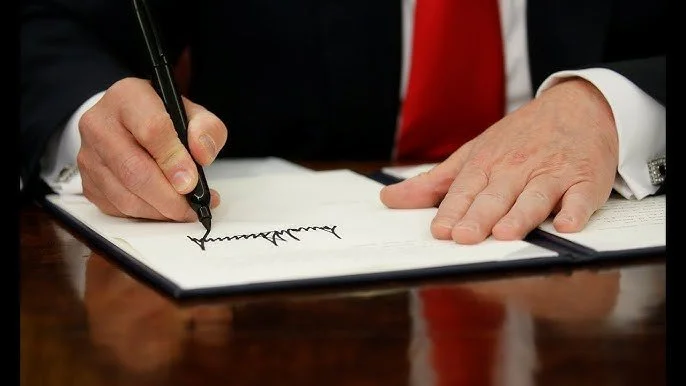
Four Years Late: Do Not Get Orgasmic About Cuba Government Private Sector Announcements

Four Years Late: Do Not Get Orgasmic About Cuba Government Private Sector Announcements 

Is There Commitment? 

Demand Correspondent Banking Because It Would Require Transparency For Cuba Banks

Fact Check:  

Important not to get too orgasmic

  • Cuba is open to having a fluid commercial relationship with U.S. companies and also with Cubans residing in the United States and their descendants.  This extends beyond the commercial sphere.  It also applies to investments- not only small investments, but also large investments, particularly in infrastructure.  The blockade deprives us of access to financing, access to technology, access to markets, and in recent years, it has specifically been aimed at depriving our country of access to fuel.”  Pérez-Oliva Fraga, Deputy Prime Minister of the Republic of Cuba 

Reality will be painful… 

A reminder to the Diaz-Canel-Valdes Mesa Administration (2019- ) in Havana that since 1994 almost all of the first licenses issued by the Bureau of Industry and Security (BIS) of the United States Department of Commerce and Office of Foreign Assets Control (OFAC) of the United States Department of the Treasury for Republic of Cuba-related commercial, economic, and financial initiatives originated from companies located outside of the State of Florida and from individuals not of Cuban descent.  “Cuban-Americans” made use of the effort and landscape created first primarily by others. 

On 10 March 2022 the Biden-Harris Administration (2021-2025) directed the OFAC to issue the first license authorizing direct investment in and direct financing to a privately-owned company in the Republic of Cuba owned by a Republic of Cuba national. 

Yes, the government of the Republic of Cuba is only now authorizing what could have been implemented four years ago- and resulted in meaningful capital flows and direct foreign investment.  They refused. 

That refusal has for nearing four years also impacted direct investment and direct financing into the re-emerging private sector in the Republic of Cuba not only from the United States, but from all countries- including those the government of the Republic of Cuba professes to have connectivity- Canada, China, European Union members, Russia, Spain, Mexico, etc.  

The Trump-Vance Administration (2025-2029) should “trump” the decision by the government of the Republic of Cuba. 

The “trump” card should be for the Trump-Vance Administration to require direct correspondent banking for all transactions into and out of a privately-owned company located in the Republic of Cuba.  This means Republic of Cuba government-operated financial institutions would need to establish correspondent accounts with United States-based financial institutions.  A requirement of would be Republic of Cuba government-operated financial institutions “open their books” to audits by United States-based accounting firms.   

The use of correspondent accounts rather than funds flowing through third countries would ensure a cost-effective, efficient, and transparent financial landscape. 

Links To Related Analyses 

Link: Biden-Harris Administration Re-Engagement With Cuba’s Re-Emerging Private Sector Brings Urgency To Re-Authorization Of Direct Correspondent Banking, U-Turn Transactions. One-Way Does Not Work.  October 06, 2022 

Link: Cuba Government Delaying Private Company Investment/Financing Regulations Is Costing Earning Potential For U.S. And Other Country Sources. Success Should Not Be Feared. September 25, 2023  

Link: Now The Hard Part For Cuba: Implementing Quickly Transparent, Equal-For-All, MSME Investment & Financing Regulations. No Limitations. No Selectivity. No Orwellian Process. August 04, 2022   

Link: Biden-Harris Administration Approves First Equity Investment Since 1960 In A Private Cuban Company May 10, 2022 

Link: With U.S. Government Authorization For First Direct Equity Investment Into A Private Company In Cuba, Here Is Important Context And Details.  About The Parties; About The Message. May 16, 2022   

Link: Mr. de Cossio At MINREX In Cuba Not Quite Accurate With His Comments About Biden-Harris Administration Efforts With MSMEs And Remittances  December 20, 2022  

Link: State Department, NSC, OFAC, BIS, USDA Don't Understand Requirements For Financial Plumbing To Function Efficiently.  They Excel In Creating, Maintaining, And Defending Clogs. May 16, 2023  

LinkLogic From U.S. Department Of State:  If We Permit It, Cuba Might Not Use It, So We Won’t Permit It.  And, Yes, No One Asked Cuba. And, No One Asked U.S. Banks, Companies.  May 01, 2023  

LINK TO COMPLETE ANALYSIS IN PDF FORMAT

undark magazine

U.S. Embassy In Cuba May Reduce Operations Due To Energy Issues. U.S. Company Previously Offered EVs And EV Charging Stations. ASAP: U.S. Companies Need BIS, OFAC, OLA, FAS, FCSC, DOJ In Havana

United States Company Offered Biden-Harris Administration Free EV Chargers For United States Embassy And Ambassador’s Residence In Havana And Availability Of Electric Vehicles 

United States Department Of State Refused- Preferred To Rent China-Built Vehicles From Cuba Government-Operated Company  

BIS, FAS, DOJ, OLA, And OFAC Representatives Need To Be Pre-Positioned In Havana 

The United States Department of State confirms energy availability is impacting operations of the United States Embassy, United States Consulate, and Ambassador’s Residence in Havana, Republic of Cuba. 

Associated Press
New York, New York
13 March 2026

  • “The U.S. State Department has weighed potentially drawing down staffing at the U.S. Embassy in Havana as the fuel shortages caused by the American blockade could affect day-to-day diplomatic operations, according to three U.S. officials.  The officials stressed that there is still time to solve the problem and that the embassy and the State Department were looking at potential solutions, including possibly importing fuel from private sources if the Cubans allow it.  A reduction in staffing at the embassy in Havana would likely lead to a U.S. demand for a similar reduction in staffing at the Cuban embassy in Washington, the officials said.” 

With the Trump-Vance Administration (2025-2029) re-engaging with the government of the Republic of Cuba and re-engaging with citizens of the Republic of Cuba, essential for United States-based companies and United States-based entrepreneurs to have available to them a robust senior-level agency and department representation in place as soon as possible at the United States Embassy in Havana and United States Consulate in Havana.   

Since focus will include re-engagement commercially, economically, and financially, with the re-emerging private sector in the Republic of Cuba, essential for personnel representing the Bureau of Industry and Security (BIS) of the United States Department of Commerce, Office of Foreign Assets Control (OFAC) of the United States Department of the Treasury, Foreign Claims Settlement Commission (FCSC) of the United States Department of Justice (representing the interests of the 5,911 certified claimants), Office of the Legal Advisor (OLA) of the United States Department of State (to support FCSC), and Foreign Agricultural Service (FAS) of the United States Department of Agriculture.   

In 2025, total exports (sold and donated) from the United States to the Republic of Cuba were approximately US$810.6 million.  That value placed the Republic of Cuba easily among the top 40% of United States product export markets.  For agricultural commodity exports and food product exports, the Republic of Cuba ranked 49th of 222 United States export markets.  Since December 2001, the total agricultural commodity and food product exports to the Republic of Cuba exceed US$8.2 billion on a cash-in-advance payment basis as required by the Trade Sanctions Reform and Export Enhancement Act (TSREEA) of 2000. 

EV Decision 

Had the Biden-Harris Administration (2021-2025) chose differently relating to electric vehicles for use by the United States Embassy in Havana, part of the energy issue(s) encountered today by Trump-Vance Administration would have been mitigated. 

A Maryland-based company repeatedly offered to provide and install solar-powered electric vehicle charging stations at the embassy and ambassador’s residence at no cost to United States taxpayers.  In addition, as the company had a license from the BIS to export electric vehicles from the United States to the Republic of Cuba, the company offered to deliver (lease, rent, sale) electric vehicles to augment the existing gasoline/diesel vehicle fleet.  The company received the following initial response: 

  • 3 December 2021: United States Department of State: “The Biden Administration has clearly articulated the United States’ goal to accelerate and deploy electric vehicles and charging stations, create good-paying, union jobs, and enable a clean transportation future to combat climate change.  However, the United States Embassy in Cuba does not operate any electric vehicles nor has any solar power charging stations at our Embassy compound or residences in Havana.  At this time, it would be unlikely that the United States Embassy consider importing one or more electric vehicles for use in Cuba in the near future due to impediments in the electrical infrastructure and lack of trained mechanics on the island to service electric vehicles.”    

On 17 November 2022, the Biden-Harris Administration approved a license application submitted on 22 October 2022 by Columbia, Maryland-based Premier Automotive Export, Ltd. (PAE) to the BIS to export electric vehicles and chargers to republic of cuba nationals with the “ULTIMATE CONSIGNEE: Privately owned companies in the Republic of Cuba owned by Cuba Nationals.”  The BIS license is valid until 30 November 2026.  PAE received six BIS licenses since 2017 including the first BIS license to export an electric vehicle to an embassy located in the Republic of Cuba.       

  • 8 May 2023: United States Department of State: “The Embassy is facing an emergency fuel crisis and is renting various electric vehicles from a local car rental agency until the crisis subsides.  There are no American made electric vehicles available to rent in Cuba.”   

  • 9 May 2023: United States Department of State: “As noted in our previous response, the Embassy is facing an emergency fuel crisis and has taken temporary measures to ensure continuity of operations.  Because of the fluid situation regarding fuel, the details you request change on a daily basis.  The rental agency is not listed on the Cuba Restricted List.  There is nothing more to share at this time.”  

  • 22 May 2023: To AP from United States Department of State: “There is a fuel crisis currently in Cuba.  In order to maintain operations, the U.S. Embassy in Havana rented numerous electric cars that are available for rent in Havana.  They will continue to do so until the crisis abates.  There are no American-made electric cars in Cuba available for rent.   The U.S. Embassy Havana currently does not operate any electric vehicles in its motor pool in Havana. All Department of State vehicles have a lifecycle and the Embassy is currently in the process of transitioning a large percentage of its vehicles to American-made electric vehicles and expects to have that process completed sometime in 2024. The vehicle needs of Embassy Havana vary daily as does the availability of various models of electric rental vehicles, their cost, and the Embassy offices which  are in need of a vehicle.” 

Link: AP and NBC News Also Want To Know Why U.S. Embassy In Havana Is Renting Electric Vehicles Made In China May 22, 2023 

United States Department of State
Washington DC
22 May 2023

Briefing With Matthew Miller, Spokesperson 

MR. MILLER: Matt, you want to close us off?\

QUESTION (Matt Lee, Associated Press):  Yeah, I just – and these will be extremely brief because I think you’ll only have a five-second answer for both.  One, do you know anything about the U.S. embassy in Cuba renting Cuban Government EV cars that are made by China?

MR MILLER:  I do not.   As I think you —

QUESTION:  Okay.  Could you —

MR MILLER:  As you seemed to anticipate.

QUESTION:  Could you – yeah.  Well, I just heard about it, so I didn’t think you would have anything, but I wanted to get it out there on the record.

MR MILLER:  Thank you.

QUESTION:  Can you – could you – or maybe not you, someone look into this and find out if it’s true and what the deal is?  I mean, it might be completely innocent.

Subsequent statement delivered later on 22 May 2023 to AP from the United States Department of State: “There is a fuel crisis currently in Cuba.  In order to maintain operations, the U.S. Embassy in Havana rented numerous electric cars that are available for rent in Havana.  They will continue to do so until the crisis abates.  There are no American-made electric cars in Cuba available for rent.   The U.S. Embassy Havana currently does not operate any electric vehicles in its motor pool in Havana. All Department of State vehicles have a lifecycle and the Embassy is currently in the process of transitioning a large percentage of its vehicles to American-made electric vehicles and expects to have that process completed sometime in 2024. The vehicle needs of Embassy Havana vary daily as does the availability of various models of electric rental vehicles, their cost, and the Embassy offices which  are in need of a vehicle.”

QUESTION (Andrea Mitchell, NBC News):  Can I just – can I just follow up on something that Matt had asked?

MR MILLER:  What – yeah.

QUESTION:  There was apparently a license, an export license, issued more than a year ago to a Maryland-based company to export an electric car and a charger to the embassy, and that four were supposed to be sent, and for some reason, apparently, Brian Nichols did not approve that. So —

MR MILLER:  I will say I’m not aware of these reports, and I think I will make it a practice not to comment on things that broke while I was at this podium that I have not had a chance to look into.

QUESTION:  Understood. 

Links To Related Analyses 

BIS "Returned Without Action" License Application To Donate EV Chargers To U.S. Embassy In Havana Because "Ultimate Consignee" Cancelled Transaction March 07, 2022 

Surprise Decision: Biden-Harris Administration Renews Trump-Pence Administration License To Export EVs To Embassies In Cuba. Company Offers To Donate EV Chargers To U.S. Embassy/Ambassador Residence January 25, 2022 

Why Is U.S. Embassy In Havana Renting Chinese-Built Electric Vehicles From A Cuba Government Company Rather Than Renting EVs From A U.S. Company? Company Offered To Donate Chargers. Rebuffed. May 22, 2023 

Is EV Data Really SCI? If U.S. Department Of State Wants U.S. Companies To Shift From Incredulousness To Embracing, Then Be Practical And Transparent Rather Than Secretive And Woefully Unprepared May 29, 2023

LINK TO COMPLETE ANALYSIS IN PDF FORMAT
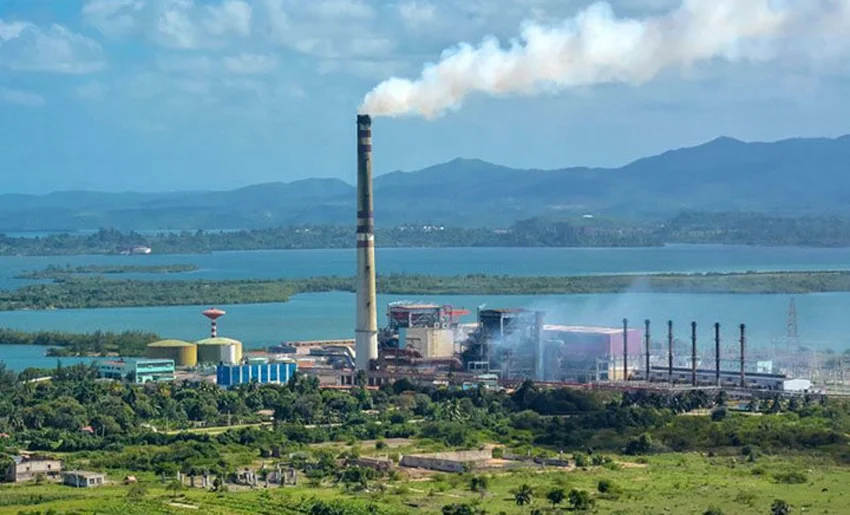
Might New OFAC General License 134 Open Door (A Crack) For Russian Oil Exports To Cuba Until 11 April 2026?

On 29 January 2026, Donald Trump, President of the United States (2027-2021, 2025-2029), signed Executive Order 14380 which authorized and “imposes a new tariff system that allows the United States to impose additional tariffs on imports from any country that directly or indirectly provides oil to Cuba.” 

To date, there are no announcements from the United States Department of State, United States Department of the Treasury, or United States Department of Commerce that a tariff was imposed on a country specifically for an oil transaction relating to the government of the Republic of Cuba.   

On 12 March 2026, to mitigate global commodity price fluctuations since the 28 February 2026 attack upon the Islamic Republic of Iran by the Israel Defense Forces (IDF) and the armed forces of the United States, the Trump-Vance Administration (2025-2029) authorized the purchase of oil sourced from the Russian Federation which was loaded onto vessels prior to 12 March 2026.  The Office of Foreign Assets Control (OFAC) of the United States Department of the Treasury reported the purchase authorization will remain in force until 11 April 2026. 

Question: Given no country is specifically sanctioned by provisions of Executive Order 14380 for engaging in oil-related transactions with the government of the Republic of Cuba and certain oil sourced from the Russian Federation may now until 11 April 2026 be purchased absent Trump-Vance Administration sanctions, could (and would) a government or company deliver oil to the government of the Republic of Cuba? 

Might the government of the Russian Federation seek to use OFAC General License 134 for oil in vessels prior to 12 March 2026, using vessels registered within the Russian Federation, and vessels insured by Russian Federation-based companies to deliver oil to the Republic of Cuba- whether the end-user is the government of the Republic of Cuba, a Republic of Cuba government-operated company(s), or one of the re-emerging private companies located in the Republic of Cuba. 

If the end-user is the re-emerging private sector in the Republic of Cuba, the government of the Russian Federation could provide substantial long-term payment terms, which might be an inducement to the Trump-Vance Administration to authorize the transaction.

United States Department of the Treasury
Washington DC
13 March 2026

Russian Harmful Foreign Activities Sanctions Regulations, 31 CFR part 587; Ukraine-/Russia-Related Sanctions Regulations, 31 CFR part 589; Iranian Transactions and Sanctions Regulations, 31 CFR part 560; Weapons of Mass Destruction Proliferators Sanctions Regulations, 31 CFR part 544; Iranian Financial Sanctions Regulations, 31 CFR part 561; Iranian Sector and Human Rights Abuses Sanctions Regulations, 31 CFR part 562; Global Terrorism Sanctions Regulations, 31 CFR part 594; Executive Order 13876 of June 24, 2019 (“Imposing Sanctions With Respect to Iran”);

Executive Order 13902 of January 10, 2020 (“Imposing Sanctions With Respect to Additional Sectors of Iran”); Executive Order 13949 of September 21, 2020 (“Blocking Property of Certain Persons with Respect to the Conventional Arms Activities of Iran”) 

GENERAL LICENSE 134 

Authorizing the Delivery and Sale of Crude Oil and Petroleum Products of Russian Federation Origin Loaded on Vessels as of March 12, 2026 

(a) Except as provided in paragraph (b) of this general license, all transactions prohibited by the above-listed authorities that are ordinarily incident and necessary to the sale, delivery, or offloading of crude oil or petroleum products of Russian Federation origin loaded on any vessel, including vessels blocked under the above listed authorities, on or before 12:01 a.m. eastern daylight time, March 12, 2026 are authorized through 12:01 a.m. eastern daylight time, April 11, 2026.  Note 1 to paragraph (a). Transactions that are ordinarily incident and necessary to the sale, delivery, or offloading of such crude oil or petroleum products include transactions for the safe docking and anchoring of vessels carrying such crude oil or petroleum products; the preservation of the health or safety of the crew of any such vessel; emergency repairs or environmental mitigation or protection activities relating to any such vessel; and services such as vessel management, crewing, bunkering, piloting, registration, flagging, insurance, classification, and salvage. Russian Federation-origin crude oil and petroleum products subject to this general license include those produced by entities sanctioned under the Russian Harmful Foreign Activities Sanctions Regulations, 31 CFR part 587, or the Ukraine-/Russia-Related Sanctions Regulations, 31 CFR part 589.  (b) This general license does not authorize any other transactions or activities prohibited by any other Executive order or by any part of 31 CFR chapter V not referenced in this general license, including any transaction or activity involving Iran, the Government of Iran, or Iranian-origin goods or services that is prohibited by the Iranian Transactions and Sanctions Regulations (31 CFR part 560), except as authorized by paragraph (a). 

Link: https://ofac.treasury.gov/media/935191/download?inline

The White House
Washington DC
29 January 2026
 

CONFRONTING THE CUBAN REGIME: Today, President Donald J. Trump signed an Executive Order declaring a national emergency and establishing a process to impose tariffs on goods from countries that sell or otherwise provide oil to Cuba, protecting U.S. national security and foreign policy from the Cuban regime’s malign actions and policies.  The Order imposes a new tariff system that allows the United States to impose additional tariffs on imports from any country that directly or indirectly provides oil to Cuba.  The Order authorizes the Secretary of State and Secretary of Commerce to take all necessary actions, including issuing rules and guidance, to implement the tariff system and related measures.  The President may modify the Order if Cuba or affected countries take significant steps to address the threat or align with U.S. national security and foreign policy objectives. 

LINK TO COMPLETE ANALYSIS IN PDF FORMAT