
More Untruths? Will NBC’s Meet The Press Interview With Deputy Foreign Minister Of Cuba Be An Unhelpful Repeat Of NBC News Interview With Deputy Prime Minister Of Cuba?
/More Untruths? Will NBC’s Meet The Press Interview With Deputy Foreign Minister Of Cuba Be A Repeat Of NBC News Interview With Deputy Prime Minister Of Cuba?
Both Have Been Untruthful When Discussing The Realities Of United States Private Sector Commercial Engagement With Cuba- Government And Re-Emerging Private Sector
On 10 March 2022, the Biden-Harris Administration (2021-2025) authorized the Office of Foreign Assets Control (OFAC) of the United States Department of the Treasury to issue a license authorizing the first direct investment in and direct financing to a privately-owned company owned by a Republic of Cuba national and located in the Republic of Cuba.
Nearing four years later, the government of the Republic of Cuba has yet to publish regulations (basically a single Know Your Customer (KYC) document to be filed with a Republic of Cuba-based financial institution) which would permit the delivery of that direct investment and direct financing while maintaining, wrongly, the United States Government does not permit direct investment and direct financing.
The delay not only impacts direct investment and direct financing into the re-emerging private sector in the Republic of Cuba, which is sourced from the United States, but sourcing from all countries, including Canada, China, European Union, Mexico, Russia, and Vietnam. For many years, capital for use by the re-emerging private sector in the Republic of Cuba has arrived informally, absent official authorization.
In a recent televised interview with NBC News, Pérez-Oliva Fraga, Deputy Prime Minister of the Republic of Cuba, said “Cuba is open to having a fluid commercial relationship with U.S. companies and also with Cubans residing in the United States and their descendants. This extends beyond the commercial sphere. It also applies to investments- not only small investments, but also large investments, particularly in infrastructure. The blockade deprives us of access to financing, access to technology, access to markets, and in recent years, it has specifically been aimed at depriving our country of access to fuel.”
He was not truthful. He knew he was not truthful.
Link: Four Years Late: Do Not Get Orgasmic About Cuba Government Private Sector Announcements March 16, 2026
Link: Now The Hard Part For Cuba: Implementing Quickly Transparent, Equal-For-All, MSME Investment & Financing Regulations. No Limitations. No Selectivity. No Orwellian Process. August 04, 2022
Link: Biden-Harris Administration Approves First Equity Investment Since 1960 In A Private Cuban Company May 10, 2022
Link: With U.S. Government Authorization For First Direct Equity Investment Into A Private Company In Cuba, Here Is Important Context And Details. About The Parties; About The Message. May 16, 2022
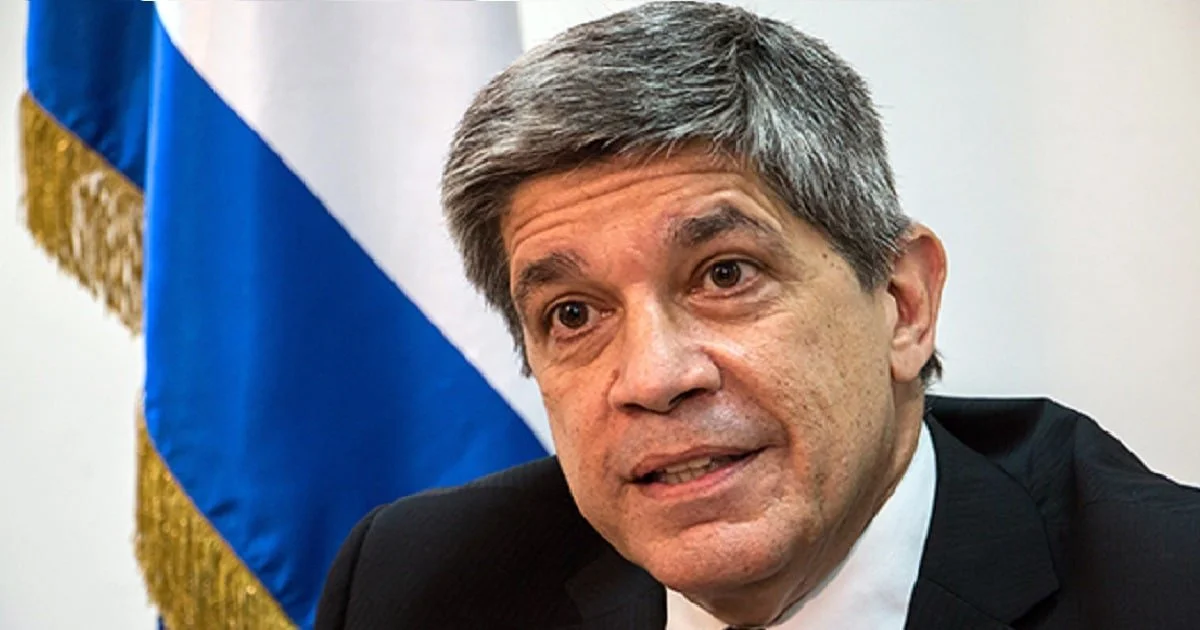
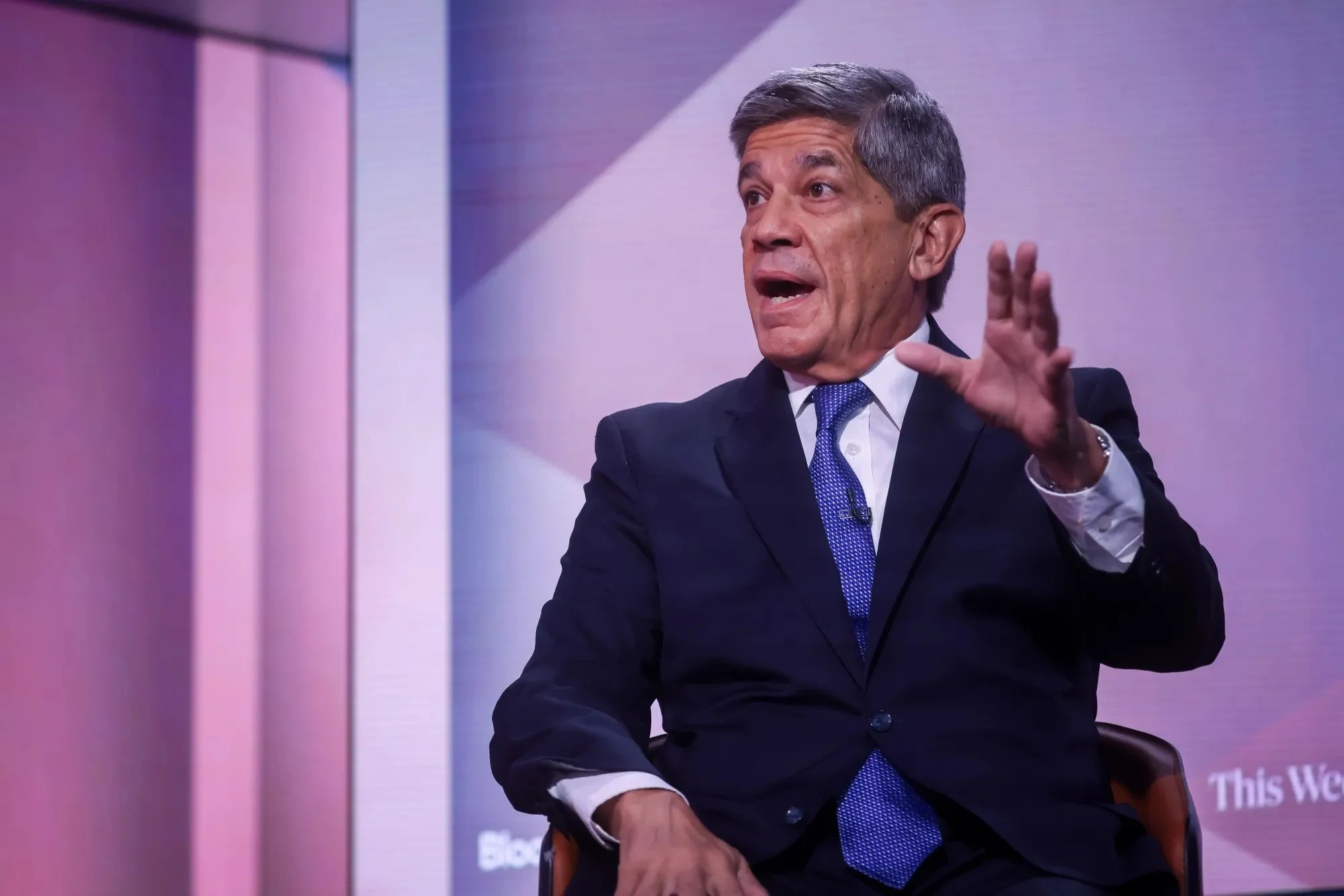
In a recent interview with Thomson Reuters, Carlos Fernández de Cossío, Deputy Minister of Foreign Affairs of the Republic of Cuba “But he did say there were plenty of topics of mutual interest, including trade between the two countries that has been severed by the comprehensive U.S. economic embargo against Cuba. He also mentioned longstanding economic compensation that each country seeks. Cuba has claims against the United States for damages caused by the embargo, while there are 5,913 claims from Americans whose properties were nationalized in Cuba after the 1959 revolution that brought Fidel Castro to power. “These are very complex issues that can be discussed, but they require dialogue. They require sitting down and are legitimate matters.”
He was not truthful. He knew he was not truthful.
Link: Why Is Cuba Deputy Foreign Minister Lying, Misleading, And Misstating Commercial Relationship With U.S.? Isn’t He Supposed To Encourage, Nurture, And Support It? November 24, 2024
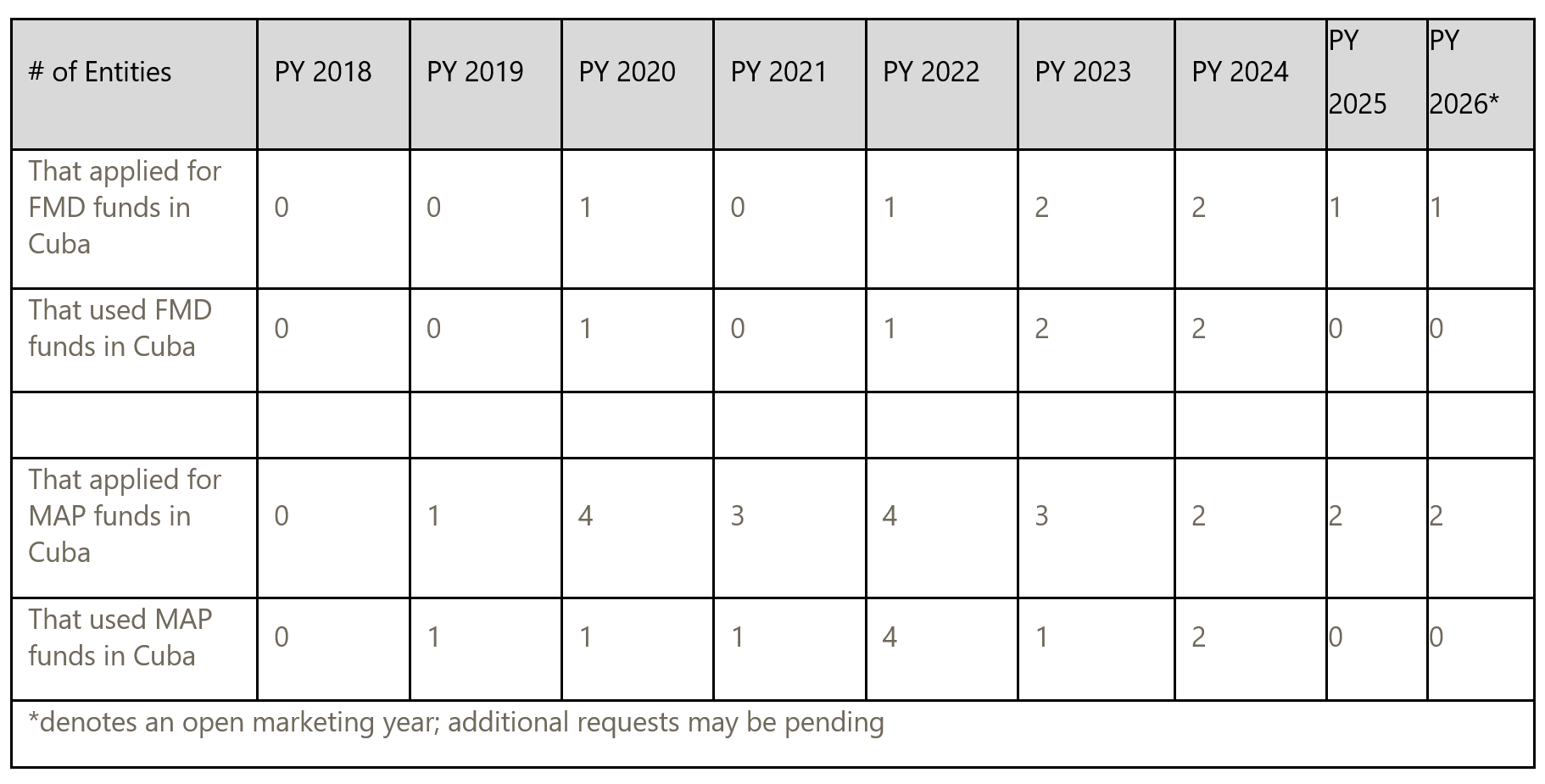
United States agricultural commodity and food product exports in 2025 were US$490,111,943.00 compared to US$433,662,216.00 in 2024 representing an 13.0% increase year-to-year. The year 2025 represents the third-highest US Dollar value in exports since the first TSREEA exports in December 2001.
Since 2022, when the first license was issued by Bureau of Industry and Security (BIS) of the United States Department of Commerce for the export of vehicles to Republic of Cuba nationals and to private companies in the Republic of Cuba, the cumulative export value of the initiatives in place during the Obama-Biden Administration, Trump-Pence Administration, Biden-Harris Administration, and Trump-Vance Administration exceeds US$394 million of which electric and gasoline-powered new and used vehicles, bicycles, trucks, motorcycles and mopeds, and parts, exceeds US$227 million (Year 2025: US$149,413,031.00; Year 2024: US$67,241,234.00; Year 2023: US$10,546,419.00; Year 2022: US$89,848.00), and purchases (equipment and products) for use by the re-emerging private sector in the Republic of Cuba driving the growth.
Link: Mr. de Cossio At MINREX In Cuba Not Quite Accurate With His Comments About Biden-Harris Administration Efforts With MSMEs And Remittances December 20, 2022
Link: Sorry, Cuba Deputy Foreign Minister- Chewing Gum Is Candy And Candy Is Exported From U.S. To Cuba- Along With Sugar, Chocolate, Puddings, Cookies, Waffles, Ice Cream, Peanut Butter, Tequila, Pet Food November 26, 2024
Link: Why Is Cuba Deputy Foreign Minister Lying, Misleading, And Misstating Commercial Relationship With U.S.? Isn’t He Supposed To Encourage, Nurture, And Support It? November 24, 2024
Link: Cuba: Acknowledging Impact Was Not Necessarily A Shrewd Political Statement. For Biden Administration, If It's Working, Why Change It? For Plaintiffs, Libertad Act Doing What It Was Designed To Do. October 03, 2023
Link: Misunderstanding? Cuba Government: Cuban-Americans' PYME Financing, Yes. PYME Investment, Yes. PYME Ownership, No. PMYE Need For Direct Banking With United States, Not Necessary. September 29, 2023
Link: Cuba Minister Of Foreign Affairs Said That Only U.S. Vessels Are Permitted For U.S. Exports To Cuba. That Was Inaccurate. August 23, 2023
Link: Biden Administration Believes Important To Discuss Immigration With Cuba. Should Also Discuss Engagement With Private Sector, Expanding Commerce, Settlement Of Certified Claims. April 19, 2022
Certified Claims
Mr. de Cossio shared the government of the Republic of Cuba has claims against the government of the United States. He conflates assets expropriated without compensation from United States citizens- companies and individuals, with the internal impact of financial decisions adopted by successive governments of the Republic of Cuba. One issue has is not connected with the other issue.
Absent resolving the 5,913 certified claims, the government of the Republic of Cuba will continue constrained- and now increasingly so given the focus by the Trump-Vance Administration (2025-2029) with attracting direct foreign investment, export opportunities, and import opportunities. The United States Government will not entertain claims of economic harm presented by the government of the Republic of Cuba.
The Diaz-Canel-Valdes Mesa Administration (2019- ) needs to focus upon what is doable rather than what may satisfy the aspirational and the inspirational. There was an opportunity to engage about settling the certified claims during the Obama-Biden Administration (2009-2017) and Biden-Harris Administration. Neither Havana nor Washington DC did anything.
There are 8,821 claims of which 5,913 awards valued at US$1,902,202,284.95 were certified by the United States Foreign Claims Settlement Commission (USFCSC) and have not been resolved for nearing sixty years (some assets were officially confiscated in the 1960’s, some in the 1970’s and some in the 1990’s). The USFCSC permitted simple interest (not compound interest) of 6% per annum (approximately US$114,132,137.10); with the approximate current value of the 5,913 certified claims is approximately US$9.2 billion.
The first asset (along with 382 enterprises the same day) to be expropriated by the Republic of Cuba was an oil refinery on 6 August 1960 owned by White Plains, New York-based Texaco, Inc., now a subsidiary of San Ramon, California-based Chevron Corporation (USFCSC: CU-1331/CU-1332/CU-1333 valued at US$56,196,422.73).
From the certified claim filed by Texaco: “The Cuban corporation was intervened on June 29, 1960, pursuant to Resolution 188 of June 28, 1960, under Law 635 of 1959. Resolution 188 was promulgated by the Government of Cuba when the Cuban corporation assertedly refused to refine certain crude oil as assertedly provided under a 1938 law pertaining to combustible materials. Subsequently, this Cuban firm was listed as nationalized in Resolution 19 of August 6, 1960, pursuant to Cuban Law 851. The Commission finds, however, that the Cuban corporation was effectively intervened within the meaning of Title V of the Act by the Government of Cuba on June 29, 1960.”
The largest certified claim (Cuban Electric Company) valued at US$267,568,413.62 is controlled by Boca Raton, Florida-based Office Depot, Inc. The second-largest certified claim (International Telephone and Telegraph Co, ITT as Trustee, Starwood Hotels & Resorts Worldwide, Inc.) valued at US$181,808,794.14 is controlled by Bethesda, Maryland-based Marriott International; the certified claim also includes land adjacent to the Jose Marti International Airport in Havana, Republic of Cuba. The third-largest certified claim valued at US$97,373,414.72 is controlled by New York, New York-based North American Sugar Industries, Inc. The smallest certified claim is by Sara W. Fishman in the amount of US$1.00 with reference to the Cuban-Venezuelan Oil Voting Trust.
The two (2) largest certified claims total US$449,377,207.76, representing 24% of the total value of the certified claims. Thirty (30) certified claimants hold 56% of the total value of the certified claims. This concentration of value creates an efficient pathway towards a settlement.