U.S. Government Had Interest In Mining Company In Cuba, Might Trump-Vance Administration Return U.S. Government To Asset Ownership In Cuba?

FOREIGN CLAIMS SETTLEMENT OF THE UNITED STATES
WASHINGTON DC


PROPOSED DECISION 

This claim against the Government of Cuba, filed under Title V of the International claims Settlement Act of 1949, as amended, in the amount of $42,600,000.00, was presented by NICARO NICKEL COMPANY based upon the asserted loss of certain mining concessions and other assets in Cuba. Under Title V of the International Claims Settlement Act of 1949

In The Matter Of The Claim Of NICARO NICKEL COMPANY  

Claim No. CU-2624 
Decision No. CU-6247
 

Appeal and objections from a Proposed Decision entered on June 30, 1971; oral hearing requested. 
Oral hearing held on September 16, 1971 

FINAL DECISION

Under date of June 30, 1971, the Commission issued its Proposed Decision certifying a loss in favor of claimant in the amount of $22,494,708.62 plus interest. 

The Certification of Loss covered certain mining concessions in Cuba in the amount of $22,297,708.62, and other appurtenant property in the amount of $197,000.00.

In determining the value of claimant’s mining concessions, the Commission allowed only the established amount of proven ore, and portions of the claim for probable ore and possible ore were denied. 

The value of the proven ore was determined by the application of a 12% annual discount rate to the yearly valuations of the ore for the period 1961 to 1979 to arrive at the aggregate value of the proven ore on October 24, 1960, the date of loss.

Claimant objected to the denial of the claim for probable ore and possible ore, and to the use of a 12% annual discount rate. In support of the objections, claimant submitted a report of August 1971 from Behre Dolbear & Company, Inc., a firm of mining geological and metallurgical consultants, which contains the conclusion that an 8% annual discount rate should be applied to determine the values of the proven ore, probable ore and possible ore. 

LINK TO CERTIFIED CLAIM FILING IN PDF FORMAT

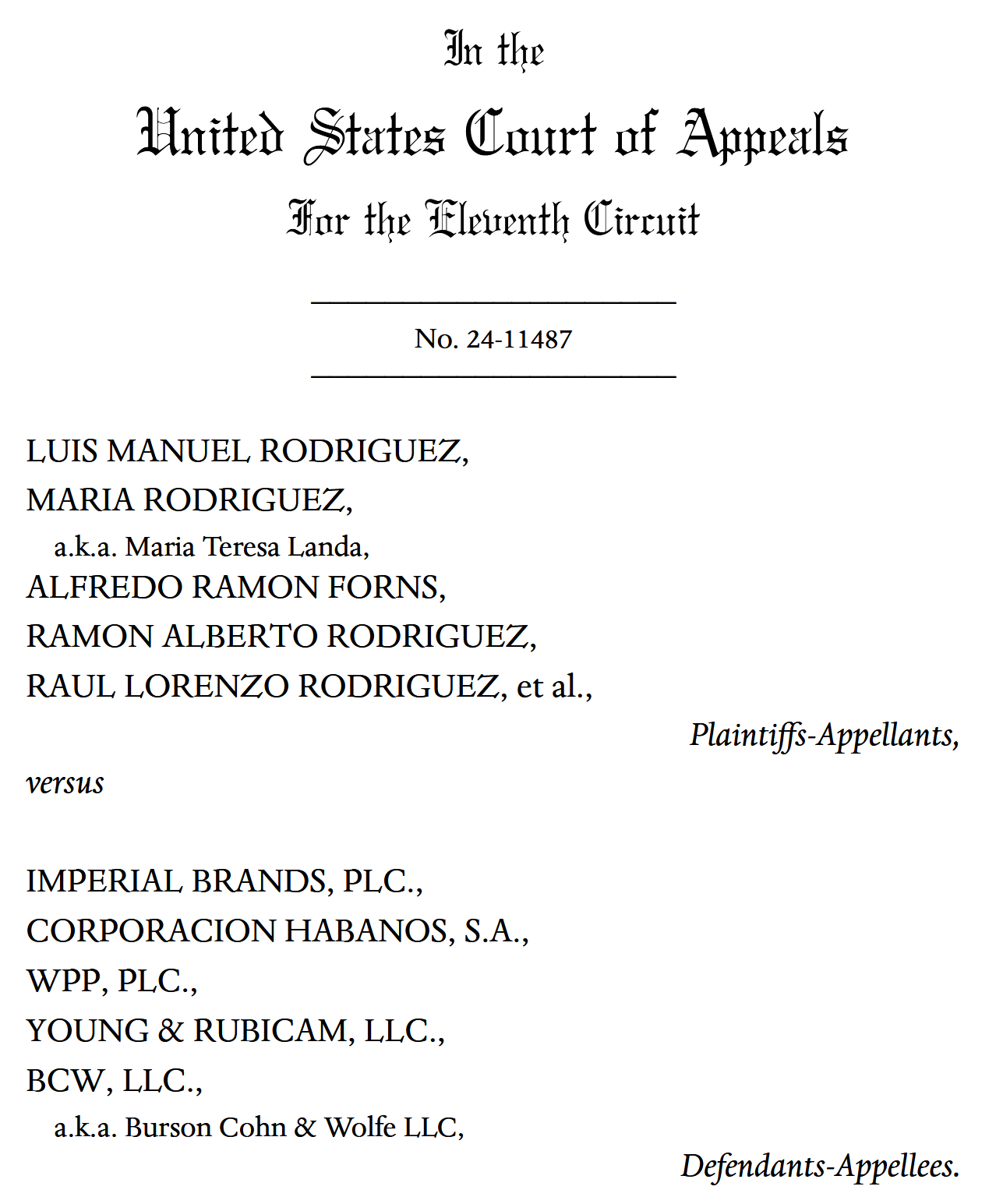
U.S. Court Of Appeals References U.S. Supreme Court Decision In Dismissing Libertad Act Lawsuit Against UK Companies

Opinion of the Court 24-11487
Appeal from the United States District Court for the Southern District of Florida
D.C. Docket No. 1:20-cv-23287-DPG


Before JORDAN, NEWSOM, Circuit Judges, and HONEYWELL, District Judge. NEWSOM, Circuit Judge:

The Cuban Liberty and Democratic Solidarity Act of 1996, 22 U.S.C. §§ 6021–6091—more commonly known as the Helms-Burton Act—imposes liability on any person that “traffics” in property that was confiscated by the Cuban government on or after January 1, 1959, and to which a U.S. national has a claim. The plaintiffs in this case are seven U.S. nationals and descendants of Ramón Rodriguez Gutiérrez, who owned property confiscated by the Cuban government in 1961. The plaintiffs sued several corporations alleging that they had “traffic[ked]” in that property within the meaning of the Helms-Burton Act. The district court granted the corporations’ respective motions to dismiss for lack of personal jurisdiction. As relevant here, the plaintiffs now appeal the dismissal of their claims against two British corporations—Imperial Brands and WPP. Doing our best to apply the Supreme Court’s recent decision in Fuld v. Palestine Liberation Organization, 606 U.S. 1 (2025), we hold that the federal courts lack personal jurisdiction over WPP and Imperial, and we therefore affirm the district court’s dismissal of the plaintiffs’ complaint.

LINK TO OPINION IN PDF FORMAT

LUIS MANUEL RODRIGUEZ, MARIA TERESA RODRIGUEZ, a/k/a MARIA TERESA LANDA, ALFREDO RAMON FORNS, RAMON ALBERTO RODRIGUEZ, RAUL LORENZO RODRIGUEZ, CHRISTINA CONROY, and FRANCISCO RAMON RODRIGUEZ, Plaintiffs, v. IMPERIAL BRANDS PLC, CORPORACIÓN HABANOS, S.A., WPP PLC, YOUNG & RUBICAM LLC, and BCW LLC, a/k/a BURSON COHN & WOLFE LLC [1:20-cv-23287; Southern Florida District].

Berenthal & Associates (plaintiff)
Rodriguez Tramont & Nunez (plaintiff)
Nelson Mullins (defendant)
Allen & Overy (defendant)
Wilmer Cutler Pickering Hale and Dorr (defendant)
Broad & Cassel (defendant)
Akerman (defendant)
Trenam, Kemker, Scharf, Barkin, Frye, O’Neill & Mullis (defendant)
Rabinowitz, Boudin, Standard, Krinsky & Lieberman (defendant)
Strook & Strook & Lavan (defendant)

Termed: 07/23/2026
Nature of Suit: 3890 Other Statutory Actions    
Luis Rodriguez, et al v. Imperial Brands, PLC., et al    
Appeal From: Southern District of Florida    
Fee Status: Fee Paid    

Case Type Information:
1) Private Civil
2) Federal Question

Originating Court Information:
District: 113C-1 : 1:20-cv-23287-DPG

10/17/2025- Appellee's Supplemental Brief filed by Appellee Imperial Brands, PLC.. [24-11487] (ECF: Andrew Davies)
10/20/2025- Received paper copies of Appellant Supplemental brief [4 copies ] for Appellant Luis Manuel Rodriguez.
10/22/2025- Received paper copies of Appellees Supplemental Brief [4 copies] for Appellees BCW, LLC., Corporacion Habanos, S.A., Imperial Brands, PLC., WPP, PLC. and Young & Rubicam, LLC.
06/03/2026- Supplemental Authority filed by Appellants Christina Conroy, Alfredo Ramon Forns, Frank R. Rodriguez, Luis Manuel Rodriguez, Maria Rodriguez and Ramon Alberto Rodriguez. [24-11487] (ECF: Charles Auslander) 
06/05/2026- Response to Supplemental Authority (28J) filed by Appellee Imperial Brands, PLC.. [24-11487] (ECF: Andrew Davies) 
06/05/2026- Response to Supplemental Authority (28J) filed by Appellees BCW, LLC., WPP, PLC. and Young & Rubicam, LLC.. [24-11487] (ECF: Mark Fleming)
06/25/2026- Supplemental Authority filed by Appellants Christina Conroy, Alfredo Ramon Forns, Frank R. Rodriguez, Luis Manuel Rodriguez, Maria Rodriguez and Ramon Alberto Rodriguez. [24-11487] (ECF: Charles Auslander)
06/29/2026- Response to Supplemental Authority (28J) filed by Appellee Imperial Brands, PLC.. [24-11487] (ECF: Andrew Davies) 
07/23/2026- Opinion issued by court as to Appellants Christina Conroy, Alfredo Ramon Forns, Frank R. Rodriguez, Luis Manuel Rodriguez, Maria Rodriguez, Ramon Alberto Rodriguez and Raul Rodriguez. Decision: Affirmed. Opinion type: Published. Opinion method: Signed. The opinion is also available through the Court's Opinions page at this link http://www.ca11.uscourts.gov/opinions. 
07/23/2026- Judgment entered as to Appellants Christina Conroy, Alfredo Ramon Forns, Frank R. Rodriguez, Luis Manuel Rodriguez, Maria Rodriguez, Ramon Alberto Rodriguez and Raul Rodriguez.

Singapore-based PSA International Has Operated Container Terminal At Port Of Mariel In Cuba Since 2011, But Scrubs Cuba From Its Web Site

Singapore-based PSA International Has Operated Container Terminal At Port Of Mariel In Cuba Since 2011, But Scrubs Cuba From Its Web Site  

The Port of Mariel container terminal opened on 27 January 2014 within the Republic of Cuba government-operated Zona Especial de Desarollo Mariel (Mariel Special Economic Zone- ZEDM).  

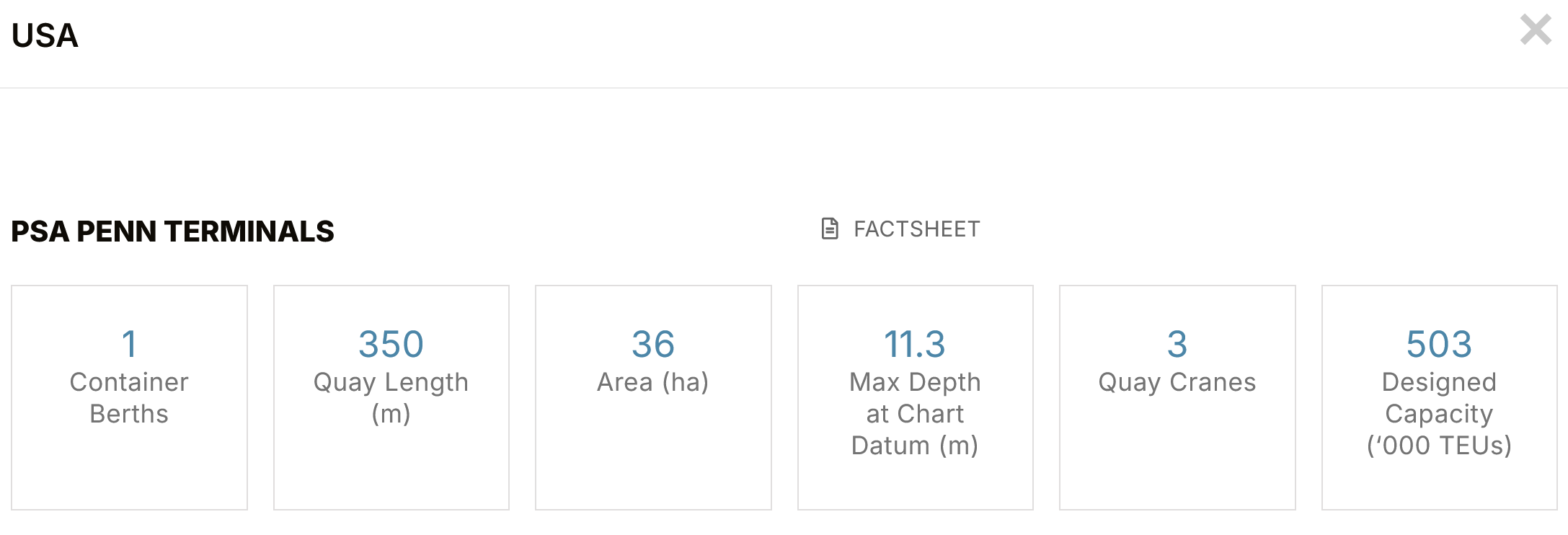
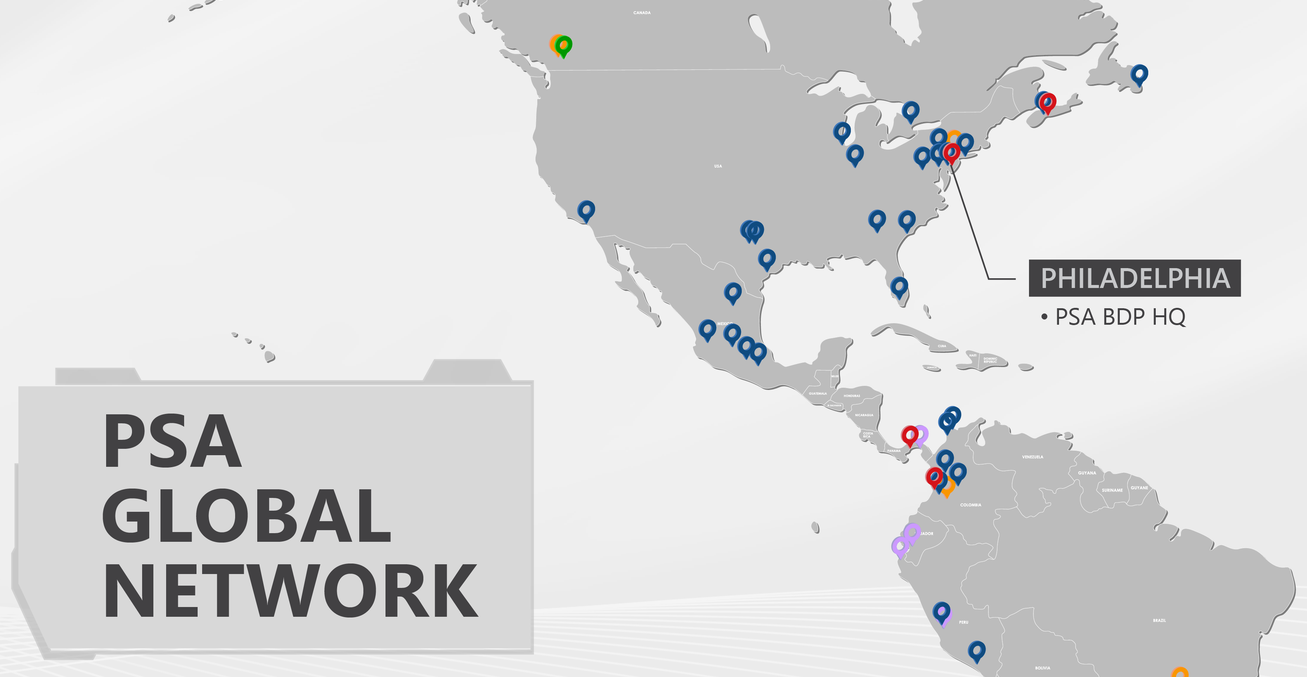
Singapore, Singapore-based PSA International Pte. Ltd. (PSA) (2025 revenue US$8.6 billion)- [formerly Port of Singapore Authority] is “a leading global port operator and trusted partner to cargo stakeholders.  Currently, PSA’s portfolio comprises over 70 deepsea, rail and inland terminals, across more than 180 locations in 45 countries- including two flagship port operations in Singapore and Belgium.  Drawing on the deep expertise and experience from a diverse global team, PSA collaborates with its customers and partners to develop world-class port ecosystems and deliver innovative supply chain solutions to accelerate the shift towards sustainable trade.”  PSA has a presence in the United States. 

United States Department of the Treasury
Washington DC
23 July 2026

The Office of Foreign Assets Control (OFAC) of the United States Department of the Treasury has updated the Specially Designated Nationals (SDN) and Blocked Persons List: 

“TERMINAL DE CONTENEDORES DE MARIEL S.A. (a.k.a. MARIEL CONTAINER TERMINAL S.A.; a.k.a. TCM S.A.), Vista del Mar, Cuba; Organization Established Date 01 Jun 2011; Organization Type: Cargo handling; Entity Code 60597 (Cuba) [CUBA-EO14404] (Linked To: GRUPO DE ADMINISTRACION EMPRESARIAL S.A.).”  

Links To Related Analyses 

The Trump-Pence Administration (2017-2021) on 2 May 2019 made operational Title III of the Cuban Liberty and Democratic Solidarity Act of 1996 (known as “Libertad Act”).  

  • Title III authorizes lawsuits in United States District Courts against companies and individuals who are using a certified claim or non-certified claim where the owner of the certified claim or non-certified claim has not received compensation from the Republic of Cuba or from a third-party who is using (“trafficking”) the asset.   

ODETTE BLANCO DE FERNANDEZ et al VERSUS A.P. MOLLER-MAERSK A/S (a/k/a A.P. MOLLER-MAERSK GROUP); MAERSK A/S (a/k/a MAERSK LINE A/S); MAERSK, INC.; and MAERSK AGENCY U.S.A., INC [2:21-cv-00339 Eastern District of Louisiana]  LINK To Complaint (2/17/2121)

Excerpt:

“As discussed more fully below, Defendant Maersk’s website touts that, since 2016, Maersk has been providing direct shipping services from Europe and Asia to Cuba, and specifically to the Port of Mariel, Cuba:  In 2016, Maersk’s operation in Cuba broke all records, seeing its vessels carry 23,094 FFE to the ports in Mariel and Santiago.  Volumes came from Asia primarily but also, increasingly, from Europe via a direct service which was launched the same year. 

Defendant Maersk, together with its subsidiaries and agents, also has provided direct service from the Port of New Orleans to the Port of Mariel.  As discussed more fully below, infra ¶¶ 108 - 110, according to the International Maritime Organization (“IMO”), a specialized agency of the United Nations responsible for regulating shipping, the ship A/S PETRA (IMO # 9283708), while operated by Defendant Maersk A/S, sailed from the Port of New Orleans on four occasions in 2020 and called at the Port of Mariel, Cuba on January 20, 2020, January 31, 2020, May 20, 2020, and August 12, 2020, respectively.  At each of the aforementioned callings at the Port of Mariel, the A/S PETRA engaged in commercial activities with the Port of Mariel and the Zona Especial de Desarollo Mariel (“ZEDM”) (a/k/a Mariel Special Economic Zone).”

NOTE: Since 2019, there have been Libertad Act Title III lawsuits filed against shipping companies for their use of the Port of Mariel.  Most have been resolved in out-of-court settlements.  In 2016, some shipping companies have suspended their presence in the Republic of Cuba marketplace. 

HAVANA, 6 July 2011 (Reuters)- “Singaporean port operator PSA International Pte. Ltd. has quietly signed on to manage a container terminal under construction at the Cuban port of Mariel, sources close to the project said this week.  The terminal is part of a larger scheme to develop Mariel Bay, 28 miles (45 km) west of Havana, into the Caribbean country's most important cargo hub and center of light manufacture. 

PSA International won a bid to manage the terminal last year and had been in negotiations ever since with Mariel developer Zona de Desarrollo Integral de Mariel, a subsidiary of the military owned Almacenes Universal S.A.  The sources said the agreement was to manage the port and did not involve any investment by the company.  Mariel Bay is one of Cuba's finest along the northern coast and the port is destined to replace Havana, the country's main port, over the coming years. 

No further details of the deal were available, but the sources said PSA International would now actively participate in planning the terminal, which is scheduled to open by 2014 when larger vessels will begin traversing the Panama Canal, now being expanded.  The Singapore company operates numerous ports around the world, including in Panama and Argentina. 

The Mariel terminal, which will have an initial 700 meters (765 yards) of berth, is ideally situated to handle U.S. cargo if the American trade embargo is eventually lifted, and will receive U.S. food exports already flowing into the country under a 2000 amendment to sanctions.  Plans through 2022 call for Mariel to house logistics facilities for offshore oil exploration and development, the container terminal, general cargo and bulk foods facilities and a Special Economic Development Zone for light manufacturing and storage, the sources said. 

Brazil has pledged $800 million so far to finance construction of infrastructure and port facilities already under way in conjunction with the Odebrecht group, Brazil's largest construction and engineering firm. 

Brazilian Presidential Adviser Marco Aurelio Garcia toured Mariel and met with Cuban President Raul Castro earlier this year, followed in June by former Brazilian President Luiz Inacio Lula da Silva.  Garcia said $400 million in financing had already been disbursed and another $200 million of the promised $800 million approved. He said an additional loan was under consideration. 

Mariel Port will handle vessels with up to a 15 meter (49 feet) draft, compared with 11 meters (36 feet) at Havana Bay due to a tunnel under the channel leading into the Cuban capital's port.  The terminal will have an annual capacity of 850,000 to 1 million containers, compared with Havana's 350,000.  Plans call for shutting down all port operations and an oil refinery at Havana Bay, which, with its excellent real estate overlooking the water, is to become a recreation area.”

LINK TO COMPLETE ANALYSIS IN PDF FORMAT

OFAC Adds To Cuba SDN List And Issues Three General Licenses, Including One To Assist With "Wind Down" Foreign Company Connectivity

United States Department of the Treasury
Washington DC
23 July 2026


The Department of the Treasury's Office of Foreign Assets Control (OFAC) is issuing Cuba General License 2, "Authorizing the Wind Down of Transactions Involving CEIBA Investments Limited;" Cuba General License 3, "Authorizing Certain Transactions Related to Debt or Equity of, or Derivative Contracts Involving, CEIBA Investments Limited;" and Cuba General License 4, "Authorizing Transactions for Third-Country Official Missions in Cuba."  Additionally, OFAC has updated the Specially Designated Nationals and Blocked Persons List.

CEIBA INVESTMENTS LIMITED, Les Echelons Court, Les Echelons, St. Peter Port, Channel Islands GY1 1AR, Guernsey; Organization Established Date 10 Oct 1995; Organization Type: Trusts, funds and similar financial entities; Legal Entity Number 213800XGY151JV5B1E88; Registration Number 30083 (Guernsey) [CUBA-EO14404]. 

CENTRO DE INVESTIGACIONES DEL PETROLEO S.A. (a.k.a. "CEINPET"), Cerro, Cuba; Organization Established Date 02 Jun 2020; Target Type State-Owned Enterprise; Entity Code 14774 (Cuba) [CUBA-EO14404]. 

COMERCIALIZADORA DE SERVICIOS MEDICOS CUBANOS SA (a.k.a. "CSMC"; a.k.a. "CUBAN MEDICAL SERVICES MARKETING COMPANY"; a.k.a. "SERVICIOS MEDICOS CUBANOS"; a.k.a. "SMC"), Havana, Cuba; Organization Established Date 11 Oct 2011; Tax ID No. 3000186940 (Cuba) [CUBA-EO14404]. 

CORAL MARITIMA S.A., Havana, Cuba; Organization Established Date 2019; Organization Type: Sea and coastal freight water transport; Entity Code 60301 (Cuba) [CUBA-EO14404] (Linked To: GRUPO EMPRESARIAL DE TRANSPORTE MARITIMO PORTUARIO). 

EINARBO S.A., Havana, Cuba; Organization Established Date 19 Feb 2020; Organization Type: Wholesale of solid, liquid and gaseous fuels and related products; Entity Code 60636 (Cuba) [CUBA-EO14404]. 

EMPRESA DE ENERGIA S.A. (a.k.a. "ENERSA"), Havana, Cuba; Organization Established Date 01 Jan 2012; Organization Type: Wholesale of solid, liquid and gaseous fuels and related products; Entity Code 60600 (Cuba) [CUBA-EO14404]. 

GRETZA SANCHEZ PADRON is designated pursuant to Sec. 2(a)(i)(E) for being or having been a leader, official, senior executive officer, or member of the board of directors of UCCM, a person proposed for concurrent designation pursuant to E.O. 14404.  GRETZA SANCHEZ PADRON is the director of UCCM.

ORBIT S.A., Havana, Cuba; Organization Established Date 02 Mar 2020; Organization Type: Financial and Insurance Activities; Entity Code 60642 (Cuba) [CUBA-EO14404]. 

TERMINAL DE CONTENEDORES DE MARIEL S.A. (a.k.a. MARIEL CONTAINER TERMINAL S.A.; a.k.a. TCM S.A.), Vista del Mar, Cuba; Organization Established Date 01 Jun 2011; Organization Type: Cargo handling; Entity Code 60597 (Cuba) [CUBA-EO14404] (Linked To: GRUPO DE ADMINISTRACION EMPRESARIAL S.A.). 

UNIDAD CENTRAL DE COOPERACION MEDICA (a.k.a. "CENTRAL UNIT FOR MEDICAL COOPERATION"; a.k.a. "UCCM"), Marianao, Cuba; Organization Established Date 30 Sep 1984; Entity Code 9809 (Cuba) [CUBA-EO14404].

PORTAL MIRANDA, Jose Angel, Havana, Cuba; DOB 10 Jan 1967; POB Cuba; nationality Cuba; Gender Male; National ID No. 67011009482 (Cuba) (individual) [CUBA-EO14404]. 

GENERAL LICENSE NO. 2 Authorizing the Wind Down of Transactions Involving CEIBA Investments Limited (a) Except as provided in paragraph (b) of this general license, all transactions prohibited by Executive Order (E.O.) 14404 that are ordinarily incident and necessary to the wind down of any transaction involving CEIBA Investments Limited, or any entity in which CEIBA Investments Limited owns, directly or indirectly, a 50 percent or greater interest, are authorized through 12:01 a.m. eastern daylight time, August 22, 2026, provided that any payment to a blocked person is made into a blocked interest-bearing account located in the United States. (b) This general license does not authorize any transactions otherwise prohibited by E.O. 14404, including transactions involving any person blocked pursuant to E.O. 14404 other than the blocked persons described in paragraph (a) of this general license, unless separately authorized.

GENERAL LICENSE NO. 3 Authorizing Certain Transactions Related to Debt or Equity of, or Derivative Contracts Involving, CEIBA Investments Limited (a) Except as provided in paragraphs (d) and (e) of this general license, all transactions prohibited by Executive Order (E.O.) 14404 that are ordinarily incident and necessary to the divestment or transfer, or the facilitation of the divestment or transfer, of debt or equity issued or guaranteed by CEIBA Investments Limited, or any entity in which CEIBA Investments Limited owns, directly or indirectly, a 50 percent or greater interest, (“Covered Debt or Equity”), to a non-U.S. person are authorized through 12:01 a.m. eastern daylight time, August 22, 2026. (b) Except as provided in paragraph (e) of this general license, all transactions prohibited by E.O. 14404 that are ordinarily incident and necessary to facilitating, clearing, and settling trades of Covered Debt or Equity that were placed prior to 4:00 p.m. eastern daylight time, July 23, 2026, are authorized through 12:01 a.m. eastern daylight time, August 22, 2026. (c) Except as provided in paragraph (e) of this general license, all transactions prohibited by E.O. 14404 that are ordinarily incident and necessary to the wind down of derivative contracts entered into prior to 4:00 p.m. eastern daylight time, July 23, 2026 that (i) include a blocked person described in paragraph (a) of this general license as a counterparty or (ii) are linked to Covered Debt or Equity are authorized through 12:01 a.m. eastern daylight time, August 22, 2026, provided that any payments to a blocked person are made into a blocked interest-bearing account located in the United States. (d) Paragraph (a) of this general license does not authorize: (1) U.S. persons to sell, or to facilitate the sale of, Covered Debt or Equity to, directly or indirectly, any person whose property and interests in property are blocked; or (2) U.S. persons to purchase or invest in, or to facilitate the purchase of or investment in, directly or indirectly, Covered Debt or Equity, other than purchases of or investments in Covered Debt or Equity ordinarily incident and necessary to the divestment or transfer, or the facilitation of the divestment or transfer, of Covered Debt or Equity as described in paragraph (a) of this general license. (e) This general license does not authorize any transactions otherwise prohibited by E.O. 14404, including transactions involving any person blocked pursuant to E.O. 14404 other than the blocked persons described in paragraph (a) of this general license, unless separately authorized.

GENERAL LICENSE NO. 4 Authorizing Transactions for Third-Country Diplomatic and Consular Missions in Cuba (a) Except as provided in paragraph (c) of this general license, all transactions involving persons blocked pursuant to Executive Order (E.O.) 14404 that are ordinarily incident and necessary to the conduct of the official business of third-country diplomatic or consular missions located in Cuba are authorized. (b) Except as provided in paragraph (c) of this general license, all transactions involving persons blocked pursuant to E.O. 14404 that are ordinarily incident and necessary to the processing of funds transfers and maintenance of accounts for the personal expenditures of the employees, grantees, and contractors, or persons who share a common dwelling as a family member of such employees, grantees, and contractors, of third-country diplomatic or consular missions are authorized. (c) This general license does not authorize: (1) Financial transfers to any person whose property and interests in property are blocked pursuant to E.O. 14404, other than for the purpose of effecting the payment of taxes, fees, or import duties, or the purchase or receipt of permits, licenses, or public utility services for transactions authorized in paragraph (a); or (2) The unblocking of any property or interests in property blocked pursuant to E.O. 14404.

Trump-Vance Administration Adds Nine Entities And Two Individuals To SDN List, Including Port Of Mariel Where U.S. Exports Are Delivered

United States Department of State
Washington DC
23 July 2026


The Communist Cuban regime continues to pose a deep multifaceted threat to U.S. national security and hemispheric stability, as the Department chronicled just this week in a report detailing seven decades of the regime’s subversion and attempts to debase and disrupt the American polity.

Today, pursuant to President Trump’s Executive Order (E.O.) 14404, I am designating nine entities and two individuals whose activities perpetuate the regime’s control over Cuba’s energy, financial, and exploitative overseas medical labor sectors.  Those sanctioned today have also tried to evade our prior sanctions on the Cuban regime and its enablers.

These designations include four entities associated with sanctions evasion efforts linked to U.S.-designated Grupo De Administración Empresarial S.A. (GAESA), three entities operating in Cuba’s energy sector, and two entities and two individuals responsible for the exploitation and forced labor of Cuban medical workers through the regime’s overseas medical brigades.

The Department’s actions are being taken pursuant to E.O. 14404, which authorizes sweeping sanctions on Cuba, including against persons who support the Cuban regime’s security apparatus and those responsible for repression in Cuba and other threats to U.S. national security.  These actions also further both E.O. 14380, “Addressing Threats to the United States by the Government of Cuba” and the National Security Presidential Memorandum 5 (NSPM-5), which directs the Executive Branch to improve human rights, encourage the rule of law, foster free markets and free enterprise, and promote democracy in Cuba.  For more information on today’s action, please see the Department of State’s Fact Sheet.

Today, the Department of State is designating nine entities and two individuals to continue to limit the Cuban regime’s access to illicit funds, including those gained through the exploitation of medical workers and sanctions evasion efforts.

All targets sanctioned today have been designated pursuant to Executive Order (E.O.) 14404, which authorizes sanctions on persons determined to meet specified criteria related to repression in Cuba and other threats to U.S. national security and foreign policy.  

Sustaining the Regime’s Energy Sector

Pursuant to Section 2(a)(i)(A) of E.O. 14404, for operating in or having operated in the energy sector of the Cuban economy, the Department designated:

•    CENTRO DE INVESTIGACIONES DEL PETROLEO S.A. (CEINPET), which is the research and development arm of the already-designated UNION CUBA-PETROLEO (CUPET) and is engaged in petroleum exploration and future energy research.
•    EMPRESA DE ENERGIA S.A. (ENERSA), which is an importer of gas, liquefied gas, and lubricants.
•    EINARBO S.A., which is an importer of gas, liquefied gas, and lubricants sourced from Mexico and India.

Countering Sanctions Evasion

The Cuban military conglomerate Grupo De Administración Empresarial S.A. (GAESA) continues attempting to shield its assets and revenue streams from U.S. sanctions through corporate restructuring and third-party intermediaries.  Accordingly, the Department designated:

•    TERMINAL DE CONTENEDORES DE MARIEL S.A., pursuant to Sec. 2(a)(i)(B) of E.O. 14404 for being owned or controlled by, or having acted or purported to act for or on behalf of, directly or indirectly, the already-designated GAESA.  TERMINAL DE CONTENEDORES DE MARIEL S.A. is the principal container terminal in Cuba located in the port of Mariel and transferred the Port of Mariel to Coral Maritima S.A. in a mid-June transaction to evade sanctions.  
•    CORAL MARITIMA S.A., pursuant to Sec. 2(a)(i)(B) of E.O. 14404 for being owned or controlled by, or having acted or purported to act for or on behalf of, directly or indirectly, the already-designated GRUPO EMPRESARIAL DE TRANSPORTE MARITIMO PORTUARIO (GEMAR).  GAESA, through its subsidiary TERMINAL DE CONTENEDORES DE MARIEL S.A., transferred the Port of Mariel to CORAL MARITIMA S.A. in a mid-June transaction to evade sanctions. 
•    CEIBA INVESTMENTS LIMITED (CEIBA), pursuant to Sec. 2(a)(i)(A) of E.O. 14404 for operating in or having operated in the financial services sector of the Cuban economy.  CEIBA is a Guernsey-based firm invested in Cuban real estate, whose Panama subsidiary, CEIBA MTC Properties Inc., assumed full ownership of a former GAESA joint venture following GAESA’s designation.
•    ORBIT S.A., pursuant to Sec. 2(a)(i)(A) of E.O. 14404 for operating in or having operated in the financial services sector of the Cuban economy.  ORBIT S.A. is a remittance processor almost certainly controlled by GAESA.

Overseas Medical Missions

As documented in the Department’s annual Trafficking in Persons Report, the Cuban regime has a policy or pattern of forced labor – a form of human trafficking – in the government’s labor export program, including its overseas medical missions.  Cuban officials exploit inherently coercive laws and economic conditions to manipulate or compel workers to join and remain in labor export programs, while confiscating between 50 and 95 percent of the wages paid by receiving countries.  Tens of thousands of medical workers across more than 50 countries are subjected to this exploitation, historically making the medical missions among Cuba’s largest sources of foreign currency.  The following entities and individuals are designated for their roles in administering, enabling, and profiting from this system:

•    COMERCIALIZADORA DE SERVICIOS MEDICOS CUBANOS S.A. (CSMC) is designated pursuant to Sec. 2(a)(i)(B)for being owned or controlled by, or having acted or purported to act for or on behalf of, directly or indirectly, the Government of Cuba.  CSMC is the state-owned exporter of international health services that manages Cuba’s medical missions, Cuba’s main source of foreign currency that generates more earnings than any other sector of the Cuban economy. 
•    JOSE ANGEL PORTAL MIRANDA is designated pursuant to Sec. 2(a)(i)(E) for being or having been a leader, official, senior executive officer, or member of the board of directors of the Government of Cuba.  JOSE ANGEL PORTAL MIRANDA is the Cuban Minister of Public Health and is responsible for overseeing entities involved in managing Cuba’s medical missions overseas. 
•    UNIDAD CENTRAL DE COOPERACION MEDICA (UCCM) is designated pursuant to Sec. 2(a)(i)(B) for being owned or controlled by, or having acted or purported to act for or on behalf of, directly or indirectly, the Government of Cuba.  UCCM is an entity within the Cuban Ministry of Public Health that is responsible for recruiting Cuban medical professionals to participate in overseas assignments. 
•    GRETZA SANCHEZ PADRON is designated pursuant to Sec. 2(a)(i)(E) for being or having been a leader, official, senior executive officer, or member of the board of directors of UCCM, a person proposed for concurrent designation pursuant to E.O. 14404.  GRETZA SANCHEZ PADRON is the director of UCCM.

Sanctions Implications

As a result of today’s sanctions actions, and in accordance with Executive Order (E.O.) 14404 of May 1, 2026, “Imposing Sanctions on Those Responsible for Repression in Cuba and for Threats to U.S. National Security and Foreign Policy,” all property and interests in property of the designated persons described above that are in the United States or in possession or control of U.S. persons are blocked and must be reported to the Department of the Treasury’s Office of Foreign Assets Control (OFAC).  Additionally, all entities that are owned individually or in the aggregate, 50 percent or more by one or more blocked persons are also blocked.

All transactions and dealings by U.S. persons or persons within (or transiting) the United States that involve any property or interests in property of designated or otherwise blocked persons are prohibited unless authorized by a general or specific license issued by OFAC or exempt.  These prohibitions include the making of any contribution or provision of funds, goods, or services by, to, or for the benefit of any blocked person and the receipt of any contribution or provision of funds, goods, or services from any such person.  Foreign persons that engage in transactions with persons designated pursuant to E.O. 14404—or that operate in the energy, defense and related materiel, metals and mining, financial services, or security sector of the Cuban economy, as identified in E.O. 14404— are themselves at risk of sanctions.  Non-U.S. persons, including foreign financial institutions, should proceed with caution in any dealings with a party sanctioned under this authority.  Actions to return assets to a sanctioned party or transfer them to another jurisdiction for potential use by the target expose non-U.S. persons to significant sanctions risk.  All property and interests in property of persons that are blocked pursuant to the Cuban Assets Control Regulations (CACR) continue to be blocked.  The CACR prohibits persons subject to U.S. jurisdiction from dealing in property in which Cuba or a Cuban national has an interest, unless authorized or exempt.

The power and integrity of U.S. government sanctions derive not only from the U.S. government’s ability to designate and add persons to the Specially Designated Nationals and Blocked Persons (SDN) List, but also from its willingness to remove persons from the SDN List consistent with the law.  The ultimate goal of sanctions is not to punish, but to bring about a positive change in behavior.  

Petitions for removal from the SDN List may be routed through OFAC’s Reconsiderations Portal.  Petitioners may also refer to the Department of State’s Delisting Guidance page.

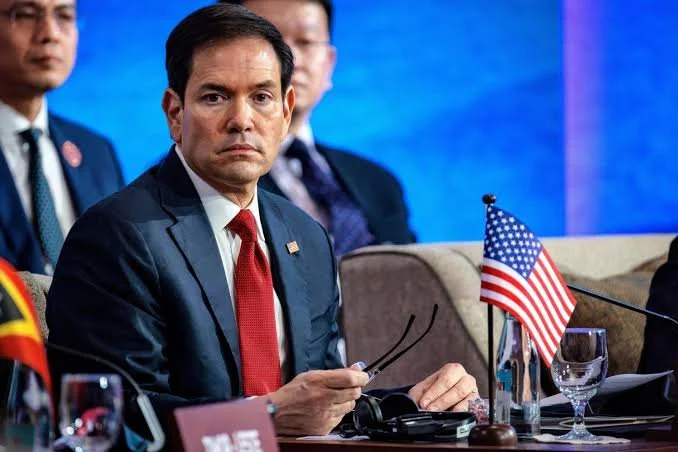
Secretary Of State Marco Rubio About Cuba: "global affairs are not like- we’re not a miniseries, like, you get in three episodes and it’s over." It's Not A Moment, It's A Series Of Moments.

United States Department of State
Washington DC
22 July 2026

Manila, Philippines

QUESTION:  On Cuba, is the goal still creating regime change through economic collapse, or is the military option still on the table?

SECRETARY RUBIO:  I think the goal is to have a Cuba where the people of Cuba can experience prosperity, safety, security, and a better life moving forward, the way Cubans are able to do all over the world when they leave Cuba.  And we’re prepared to be very realistic about how you do that, and patient about how – you got a serious process that leads to that.  And we’ve engaged them from time to time in that regard, and they know where we stand on that issue, and hopefully that’s where it arrives.

The fundamental Cuba – the fundamental problem Cuba has right now is two things.  Number one is their economic system doesn’t work because it – that economic system doesn’t exist anywhere else in the world.  It’s completely backwards; it just doesn’t work.  And that’s why people have to leave that country.  And number two, it’s they’re no longer getting free oil from Venezuela.  That’s their biggest problem.  They’re not getting free oil from Venezuela – which, by the way, they weren’t using for their power grid.  They were taking about 60 percent of the free oil they were getting from Venezuela and reselling it for cash.  So the biggest problem Cuba has is that the regime is a disaster, their economic model doesn’t work, and the people who run the country don’t know what the hell they’re doing.  And all they’re most interested in is holding onto power.  They are afraid of economic prosperity because they are afraid that economic prosperity and economic liberties will – they will lose control over people.  And that’s always been the struggle they’ve faced in recent times.

But again, look, we’ve been – just today we began shipping over $100 million of humanitarian assistance to Cuba which will be distributed by nongovernmental entities on the ground.  So it – we’ll – we’re willing to engage with them; we’ve engaged with them in the past.  We’ll keep talking to them about the kind of changes they can make.  But this is 90 miles from our shores.  This is a government that has spent – a regime that has spent the better part of 30, 40, 50 years destabilizing the region in the movements that they’ve supported, and they’ve lost, I don’t know, 10 to 15 percent of their population since 2021 because of how mismanaged the country is.  We want it to have a better future, and we’re prepared to do things that help them get there.  But they have to decide they want to do that.  The people that are in charge there right now just don’t want to do it. 

QUESTION:  Several people in your administration were talking about how they expected the – just to follow up – to see regime change or to see big changes in Cuba – economic, political – by the end of this year.  That’s what a lot of them were saying consistently.

SECRETARY RUBIO:  Who’s “a lot of them?”  Who was saying that?

QUESTION:  People within the administration who work on this issue.  They weren’t —

SECRETARY RUBIO:  Like who?  Because I work on this issue more than anybody else, and I never said that.

QUESTION:  They weren’t predicting it, but, like, there was an expectation that Cuba was so weak that it was going to happen.

SECRETARY RUBIO:  No, look, guys, I mean, you – look, this – global affairs are not like – we’re not a miniseries, like, you get in three episodes and it’s over.  I mean, global affairs are difficult.  You’re talking about a system that’s been in place since 1959.  You talk about a country that’s suffered tremendously because of poor leadership and a bad economic model.  You’re talking about a regime that’s survived all these years because they had a foreign sponsor, be it the Soviet Union or Hugo Chávez.  They don’t have that anymore.  So it’s – these are complex things that take time, and obviously we’re prepared to do what we can do to effectuate a positive change in Cuba because it directly impacts our national security.  Cuba matters to us because it’s 90 miles from our shores, and it has a direct impact on our national security – be it the things they’ve been involved in in the past, the countries they’ve aligned with in the past and currently, or the threat of mass migration, which is always a risk that you run when countries are as deeply destabilized as Cuba.  It’s a failed state.  It’s a failed state.  But I’ve never laid out any timeline as to what change would look like or when it would happen.  I wish it was tomorrow because they deserve it; the people of Cuba deserve a better future.

Will (Should) EU Sanction Chairman And CEO Of Spain-Based Melia Hotels For Acquiescing To OFAC? European Version of TACO? Discovery Process Could Make A Lawsuit Challenging For Cuba  

Will (Should) EU Sanction Chairman And CEO Of Spain-Based Melia Hotels For Acquiescing To OFAC? 

EU Tough Words Become EACO Version Of TACO 

Canada Has CACO Version Of TACO 

A Pandemic Of ACO Because Cuba Does Not Make Itself Worth The Effort 

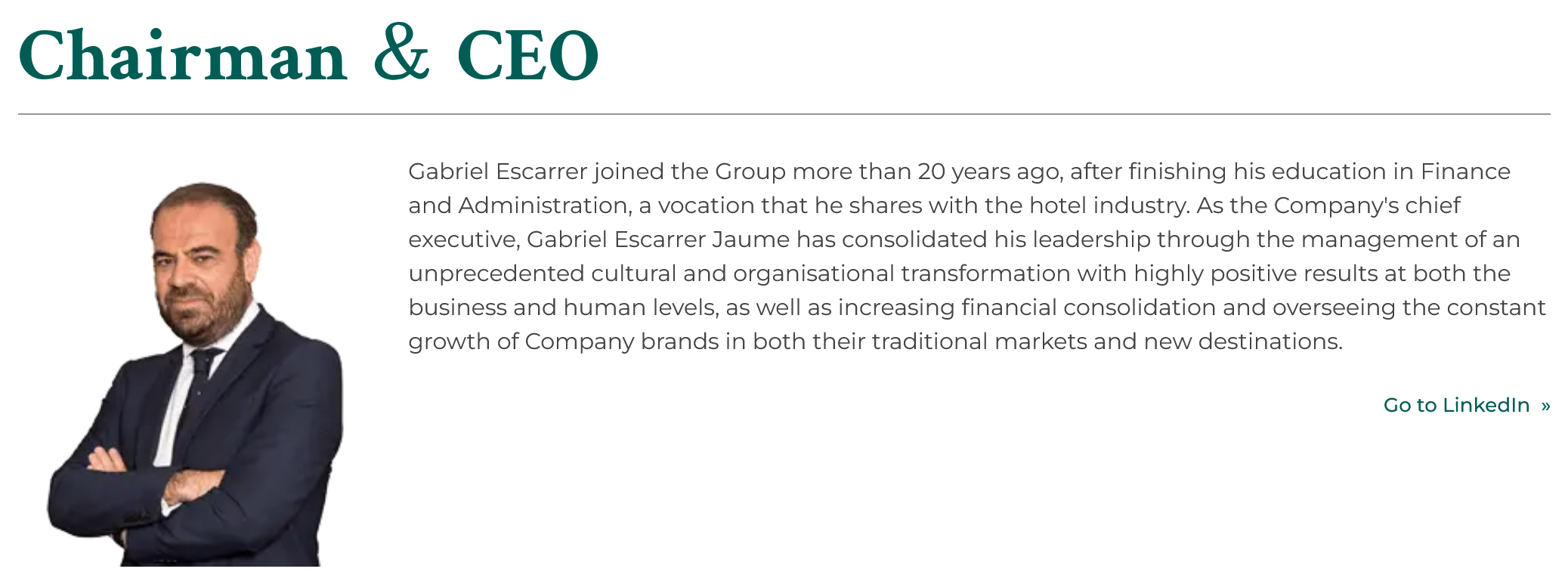
Gabriel Escarrer Jaume, Chairman and Chief Executive Officer of Palma de Majorca, Spain-based Melia Hotels International (2025 revenue approximately US$2.4 billion): 

  • I honestly don't know what's going to happen.  We are adhering to the guidelines provided by the U.S. State Department.”    

In response to decisions by the Trump-Vance Administration (2025-2029), Melia Hotels International will cease operations in the Republic of Cuba due to “notable operational, legal and economic-financial difficulties.” 

On 3 June 2026, Melia Hotels International reported an initial decision to terminate operations at some properties in the Republic of Cuba due to “unforeseen circumstances beyond management's control.” 

  • This week, Melia Hotels International reported to the Madrid, Spain-based Comision Nacional Del Mercado De Valores (CNMV): “The company informs that its Portuguese subsidiary, Ilha Bela, has decided to cease, with effect from July 24, 2026, the provision of its hotel management and marketing services in relation to all its establishments in Cuba.  This decision also extends to the use of licensed brands, inbound tourism services and the local supply chain associated with the supply of the aforementioned establishments, whose operations will also be interrupted.”  

Executive Order 14404 on 1 May 2026 designated Revolutionary Armed Forces of the Republic of Cuba (FAR)-controlled Grupo de Administración Empresarial S.A. (GAESA) as a Specially Designated National (SDN) subjecting any entity engaging with GAESA to sanctions implemented by the Office of Foreign Assets Control (OFAC) of the United States Department of the Treasury.   

The Diaz-Canel-Valdes Mesa Administration (2019- ) indicated it may commence legal proceedings for breach of contract against Melia Hotels International which would then be expected to use force majeure as a defence would may (should) result in legal action by the European Union against Melia Hotels International.  If there is litigation, which will likely first be subject to arbitration, the key metric will be through the process of discovery where neither Melia Hotels International nor the government of the Republic of Cuba may want their internal communications in the public domain. 

Melia Hotels International is a publicly-listed company.  As such, any decision by management to forgo seeking repayment of all monies owed to the company by the government of the Republic of Cuba and Republic of Cuba government-operated entities would result in lawsuits from shareholders.

Since 2019, Dr. Ursula von der Leyen, President (2019-2029) of the twenty-seven-country member Brussels, Belgium-based European Commission (EC), and Antonio Costa, President (2024-2029) of the Brussels, Belgium-based European Council (EC), have done nothing to counter decisions implemented by Donald Trump, President of the United States (2017-2021 and 2025-2029). 

  • EU: Austria, Belgium, Bulgaria, Croatia, Cyprus, Czech Republic, Denmark, Estonia, Finland, France, Germany, Greece, Hungary, Ireland, Italy, Latvia, Lithuania, Luxembourg, Malta, Netherlands, Poland, Portugal, Romania, Slovakia, Slovenia, Spain, Sweden.  

In 2019, the Trump-Pence Administration (2017-2021) made operational Title III and further implemented Title IV of the Cuban Liberty and Democratic Solidarity Act of 1996 (known as “Libertad Act”).  To date forty-six lawsuits have been filed (sixteen by certified claimants & thirty by non-certified claimants).  An increasing number of European Union-based companies have since settled Title III lawsuits.  

  • Title III authorizes lawsuits in United States District Courts against companies and individuals who are using a certified claim or non-certified claim where the owner of the certified claim or non-certified claim has not received compensation from the Republic of Cuba or from a third-party who is using (“trafficking”) the asset.   

  • Title IV restricts entry into the United States by individuals who have connectivity to unresolved certified claims or non-certified claims.  One Canada-based company and one Spain-based company are currently known to be subject to this provision based upon a certified claim and non-certified claim. 

In 1996, the European Union implemented a blocking statute in Council Regulation (EC) No 2271/96 administered by the European Commission. 

European Union (bold per original text): “The European Union does not recognise the extra-territorial application of laws adopted by third countries and considers such effects to be contrary to international law. 

In 1996, the United States took such measures concerning Cuba, Iran and Libya.  In response, the EU adopted the blocking statute.  It protects EU operators engaged in lawful international trade and/or movement of capital, as well as related commercial activities, against the effects of the extra-territorial legislation specified in its Annex.  This annex currently consists of U.S. measures concerning Cuba and Iran. 

The blocking statute protects EU operators, regardless of their size and field of activity, by nullifying the effect in the EU of any foreign court ruling based on the foreign laws listed in its Annex; allowing EU operators to recover in court damages caused by the extra-territorial application of the specified foreign laws. 

The blocking statute prohibits compliance by EU operators with any requirement or prohibition based on the specified foreign laws.  EU operators whose economic and financial interests are affected by the extra-territorial application of those laws are obligated to inform the European Commission. 

If EU operators consider that non-compliance with a requirement or prohibition based on the specified foreign laws would seriously damage their interests or the interests of the Union, they can apply to the Commission for an authorisation to comply with those laws.  Such an authorisation may be granted by the Commission in specific and duly motivated circumstances, and as a derogation from the rule.  A template to help EU operators prepare and submit the application is available.”  LINK

Philadelphia, Pennsylvania-based Morgan Lewis: 

“While the EU and UK have blocking statutes in place, the Blocking Statute (Council Regulation (EC) No 2271/96) and the Protection of Trading Interests, respectively, these authorities are not currently drafted to prohibit compliance with the EO.  However, there remains a chance that a single person becomes designated under both the CACR and the EO, in which case there would be implications under these blocking statutes.  

It remains to be seen whether these authorities will be amended, though doing so is not nearly as quick as the US president issuing an executive order.  For example, amending the EU Blocking Statute would require reinitiating the EU legislative process, which usually starts with the European Commission proposing an amendment to the regulation itself or to its Annex, followed by adoption by the co-legislators (the European Parliament and the Council) under the ordinary legislative procedure.  

If the change is limited to updating the Annex, this could also be done by a delegated act.  This was done in 2018 when the European Commission included restrictive measures relating to Iran through a Delegated Regulation (EU) 2018/1100 of June 6, 2018, which shows that the EU can move rather quickly when it wants to capture new US measures. 

The European Union and United Kingdom are not the only jurisdictions which have implemented blocking statutes limiting compliance with US sanctions on Cuba.  Both Mexico and Canada, two material trading partners of the island, also have blocking statutes and therefore operators with touchpoints to those jurisdictions should consider that legislation.”  

EU Absurdity And Parody From An Observer 

“A “preliminary assessment and ascertainment group” will meet in early 2029 to ‘calendar’ a review of the EO 14404 matter for the following year.  Sometime in 2030 a clerk of the EU Commission will read EO 14404 into the official record. It will then be referred to the EU’s extraterritoriality division for a determination that the Order is not a forgery.  The verification timetable there is 12-18 months.  Next is its referral to the EU Parliament for tabling, probably in 2031-32, awaiting a possible hearing.  From there it goes to the Commission's translation bureau in Luxembourg for translation into all 521 EU languages and dialects, which will conclude in 2033.  Once translated, printing and binding of the Executive Order will take another two years if the EU’s official printers’ union isn’t on strike.  Commencement of review of the Order by the Commission will therefore possibly occur in late 2035, early 2036, with special consideration given to updating the EU blocking statute by adding Executive Order14404 to the statute's Annex.  Deliberations may take “up to five years.”  Sources in the Commission can confirm that the matter is viewed as one of “utmost urgency,” so they believe they can keep it within a five-year “analytic framework.”  All-in-all, we’ll have something by 2042 under the Commission's expedited consideration.” 

TACO To EACO To CACO 

The phrase “Trump always chickens out” (TACO) has been embraced and rebranded as “Europe always chickens out” (EACO) by the European Union and European Commission and individual members of the European Union, particularly Spain which has the largest number of companies impacted by Republic of Cuba-related decisions from Trump-Pence Administration and Trump-Vance Administration.  The government of Canada has joined the EACO movement with “Canada always chickens out” (CACO) in doing nothing to defend operations in the Republic of Cuba by Canada-based companies.  

Links To Related Analyses 

EU Not Updating Cuba Blocking Statute After Executive Orders By Trump Administration. Collective Weakness, Forgetfulness, Or Political Impotence? June 23, 2026 

Iberostar Of Spain Settles Cuba Libertad Title III Lawsuit. European Union Tested Limits Of U.S. Courts. May 09, 2026 

How Does CMA CGM Of France Know That European Commission (EC) Will Issue Decision For Libertad Act Lawsuits “in a much shorter period of time than with the prior applicants”?  October 03, 2021 

EC/EU May Today Find End Of “Comity” By United States Courts. After One Year Waiting, EC/EU May Have Run Out Of Time. April 15, 2021 

UK Approves Imperial Brands To Defend Itself In Libertad Act Lawsuit; Nearing A Year, Iberostar Of Spain Awaiting Answer From EU March 19, 2021

LINK TO COMPLETE ANALYSIS IN PDF FORMAT

OFAC Adds Cuba Government Entities To SDN List- More To Come.

United States Department of the Treasury
Washington DC
13 July 2026

1262. On July 13, 2026, the Department of State designated the Cuban entities Grupo Empresarial del Comercio Exterior (GECOMEX) and Grupo Empresarial de Transporte Marítimo Portuario (GEMAR) pursuant to E.O. 14404. Are non-U.S. persons, including foreign financial institutions (FFIs), exposed to sanctions risk for winding down transactions with GECOMEX or GEMAR?

The U.S. government does not intend to target non-U.S. persons, including FFIs, pursuant to E.O. 14404 for engaging in transactions ordinarily incident and necessary to the wind down of transactions involving GECOMEX, GEMAR, or any entity in which either GECOMEX or GEMAR owns, directly or indirectly, a 50 percent or greater interest, through August 12, 2026. However, non-U.S. persons, including FFIs, should proceed with caution in any dealings with a party sanctioned under this authority. Actions to return assets to GECOMEX, GEMAR, or any entity in which either GECOMEX or GEMAR owns, directly or indirectly, a 50 percent or greater interest, or transfer such assets to another jurisdiction could expose non-U.S. persons to significant sanctions risk.

Non-U.S. persons unable to wind down transactions involving GECOMEX, GEMAR, or any entity in which either GECOMEX or GEMAR owns, directly or indirectly, a 50 percent or greater interest, before August 12, 2026, are encouraged to contact the OFAC Compliance Hotline.

Persons subject to U.S. jurisdiction, including U.S. entities owned or controlled by U.S. persons, have long been prohibited pursuant to the Cuban Assets Control Regulations (CACR), 31 CFR part 515, from transacting with GECOMEX and GEMAR, absent OFAC authorization. Accordingly, persons subject to U.S. jurisdiction continue to be prohibited from engaging in transactions involving GECOMEX or GEMAR, including in connection with a non-U.S. person's wind down of activities with GECOMEX or GEMAR, unless separately authorized by OFAC. Relevant authorizations may include humanitarian-related transactions authorized under the CACR in subpart E of part 515 and under E.O. 14404 via General License (GL) 1. For additional information on GL 1, see FAQ 1253.

Released on Jul 13, 2026 

The following entities have been added to OFAC's SDN List:

ASSOCIATION OF COMBATANTS OF THE CUBAN REVOLUTION (a.k.a. ASOCIACION DE COMBATIENTES DE LA REVOLUCION CUBANA; a.k.a. "ACRC"), Havana, Cuba; Organization Established Date 07 Dec 1993; Target Type Civil Society Organization [CUBA-EO14404]. 

COREYDAN S.A., Havana, Cuba; Organization Established Date 19 Feb 2020; Organization Type: Wholesale of solid, liquid and gaseous fuels and related products; Entity Code 60637 (Cuba) [CUBA-EO14404]. 

CORPORACION ANTILLANA EXPORTADORA SA (a.k.a. ANTEX EXPORTING CORPORATION S.A.; a.k.a. ANTEX S.A.; a.k.a. ANTILLEAN EXPORTER PLC; a.k.a. CORPORACION ANTEX, S.A.; a.k.a. CORPORACION COMERCIAL ANTEX, S.A.), Havana, Cuba; Organization Established Date 01 Jan 1998; Organization Type: Management consultancy activities; Target Type State-Owned Enterprise; Entity Code 60245 (Cuba) [CUBA-EO14404] (Linked To: GRUPO DE ADMINISTRACION EMPRESARIAL S.A.). 

ENETEC S.A., Havana, Cuba; Organization Established Date 09 Dec 2019; Organization Type: Wholesale of solid, liquid and gaseous fuels and related products; Entity Code 60631 (Cuba) [CUBA-EO14404]. 

FIRST VPN SERVICE (a.k.a. 1VPNS; a.k.a. FIRSTVPN; a.k.a. "FVPNS"), Dnipro, Ukraine; Website 1vpns.com; alt. Website 1vpns.net; alt. Website 1vpns.org; alt. Website 1jabber.com; alt. Website t.me/FirstVPNService; Email Address support@1vpns.com; Digital Currency Address - XBT bc1qdnr88f4d2yqunnc4mjsguezm6g3mlwe44z5dw8; alt. Digital Currency Address - XBT bc1qr4ankqmvmrhce3ydvzse86dfx5s3zhehfr9tg9; Digital Currency Address - ETH 0x2711d73d559f62f4f855ee21f38378f528e07985; Digital Currency Address - LTC ltc1qr8ntsedq8tv0svmxqhzvdcdl5k7kntdmnhwep7; Organization Established Date Oct 2014; Organization Type: Computer programming activities; Digital Currency Address - TRX TUuaxBAWfA5nmsqNfycxYrzEvz4a5GJMGY [CYBER4]. 

GRUPO EMPRESARIAL DE TRANSPORTE MARITIMO PORTUARIO (a.k.a. "GEMAR"), Havana, Cuba; Organization Established Date 2015; Organization Type: Activities of holding companies; Target Type State-Owned Enterprise [CUBA-EO14404]. 

GRUPO EMPRESARIAL DEL COMERCIO EXTERIOR (a.k.a. GECOMEX), Havana, Cuba; Organization Established Date 04 Jun 2013; Organization Type: Wholesale and retail trade; Target Type State-Owned Enterprise [CUBA-EO14404]. 

MILICIAS DE TROPAS TERRITORIALES (a.k.a. "MTT"; a.k.a. "TERRITORIAL TROOP MILITIAS"), Cuba; Organization Established Date 20 Jan 1980; Target Type Government Entity [CUBA-EO14404]. 

MINISTRY OF TOURISM OF CUBA (a.k.a. MINISTERIO DE TURISMO DE CUBA; a.k.a. "MINTUR"), Havana, Cuba; Organization Established Date 21 Apr 1994; Target Type Government Entity [CUBA-EO14404]. 

ORGANIZACION SUPERIOR DE DIRECCION EMPRESARIAL CAUDAL S.A. (a.k.a. GRUPO CAUDAL S.A.; a.k.a. OSDE CAUDAL S.A.), Havana, Cuba; Organization Established Date 31 Mar 2000; Organization Type: Activities of holding companies; Target Type State-Owned Enterprise [CUBA-EO14404]. 

RAPID RESPONSE BRIGADES (a.k.a. BRIGADAS DE ACCION RAPIDA; a.k.a. BRIGADAS DE RESPUESTA RAPIDA; a.k.a. DESTACAMENTOS DE RESPUESTA RAPIDA), Cuba; Organization Established Date Jun 1991; Organization Type: Public order and safety activities [CUBA-EO14404].

New Cuba Sanctions: Implementing Like Drip Coffee... Each Drop Is Reason For Banks And Companies To Proactively Avoid And Disengage With Cuba- Even If Their Activities Are Not Yet Impacted By OFAC

United States Department of State
Washington DC
13 July 2026

Further Sanctions on the Cuban Regime’s Sources of Funding and Tools of Oppression
Fact Sheet


Today, the Department of State is designating ten entities to further the Trump Administration’s comprehensive push to end the Cuban regime’s malign activities, both in Cuba and across our hemisphere. These actions target interlocking pillars of that apparatus: state-owned entities that funnel revenue to the regime and paramilitary forces, armed civilian groups, and surveillance organizations that repress the Cuban people.

As the Secretary said in his July 11 statement marking the five-year anniversary of the Cuban regime’s brutal suppression of popular protests: “The United States will continue to use every tool at our disposal to both address the national security threats posed by the Cuban Communist regime, and to drive the economic and political reforms to give Cuba a better future.”

All Department of State targets sanctioned today have been designated pursuant to Executive Order (E.O.) 14404, which authorizes sanctions on persons determined to meet specified criteria related to repression in Cuba and other threats to U.S. national security and foreign policy.

Cuban Regime’s Instruments of Repression

The following entities are designated for their direct roles in carrying out, enabling, and financing the Cuban regime’s campaign of violent repression against its own people.

Milicias de Tropas Territoriales (MTT)
MILICIAS DE TROPAS TERRITORIALES (MTT) is designated pursuant to Sec. 2(a)(i)(F) of E.O. 14404 for being a political subdivision, agency, or instrumentality of the Government of Cuba. MTT is a part-time civilian paramilitary force under the command of the already designated MINISTRY OF THE REVOLUTIONARY ARMED FORCES OF CUBA (MINFAR).

Association of Combatants of the CUBAN Revolution (ACRC)
ASSOCIATION OF COMBATANTS OF THE CUBAN REVOLUTION (ACRC) is designated pursuant to Sec. 2(a)(i)(B) of E.O. 14404 for being owned or controlled by, or having acted or purported to act for or on behalf of, directly or indirectly, the Government of Cuba. ACRC is a social and paramilitary organization overseen by MINFAR that conducts surveillance on dissidents at the direction of the already designated MINISTRY OF THE INTERIOR OF CUBA.

Corporacion Antillana Exportadora (ANTEX S.A.)
CORPORACION ANTILLANA EXPORTADORA (ANTEX S.A.) is designated pursuant to Sec. 2(a)(i)(B) of E.O. 14404 for being owned or controlled by, or having acted or purported to act for or on behalf of, directly or indirectly, Cuba’s GRUPO DE ADMINISTRACION EMPRESARIAL S.A. (GAESA), a person whose property or interests in property are blocked pursuant to this order. ANTEX S.A. is a Cuban state-owned entity that manages the export of Cuban forced labor to Angola.

Rapid Response Brigades
RAPID RESPONSE BRIGADES is designated pursuant to Sec. 2(a)(i)(B) of E.O. 14404 for being owned or controlled by, or having acted or purported to act for or on behalf of, directly or indirectly, the Government of Cuba. The RAPID RESPONSE BRIGADES are armed civilian para-police groups organized and trained by the Cuban government.

Cuban Regime’s Sources of Funding
The following Cuban state-owned entities are designated for generating and channeling revenue that sustains the Cuban regime.

Enetec S.A.
ENETEC S.A. is designated pursuant to Sec. 2(a)(i)(A) of E.O. 14404 for operating or having operated in the energy sector of the Cuban economy. ENETEC S.A. is a Cuban entity engaged in the import and export of fuels and lubricants.

Coreydan S.A.
COREYDAN S.A. is designated pursuant to Sec. 2(a)(i)(A) of E.O. 14404 for operating or having operated in the energy sector of the Cuban economy. COREYDAN S.A. is a Cuban state-owned entity engaged in the import of solid, liquid, and gaseous fuels and related products.

Grupo Empresarial de Comerico Exterior (GECOMEX)
GRUPO EMPRESARIAL DE COMERCIO EXTERIOR (GECOMEX) is designated pursuant to Sec. 2(a)(i)(B) of E.O. 14404 for being owned or controlled by, or having acted or purported to act for or on behalf of, directly or indirectly, the Government of Cuba. GECOMEX is a Cuban state-owned business group that manages the country’s foreign trade, handling a significant share of imports and exports.

Organizacion Superior de Direccion Empresarial Caudal S.A. (CAUDAL)
ORGANIZACION SUPERIOR DE DIRECCION EMPRESARIAL CAUDAL S.A. (CAUDAL) is designated pursuant to Sec. 2(a)(i)(B) of E.O. 14404 for being owned or controlled by, or having acted or purported to act for or on behalf of, directly or indirectly, the Government of Cuba. CAUDAL is a Cuban state-owned entity, specializing in insurance, reinsurance, financial services, and related professional services.

Grupo Empresarial de Transporte Maritimo Portuario (GEMAR)
GRUPO EMPRESARIAL DE TRANSPORTE MARITIMO PORTUARIO (GEMAR) is designated pursuant to Sec. 2(a)(i)(B) of E.O. 14404 for being owned or controlled by, or having acted or purported to act for or on behalf of, directly or indirectly, the Government of Cuba. GEMAR is a Cuban state-owned entity with a strong presence in Cuba’s maritime sector.

Ministry of Tourism of Cuba (MINTUR)
MINISTRY OF TOURISM OF CUBA (MINTUR) is designated pursuant to Sec. 2(a)(i)(F) of E.O. 14404 for being a political subdivision, agency, or instrumentality of the Government of Cuba. MINTUR is Cuba’s ministry responsible for regulating tourism in and out of the country and constitutes the largest single player in the tourism sector outside of GAESA.

The Department’s actions are being taken pursuant to E.O. 14404, which authorizes sweeping sanctions on Cuba, including against persons who support the Cuban regime’s security apparatus and those responsible for repression in Cuba and other threats to U.S. national security. These actions also further the national emergency declared in E.O. 14380,  “Addressing Threats to the United States by the Government of Cuba” and the National Security Presidential Memorandum 5 (NSPM-5), which direct the Executive Branch to improve human rights, encourage the rule of law, foster free markets and free enterprise, and promote democracy in Cuba.

Sanctions Implications

As a result of today’s sanctions actions, and in accordance with E.O. 14404, all property and interests in property of the designated persons described above that are in the United States or in possession or control of U.S. persons are blocked and must be reported to the Department of the Treasury’s Office of Foreign Assets Control (OFAC). Additionally, all entities that are owned individually or in the aggregate, 50 percent or more by one or more blocked persons are also blocked.

All transactions and dealings by U.S. persons or persons within (or transiting) the United States that involve any property or interests in property of designated or otherwise blocked persons are prohibited unless authorized by a general or specific license issued by OFAC or exempt. These prohibitions include the making of any contribution or provision of funds, goods, or services by, to, or for the benefit of any blocked person and the receipt of any contribution or provision of funds, goods, or services from any such person. Foreign persons that engage in transactions with persons designated pursuant to E.O. 14404—or that operate in the energy, defense and related materiel, metals and mining, financial services, or security sector of the Cuban economy, as identified in E.O. 14404—are themselves at risk of sanctions. Non-U.S. persons, including foreign financial institutions, should proceed with caution in any dealings with a party sanctioned under this authority. Actions to return assets to a sanctioned party or transfer them to another jurisdiction for potential use by the target could expose non-U.S. persons to significant sanctions risk. All property and interests in property of persons that are blocked pursuant to the Cuban Assets Control Regulations (CACR) continue to be blocked. The CACR prohibits persons subject to U.S. jurisdiction from dealing in property in which Cuba or a Cuban national has an interest, unless authorized or exempt.

The power and integrity of U.S. government sanctions derive not only from the U.S. government’s ability to designate and add persons to the Specially Designated Nationals and Blocked Persons (SDN) List, but also from its willingness to remove persons from the SDN List consistent with the law. The ultimate goal of sanctions is not to punish, but to bring about a positive change in behavior. Petitions for removal from the SDN List may be routed through OFAC’s Reconsiderations Portal. Petitioners may also refer to the Department of State’s Delisting Guidance page.

Cuba: Just Because There Is No Talking Does Not Mean There Is No Communicating.  That Something Is Not Happening, Someone Is Not Listening, And Someone Is Not Responding

Diaz-Canel Versus Trump And Trump Versus Diaz-Canel 

Just Because There Is No Talking Does Not Mean There Is No Communicating.  That Something Is Not Happening, Someone Is Not Listening, And Someone Is Not Responding

Goal Is For Cuba To Wean Off The Ventilator

It’s The Private Sector, Stupid

On 3 January 2026, the Trump-Vance Administration (2025-2029) confirmed the capture and departure of Nicolas Maduro, President of the Bolivarian Republic of Venezuela (2013-2025), and Mrs. Maduro from the capital city of Caracas.

That moment triggered for some in the government of the Republic of Cuba and for some of the approximately ten million citizens of the Republic of Cuba an unanticipated and unwelcomed opportunity to address the increasingly dire instability and unsustainability throughout the political model adopted on 1 January 1959.  For others in the Republic of Cuba, that moment on 3 January 2026 was precisely the prescription long sought from the compounding pharmacy.   

The survival of that adopted political model on 1 January 1959 has always necessitated from third parties commercial, economic, and financial defibrillation, dialysis, intervention, resuscitation, and ventilation.  It has never supported itself irrespective of policies, regulations, and statutes implemented by the United States government.

During the last seven months, the Diaz-Canel-Valdes Mesa Administration (2019- ) and the government of the Republic of Cuba have approved more than 176 commercial, economic, financial, political, and societal changes to policies, regulations, and statutes. 

Fifteen years earlier, in 2011, the government of the Republic of Cuba approved 311 commercial, economic, financial, political, and societal changes to policies, regulations, and statutes. 

Thus far in 2026, there have been a higher number of announcements and approvals than implementation (regulations) of those announcements and regulations.

  • The discussions between the Cuban and US governments are showing no progress… despite all that… [we] will remain open to dialogue.”  Bruno Rodriguez, Minister of Foreign Affairs of the Republic of Cuba (2009- )

Minister Rodriguez is wrong.  Discussions and dialogue and actions thus far have been successful in fostering change- that which the government of the Republic of Cuba maintains is taken independently of external influences and that which the government of the United States maintains is taken precisely due to external influences.  

The communication process may not reflect diplomatic norms, but there is no debating that however the communication process is defined and described, there are results.  

There may be inconsistent face-to-face dialogue.  And when there is face-to-face dialogue, the result may not be what Havana wants- but is acceptable to Washington DC.  There are also inconsistent exchanges of diplomatic notes.   

The connectivity between the Palacio de la Revolución and The White House exists under non-traditional norms.  There exists Pavlovian Diagloue, Performative Dialogue, Responsive Dialogue, and Sign Language Dialogue.  There is Non-Communicative Dialogue

From the perspective of the Trump-Vance Administration, its implemented strategies targeting the Republic of Cuba are successful by any measure.  Those strategies are implemented by communicating.  And to date quite cost-effectively.   

This is achieved without the armed forces of the United States having deployed to the Republic of Cuba one boot on the ground or having fired one bullet.   

The strategies consist of writing and then publishing those writings on the Internet portals of the United States Department of State, Office of Foreign Assets Control (OFAC) of the United States Department of the Treasury, and Bureau of Industry and Security (BIS) of the United States Department of Commerce.   

Thus far, less than 10,000 words have resulted in an impressive quality and quantity of non-United States-based companies ending, lessening, or suspending their presence in the Republic of Cuba.  Governments, including those with previous connectivity with the government of the Republic of Cuba, have remained reticent to align their rhetoric with consequential support. 

The degradation of the presence in the Republic of Cuba of non-Republic of Cuba-based companies is likened to a lava flow- it may be slow, but unstoppable until it decides to stop.  The lava flow can, sometimes, be redirected- preferably towards where it will do less damage.  The government of the Republic of Cuba can both redirect and stop the lava flow if it accepts the terms: changes and compromises. 

Important for the government of the Republic of Cuba to appreciate that most of what the Trump-Vance Administration wants is aligned with what governments want who have provided support to the Republic of Cuba.  The alignment is defined by jettisoning and rejecting and replacing what does not work with what can work.    

  • There is an attempt to force upon us an economic dependency on the United States, undermining the involvement of our partners and companies which have actively contributed to the island's economic and social development for decades, some for over 30 or even 49 years.”  Oscar Perez-Oliva Fraga, Deputy Prime Minister, Minister of Foreign Trade and Foreign Investment of the Republic of Cuba (2025- ) 

Deputy Prime Minister Fraga is partially correct.  The primary goal of the Trump-Vance Administration is shared by most governments (particularly those who are owed money and whose companies are owed money).  It is shared by the United States business community (particularly those who are owed money (5,913 certified claimants), are engaged in the Republic of Cuba, would like to re-engage with the Republic of Cuba, or anticipate engagement in the Republic of Cuba).   

There must be a redesign of the systematic infrastructure throughout the 800-mile-long archipelago.  The goal is to do better and to give more.   

The government of the Republic of Cuba must seek to match-up desires during the second half of the 20th century with realities available thus far in the 21st century.  

The Trump-Vance Administration has used Microsoft Word and the Internet as deployment platforms to influence and impact the government of the Republic of Cuba.   

These are the tools it uses to communicate.  The government of the Republic of Cuba is communicating, responding, through its announcements of changes.   

  • The U.S. government has obstructed Cuba’s ability to receive fuel supplies for the past seven months… violation of international law… collective punishment… crime against humanity.”  Bruno Rodriguez, Minister of Foreign Affairs of the Republic of Cuba (2009- )

  • The U.S. measures its success against Cuba by the number of blackout hours endured by the citizens, the families lacking cooking gas, the spoilage of food due to lack of refrigeration, postponed or unperformed surgeries, the decline in infant mortality rates, and the resulting newborn deaths.”  Carlos Fernández de Cossío, Deputy Foreign Minister of the Republic of Cuba (2022- ) 

The statements by Minister Rodriguez and Deputy Minister Fernandez de Cossio have resonance with many and receive empathy and sympathy too. 

However, and this is cold, but those who matter in Washington DC and in the State of Florida do not see those current realities as dissuasive from maintaining a strategy they believe is effective and believe is working and believe will ultimately prevail.  They may be wrong.  But they will stick with it as it is highly cost-effective.   

If the strategy was not effective and not working, then, they ask, why are the Diaz-Canel-Valdes Mesa Administration and the Communist Party of the Republic of Cuba (Partido Comunista de Cuba, PCC) continuing to adopt changes to the commercial, economic, financial, political, and societal infrastructure? 

For The White House, a prosperous country is a better customer than a poor country.  If a Communist-governed country can manage its economy, as does the People’ Republic of China and Socialist Republic of Vietnam, then while not preferable, it is acceptable.   

If the Republic of Cuba had a Communist Party that could successfully manage its economy, then the bilateral dynamic would have greater elasticity.  Competent Communist- Si.  Incompetent Communist- No.  

A Republic of Cuba that is prosperous and well-managed means more export opportunities, more import opportunities, more investment opportunities, and more service opportunities for United States-based companies.  That is what is meant by the following statement:    

  • “… And speaking of Cuba, after many, many decades, it's coming our way.”  Donald Trump, President of the United States (2017-2021 and 2025-2029) 

Representatives of United States-based companies who interacted with Fidel Castro, President of the Republic of Cuba (1976-2008), and, specifically, with those within his administration, believe he and his team would never have permitted in 2025 and 2026 what has been permitted by the Diaz-Canel-Valdes Mesa Administration.  Not because President Castro would have surrendered.  Because he would have made a deal.  He would have seen change as a challenge rather than capitulation.  

In September 2002, President Castro personally hosted 923 representatives of United States-based companies during the U.S. Food & Agribusiness Exhibition held at the Palacio de Convenciones de la Habana.  For perspective, the 1961 Bay of Pigs invasion of the Republic of Cuba included approximately 1,511 participants. 

President Castro knew the Bush-Cheney Administration (2001-2009) would exploit to the negative the gathering- and it did.  

There were also constituencies within the government of the Republic of Cuba who were ferocious in their opposition to the gathering.  For most, the rationale was the negative impact upon their personal political fiefdoms. 

President Castro’s position and critically the position of his senior team was “fine, the Americans believe this event will benefit them.  We will make it benefit us.”  He looked at challenges as opportunities and opportunities as challenges.  That is not happening in 2026.

LINK TO COMPLETE ANALYSIS IN PDF FORMAT
https://humanfocus.co.uk/blog/the-four-types-of-communication-and-when-to-use-them/

Time For Trump Administration To Authorize OFAC To License U.S. Banks To Open Branches In Havana. The White House Wants Disruption And Efficiency- Branches Would Qualify. 

Time For Trump-Vance Administration To Authorize OFAC To License U.S. Banks To Open Branches In Havana 

And For Government Of Cuba To Welcome It… Quickly

If U.S. Company Completes Takeover Of Nickel & Cobalt Mining Operation In Cuba, It Will Need To Move Funds From And To Cuba

In 2025, More Than US$700 Million For Authorized Commercial Transactions Moved From The Republic Of Cuba To The United States And From The United States To The Republic Of Cuba

Might First American Bank In Illinois Be A Candidate To Open Branch In Havana?  Three Florida-Based Banks Could Be Candidates

The Trump-Vance Administration (2025-2029) has focused upon reducing and removing Republic of Cuba government-operated companies and Republic of Cuba government-operated financial institutions from their roles in the commercial, economic, and financial infrastructure of the Republic of Cuba.

In February 2026, the Office of Foreign Assets Control (OFAC) of the United States Department of the Treasury authorized United States-based companies to export fuels directly to the re-emerging private sector in the Republic of Cuba. 

In May 2022, the OFAC authorized the direct investment in and direct financing to a privately-owned company owned by a Republic of Cuba national residing in the Republic of Cuba.

The easier the mechanisms to receive payment, the more fuels (and other products) will be exported, and the more revenue will in turn flow to United States-based companies.

If the Trump-Vance Administration wants to jump-start the re-emerging private sector in the Republic of Cuba and jump-start the interest in the Republic of Cuba by the private sector in the United States, then permit financial institutions subject to United States jurisdiction to own, manage, and operate full-service branches in the city of Havana.

The authorization by the OFAC could be contingent upon the Central Bank of the Republic of Cuba issuing a license for financial institutions subject to United States jurisdiction to own, manage, and operate full-service branches in the Republic of Cuba.

  • The aggression of the U.S. against Cuba has taken on the unbelievable form of prohibiting citizens and businesses from any country from engaging in certain commercial ties with Cuba.  The stance of the governments of these citizens and businesses does not matter.  They are left unprotected under the coercive arm of the U.S.Carlos Fernandez de Cossio, Deputy Minister of Foreign Affairs of the Republic of Cuba

The Obama-Biden Administration (2009-2017) authorized United States-based financial institutions to have correspondent accounts with Republic of Cuba government-operated financial institutions.  However, Republic of Cuba government-operated financial institutions were not authorized to have correspondent accounts with United States-based financial institutions.

  • “Correspondent banking is an arrangement where one bank (the correspondent) holds deposits for and provides payment or settlement services to another bank (the respondent).  It serves as the vital plumbing for cross-border transactions and foreign currency exchanges, allowing smaller or regional institutions to offer global services without establishing international branches.”

If a financial institution subject to United States jurisdiction has a full-service branch in the Republic of Cuba, it would then establish correspondent account operations within its existing efficient, secure, and transparent Information Technology (IT) framework.

Given the recurring operational issues with Republic of Cuba government-operated financial institutions, quite likely there would be an overwhelming welcoming by the re-emerging private sector in the Republic of Cuba for a full-service branch of a financial institution subject to United States jurisdiction.  Customers would know their deposits are safe, their transactions secure, their online banking functions, and their debit cards and credit cards can access Automated Teller Machine (ATM) and online banking services.

Currently, funds authorized by the OFAC, Bureau of Industry and Security (BIS) of the United States Department of Commerce, and United States Department of State, moving from the United States to the Republic of Cuba and from the Republic of Cuba to the United States must use financial institutions located in third countries.  Meaning, for each transaction, there is an additional and unnecessary fee.

  • The total value of agricultural and food products exported from the United States to the Republic of Cuba, on a cash basis as required by the Trade Sanctions Reform and Export Enhancement Act (TSREEA) of 2000 exceeds US$8.3 billion. 

  • The total value of healthcare products exported from the United States to the Republic of Cuba using provisions of the Cuban Democracy Act (CDA) of 1992 exceeds US$39 million.

  • Since 2015, the total value of products exported from the United States to the Republic of Cuba for use by the re-emerging private sector exceeds US$470 million.  From 2025 through 2026, the value exceeds US$270 million.

  • Other payments from the United States to the Republic of Cuba include patent registrations, trademark registrations, estate settlements, and overflight fees.  Other payments from the Republic of Cuba to the United States include agricultural equipment, assembly equipment, fuels, hardware, manufacturing equipment, motor vehicles, retail products, and solar panels. 

In 2017, Deere & Company (2025 revenues approximately US$45.6 billion) established a distribution center in the Republic of Cuba, and San Juan, Puerto Rico-based RIMCO, the Republic of Cuba distributor for Irving, Texas-based Caterpillar Inc. (2025 revenues US$67.6 billion) established a distribution center.   

Dallas, Texas-based Gillon Capital, LLC is seeking to control 55% of Toronto, Canada-based Sherritt International Corporation which has cobalt, nickel, and energy operations in the Republic of Cuba.  The transaction would permit settlement of one of the largest of the 5,913 claims certified by the United States Foreign Claims Settlement Commission (USFCSC) within the United States Department of Justice (DOJ) along with additional supplies of cobalt and nickel.  CU-2619: MOA Bay Mining Company, Improved Real Property, Oriente, Republic of Cuba, US$88,349,000.00.  Link To Claim Filing In PDF Format 

A successful transaction by Gillon Capital LLC will require the regular movement of millions of dollars from the Republic of Cuba and to the Republic of Cuba.

In 2019, Chicago, Illinois-based First American Bank (2026 assets approximately US$8 billion) acquired Miami, Florida-based Continental National Bank (2019 assets approximately US$490 million), the first national chartered bank in the United States owned by an individual of Cuban descent.   

Other Florida-based financial institutions with connectivity to individuals of Cuban descent include Coral Gables, Florida-based Bradesco BAC Florida Bank; Miami, Florida-based Ocean Bank; and Doral, Florida-based U.S. Century Bank.

El Toque (excerpts): “In May 2025, the Official Gazette of the Republic of Cuba published Resolution 28/2025 from the Central Bank of the Republic of Cuba (BCC), granting Novabank S.A., a fully foreign-owned corporate bank, an indefinite license to operate as a financial intermediary on the island.  The license authorizes Canadian firms Groupe Novinvest Inc. and Les Fonds Génération Nova Inc., both established in 2022, to create the new financial institution.  Novabank S.A. will offer services exclusively to legal entities.  Both Canada-based companies are affiliated with Principal, Quebec-based Le Groupe Lussier which has more than thirty years operating in the Republic of Cuba.  Novabank S.A. is authorized to engage with micro, small, and medium-sized enterprises (MSMEs) and non-agricultural cooperatives (CNAs).  Novabank S.A. is not a Canada-based bank operating in the Republic of Cuba.  It is a Republic of Cuba-based financial institution created to operate exclusively in the Republic of Cuba.  The capital originates with Canada-based investors, the bank is not a branch or subsidiary of any existing Canada-based bank.” 

“In 2023, the BCC authorized Spain-based Alto Cedro Banco Corporativo S.A. to operate within the Republic of Cuba.  The BCC has authorized Moscow, Russian Federation-based Novikombank AO to operate in the Republic of Cuba.  Novikombank AO is a subsidiary of Moscow, Russian Federation-based State Corporation for the Promotion of the Development, Manufacture, and Export of High-Tech Products (ROSTEC) created with Tolyatti, Russian Federation-based JSC Avtovaz, which has since relinquished its shareholding.”  The OFAC lists Novikombank AO as a Specially Designated National (SDN).  

Link To Related Analyses 

Canada's Sherritt Questions "ability to continue" While OFAC Considers U.S. Company License Application To Save Company, Invest In Cuba, Settle A Certified Claim, Export Nickel And Cobalt To U.S. June 26, 2026 

Exxon Prevails At U.S. Supreme Court Against Cuba Government Companies. "We conclude that the Helms-Burton Act itself abrogates the sovereign immunity of Cuban agencies and instrumentalities" June 23, 2026 

Revisionism: In USA Today Cuba Interview, Biden Administration White House And State Department Official "Forgets" Opposing Critical Private Sector Banking Need March 09, 2026 

With New BIS Guidance For Fuel, Gas, Petroleum Product Exports To Cuba, Trump Administration Confirms There Is A Private Sector In Cuba And U.S. Companies May Engage. Members Of Congress Not Pleased. February 25, 2026 

Arrest Of "Super Mule" In Tampa For Illegally Transporting US$100,000.00 To U.S. From Cuba Not Surprising… May Have Transported US$4.5 Million In Last Nine Months. February 07, 2024 

State Department, NSC, OFAC, BIS, USDA Don't Understand Requirements For Financial Plumbing To Function Efficiently.  They Excel In Creating, Maintaining, And Defending Clogs. May 16, 2023 

Logic From U.S. Department Of State:  If We Permit It, Cuba Might Not Use It, So We Won’t Permit It.  And, Yes, No One Asked Cuba. And, No One Asked U.S. Banks, Companies. May 01, 2023 

Biden-Harris Administration Re-Engagement With Cuba’s Re-Emerging Private Sector Brings Urgency To Re-Authorization Of Direct Correspondent Banking, U-Turn Transactions. One-Way Does Not Work. October 06, 2022 

The Ketchup Is Out Of The Bottle... Cuba Authorizes Direct Equity Investments (And Direct Financing) To Privately-Owned Companies. Now, Will Cuba Make The Regulations Realistic Or Full Of Barriers? July 22, 2022 

Now The Hard Part For Cuba: Implementing Quickly Transparent, Equal-For-All, MSME Investment & Financing Regulations. No Limitations. No Selectivity. No Orwellian Process. August 04, 2022

LINK TO COMPLETE ANALYSIS IN PDF FORMAT

Desmond Boylan- AP. Banco Metropolitano, the former building of the First National City Bank of New York, in Havana, Cuba, on Aug. 11, 2015.

Turkiye-Based, Russia Federation-Connected Hotel Management Company Relinquishes Properties In Cuba

From company: “ATG (Anex Tourism Group) has been one of the world’s leading tour operators for 27 years and a dominant force in the tourism industry offering travel agents and tour operators exclusive access to quality hotels and resorts around the world.  ATG owns and operates tour operations throughout Europe, three hotel chains, Selectum Blu Cruises and a worldwide network of Destination Management Companies.”

From LinkedIn Profile: “Anex Tourism Group (ATG) Turkey [Turkey] is one of the nation’s largest and fastest-growing business travel management companies offering best-in-class products, services and industry expertise to a diverse portfolio of corporate clients.  ATG Turkey is a member of ATG Global which is a leading global business travel management company based in New Albany, Ohio, U.S.A.  ATG Global covers the globe with more than 176.000 experienced travel professionals serve in over 72 countries.”

From company: “Neşet Koçkar is the founder and owner of ANEX Tourism Group companies.  Growing in a rapid and confident manner, ANEX now operates under the name ANEX Tour is operating more than 35 countries.  Mr. Koçkar also has lodging industry investments in various countries.  In Turkey, his company has Zen Hotels (Phaselis Princess Hotel and The Inn Resort Hotel) and Life Hotels (Green Hill Hotel) umbrella brands as well as Syedra Princess Hotel, Sun Princess Hotel, Vista Hotel, and Anex Sky Hotel.  As of 2017, Selectum Luxury Resort Hotel, which serves in the five-star and luxury segments, opened its doors in Belek, Antalya.  The Group boasts hotel management investments in Vietnam and Thailand under the brand name Diva Hotels and further hotel investments in Egypt and Cyprus.  Mr. Koçkar has made investments in businesses other than the tourism industry:  These include A Enerji in the energy industry; an active hydroelectric power plant (HEPP), another HEPP that is under construction, and Turkey’s largest solar power project.”

Antalya, Turkiye-based Selectum Hotels & Resorts is a subsidiary of Istanbul, Turkiye-based ATG Group Turkey [Turkiye].  

CiberCuba (excerpts)

Istanbul, Turkiye-based ATG makes five.  

The company notified the immediate termination of all its management and marketing contracts with the Republic of Cuba government-operated Grupo de Turismo Gaviota S.A., a subsidiary of Grupo de Administración Empresarial S.A. (GAESA) which is a subsidiary of the Revolutionary Armed Forces of the Republic of Cuba (FAR).

The decision was reported through an official statement published on Facebook by Selectum Family Resort Varadero and in an internal letter addressed to sales agents and tour operators, exclusively revealed by Reportur.

“Through this letter, the ATG chain, in its capacity as Manager, formally notifies you of the immediate termination of all Administration and Marketing Contracts for the hotel owned by Grupo de Turismo Gaviota, S.A., managed by our entity under the brand and name Selectum Family Resort Varadero.  As a result, starting June 4, 2026, the Hotel Room Reservation contracts signed by the ATG chain for the upcoming seasons will be terminated and will no longer be in effect…. Although it has been a short cycle, it has proved to be an extremely productive and successful stage, achieving an exceptional position for Selectum Family Resort Varadero thanks to the support and trust placed in our team.”

ATG Hotels is a hotel group based in Turkey [Turkiye], owned by the tour operator Anex Tour, with a presence in more than seventy-two countries.  In the Republic of Cuba, ATG Hotels managed Selectum Family Resort Varadero and Selectum Family Resort Santa María in Cayo Santa María, Villa Clara, since 2023.  In August 2024, ATG Hotels managed 147-room Hotel Corona in Havana.

Link To Related Analysis

Turkiye's ATG (Affiliated With ATG Global In New Albany, Ohio) Reported To Manage Hotel Corona In Cuba. Company Not Confirming. August 29, 2024

LINK TO COMPLETE ANALYSIS IN PDF FORMAT
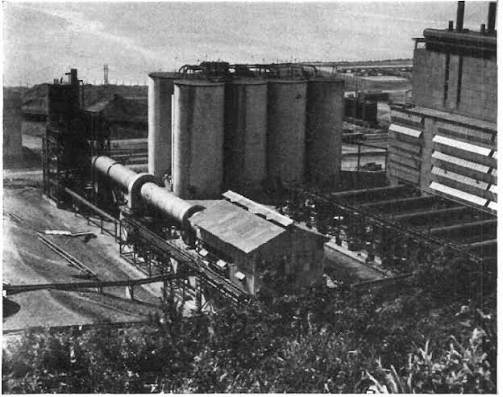
Netherlands-Based Nirint Shipping Reportedly Joins Two EU-Based Shipping Companies In Suspending Cuba Operations.

Container Management
Schindellegi, Switzerland
22 June 2026


“Barendrecht, Netherlands-based Nirint Shipping B.V. has removed Halifax from the northbound leg of its Europe–Cuba–Canada multipurpose service, consolidating the route to a purely Europe–Cuba loop. The revised rotation now runs Villagarcia–Bilbao–Rotterdam–Mariel–Moa–Villagarcia, according to DynaLiners. The approximately fortnightly service is operated by vessels of 12,000–17,000 deadweight tonnes with capacities of 680–900 teu. The removal of Halifax ends the service's Canadian component entirely, reducing port calls from what had been a transatlantic triangulation to a six-port Europe–Cuba circuit. Nirint's Cuba service is one of a small number of direct European liner links to the island, connecting the Spanish ports of Villagarcia and Bilbao alongside Rotterdam to the Cuban ports of Mariel and Moa.”

NOTE: As of 26 June 2026, Republic of Cuba-related references and Republic of Cuba-related schedules remain available on the Internet site of the company.  Link To Schedule

14 May 2026: Hamburg, Germany-based Hapag-Lloyd AG (2025 revenue US$21 billion) and Marseille, France-based CMA CGM (2025 revenue US$55 billion), issued a STOP BOOKING for origins and destinations of their regular services to and from the Republic of Cuba.” 

Link To Related Analysis

Two EU-Based Shipping Companies Suspend Cuba Operations.  One Settled Libertad Act Lawsuit And The Other Owns Florida International Terminal In Port Everglades. Will EU Do Anything? May 16, 2026 

MSC Of Switzerland Is 42nd Company Sued Using Libertad Act. Same Plaintiffs Sued Four Other Shipping Companies For Use Of Port Mariel In Cuba September 24, 2021 

European Union Member France's CMA CGM S.A. Is 41st Company Sued Using Libertad Act- Shipping To Cuba Through Jamaica And Using Port Mariel August 03, 2021 

Will Israel Shipping Company About To IPO In U.S. Become 33rd Libertad Act Lawsuit? Project For Jared Kushner? January 06, 2021

Canada's Sherritt Questions "ability to continue" While OFAC Considers U.S. Company License Application To Save Company, Invest In Cuba, Settle A Certified Claim, Export Nickel And Cobalt To U.S.

"The imposition of tariffs by the U.S. on countries that provide oil to Cuba and the imposition of expanded sanctions against Cuba contributed to a material uncertainty which may cast significant doubt about the Corporation’s ability to continue as a going concern, as disclosed in note 2."

"The Corporation discloses further information regarding the material uncertainty regarding the Corporation’s ability to continue as a going concern and its application of significant judgment in the assessment of the Corporation’s ability to continue as a going concern in the critical accounting judgments section of this MD&A."

"Assessing the ability of the Corporation to continue as a going concern requires judgment that includes considering whether conditions or events, including those at any of its investees, joint operations and subsidiaries, impact the going concern assumption. In conducting this assessment, management identified adverse events impacting the Moa Joint Venture and the Energas S.A. joint operation, as well as environment rehabilitation expenditures for its legacy Spanish Oil and Gas operations, and an event regarding compliance with, ongoing accessibility to and ability to repay its revolving-term credit facility (“Credit Facility”). The aforementioned adverse events impact both production and liquidity and result in significant obligations that will require repayment or refinancing. Consequently, the Corporation is required to evaluate the impact of these adverse events on its ability to continue as a going concern."

"The uncertainties related to the matters described above result in material uncertainty which may cast significant doubt about the Corporation’s ability to continue as a going concern. If the Corporation is unable to meet its obligations when due or comply with the terms of its debt agreements, the assumption of preparing these consolidated financial statements on a going concern basis may no longer be appropriate. These condensed consolidated financial statements for the three months ended March 31, 2026 do not reflect any adjustments to the carrying values of assets and liabilities and the reported expenses and statement of financial position classifications that would be necessary should the going concern assumption be inappropriate, and such adjustments could be material."

25 June 2026: TORONTO – Sherritt International Corporation (“Sherritt” or the “Corporation”) (TSX:S) today announced that it has filed its unaudited interim financial statements, management’s discussion and analysis and related officer certifications for the three months ended March 31, 2026 (collectively, the “Q1 2026 Filings”). The Q1 2026 Filings are available on SEDAR+ at www.sedarplus.ca.

LINK To Q1 Report In PDF Format

As previously disclosed, the Ontario Securities Commission (the “OSC”), as principal regulator, issued a cease trade order (the “CTO”) on May 21, 2026 as a result of the Corporation’s failure to file the Q1 2026 Filings by the filing deadline of May 15, 2026. The Corporation was delayed in filing as a result of operational and governance disruptions following the U.S. administration’s May 1, 2026 Executive Order expanding sanctions against Cuba.

The resumption of trading in Sherritt’s shares remains subject to regulatory and stock exchange approval. Sherritt will continue to provide timely public disclosure as circumstances develop.

About Sherritt

Sherritt is a world leader in using hydrometallurgical processes to mine and refine nickel and cobalt – metals deemed critical for the energy transition. Leveraging its technical expertise and decades of experience in critical minerals processing, Sherritt is committed to expanding domestic refining capacity and reducing reliance on foreign sources. The Corporation operates a strategically important refinery in Alberta, Canada, recognized as the only significant cobalt refinery and one of just three nickel refineries in North America.

Sherritt’s common shares are listed on the Toronto Stock Exchange under the symbol “S”.

Forward-Looking Statements

Certain statements and other information included in this press release may constitute “forward -looking information” or “forward-looking statements” (collectively, “forward-looking statements”) under applicable securities laws (such statements are often accompanied by words such as “anticipate”, “forecast”, “expect”, “believe”, “may”, “will”, “should”, “estimate”, “intend” or other similar words).

All statements in this press release, other than those relating to historical information, are forward-looking statements. Forward-looking statements in this press release include, without limitation, statements regarding the anticipated revocation of the CTO and the Corporation’s ability to satisfy any applicable requirements in connection with the foregoing.

The Corporation cautions readers of this press release not to place undue reliance on any forward-looking statement as a number of factors could cause actual future results, conditions, actions or events to differ materially from the targets, expectations, estimates or intentions expressed in the forward-looking statements. Such factors include, without limitation, continued risks related to Sherritt’s operations in Cuba and future actions taken by the U.S. government toward Cuba, including with respect to the Executive Order; level of liquidity of Sherritt, including access to capital and financing; the risk to or loss of Sherritt’s entitlements to future distributions (including pursuant to the Cobalt Swap) from the Moa JV; the inability of the Corporation to comply with debt restrictions and covenants; the inability of the Corporation to comply with the listing requirements of the Toronto Stock Exchange or another recognized stock exchange; uncertainty in the ability of the Corporation to enforce legal rights in foreign jurisdictions; uncertainty regarding the interpretation and/or application of the applicable laws in foreign jurisdictions; tax risks; political, economic and other risks of foreign operations; security market fluctuations and price volatility; risks related to environmental liabilities including liability for reclamation costs, tailings facility failures and toxic gas releases; compliance with applicable environment, health and safety legislation and other associated matters; risks associated with governmental regulations regarding climate change and greenhouse gas emissions; risks relating to community relations; maintaining social license to grow and operate; risks associated with the operation of large projects generally; the ability to replace depleted mineral reserves; risks associated with the Corporation’s joint venture partners; risks associated with mining, processing and refining activities; reliance on key personnel and skilled workers; risks related to the Corporation’s corporate structure; foreign exchange and pricing risks; credit risks; future market access; interest rate changes; risks in obtaining insurance; uncertainties in labour relations; legal contingencies; risks related to the Corporation’s accounting policies; uncertainty in the ability of the Corporation to obtain government permits; failure to comply with, or changes to, applicable government regulations. The key risks and uncertainties should be considered in conjunction with the risk factors described in the Corporation’s other documents filed with the Canadian securities authorities, including without limitation the “Managing Risk” section of the Management’s Discussion and Analysis for the three months and year ended December 31, 2025 and the Annual Information Form of the Corporation dated March 23, 2026 for the period ending December 31, 2025, which is available on SEDAR+ at www.sedarplus.ca. The forward-looking information and statements contained in this press release are made as of the date hereof and the Corporation undertakes no obligation to update publicly or revise any oral or written forward-looking information or statements, whether as a result of new information, future events or otherwise, except as required by applicable securities laws. The forward-looking information and statements contained herein are expressly qualified in their entirety by this cautionary statement.

Link To Related Analyses

120-Day Cuba Countdown Clock. Will Trump Administration Approve U.S. Company's Takeover Of Canada's Sherritt International Corporation? June 23, 2026

U.S. Control For Canada's Sherritt And Cuba's Nickel/Cobalt? Ray Washburne, First Trump Administration OPIC President & CEO And Current Chairman Of Sunoco LLC Making An Offer? May 20, 2026

Due To Trump Administration Cuba-Related Executive Orders And SDN List Additions, Canada's Sherritt International Corporation May Sell 55% To U.S. Company May 20, 2026

Trump Administration Policies Impact Another Cuba Export: Cigar Distributor Adding Transportation Surcharge Due To Ocean/Air Cargo Disruptions

"Phoenicia TAA Cyprus LTD is a renowned leading cigar distributor worldwide, established in 1999 as part of the Phoenicia group of companies. Headquartered in Limassol, Cyprus, the company has established a strong distribution network spanning more than 56 countries across Eurasia, Sub-Saharan Africa, The Gulf, the Middle East, Cyprus, Greece and Egypt. Furthermore, one of its subsidiaries is dedicated to distributing Imperial Tobacco and BAT products within the market of Cyprus.  Phoenicia is well-known for providing high-quality products and services, thanks to its team of experienced professionals and its unwavering commitment to maintaining the highest standards of quality, reliability, and product range. The company prides itself on catering to the unique tastes and needs of aficionados across its vast distribution network.  At the core of Phoenicia’s values is its dedication to both its markets and customers. This dedication is reflected in the company’s long-standing relationships with its customers and its continued efforts to exceed their expectations."

Halfwheel
Dallas, Texas
25 June 2026

One of the largest distributors of Cuban cigars in the world has announced it is adding a new surcharge for all orders.

On June 23, Phoenicia T.A.A. Cyprus Ltd.—the distributor of Cuban cigars for more than 50 countries throughout Africa, Europe and the Middle East—began adding a 6.5 percent surcharge to all “offers and orders” of Cuban cigars in lieu of raising prices on individual products. The company says that because of massive declines in sea cargo to and from Cuba, it has had to switch from using sea freight to air freight, which has resulted in higher prices.

“However, this option presents significant constraints, including limited flight availability and substantially higher transportation costs, which can reach more than 15 percent of the value of the imported cigars,” reads the email. “Given these exceptional circumstances, we find it necessary to pass on a portion of these additional costs.”

The situation in Cuba has been getting progressively worse since January, when the American government ramped up pressure on the Cuban government by going after its oil suppliers. Since then, most commercial airlines have cut back on services, and the number of ships leaving the island has been severely impacted.

According to the email, the surcharge is a temporary measure and will be removed “once conditions improve and sea freight services to Cuba resume.”

Phoenicia is best known as the distributor of Cuban cigars in the Middle East, though it also handles the importation and distribution for Habanos S.A. products in Cyprus, Greece, Malta, Ukraine, Turkey and all of Africa except for Algeria, Morocco and South Africa.

Paris Club Of Creditor Nations Reports Cuba Owes US$4.9497 Billion As Of 31 December 2025

2025 Paris Club of Creditor Nations Report

AS OF 31 DECEMBER 2025, EXCLUDING LATE INTEREST (IN U.S. Dollars)
ODA: Official Development Assistance
NODA: Non-Official Development Assistance

DEBTOR COUNTRY- Republic of Cuba

ODA- US$300.8 Million

NODA- US$4.9497 Billion

TOTAL- US$4.7955 Billion

LINK TO COMPLETE PARIS CLUB REPORT IN PDF FORMAT
Links To Related Analyses 

Paris Club Of Creditor Nations Reported To Propose New Repayment Schedule For Cuba Which Has Not Maintained A Previous 76% Write-Off From 2015. August 31, 2023 

Japan Delivering Buses To Cuba Through "Non-Reimbursable Financial Aid" While Cuba Continues To Owe Japan Approximately US$1 billion January 13, 2022 

Moody's Investors Service Downgrades Cuba Rating From Ca To Caa2, Returning To Same Rating Of November 2020, November 2019, November 2018, November 2017, November 2016 November 20, 2021 

Cuba Reported To Owe More Than US$2.1 Billion To Spain- And Expectation The Amount Will Increase In 2021, 2022, 2023. Cuba Companies Reported Seeking 365 Days To Pay Invoices. October 26, 2021 

Cuba Reported In New Agreement With Paris Club "Group Of Creditors Of Cuba" To Restructure Defaulted Payment Terms. Previously Forgave 75% Of Debt. Officials Expect Further Defaults. October 21, 2021 

Paris Club Offers Cuba One-Year Moratorium; Cuba Wants Two-Years And Much More June 20, 2020 

Cuba Defaulting On Paris Club Agreements, Seeking Again More Time; Trump Administration Message To Members: "Negotiate Like Donald Trump, Not Like EU" May 22, 2020

OFAC Adds Cuba Government Companies To SDN List Including In United Kingdom

ALMACENES UNIVERSALES S.A., Fabrica No. 54 e/ Aspuru y Linea del Ferrocarril, Habana Vieja, Havana, Cuba; Organization Established Date 28 Jan 1994; Organization Type: Cargo handling; Tax ID No. 11.791.301/0001-05 (Brazil); Entity Code 60297 (Cuba) [CUBA-EO14404] (Linked To: GRUPO DE ADMINISTRACION EMPRESARIAL S.A.). 

BANCO FINANCIERO INTERNACIONAL S.A. (a.k.a. "BFI"), 5ta Ave. No. 9009 esq. 92, Playa, Havana, Cuba; SWIFT/BIC BFICCUHH; Organization Established Date 13 Oct 1984; Target Type Financial Institution; alt. Target Type State-Owned Enterprise; Entity Code 60210 (Cuba) [CUBA-EO14404]. 

CUBAN TRADING UK LTD, London, United Kingdom; Organization Established Date 05 Feb 2025; Organization Type: Wholesale of food, beverages and tobacco; Company Number 16229981 (United Kingdom) [TCO] (Linked To: KONG, Ka On). 

EMPRESA SIDERURGICA JOSE MARTI (a.k.a. ANTILLANA DE ACERO), Calle 20 No 10522, Cotorro, Havana, Cuba; Organization Established Date 04 May 1958; Organization Type: Manufacture of basic iron and steel; Entity Code 1101 (Cuba) [CUBA-EO14404]. 

GEOMINERA, S.A., Calzada de Guines S/N E/ Virgen del Camino y Calle Linea del Ferrocarril, RPTO Los Angeles, Havana, Cuba; Organization Established Date 01 Jan 1998; Organization Type: Extraction of salt; Entity Code 60274 (Cuba) [CUBA-EO14404]. 

RAFIN S.A., Ave. Del Puerto Esq. A Obrapia, Edif. La Marina, La Habana Vieja, Havana, Cuba; Organization Established Date 28 Feb 1999; Organization Type: Management consultancy activities; Entity Code 60448 (Cuba) [CUBA-EO14404]. 

Trump Administration Adds To Castro-Related And Cuba Commercial Python: "Further Sanctions on the Cuban Regime’s Revenue Generation Network"

United States Department of State
Washington DC
23 June 2026

Today, the Department of State is designating five entities and one individual to further the Trump Administration’s comprehensive push to end the Cuban regime’s malign activities, both in Cuba and across our hemisphere.

All Department of State targets sanctioned today have been designated pursuant to Executive Order (E.O.) 14404, which authorizes sanctions on persons determined to meet specified criteria related to repression in Cuba and other threats to U.S. national security and foreign policy.  

Entities Affiliated with the Previously Designated Grupo de Administración Empresarial S.A. (GAESA)

The following entities associated with Cuba’s GAESA are being designated to further restrict the regime’s ability to move both money and materials at the cost of U.S. national security and the well-being of the Cuban public:

ALMACENES UNIVERSALES S.A. (AUSA) is designated pursuant to Sec. 2(a)(i)(B) of E.O. 14404 for being owned, controlled, or directed by, or to have acted or purported to act for or on behalf of, directly or indirectly, the Government of Cuba or any person whose property or interests in property are blocked pursuant to this order. AUSA, a subsidiary of GAESA, is a Cuban logistics and warehousing company specializing in storage, handling, and transportation services, including port-related activities. AUSA controls container traffic at the Port of Mariel Special Development Zone. GAESA was designated under E.O. 14404 on May 7, 2026.

RAFIN S.A. (RAFIN) is designated pursuant to Sec. 2(a)(i)(A) of E.O. 14404 for operating in or having operated in the financial services sector of the Cuban economy. RAFIN operates as a key financial management component of the GAESA conglomerate.

BANCO FINANCIERO INTERNACIONAL S.A. (BFI) is designated pursuant to Sec. 2(a)(i)(A) of E.O. 14404 for operating in or having operated in the financial services sector of the Cuban economy. BFI is a commercial banking institution absorbed by GAESA in 2016 that handles the vast majority of transactions involving foreign entities transacting in and out of Cuba.

Entities Involved in Exploiting Cuba’s Metals and Mining Sector

The following entities are designated pursuant to Sec. 2(a)(i)(A) of E.O. 14404 for operating in or having operated in the metals and mining sector of the Cuban economy:

GEOMINERA, S.A., which is a state-owned enterprise under the jurisdiction of the Cuban government’s Ministry of Energy and Mines that leverages foreign investment from Australian-based Antilles Gold and other companies to manage Cuba’s non-nickel metallic mineral assets. GEOMINERA, S.A. manages Minera La Victoria S.A., which was designated pursuant to E.O. 14404 on June 4, 2026.

EMPRESA SIDERURGICA JOSE MARTI (Antillana de Acero), which is Cuba’s largest raw steel producer, and recently underwent a modernization and expansion in collaboration with Russian entities.

Continued Designations of Cuban Regime Officials and their Networks

To continue restricting the ability of the Cuban regime-aligned elites to benefit while everyday people suffer, ANNALIE LILLIAM RUEDA CARDERO is designated pursuant to Section 2(a)(i)(I) of E.O. 14404 for being an adult family member of ALEJANDRO CASTRO ESPIN, who was designated pursuant to E.O. 14404 on June 4, 2026. ALEJANDRO CASTRO ESPIN is the former head of the Cuban intelligence services and the son of Raul Modesto Castro Ruz.

SANCTIONS IMPLICATIONS

As a result of today’s sanctions-related actions, and in accordance with Executive Order (E.O.) 14404 of May 1, 2026, “Imposing Sanctions on Those Responsible for Repression in Cuba and for Threats to U.S. National Security and Foreign Policy,” all property and interests in property of the designated persons described above that are in the United States or in possession or control of U.S. persons are blocked and must be reported to the Department of the Treasury’s Office of Foreign Assets Control (OFAC).  Additionally, all entities that are owned individually or in the aggregate, 50 percent or more by one or more blocked persons are also blocked.

All transactions and dealings by U.S. persons or persons within (or transiting) the United States that involve any property or interests in property of designated or otherwise blocked persons are prohibited unless authorized by a general or specific license issued by OFAC or exempt.  These prohibitions include the making of any contribution or provision of funds, goods, or services by, to, or for the benefit of any blocked person and the receipt of any contribution or provision of funds, goods, or services from any such person.  Foreign persons that engage in transactions with persons designated pursuant to E.O. 14404—or that operate in the energy, defense and related materiel, metals and mining, financial services, or security sector of the Cuban economy, as identified in E.O. 14404—are themselves at risk of sanctions. Non-U.S. persons, including foreign financial institutions, should proceed with caution in any dealings with a party sanctioned under this authority.  Actions to return assets to a sanctioned party or transfer them to another jurisdiction for potential use by the target could expose non-U.S. persons to significant sanctions risk.  All property and interests in property of persons that are blocked pursuant to the Cuban Assets Control Regulations (CACR) continue to be blocked. The CACR prohibits persons subject to U.S. jurisdiction from dealing in property in which Cuba or a Cuban national has an interest, unless authorized or exempt.

The power and integrity of U.S. government sanctions derive not only from the U.S. government’s ability to designate and add persons to the Specially Designated Nationals and Blocked Persons (SDN) List, but also from its willingness to remove persons from the SDN List consistent with the law. The ultimate goal of sanctions is not to punish, but to bring about a positive change in behavior.  

Petitions for removal from the SDN List may be sent to: OFAC.Reconsideration@treasury.gov.  Petitioners may also refer to the Department of State’s Delisting Guidance page.