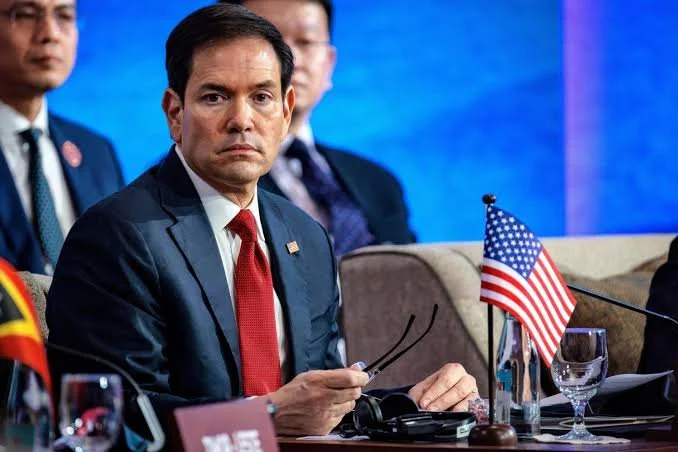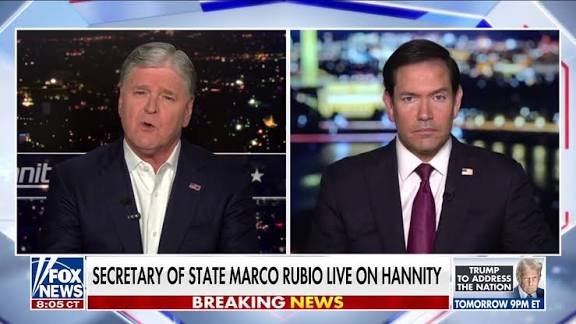

Secretary Of State Marco Rubio About Cuba: "global affairs are not like- we’re not a miniseries, like, you get in three episodes and it’s over." It's Not A Moment, It's A Series Of Moments.
/United States Department of State
Washington DC
22 July 2026
Manila, Philippines
QUESTION: On Cuba, is the goal still creating regime change through economic collapse, or is the military option still on the table?
SECRETARY RUBIO: I think the goal is to have a Cuba where the people of Cuba can experience prosperity, safety, security, and a better life moving forward, the way Cubans are able to do all over the world when they leave Cuba. And we’re prepared to be very realistic about how you do that, and patient about how – you got a serious process that leads to that. And we’ve engaged them from time to time in that regard, and they know where we stand on that issue, and hopefully that’s where it arrives.
The fundamental Cuba – the fundamental problem Cuba has right now is two things. Number one is their economic system doesn’t work because it – that economic system doesn’t exist anywhere else in the world. It’s completely backwards; it just doesn’t work. And that’s why people have to leave that country. And number two, it’s they’re no longer getting free oil from Venezuela. That’s their biggest problem. They’re not getting free oil from Venezuela – which, by the way, they weren’t using for their power grid. They were taking about 60 percent of the free oil they were getting from Venezuela and reselling it for cash. So the biggest problem Cuba has is that the regime is a disaster, their economic model doesn’t work, and the people who run the country don’t know what the hell they’re doing. And all they’re most interested in is holding onto power. They are afraid of economic prosperity because they are afraid that economic prosperity and economic liberties will – they will lose control over people. And that’s always been the struggle they’ve faced in recent times.
But again, look, we’ve been – just today we began shipping over $100 million of humanitarian assistance to Cuba which will be distributed by nongovernmental entities on the ground. So it – we’ll – we’re willing to engage with them; we’ve engaged with them in the past. We’ll keep talking to them about the kind of changes they can make. But this is 90 miles from our shores. This is a government that has spent – a regime that has spent the better part of 30, 40, 50 years destabilizing the region in the movements that they’ve supported, and they’ve lost, I don’t know, 10 to 15 percent of their population since 2021 because of how mismanaged the country is. We want it to have a better future, and we’re prepared to do things that help them get there. But they have to decide they want to do that. The people that are in charge there right now just don’t want to do it.
QUESTION: Several people in your administration were talking about how they expected the – just to follow up – to see regime change or to see big changes in Cuba – economic, political – by the end of this year. That’s what a lot of them were saying consistently.
SECRETARY RUBIO: Who’s “a lot of them?” Who was saying that?
QUESTION: People within the administration who work on this issue. They weren’t —
SECRETARY RUBIO: Like who? Because I work on this issue more than anybody else, and I never said that.
QUESTION: They weren’t predicting it, but, like, there was an expectation that Cuba was so weak that it was going to happen.
SECRETARY RUBIO: No, look, guys, I mean, you – look, this – global affairs are not like – we’re not a miniseries, like, you get in three episodes and it’s over. I mean, global affairs are difficult. You’re talking about a system that’s been in place since 1959. You talk about a country that’s suffered tremendously because of poor leadership and a bad economic model. You’re talking about a regime that’s survived all these years because they had a foreign sponsor, be it the Soviet Union or Hugo Chávez. They don’t have that anymore. So it’s – these are complex things that take time, and obviously we’re prepared to do what we can do to effectuate a positive change in Cuba because it directly impacts our national security. Cuba matters to us because it’s 90 miles from our shores, and it has a direct impact on our national security – be it the things they’ve been involved in in the past, the countries they’ve aligned with in the past and currently, or the threat of mass migration, which is always a risk that you run when countries are as deeply destabilized as Cuba. It’s a failed state. It’s a failed state. But I’ve never laid out any timeline as to what change would look like or when it would happen. I wish it was tomorrow because they deserve it; the people of Cuba deserve a better future.