
Revisionism: In USA Today Cuba Interview, Biden Administration White House And State Department Official "Forgets" Opposing Critical Private Sector Banking Need
/Embracing Revisionism
Biden-Harris Administration White House And State Department Official Forgets His Lack Of Support For Critical U.S. Company And Cuba Private Sector Engagement Issue
If He Was Not An Advocate, He Was An Obstacle
Make Sense? Moving More Than US$8.2 Billion Through Third Country Banks- Where They Take A Fee For Every Transaction
Remember NSC From Obama-Biden Administration: “We’ve gone as far as we can go.”
Nothing For 5,911 Certified Claimants- The Embargo Began Because Of Them
Good News: Trump-Vance Administration Which Is Robust With Private Sector Experience Appreciates Tools Required For Re-Engagement By United States-Based Companies: Direct Correspondent Banking
USA Today
Washington DC
6 March 2026
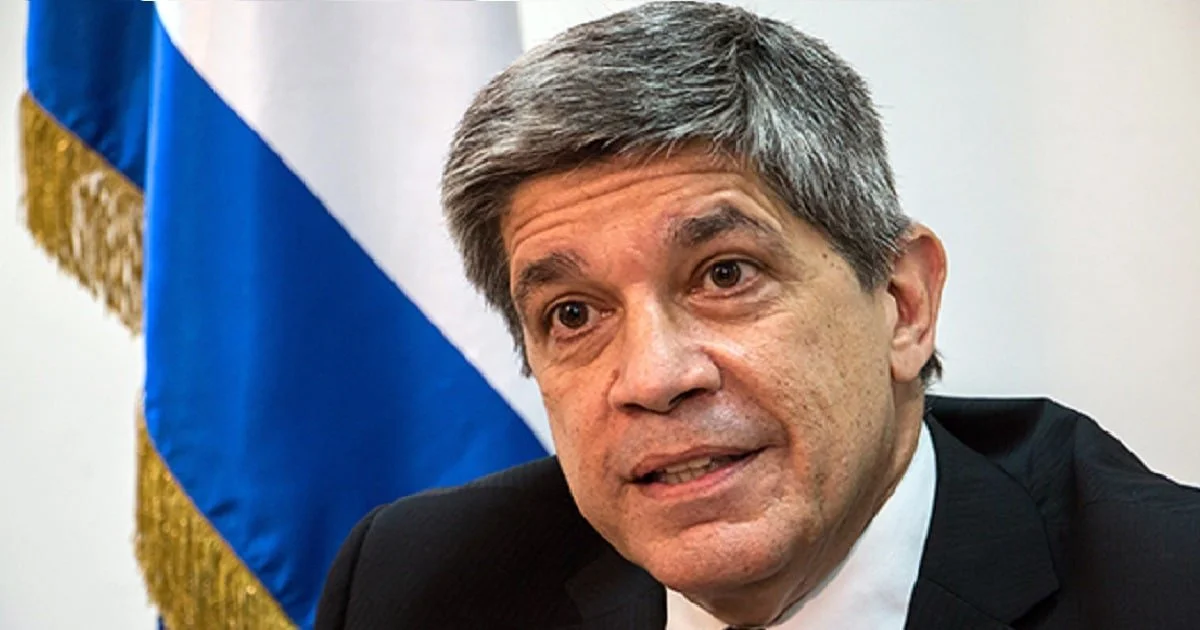
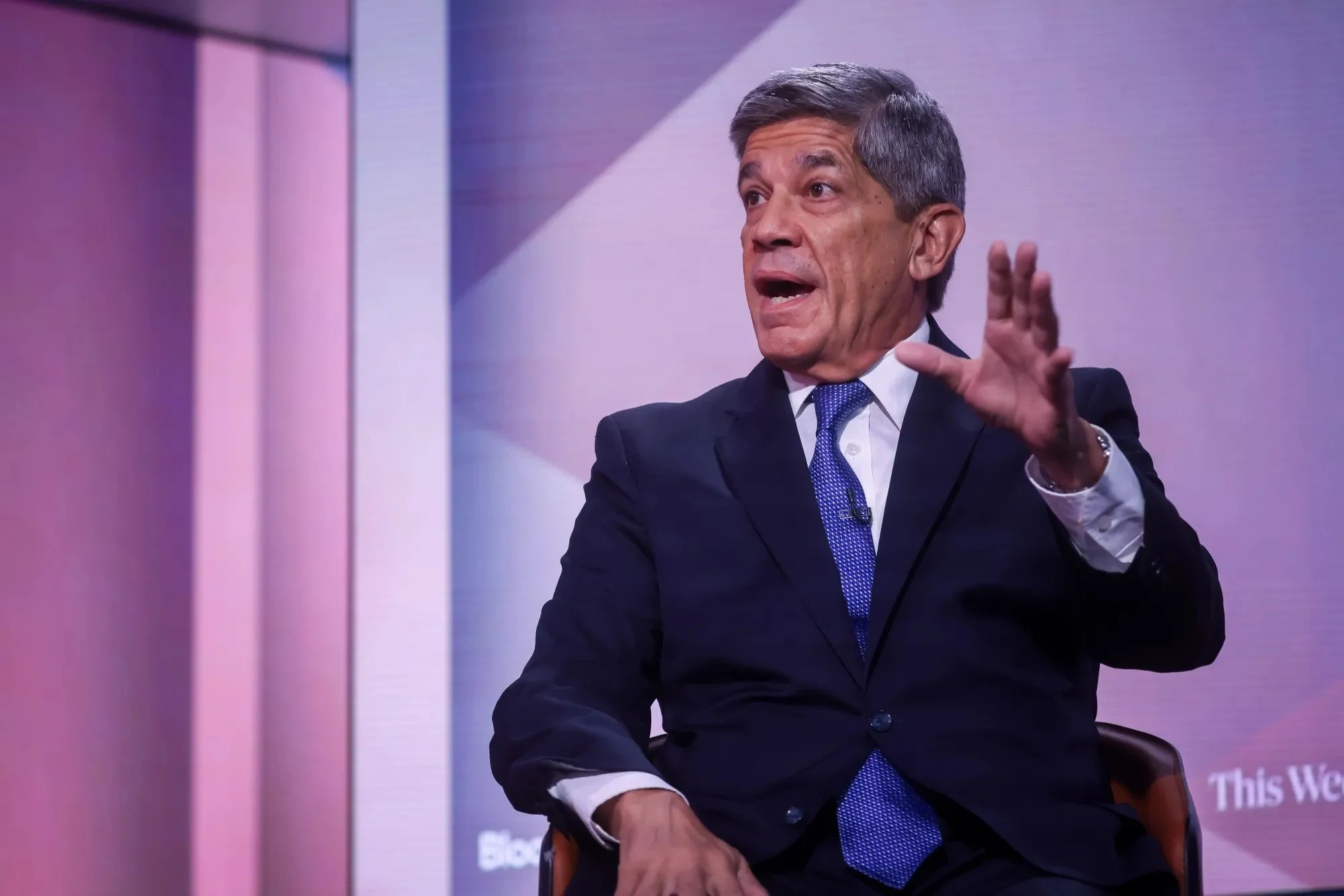
“Eric Jacobstein, former deputy assistant secretary of state for western hemisphere affairs in the Biden administration [2023-2025; and 2022-2023 as special advisor to the vice president for the western hemisphere and national security council director for Central America and Cuba], traveled to the island repeatedly to meet with Cuban entrepreneurs and encourage them to connect with U.S. businesses. For Trump’s strategy to take root, Cuba’s private sector will need increased help from American businesses, particularly the banking sector, he said. “It's critical to engage this independent Cuban private sector,” Jacobstein said. “They're independent, they're entrepreneurial … It's a group that has embraced capitalism within a failing communist system.” Link To Article: Inside Trump's plan to win Cuba with American oil
Mr. Jacobstein met with owners of the re-emerging private sector in the Republic of Cuba to encourage them to connect with United States-based companies. News flash- they did not need convincing. Engaging with those who agree with you is no diplomatic feat.
Who did need convincing? The government of the Republic of Cuba. Why did Mr. Jacobstein not meet “repeatedly” with senior-level officials of the government of the Republic of Cuba to encourage them to issue the regulations to authorize direct investment in and direct financing to privately-owned companies located in the Republic of Cuba? The investment and financing were authorized on 10 March 2022 by the Biden-Harris Administration (2021-2025). And, what about meeting with officials of the government of the Republic of Cuba to advocate for a settlement of the 5,911 claims certified by the Foreign Claims Settlement Commission (FCSC) within the United States Department of Justice? There is no record of efforts by Mr. Jacobstein to advocate directly to those who were decisionmakers.
Link: Now The Hard Part For Cuba: Implementing Quickly Transparent, Equal-For-All, MSME Investment & Financing Regulations. No Limitations. No Selectivity. No Orwellian Process. August 04, 2022
Link: Biden-Harris Administration Approves First Equity Investment Since 1960 In A Private Cuban Company May 10, 2022
Link: With U.S. Government Authorization For First Direct Equity Investment Into A Private Company In Cuba, Here Is Important Context And Details. About The Parties; About The Message. May 16, 2022
Link: Mr. de Cossio At MINREX In Cuba Not Quite Accurate With His Comments About Biden-Harris Administration Efforts With MSMEs And Remittances December 20, 2022
Mr. Jacobstein was never employed in the private sector according to his LinkedIn profile. He could not and would not appreciate the burdensome, cost-ineffective, and unnecessary costs with moving funds for commercial purposes through third countries- meaning a triangle. Rather than a cost-effective, efficient, secure, timely, and transparent moving of funds for commercial purposes directly, meaning a straight line.
Link: Logic From U.S. Department Of State: If We Permit It, Cuba Might Not Use It, So We Won’t Permit It. And, Yes, No One Asked Cuba. And, No One Asked U.S. Banks, Companies. May 01, 2023
When described as advocating for the re-emerging private sector in the Republic of Cuba to “connect with” United States-based companies and stressing the importance of the “banking sector” Mr. Jacobstein has conveniently forgotten his remark to representatives of United States-based companies.
The Biden-Harris Administration did authorize private companies located in the Republic of Cuba to establish accounts with United States-based financial institutions. That was important. However, that did not address the critical problem- moving money.
During his tenure, Mr. Jacobstein did not indicate support for correcting a mistake by the Obama-Biden Administration (2009-2017). Its failure to authorize direct correspondent banking for authorized commercial transactions from the United States to the Republic of Cuba and from the Republic of Cuba to the United States.
Infamously, Mark Feierstein, Senior Director for Western Hemisphere Affairs at the National Security Council from 2015 to 2017 during the Obama-Biden Administration, said to representatives of United States-based companies, “We’ve gone as far as we can go” when asked to support direct correspondent banking. While simultaneously seeking re-engagement, the most important protocol required for commerce was ignored. The government of the Republic of Cuba was not required to permit widespread on-the-ground opportunities for United States-based companies to employee thousands of Republic of Cuba nationals. Mr. Feierstein presided over a tepid landscape and what would be a roadmap for the Trump-Pence Administration (2017-2021) to roll-up some of the most visible examples of United States-based company presence in the Republic of Cuba.
The Obama-Biden Administration authorized United States-based financial institutions to establish correspondent accounts with Republic of Cuba-based financial institutions, including those operated by the government of the Republic of Cuba.
Inexplicably, at the direction of the National Security Council (NSC) at The White House, Republic of Cuba government-operated financial institutions were not permitted to have correspondent accounts with United States-based financial institutions. One such financial institution was vetted and approved for a United States-based financial institution to maintain a correspondent account. The Office of Foreign Assets Control (OFAC) of the United States Department of the Treasury did not approve the Republic of Cuba government-operated financial institution to maintain a correspondent account with the United States-based financial institution.
Link: Remittances To Cuba Mentioned 16 Times In 14 Pages Of New OFAC Regulations: Biden, Blinken, Sullivan, Nichols, Gonzalez, Yellen Defend 3rd-Country Banks Taking Percentage Of Every Dollar To/From Cuba June 13, 2022
Thus, absent bilateral correspondent accounts, funds for authorized financial transactions continued then and continue now to move through third countries.
The result is third country financial institutions receiving a fee for every United States Dollar transaction using a financial institution.
For perspective, since December 2001 when the first agricultural commodity and food product exports from the United States to the Republic of Cuba were re-authorized within provisions of the Trade Sanctions Reform and Export Enhancement Act (TSREEA) of 2000, more than US$8.2 billion in authorized commercial payments have moved from the Republic of Cuba to United States-based companies through third country financial institutions- and a fee is paid each time.
Every United States Dollar to a third-country financial institution is a burdensome and unnecessary fee to United States-based companies and one less United States Dollar directed to additional product exports from the United States to the Republic of Cuba.
Continuation of the indirect payment process is partly a legacy of Mr. Jacobstein.
Was Mr. Jacostein, along with his colleagues, incapable of understanding direct correspondent banking or did not care enough to want to learn of its importance because of his and their lack of private sector experience? Why ignore an essential component for the movement of global capital investment- efficient, cost-effective funds transfers.
For United States-based companies and financial institutions, Mr. Jacobstein should have been an advocate rather than in impediment.
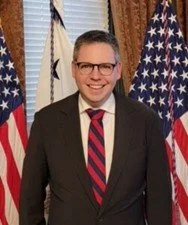
Eric Jacobstein
Deputy Assistant Secretary For Central America
Bureau of Western Hemisphere Affairs
United States Department of State
Washington DC
Eric Jacobstein currently serves as a Deputy Assistant Secretary in the Bureau of Western Hemisphere Affairs (June 2023 to January 2025) covering Central America, Cuba and regional migration. He previously served at the White House as the Special Advisor to the Vice President for the Western Hemisphere and as National Security Council Director for Central America and Cuba (February 2022 to June 2023). In 2021, Mr. Jacobstein joined the Biden-Harris Administration as a Senior Advisor in the U.S. Agency for International Development’s Bureau for Latin America and the Caribbean and as Staff Director of the Northern Triangle Task Force. Before that, Mr. Jacobstein worked in the United States Congress for 15 years, including as a Senior Policy Advisor on the House Committee on Foreign Affairs managing the Western Hemisphere portfolio for Chairman Eliot Engel and Committee Democrats. In this role, he was the lead Democratic advisor handling issues related to Latin America and the Caribbean in the House of Representatives. Mr. Jacobstein also served as the Staff Director of the Senate Caucus on International Narcotics Control working for Senator Dianne Feinstein. In addition, he has worked for the House Subcommittee on the Western Hemisphere, Representative Jim Kolbe and the Inter-American Dialogue. He holds a M.A. in Latin American Studies from the Georgetown University School of Foreign Service and a B.A. in Political Science from Haverford College.
5,911 Certified Claimants
Neither the Obama-Biden Administration, the Trump-Pence Administration, nor the Biden-Harris Administration focused upon seeking a settlement with the government of the Republic of Cuba on behalf of the 5,911 United States-based companies with claims certified by the Foreign Claims Settlement Commission (FCSC) within the United States Department of Justice in Washington DC. The value of the certified claims at date of certification was US$1,902,202,284.95 with simple interest of 6% annually permitted, with the current estimated value at approximately US$9.2 billion.
The “embargo” commenced in 1960 during the Eisenhower-Nixon Administration (1953-1961) and was a direct result of the seizure of an asset owned by a United States-based company. Ending the “embargo” should require first a settlement on behalf of the 5,911 certified claimants.
The first asset (along with 382 enterprises the same day) to be expropriated by the Republic of Cuba was an oil refinery on 6 August 1960 owned by White Plains, New York-based Texaco, Inc., now a subsidiary of San Ramon, California-based Chevron Corporation (USFCSC: CU-1331/CU-1332/CU-1333 valued at US$56,196,422.73).
Link: Cuba Could Resolve Western Union's Certified Claim By Waiving Four Months Of Electronic Remittance Transfer Fees. Biden Administration Should Support And Negotiate Certified Claims Settlement. September 17, 2021
The Trump-Vance Administration (2025-2029) has an opportunity to complete what the Obama-Biden Administration, Trump-Pence Administration, and Biden-Harris Administration partially succeeded in doing- secure the viability of the re-emerging private sector in the Republic of Cuba. Specifically, to provide them with access to the same business operational tools commonplace in other countries.
These tools include in Havana- implementing regulations permitting direct investment and direct financing into private companies, and requesting Republic of Cuba-government-operated financial institutions to seek correspondent accounts with United States-based financial institutions.
Those tools include in Washington DC- permitting Republic of Cuba-based financial institutions to have correspondent accounts with United States-based financial institutions.
If companies are unable to move funds cost-effectively (particularly for small values), efficiently, and transparently, then all other authorizations become more about optics than performance.