
USIDFC Expected To Have A Presence In Acquisition Canada's Sherritt International Corporation By U.S.-Based Investors. All About Protecting Supply Chains From China And Russia.
/U.S. International Development Finance Corporation (DFC)
Washington DC
Who We Are
“DFC is the international investment arm of the U.S. Government. We mobilize private capital to advance U.S. foreign policy and economic development. Our investments deliver strong returns for American taxpayers, drive meaningful economic development for our allies and partners, and secure supply chains to counter and outcompete our adversaries.”
Our History
“DFC was established in 2019 during President Trump’s first term, built upon years of strong bipartisan support, and granted significant expanded authorities in 2025.”
Challenge
“As global demand soars for critical minerals, building a reliable and diversified supply chain will be essential for the industries of the future. Lithium, cobalt, and nickel are all used across the energy, technology, and national security sectors. The United States is heavily reliant on imports of these minerals, and global supply chains are vulnerable to supply chain bottlenecks and geopolitical risk. Currently, China controls a substantial portion of the critical mineral mining and processing markets, including well over half the global capacity to process and refine cobalt, and to refine and produce rare earth elements. China has controlled as much as 90 percent of the global production capacity for rare earths. And Beijing has suggested it will impose export restrictions on rare earths to the United States.”
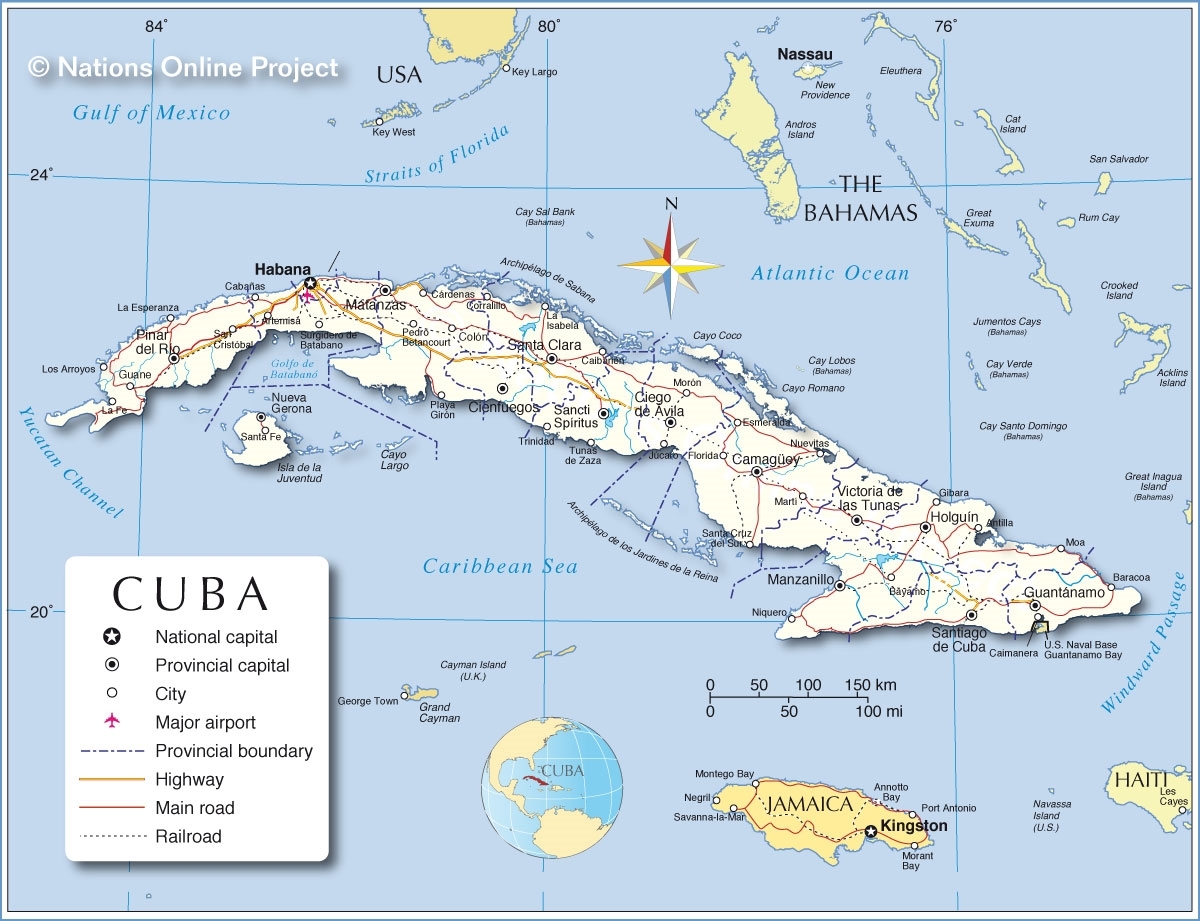
The future of Toronto, Canada-based Sherritt International Corporation (2025 revenue approximately US$389 million) which has cobalt, nickel, and energy (30% interest in Energas S.A.) operations in the Republic of Cuba is simultaneously in doubt and in play.
Two suitors want control of the company. At least one, and probably two certified claims must be addressed regardless of which suitor prevails or if no suitor prevails. Perhaps, at least one non-certified claim may need to be addressed regardless of which suitor prevails or if no suitor prevails.
Absent United States-based connectivity, the Trump-Vance Administration (2025-2029) is unlikely to approve (license) an acquisition of Sherritt International Corporation and remove sanctions impacting the company implemented by the Office of Foreign Assets Control (OFAC) of the United States Department of the Treasury, United States Department of Commerce, and by the United States Department of State.
The Trump-Vance Administration prefers that Sherritt International Corporation be controlled by a United States-based entity and that the nickel and cobalt sourced in the Republic of Cuba by the company be destined for United States markets, particularly the cobalt for markets with military connectivity. Assisting United States-based companies to control supply-chains for critical minerals is foundational for the Trump-Vance Administration.
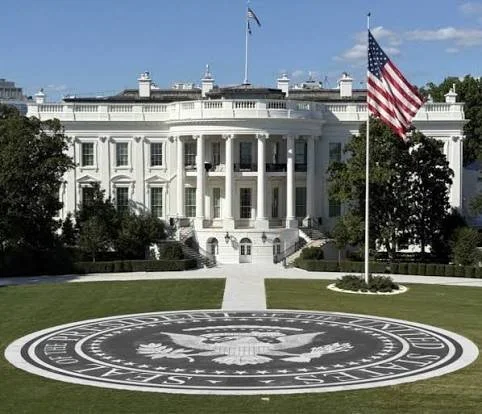
Will The White House embrace a Canada-Cuba-United States transaction or a Canada-Cuba-Switzerland-United Kingdom-United States transaction?
LINK: Potential Triple Play? Carney, Diaz-Canel, Trump Deal. U.S. Secretary Of Defense Hegseth Wants Cobalt. Cuba Has It. Settling One Libertad Act Issue. And Opening Doors? August 23, 2025
LINK: Cuba Has Nickel And Cobalt. Vehicle Electric Batteries Use Nickel And Cobalt. Cuba Should Benefit. September 25, 2021

LINK: U.S. Control For Canada's Sherritt And Cuba's Nickel/Cobalt? Ray Washburne, First Trump Administration OPIC President & CEO And Current Chairman Of Sunoco LLC Making An Offer? May 20, 2026
LINK: Due To Trump Administration Cuba-Related Executive Orders And SDN List Additions, Canada's Sherritt International Corporation May Sell 55% To U.S. Company May 20, 2026
LINK: Canada's Sherritt Reports That "dissolution [of GNC] is required as a result of a material adverse change that is an immediate change under the MSA and that there is inadequate time for arbitration" May 15, 2026
Semafor
20 August 2026
The US International Development Finance Corporation is stepping in to fund rare earths production in Africa as private investors remain reluctant to finance the sector, a key battleground in Washington’s competition with China. The US has been scrambling to diversify its import of rare earths- vital for tech and defense- the majority of which are produced in China. Beijing threatened to impose an export ban last year, sending a shudder across US industry. While Africa holds some of the largest deposits, many are in countries that lack adequate infrastructure, compounding investors’ worries on top of fears that Chinese intervention could subvert project economics, Reuters reported. “We’re trying to help projects reach a more de-risked stage,” a DFC official said.
Reuters
19 August 2026
US steps in to fund African rare earths shunned by private money, sources say
DFC has committed $62.8 million to projects in four African countries
Private investors largely unwilling to fund African rare-earth projects, DFC executives say
DAKAR, Aug 19 (Reuters) - The U.S. International Development Finance Corporation (DFC) is backing a pipeline of African rare-earth projects as private investors remain reluctant to finance the sector, two senior DFC executives told Reuters. The DFC has committed $62.8 million to rare-earth projects in Malawi, Angola, Madagascar and South Africa, though none has so far reached production, the agency said on Wednesday. Most of that funding- about $50 million- was for the Phalaborwa project in South Africa backed by Dublin-based mining investor TechMet.
"We do not see private capital coming in," one of the executives said, requesting anonymity because they were not authorised to discuss the matter publicly. "We're trying to help projects reach a more de-risked stage and become attractive for private-sector investment."
In a rare public acknowledgement, the two DFC executives said that private investors remain largely unwilling to fund African rare-earth projects despite their strategic importance in reducing U.S. dependence on top producer China, which dominates the global supply chain and has over the past couple of years tightened export controls. Rare earths are essential for magnets used in electric vehicles, wind turbines and defence systems. The United States is increasingly using the DFC to help develop Western-aligned supply chains for critical minerals. One of the DFC executives said private investors remain wary of African rare-earth projects because of their higher risk profile and concerns that Chinese market intervention can undermine pricing and project economics.
Analysts also say many proposed rare earth projects face uncertain economics and limited investor appetite. "There are far more announced rare-earth projects than there is demand for neodymium-praseodymium (NdPr) magnets," said Olimpia Pilch, head of strategy at advocacy group Critical Minerals Africa. Africa accounts for roughly 20% to 25% of DFC's global investment portfolio, the second DFC executive said.
U.S. International Development Finance Corporation
Politico
20 August 2026
MINERAL DEAL PROBES ON DEMS’ RADAR- The Trump administration has doled out billions for mining and critical mineral processing companies, and Dems are eager to probe any ties to Trump family members as they aim to wield congressional gavels next year. Mineral deals struck by the Trump administration are rife with conflicts of interest, Democrats say. They point to ties between some companies and the business empires of Trump’s family and that of Commerce Secretary Howard Lutnick, who has helped shepherd many of the awards for the administration, Hannah Northey and James Bikales report.
That means business leaders from Australia to Canada to the U.S. considering big financing packages- which in some cases total more than $1 billion- will need to decide whether they want to sign up for possible congressional scrutiny that could put their companies under a microscope. Some mineral companies moving through the queue to secure federal financing insist there’s been no wrongdoing and federal oversight is sufficient. Democrats angling to take back Congress this fall are laying the groundwork for deep investigations into President Donald Trump’s ever-expanding critical mineral spending spree- and the industry is taking note. Mineral deals struck by the Trump administration are rife with conflicts of interest, Democrats say. They point to ties between some companies and the business empires of Trump’s family and that of Commerce Secretary Howard Lutnick, who has helped shepherd many of the awards for the administration. Business leaders from Australia to Canada to the U.S. considering big financing packages- which in some cases total more than $1 billion- will need to decide whether they want to sign up for possible congressional scrutiny that could put their companies under a microscope.