
Will (Should) EU Sanction Chairman And CEO Of Spain-Based Melia Hotels For Acquiescing To OFAC? European Version of TACO? Discovery Process Could Make A Lawsuit Challenging For Cuba
/Will (Should) EU Sanction Chairman And CEO Of Spain-Based Melia Hotels For Acquiescing To OFAC?
EU Tough Words Become EACO Version Of TACO
Canada Has CACO Version Of TACO
A Pandemic Of ACO Because Cuba Does Not Make Itself Worth The Effort
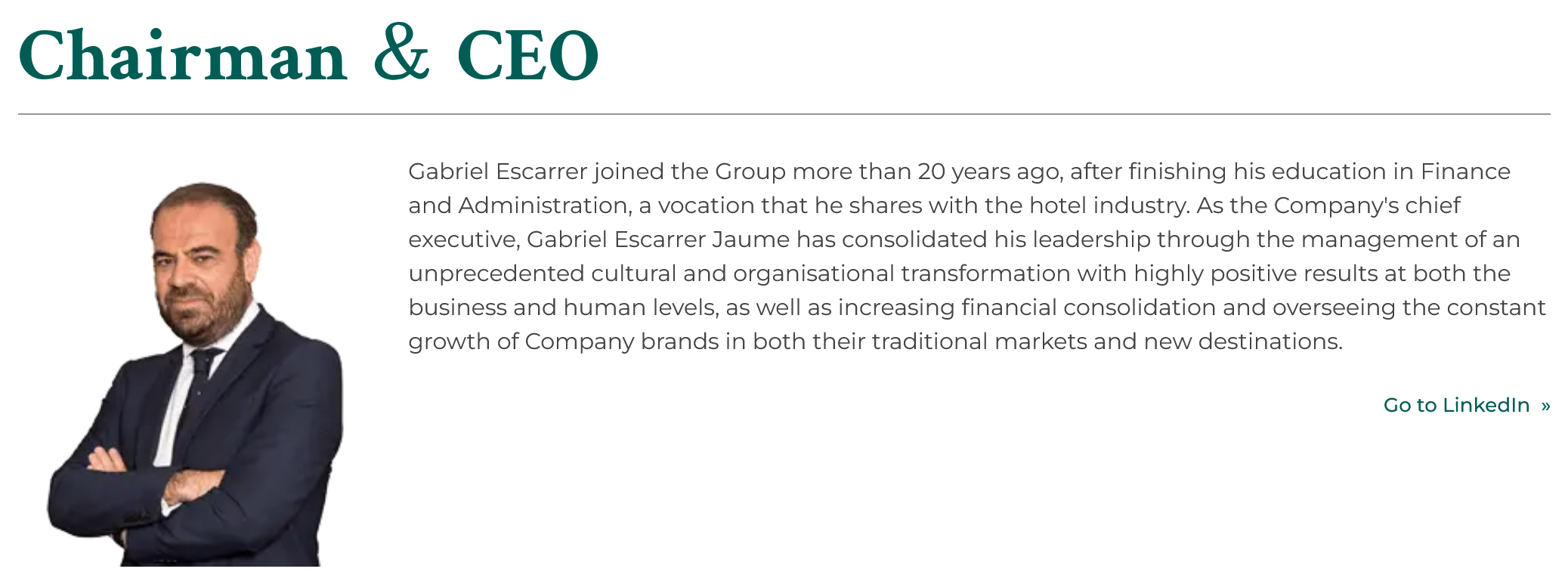
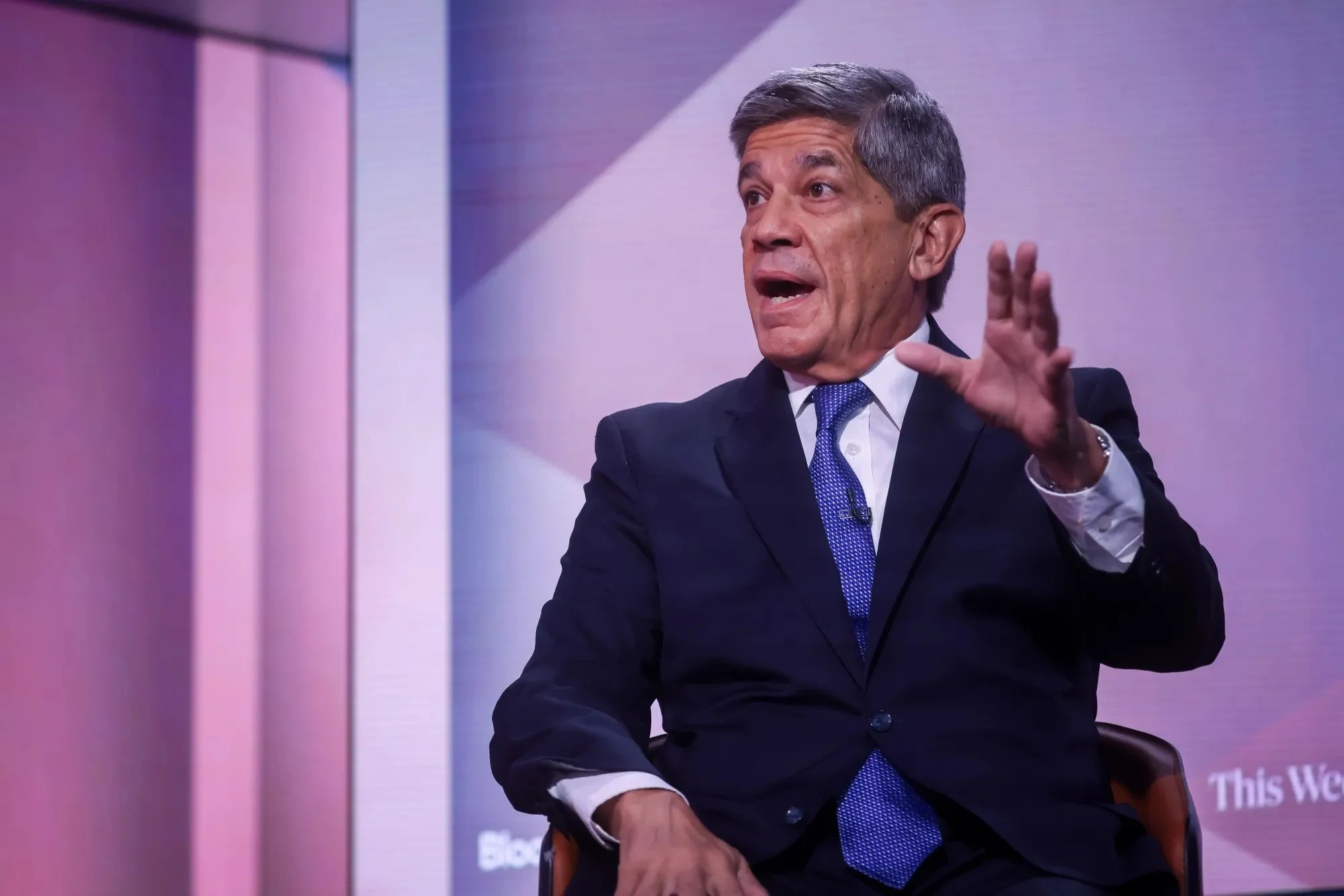
Gabriel Escarrer Jaume, Chairman and Chief Executive Officer of Palma de Majorca, Spain-based Melia Hotels International (2025 revenue approximately US$2.4 billion):
“I honestly don't know what's going to happen. We are adhering to the guidelines provided by the U.S. State Department.”
In response to decisions by the Trump-Vance Administration (2025-2029), Melia Hotels International will cease operations in the Republic of Cuba due to “notable operational, legal and economic-financial difficulties.”
On 3 June 2026, Melia Hotels International reported an initial decision to terminate operations at some properties in the Republic of Cuba due to “unforeseen circumstances beyond management's control.”
This week, Melia Hotels International reported to the Madrid, Spain-based Comision Nacional Del Mercado De Valores (CNMV): “The company informs that its Portuguese subsidiary, Ilha Bela, has decided to cease, with effect from July 24, 2026, the provision of its hotel management and marketing services in relation to all its establishments in Cuba. This decision also extends to the use of licensed brands, inbound tourism services and the local supply chain associated with the supply of the aforementioned establishments, whose operations will also be interrupted.”
Executive Order 14404 on 1 May 2026 designated Revolutionary Armed Forces of the Republic of Cuba (FAR)-controlled Grupo de Administración Empresarial S.A. (GAESA) as a Specially Designated National (SDN) subjecting any entity engaging with GAESA to sanctions implemented by the Office of Foreign Assets Control (OFAC) of the United States Department of the Treasury.
The Diaz-Canel-Valdes Mesa Administration (2019- ) indicated it may commence legal proceedings for breach of contract against Melia Hotels International which would then be expected to use force majeure as a defence would may (should) result in legal action by the European Union against Melia Hotels International. If there is litigation, which will likely first be subject to arbitration, the key metric will be through the process of discovery where neither Melia Hotels International nor the government of the Republic of Cuba may want their internal communications in the public domain.
Melia Hotels International is a publicly-listed company. As such, any decision by management to forgo seeking repayment of all monies owed to the company by the government of the Republic of Cuba and Republic of Cuba government-operated entities would result in lawsuits from shareholders.
Since 2019, Dr. Ursula von der Leyen, President (2019-2029) of the twenty-seven-country member Brussels, Belgium-based European Commission (EC), and Antonio Costa, President (2024-2029) of the Brussels, Belgium-based European Council (EC), have done nothing to counter decisions implemented by Donald Trump, President of the United States (2017-2021 and 2025-2029).
EU: Austria, Belgium, Bulgaria, Croatia, Cyprus, Czech Republic, Denmark, Estonia, Finland, France, Germany, Greece, Hungary, Ireland, Italy, Latvia, Lithuania, Luxembourg, Malta, Netherlands, Poland, Portugal, Romania, Slovakia, Slovenia, Spain, Sweden.
In 2019, the Trump-Pence Administration (2017-2021) made operational Title III and further implemented Title IV of the Cuban Liberty and Democratic Solidarity Act of 1996 (known as “Libertad Act”). To date forty-six lawsuits have been filed (sixteen by certified claimants & thirty by non-certified claimants). An increasing number of European Union-based companies have since settled Title III lawsuits.
Title III authorizes lawsuits in United States District Courts against companies and individuals who are using a certified claim or non-certified claim where the owner of the certified claim or non-certified claim has not received compensation from the Republic of Cuba or from a third-party who is using (“trafficking”) the asset.
Title IV restricts entry into the United States by individuals who have connectivity to unresolved certified claims or non-certified claims. One Canada-based company and one Spain-based company are currently known to be subject to this provision based upon a certified claim and non-certified claim.
In 1996, the European Union implemented a blocking statute in Council Regulation (EC) No 2271/96 administered by the European Commission.
European Union (bold per original text): “The European Union does not recognise the extra-territorial application of laws adopted by third countries and considers such effects to be contrary to international law.
In 1996, the United States took such measures concerning Cuba, Iran and Libya. In response, the EU adopted the blocking statute. It protects EU operators engaged in lawful international trade and/or movement of capital, as well as related commercial activities, against the effects of the extra-territorial legislation specified in its Annex. This annex currently consists of U.S. measures concerning Cuba and Iran.
The blocking statute protects EU operators, regardless of their size and field of activity, by nullifying the effect in the EU of any foreign court ruling based on the foreign laws listed in its Annex; allowing EU operators to recover in court damages caused by the extra-territorial application of the specified foreign laws.
The blocking statute prohibits compliance by EU operators with any requirement or prohibition based on the specified foreign laws. EU operators whose economic and financial interests are affected by the extra-territorial application of those laws are obligated to inform the European Commission.
If EU operators consider that non-compliance with a requirement or prohibition based on the specified foreign laws would seriously damage their interests or the interests of the Union, they can apply to the Commission for an authorisation to comply with those laws. Such an authorisation may be granted by the Commission in specific and duly motivated circumstances, and as a derogation from the rule. A template to help EU operators prepare and submit the application is available.” LINK
Philadelphia, Pennsylvania-based Morgan Lewis:
“While the EU and UK have blocking statutes in place, the Blocking Statute (Council Regulation (EC) No 2271/96) and the Protection of Trading Interests, respectively, these authorities are not currently drafted to prohibit compliance with the EO. However, there remains a chance that a single person becomes designated under both the CACR and the EO, in which case there would be implications under these blocking statutes.
It remains to be seen whether these authorities will be amended, though doing so is not nearly as quick as the US president issuing an executive order. For example, amending the EU Blocking Statute would require reinitiating the EU legislative process, which usually starts with the European Commission proposing an amendment to the regulation itself or to its Annex, followed by adoption by the co-legislators (the European Parliament and the Council) under the ordinary legislative procedure.
If the change is limited to updating the Annex, this could also be done by a delegated act. This was done in 2018 when the European Commission included restrictive measures relating to Iran through a Delegated Regulation (EU) 2018/1100 of June 6, 2018, which shows that the EU can move rather quickly when it wants to capture new US measures.
The European Union and United Kingdom are not the only jurisdictions which have implemented blocking statutes limiting compliance with US sanctions on Cuba. Both Mexico and Canada, two material trading partners of the island, also have blocking statutes and therefore operators with touchpoints to those jurisdictions should consider that legislation.”
EU Absurdity And Parody From An Observer
“A “preliminary assessment and ascertainment group” will meet in early 2029 to ‘calendar’ a review of the EO 14404 matter for the following year. Sometime in 2030 a clerk of the EU Commission will read EO 14404 into the official record. It will then be referred to the EU’s extraterritoriality division for a determination that the Order is not a forgery. The verification timetable there is 12-18 months. Next is its referral to the EU Parliament for tabling, probably in 2031-32, awaiting a possible hearing. From there it goes to the Commission's translation bureau in Luxembourg for translation into all 521 EU languages and dialects, which will conclude in 2033. Once translated, printing and binding of the Executive Order will take another two years if the EU’s official printers’ union isn’t on strike. Commencement of review of the Order by the Commission will therefore possibly occur in late 2035, early 2036, with special consideration given to updating the EU blocking statute by adding Executive Order14404 to the statute's Annex. Deliberations may take “up to five years.” Sources in the Commission can confirm that the matter is viewed as one of “utmost urgency,” so they believe they can keep it within a five-year “analytic framework.” All-in-all, we’ll have something by 2042 under the Commission's expedited consideration.”
TACO To EACO To CACO
The phrase “Trump always chickens out” (TACO) has been embraced and rebranded as “Europe always chickens out” (EACO) by the European Union and European Commission and individual members of the European Union, particularly Spain which has the largest number of companies impacted by Republic of Cuba-related decisions from Trump-Pence Administration and Trump-Vance Administration. The government of Canada has joined the EACO movement with “Canada always chickens out” (CACO) in doing nothing to defend operations in the Republic of Cuba by Canada-based companies.
Links To Related Analyses
EU Not Updating Cuba Blocking Statute After Executive Orders By Trump Administration. Collective Weakness, Forgetfulness, Or Political Impotence? June 23, 2026
Iberostar Of Spain Settles Cuba Libertad Title III Lawsuit. European Union Tested Limits Of U.S. Courts. May 09, 2026
How Does CMA CGM Of France Know That European Commission (EC) Will Issue Decision For Libertad Act Lawsuits “in a much shorter period of time than with the prior applicants”? October 03, 2021
EC/EU May Today Find End Of “Comity” By United States Courts. After One Year Waiting, EC/EU May Have Run Out Of Time. April 15, 2021
UK Approves Imperial Brands To Defend Itself In Libertad Act Lawsuit; Nearing A Year, Iberostar Of Spain Awaiting Answer From EU March 19, 2021