UK Court Awards US$24.4 Million To CRF I Limited In Lawsuit Against Banco Nacional de Cuba

ORDER UPON the Order of Mr Justice Andrew Baker dated 10 July 2026 (“the Order”) made following the Claimant’s application for default judgment dated 4 June 2026 (the “Default Judgment Application”) ordering judgment in default against the Defendant and granting liberty to the Claimant to apply for the assessment of damages to be conducted on paper and for costs to be assessed summarily in conjunction with the assessment of damages

AND UPON the Claimant having, by letter from its solicitors Stephenson Harwood LLP dated15 July 2026 (“the Letter Application”), applied pursuant to paragraphs 2 and 3 of the Order for the assessment of damages to be conducted on paper by Mr Justice Andrew Baker and for the Claimant’s costs to be assessed summarily in conjunction with the assessment of damages

AND UPON the Judge having considered the Letter Application and the evidence referred to therein, including the First Witness Statement of Benjamin James Sigler dated 4 June 2026 and the Claimant’s Statements of Costs dated 2 July 2026 and 15 July 2026, and having been satisfied that recoverable damages are proved thereby in the sum of £18,034,078.32 and that the Claimant’s incurred costs as set out in the Statements of Costs were reasonable and proportionate

AND UPON a copy of the Letter Application having been provided in draft to the Defendant on 15 July 2026 and the Defendant not having made any submissions in response

IT IS ORDERED THAT:

1. The Claimant’s damages are assessed in the sum of £18,034,078.32.
2. The Claimant’s costs of these proceedings are assessed as follows:(a) the costs of the Default Judgment Application are summarily assessed in the sum of £49,932.73; and(b) the Claimant’s remaining costs of the proceedings are summarily assessed in the sum of £39,872.23.
3. The Defendant shall pay the Claimant the aggregate sum of £18,123,883.28(comprising the damages referred to in paragraph 1 and the costs referred to in paragraph 2) within 14 days of service of this Order.
4. The Defendant shall have liberty to apply within 7 days of the date of this Order for this Order to be set aside, varied or discharged.
5. This Order shall be served by the Claimant on the Defendant.

Service of the Order The Court has provided a sealed copy of this Order to the serving party: Stephenson Harwood LLP at 1 Finsbury Circus, London EC2M 7SH.

LINK TO COMPLETE TEXT OF COURT ORDER

FOR IMMEDIATE RELEASE 
London, United Kingdom
31 July 2026
 

Statement from David Charters
Chairman
CRF I Limited 

Registered Office: 
Maples Fund Services (Cayman) Limited
P.O. Box 1093
Boundary Hall, Grand Cayman
KY1-1102, Cayman Islands 

Since 2013, CRF I Limited has repeatedly sought to engage constructively with the Republic of Cuba and Banco Nacional de Cuba to resolve Cuba’s long-outstanding commercial debt on terms that are fair to creditors, commercially realistic for Cuba and capable of supporting the country’s eventual return to international financial markets. 

CRF has made numerous approaches over that period, including formal restructuring proposals and, most recently, a direct written approach to President Miguel Díaz-Canel on 22 June 2026. In that letter, sent before the latest judgment was obtained, CRF proposed confidential discussions and outlined possible solutions including growth-linked instruments, debt-for-equity arrangements and other structures designed to preserve Cuba’s near-term liquidity. Cuba and BNC did not respond. 

CRF was therefore left with no realistic alternative but to continue protecting its rights through the English courts. 

The latest judgment represents a significant development. The English Commercial Court has entered judgment against BNC and assessed damages and costs totalling £18,123,883.28. Unlike the earlier decisions, which conclusively established CRF’s standing as BNC’s lawful creditor and its right to pursue the debt, this is a quantified monetary judgment against BNC. 

It follows a consistent series of decisions in CRF’s favour, including the Commercial Court judgment, the unanimous decision of the Court of Appeal and the refusal of permission to appeal to the UK Supreme Court. CRF has acted patiently, responsibly and consistently throughout this process. 

CRF expects to continue pursuing its remaining claims and to seek further judgments where necessary. However, litigation has never been CRF’s preferred outcome. A negotiated resolution remains possible, but it now requires serious and constructive engagement from Cuba and BNC. 

We have noted the more progressive and pragmatic tone of Cuba’s recent proposals concerning economic reform, foreign investment, private capital and modernisation of the financial system. Those developments are potentially important. Credible engagement with recognised commercial creditors would be a practical demonstration that Cuba intends to translate reform announcements into a durable change of economic approach. CRF I Limited 

A fair restructuring could resolve CRF’s claims while preserving Cuba’s immediate liquidity, improving confidence among international creditors and investors, and supporting the investment and growth that Cuba urgently needs. 

CRF remains ready to meet representatives of the Cuban government and BNC at short notice, at a mutually acceptable neutral location, and to discuss commercially realistic terms. That opportunity remains open. At the same time, CRF’s legal proceedings will continue unless and until a credible negotiated resolution is agreed. 

David Charters 
Chairman 
CRF I Limited 

LINK TO COMPLETE MEDIA RELEASE IN PDF FORMAT

Links To Related Analyses

UK Supreme Court Rules In Favor Of CRF I Limited Lawsuit Against Banco Nacional de Cuba April 08, 2025 

"CRF I Limited Welcomes Decisive English Court of Appeal Ruling" Against Banco Nacional de Cuba. The US$100 Million Lawsuit Continues. November 20, 2024  

In London, China Bank Proceeds With Lawsuit Against Cuba For Potential US$1.3 Billion. Another Plaintiff In London Received Legal Fees From Cuba- That Lawsuit Continues In Litigation.. June 28, 2023  

Verdict By London Court In Cuba Debt Lawsuit: From Court- Money Remains Owed By Cuba, Cuba Lawfully Changed Assignment Process, Plaintiff Will Seek New Assignment. Another Year In Court? April 04, 2023  

Judge In London Lawsuit Against National Bank Of Cuba And Cuba Government: Why? "defendants’ sudden and late abandonment, without explanation, of their case that bribery in fact occurred." January 18, 2023 

36 Months Of Litigation; US$5.8 Million On Attorneys By Cayman Islands-Based Plaintiff And Havana-Based Defendants, Now London Trial. KCs Lead Sides. Issues: Interpol Red Notice, Jurisdiction, Bribery January 13, 2023  

China-Owned Bank In London Sues Cuba Central Bank And Government Of Cuba. Either Sue For Custodian Account Holders Or Be Sued By Them? Embarrassing For Cuba To Be Sued By "Good Friend." December 21, 2021  

UK Lawsuit Seeks US$100+ Million From Central Bank Of Cuba & Government Of Cuba. Four Countries. Three Banks. Questions- Defining A "Loan" And Capacity To Contract. Read The 14 Court Filings. December 06, 2021
Can Antilles Gold Of Australia Convince The Trump-Vance Administration And Government Of Cuba To Restructure Company Operations And Assets In Cuba? 

Can Antilles Gold Of Australia Convince The Trump-Vance Administration And Government Of Cuba To Restructure Company Operations And Assets In Cuba? 

Bowral, Australia-based Antilles Gold Limited entered the Republic of Cuba in 2020 to develop copper, gold, and silver mining projects.  The company has four locations of focus within the Republic of Cuba through an agreement with Republic of Cuba government-operated GeoMinera S.A. and a joint venture mining company, Minera La Victoria S.A., both of which are listed on the Specially Designated National (SDN) And Blocked Persons List by the Office of Foreign Assets Control (OFAC) of the United States Department of the Treasury.  Link To Antilles Gold 2025 Annual Report 

  • GEOMINERA, S.A., which is a state-owned enterprise under the jurisdiction of the Cuban government’s Ministry of Energy and Mines that leverages foreign investment from Australian-based Antilles Gold and other companies to manage Cuba’s non-nickel metallic mineral assets. GEOMINERA, S.A. manages Minera La Victoria S.A., which was designated pursuant to E.O. 14404 on June 4, 2026.

  • MINERA LA VICTORIA SA (a.k.a. "MLV"), Office 123, First Floor, Third Avenue Between 76 and 78, Beijing Building, Miramar Business Center, Playa, Havana 11300, Cuba; Organization Established Date 14 Aug 2020; Organization Type: Mining of other non-ferrous metal ores [CUBA-EO14404].  

Due to the sanctions implemented by the OFAC, Antilles Gold Limited has engaged with the United States Department of State to determine if there exists restructuring of the operations in the Republic of Cuba which would permit the company to continue those operations. 

  • 30 July 2026: “ANTILLES GOLD QUARTERLY REPORT & APPENDIX 5B – 30 JUNE 2026 U.S. SANCTION OF CUBAN JOINT VENTURE MINING COMPANY.  On 4 June 2026, the Cuban joint venture mining company, Minera La Victoria SA (“MLV”), was designated by the U.S. Department of Treasury’s Office of Foreign Assets Control (“OFAC”) as a Specially Designated National (“SDN”).  The U.S. Department of State (“DoS”) press release announcing the designation explains the rationale of Executive Order 14404 under which it is made, and that any U.S. entity or person is generally prohibited from transacting with an SDN and secondary sanctions may be imposed on parties from other jurisdictions. The press release is available at: https://www.state.gov/releases/office-of-the-spokesperson/2026/06/sanctions on-cuban-actors-responsible-for-subversive-anti-american-activities-fact-sheet/  As a consequence, Antilles Gold Limited’s subsidiary, Antilles Gold Inc (“AGI”), which is a 50% shareholder in MLV, advised its Cuban joint venture partner, Gold Caribbean Mining S.A.  (“GCM”), that it was suspending its direct participation in the administration and management of MLV’s activities while it evaluates the implications of the OFAC designation, and available options.  Following discussions with DoS, AGI submitted a Proposal to DoS suggesting changes to the operation and structure of the joint venture that could lead to the lifting of the sanction, or OFAC licencing MLV to transact with U.S. entities or persons.  To advance the Proposal, a potential cornerstone U.S. investor in AGI is required to approach DoS directly on the matter and gain approval for the various stakeholders to undertake negotiations on the proposed commercial arrangements and commitments to DoS.  AGI is in preliminary discussions on this matter with potential U.S. investors.”

  • 24 June 2026: “Antilles Gold Limited has submitted a Proposal to U.S. Department of State offering to commit to specific operational and ownership changes to the joint venture that may encourage U.S. Department of State to lift the sanction, or the U.S. Department of Treasury's Office of Foreign Assets Control to licence Minera La Victoria S.A. to transact with U.S. entities or persons.” 

  • 7 July 2026: “Antilles Gold Limited advises that it is encouraged by the response to the Proposal submitted to the U.S. Department of State following its sanctioning of the Cuban joint venture mining company, Minera La Victoria S.A., on 4 June 2026… The Company's Chairman is in preliminary discussions on the above matters and the potential pricing of a share issue by Antilles Gold Limited, with a United States investment group which has Cuban connections, and understands the potential of both Antilles Gold Limited, and the Country's mining sector.” 

Market Release- 05/06/2026: ANTILLES GOLD LIMITED.  Security Code: AAU.  Pause in Trading.  Trading in the securities of the entity will be temporarily paused pending a further announcement. 

Market Announcement- 5 June 2026: Antilles Gold Limited (ASX: AAU) – Trading Halt.  Trading in the securities of Antilles Gold Limited (‘AAU’) will be halted at the request of AAU, pending the release of an announcement by AAU.  Unless ASX decides otherwise, the securities will remain in trading halt until the earlier of: the commencement of normal trading on Wednesday, 10 June 2026; or the release of the announcement to the market.  AAU’s request for a trading halt is attached below for the information of the market.  Issued by ASX Supervision. 

10 June 2026: U.S. SANCTIONS ON CUBAN JOINT VENTURE COMPANYMINERA LA VICTORIA S.A.  Antilles Gold Limited (“Antilles Gold” or the “Company”) (ASX Code: AAU) advises that Minera La Victoria S.A. (“MLV”), the Company’s 50%-owned joint venture company in Cuba, was designated by the U.S. Treasury Department’s Office of Foreign Assets Control (“OFAC”) as a Specially Designated National (“SDN”) on 4 June 2026.  The U.S. Department of State press release announcing the designation explains the rationale of Executive Order 14404 under which it is made, and that any U.S. entity or person is generally prohibited from transacting with an SDN and secondary sanctions may be imposed on parties from other jurisdictions.  It is available at: https://www.state.gov/releases/office-of-the-spokesperson/2026/06/sanctions-on-cuban-actors-responsible-for-subversive-anti-american-activities-fact-sheet/ MLV’s first mining project, Nueva Sabana, is currently at an early construction stage and is not yet producing revenue.  The Company is reviewing the designation and its potential implications for MLV, the Nueva Sabana project, and Antilles Gold and its shareholders.  As an interim measure, Antilles Gold Limited’s subsidiary, Antilles Gold Inc (“AGI”), has advised its Cuban joint venture partner, Gold Caribbean Mining S.A. (“GCM”), that it is immediately suspending its direct participation in the administration, management and funding of MLV’s activities while the Company evaluates the implications of the OFAC designation and available options. During this period, GCM will be responsible for the administration and management of MLV’s operations.  The Company intends to evaluate available administrative remedies, including whether there are grounds to seek reconsideration of the designation by OFAC. No assurance can be given as to the timing, prospects or outcome of any such process. The Company is also reviewing the broader impact of the designation on project development, financing, governance, operations and future strategy. As part of this effort, AGI has engaged a New York-based law firm with considerable experience in handling U.S. sanctions matters.  Due to the uncertainty regarding the designation and its potential impact on Antilles Gold, the Company has requested that the ASX suspend trading in AAU shares and AAUO options.  The Board regrets the need to take this step and will provide further updates to shareholders as material developments occur.  This announcement has been authorised by the Board of Antilles Gold Limited. 

Market Announcement- 10 June 2026: Antilles Gold Limited (ASX: AAU) – Suspension from Quotation.  The securities of Antilles Gold Limited (‘AAU’) will be suspended from quotation immediately under Listing Rule 17.2 at the request of AAU, pending the release of an announcement by AAU.  Unless ASX decides otherwise, the securities will remain suspended until the earlier of: the end of the period stated in AAU’s request for voluntary suspension; or the release of the announcement to the market.  AAU’s request for voluntary suspension is attached below for the information of the market. 

18 June 2026: ANTILLES GOLD REPORTS ON US SANCTIONS OF CUBAN JOINT VENTURE COMPANY.  Antilles Gold Limited (Antilles Gold, or the Company) (ASX Code: AAU) advises the following with respect to sanctions imposed on the Cuban joint venture mining company, Minera La Victoria S.A ("MLV"), by the U.S. Department of State, which was reported to the ASX on 10 June 2026 prior to a voluntary suspension from trading of AAU shares on the same day; On 4 June, 2026, the U.S. Department of Treasury’s Office of Foreign Assets Control (“OFAC”) sanctioned MLV by identifying it as a Specially Designated National (“SDN”) for operating in the metals and mining sector of the Cuban economy.  Antilles Gold Limited’s subsidiary, Antilles Gold Inc (“AGI”), is a 50% shareholder in MLV with a subsidiary of the Cuban Government’s mining company, GeoMinera S.A., holding 50%.  AGI has initiated discussions with the U.S. Department of State (“DoS”) and will put forward a proposal on this matter in the near future but there is no certainty as to the outcome.  Antilles Gold and its subsidiaries will comply with all U.S. sanctions and associated restrictions.  AGI has advised its Cuban joint venture partner, Gold Caribbean Mining S.A. (“GCM”), that it has suspended its direct participation in the administration, management, and funding of MLV until further notice, but will retain its 50% shareholding.  Xinhai Mining will also suspend activity on the Engineering, Procurement, and Construction (“EPC”) contract for the Nueva Sabana mine until either the designation is removed, or OFAC licences MLV to transact with U.S. entities or persons.  The Company regrets the impact of the MLV sanction on shareholders, but it is being proactive in seeking a resolution of this major problem.  The market will be kept informed of any developments on this matter.  END.  This announcement has been authorised by the Board of Antilles Gold Limited. 

Market Announcement- 18 June 2026: Antilles Gold Limited (ASX: AAU) – Reinstatement to Quotation.  Description: The suspension of trading in the securities of Antilles Gold Limited (‘AAU’) will be lifted immediately following the release by AAU of an announcement regarding its Cuban Joint Venture Company. 

24 June 2026- ANTILLES GOLD PROVIDES UPDATE ON U.S. SANCTION OF CUBAN JOINT VENTURE MINING COMPANY, MINERA LA VICTORIA.  Antilles Gold Limited ("Antilles Gold" or "the Company") (ASX Code : AAU) advises that following the U.S. Department of State ("DoS") sanctioning Cuban joint venture mining company, Minera La Victoria S.A. ("MLV"), on 4 June 2026 for operating in the metals and mining sector of the Cuban economy, the Company's subsidiary, Antilles Gold Inc ("AGI"), which holds 50% of MLV, initiated discussions on the matter with DoS (refer ASX announcements dated 10 and 18 June 2026 for a chronology of this matter).  AGI has submitted a Proposal to DoS offering to commit to specific operational and ownership changes to the joint venture that may encourage DoS to lift the sanction, or the U.S. Department of Treasury's Office of Foreign Assets Control ("OFAC") to licence MLV to transact with U.S. entities or persons. In either circumstance, MLV would be able to continue with the construction and operation of the Nueva Sabana gold-copper mine, and the integrity of MLV and the value of its assets would be preserved.  Due to the confidential nature of the discussions with DoS, AGI’s proposed commitments, some which would require shareholder approval, can only be advised after a response to the Proposal has been received from DoS. There is no certainty as to if or when a response will be received, or what the outcome might be.  The market will be kept informed of any developments on this matter.  END.  This announcement has been authorised by the Board of Antilles Gold Limited. 

7 July 2026: UPDATE ON U.S. SANCTION OF CUBAN JOINT VENTURE MINING COMPANY.  Antilles Gold Limited ("Antilles Gold", or the "Company") (ASX Code : AAU) advises that it is encouraged by the response to the Proposal submitted to the U.S. Department of State ("DoS") following its sanctioning of the Cuban joint venture mining company, Minera La Victoria S.A. ("MLV"), on 4 June 2026 (refer ASX announcements dated 10, 18, and 24 June for a chronology of this matter).  The Proposal suggested changes to the operation and structure of the joint venture that could lead to the lifting of the sanction, or the U.S. Treasury Department’s Office of Foreign Assets Control (“OFAC”) licencing MLV to transact with U.S. entities or persons.  One of the primary elements of the Proposal was for a minimum of 51% of the shares of Cayman Islands registered subsidiary, Antilles Gold Inc ("AGI"), which holds 50% of MLV, to be taken up by an acceptable U.S. investor, or investors, through subscriptions for AGI shares.  The next step in the process of advancing the Proposal with DoS will require a potential cornerstone U.S. investor to approach DoS directly on the matter and gain approval for the various stakeholders to undertake negotiations on the proposed commercial arrangements and commitments to DoS.  The Company's Chairman is in preliminary discussions on the above matters and the potential pricing of a share issue by AGI, with a U.S. investment group which has Cuban connections, and understands the potential of both AGI, and the Country's mining sector.  The divestment concept would require approval by Antilles Gold's shareholders, and Cuban authorities would also have to approve the change of control of AGI if this could lead to MLV being able to resume operations.  The market will be kept informed of any developments on this matter.  END.  This announcement has been authorised by the Board of Antilles Gold Limited. 

Antilles Gold Limited Operations 

El Pilar Copper-Gold Porphyry System: A 752ha concession in central Cuba is held by Minera La Victoria, and covers the Nueva Sabana gold-copper oxide deposit, and the El Pilar porphyry copper system.  The site is flat, unoccupied, and ideally located adjacent to a major highway, high tension power, and a 60km rail link to Palo Alto port.  Antilles Gold has identified surface exposure as the leached phyllic caps to underlying copper-gold porphyry intrusives in the El Pilar system.  The extent of surficial hydrothermal alteration indicates the porphyry intrusions have large dimensions, and potential depth greater than 1,000m.  Ground magnetics and Induced Polarisation surveys in early 2023 identified a cluster of three porphyry intrusives (El Pilar, Gaspar, and Camilo) within the concession. 

Sierra Maestra Copper Belt: A highly prospective area of outcropping copper-gold-molybdenum mineralization has been discovered by Antilles Gold within the Sierra Maestra copper belt in south east Cuba.  As a result, the 3,600ha La Cristina concession was delineated and issued to Minera La Victoria for geological investigation.  The copper belt is +200km terrain of Cretaceous arc geology intruded by Eocene stocks which are the source of widespread gold, and base-metals mineralization.  The concession incorporates a series of copper-gold-molybdenum zones that display significant footprints of hydrothermal alteration normally associated with potentially large porphyry systems, and show high prospectivity for associated epithermal gold-silver base metal systems.  The Sierra Maestra belt is a large (+200km long) east-west trending island arc terrain of Cretaceous age geology that is intruded by Eocene age stocks which are the source for the widespread gold and base-metal mineralization that characterizes the underexplored belt which hosts the large El Cobre copper-gold-base metals deposit which is along strike from the concession.  El Cobre has been mined since 1540 and is ongoing, making it the oldest copper mine in the Americas.  The La Cristina concession hosts the same geological sequence as El Cobre and is located immediately to the south and further along strike to the west of this major mineralized system. 

Nueva Sabana Copper-Gold Mine (Stage One): The deposit has a small high grade gold cap (2.6g/t Au), with an underlying copper-gold zone, followed by a copper zone which is open at 150m, and could transition into the El Pilar porphyry copper deposit off-set to the south.  The concession also covers the Gaspar and Camilo porphyry intrusives, and numerous shallow gold targets identified by artisinal mining.  The Initial Mineral Resource Estimate (“MRE”) to a depth of ~150m from surface was established by Mining Associates Pty Ltd, and reported to ASX on 6 March 2024 based on 24,000m of historic drilling, and 12,000m by MLV.  After a 2,000m in-fill drilling program in mid 2024 at locations advised by consultants, the MRE was updated and advised to ASX on 2 October 2024. 

La Demajagua Open Pit Mine: The 900ha La Demajagua mining concession is located on the Isle of Youth, 60nm from the mainland, and 35km from the port of Nueva Gerona via sealed roads, and is connected to water, electricity, and fiber optic cable.  Mineral Resource Estimate (“MRE”) 905,000 oz Au Eq for open pit advised to ASX on 7 July 2023.  Mining is planned at the rate of ~815,000tpa ore from an open pit for 9 years.  The Scoping Study for this element of the project reported to ASX on 30 March 2023 indicated Project Development Costs of US$100M, LoM Sales of US$880M (at US$1,800/oz Au, US$22/oz Ag, and US$13,000/t Sb), LoM Surplus Cash of US$356M, and an NPV8 of US$196M.  Subsequent extensive metallurgical testwork by specialist Chinese engineering group, BGRIMM Technologies, has demonstrated the potential to recover antimony from the bulk gold-arsenopyrite concentrate which would result in ~3,000tpa of antimony cathodes being produced in addition to ~50,000oz Au per year in a concentrate.  At current metal prices of over US$4,000/oz Au, US$80/oz Ag, and US$25,000/t Sb, LoM Sales would increase to over US$1,700M with a resultant significant increase in profitability and NPV8.

LINK TO COMPLETE ANALYSIS IN PDF FORMAT

Cuban Electric Company Sues Cuba Government And Indirectly Canada's Sherritt International Corporation For US$267.6 Million Plus Sixty-Years Of 6% Annual Interest

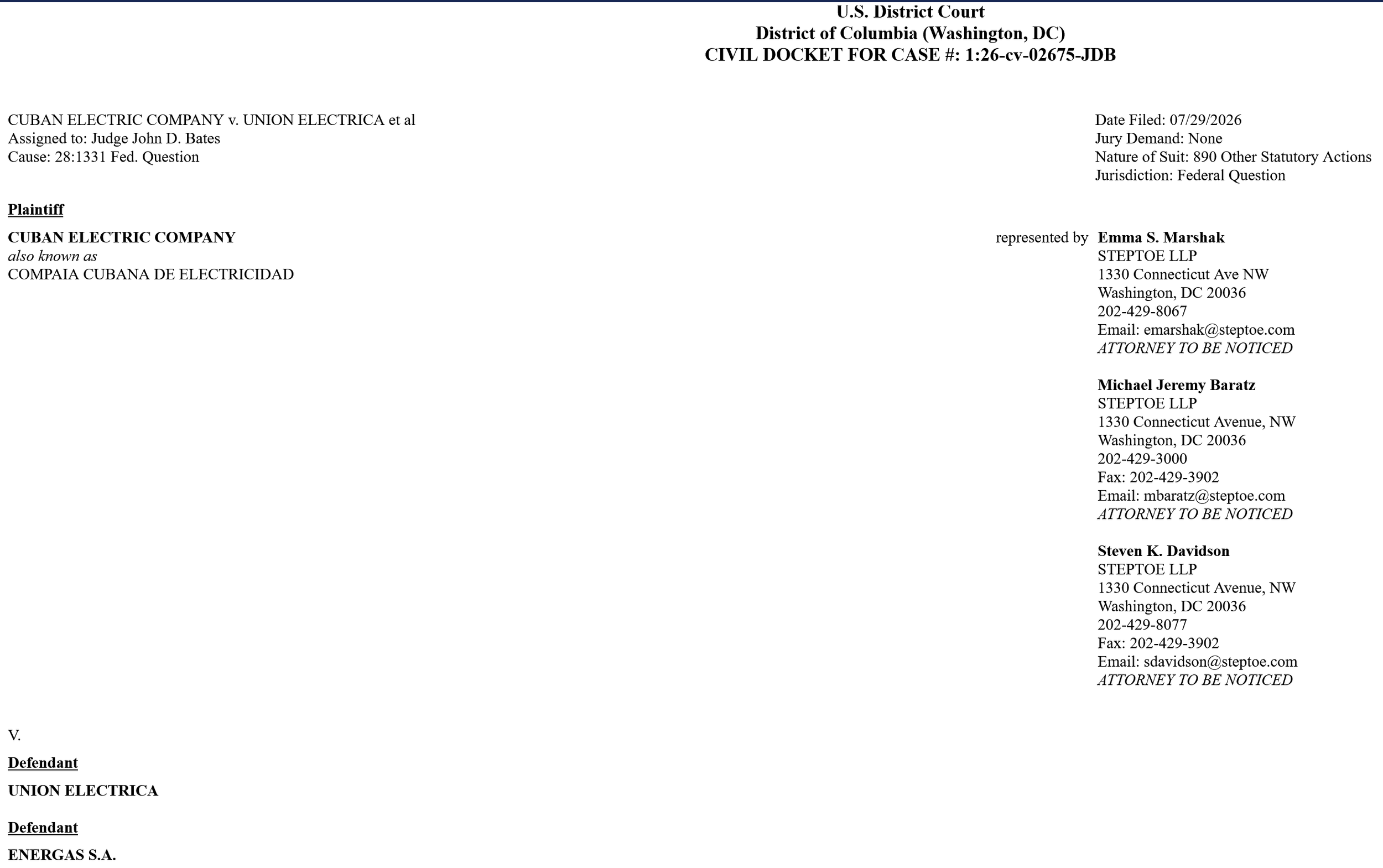
U.S. District Court
District of Columbia (Washington, DC)
CIVIL DOCKET FOR CASE #: 1:26-cv-02675-JDB

Link To Complaint In PDF Format

Link To Libertad Act Title III Lawsuit Filing Statistics

CUBAN ELECTRIC COMPANY A/K/A COMPAÑIA CUBANA DE ELECTRICIDAD
P.O. Box 5023
Boca Raton, FL 33431
Plaintiff,
v.
UNIÓN ELÉCTRICA
Edificio del Ministerio de Energía y Minas
Avenida Salvador Allende No 666 e/ Oquendo y Soledad
Municipio Centro Habana, La Habana, Cuba
AND
ENERGAS S.A.
Edificio del Ministerio de Energía y Minas
Avenida Salvador Allende No 666 e/ Oquendo y Soledad
Municipio Centro Habana, La Habana, Cuba
Defendants.

NOTE: Greenwich, Connecticut-based Atlas Holdings owns Boca Raton-based Office Depot (2025 revenue approximately US$7 billion) which is the owner of the certified claim.  Steptoe LLP also represents Spring, Texas-based ExxonMobil Corporation (2025 revenue approximately US$332 billion) in its Libertad Act Title III lawsuit filed in 2019 against Republic of Cuba government-operated Corporación Cimex, S.A. and Republic of Cuba government-operated Unión Cuba-Petróleo (CUPET).

Complaint (excerpts): 

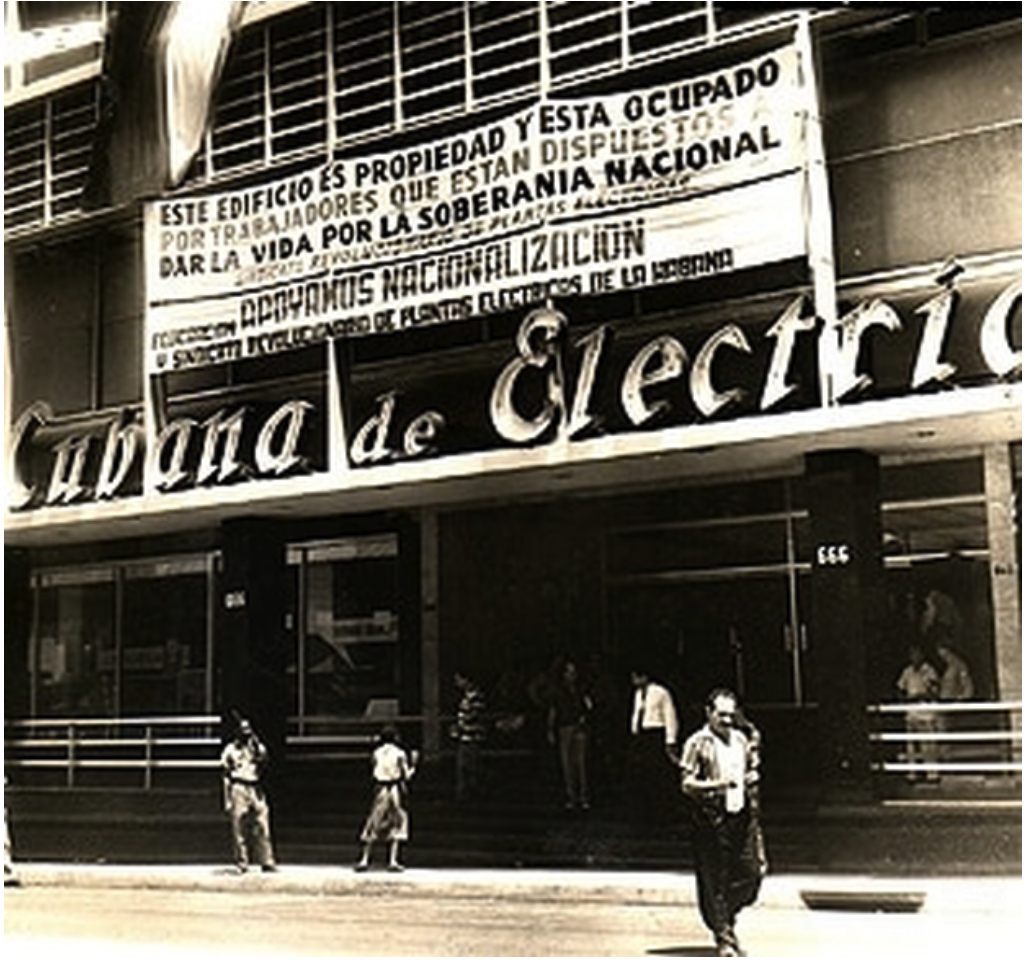
Before 1960, Plaintiff owned and operated a substantial portion of Cuba’s electric power generation and transmission infrastructure, supplying more than 90% of Cuba’s electricity. In 1960, Fidel Castro’s revolutionary regime unlawfully confiscated that property and numerous other assets—collectively valued in excess of $300 million—from Plaintiff without just cause or compensation. As a direct result of these confiscations, Plaintiff was stripped of its investments, deprived of the use and value of its property, and forced to cease its operations in Cuba. 

Defendant Energas S.A. is an enterprise organized under the laws of Cuba as a joint venture with three equal owners: 1/3 owner UNE, 1/3 owner Unión Cubapetróleo (“CUPET”), Cuba’s state-owned oil company, and 1/3 owner Sherritt International Corporation (“Sherritt”), a minerals company which is a corporation organized under the laws of Canada with its principal place of business in Canada. Thus, Energas is majority-owned by Cuban state-owned entities. Energas processes raw natural gas, which is supplied to Energas free of charge by CUPET. Energas also generates electricity for sale to the national grid, providing approximately 10% of Cuba’s total electrical generating capacity. Energas’ principal place of business is in Cuba, and it has operations throughout the country. 

WHEREFORE, Plaintiff respectfully requests that judgment be entered in its favor and against Defendants: 

a. Awarding Plaintiff actual damages in the amount of $267,568,413.62; b. Awarding Plaintiff pre-judgment interest at the rate of 6% per annum from August 6, 1960, as set forth in the FCSC’s award; c. Awarding Plaintiff treble damages pursuant to 22 U.S.C. § 6082(a)(3); d. Ordering Defendants to pay Plaintiff’s reasonable attorney’s fees and costs incurred in this action pursuant to 22 U.S.C. § 6082(a); e. Awarding Plaintiff statutory interest pursuant to 22 U.S.C. § 6082(a)(1)(B) and post-judgment interest; and f. Granting all other relief at law or in equity that the Court deems just and proper.

CUBAN ELECTRIC COMPANY v. UNION ELECTRICA et al
Assigned to: Judge John D. Bates
Cause: 28:1331 Fed. Question    
Date Filed: 07/29/2026
Jury Demand: None
Nature of Suit: 890 Other Statutory Actions
Jurisdiction: Federal Question
Plaintiff 

Plaintiff 

CUBAN ELECTRIC COMPANY also known as COMPAIA CUBANA DE ELECTRICIDAD

Emma S. Marshak 
STEPTOE LLP 
1330 Connecticut Ave NW 
Washington, DC 20036 
202-429-8067 
Email: emarshak@steptoe.com 

Michael Jeremy Baratz 
STEPTOE LLP 
1330 Connecticut Avenue, NW 
Washington, DC 20036 
202-429-3000 
Fax: 202-429-3902 
Email: mbaratz@steptoe.com 

Steven K. Davidson 
STEPTOE LLP 
1330 Connecticut Avenue, NW 
Washington, DC 20036 
202-429-8077 
Fax: 202-429-3902 
Email: sdavidson@steptoe.com

07/31/2026- ORDER granting 5 Motion for Leave to Appear Pro Hac Vice. Counsel should register for e-filing via PACER and file a notice of appearance pursuant to LCvR 83.6(a). Click for instructions. Signed by Judge John D. Bates on 7/31/2026. (lcjdb1) 
07/30/2026- SUMMONS (2) Issued Electronically as to ENERGAS S.A., UNION ELECTRICA. (Attachments: # 1 Notice and Consent)(zmtm)
07/30/2026- Case Assigned to Judge John D. Bates. (zmtm)
07/29/2026- MOTION for Leave to Appear Pro Hac Vice :Attorney Name- Michael G. Scavelli, Filing fee $ 100, receipt number ADCDC-12577252. Fee Status: Fee Paid. by CUBAN ELECTRIC COMPANY. (Attachments: # 1 Declaration of Michael G. Scavelli, # 2 Exhibit 1, # 3 Text of Proposed Order)(Davidson, Steven)
07/29/2026- NOTICE of Appearance by Emma S. Marshak on behalf of CUBAN ELECTRIC COMPANY (Marshak, Emma) 
07/29/2026- NOTICE of Appearance by Michael Jeremy Baratz on behalf of CUBAN ELECTRIC COMPANY (Baratz, Michael)
07/29/2026- LCvR 26.1 CERTIFICATE OF DISCLOSURE of Corporate Affiliations and Financial Interests by CUBAN ELECTRIC COMPANY (Davidson, Steven)
07/29/2026- Payment for 1 Complaint,. ($7202; Receipt number ADCDC-12577176). (Davidson, Steven)
07/29/2026- COMPLAINT against ENERGAS S.A., UNION ELECTRICA ( Filing fee $ 405 receipt number ADCDC-12577139) filed by CUBAN ELECTRIC COMPANY. (Attachments: # 1 Exhibit 1, # 2 Civil Cover Sheet, # 3 Summons of Union Electrica, # 4 Summons of Energas S.A.)(Davidson, Steven)

Center for free cuba

May 2026 U.S. Agricultural Commodity/Food Product Exports To Cuba Increase 13.2%. Fresh Eggs, Eggs For Incubation, Sugar, Motor Home, Solar Cells, US$15.7 Million Vehicles & Parts.

ECONOMIC EYE ON CUBA©
July 2026

May 2026 Ag/Food Exports To Cuba Increase 13.2%- 1
Year-To-Year Decrease 7.7%- 2
51st Of 219 May 2026 U.S. Food/Ag Export Markets- 2
Year-To-Year Ranking 52nd Of 219 U.S. Ag/Export Markets- 2
Re-Emerging Private Sector Exports Continue To Increase - 3
Trump-Vance Administration Fuels Authorization- US$23,890,779.00- 3 
May 2026 CDA Healthcare Product Exports US$9,240.00- 6
May 2026 Humanitarian Donations US$26,091,252.00 – 7
U.S. Port Export Data- 20


MAY 2026 AG/FOOD EXPORTS TO CUBA INCREASE 13.2%- Exports of food products and agricultural commodities from the United States to the Republic of Cuba were US$42,191,741.00 in May 2026 compared to U$37,243,858.00 in May 2025 and US$34,611,474.00 in May 2024.  

US$189,034,771.00 thus far in 2026 compared with US$204,928,982.00 during the same period in 2025 representing a decrease of 7.7% year-to-year.

Highlights: Motor Home (US$14,360.00), US$15,744,277.00 (Vehicles, Parts, Motorcycles, Bicycles), Solar Cells (US$285,656.00), US$315,579.00 (Cane/Beet Sugar), US$1.47 Million (Eggs For Incubation), US$3.6 Million (Fresh Eggs).

Since 2022, when the first BIS license was issued for the export of vehicles to Republic of Cuba nationals and to private companies in the Republic of Cuba, the cumulative export value of the initiatives in place during the Obama-Biden Administration, Trump-Pence Administration, Biden-Harris Administration, and Trump-Vance Administration exceeds US$485 million of which electric and gasoline-powered new and used vehicles, bicycles, trucks, motorcycles and mopeds, and parts, exceeds US$285 million (Year 2026: US$58,364,928.00; Year 2025: US$149,413,031.00; Year 2024: US$67,241,234.00; Year 2023: US$10,546,419.00; Year 2022: US$89,848.00), and purchases (equipment and products) for use by the re-emerging private sector in the Republic of Cuba driving the growth.

The data contains information on exports from the United States to the Republic of Cuba- products within the Trade Sanctions Reform and Export Enhancement Act (TSREEA) of 2000, Cuban Democracy Act (CDA) of 1992, and regulations implemented (1992 to present) for other products by the Office of Foreign Assets Control (OFAC) of the United States Department of the Treasury, Bureau of Industry and Security (BIS) of the United States Department of Commerce, and United States Department of State.

The TSREEA re-authorized the direct commercial (on a cash basis) export of food products (including branded food products) and agricultural commodities from the United States to the Republic of Cuba, irrespective of purpose. The TSREEA does not include healthcare products, which remain authorized and regulated by the CDA.

The data represents the U.S. Dollar value of product exported from the United States to the Republic of Cuba under the TSREEA, CDA, and other regulations, specifically including products exported from the United States to the re-emerging private sector in the Republic of Cuba.

The data does not include transportation charges, bank charges, or other costs associated with exports; the government of the Republic of Cuba reports unverifiable data that includes transportation charges, bank charges, and other costs.

LINK TO COMPLETE REPORT IN PDF FORMAT

LINK TO 2026 U.S. PORT EXPORT DATA

LINK TO COMPLETE LIST OF PRODUCTS IN 2025 EXPORTED FROM THE UNITED STATES TO CUBA

LINK TO COMPLETE LIST OF PRODUCTS IN 2024 EXPORTED FROM THE UNITED STATES TO CUBA

Readying An Off-The-Shelf Solution? US$500 Million U.S.-Cuba Strategic Investment Program? The White House As Champion Spark Plug.

Get Ready For US$500 Million U.S.-Cuba Strategic Investment Program? 

The White House Wants To Be Spark Plug For Cuba 

Expect Trump-Vance Administration Formula For Cuba Will Be Revisions Of Elements In Existing Commercially-Focused Programs 

Consequently, And Controversially, The White House Will Direct United States Taxpayer Funds To Guarantee Investments, Serve As Investment Capital, Serve As Collateral, And Be Available To Purchase Shares 

United States, Inc. Meet Cuba, Inc. 

The Trump-Vance Administration (2025-2029) continues to commingle and intertwine the private sector with the public sector.   

No longer politically taboo is the United States government having a shareholding (sometimes with preferential management and voting authority) in a company- whether that company is privately-held or publicly-held.   

Within The White House, United States Department of State, United States Department of Commerce, and United States Department of the Treasury, an increasing number of mid-level and senior-level officials, career and political appointees, are concluding the Republic of Cuba will require capital and guarantees, particularly for infrastructure, which the United States private sector will be unable and unwilling to provide. 

The template for an off-the-shelf structure is the newly-announced US$500 million United States-Africa Strategic Investment Program which could be copied and then rebranded as the United States-Cuba Strategic Investment Program.   

The goal for the United States taxpayer financial commitment would be to leverage at least US$1 billion.  One vehicle toward that goal would be the Washington DC-based U.S. International Development Finance Corporation (https://www.dfc.gov/). 

  • “The U.S. International Development Finance Corporation (DFC) is the international investment arm of the United States Government and central to U.S. economic statecraft.  DFC mobilizes private capital to advance U.S. foreign policy and economic development.  Our investments deliver strong returns for American taxpayers, drive meaningful economic development for our allies and partners, and secure supply chains to counter and outcompete our adversaries.”   

A challenge for the Trump-Vance Administration will be to determine which application(s) to approve first, second, third and so forth.  The most difficult political decision is conveying to an applicant that their proposal, while important, while useful, is not urgent and, thus, can wait.   

Each application will have advocates (and lobbyists and members of the United States Congress) who believe their application is the most important for the Republic of Cuba.   

The epicenter of the advocacy will be South Florida.  There will be an extraordinary amount of private sector money and public sector money spent seeking public sector money. 

Semafor: “The Trump administration’s new United States-Africa Strategic Investment Program reflects Washington’s shift in prioritizing “trade over aid” in its diplomatic engagement with the continent.  The US$500 million initiative, overseen by an office comprising remnants of the United States Agency for International Development (USAID) former Africa portfolio- awards grants to businesses, nonprofits, and international organizations, aiming to use development dollars to boost private sector investment, particularly in critical minerals.”   

United States Department of State
Washington DC
24 July 2026

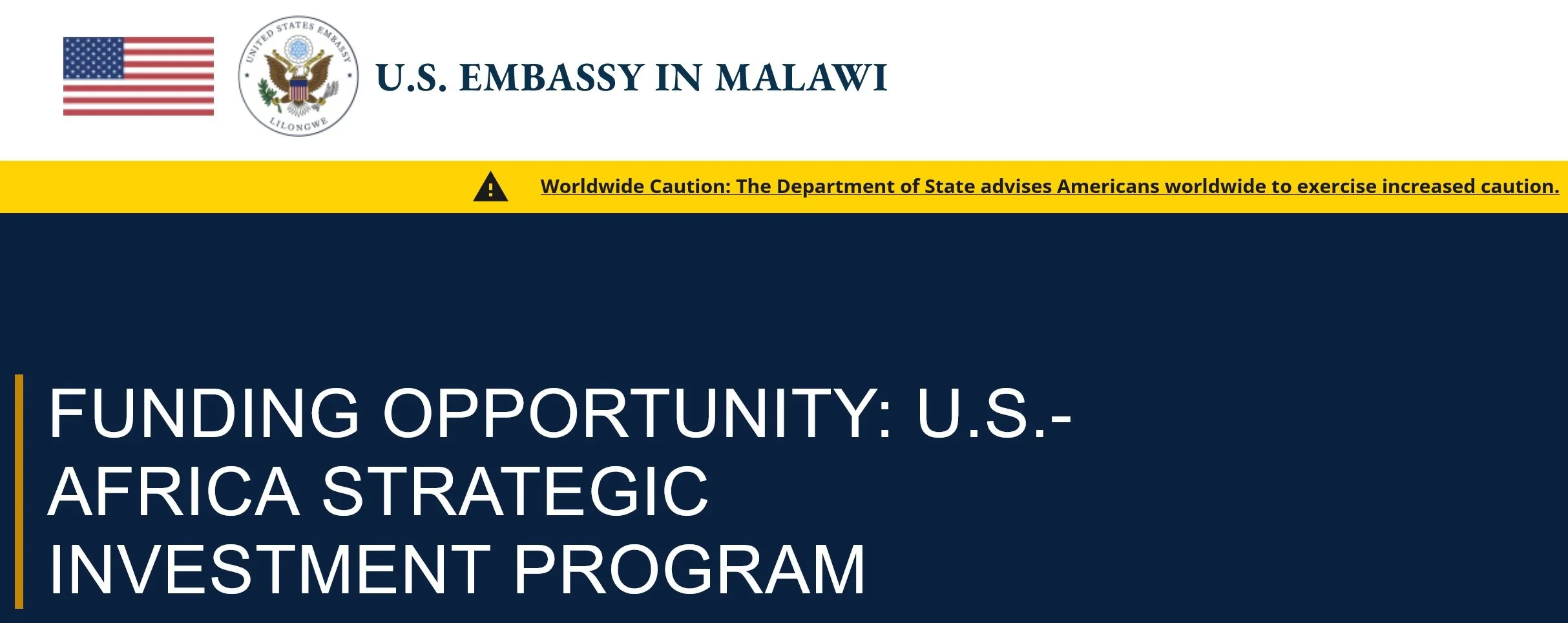
The Bureau of African Affairs of the U.S. Department of State is pleased to announce a public grants opportunity for its U.S.-Africa Strategic Investment Program through an Annual Program Statement (APS).

“The U.S.-Africa Strategic Investment Program advances America’s national interests by harnessing market-based, private sector-led growth across two strategic focus areas: Critical Minerals Investment and Commercial Diplomacy Acceleration.  This program seeks market-based solutions that strengthen the environment for foreign investment in sub-Saharan Africa through transparent and competitive processes, creating sustainable economic growth in two strategic focus areas.  Projects must demonstrate clear, measurable benefits to one or more sub-Saharan countries, such as increased investment from high-quality U.S. and U.S.-aligned companies.  Applicants are also encouraged to identify how their projects create conditions that enable U.S. commercial participation.” 

Estimated Total Program Funding: US$500 million
Award Ceiling: US$50 million
Award Floor: US$5 million

Statement of Interest (SOI) will be accepted throughout the year according to the following schedule: Window 1: 23 July 2026 to 21 August 2026; Applications due by 11:59 pm ET 21 August 2026; Deadline for Questions and Notice of Intent to Apply: 2 August 2026 by 11:59 pm ET; Anticipated Response to Questions: 10 August 2026; Notifications of Results: 29 November 2026.  All submissions must be made by email to AF-A-Proposals@state.gov, not through grants.gov or the MyGrants system.   

View Grant Opportunity 

DFOP0019410
U.S.-Africa Strategic Investment Program
Department of State- Bureau of African Affairs

General Information

Document Type: Grants Notice
Funding Opportunity Number: DFOP0019410
Funding Opportunity Title: U.S.-Africa Strategic Investment Program
Opportunity Category: Discretionary
Opportunity Category Explanation:    
Funding Instrument Type: Cooperative Agreement Grant
Category of Funding Activity: Business and Commerce
Category Explanation:    
Expected Number of Awards: 10
Assistance Listings: 19.989- State/African Regional- Other Economic Support Funds (ESF) Projects/Programs
Cost Sharing or Matching Requirement: No
Version: Synopsis 2
Posted Date: Jul 23, 2026
Last Updated Date: Jul 23, 2026
Original Closing Date for Applications: May 27, 2027 
Current Closing Date for Applications: May 27, 2027 See deadlines for each application window within the Annual Program Statement.
Estimated Total Program Funding: US$500,000,000
Award Ceiling: US$50,000,000
Award Floor: US$5,000,000

Eligibility

Eligible Applicants: Others (see text field entitled "Additional Information on Eligibility" for clarification).  Nonprofits having a 501(c)(3) status with the IRS, other than institutions of higher education.  Nonprofits that do not have a 501(c)(3) status with the IRS, other than institutions of higher education. For profit organizations other than small businesses. Small businesses.  

Additional Information on Eligibility: Public International Organizations are also eligible. Recipients must demonstrate alignment with or a commitment to advancing U.S. supply chain goals.

Additional Information

Agency Name:  Bureau of African Affairs

Description: The U.S.-Africa Strategic Investment Program advances America's national interests by harnessing market-based, private sector-led growth across two strategic focus areas: Critical Minerals Investment and Commercial Diplomacy Acceleration.  This program seeks market-based solutions that strengthen the environment for foreign investment in sub-Saharan Africa through transparent and competitive processes, creating sustainable economic growth in two strategic focus areas.  Projects must demonstrate clear, measurable benefits to one or more sub-Saharan countries, such as increased investment from high-quality U.S. and U.S.-aligned companies. Applicants are also encouraged to identify how their projects create conditions that enable U.S. commercial participation.

Link to Additional Information: Link to Opportunity in MyGrants

Grantor Contact Information: If you have difficulty accessing the full announcement electronically, please contact: DFOP0019410. AF-A-Proposals@state.gov

Links 

https://mw.usembassy.gov/funding-opportunity-u-s-africa-strategic-investment-program/?utm_source=semafor 

https://www.grants.gov/search-results-detail/363298

LINK TO COMPLETE ANALYSIS IN PDF FORMAT

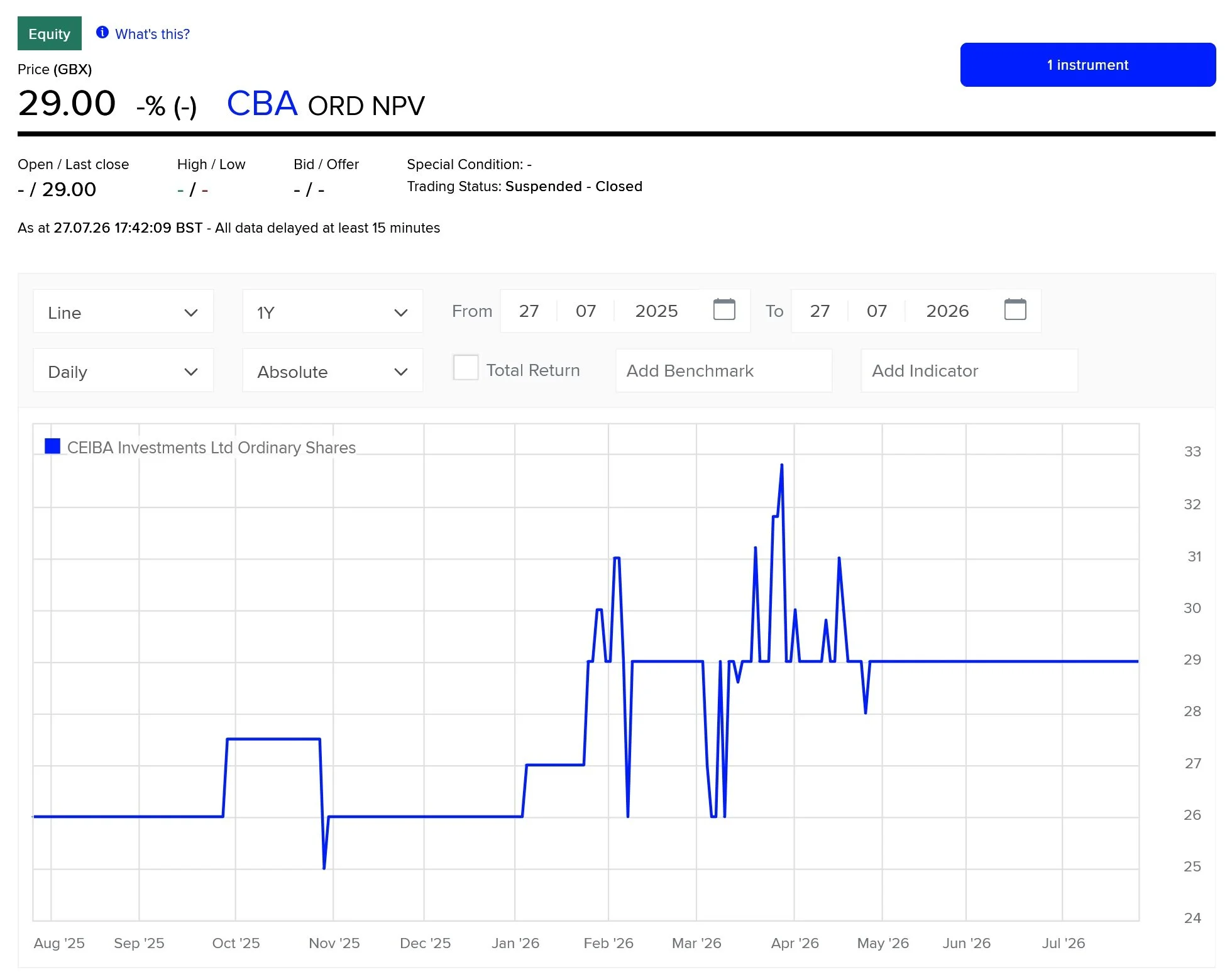
UK-Based CEIBA Investments Sanctioned By The OFAC For Presence In Cuba. Did CEIBA Have An Opportunity To Resolve Issue Prior To The OFAC Designation?

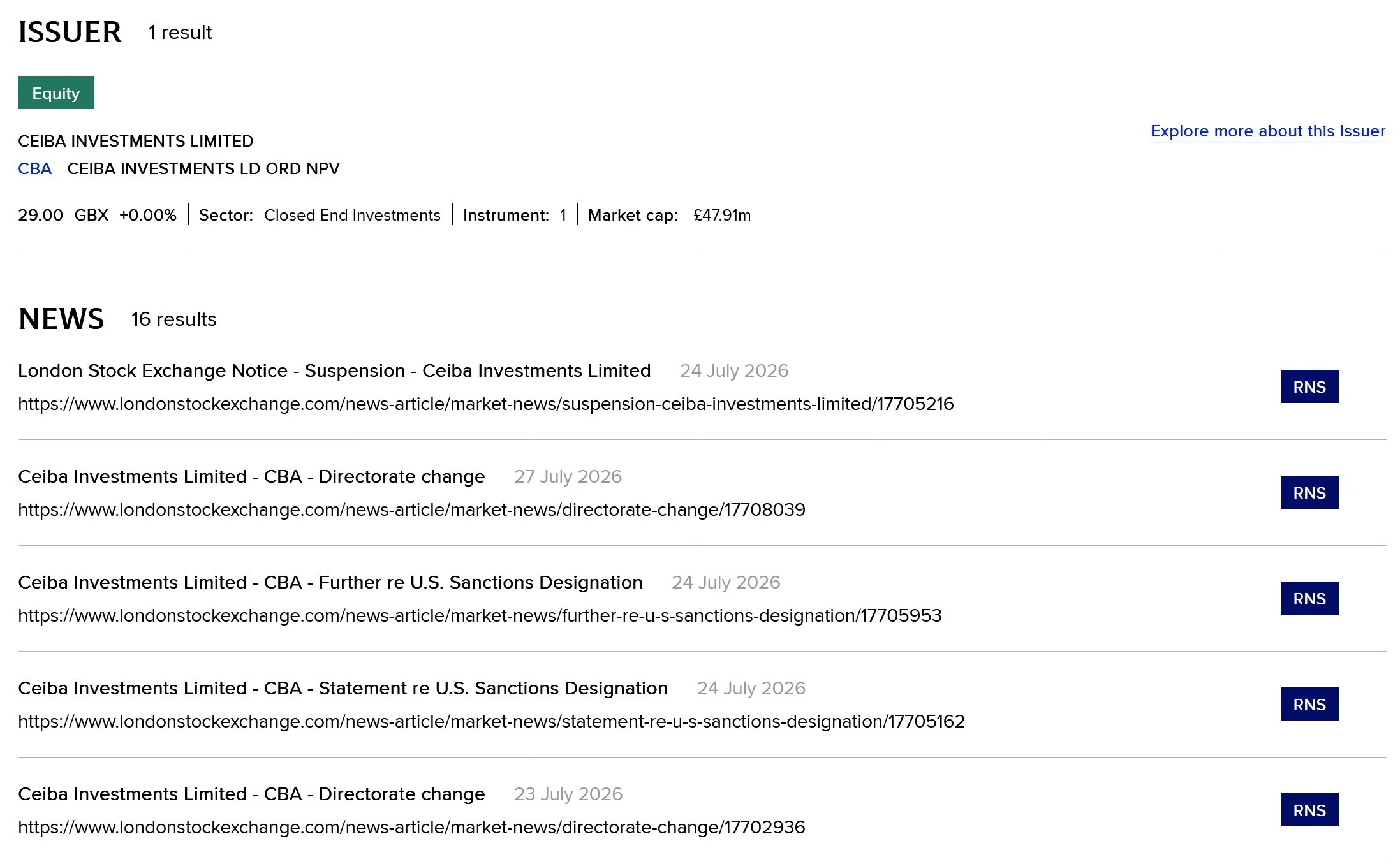
Suspension - Ceiba Investments Limited 
Released 11:10:01 24 July 2026
RNS Number: 8011N
London Stock Exchange Notice
24 July 2026

 
NOTICE
24/07/2026 11:10am
TEMPORARY SUSPENSION OF TRADING ON SPECIALIST FUND SEGMENT
CEIBA INVESTMENTS LIMITED
 
At the request of the company, trading on SFS for the under-mentioned securities have been temporarily suspended from 24/07/2026 11:10am, pending an announcement.
 
ORDINARY SHARES OF NO PAR VALUE; FULLY PAID
(BFMDJH1) (GG00BFMDJH11)
 
If you have any queries relating to the above, please contact the company's corporate finance adviser on +44 (0)20 7496 3000.

Further re U.S. Sanctions Designation 
CEIBA INVESTMENTS LIMITED
Released 18:04:55 24 July 2026

 
RNS Number : 8614N
Ceiba Investments Limited
24 July 2026
 
THIS ANNOUNCEMENT CONTAINS INSIDE INFORMATION FOR THE PURPOSES OF ARTICLE 7 OF REGULATION (EU) NO 596/2014 AS IT FORMS PART OF UK DOMESTIC LAW BY VIRTUE OF THE EUROPEAN UNION (WITHDRAWAL) ACT 2018, AS AMENDED ("UK MAR"). ON PUBLICATION OF THIS ANNOUNCEMENT VIA A REGULATORY INFORMATION SERVICE, THIS INSIDE INFORMATION IS NOW CONSIDERED TO BE IN THE PUBLIC DOMAIN.

CEIBA INVESTMENTS LIMITED
("CEIBA" or the "Company")
(TICKER CBA, ISIN: GG00BFMDJH11)
Legal Entity Identifier: 213800XGY151JV5B1E88
 
U.S. SANCTIONS DESIGNATION
 
SUSPENSION OF TRADING
 
The U.S. Department of State has designated CEIBA as a blocked person and a Specially Designated National under Executive Order 14404

On 23 July 2026, the Department of State designated CEIBA pursuant to Executive Order (E.O.) 14404, which authorizes sanctions on persons determined to meet specified criteria related to Cuba.

The apparent justification for making this designation is the assumption on the part of the Department of State that CEIBA has attempted (or is complicit in attempting) to shield assets and revenue streams of Grupo de Administración Empresarial S.A. ("GAESA") from U.S. sanctions.

In this respect, explicit reference is made by the Department of State to a transaction carried out by CEIBA's wholly-owned subsidiary CEIBA MTC Properties Inc. to acquire 51% of the shares in Inmobiliaria Monte Barreto S.A. ("Monte Barreto") from Inmobiliaria Lares S.A., an indirect subsidiary of GAESA.

As announced by the Company on 5 June 2026, the Monte Barreto transaction was the result of a lengthy process of negotiations that began in March 2017 and was finalized and set out in a binding agreement on 22 April 2026, before the date that GAESA was designated by the U.S. State Department as a blocked person and SDN under E.O. 14404.

The transaction was carried out on arm's-length terms and was completed within the stated timeframe granted under E.O. 14404 to wind down dealings with GAESA, and was fully funded using monies of Monte Barreto, including reserves, unpaid dividends and other Cuban onshore funds attributable to Monte Barreto and its shareholders and did not include any hard currency payment.  The transaction resulted in Monte Barreto becoming a full foreign capital company falling under the supervision of the Cuban Ministry of Foreign Trade and Investment, with total autonomy of operations, benefitting from the new rules approved by the Cuban government in late 2025, including the direct hiring and remuneration of its personnel.  As of 4 June 2026, the board of directors of Monte Barreto is made up only of CEIBA representatives.  All Cuban directors resigned on completion of the transaction.

On 4 June 2026, CEIBA voluntarily disclosed the Monte Barreto transaction to the Office of Foreign Assets Control of the U.S. Department of the Treasury ("OFAC") and informed OFAC that by doing so it had fully wound down its only business relationship with GAESA within the period specified to do so.

To date, the Company has always been extremely careful with its investments in Cuba and has taken numerous steps to mitigate the risks of exposure to U.S. sanctions, including but not limited to: (i) not holding bank accounts, nor at any time transacting, in U.S. Dollars; (ii) not retaining U.S. entities (or non-U.S. entities that fall under the Cuban Assets Control Regulations (CACR) definition of "U.S. Person"); prohibiting U.S. investors from becoming shareholders of the Company; (iii) not using or benefitting from properties to which a claim is held by a U.S. Person; and (iv) excluding U.S. Persons from being a board member. 

Request to be Removed from the E.O. 14404 SDN List and Immediate Implications  

The Company believes that its designation by the Department of State as a blocked person and SDN under E.O. 14404 is an error and that the Company is able to prove that the transaction to acquire shares in Monte Barreto had a valid and real purpose, with many positive aspects, and it was not carried out to shield assets and revenue streams belonging to GAESA from U.S. sanctions.   

CEIBA will therefore immediately approach OFAC and the Department of State to request cancellation of the designation and removal of the Company from the SDN list. 

However, the Company is conscious of the fact that there are no set time limits in relation to the designation delisting process and that, in the meantime, the designation will have severe immediate implications for the Company and its subsidiaries, who under E.O. 14404 are now all considered blocked persons. 

On the basis of General License number 2, issued by OFAC on 23 July 2026, third parties are also authorized to wind down transactions involving CEIBA and its subsidiaries through 22 August 2026.

Board Resignations

As a result of the SDN designation the following members of the Board of Directors have tendered their immediate resignation: Simeon Goddard, Robin Smith, Enrique Martinon Garcia

Suspension of Trading

Following the announcement issued by CEIBA earlier today, at the request of the Company trading of the Company's shares on the Specialist Funds Segment of the London Stock Exchange was temporarily suspended while the Board considers the impact on CEIBA of the E.O. 14404 Designation.

Given the complexity and unexpected nature of this designation, the Board and Management of CEIBA continue to consult with advisors to assess and understand the impact of this designation on the Company and its financial position.

As such, the Company has requested that the temporary suspension to trading in its shares remains in place and an update will be made in due course.
 
www.ceibainvest.com 

Link To London Stock Exchange Filings

U.S. Government Had Interest In Mining Company In Cuba, Might Trump-Vance Administration Return U.S. Government To Asset Ownership In Cuba?

FOREIGN CLAIMS SETTLEMENT OF THE UNITED STATES
WASHINGTON DC


PROPOSED DECISION 

This claim against the Government of Cuba, filed under Title V of the International claims Settlement Act of 1949, as amended, in the amount of $42,600,000.00, was presented by NICARO NICKEL COMPANY based upon the asserted loss of certain mining concessions and other assets in Cuba. Under Title V of the International Claims Settlement Act of 1949

In The Matter Of The Claim Of NICARO NICKEL COMPANY  

Claim No. CU-2624 
Decision No. CU-6247
 

Appeal and objections from a Proposed Decision entered on June 30, 1971; oral hearing requested. 
Oral hearing held on September 16, 1971 

FINAL DECISION

Under date of June 30, 1971, the Commission issued its Proposed Decision certifying a loss in favor of claimant in the amount of $22,494,708.62 plus interest. 

The Certification of Loss covered certain mining concessions in Cuba in the amount of $22,297,708.62, and other appurtenant property in the amount of $197,000.00.

In determining the value of claimant’s mining concessions, the Commission allowed only the established amount of proven ore, and portions of the claim for probable ore and possible ore were denied. 

The value of the proven ore was determined by the application of a 12% annual discount rate to the yearly valuations of the ore for the period 1961 to 1979 to arrive at the aggregate value of the proven ore on October 24, 1960, the date of loss.

Claimant objected to the denial of the claim for probable ore and possible ore, and to the use of a 12% annual discount rate. In support of the objections, claimant submitted a report of August 1971 from Behre Dolbear & Company, Inc., a firm of mining geological and metallurgical consultants, which contains the conclusion that an 8% annual discount rate should be applied to determine the values of the proven ore, probable ore and possible ore. 

LINK TO CERTIFIED CLAIM FILING IN PDF FORMAT

U.S. Court Of Appeals References U.S. Supreme Court Decision In Dismissing Libertad Act Lawsuit Against UK Companies

Opinion of the Court 24-11487
Appeal from the United States District Court for the Southern District of Florida
D.C. Docket No. 1:20-cv-23287-DPG


Before JORDAN, NEWSOM, Circuit Judges, and HONEYWELL, District Judge. NEWSOM, Circuit Judge:

The Cuban Liberty and Democratic Solidarity Act of 1996, 22 U.S.C. §§ 6021–6091—more commonly known as the Helms-Burton Act—imposes liability on any person that “traffics” in property that was confiscated by the Cuban government on or after January 1, 1959, and to which a U.S. national has a claim. The plaintiffs in this case are seven U.S. nationals and descendants of Ramón Rodriguez Gutiérrez, who owned property confiscated by the Cuban government in 1961. The plaintiffs sued several corporations alleging that they had “traffic[ked]” in that property within the meaning of the Helms-Burton Act. The district court granted the corporations’ respective motions to dismiss for lack of personal jurisdiction. As relevant here, the plaintiffs now appeal the dismissal of their claims against two British corporations—Imperial Brands and WPP. Doing our best to apply the Supreme Court’s recent decision in Fuld v. Palestine Liberation Organization, 606 U.S. 1 (2025), we hold that the federal courts lack personal jurisdiction over WPP and Imperial, and we therefore affirm the district court’s dismissal of the plaintiffs’ complaint.

LINK TO OPINION IN PDF FORMAT

LUIS MANUEL RODRIGUEZ, MARIA TERESA RODRIGUEZ, a/k/a MARIA TERESA LANDA, ALFREDO RAMON FORNS, RAMON ALBERTO RODRIGUEZ, RAUL LORENZO RODRIGUEZ, CHRISTINA CONROY, and FRANCISCO RAMON RODRIGUEZ, Plaintiffs, v. IMPERIAL BRANDS PLC, CORPORACIÓN HABANOS, S.A., WPP PLC, YOUNG & RUBICAM LLC, and BCW LLC, a/k/a BURSON COHN & WOLFE LLC [1:20-cv-23287; Southern Florida District].

Berenthal & Associates (plaintiff)
Rodriguez Tramont & Nunez (plaintiff)
Nelson Mullins (defendant)
Allen & Overy (defendant)
Wilmer Cutler Pickering Hale and Dorr (defendant)
Broad & Cassel (defendant)
Akerman (defendant)
Trenam, Kemker, Scharf, Barkin, Frye, O’Neill & Mullis (defendant)
Rabinowitz, Boudin, Standard, Krinsky & Lieberman (defendant)
Strook & Strook & Lavan (defendant)

Termed: 07/23/2026
Nature of Suit: 3890 Other Statutory Actions    
Luis Rodriguez, et al v. Imperial Brands, PLC., et al    
Appeal From: Southern District of Florida    
Fee Status: Fee Paid    

Case Type Information:
1) Private Civil
2) Federal Question

Originating Court Information:
District: 113C-1 : 1:20-cv-23287-DPG

10/17/2025- Appellee's Supplemental Brief filed by Appellee Imperial Brands, PLC.. [24-11487] (ECF: Andrew Davies)
10/20/2025- Received paper copies of Appellant Supplemental brief [4 copies ] for Appellant Luis Manuel Rodriguez.
10/22/2025- Received paper copies of Appellees Supplemental Brief [4 copies] for Appellees BCW, LLC., Corporacion Habanos, S.A., Imperial Brands, PLC., WPP, PLC. and Young & Rubicam, LLC.
06/03/2026- Supplemental Authority filed by Appellants Christina Conroy, Alfredo Ramon Forns, Frank R. Rodriguez, Luis Manuel Rodriguez, Maria Rodriguez and Ramon Alberto Rodriguez. [24-11487] (ECF: Charles Auslander) 
06/05/2026- Response to Supplemental Authority (28J) filed by Appellee Imperial Brands, PLC.. [24-11487] (ECF: Andrew Davies) 
06/05/2026- Response to Supplemental Authority (28J) filed by Appellees BCW, LLC., WPP, PLC. and Young & Rubicam, LLC.. [24-11487] (ECF: Mark Fleming)
06/25/2026- Supplemental Authority filed by Appellants Christina Conroy, Alfredo Ramon Forns, Frank R. Rodriguez, Luis Manuel Rodriguez, Maria Rodriguez and Ramon Alberto Rodriguez. [24-11487] (ECF: Charles Auslander)
06/29/2026- Response to Supplemental Authority (28J) filed by Appellee Imperial Brands, PLC.. [24-11487] (ECF: Andrew Davies) 
07/23/2026- Opinion issued by court as to Appellants Christina Conroy, Alfredo Ramon Forns, Frank R. Rodriguez, Luis Manuel Rodriguez, Maria Rodriguez, Ramon Alberto Rodriguez and Raul Rodriguez. Decision: Affirmed. Opinion type: Published. Opinion method: Signed. The opinion is also available through the Court's Opinions page at this link http://www.ca11.uscourts.gov/opinions. 
07/23/2026- Judgment entered as to Appellants Christina Conroy, Alfredo Ramon Forns, Frank R. Rodriguez, Luis Manuel Rodriguez, Maria Rodriguez, Ramon Alberto Rodriguez and Raul Rodriguez.

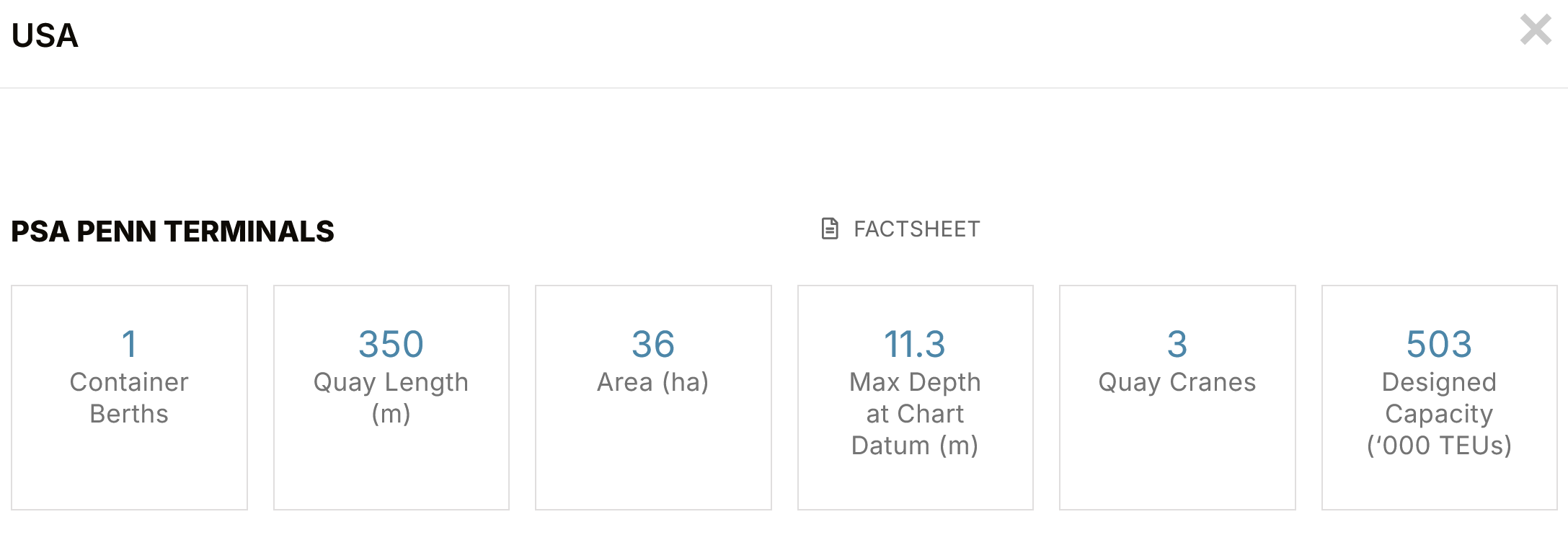
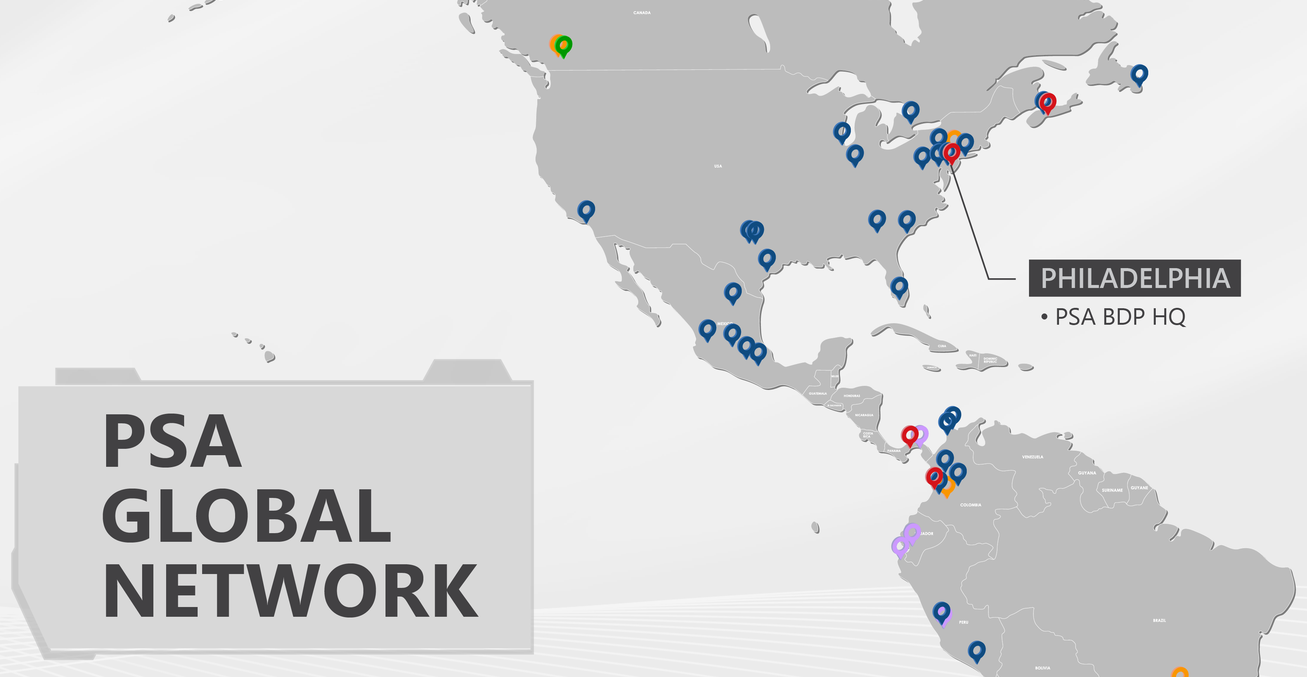
Singapore-based PSA International Has Operated Container Terminal At Port Of Mariel In Cuba Since 2011, But Scrubs Cuba From Its Web Site

Singapore-based PSA International Has Operated Container Terminal At Port Of Mariel In Cuba Since 2011, But Scrubs Cuba From Its Web Site  

The Port of Mariel container terminal opened on 27 January 2014 within the Republic of Cuba government-operated Zona Especial de Desarollo Mariel (Mariel Special Economic Zone- ZEDM).  

Singapore, Singapore-based PSA International Pte. Ltd. (PSA) (2025 revenue US$8.6 billion)- [formerly Port of Singapore Authority] is “a leading global port operator and trusted partner to cargo stakeholders.  Currently, PSA’s portfolio comprises over 70 deepsea, rail and inland terminals, across more than 180 locations in 45 countries- including two flagship port operations in Singapore and Belgium.  Drawing on the deep expertise and experience from a diverse global team, PSA collaborates with its customers and partners to develop world-class port ecosystems and deliver innovative supply chain solutions to accelerate the shift towards sustainable trade.”  PSA has a presence in the United States. 

United States Department of the Treasury
Washington DC
23 July 2026

The Office of Foreign Assets Control (OFAC) of the United States Department of the Treasury has updated the Specially Designated Nationals (SDN) and Blocked Persons List: 

“TERMINAL DE CONTENEDORES DE MARIEL S.A. (a.k.a. MARIEL CONTAINER TERMINAL S.A.; a.k.a. TCM S.A.), Vista del Mar, Cuba; Organization Established Date 01 Jun 2011; Organization Type: Cargo handling; Entity Code 60597 (Cuba) [CUBA-EO14404] (Linked To: GRUPO DE ADMINISTRACION EMPRESARIAL S.A.).”  

Links To Related Analyses 

The Trump-Pence Administration (2017-2021) on 2 May 2019 made operational Title III of the Cuban Liberty and Democratic Solidarity Act of 1996 (known as “Libertad Act”).  

  • Title III authorizes lawsuits in United States District Courts against companies and individuals who are using a certified claim or non-certified claim where the owner of the certified claim or non-certified claim has not received compensation from the Republic of Cuba or from a third-party who is using (“trafficking”) the asset.   

ODETTE BLANCO DE FERNANDEZ et al VERSUS A.P. MOLLER-MAERSK A/S (a/k/a A.P. MOLLER-MAERSK GROUP); MAERSK A/S (a/k/a MAERSK LINE A/S); MAERSK, INC.; and MAERSK AGENCY U.S.A., INC [2:21-cv-00339 Eastern District of Louisiana]  LINK To Complaint (2/17/2121)

Excerpt:

“As discussed more fully below, Defendant Maersk’s website touts that, since 2016, Maersk has been providing direct shipping services from Europe and Asia to Cuba, and specifically to the Port of Mariel, Cuba:  In 2016, Maersk’s operation in Cuba broke all records, seeing its vessels carry 23,094 FFE to the ports in Mariel and Santiago.  Volumes came from Asia primarily but also, increasingly, from Europe via a direct service which was launched the same year. 

Defendant Maersk, together with its subsidiaries and agents, also has provided direct service from the Port of New Orleans to the Port of Mariel.  As discussed more fully below, infra ¶¶ 108 - 110, according to the International Maritime Organization (“IMO”), a specialized agency of the United Nations responsible for regulating shipping, the ship A/S PETRA (IMO # 9283708), while operated by Defendant Maersk A/S, sailed from the Port of New Orleans on four occasions in 2020 and called at the Port of Mariel, Cuba on January 20, 2020, January 31, 2020, May 20, 2020, and August 12, 2020, respectively.  At each of the aforementioned callings at the Port of Mariel, the A/S PETRA engaged in commercial activities with the Port of Mariel and the Zona Especial de Desarollo Mariel (“ZEDM”) (a/k/a Mariel Special Economic Zone).”

NOTE: Since 2019, there have been Libertad Act Title III lawsuits filed against shipping companies for their use of the Port of Mariel.  Most have been resolved in out-of-court settlements.  In 2016, some shipping companies have suspended their presence in the Republic of Cuba marketplace. 

HAVANA, 6 July 2011 (Reuters)- “Singaporean port operator PSA International Pte. Ltd. has quietly signed on to manage a container terminal under construction at the Cuban port of Mariel, sources close to the project said this week.  The terminal is part of a larger scheme to develop Mariel Bay, 28 miles (45 km) west of Havana, into the Caribbean country's most important cargo hub and center of light manufacture. 

PSA International won a bid to manage the terminal last year and had been in negotiations ever since with Mariel developer Zona de Desarrollo Integral de Mariel, a subsidiary of the military owned Almacenes Universal S.A.  The sources said the agreement was to manage the port and did not involve any investment by the company.  Mariel Bay is one of Cuba's finest along the northern coast and the port is destined to replace Havana, the country's main port, over the coming years. 

No further details of the deal were available, but the sources said PSA International would now actively participate in planning the terminal, which is scheduled to open by 2014 when larger vessels will begin traversing the Panama Canal, now being expanded.  The Singapore company operates numerous ports around the world, including in Panama and Argentina. 

The Mariel terminal, which will have an initial 700 meters (765 yards) of berth, is ideally situated to handle U.S. cargo if the American trade embargo is eventually lifted, and will receive U.S. food exports already flowing into the country under a 2000 amendment to sanctions.  Plans through 2022 call for Mariel to house logistics facilities for offshore oil exploration and development, the container terminal, general cargo and bulk foods facilities and a Special Economic Development Zone for light manufacturing and storage, the sources said. 

Brazil has pledged $800 million so far to finance construction of infrastructure and port facilities already under way in conjunction with the Odebrecht group, Brazil's largest construction and engineering firm. 

Brazilian Presidential Adviser Marco Aurelio Garcia toured Mariel and met with Cuban President Raul Castro earlier this year, followed in June by former Brazilian President Luiz Inacio Lula da Silva.  Garcia said $400 million in financing had already been disbursed and another $200 million of the promised $800 million approved. He said an additional loan was under consideration. 

Mariel Port will handle vessels with up to a 15 meter (49 feet) draft, compared with 11 meters (36 feet) at Havana Bay due to a tunnel under the channel leading into the Cuban capital's port.  The terminal will have an annual capacity of 850,000 to 1 million containers, compared with Havana's 350,000.  Plans call for shutting down all port operations and an oil refinery at Havana Bay, which, with its excellent real estate overlooking the water, is to become a recreation area.”

LINK TO COMPLETE ANALYSIS IN PDF FORMAT

OFAC Adds To Cuba SDN List And Issues Three General Licenses, Including One To Assist With "Wind Down" Foreign Company Connectivity

United States Department of the Treasury
Washington DC
23 July 2026


The Department of the Treasury's Office of Foreign Assets Control (OFAC) is issuing Cuba General License 2, "Authorizing the Wind Down of Transactions Involving CEIBA Investments Limited;" Cuba General License 3, "Authorizing Certain Transactions Related to Debt or Equity of, or Derivative Contracts Involving, CEIBA Investments Limited;" and Cuba General License 4, "Authorizing Transactions for Third-Country Official Missions in Cuba."  Additionally, OFAC has updated the Specially Designated Nationals and Blocked Persons List.

CEIBA INVESTMENTS LIMITED, Les Echelons Court, Les Echelons, St. Peter Port, Channel Islands GY1 1AR, Guernsey; Organization Established Date 10 Oct 1995; Organization Type: Trusts, funds and similar financial entities; Legal Entity Number 213800XGY151JV5B1E88; Registration Number 30083 (Guernsey) [CUBA-EO14404]. 

CENTRO DE INVESTIGACIONES DEL PETROLEO S.A. (a.k.a. "CEINPET"), Cerro, Cuba; Organization Established Date 02 Jun 2020; Target Type State-Owned Enterprise; Entity Code 14774 (Cuba) [CUBA-EO14404]. 

COMERCIALIZADORA DE SERVICIOS MEDICOS CUBANOS SA (a.k.a. "CSMC"; a.k.a. "CUBAN MEDICAL SERVICES MARKETING COMPANY"; a.k.a. "SERVICIOS MEDICOS CUBANOS"; a.k.a. "SMC"), Havana, Cuba; Organization Established Date 11 Oct 2011; Tax ID No. 3000186940 (Cuba) [CUBA-EO14404]. 

CORAL MARITIMA S.A., Havana, Cuba; Organization Established Date 2019; Organization Type: Sea and coastal freight water transport; Entity Code 60301 (Cuba) [CUBA-EO14404] (Linked To: GRUPO EMPRESARIAL DE TRANSPORTE MARITIMO PORTUARIO). 

EINARBO S.A., Havana, Cuba; Organization Established Date 19 Feb 2020; Organization Type: Wholesale of solid, liquid and gaseous fuels and related products; Entity Code 60636 (Cuba) [CUBA-EO14404]. 

EMPRESA DE ENERGIA S.A. (a.k.a. "ENERSA"), Havana, Cuba; Organization Established Date 01 Jan 2012; Organization Type: Wholesale of solid, liquid and gaseous fuels and related products; Entity Code 60600 (Cuba) [CUBA-EO14404]. 

GRETZA SANCHEZ PADRON is designated pursuant to Sec. 2(a)(i)(E) for being or having been a leader, official, senior executive officer, or member of the board of directors of UCCM, a person proposed for concurrent designation pursuant to E.O. 14404.  GRETZA SANCHEZ PADRON is the director of UCCM.

ORBIT S.A., Havana, Cuba; Organization Established Date 02 Mar 2020; Organization Type: Financial and Insurance Activities; Entity Code 60642 (Cuba) [CUBA-EO14404]. 

TERMINAL DE CONTENEDORES DE MARIEL S.A. (a.k.a. MARIEL CONTAINER TERMINAL S.A.; a.k.a. TCM S.A.), Vista del Mar, Cuba; Organization Established Date 01 Jun 2011; Organization Type: Cargo handling; Entity Code 60597 (Cuba) [CUBA-EO14404] (Linked To: GRUPO DE ADMINISTRACION EMPRESARIAL S.A.). 

UNIDAD CENTRAL DE COOPERACION MEDICA (a.k.a. "CENTRAL UNIT FOR MEDICAL COOPERATION"; a.k.a. "UCCM"), Marianao, Cuba; Organization Established Date 30 Sep 1984; Entity Code 9809 (Cuba) [CUBA-EO14404].

PORTAL MIRANDA, Jose Angel, Havana, Cuba; DOB 10 Jan 1967; POB Cuba; nationality Cuba; Gender Male; National ID No. 67011009482 (Cuba) (individual) [CUBA-EO14404]. 

GENERAL LICENSE NO. 2 Authorizing the Wind Down of Transactions Involving CEIBA Investments Limited (a) Except as provided in paragraph (b) of this general license, all transactions prohibited by Executive Order (E.O.) 14404 that are ordinarily incident and necessary to the wind down of any transaction involving CEIBA Investments Limited, or any entity in which CEIBA Investments Limited owns, directly or indirectly, a 50 percent or greater interest, are authorized through 12:01 a.m. eastern daylight time, August 22, 2026, provided that any payment to a blocked person is made into a blocked interest-bearing account located in the United States. (b) This general license does not authorize any transactions otherwise prohibited by E.O. 14404, including transactions involving any person blocked pursuant to E.O. 14404 other than the blocked persons described in paragraph (a) of this general license, unless separately authorized.

GENERAL LICENSE NO. 3 Authorizing Certain Transactions Related to Debt or Equity of, or Derivative Contracts Involving, CEIBA Investments Limited (a) Except as provided in paragraphs (d) and (e) of this general license, all transactions prohibited by Executive Order (E.O.) 14404 that are ordinarily incident and necessary to the divestment or transfer, or the facilitation of the divestment or transfer, of debt or equity issued or guaranteed by CEIBA Investments Limited, or any entity in which CEIBA Investments Limited owns, directly or indirectly, a 50 percent or greater interest, (“Covered Debt or Equity”), to a non-U.S. person are authorized through 12:01 a.m. eastern daylight time, August 22, 2026. (b) Except as provided in paragraph (e) of this general license, all transactions prohibited by E.O. 14404 that are ordinarily incident and necessary to facilitating, clearing, and settling trades of Covered Debt or Equity that were placed prior to 4:00 p.m. eastern daylight time, July 23, 2026, are authorized through 12:01 a.m. eastern daylight time, August 22, 2026. (c) Except as provided in paragraph (e) of this general license, all transactions prohibited by E.O. 14404 that are ordinarily incident and necessary to the wind down of derivative contracts entered into prior to 4:00 p.m. eastern daylight time, July 23, 2026 that (i) include a blocked person described in paragraph (a) of this general license as a counterparty or (ii) are linked to Covered Debt or Equity are authorized through 12:01 a.m. eastern daylight time, August 22, 2026, provided that any payments to a blocked person are made into a blocked interest-bearing account located in the United States. (d) Paragraph (a) of this general license does not authorize: (1) U.S. persons to sell, or to facilitate the sale of, Covered Debt or Equity to, directly or indirectly, any person whose property and interests in property are blocked; or (2) U.S. persons to purchase or invest in, or to facilitate the purchase of or investment in, directly or indirectly, Covered Debt or Equity, other than purchases of or investments in Covered Debt or Equity ordinarily incident and necessary to the divestment or transfer, or the facilitation of the divestment or transfer, of Covered Debt or Equity as described in paragraph (a) of this general license. (e) This general license does not authorize any transactions otherwise prohibited by E.O. 14404, including transactions involving any person blocked pursuant to E.O. 14404 other than the blocked persons described in paragraph (a) of this general license, unless separately authorized.

GENERAL LICENSE NO. 4 Authorizing Transactions for Third-Country Diplomatic and Consular Missions in Cuba (a) Except as provided in paragraph (c) of this general license, all transactions involving persons blocked pursuant to Executive Order (E.O.) 14404 that are ordinarily incident and necessary to the conduct of the official business of third-country diplomatic or consular missions located in Cuba are authorized. (b) Except as provided in paragraph (c) of this general license, all transactions involving persons blocked pursuant to E.O. 14404 that are ordinarily incident and necessary to the processing of funds transfers and maintenance of accounts for the personal expenditures of the employees, grantees, and contractors, or persons who share a common dwelling as a family member of such employees, grantees, and contractors, of third-country diplomatic or consular missions are authorized. (c) This general license does not authorize: (1) Financial transfers to any person whose property and interests in property are blocked pursuant to E.O. 14404, other than for the purpose of effecting the payment of taxes, fees, or import duties, or the purchase or receipt of permits, licenses, or public utility services for transactions authorized in paragraph (a); or (2) The unblocking of any property or interests in property blocked pursuant to E.O. 14404.

Trump-Vance Administration Adds Nine Entities And Two Individuals To SDN List, Including Port Of Mariel Where U.S. Exports Are Delivered

United States Department of State
Washington DC
23 July 2026


The Communist Cuban regime continues to pose a deep multifaceted threat to U.S. national security and hemispheric stability, as the Department chronicled just this week in a report detailing seven decades of the regime’s subversion and attempts to debase and disrupt the American polity.

Today, pursuant to President Trump’s Executive Order (E.O.) 14404, I am designating nine entities and two individuals whose activities perpetuate the regime’s control over Cuba’s energy, financial, and exploitative overseas medical labor sectors.  Those sanctioned today have also tried to evade our prior sanctions on the Cuban regime and its enablers.

These designations include four entities associated with sanctions evasion efforts linked to U.S.-designated Grupo De Administración Empresarial S.A. (GAESA), three entities operating in Cuba’s energy sector, and two entities and two individuals responsible for the exploitation and forced labor of Cuban medical workers through the regime’s overseas medical brigades.

The Department’s actions are being taken pursuant to E.O. 14404, which authorizes sweeping sanctions on Cuba, including against persons who support the Cuban regime’s security apparatus and those responsible for repression in Cuba and other threats to U.S. national security.  These actions also further both E.O. 14380, “Addressing Threats to the United States by the Government of Cuba” and the National Security Presidential Memorandum 5 (NSPM-5), which directs the Executive Branch to improve human rights, encourage the rule of law, foster free markets and free enterprise, and promote democracy in Cuba.  For more information on today’s action, please see the Department of State’s Fact Sheet.

Today, the Department of State is designating nine entities and two individuals to continue to limit the Cuban regime’s access to illicit funds, including those gained through the exploitation of medical workers and sanctions evasion efforts.

All targets sanctioned today have been designated pursuant to Executive Order (E.O.) 14404, which authorizes sanctions on persons determined to meet specified criteria related to repression in Cuba and other threats to U.S. national security and foreign policy.  

Sustaining the Regime’s Energy Sector

Pursuant to Section 2(a)(i)(A) of E.O. 14404, for operating in or having operated in the energy sector of the Cuban economy, the Department designated:

•    CENTRO DE INVESTIGACIONES DEL PETROLEO S.A. (CEINPET), which is the research and development arm of the already-designated UNION CUBA-PETROLEO (CUPET) and is engaged in petroleum exploration and future energy research.
•    EMPRESA DE ENERGIA S.A. (ENERSA), which is an importer of gas, liquefied gas, and lubricants.
•    EINARBO S.A., which is an importer of gas, liquefied gas, and lubricants sourced from Mexico and India.

Countering Sanctions Evasion

The Cuban military conglomerate Grupo De Administración Empresarial S.A. (GAESA) continues attempting to shield its assets and revenue streams from U.S. sanctions through corporate restructuring and third-party intermediaries.  Accordingly, the Department designated:

•    TERMINAL DE CONTENEDORES DE MARIEL S.A., pursuant to Sec. 2(a)(i)(B) of E.O. 14404 for being owned or controlled by, or having acted or purported to act for or on behalf of, directly or indirectly, the already-designated GAESA.  TERMINAL DE CONTENEDORES DE MARIEL S.A. is the principal container terminal in Cuba located in the port of Mariel and transferred the Port of Mariel to Coral Maritima S.A. in a mid-June transaction to evade sanctions.  
•    CORAL MARITIMA S.A., pursuant to Sec. 2(a)(i)(B) of E.O. 14404 for being owned or controlled by, or having acted or purported to act for or on behalf of, directly or indirectly, the already-designated GRUPO EMPRESARIAL DE TRANSPORTE MARITIMO PORTUARIO (GEMAR).  GAESA, through its subsidiary TERMINAL DE CONTENEDORES DE MARIEL S.A., transferred the Port of Mariel to CORAL MARITIMA S.A. in a mid-June transaction to evade sanctions. 
•    CEIBA INVESTMENTS LIMITED (CEIBA), pursuant to Sec. 2(a)(i)(A) of E.O. 14404 for operating in or having operated in the financial services sector of the Cuban economy.  CEIBA is a Guernsey-based firm invested in Cuban real estate, whose Panama subsidiary, CEIBA MTC Properties Inc., assumed full ownership of a former GAESA joint venture following GAESA’s designation.
•    ORBIT S.A., pursuant to Sec. 2(a)(i)(A) of E.O. 14404 for operating in or having operated in the financial services sector of the Cuban economy.  ORBIT S.A. is a remittance processor almost certainly controlled by GAESA.

Overseas Medical Missions

As documented in the Department’s annual Trafficking in Persons Report, the Cuban regime has a policy or pattern of forced labor – a form of human trafficking – in the government’s labor export program, including its overseas medical missions.  Cuban officials exploit inherently coercive laws and economic conditions to manipulate or compel workers to join and remain in labor export programs, while confiscating between 50 and 95 percent of the wages paid by receiving countries.  Tens of thousands of medical workers across more than 50 countries are subjected to this exploitation, historically making the medical missions among Cuba’s largest sources of foreign currency.  The following entities and individuals are designated for their roles in administering, enabling, and profiting from this system:

•    COMERCIALIZADORA DE SERVICIOS MEDICOS CUBANOS S.A. (CSMC) is designated pursuant to Sec. 2(a)(i)(B)for being owned or controlled by, or having acted or purported to act for or on behalf of, directly or indirectly, the Government of Cuba.  CSMC is the state-owned exporter of international health services that manages Cuba’s medical missions, Cuba’s main source of foreign currency that generates more earnings than any other sector of the Cuban economy. 
•    JOSE ANGEL PORTAL MIRANDA is designated pursuant to Sec. 2(a)(i)(E) for being or having been a leader, official, senior executive officer, or member of the board of directors of the Government of Cuba.  JOSE ANGEL PORTAL MIRANDA is the Cuban Minister of Public Health and is responsible for overseeing entities involved in managing Cuba’s medical missions overseas. 
•    UNIDAD CENTRAL DE COOPERACION MEDICA (UCCM) is designated pursuant to Sec. 2(a)(i)(B) for being owned or controlled by, or having acted or purported to act for or on behalf of, directly or indirectly, the Government of Cuba.  UCCM is an entity within the Cuban Ministry of Public Health that is responsible for recruiting Cuban medical professionals to participate in overseas assignments. 
•    GRETZA SANCHEZ PADRON is designated pursuant to Sec. 2(a)(i)(E) for being or having been a leader, official, senior executive officer, or member of the board of directors of UCCM, a person proposed for concurrent designation pursuant to E.O. 14404.  GRETZA SANCHEZ PADRON is the director of UCCM.

Sanctions Implications

As a result of today’s sanctions actions, and in accordance with Executive Order (E.O.) 14404 of May 1, 2026, “Imposing Sanctions on Those Responsible for Repression in Cuba and for Threats to U.S. National Security and Foreign Policy,” all property and interests in property of the designated persons described above that are in the United States or in possession or control of U.S. persons are blocked and must be reported to the Department of the Treasury’s Office of Foreign Assets Control (OFAC).  Additionally, all entities that are owned individually or in the aggregate, 50 percent or more by one or more blocked persons are also blocked.

All transactions and dealings by U.S. persons or persons within (or transiting) the United States that involve any property or interests in property of designated or otherwise blocked persons are prohibited unless authorized by a general or specific license issued by OFAC or exempt.  These prohibitions include the making of any contribution or provision of funds, goods, or services by, to, or for the benefit of any blocked person and the receipt of any contribution or provision of funds, goods, or services from any such person.  Foreign persons that engage in transactions with persons designated pursuant to E.O. 14404—or that operate in the energy, defense and related materiel, metals and mining, financial services, or security sector of the Cuban economy, as identified in E.O. 14404— are themselves at risk of sanctions.  Non-U.S. persons, including foreign financial institutions, should proceed with caution in any dealings with a party sanctioned under this authority.  Actions to return assets to a sanctioned party or transfer them to another jurisdiction for potential use by the target expose non-U.S. persons to significant sanctions risk.  All property and interests in property of persons that are blocked pursuant to the Cuban Assets Control Regulations (CACR) continue to be blocked.  The CACR prohibits persons subject to U.S. jurisdiction from dealing in property in which Cuba or a Cuban national has an interest, unless authorized or exempt.

The power and integrity of U.S. government sanctions derive not only from the U.S. government’s ability to designate and add persons to the Specially Designated Nationals and Blocked Persons (SDN) List, but also from its willingness to remove persons from the SDN List consistent with the law.  The ultimate goal of sanctions is not to punish, but to bring about a positive change in behavior.  

Petitions for removal from the SDN List may be routed through OFAC’s Reconsiderations Portal.  Petitioners may also refer to the Department of State’s Delisting Guidance page.

Secretary Of State Marco Rubio About Cuba: "global affairs are not like- we’re not a miniseries, like, you get in three episodes and it’s over." It's Not A Moment, It's A Series Of Moments.

United States Department of State
Washington DC
22 July 2026

Manila, Philippines

QUESTION:  On Cuba, is the goal still creating regime change through economic collapse, or is the military option still on the table?

SECRETARY RUBIO:  I think the goal is to have a Cuba where the people of Cuba can experience prosperity, safety, security, and a better life moving forward, the way Cubans are able to do all over the world when they leave Cuba.  And we’re prepared to be very realistic about how you do that, and patient about how – you got a serious process that leads to that.  And we’ve engaged them from time to time in that regard, and they know where we stand on that issue, and hopefully that’s where it arrives.

The fundamental Cuba – the fundamental problem Cuba has right now is two things.  Number one is their economic system doesn’t work because it – that economic system doesn’t exist anywhere else in the world.  It’s completely backwards; it just doesn’t work.  And that’s why people have to leave that country.  And number two, it’s they’re no longer getting free oil from Venezuela.  That’s their biggest problem.  They’re not getting free oil from Venezuela – which, by the way, they weren’t using for their power grid.  They were taking about 60 percent of the free oil they were getting from Venezuela and reselling it for cash.  So the biggest problem Cuba has is that the regime is a disaster, their economic model doesn’t work, and the people who run the country don’t know what the hell they’re doing.  And all they’re most interested in is holding onto power.  They are afraid of economic prosperity because they are afraid that economic prosperity and economic liberties will – they will lose control over people.  And that’s always been the struggle they’ve faced in recent times.

But again, look, we’ve been – just today we began shipping over $100 million of humanitarian assistance to Cuba which will be distributed by nongovernmental entities on the ground.  So it – we’ll – we’re willing to engage with them; we’ve engaged with them in the past.  We’ll keep talking to them about the kind of changes they can make.  But this is 90 miles from our shores.  This is a government that has spent – a regime that has spent the better part of 30, 40, 50 years destabilizing the region in the movements that they’ve supported, and they’ve lost, I don’t know, 10 to 15 percent of their population since 2021 because of how mismanaged the country is.  We want it to have a better future, and we’re prepared to do things that help them get there.  But they have to decide they want to do that.  The people that are in charge there right now just don’t want to do it. 

QUESTION:  Several people in your administration were talking about how they expected the – just to follow up – to see regime change or to see big changes in Cuba – economic, political – by the end of this year.  That’s what a lot of them were saying consistently.

SECRETARY RUBIO:  Who’s “a lot of them?”  Who was saying that?

QUESTION:  People within the administration who work on this issue.  They weren’t —

SECRETARY RUBIO:  Like who?  Because I work on this issue more than anybody else, and I never said that.

QUESTION:  They weren’t predicting it, but, like, there was an expectation that Cuba was so weak that it was going to happen.

SECRETARY RUBIO:  No, look, guys, I mean, you – look, this – global affairs are not like – we’re not a miniseries, like, you get in three episodes and it’s over.  I mean, global affairs are difficult.  You’re talking about a system that’s been in place since 1959.  You talk about a country that’s suffered tremendously because of poor leadership and a bad economic model.  You’re talking about a regime that’s survived all these years because they had a foreign sponsor, be it the Soviet Union or Hugo Chávez.  They don’t have that anymore.  So it’s – these are complex things that take time, and obviously we’re prepared to do what we can do to effectuate a positive change in Cuba because it directly impacts our national security.  Cuba matters to us because it’s 90 miles from our shores, and it has a direct impact on our national security – be it the things they’ve been involved in in the past, the countries they’ve aligned with in the past and currently, or the threat of mass migration, which is always a risk that you run when countries are as deeply destabilized as Cuba.  It’s a failed state.  It’s a failed state.  But I’ve never laid out any timeline as to what change would look like or when it would happen.  I wish it was tomorrow because they deserve it; the people of Cuba deserve a better future.

Will (Should) EU Sanction Chairman And CEO Of Spain-Based Melia Hotels For Acquiescing To OFAC? European Version of TACO? Discovery Process Could Make A Lawsuit Challenging For Cuba  

Will (Should) EU Sanction Chairman And CEO Of Spain-Based Melia Hotels For Acquiescing To OFAC? 

EU Tough Words Become EACO Version Of TACO 

Canada Has CACO Version Of TACO 

A Pandemic Of ACO Because Cuba Does Not Make Itself Worth The Effort 

Gabriel Escarrer Jaume, Chairman and Chief Executive Officer of Palma de Majorca, Spain-based Melia Hotels International (2025 revenue approximately US$2.4 billion): 

  • “I honestly don't know what's going to happen.  We are adhering to the guidelines provided by the U.S. State Department.”    

In response to decisions by the Trump-Vance Administration (2025-2029), Melia Hotels International will cease operations in the Republic of Cuba due to “notable operational, legal and economic-financial difficulties.” 

On 3 June 2026, Melia Hotels International reported an initial decision to terminate operations at some properties in the Republic of Cuba due to “unforeseen circumstances beyond management's control.” 

  • This week, Melia Hotels International reported to the Madrid, Spain-based Comision Nacional Del Mercado De Valores (CNMV): “The company informs that its Portuguese subsidiary, Ilha Bela, has decided to cease, with effect from July 24, 2026, the provision of its hotel management and marketing services in relation to all its establishments in Cuba.  This decision also extends to the use of licensed brands, inbound tourism services and the local supply chain associated with the supply of the aforementioned establishments, whose operations will also be interrupted.”  

Executive Order 14404 on 1 May 2026 designated Revolutionary Armed Forces of the Republic of Cuba (FAR)-controlled Grupo de Administración Empresarial S.A. (GAESA) as a Specially Designated National (SDN) subjecting any entity engaging with GAESA to sanctions implemented by the Office of Foreign Assets Control (OFAC) of the United States Department of the Treasury.   

The Diaz-Canel-Valdes Mesa Administration (2019- ) indicated it may commence legal proceedings for breach of contract against Melia Hotels International which would then be expected to use force majeure as a defence would may (should) result in legal action by the European Union against Melia Hotels International.  If there is litigation, which will likely first be subject to arbitration, the key metric will be through the process of discovery where neither Melia Hotels International nor the government of the Republic of Cuba may want their internal communications in the public domain. 

Melia Hotels International is a publicly-listed company.  As such, any decision by management to forgo seeking repayment of all monies owed to the company by the government of the Republic of Cuba and Republic of Cuba government-operated entities would result in lawsuits from shareholders.

Since 2019, Dr. Ursula von der Leyen, President (2019-2029) of the twenty-seven-country member Brussels, Belgium-based European Commission (EC), and Antonio Costa, President (2024-2029) of the Brussels, Belgium-based European Council (EC), have done nothing to counter decisions implemented by Donald Trump, President of the United States (2017-2021 and 2025-2029). 

  • EU: Austria, Belgium, Bulgaria, Croatia, Cyprus, Czech Republic, Denmark, Estonia, Finland, France, Germany, Greece, Hungary, Ireland, Italy, Latvia, Lithuania, Luxembourg, Malta, Netherlands, Poland, Portugal, Romania, Slovakia, Slovenia, Spain, Sweden.  

In 2019, the Trump-Pence Administration (2017-2021) made operational Title III and further implemented Title IV of the Cuban Liberty and Democratic Solidarity Act of 1996 (known as “Libertad Act”).  To date forty-six lawsuits have been filed (sixteen by certified claimants & thirty by non-certified claimants).  An increasing number of European Union-based companies have since settled Title III lawsuits.  

  • Title III authorizes lawsuits in United States District Courts against companies and individuals who are using a certified claim or non-certified claim where the owner of the certified claim or non-certified claim has not received compensation from the Republic of Cuba or from a third-party who is using (“trafficking”) the asset.   

  • Title IV restricts entry into the United States by individuals who have connectivity to unresolved certified claims or non-certified claims.  One Canada-based company and one Spain-based company are currently known to be subject to this provision based upon a certified claim and non-certified claim. 

In 1996, the European Union implemented a blocking statute in Council Regulation (EC) No 2271/96 administered by the European Commission. 

European Union (bold per original text): “The European Union does not recognise the extra-territorial application of laws adopted by third countries and considers such effects to be contrary to international law. 

In 1996, the United States took such measures concerning Cuba, Iran and Libya.  In response, the EU adopted the blocking statute.  It protects EU operators engaged in lawful international trade and/or movement of capital, as well as related commercial activities, against the effects of the extra-territorial legislation specified in its Annex.  This annex currently consists of U.S. measures concerning Cuba and Iran. 

The blocking statute protects EU operators, regardless of their size and field of activity, by nullifying the effect in the EU of any foreign court ruling based on the foreign laws listed in its Annex; allowing EU operators to recover in court damages caused by the extra-territorial application of the specified foreign laws. 

The blocking statute prohibits compliance by EU operators with any requirement or prohibition based on the specified foreign laws.  EU operators whose economic and financial interests are affected by the extra-territorial application of those laws are obligated to inform the European Commission. 

If EU operators consider that non-compliance with a requirement or prohibition based on the specified foreign laws would seriously damage their interests or the interests of the Union, they can apply to the Commission for an authorisation to comply with those laws.  Such an authorisation may be granted by the Commission in specific and duly motivated circumstances, and as a derogation from the rule.  A template to help EU operators prepare and submit the application is available.”  LINK

Philadelphia, Pennsylvania-based Morgan Lewis: 

“While the EU and UK have blocking statutes in place, the Blocking Statute (Council Regulation (EC) No 2271/96) and the Protection of Trading Interests, respectively, these authorities are not currently drafted to prohibit compliance with the EO.  However, there remains a chance that a single person becomes designated under both the CACR and the EO, in which case there would be implications under these blocking statutes.  

It remains to be seen whether these authorities will be amended, though doing so is not nearly as quick as the US president issuing an executive order.  For example, amending the EU Blocking Statute would require reinitiating the EU legislative process, which usually starts with the European Commission proposing an amendment to the regulation itself or to its Annex, followed by adoption by the co-legislators (the European Parliament and the Council) under the ordinary legislative procedure.  

If the change is limited to updating the Annex, this could also be done by a delegated act.  This was done in 2018 when the European Commission included restrictive measures relating to Iran through a Delegated Regulation (EU) 2018/1100 of June 6, 2018, which shows that the EU can move rather quickly when it wants to capture new US measures. 

The European Union and United Kingdom are not the only jurisdictions which have implemented blocking statutes limiting compliance with US sanctions on Cuba.  Both Mexico and Canada, two material trading partners of the island, also have blocking statutes and therefore operators with touchpoints to those jurisdictions should consider that legislation.”  

EU Absurdity And Parody From An Observer 

“A “preliminary assessment and ascertainment group” will meet in early 2029 to ‘calendar’ a review of the EO 14404 matter for the following year.  Sometime in 2030 a clerk of the EU Commission will read EO 14404 into the official record. It will then be referred to the EU’s extraterritoriality division for a determination that the Order is not a forgery.  The verification timetable there is 12-18 months.  Next is its referral to the EU Parliament for tabling, probably in 2031-32, awaiting a possible hearing.  From there it goes to the Commission's translation bureau in Luxembourg for translation into all 521 EU languages and dialects, which will conclude in 2033.  Once translated, printing and binding of the Executive Order will take another two years if the EU’s official printers’ union isn’t on strike.  Commencement of review of the Order by the Commission will therefore possibly occur in late 2035, early 2036, with special consideration given to updating the EU blocking statute by adding Executive Order14404 to the statute's Annex.  Deliberations may take “up to five years.”  Sources in the Commission can confirm that the matter is viewed as one of “utmost urgency,” so they believe they can keep it within a five-year “analytic framework.”  All-in-all, we’ll have something by 2042 under the Commission's expedited consideration.” 

TACO To EACO To CACO 

The phrase “Trump always chickens out” (TACO) has been embraced and rebranded as “Europe always chickens out” (EACO) by the European Union and European Commission and individual members of the European Union, particularly Spain which has the largest number of companies impacted by Republic of Cuba-related decisions from Trump-Pence Administration and Trump-Vance Administration.  The government of Canada has joined the EACO movement with “Canada always chickens out” (CACO) in doing nothing to defend operations in the Republic of Cuba by Canada-based companies.  

Links To Related Analyses 

EU Not Updating Cuba Blocking Statute After Executive Orders By Trump Administration. Collective Weakness, Forgetfulness, Or Political Impotence? June 23, 2026 

Iberostar Of Spain Settles Cuba Libertad Title III Lawsuit. European Union Tested Limits Of U.S. Courts. May 09, 2026 

How Does CMA CGM Of France Know That European Commission (EC) Will Issue Decision For Libertad Act Lawsuits “in a much shorter period of time than with the prior applicants”?  October 03, 2021 

EC/EU May Today Find End Of “Comity” By United States Courts. After One Year Waiting, EC/EU May Have Run Out Of Time. April 15, 2021 
UK Approves Imperial Brands To Defend Itself In Libertad Act Lawsuit; Nearing A Year, Iberostar Of Spain Awaiting Answer From EU March 19, 2021
LINK TO COMPLETE ANALYSIS IN PDF FORMAT

OFAC Adds Cuba Government Entities To SDN List- More To Come.

United States Department of the Treasury
Washington DC
13 July 2026

1262. On July 13, 2026, the Department of State designated the Cuban entities Grupo Empresarial del Comercio Exterior (GECOMEX) and Grupo Empresarial de Transporte Marítimo Portuario (GEMAR) pursuant to E.O. 14404. Are non-U.S. persons, including foreign financial institutions (FFIs), exposed to sanctions risk for winding down transactions with GECOMEX or GEMAR?

The U.S. government does not intend to target non-U.S. persons, including FFIs, pursuant to E.O. 14404 for engaging in transactions ordinarily incident and necessary to the wind down of transactions involving GECOMEX, GEMAR, or any entity in which either GECOMEX or GEMAR owns, directly or indirectly, a 50 percent or greater interest, through August 12, 2026. However, non-U.S. persons, including FFIs, should proceed with caution in any dealings with a party sanctioned under this authority. Actions to return assets to GECOMEX, GEMAR, or any entity in which either GECOMEX or GEMAR owns, directly or indirectly, a 50 percent or greater interest, or transfer such assets to another jurisdiction could expose non-U.S. persons to significant sanctions risk.

Non-U.S. persons unable to wind down transactions involving GECOMEX, GEMAR, or any entity in which either GECOMEX or GEMAR owns, directly or indirectly, a 50 percent or greater interest, before August 12, 2026, are encouraged to contact the OFAC Compliance Hotline.

Persons subject to U.S. jurisdiction, including U.S. entities owned or controlled by U.S. persons, have long been prohibited pursuant to the Cuban Assets Control Regulations (CACR), 31 CFR part 515, from transacting with GECOMEX and GEMAR, absent OFAC authorization. Accordingly, persons subject to U.S. jurisdiction continue to be prohibited from engaging in transactions involving GECOMEX or GEMAR, including in connection with a non-U.S. person's wind down of activities with GECOMEX or GEMAR, unless separately authorized by OFAC. Relevant authorizations may include humanitarian-related transactions authorized under the CACR in subpart E of part 515 and under E.O. 14404 via General License (GL) 1. For additional information on GL 1, see FAQ 1253.

Released on Jul 13, 2026 

The following entities have been added to OFAC's SDN List:

ASSOCIATION OF COMBATANTS OF THE CUBAN REVOLUTION (a.k.a. ASOCIACION DE COMBATIENTES DE LA REVOLUCION CUBANA; a.k.a. "ACRC"), Havana, Cuba; Organization Established Date 07 Dec 1993; Target Type Civil Society Organization [CUBA-EO14404]. 

COREYDAN S.A., Havana, Cuba; Organization Established Date 19 Feb 2020; Organization Type: Wholesale of solid, liquid and gaseous fuels and related products; Entity Code 60637 (Cuba) [CUBA-EO14404]. 

CORPORACION ANTILLANA EXPORTADORA SA (a.k.a. ANTEX EXPORTING CORPORATION S.A.; a.k.a. ANTEX S.A.; a.k.a. ANTILLEAN EXPORTER PLC; a.k.a. CORPORACION ANTEX, S.A.; a.k.a. CORPORACION COMERCIAL ANTEX, S.A.), Havana, Cuba; Organization Established Date 01 Jan 1998; Organization Type: Management consultancy activities; Target Type State-Owned Enterprise; Entity Code 60245 (Cuba) [CUBA-EO14404] (Linked To: GRUPO DE ADMINISTRACION EMPRESARIAL S.A.). 

ENETEC S.A., Havana, Cuba; Organization Established Date 09 Dec 2019; Organization Type: Wholesale of solid, liquid and gaseous fuels and related products; Entity Code 60631 (Cuba) [CUBA-EO14404]. 

FIRST VPN SERVICE (a.k.a. 1VPNS; a.k.a. FIRSTVPN; a.k.a. "FVPNS"), Dnipro, Ukraine; Website 1vpns.com; alt. Website 1vpns.net; alt. Website 1vpns.org; alt. Website 1jabber.com; alt. Website t.me/FirstVPNService; Email Address support@1vpns.com; Digital Currency Address - XBT bc1qdnr88f4d2yqunnc4mjsguezm6g3mlwe44z5dw8; alt. Digital Currency Address - XBT bc1qr4ankqmvmrhce3ydvzse86dfx5s3zhehfr9tg9; Digital Currency Address - ETH 0x2711d73d559f62f4f855ee21f38378f528e07985; Digital Currency Address - LTC ltc1qr8ntsedq8tv0svmxqhzvdcdl5k7kntdmnhwep7; Organization Established Date Oct 2014; Organization Type: Computer programming activities; Digital Currency Address - TRX TUuaxBAWfA5nmsqNfycxYrzEvz4a5GJMGY [CYBER4]. 

GRUPO EMPRESARIAL DE TRANSPORTE MARITIMO PORTUARIO (a.k.a. "GEMAR"), Havana, Cuba; Organization Established Date 2015; Organization Type: Activities of holding companies; Target Type State-Owned Enterprise [CUBA-EO14404]. 

GRUPO EMPRESARIAL DEL COMERCIO EXTERIOR (a.k.a. GECOMEX), Havana, Cuba; Organization Established Date 04 Jun 2013; Organization Type: Wholesale and retail trade; Target Type State-Owned Enterprise [CUBA-EO14404]. 

MILICIAS DE TROPAS TERRITORIALES (a.k.a. "MTT"; a.k.a. "TERRITORIAL TROOP MILITIAS"), Cuba; Organization Established Date 20 Jan 1980; Target Type Government Entity [CUBA-EO14404]. 

MINISTRY OF TOURISM OF CUBA (a.k.a. MINISTERIO DE TURISMO DE CUBA; a.k.a. "MINTUR"), Havana, Cuba; Organization Established Date 21 Apr 1994; Target Type Government Entity [CUBA-EO14404]. 

ORGANIZACION SUPERIOR DE DIRECCION EMPRESARIAL CAUDAL S.A. (a.k.a. GRUPO CAUDAL S.A.; a.k.a. OSDE CAUDAL S.A.), Havana, Cuba; Organization Established Date 31 Mar 2000; Organization Type: Activities of holding companies; Target Type State-Owned Enterprise [CUBA-EO14404]. 

RAPID RESPONSE BRIGADES (a.k.a. BRIGADAS DE ACCION RAPIDA; a.k.a. BRIGADAS DE RESPUESTA RAPIDA; a.k.a. DESTACAMENTOS DE RESPUESTA RAPIDA), Cuba; Organization Established Date Jun 1991; Organization Type: Public order and safety activities [CUBA-EO14404].

New Cuba Sanctions: Implementing Like Drip Coffee... Each Drop Is Reason For Banks And Companies To Proactively Avoid And Disengage With Cuba- Even If Their Activities Are Not Yet Impacted By OFAC

United States Department of State
Washington DC
13 July 2026

Further Sanctions on the Cuban Regime’s Sources of Funding and Tools of Oppression
Fact Sheet


Today, the Department of State is designating ten entities to further the Trump Administration’s comprehensive push to end the Cuban regime’s malign activities, both in Cuba and across our hemisphere. These actions target interlocking pillars of that apparatus: state-owned entities that funnel revenue to the regime and paramilitary forces, armed civilian groups, and surveillance organizations that repress the Cuban people.

As the Secretary said in his July 11 statement marking the five-year anniversary of the Cuban regime’s brutal suppression of popular protests: “The United States will continue to use every tool at our disposal to both address the national security threats posed by the Cuban Communist regime, and to drive the economic and political reforms to give Cuba a better future.”

All Department of State targets sanctioned today have been designated pursuant to Executive Order (E.O.) 14404, which authorizes sanctions on persons determined to meet specified criteria related to repression in Cuba and other threats to U.S. national security and foreign policy.

Cuban Regime’s Instruments of Repression

The following entities are designated for their direct roles in carrying out, enabling, and financing the Cuban regime’s campaign of violent repression against its own people.

Milicias de Tropas Territoriales (MTT)
MILICIAS DE TROPAS TERRITORIALES (MTT) is designated pursuant to Sec. 2(a)(i)(F) of E.O. 14404 for being a political subdivision, agency, or instrumentality of the Government of Cuba. MTT is a part-time civilian paramilitary force under the command of the already designated MINISTRY OF THE REVOLUTIONARY ARMED FORCES OF CUBA (MINFAR).

Association of Combatants of the CUBAN Revolution (ACRC)
ASSOCIATION OF COMBATANTS OF THE CUBAN REVOLUTION (ACRC) is designated pursuant to Sec. 2(a)(i)(B) of E.O. 14404 for being owned or controlled by, or having acted or purported to act for or on behalf of, directly or indirectly, the Government of Cuba. ACRC is a social and paramilitary organization overseen by MINFAR that conducts surveillance on dissidents at the direction of the already designated MINISTRY OF THE INTERIOR OF CUBA.

Corporacion Antillana Exportadora (ANTEX S.A.)
CORPORACION ANTILLANA EXPORTADORA (ANTEX S.A.) is designated pursuant to Sec. 2(a)(i)(B) of E.O. 14404 for being owned or controlled by, or having acted or purported to act for or on behalf of, directly or indirectly, Cuba’s GRUPO DE ADMINISTRACION EMPRESARIAL S.A. (GAESA), a person whose property or interests in property are blocked pursuant to this order. ANTEX S.A. is a Cuban state-owned entity that manages the export of Cuban forced labor to Angola.

Rapid Response Brigades
RAPID RESPONSE BRIGADES is designated pursuant to Sec. 2(a)(i)(B) of E.O. 14404 for being owned or controlled by, or having acted or purported to act for or on behalf of, directly or indirectly, the Government of Cuba. The RAPID RESPONSE BRIGADES are armed civilian para-police groups organized and trained by the Cuban government.

Cuban Regime’s Sources of Funding
The following Cuban state-owned entities are designated for generating and channeling revenue that sustains the Cuban regime.

Enetec S.A.
ENETEC S.A. is designated pursuant to Sec. 2(a)(i)(A) of E.O. 14404 for operating or having operated in the energy sector of the Cuban economy. ENETEC S.A. is a Cuban entity engaged in the import and export of fuels and lubricants.

Coreydan S.A.
COREYDAN S.A. is designated pursuant to Sec. 2(a)(i)(A) of E.O. 14404 for operating or having operated in the energy sector of the Cuban economy. COREYDAN S.A. is a Cuban state-owned entity engaged in the import of solid, liquid, and gaseous fuels and related products.

Grupo Empresarial de Comerico Exterior (GECOMEX)
GRUPO EMPRESARIAL DE COMERCIO EXTERIOR (GECOMEX) is designated pursuant to Sec. 2(a)(i)(B) of E.O. 14404 for being owned or controlled by, or having acted or purported to act for or on behalf of, directly or indirectly, the Government of Cuba. GECOMEX is a Cuban state-owned business group that manages the country’s foreign trade, handling a significant share of imports and exports.

Organizacion Superior de Direccion Empresarial Caudal S.A. (CAUDAL)
ORGANIZACION SUPERIOR DE DIRECCION EMPRESARIAL CAUDAL S.A. (CAUDAL) is designated pursuant to Sec. 2(a)(i)(B) of E.O. 14404 for being owned or controlled by, or having acted or purported to act for or on behalf of, directly or indirectly, the Government of Cuba. CAUDAL is a Cuban state-owned entity, specializing in insurance, reinsurance, financial services, and related professional services.

Grupo Empresarial de Transporte Maritimo Portuario (GEMAR)
GRUPO EMPRESARIAL DE TRANSPORTE MARITIMO PORTUARIO (GEMAR) is designated pursuant to Sec. 2(a)(i)(B) of E.O. 14404 for being owned or controlled by, or having acted or purported to act for or on behalf of, directly or indirectly, the Government of Cuba. GEMAR is a Cuban state-owned entity with a strong presence in Cuba’s maritime sector.

Ministry of Tourism of Cuba (MINTUR)
MINISTRY OF TOURISM OF CUBA (MINTUR) is designated pursuant to Sec. 2(a)(i)(F) of E.O. 14404 for being a political subdivision, agency, or instrumentality of the Government of Cuba. MINTUR is Cuba’s ministry responsible for regulating tourism in and out of the country and constitutes the largest single player in the tourism sector outside of GAESA.

The Department’s actions are being taken pursuant to E.O. 14404, which authorizes sweeping sanctions on Cuba, including against persons who support the Cuban regime’s security apparatus and those responsible for repression in Cuba and other threats to U.S. national security. These actions also further the national emergency declared in E.O. 14380,  “Addressing Threats to the United States by the Government of Cuba” and the National Security Presidential Memorandum 5 (NSPM-5), which direct the Executive Branch to improve human rights, encourage the rule of law, foster free markets and free enterprise, and promote democracy in Cuba.

Sanctions Implications

As a result of today’s sanctions actions, and in accordance with E.O. 14404, all property and interests in property of the designated persons described above that are in the United States or in possession or control of U.S. persons are blocked and must be reported to the Department of the Treasury’s Office of Foreign Assets Control (OFAC). Additionally, all entities that are owned individually or in the aggregate, 50 percent or more by one or more blocked persons are also blocked.

All transactions and dealings by U.S. persons or persons within (or transiting) the United States that involve any property or interests in property of designated or otherwise blocked persons are prohibited unless authorized by a general or specific license issued by OFAC or exempt. These prohibitions include the making of any contribution or provision of funds, goods, or services by, to, or for the benefit of any blocked person and the receipt of any contribution or provision of funds, goods, or services from any such person. Foreign persons that engage in transactions with persons designated pursuant to E.O. 14404—or that operate in the energy, defense and related materiel, metals and mining, financial services, or security sector of the Cuban economy, as identified in E.O. 14404—are themselves at risk of sanctions. Non-U.S. persons, including foreign financial institutions, should proceed with caution in any dealings with a party sanctioned under this authority. Actions to return assets to a sanctioned party or transfer them to another jurisdiction for potential use by the target could expose non-U.S. persons to significant sanctions risk. All property and interests in property of persons that are blocked pursuant to the Cuban Assets Control Regulations (CACR) continue to be blocked. The CACR prohibits persons subject to U.S. jurisdiction from dealing in property in which Cuba or a Cuban national has an interest, unless authorized or exempt.

The power and integrity of U.S. government sanctions derive not only from the U.S. government’s ability to designate and add persons to the Specially Designated Nationals and Blocked Persons (SDN) List, but also from its willingness to remove persons from the SDN List consistent with the law. The ultimate goal of sanctions is not to punish, but to bring about a positive change in behavior. Petitions for removal from the SDN List may be routed through OFAC’s Reconsiderations Portal. Petitioners may also refer to the Department of State’s Delisting Guidance page.

Cuba: Just Because There Is No Talking Does Not Mean There Is No Communicating.  That Something Is Not Happening, Someone Is Not Listening, And Someone Is Not Responding

Diaz-Canel Versus Trump And Trump Versus Diaz-Canel 

Just Because There Is No Talking Does Not Mean There Is No Communicating.  That Something Is Not Happening, Someone Is Not Listening, And Someone Is Not Responding

Goal Is For Cuba To Wean Off The Ventilator

It’s The Private Sector, Stupid

On 3 January 2026, the Trump-Vance Administration (2025-2029) confirmed the capture and departure of Nicolas Maduro, President of the Bolivarian Republic of Venezuela (2013-2025), and Mrs. Maduro from the capital city of Caracas.

That moment triggered for some in the government of the Republic of Cuba and for some of the approximately ten million citizens of the Republic of Cuba an unanticipated and unwelcomed opportunity to address the increasingly dire instability and unsustainability throughout the political model adopted on 1 January 1959.  For others in the Republic of Cuba, that moment on 3 January 2026 was precisely the prescription long sought from the compounding pharmacy.   

The survival of that adopted political model on 1 January 1959 has always necessitated from third parties commercial, economic, and financial defibrillation, dialysis, intervention, resuscitation, and ventilation.  It has never supported itself irrespective of policies, regulations, and statutes implemented by the United States government.

During the last seven months, the Diaz-Canel-Valdes Mesa Administration (2019- ) and the government of the Republic of Cuba have approved more than 176 commercial, economic, financial, political, and societal changes to policies, regulations, and statutes. 

Fifteen years earlier, in 2011, the government of the Republic of Cuba approved 311 commercial, economic, financial, political, and societal changes to policies, regulations, and statutes. 

Thus far in 2026, there have been a higher number of announcements and approvals than implementation (regulations) of those announcements and regulations.

  • “The discussions between the Cuban and US governments are showing no progress… despite all that… [we] will remain open to dialogue.”  Bruno Rodriguez, Minister of Foreign Affairs of the Republic of Cuba (2009- )

Minister Rodriguez is wrong.  Discussions and dialogue and actions thus far have been successful in fostering change- that which the government of the Republic of Cuba maintains is taken independently of external influences and that which the government of the United States maintains is taken precisely due to external influences.  

The communication process may not reflect diplomatic norms, but there is no debating that however the communication process is defined and described, there are results.  

There may be inconsistent face-to-face dialogue.  And when there is face-to-face dialogue, the result may not be what Havana wants- but is acceptable to Washington DC.  There are also inconsistent exchanges of diplomatic notes.   

The connectivity between the Palacio de la Revolución and The White House exists under non-traditional norms.  There exists Pavlovian Diagloue, Performative Dialogue, Responsive Dialogue, and Sign Language Dialogue.  There is Non-Communicative Dialogue. 

From the perspective of the Trump-Vance Administration, its implemented strategies targeting the Republic of Cuba are successful by any measure.  Those strategies are implemented by communicating.  And to date quite cost-effectively.   

This is achieved without the armed forces of the United States having deployed to the Republic of Cuba one boot on the ground or having fired one bullet.   

The strategies consist of writing and then publishing those writings on the Internet portals of the United States Department of State, Office of Foreign Assets Control (OFAC) of the United States Department of the Treasury, and Bureau of Industry and Security (BIS) of the United States Department of Commerce.   

Thus far, less than 10,000 words have resulted in an impressive quality and quantity of non-United States-based companies ending, lessening, or suspending their presence in the Republic of Cuba.  Governments, including those with previous connectivity with the government of the Republic of Cuba, have remained reticent to align their rhetoric with consequential support. 

The degradation of the presence in the Republic of Cuba of non-Republic of Cuba-based companies is likened to a lava flow- it may be slow, but unstoppable until it decides to stop.  The lava flow can, sometimes, be redirected- preferably towards where it will do less damage.  The government of the Republic of Cuba can both redirect and stop the lava flow if it accepts the terms: changes and compromises. 

Important for the government of the Republic of Cuba to appreciate that most of what the Trump-Vance Administration wants is aligned with what governments want who have provided support to the Republic of Cuba.  The alignment is defined by jettisoning and rejecting and replacing what does not work with what can work.    

  • “There is an attempt to force upon us an economic dependency on the United States, undermining the involvement of our partners and companies which have actively contributed to the island's economic and social development for decades, some for over 30 or even 49 years.”  Oscar Perez-Oliva Fraga, Deputy Prime Minister, Minister of Foreign Trade and Foreign Investment of the Republic of Cuba (2025- ) 

Deputy Prime Minister Fraga is partially correct.  The primary goal of the Trump-Vance Administration is shared by most governments (particularly those who are owed money and whose companies are owed money).  It is shared by the United States business community (particularly those who are owed money (5,913 certified claimants), are engaged in the Republic of Cuba, would like to re-engage with the Republic of Cuba, or anticipate engagement in the Republic of Cuba).   

There must be a redesign of the systematic infrastructure throughout the 800-mile-long archipelago.  The goal is to do better and to give more.   

The government of the Republic of Cuba must seek to match-up desires during the second half of the 20th century with realities available thus far in the 21st century.  

The Trump-Vance Administration has used Microsoft Word and the Internet as deployment platforms to influence and impact the government of the Republic of Cuba.   

These are the tools it uses to communicate.  The government of the Republic of Cuba is communicating, responding, through its announcements of changes.   

  • “The U.S. government has obstructed Cuba’s ability to receive fuel supplies for the past seven months… violation of international law… collective punishment… crime against humanity.”  Bruno Rodriguez, Minister of Foreign Affairs of the Republic of Cuba (2009- )

  • “The U.S. measures its success against Cuba by the number of blackout hours endured by the citizens, the families lacking cooking gas, the spoilage of food due to lack of refrigeration, postponed or unperformed surgeries, the decline in infant mortality rates, and the resulting newborn deaths.”  Carlos Fernández de Cossío, Deputy Foreign Minister of the Republic of Cuba (2022- ) 

The statements by Minister Rodriguez and Deputy Minister Fernandez de Cossio have resonance with many and receive empathy and sympathy too. 

However, and this is cold, but those who matter in Washington DC and in the State of Florida do not see those current realities as dissuasive from maintaining a strategy they believe is effective and believe is working and believe will ultimately prevail.  They may be wrong.  But they will stick with it as it is highly cost-effective.   

If the strategy was not effective and not working, then, they ask, why are the Diaz-Canel-Valdes Mesa Administration and the Communist Party of the Republic of Cuba (Partido Comunista de Cuba, PCC) continuing to adopt changes to the commercial, economic, financial, political, and societal infrastructure? 

For The White House, a prosperous country is a better customer than a poor country.  If a Communist-governed country can manage its economy, as does the People’ Republic of China and Socialist Republic of Vietnam, then while not preferable, it is acceptable.   

If the Republic of Cuba had a Communist Party that could successfully manage its economy, then the bilateral dynamic would have greater elasticity.  Competent Communist- Si.  Incompetent Communist- No.  

A Republic of Cuba that is prosperous and well-managed means more export opportunities, more import opportunities, more investment opportunities, and more service opportunities for United States-based companies.  That is what is meant by the following statement:    

  • “… And speaking of Cuba, after many, many decades, it's coming our way.”  Donald Trump, President of the United States (2017-2021 and 2025-2029) 

Representatives of United States-based companies who interacted with Fidel Castro, President of the Republic of Cuba (1976-2008), and, specifically, with those within his administration, believe he and his team would never have permitted in 2025 and 2026 what has been permitted by the Diaz-Canel-Valdes Mesa Administration.  Not because President Castro would have surrendered.  Because he would have made a deal.  He would have seen change as a challenge rather than capitulation.  

In September 2002, President Castro personally hosted 923 representatives of United States-based companies during the U.S. Food & Agribusiness Exhibition held at the Palacio de Convenciones de la Habana.  For perspective, the 1961 Bay of Pigs invasion of the Republic of Cuba included approximately 1,511 participants. 

President Castro knew the Bush-Cheney Administration (2001-2009) would exploit to the negative the gathering- and it did.  

There were also constituencies within the government of the Republic of Cuba who were ferocious in their opposition to the gathering.  For most, the rationale was the negative impact upon their personal political fiefdoms. 

President Castro’s position and critically the position of his senior team was “fine, the Americans believe this event will benefit them.  We will make it benefit us.”  He looked at challenges as opportunities and opportunities as challenges.  That is not happening in 2026.

LINK TO COMPLETE ANALYSIS IN PDF FORMAT

https://humanfocus.co.uk/blog/the-four-types-of-communication-and-when-to-use-them/

Time For Trump Administration To Authorize OFAC To License U.S. Banks To Open Branches In Havana. The White House Wants Disruption And Efficiency- Branches Would Qualify. 

Time For Trump-Vance Administration To Authorize OFAC To License U.S. Banks To Open Branches In Havana 

And For Government Of Cuba To Welcome It… Quickly

If U.S. Company Completes Takeover Of Nickel & Cobalt Mining Operation In Cuba, It Will Need To Move Funds From And To Cuba

In 2025, More Than US$700 Million For Authorized Commercial Transactions Moved From The Republic Of Cuba To The United States And From The United States To The Republic Of Cuba

Might First American Bank In Illinois Be A Candidate To Open Branch In Havana?  Three Florida-Based Banks Could Be Candidates

The Trump-Vance Administration (2025-2029) has focused upon reducing and removing Republic of Cuba government-operated companies and Republic of Cuba government-operated financial institutions from their roles in the commercial, economic, and financial infrastructure of the Republic of Cuba.

In February 2026, the Office of Foreign Assets Control (OFAC) of the United States Department of the Treasury authorized United States-based companies to export fuels directly to the re-emerging private sector in the Republic of Cuba. 

In May 2022, the OFAC authorized the direct investment in and direct financing to a privately-owned company owned by a Republic of Cuba national residing in the Republic of Cuba.

The easier the mechanisms to receive payment, the more fuels (and other products) will be exported, and the more revenue will in turn flow to United States-based companies.

If the Trump-Vance Administration wants to jump-start the re-emerging private sector in the Republic of Cuba and jump-start the interest in the Republic of Cuba by the private sector in the United States, then permit financial institutions subject to United States jurisdiction to own, manage, and operate full-service branches in the city of Havana.

The authorization by the OFAC could be contingent upon the Central Bank of the Republic of Cuba issuing a license for financial institutions subject to United States jurisdiction to own, manage, and operate full-service branches in the Republic of Cuba.

  • “The aggression of the U.S. against Cuba has taken on the unbelievable form of prohibiting citizens and businesses from any country from engaging in certain commercial ties with Cuba.  The stance of the governments of these citizens and businesses does not matter.  They are left unprotected under the coercive arm of the U.S.” Carlos Fernandez de Cossio, Deputy Minister of Foreign Affairs of the Republic of Cuba

The Obama-Biden Administration (2009-2017) authorized United States-based financial institutions to have correspondent accounts with Republic of Cuba government-operated financial institutions.  However, Republic of Cuba government-operated financial institutions were not authorized to have correspondent accounts with United States-based financial institutions.

  • “Correspondent banking is an arrangement where one bank (the correspondent) holds deposits for and provides payment or settlement services to another bank (the respondent).  It serves as the vital plumbing for cross-border transactions and foreign currency exchanges, allowing smaller or regional institutions to offer global services without establishing international branches.”

If a financial institution subject to United States jurisdiction has a full-service branch in the Republic of Cuba, it would then establish correspondent account operations within its existing efficient, secure, and transparent Information Technology (IT) framework.

Given the recurring operational issues with Republic of Cuba government-operated financial institutions, quite likely there would be an overwhelming welcoming by the re-emerging private sector in the Republic of Cuba for a full-service branch of a financial institution subject to United States jurisdiction.  Customers would know their deposits are safe, their transactions secure, their online banking functions, and their debit cards and credit cards can access Automated Teller Machine (ATM) and online banking services.

Currently, funds authorized by the OFAC, Bureau of Industry and Security (BIS) of the United States Department of Commerce, and United States Department of State, moving from the United States to the Republic of Cuba and from the Republic of Cuba to the United States must use financial institutions located in third countries.  Meaning, for each transaction, there is an additional and unnecessary fee.

  • The total value of agricultural and food products exported from the United States to the Republic of Cuba, on a cash basis as required by the Trade Sanctions Reform and Export Enhancement Act (TSREEA) of 2000 exceeds US$8.3 billion. 

  • The total value of healthcare products exported from the United States to the Republic of Cuba using provisions of the Cuban Democracy Act (CDA) of 1992 exceeds US$39 million.

  • Since 2015, the total value of products exported from the United States to the Republic of Cuba for use by the re-emerging private sector exceeds US$470 million.  From 2025 through 2026, the value exceeds US$270 million.

  • Other payments from the United States to the Republic of Cuba include patent registrations, trademark registrations, estate settlements, and overflight fees.  Other payments from the Republic of Cuba to the United States include agricultural equipment, assembly equipment, fuels, hardware, manufacturing equipment, motor vehicles, retail products, and solar panels. 

In 2017, Deere & Company (2025 revenues approximately US$45.6 billion) established a distribution center in the Republic of Cuba, and San Juan, Puerto Rico-based RIMCO, the Republic of Cuba distributor for Irving, Texas-based Caterpillar Inc. (2025 revenues US$67.6 billion) established a distribution center.   

Dallas, Texas-based Gillon Capital, LLC is seeking to control 55% of Toronto, Canada-based Sherritt International Corporation which has cobalt, nickel, and energy operations in the Republic of Cuba.  The transaction would permit settlement of one of the largest of the 5,913 claims certified by the United States Foreign Claims Settlement Commission (USFCSC) within the United States Department of Justice (DOJ) along with additional supplies of cobalt and nickel.  CU-2619: MOA Bay Mining Company, Improved Real Property, Oriente, Republic of Cuba, US$88,349,000.00.  Link To Claim Filing In PDF Format 

A successful transaction by Gillon Capital LLC will require the regular movement of millions of dollars from the Republic of Cuba and to the Republic of Cuba.

In 2019, Chicago, Illinois-based First American Bank (2026 assets approximately US$8 billion) acquired Miami, Florida-based Continental National Bank (2019 assets approximately US$490 million), the first national chartered bank in the United States owned by an individual of Cuban descent.   

Other Florida-based financial institutions with connectivity to individuals of Cuban descent include Coral Gables, Florida-based Bradesco BAC Florida Bank; Miami, Florida-based Ocean Bank; and Doral, Florida-based U.S. Century Bank.

El Toque (excerpts): “In May 2025, the Official Gazette of the Republic of Cuba published Resolution 28/2025 from the Central Bank of the Republic of Cuba (BCC), granting Novabank S.A., a fully foreign-owned corporate bank, an indefinite license to operate as a financial intermediary on the island.  The license authorizes Canadian firms Groupe Novinvest Inc. and Les Fonds Génération Nova Inc., both established in 2022, to create the new financial institution.  Novabank S.A. will offer services exclusively to legal entities.  Both Canada-based companies are affiliated with Principal, Quebec-based Le Groupe Lussier which has more than thirty years operating in the Republic of Cuba.  Novabank S.A. is authorized to engage with micro, small, and medium-sized enterprises (MSMEs) and non-agricultural cooperatives (CNAs).  Novabank S.A. is not a Canada-based bank operating in the Republic of Cuba.  It is a Republic of Cuba-based financial institution created to operate exclusively in the Republic of Cuba.  The capital originates with Canada-based investors, the bank is not a branch or subsidiary of any existing Canada-based bank.” 

“In 2023, the BCC authorized Spain-based Alto Cedro Banco Corporativo S.A. to operate within the Republic of Cuba.  The BCC has authorized Moscow, Russian Federation-based Novikombank AO to operate in the Republic of Cuba.  Novikombank AO is a subsidiary of Moscow, Russian Federation-based State Corporation for the Promotion of the Development, Manufacture, and Export of High-Tech Products (ROSTEC) created with Tolyatti, Russian Federation-based JSC Avtovaz, which has since relinquished its shareholding.”  The OFAC lists Novikombank AO as a Specially Designated National (SDN).  

Link To Related Analyses 

Canada's Sherritt Questions "ability to continue" While OFAC Considers U.S. Company License Application To Save Company, Invest In Cuba, Settle A Certified Claim, Export Nickel And Cobalt To U.S. June 26, 2026 

Exxon Prevails At U.S. Supreme Court Against Cuba Government Companies. "We conclude that the Helms-Burton Act itself abrogates the sovereign immunity of Cuban agencies and instrumentalities" June 23, 2026 

Revisionism: In USA Today Cuba Interview, Biden Administration White House And State Department Official "Forgets" Opposing Critical Private Sector Banking Need March 09, 2026 

With New BIS Guidance For Fuel, Gas, Petroleum Product Exports To Cuba, Trump Administration Confirms There Is A Private Sector In Cuba And U.S. Companies May Engage. Members Of Congress Not Pleased. February 25, 2026 

Arrest Of "Super Mule" In Tampa For Illegally Transporting US$100,000.00 To U.S. From Cuba Not Surprising… May Have Transported US$4.5 Million In Last Nine Months. February 07, 2024 

State Department, NSC, OFAC, BIS, USDA Don't Understand Requirements For Financial Plumbing To Function Efficiently.  They Excel In Creating, Maintaining, And Defending Clogs. May 16, 2023 

Logic From U.S. Department Of State:  If We Permit It, Cuba Might Not Use It, So We Won’t Permit It.  And, Yes, No One Asked Cuba. And, No One Asked U.S. Banks, Companies. May 01, 2023 

Biden-Harris Administration Re-Engagement With Cuba’s Re-Emerging Private Sector Brings Urgency To Re-Authorization Of Direct Correspondent Banking, U-Turn Transactions. One-Way Does Not Work. October 06, 2022 

The Ketchup Is Out Of The Bottle... Cuba Authorizes Direct Equity Investments (And Direct Financing) To Privately-Owned Companies. Now, Will Cuba Make The Regulations Realistic Or Full Of Barriers? July 22, 2022 

Now The Hard Part For Cuba: Implementing Quickly Transparent, Equal-For-All, MSME Investment & Financing Regulations. No Limitations. No Selectivity. No Orwellian Process. August 04, 2022

LINK TO COMPLETE ANALYSIS IN PDF FORMAT

Desmond Boylan- AP. Banco Metropolitano, the former building of the First National City Bank of New York, in Havana, Cuba, on Aug. 11, 2015.