
Will Trump Administration Require Antilles Gold, Melbana Energy, Sherritt International To Pay Cuba Nationals In U.S. Dollars As Condition To Save Their Operations In Cuba?
/Will Trump-Vance Administration Require Antilles Gold, Melbana Energy, And Sherritt International Corporation To Pay Cuba National Employees In U.S. Dollars As Condition For Approvals To Save Their Operations In Cuba?
A Deal Clock Continues To Tick
Does The White House Want Deals Implemented Or Want Only Discussion About Deals?
In Australia, Canada, and United States, bondholders, exporters, employees, financial institutions, government officials, importers, investors, management, and shareholders are increasingly nervous.
Simultaneously, those same constituencies in the People’s Republic of China and Russian Federation are sensing opportunities.
For three Republic of Cuba-connected private-sector proposals to have successful trajectories, they require the decision-maker-in-chief in Washington DC to accept yes for an answer rather than an unabated strategy of pressure towards believing there is a better deal tomorrow than today or yesterday.
Concern by law firms retained to represent companies whose interest is authorized engagement or authorized re-engagement with the Republic of Cuba is directed towards those advising the decision-maker-in-chief.
Rather than abstain from making decisions- issuing authorizations and issuing licenses, attorneys are advocating to presidential advisors for prompt issuance of authorizations and issuing licenses so proposals may shift from ideas to negotiations and eventually to operations.
NOTE: The issuance of authorizations and licenses does not mean once issued the United States government forgoes oversight. The United States government retains authority to alter, revoke, or suspend an authorization and license if they are no longer in the interests of United States government policy. This is nothing new.
One, two, or three proposal disruptions could set in motion a chain of commercial, economic, financial, and political outcomes unlikely to create for the Trump-Vance Administration (2025-2029) desired cost-effective, efficient, timely, and transparent outcomes.
Most importantly for the Trump-Vance Administration is likelihood that delay in providing authorizations and licenses put at risk an announcement by The White House of an investment trifecta where political prizes include resolution of two of the largest claims against the government of the Republic of Cuba certified by the United States Foreign Claims Settlement Commission (USFCSC) within the United States Department of Justice.
The fear among management of United States-based companies is the Trump-Vance Administration will fail to deliver soon what United States-based companies need to negotiate deals prior to those deals becoming no longer viable. Worse, that the deal process shifts from decisions by politicians and the officials who support them to decisions by the judicial branch- which means far more time and unpredictable outcomes.
Management of United States-based companies are concerned Washington DC-based and Florida-based advocacy groups and lobbying organizations believe more financial advantage to them by deploying tactics to impede commercial opportunities from becoming realities than supporting commercial opportunities becoming realities.
On 12 October 2026, one proposal expires. Two others, while having no statutory expiration, do have consequential decisions to consider.
Recent changes to the Labor Code in the Republic of Cuba may be the basis for the Trump-Vance Administration to require a company subject to United States jurisdiction operating in the energy/mineral sector within the internationally-recognized territory of the Republic of Cuba to compensate (salary, bonus, benefits) in U.S. Dollars or other convertible currency all employees who are Republic of Cuba nationals. Such a position will complicate, but not derail interests.
The Diaz-Canel-Valdes Mesa Administration (2019-2028) in Havana, Republic of Cuba, will grudgingly accept conditions from Bowral, Australia-based Antilles Gold Limited, Sydney, Australia-based Melbana Energy Limited, and Toronto, Canada-based Sherritt International Corporation (2025 revenue approximately US$389 million) required by authorizations and licenses from the Bureau of Industry and Security (BIS) of the United States Department of Commerce, Office of Foreign Assets Control (OFAC) of the United States Department of the Treasury, Office of Legal Adviser (OLA) of the United States Department of State, United States Department of Defense (War) Office of Strategic Capital, (OSC) and connectivity with the USFCSC.
NOTE: The Commonwealth of Australia and Canada are members of the fifty-six-country Commonwealth created in 1931 by the United Kingdom (England, Northern Ireland, Scotland, Wales). Charles III, by the Grace of God, of the United Kingdom of Great Britain and Northern Ireland and of His other Realms and Territories King, Head of the Commonwealth, Defender of the Faith, is considered to be a friend of Donald Trump, President of the United States (2017-2021 and 2025-2029). That friendship might be an impetus for a timely decision impacting two Australia-based companies and one Canada-based company.
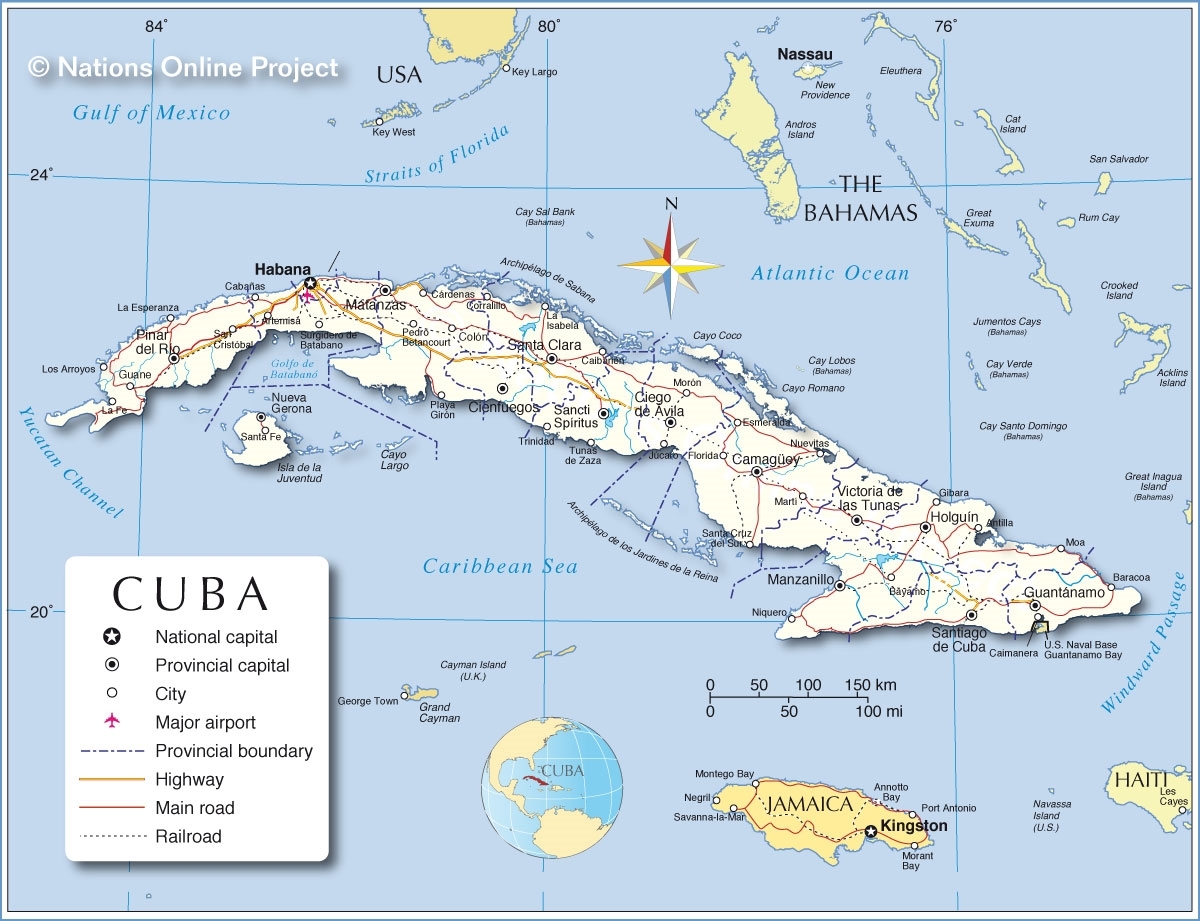
With every change my by the government of the Republic of Cuba to the commercial, economic, and financial infrastructure on the 800-mile archipelago home to approximately 9.5 million citizens, the Trump-Vance Administration will determine how to extract additional elasticity- moving how Cuba, Inc. operates nearer to how U.S.A., Inc. operates.
If the Trump-Vance Administration requires what Antilles Gold Limited, Melbana Energy Limited, and Sherritt International Corporation find impossible to provide, then the government of the Republic of Cuba will engage with companies in the People’s Republic of China and Russian Federation who have an interest in cobalt, copper, gold, oil, nickel, and silver.
For the Trump-Vance Administration, the United States Navy might then need be deployed to the Atlantic Ocean and Caribbean Sea to prevent China-based companies and Russia-based companies from exporting cobalt, copper, gold, oil, nickel, and silver from the Republic of Cuba. A costly exercise expensed to United States taxpayers.
Link To Related Analyses
Saving Antilles Gold: Will GEM Global Yield LLC SCS Obtain OFAC, BIS, Department Of State Authorizations? September 24, 2026
Melbana Energy Of Australia Determining If Trump Administration Targeting Of Cuba Energy Sector Permits Continuing Operations. Similar Strategy To Australia's Antilles Gold September 23, 2026
DOD (War) OSC Could Be U.S. Taxpayer Partner Of Last Resort For Canada’s Sherritt And Australia’s Antilles. Cobalt, Copper, Gold, Nickel, Silver Are Strategic Minerals. August 30, 2026
Cuba: And Now There Are Two… Antilles Gold Has Until 25 January 2027 And Sherritt International Has Until 12 October 2026 August 27, 2026
Potential Triple Play? Carney, Diaz-Canel, Trump Deal. U.S. Secretary Of Defense Hegseth Wants Cobalt. Cuba Has It. Settling One Libertad Act Issue. And Opening Doors? August 23, 2025
LINK TO COMPLETE ANALYSIS IN PDF FORMAT
CiberCuba
3 October 2026
Foreign companies can now hire directly in Cuba, but are they allowed to pay salaries in dollars?
“The recent authorization for certain companies and foreign representatives to directly hire Cuban workers has raised an unavoidable question: if the foreign company becomes the employer, will it also be able to pay salaries directly in dollars? The response arising from the new regulations is more complex than a simple yes or no. Direct hiring eliminates the obligation to use a state employer in certain cases, but does not automatically convert the salary into a payment in foreign currency.
The new Cuban Labor Code maintains an explicit rule: the salary is a remuneration in Cuban pesos and must be paid in CUP. At the same time, other regulations allow certain workers to receive gratuities in foreign currency, a legal category different from salary.
What changed with direct contracting? October 2 in Official Gazette No. 82, allows foreign commercial representations established in Cuba to directly hire their employees. Until now, hiring had to be carried out exclusively through employer entities authorized by the Ministry of Labor and Social Security, which formalized the employment relationship with the worker and then provided that workforce to the foreign representation.
The outlines the new system and establishes that foreign commercial representations can hire directly or may continue to rely on an employer entity. When opting for direct hiring, the representation itself assumes the role of employer and must comply with Cuban labor and social security legislation.
The key to understanding what currency can be used appears in a regulation published just two weeks prior: Article 7 expressly states that foreign investment modalities and foreign commercial representations based in Cuba are governed by the Labor Code, along with the adjustments provided in their specific regulations. Article 246 is even more precise: it defines salary as “the payment in Cuban pesos that the employer pays to the worker”. Article 261 establishes that the salary is paid in Cuban pesos at least once a month, whether in cash, through a banking instrument, or electronically. Therefore, the possibility of a foreign commercial representation directly signing a contract with a Cuban worker does not in itself authorize the establishment of that ordinary salary in dollars, euros, or another foreign currency.
What fundamentally changes is who acts as the employer and who signs the contract, not the currency in which the Labor Code defines the salary. Salary and bonus are not the same. Here a fundamental difference appears. The Labor Code itself states that a person's remuneration can consist of salary and other legally established income. Article 246 clearly states that bonuses are not considered salary. This opens up the possibility for certain workers to receive additional income in foreign currency without those payments replacing the mandatory salary in CUP.
The Foreign Investment Law does provide for bonuses in foreign currency. The situation is particularly clear for the so-called foreign investment modalities. The updated version of the , modified in 2026, establishes in its Article 29 that joint ventures, fully foreign-owned enterprises, and international economic association contracts can create incentive funds using their profits. The same provision states that workers “may receive bonuses in foreign currency, provided that the form of foreign investment generates them”. This means that a worker can have a salary subject to general rules in Cuban pesos and, in addition, receive certain additional payments in foreign currency when specific legislation allows for it. They are not legally the same. Not all foreign companies fall into the same category.
This distinction is particularly important because a foreign commercial representation is not necessarily a form of foreign investment under Law 118 which includes mixed enterprises, wholly foreign-owned companies, and international economic association contracts as its fundamental modalities. For these entities, direct contracting had already been relaxed in September through the and the modifications introduced in the Foreign Investment Law.
The reform of October 2 extends a similar logic to foreign commercial representations, but through another regulatory package: Decree-Law 137 and Resolution 62. And what about the bonuses for branch and representation workers? The Cuban legislation already acknowledges the existence of bonuses received by workers linked to branches of foreign firms and other representations. The law explicitly mentions individuals who receive bonuses for working in branches of foreign commercial firms, representative offices of banks, financial companies, and other representations of foreign entities accredited in Cuba. But having that additional income recognized for tax purposes does not convert a bonus into salary nor does it automatically allow for the replacement of the salary in CUP with a monthly payment in dollars. The Central Bank allows currency transfers, but only when they are authorized. Another element that can cause confusion arises in the banking regulation.
The sets new rules for foreign currency bank accounts and includes transfers from legal entities to individuals for reasons such as remunerations, bonuses, authorized travel expenses, and per diems.The key word is "authorized." The Resolution 102 regulates how a payment in foreign currency can be processed bank-wise when there is a legal basis to do so, but it does not replace labor legislation nor does it by itself constitute a general authorization to pay any salary in dollars.
What changes then for the worker? The change is not insignificant. When a foreign commercial representation uses direct contracting, the worker signs their contract with the representation itself, and it assumes the responsibility of the employer, instead of maintaining a contractual relationship with a state intermediary agency. Resolution 62 also establishes that those who were already working for these representations cannot receive lower income than what they earned prior to the transition. For foreign investment modalities, a similar situation occurs under Resolution 56: the company can hire directly and assume the corresponding labor and social security obligations. But the liberalization of who is hired does not equate to a complete liberalization of how payments are made.
So, can a foreign company offer a monthly salary of US$500.00? With the revised regulations, direct hiring alone does not provide a basis for replacing the legal salary in Cuban pesos with an ordinary salary expressed entirely in dollars. The Labor Code explicitly maintains the salary in CUP. It is different in that, in addition to the salary, there are bonuses or other income in foreign currency expressly permitted by the regulations applicable to each type of company or representation, which can be channeled through the banking system. Therefore, the main novelty of the reforms is not that Cuban workers have started to be paid automatically in dollars, but that certain foreign companies can hire directly and negotiate the employment relationship without the mandatory mediation of a state employer entity. The dollar may appear as a bonus or additional income in authorized cases. The salary, according to the current Labor Code, continues to be in Cuban pesos.”