U.S. Department Of State Issues 2020 Country Reports On Terrorism- Cuba Included; Media Ask Questions Which Mostly Go Unanswered

The Washington Post
Washington DC
16 December 2021

"Asked Thursday about Cuba’s continued presence on the U.S. list of state sponsors of terrorism, the State Department’s acting coordinator for counterterrorism John T. Godfrey said “the Cuba policy and the designation” are “under review.” He spoke to reporters after the State Department’s 2020 Country Report on Terrorism."

Cuba

Overview:  Cuba was designated as a State Sponsor of Terrorism in 1982 because of its long history of providing advice, safe haven, communications, training, and financial support to guerrilla groups and individual terrorists.  This designation was rescinded in 2015 after a policy review found Cuba met the statutory requirements for rescission.  Cuba maintains close and collaborative ties with designated state sponsors of terror such as Iran and North Korea.  Citing peace negotiation protocols signed by Colombia in 2016 that stipulated safe passage for ELN negotiators back to Colombia, the Cuban regime continued to permit ELN negotiators associated with now-defunct peace talks to reside in Cuba, despite Colombia’s repeated requests for their extradition.  Cuba also continues to harbor multiple fugitives who committed or supported acts of terrorism in the United States.

2020 Terrorist Incidents:  There were no terrorist attacks within Cuba in 2020.

Legislation, Law Enforcement, and Border Security:  Citing peace negotiation protocols, Cuba refused Colombia’s request to extradite 10 ELN leaders living in Havana after that group claimed responsibility for the 2019 bombing of a Bogotá police academy that killed 22 persons and injured 87 others.  The Cuban government did not formally respond to the 2019 extradition requests for ELN leaders Victor Orlando Cubides (aka “Pablo Tejada”) and Israel Ramírez Pineda (aka “Pablo Beltrán”) filed by Colombia.

Cuba also harbors several U.S. fugitives from justice wanted on charges related to political violence, many of whom have resided in Cuba for decades.  For example, the Cuban regime refused to return Joanne Chesimard, aka Assata Shakur, a fugitive on the FBI’s Most Wanted Terrorists List, who was convicted of executing New Jersey State Trooper Werner Foerster.  Cuba also refused to return William “Guillermo” Morales, a fugitive bomb maker for the Armed Forces for National Liberation, who is wanted by the FBI and escaped detention after being convicted of charges related to domestic terrorism; Ishmael LaBeet, aka Ishmael Muslim Ali, who received eight life sentences after being convicted of killing eight persons in the U.S. Virgin Islands in 1972 and hijacking a plane to flee to Cuba in 1984; Charles Lee Hill, who has been charged with killing New Mexico state policeman Robert Rosenbloom in 1971; Ambrose Henry Montfort, who used a bomb threat to hijack a passenger aircraft and fly to Cuba in 1983; and Víctor Manuel Gerena, a Puerto Rican militant who stole $7 million in a bank heist.  Cuba is also believed to host or has hosted U.S. fugitive terrorists Catherine Marie Kerkow and Elizabeth Anna Duke.

Countering the Financing of Terrorism:  Cuba is a member of the GAFILAT, a FATF-style regional body.  Its FIU, the Directorate General of Financial Transactions Investigation, is a member of the Egmont Group.  There were no significant updates in 2020.

Countering Violent Extremism:  Cuba conducted no CVE efforts in 2020.

International and Regional Cooperation:  Cuba is not an active member of the OAS.

LINK To Complete Report

United States Department of State
Washington DC
16 December 2021


John T. Godfrey, Acting Coordinator for Counterterrorism and Acting Special Envoy for the Global Coalition to Defeat ISIS, Bureau of Counterterrorism, On the 2020 Country Report on Terrorism

Via Teleconference (excerpts):

MR ICE: Okay. And let’s go to the line of Shaun Tandon.
OPERATOR: Thank you. Your line is open, Mr. Tandon. Go ahead, sir.
QUESTION: Thank you. Thanks for doing the call. Could I ask a question about Cuba? In Chapter 2, State Sponsors of Terrorism, I know it says very clearly that this report doesn’t constitute an announcement, but there’s no information on Cuba on actions that could make it a state sponsor of terrorism. Could you say whether the administration still thinks that Cuba should be designated a state sponsor of terrorism and where any review on that designation is? Thanks.
MR GODFREY: Sorry, having trouble with my mute button there. What I can say about that is that the Cuba policy and the designation you referenced are under review.
MR ICE: And let’s go the line of Daphne Psaledakis.
OPERATOR: Daphne, your line is open. Go ahead, please.
QUESTION: Hi. Thank you so much for doing this. I just wanted to follow up on Shaun’s question about the Cuba State Sponsors of Terrorism review. Could you give us an update on the timeline of that policy review?
MR GODFREY: I’m afraid that I don’t have anything that I can share in terms of sort of an end date or an anticipated end date with respect that review. It’s ongoing and President Biden has said that he remains committed to policies that will advance the democratic aspirations of the Cuban people. But beyond that, I don’t have anything in terms of timing.
MR ICE: Okay. And now let’s go to the line of Beatriz Pascual.
QUESTION: Hi. Thank you very much. So following up on Cuba, I would like to know how high is the review in the list of the priorities for the State Department. And also I would like to ask about las FARC and Venezuela. If you could talk a little bit about what is included in the report about the relation between the dissidents of las FARC, ELN, and the government of Nicolas Maduro? Thank you.
MR GODFREY: Thanks, Beatrice. Maybe to start with the second part, the United States is quite concerned about the continued presence of foreign terrorist organizations in Latin America, including the National Liberation Army, the ELN, and FARC dissidents in both Colombia and Venezuela. We’ve long considered the ELN an FTO, a Foreign Terrorist Organization, and remain concerned about its arms – possession of arms, trafficking of narcotics, kidnapping of innocent individuals, and its attacks on Colombian officials. We have already taken a number of steps to convey our concerns about Venezuela, including the annual certification of Venezuela as not fully cooperating with U.S. antiterrorism efforts. And that’s been something that’s happened every year since 2006, so this is not a new concern. And that certification, which was most recently renewed just this past May, extends the resulting prohibition against the sale or licensing for export of defense articles or services to Venezuela. The Country Reports on Terrorism that we’re talking about in this conversation covers foreign terrorist organizations that were designated during calendar year 2020, and so it doesn’t reflect any changes that occurred in 2021. And that would include the new FTO designations of Segunda Marquetalia and FARC-EP and the revocation of the designation of the former FARC.

11th Circuit Court Of Appeals Hearing Recording For Del Valle Vs. Expedia, Hotels, Orbitz, Trivago, Etc. Libertad Act Lawsuit

MARIO DEL VALLE, ENRIQUE FALLA, MARIO ECHEVARRIA V. EXPEDIA, INC., HOTELS.COM L.P., HOTELS.COM GP, ORBITZ, LLC, BOOKING.COM B.V., BOOKING HOLDINGS INC. Initial defendants were: TRIVAGO GMBH, BOOKING.COM B.V., GRUPO HOTELERO GRAN CARIBE, CORPORACION DE COMERCIO Y TURISMO INTERNACIONAL CUBANACAN S.A., GRUPO DE TURISMO GAVIOTA S.A., RAUL DOE I-5, AND MARIELA ROE 1-5, [1:19-cv-22619 Southern Florida District; 20-12407 11th Circuit Court of Appeals]

Rivero Mestre LLP (plaintiff)
Manuel Vazquez, P.A. (plaintiff)
Baker & McKenzie, LLP (defendant)
Scott Douglass & McConnico (defendant)
Akerman (defendant)

LINK: https://www.ca11.uscourts.gov/oral-argument-recordings?title=20-12407&field_oar_case_name_value=&field_oral_argument_date_value%5Bvalue%5D%5Byear%5D=2021&field_oral_argument_date_value%5Bvalue%5D%5Bmonth%5D=10

LINK: Assigned to tentative calendar number 1 in Jacksonville during the week of October 4, 2021. [07/16/2021]

LINK ORDER: On its own motion, the court Appellant's motion to assign related appeals in 20-12960 to a single panel is GRANTED: the Clerk is DIRECTED to (a) remove Mario Del Valle, et al. v. Trivago GMBH no. 20-12407, from the oral argument calendar to be argued the week of September 20, 2021, in Miami, Florida, and (b) place Mario Del Valle, et al v. Trivago GMBH, et al., no. 20-12407 and these consolidated appeals on the next available oral argument calendar. ENTERED FOR THE COURT-BY DIRECTION. (See attached order for complete text) [07/15/2021]

LINK: Supplemental Authority filed by Appellees EXPE, Hotels.com GP, LLC, Hotels.com L.P. and Orbitz, LLC. [20-12407] (ECF: David Shank) [07/12/2021]

LINK: Appellee's Supplemental Brief filed by Appellee CCL. [20-12960] (ECF: Stuart Singer) [07/28/2021]

LINK: Assigned to tentative calendar number 1 in Jacksonville during the week of October 4, 2021. [07/16/202

LINK: Libertad Act Title III Lawsuit Filing Statistics

11th Circuit Court Of Appeals Recording Of Hearing For Javier-Garcia Bengochea Vs. Carnival Corporation, Royal Caribbean Libertad Act Lawsuits.

JAVIER GARCIA-BENGOCHEA V. CARNIVAL CORPORATION D/B/A/ CARNIVAL CRUISE LINE, A FOREIGN CORPORATION [1:19-cv-21725 Southern Florida District; 20-12960 11th Circuit Court of Appeals]

Colson Hicks Eidson, P.A. (plaintiff)
Margol & Margol, P.A. (plaintiff)
Creed & Gowdy (plaintiff- appellate)
Jones Walker (defendant)
Boies Schiller Flexner LLP (defendant)
Akerman (defendant)

LINK: https://www.ca11.uscourts.gov/oral-argument-recordings?title=20-12960&field_oar_case_name_value=&field_oral_argument_date_value%5Bvalue%5D%5Byear%5D=2021&field_oral_argument_date_value%5Bvalue%5D%5Bmonth%5D=10

LINK: Assigned to tentative calendar number 1 in Jacksonville during the week of October 4, 2021. [07/16/2021]

LINK: Appellee's Supplemental Brief filed by Appellee Royal Caribbean Cruises LTD.. [20-14251] (ECF: Scott Ponce) [07/28/2021]

LINK: ORDER: “Appellant’s Motion to Assign Related Appeals to a Single Panel’ is GRANTED as follows: the Clerk is DIRECTED to (a) remove Mario Del Valle, et al. v. Trivago GMBH, et al., no. 20-12407, from the oral argument calendar to be argued the week of September 20, 2021 in Miami, Florida, and (b) place Mario Del Valle, et al. v. Trivago GMBH, et al., no. 20-12407, and these consolidated appeals on the next available oral argument calendar...Clerk also is DIRECTED to docket this order in...no. 20-12407. Appellee Carnival’s Motion for Leave to File a Sur-Reply ...and Appellee Royal Caribbean Cruises LTD.’s Motion for Leave to File a Sur-Reply ...are GRANTED IN PART..." ENTERED FOR THE COURT – BY DIRECTION [9422361-2][9422361-3] [9420529-2] (See attached order for complete text) [20-12960, 20-14251]--[Edited 07/19/2021 by TLR] [07/14/2021]

LINK To Libertad Act Lawsuit Filing Statistics

JaxFederalCourthouse.jpg

Iberostar Of Spain Files 21st Notice To Court In Libertad Act Lawsuit: No Decision From The European Commission After 609 Days

MARIA DOLORES CANTO MARTI, AS PERSONAL REPRESENTATIVE OF THE ESTATES OF DOLORES MARTI MERCADE AND FERNANDO CANTO BORY V. IBEROSTAR HOTELES Y APARTAMENTOS SL [1:20-cv-20078; Southern Florida District]

Zumpano Patricios P.A. (plaintiff)
Bird & Bird (defendant)
Holland & Knight (defendant)

DEFENDANT’S STATUS REPORT

“Since the last update filed on November 12, 2021, Iberostar continues to await a decision on its application for authorization to the European Commission to respond to the Complaint in this action which was filed with the European Commission on April 15, 2020 (the “Application”). Defendant’s Motion to Stay, ¶ 2. (D.E. 16).”

LINK To Court Filing (12/13/21)
LINK To Libertad Act Lawsuit Filing Statistics

Related Analyses

53-Minute Meeting Between President Biden And EC President Von Der Leyen. Again, Nothing About Cuba Libertad Act Lawsuits. EC Won't React Until A U.S. Court Issues A Verdict & Damages Assessed.  November 10, 2021

US Subsidiary Requests 30-Day Court Delay In Libertad Act Lawsuit. Will US Court Approve? Other Requests Were From EU-Based Defendant Parent Companies. Iberostar Waiting 528 Days For EC Guidance September 27, 2021

European Commission (EC) Reports "Several" EU-Based "Persons and Companies" With Libertad Act Title III Engagement. Iberostar Of Spain Waiting 528 Days For EC Guidance 26 September 2021 

During United Nations Meetings, European Commission And United States Continue 2021 Theme For Cuba: Neither Party Wants To Discuss- So They Don’t. For EC, Title III Not As Important As Advertised 23 September 2021

At U.S.-EU Summit Will Cuba Be Mentioned By President Biden, President Michel, Or President von der Leyen? Trajectory Suggests Not. How Does Borrell Square Statements With Action? June 14, 2021 

After Four Meetings In Brussels, Representatives Of EC, EU, and United States Have Not Discussed Cuba Despite EC Commitment To Do So May 26, 2021  

Third Meeting In Two Months- EU High Representative for Foreign Affairs Borrell Again Does Not Discuss Cuba With U.S. Secretary Of State Blinken. Confirms Cuba Not Important To EU-U.S. Relations. May 04, 2021 

EC Now Has To Decide What It Perhaps Doesn’t Want To Decide- Iberostar Of Spain Libertad Act Lawsuit Is First To Report U.S. Court Recognizing EC’s Interest In Title III Lawsuits April 26, 2020  

EC/EU May Today Find End Of “Comity” By United States Courts. After One Year Waiting, EC/EU May Have Run Out Of Time. April 15, 2021  

Second Visit In Three Weeks- U.S. Secretary Of State To Brussels. EC Writes It Will "Address" Cuba. Did Not Last Time. EU Defendants Waiting One Year For Guidance. April 13, 2021  

Lost In Translation- EP Member & Media Report EC Will “mediate” With Biden Administration About Cuba On Terrorism List. Problem- EC Wrote “we will address this issue” April 02, 2021 

Confusing Message By EC/EU Not Including Libertad Act In Agendas For Meetings With Secretary Of State Blinken. Not As Important As Advertised? March 25, 2021  

In Brussels Will U.S. Secretary Of State Blinken Discuss Cuba, Libertad Act And Venezuela With EC/EU Officials?  Will He Rebuff, Sway Or Be Swayed?  Quid Pro Quo? March 23, 2021  

EC Responds To European Parliament Inquiry About EU Ambassador To Cuba Letter To President Biden- Navarro "Committed Two Major... Failures..." March 12, 2021 

US$6.6 Billion In Twenty Years... 16 December Is 20th Anniversary For Resumption Of Direct Agricultural Commodity And Food Product Exports From United States To Cuba

16 December Is 20th Anniversary For Resumption Of Direct Agricultural Commodity And Food Product Exports From United States To Cuba

First Contracts- Corn (ADM), Poultry (Louis Dreyfus), Rice (Riceland Foods)
December Deliveries- Corn (US$2,327,201.00) And Poultry (US$1,703,610.00)

More Than US$6.6 Billion Spent On “Cash-In-Advance” Basis
Cuba Averages Annually 48th Of 225+ Agricultural Commodity And Food Export Country Markets Measured By The United States Department Of Commerce.   

Highest Ranking- 25th
Lowest Ranking- 63rd
Highest Year 2008- US$710.0 Million
Lowest Year 2002- US$138.6 Million

LINK To Detailed Export Data (2001 To Present) 

26 September 2002 Is 20th Anniversary Of U.S.-Food & Agribusiness Exhibition With 923 U.S. Company Representatives Remains Largest Gathering Since 1959.  Cuba Spent US$91.9 Million During The Event.  LINK To Final Report 

Signed into law by The Honorable William J. Clinton, President of the United States (1993-2001) and implemented by The Honorable George W. Bush, President of the United States (2001-2009), the Trade Sanctions Reform and Export Enhancement Act (TSREEA) of 2000 re-authorized the direct commercial (on a cash basis) export of food products (including branded food products) and agricultural commodities from the United States to the Republic of Cuba, irrespective of purpose.  

Application of the TSREEA is under the auspice of the Office of Foreign Assets Control (OFAC) of the United States Department of the Treasury and Bureau of Industry and Security (BIS) of the United States Department of Commerce.  The TSREEA does not include healthcare products, which remain authorized and regulated by the Cuban Democracy Act (CDA) of 1992. 

The Following Is Reporting In November 2001 & December 2001 From The Economic Eye On Cuba As Published At The Time 

On 14 November 2001, Republic of Cuba government-operated Empresa Cubana Importadora de Alimentos (Alimport), under the auspice of the Ministry of Foreign Trade of the Republic of Cuba, presented a list of products (which has since been expanded) to be purchased from United States-based companies under provisions of the TSREEA.  The government of the Republic of Cuba reported that the decision to purchase products from United States-based companies (and two United States-based subsidiaries of France-based companies) was due to the impact upon inventories from hurricane Michelle on 4 November 2001.  Subsequently, the United States Department of State reported that the TSREEA licensing procedures would be expedited due to the humanitarian nature of the request from the government of the Republic of Cuba.  Thus, while the reason(s) for the decision to purchase the products from United States-based companies (and a United States-based subsidiary of a France-based company) have a humanitarian component, the TSREEA authorizes the purchases regardless of a whether there exists a humanitarian component. 

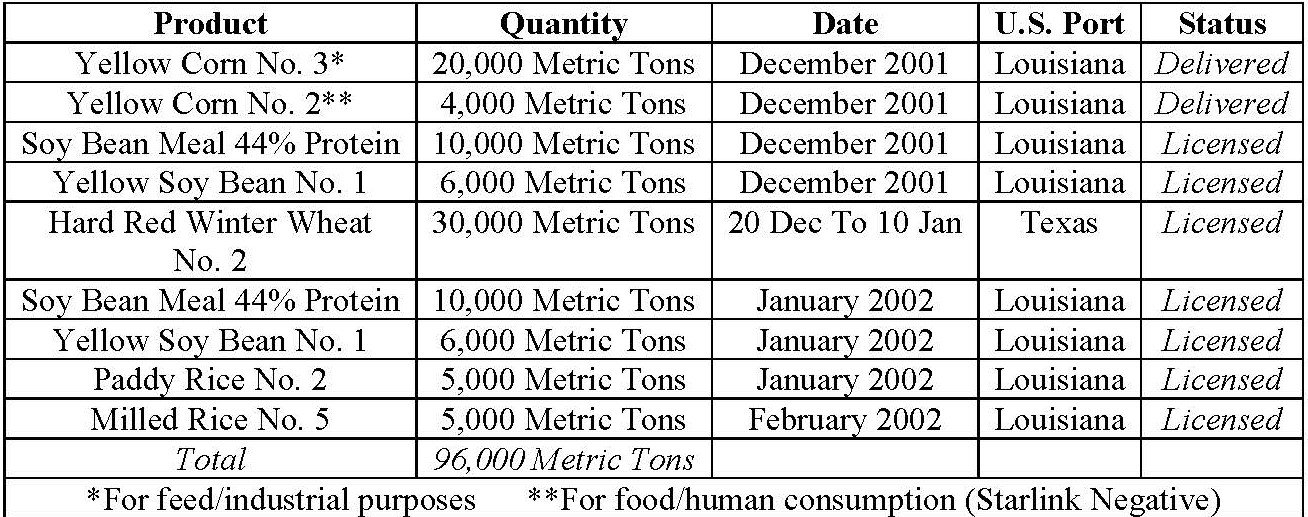
ADM FIRST U.S. COMPANY SINCE 1962 TO CONTRACT FOR DIRECT FOOD EXPORTS TO CUBA- On 20 November 2001, Decatur, Illinois-based Archer Daniels Midland Company (2000 revenues exceeded US$20 billion) signed the first contract since 1962 by a United States-based company for a direct sale of an agricultural product to a Republic of Cuba-based entity.  Republic of Cuba government-operated Empresa Cubana Importadora de Alimentos (Alimport), under the auspice of the Ministry of Foreign Trade of the Republic of Cuba, signed a contract with Archer Daniels Midland Company for 20,000 metric tons of Hard Red Winter Wheat for delivery from Texas to the Republic of Cuba in December 2001. ADM also contracted for 5,000 metric tons of long grain white rice (25% broken); 12,000 metric tons of soybeans (human consumption and for crushing); 6,000 metric tons of soybean oil; and 20,000 metric tons yellow corn for delivery in December 2001 and January 2002 through the Port of New Orleans, Louisiana, and the Port of Houston, Texas.  Discussions are continuing for other products.     

RICELAND FOODS OBTAINS CONTRACT FOR RICE EXPORTS TO CUBA- On 21 November 2001, Stuttgart, Arkansas-based Riceland Foods, Inc. (2000 revenues exceeded US$2 billion) signed a contract with Republic of Cuba government-operated Empresa Cubana Importadora de Alimentos (Alimport), under the auspice of the Ministry of Foreign Trade of the Republic of Cuba, to export 15,000 metric tons of long grain white rice (25% broken) for delivery in December 2001 and January 2002 through the Port of New Orleans, Louisiana, to the Republic of Cuba. 

FIRST COMMERCIAL CARGO TO CUBA IS CORN FROM IL, IN, IA, KS, KY, MN, MO, OH, WI- The first agricultural commodity cargo transported directly from the United States to the Republic of Cuba since 1963 will consist of 24,000 metric tons of corn from farms in Illinois, Indiana, Iowa, Kansas, Kentucky, Minnesota, Missouri, Ohio, and Wisconsin.  Decatur, Illinois-based Archer Daniels Midland Company (2000 revenues US$20.1 billion) included corn from farms throughout the United States to reinforce the significance of the first shipment. 

PORT IN LOUISIANA SELECTED TO LOAD FIRST COMMERCIAL CARGO TO CUBA SINCE 1963- Decatur, Illinois-based Archer Daniels Midland Company (2000 revenues US$20.1 billion) expects this week to commence the loading of 24,000 metric tons of corn which was contracted to Republic of Cuba government-operated Empresa Cubana Importadora de Alimentos (Alimport), under the auspice of the Ministry of Foreign Trade of the Republic of Cuba.  The corn will be loaded and then transported to the Republic of Cuba from an Archer Daniels Midland Company-owned grain elevator facility located in Ama, Louisiana, approximately 30 minutes from New Orleans, Louisiana.  The loading of the corn will take approximately 15 hours.  The corn is scheduled to arrive at the Port of Havana approximately four days after departing Ama, Louisiana. 

On 20 November 2001, Archer Daniels Midland Company signed the first contract since 1963 by a United States-based company for a direct sale of an agricultural product to a Republic of Cuba-based entity.  Alimport signed a contract with Archer Daniels Midland Company for 20,000 metric tons of wheat for delivery from Texas to the Republic of Cuba; later amended to 30,000 metric tons of wheat. The wheat is being exported through a joint venture, ADM/Farmland Inc., established in 2001 between Archer Daniels Midland Company and Kansas City, Missouri-based Farmland Industries, Inc. (2000 revenues exceeded US$12 billion). 

55.5 MILLION POUNDS OF CORN FROM ADM ARRIVES IN CUBA- On 16 December 2001, 24,000 metric tons (55,555,460 pounds) of corn (No. 2 and No. 3) with a market value of approximately US$2.5 million from Decatur, Illinois-based Archer Daniels Midland Company (2000 revenues US$20.1 billion) arrived at the Port of Havana aboard the 189.8 meter (622.7 feet), 50,000 metric ton deadweight, Singapore-registered bulk carrier M.V. Ikan Mazatlan, operated by Cuernavaca, Mexico-based PACNAV de Mexico S.A. de C.V. and owned by Cuernavaca, Mexico-based Mazatlan Shipping Pte Ltd.  The M.V. Ikan Mazatlan departed from the Port of New Orleans, Louisiana, on 14 December 2001. 

The corn represents the first direct commercial export of agricultural commodities from a United States-based company to the Republic of Cuba since 1963. The corn is from farms in Illinois, Indiana, Iowa, Kansas, Kentucky, Minnesota, Missouri, Ohio, and Wisconsin. The corn was sold to Republic of Cuba government-operated Empresa Cubana Importadora de Alimentos (Alimport), under the auspice of the Ministry of Foreign Trade of the Republic of Cuba. The total approximate market value (not contract value) of the products contracted by Archer Daniels Midland Company to Alimport since 20 November 2001 is approximately US$14 million, representing approximately 1.8% of the approximately US$750 million in purchases by Alimport in 2000.  The current list:

POULTRY SOLD BY LOUIS DREYFUS CORPORATION OF FRANCE ARRIVES IN CUBA- On 16 December 2001, the M.V. Express container vessel arrived at the Port of Havana, Republic of Cuba, with refrigerated containers carrying 500 metric tons of frozen chicken leg quarters.  The M.V. Express departed Gulfport, Mississippi, on 14 December 2001.  The frozen chicken leg quarters were sold to Republic of Cuba government-operated Empresa Cubana Importadora de Alimentos (Alimport), under the auspice of the Ministry of Foreign Trade of the Republic of Cuba, by Wilton, Connecticut-basd Louis Dreyfus Corporation, a subsidiary of Paris, France-based Louis Dreyfus Corporation (2000 revenues approximately US$27 billion).   

An additional 2,000 metric tons of frozen chicken leg quarters sold to Alimport by Louis Dreyfus Corporation will be delivered to the Port of Havana during the week of 17 December 2001 aboard the 119.6 meter, Panama-registered Japan Star refrigerated cargo vessel.  The Japan Star is owned by Athens, Greece-based Laskaridis Shipping Co. Ltd. Louis Dreyfus Negoce (a subsidiary of Louis Dreyfus Corporation) has a representative office located in the city of Havana, Republic of Cuba.  Louis Dreyfus Corporation has offices in New York City, New York, and in Wilton, Connecticut; and the company is a partner in a joint venture that owns the 260-room Four Seasons Hotel in Washington, D.C.  

Of the agricultural commodities (with a total market value of approximately US$30 million) contained in the list presented by Alimport to the United States Department of State on 14 November 2001, Louis Dreyfus Corporation has contracted to export from the United States the following products, with a total market value of approximately US$3.5 million: 2,500 metric tons of frozen chicken leg quarters (including the 500 metric tons delivered on 16 December 2001); 22,000 metric tons of corn; and 2,500 metric tons of rough (unmilled) rice. Reportedly, Alimport was requested to include Louis Dreyfus Corporation as a means to lessen unease expressed by current France-based suppliers to Alimport, especially as the government of the Republic of Cuba has substantial outstanding debt to France-based entities (government and private sector). 

Alimport is purchasing approximately 6,000 metric tons of poultry (with a market value of approximately US$6.7 million) from the following companies: Louis Dreyfus Corporation; Atlanta, Georgia-based Gold Kist (2000 revenues exceeded US$1 billion); Arkansas-based Tyson Foods (2000 revenues exceeded US$7 billion); Salisbury, Maryland-based Perdue Farms (2000 revenues exceeded US$2 billion); Pittsburg, Texas-based Pilgrim’s Pride Corporation (2000 revenues exceeded US$2.2 billion); and Omaha, Nebraska-based ConAgra Foods, Inc. (2000 revenues exceeded US$27 billion).   

5.51 MILLION POUNDS OF POULTRY FROM WEST VIRGINIA, ALABAMA, MISSISSIPPI, MARYLAND- On 20 December 2001, the 119.6 meter (392 foot), Panama-registered Japan Star refrigerated cargo vessel commenced loading at the Port of Pascagoula, Mississippi, with 2,500 metric tons (5,511,500 pounds) of frozen chicken leg quarters from Pittsburg, Texas-based Pilgrim’s Pride Corporation (2000 revenues exceeded US$2.2 billion) and Wilton, Connecticut-based Louis Dreyfus Corporation, a subsidiary of Paris, France-based Louis Dreyfus Corporation (2000 revenues approximately US$27 billion).   

66.1 MILLION POUNDS OF WHEAT FROM KANSAS, OKLAHOMA, TEXAS- During the week of 7 January 2002, the first commercial shipment of wheat from the United States to the Republic of Cuba since 1963 will arrive at the Port of Havana.  The 30,000 metric tons (66.138 million pounds) of Red Winter Wheat No. 2 from Kansas, Oklahoma, and Texas, will load at the Port of Galveston, Texas, on the 185.84 meter (609.7 foot) Panama, registered MV Sea Crown, chartered by Republic of Cuba government-operated Empresa Cubana Importadora de Alimentos (Alimport), under the auspice of the Ministry of Foreign Trade of the Republic of Cuba. The wheat is being exported to the Republic of Cuba through a joint venture, ADM/Farmland Inc., established in 2001 between Kansas City, Missouri-based Farmland Industries, Inc. (2000 revenues exceeded US$12 billion) and Decatur, Illinois-based Archer Daniels Midland Company (2000 revenues US$20.1 billion). 

CARGILL OBTAINS CONTRACT FOR AGRICULTURAL PRODUCT EXPORTS TO CUBA- On 20 November 2001, Minneapolis, Minnesota-based Cargill Inc. (2000 revenues exceeded US$48 billion), signed a contract with Republic of Cuba government-operated Empresa Cubana Importadora de Alimentos (Alimport), under the auspice of the Ministry of Foreign Trade of the Republic of Cuba, to export 20,000 metric tons of hard red winter wheat; 19,000 metric tons of yellow corn; and 5,000 metric tons of crude vegetable oil for delivery to the Republic of Cuba in January 2002 and February 2002.   

ALIMPORT LISTS AGRICULTURAL COMMODITIES TO BE PUCHASED FROM U.S. COMPANIES- Republic of Cuba government-operated Empresa Cubana Importadora de Alimentos (Alimport), under the auspice of the Ministry of Foreign Trade of the Republic of Cuba, is purchasing (on a cash basis) the following products, among others, with a total approximate current market value of approximately US$30 million, from United States-based companies (and at least one France-based company).  The US$30 million represents 4% of the approximately US$750 million in food products and agricultural products purchased by Alimport in 2000 for use by the 11.2 million citizens of the Republic of CubaThe government of the Republic of Cuba has continually reiterated that these purchases are a one-time series of commercial transactions under a humanitarian umbrella due to the 4 November 2001 impact of hurricane Michelle on inventories, and will not be repeated until there are changes in United States law governing commercial transactions between United States-based companies and Republic of Cuba-based entities.  As of 21 November 2001, the total value of the products purchase thus far by Alimport is approximately US$20 million. H.E. Alejandro Roca, Minister of the Food Processing Industry of the Republic of Cuba, reported that due to the impact of hurricane Michelle on 4 November 2002, the government of the Republic of Cuba was required to immediately spend US$2.925 million to import flour and yeast due to damage to wheat mills and other facilities. Representatives of United States-based companies consider that accepting an “invitation” from Alimport to visit the Republic of Cuba is mandatory in order to be considered as a supplier for the purchases sought by Alimport. 

CROWLEY LINER SERVICES LOWERS RATES FROM UNITED STATES TO CUBA-  Seeking to expand current cargo market share, on 16 November 2001, Jacksonville, Florida-based Crowley Liner Services, a subsidiary of Oakland, California-based Crowley Maritime Corporation (2000 revenues approximately US$1.2 billion), announced implementation of a “humanitarian” pre-paid rate (no payment required by the exporter to a Republic of Cuba government-operated entity) for cargo authorized by the Bureau of Export Administration (BXA) of the United States Department of Commerce in Washington, D.C., and/or by the Office of Foreign Assets Control (OFAC) of the United States Department of the Treasury in Washington, D.C., from the United States through Mexico to the Republic of Cuba.  The “humanitarian” rate may be used by exporters provided that a license (BXA and/or the OFAC) describing the cargo as “humanitarian” is presented to Crowley Liner Services.

Crowley Liner Services, among other United States-based companies, has authorization from the OFAC to provide regularly scheduled common carrier services between the United States and the Republic of Cuba for products authorized by the BXA and/or the OFAC. Crowley Liner Services currently operates the following routing: Port Everglades-Jacksonville-Havana-Progresso-Vera Cruz-Tampico-Progresso-Port Everglades; but the Port of Havana is not included at this time.  The direct transit time from Port Everglades to Havana is three days.   

Since receiving authorization from the OFAC to transport cargo directly from the United States to the Republic of Cuba, Crowley Liner Services has not been permitted by the government of the Republic of Cuba to operate direct service.  However, cargo (humanitarian and commercial) from the United States has been transported by Crowley Liner Services to Vera Cruz, Mexico, where the cargo is transferred to vessels owned by Republic of Cuba government-operated Melfi Marine Corporation S.A. (a subsidiary of Republic of Cuba government-operated Corporacion Cimex S.A.) for the voyage to the Republic of Cuba. A representative of Crowley Liner Services visited the Republic of Cuba from 21 November 2001 to 23 November 2001 to discuss with Republic of Cuba government-operated Empresa Cubana Importadora de Alimentos (Alimport), under the auspice of the Ministry of Foreign Trade of the Republic of Cuba, the provision of direct cargo routings from the United States to the Republic of Cuba in conjunction with commercial exports by United States-based companies to Alimport, Republic of Cuba government-operated MediCuba (under the auspice of the Ministry of Public Health of the Republic of Cuba) and, perhaps, other Republic of Cuba government-operated entities. Alimport is seeking to have food products, agricultural products, and healthcare products delivered from the United States to the Republic of Cuba through ports (New Orleans, Houston, Alabama, etc.) located in those states which include United States-based companies, United States-based organizations, and Members of United States Congress who have sought to expand commercial, economic, and political relations between the United States and the Republic of Cuba. 

LINK TO COMPLETE REPORT

Bureau Of National Affairs
Washington DC
26 November 2001
Agriculture Firms Sign First Farm Deals With Cuba In Almost Four Decades, Led by Giant ADM

By Chris Rugaber

Led by agribusiness giant Archer Daniels Midland, four U.S. companies have agreed to sell agricultural goods to Cuba, becoming the first U.S. companies to do so since 1962, business sources said Nov. 21.

John Kavulich, president of the U.S.-Cuba Trade and Economic Council, a nonpartisan business group, told BNA that representatives of ADM, Con Agra, Cargill, and Riceland were in Havana to sign agreements with Cuba's import agency, Alimport, Nov. 21.  The sales are the first to be made under a sanctions reform provision included in last year's agriculture appropriations bill (P.L. 106-387).  The provision permits the direct export of food and agricultural products to Cuba, subject to licensing requirements.

Proposal to Remove Ban on Private Financing

However, private and government financing of such exports are still banned. A proposal in the current Senate farm bill (S. 1628) would remove the ban on private financing, and may receive a political boost from the sales.  A spokesman for ADM confirmed that his company reached an agreement on wheat and corn sales Nov. 20, and soy, soybean meal, and rice on Nov. 21, though he would not comment on the price or volume of the sales.  Kavulich said that ADM agreed Nov. 20 to sell 20,000 metric tons of wheat with a market value of $2.5 million to Cuba. He added that the sales may not have been at market value, though all were profitable for the companies involved.

Kavulich also said that Cuba expressed interest Nov. 13 in purchasing approximately $30 million in agricultural, health, and construction products. The four agribusiness firms have captured most of the agricultural purchases, he said, which constitute about 80 percent of the requested $30 million.  Three U.S. companies--Gold Kist of Georgia, Tyson Foods of Arkansas, and Perdue Farms of Maryland--were expected to win contracts for poultry exports, Kavulich added.

Previously, the government of Cuba refused to make any purchases under last year's law because of the remaining ban on government and private financing of such transactions.  Cuba's Ministry of Foreign Affairs argued that this essentially left the embargo intact, and was "discriminatory and humiliating" to Cuba.  Nevertheless, after Hurricane Michelle struck Cuba on Nov. 4, Cuban officials approached the United States Nov. 8 to request a temporary suspension of licensing requirements, and to seek permission to use Cuban vessels to transport the purchases, according to Kavulich. 

The United States agreed only to speed the licensing process, he said, and noted that the use of Cuban vessels might prompt attempts by individuals with claims on the government of Cuba to seek a court-ordered seizure of the vessels. As a result, Cuba agreed to have the goods shipped on non-Cuban vessels.  Cuba began soliciting bids from the U.S. companies Nov. 13, Kavulich said. Some of the U.S. companies began submitting licensing requests Nov. 16, while others will be submitted later the week of Nov. 18 and afterward, he said.

Political Impact

Kavulich noted that the purchase "demonstrates the political will and economic ability" of Cuba to purchase agriculture products.  He also said it was a "shrewd move" that might influence the fate of Sen. Tom Harkin's (D-Iowa) farm bill (S. 1628), noting that Cuba approached the U.S. government Nov. 8, the day after the provision permitting private financing was approved by the Senate Agriculture Committee.  Larry Cunningham, senior vice president for corporate affairs at ADM, was optimistic that the deal could have longer term consequences.  "We think this is a breakthrough deal that we hope will lead to further sales to Cuba," he said.  "We hope this will demonstrate to people that we're a nation with agricultural surpluses, only 90 miles" from an untapped market, he added.  

Gannett News Service
Arlington, Virginia
26 November 2001

By Ana Radelat

American farmers are preparing to ship Cuba a mountain of wheat and thousands of tons of corn, soybeans and poultry - the first U.S. food sale to Cuba in nearly 40 years.  U.S. farmers won an easing of the U.S. economic embargo in last year's agricultural appropriations bill.

Last week, representatives of Illinois-based Archer Daniels Midland, Minneapolis, Minn.-based Cargill Inc. and Stuttgart, Ark.-based Riceland Foods Inc., signed contracts in Havana to sell more than 100,000 metric tons of rice, wheat, soy, corn and soy meal and began negotiations to sell beans and cooking oil. Alimport, the Cuban state food import company, wants the commodities to be delivered by Dec. 10.  ADM was the first to sign a contract with Alimport. The deal was for 20,000 metric tons of wheat, which has a market value of about $2.5 million.  ``We've made history,'' ADM spokeswoman Karla Miller said.

Another three companies, Georgia-based Gold Kist, Arkansas-based Tyson Foods, and Maryland-based Perdue Farms, are likely to win some remaining Cuban contracts for 6,000 tons of frozen chicken leg quarters.  Richard Loeb of the National Chicken Council said the poultry sale to Cuba would constitute a fraction of the year's exports for the industry -- which in the first nine months of the year reached 2 million tons.  But he called the opening a "good sign."  The U.S. agribusinesses involved in the sales declined to say how much Fidel Castro's government is paying for their commodities, but the U.S.-Cuba Trade and Economic Council estimates the total amount of purchases to be about $30 million.

Cuba decided to make the buy after rejecting a U.S. offer to send an aid team to assess the damage wrought by Hurricane Michelle, whose winds ravaged hundreds of thousands of acres of sugar cane and destroyed bananas, fruits and other crops Nov. 4. The purchase is possible because a U.S. law approved last year allows the sale of food to Cuba under certain conditions - including the requirement that Castro's government pay cash. Cuba chafed at the conditions and declared it would not buy ``a single grain of rice or aspirin'' until they were removed.  But Castro was pressured to make the purchases because Cuba's food scarcities worsened when Michelle destroyed crops and livestock.  ``We are ready, just for this once, to acquire certain quantities of food and medicine from the United States, paying them in cash,'' Castro said in a televised speech Nov. 16.

Havana initially wanted to ship the foodstuff in Cuban vessels. But when the Bush administration declined to bend the embargo's rules, Havana dropped its demands. The administration, however, said it would expedite the Bureau of Export Control licensing that is needed to complete the sales. 

While some have hailed the Cuban decision to buy American goods as a new thaw in relations between Washington and Havana, U.S.-Cuba Trade and Economic Council President John Kavulich warned it may not happen again.  ``U.S. businesses are treating these purchases as a one-time commercial sale under a humanitarian umbrella,'' he said.  Nevertheless, farm lobbyists continue to press for better access to the Cuban market.  

A provision that would remove the requirement that Cuba pay in cash for American farm products was included this month in a new $174 billion farm bill that the Senate is expected to consider soon.  Championed by Senate Agriculture Committee Chairman Tom Harkin, D-Iowa, and other key farm state lawmakers, the measure would allow private U.S. financing of food sales - one of the restrictions placed on the new trade by embargo supporters in the House last year.     The House has approved a similar bill that does not include the financing provision, making it one of several issues House and Senate negotiators will have to work out when they craft a final farm bill before Congress adjourns in December. 

Dennis Hays, executive vice president of the pro-embargo Cuban-American National Foundation, said the organization is ``not crazy'' about the impending sales to Cuba, but would accept them because they're being carried out within the law and its restrictions.  But the exile group opposes extending U.S. credit to Havana. Hays said Castro does not pay his bills.  ``Everybody else who's done business on credit with Cuba has lived to regret it,'' he said.

91% Increase In U.S. Agricultural Commodity Exports To Cuba In October 2021; Up 80.5% Year-To-Year; Cuba Ranks 63rd Of U.S. Ag/Food Export Markets

ECONOMIC EYE ON CUBA©
December 2021

October 2021 Food/Ag Exports To Cuba Increase 91.8%- 1
56th Of 226 October 2021 U.S. Food/Ag Export Markets- 2
Year-To-Year Exports Increase 80.5%- 2
Cuba Ranked 63rd Of 2021 U.S. Ag/Food Export Markets- 2
October 2021 Healthcare Product Exports US$132,324.00- 2
October 2021 Humanitarian Donations US$2,305,460.00- 3
2021 Obama Administration Initiatives Exports Continue- 3
U.S. Port Export Data- 16

OCTOBER 2021 FOOD/AG EXPORTS TO CUBA INCREASE 91.8%- Exports of food products and agricultural commodities from the United States to the Republic of Cuba in October 2021 were US$22,271,632.00 compared to US$11,607,415.00 in October 2020 and US$3,704,369.00 in October 2019.

October 2021 Exports Included: Chicken Leg Quarters (Frozen); Chicken Meat (Frozen); Chicken Legs (Frozen); Decalcium Phosphate; Rice, Fruit.

January 2021 through October 2021 exports were US$226,712,431.00 compared to US$137,869,727.00 for the period January 2020 through October 2020, representing a period increase of 80.5%.

Since December 2001, agricultural commodity and food product exports reported from the United States to the Republic of Cuba is US$6,545,211,487.00.

This report contains information on exports from the United States to the Republic of Cuba- products within the Trade Sanctions Reform and Export Enhancement Act (TSREEA) of 2000, Cuban Democracy Act (CDA) of 1992, and regulations implemented (1992 to present) for other products by the Office of Foreign Assets Control (OFAC) of the United States Department of the Treasury and Bureau of Industry and Security (BIS) of the United States Department of Commerce.

The TSREEA re-authorized the direct commercial (on a cash basis) export of food products (including branded food products) and agricultural commodities from the United States to the Republic of Cuba, irrespective of purpose. The TSREEA does not include healthcare products, which remain authorized and regulated by the CDA.

Click here for a list of agricultural commodities eligible for export to Cuba under Section 902(1) of the Trade Sanctions Reform and Export Enhancement Act of 2000

COMPLETE REPORT IN PDF FORMAT

Gibson Dunn & Crutcher (London) Represented Plaintiff In US$100 Million Lawsuit Against Cuba. Firm Represents Plaintiff In Libertad Act Lawsuits In Florida, New Jersey, Texas. China A Defendant.

CRF I Limited (Cayman Islands), V. Banco Nacional de Cuba, The Republic of Cuba.  High Court of Justice, Business And Property Courts Of England And Wales, Queen’s Bench Division, Commercial Court [Part 7 Claim- General Commercial Contracts], Royal Courts of Justice. [CL-2020-000092 Filed 18 February 2020; Court Filing Fee £10,000.00 (approximately US$13,000.00].

Gibson, Dunn & Crutcher UK LLP (plaintiff)
Memery Crystal (plaintiff)
7 King’s Bench Walk (plaintiff)
PCB Byrne LLP (defendant)
Essex Court Chambers (defendant)

LINK To All Fourteen Court Filings

NORTH AMERICAN SUGAR INDUSTRIES INC., V. XINJIANG GOLDWIND SCIENCE & TECHNOLOGY CO., LTD., GOLDWIND INTERNATIONAL HOLDINGS (HK) LTD., DSV AIR & SEA INC., BBC CHARTERING USA, LLC, and BBC CHARTERING SINGAPORE PTE LTD., [1:20-cv-22471; Southern Florida District]. 

Gibson, Dunn & Crutcher (plaintiff)
Mandel & Mandel (plaintiff)
Morgan, Lewis & Bochius (defendant)
Akerman (defendant)
Hogan Lovells LLP (defendant)

LINK Two Additional Libertad Act Lawsuits Filed In New Jersey And Texas: Now Total Is 36 Lawsuits Since May 2019 

NORTH AMERICAN SUGAR INDUSTRIES INC., Plaintiff, v. DSV AIR & SEA INC., Defendant. [2:21-cv-00080; New Jersey District]. 

Gibson, Dunn & Crutcher (plaintiff)
Morgan, Lewis & Bochius (defendant)

LINK Could Be Politically-Charged: Wind Turbine Company Sued Using Libertad Act By U.S. Company- Case Involves Cuba, China, Hong Kong, Singapore, Florida, Texas, New Jersey, New York 

NORTH AMERICAN SUGAR INDUSTRIES INC., Plaintiff, V. BBC CHARTERING USA, LLC, Defendant. [4:21-cv-00012; Southern District Texas] 

Gibson, Dunn & Crutcher (plaintiff)
Morgan, Lewis & Bochius (defendant)

LINK Two Additional Libertad Act Lawsuits Filed In New Jersey And Texas: Now Total Is 36 Lawsuits Since May 2019 

The Trump Administration on 2 May 2019 made operational Title III of the Cuban Liberty and Democratic Solidarity Act of 1996 (known as “Libertad Act”).  Title III authorizes lawsuits in United States District Courts against companies and individuals who are using a certified claim or non-certified claim where the owner of the certified claim or non-certified claim has not received compensation from the Republic of Cuba or from a third-party who is using (“trafficking”) the asset. 

42 Lawsuits Filed (15 certified claimants & 27 non-certified claimants)
1 Settlement (certified claimants)
1 Current Lawsuit At Court Of Appeals
5 Of Dismissed Lawsuits At Court Of Appeals
US$272,000.00+ Court Filing Fees (not including attorney court appearance fees)
87+ Law Firms
251+ Attorneys
18,000+ Filed Court Documents
US$22+ Million Law Firm Billable Hours (estimated 75% by defendants)
16 Countries Impacted
119 Plaintiffs (some in multiple cases)
4 Class Action Requests
82 Defendants (including corporate parent, subsidiaries; some sued in multiple lawsuits)
26 United States Defendants (not including subsidiaries)
15 Republic of Cuba Initial Defendants (eleven remaining)
31 Non-United States Defendants
10 European Union-Based Defendants
5 Companies Notified As Potential Defendants

LINK To Libertad Act Lawsuit Filing Statistics

Bloomberg
New York, New York
3 May 2018

Cuba Creditor Hires Lawyer Who Won Argentina Debt Settlement
London Club member trying to recover $1.3 billion from Cuba
Creditors had offered to restructure commercial loans

An investment fund that’s seeking a payout from the Cuban government on more than $1.3 billion in defaulted debtand back interest has hired the lawyer who won a settlement for hedge funds in a long-running legal battle against Argentina. CRF I Ltd. contracted Matthew McGill, a partner with Gibson, Dunn & Crutcher, to represent it in its claim against Cuba “including potential litigation,” according to a letter from the firm provided to Bloomberg News by a fund investor. McGill will be joined by Charles Falconer, the former British secretary of State for Justice, according to the letter. CRF is the largest debt holder in the London Club, a group of creditors with a total of more than $5 billion in defaulted commercial debt and back interest. The debt dates back to the 1970s and 1980s and trades at about 23 to 24 cents on the dollar, according to the creditors.

The Cuban government has said it intends to clear such obligations as it seeks a return to international capital markets. Cuba’s former President Raul Castro negotiated a settlement of $11.1 billion in sovereign debt to the Paris Club of creditors, which forgave all but $2.6 billion. The London Club -- which includes CRF, Stancroft Trust Ltd, Adelante Exotic Debt Fund Ltd, and a commercial bank -- also offered to restructure the loans earlier this year but withdrew the proposal when Cuba failed to respond.

A spokesman for CRF said the company wants to work with Cuba’s new government, under President Miguel Diaz-Canel, “to resolve issues so Cuba can return to the international markets.” McGill and the Cuba Finance Ministry didn’t reply to emails seeking comment. McGill represented NML Capital Ltd for more than 10 years as it sought to recover on defaulted sovereign bonds from Argentina. After winning a case before the U.S. Supreme Court, NML and other hedge funds settled with Argentinafor $4.65 billion. More recently, McGill represented funds that hold Puerto Rican municipal debt in a case that was heard by the Supreme Court in March.

UK Lawsuit Seeks US$100+ Million From Central Bank Of Cuba & Government Of Cuba. Four Countries. Three Banks. Questions- Defining A "Loan" And Capacity To Contract. Read The 14 Court Filings.

Creditor In UK Seeks US$100+ Million From Cuba
Six Judges So Far
Four Countries (Cuba, France, Italy, United Kingdom)
Three Banks (Cuba, France, Italy)
Dispute On Defining A Loan
Dispute About Who Had Capacity To Sign
Illegal Acts?
Cubans In Prison
Objecting To “Vulture Fund
US$1+ Million Legal Expenses
Lawsuit Filed February 2020; Trial October 2022

CRF I Limited (Cayman Islands), V. Banco Nacional de Cuba, The Republic of Cuba.  High Court of Justice, Business And Property Courts Of England And Wales, Queen’s Bench Division, Commercial Court [Part 7 Claim- General Commercial Contracts], Royal Courts of Justice. [CL-2020-000092 Filed 18 February 2020; Court Filing Fee £10,000.00 (approximately US$13,000.00].

Gibson, Dunn & Crutcher UK LLP (plaintiff)
Memery Crystal (plaintiff)
7 King’s Bench Walk (plaintiff)
PCB Byrne LLP (defendant)
Essex Court Chambers (defendant)

Brief details of claim:

1. The Claimant ("CRF I") is a company incorporated under the laws of the Cayman Islands which holds unpaid Cuban sovereign debt obligations.

2. The First Defendant is the Banco Nacional de Cuba ("BNC"), which is the "Borrower" under the Debts further described below.

3. The Second Defendant is the Republic of Cuba ("Cuba"), which is the "Guarantor" of such Debts.

4. CRF I claims, as assignee under a "Notice of Assignment and Agreement(s) to be bound" dated 13 June 2019, to which the Defendants confirmed their agreement by BNC's letter dated 25 November 2019, sums due and owing to it from the Defendants under the Debts and the Guarantees further described below.

5. The Debts comprise the following written agreements: (1) A "Short-Term Non-Trade Related Indebtedness" dated 17 January 1982, entered into between BNC as "Borrower" and Credit Lyonnais Bank Nederland NV as "Bank" as amended, (the "Credit Lyonnais Debt"); and (2) A "Short-Term Bank Non-Trade Related Indebtedness dated 30 January 1984, entered into between BNC as "Borrower" and lstituto Banco Italiano as "Bank" as amended (the "181 Debt") (together, the "Debts").

6. It was a term of each of the Debts that Cuba enter into a guarantee of the obligations of the "Borrower" thereunder substantially in the form set out in Part IV of the "Particulars" to the Debts (see Clause 23 of the Credit Lyonnais Debt and Clause 23 of the IBI Debt). Cuba entered into such guarantees: (1) in respect of the Credit Lyonnais Debt, on dates presently unknown to CRF I, but in any case by 25 January 1984 (as evidenced by BNC's letter of that date to Credit Lyonnais Bank Nederland NV); and (2) in respect of the IBI Debt, on 30 January 1984 (together, the "Guarantees").

7. As reflected in BNC's letter dated 25 November 2019, the principal amounts under the Debts (exclusive of all unpaid and accrued interests) are: (i) DEM 22,500,000 (equivalent to €11,504,067.33) in respect of the Credit Lyonnais Debt; and (ii) DEM 5,750,000 (equivalent to €2,939,928.32) in respect of the IBI Debt.

8. Interest has accrued on such principal amounts in accordance with the terms of the Debts.

9. The following table sets out in respect of each Debt the principal and accrued interest that are due and owing to CRF I as at the date of this Claim Form and the daily rate at which interest will continue to accrue after that date:

10. CRF I is entitled to and claims from each of the Defendants as "Borrower" in the case of BNC and as "Guarantor" in the case of Cuba: (1) the sum of € 72,122,664.70 in respect of principal and accrued interest under the Debts; and (2) a further sum to be quantified in respect of such further interest as has accrued under the Debts by the time of judgment or payment, whichever is the sooner.

Link To Court Filings:
Claim Form (18 February 2020)
Order (8 March 2021)
Amended Claim Form (16 March 2021)
Consent Order (17 May 2021)
Sealed Amended Claim (14 June 2021)
Amended Points Of Claim (14 June 2021)
Amended Details Of Claim (15 June 2021)
Order (17 June 2021)
Consent Order (13 July 2021)
Consent Order (19 July 2021)
Points Of Defence (23 July 2021)
Consent Order (4 August 2021)
Points Of Reply (4 October 2021)
Defendant’s Response To The Claimant’s Part 18 Requests Of The Points Of Defence (11 November 2021)

Bloomberg
New York, New York
3 May 2018

Cuba Creditor Hires Lawyer Who Won Argentina Debt Settlement
London Club member trying to recover $1.3 billion from Cuba
Creditors had offered to restructure commercial loans

An investment fund that’s seeking a payout from the Cuban government on more than $1.3 billion in defaulted debtand back interest has hired the lawyer who won a settlement for hedge funds in a long-running legal battle against Argentina. CRF I Ltd. contracted Matthew McGill, a partner with Gibson, Dunn & Crutcher, to represent it in its claim against Cuba “including potential litigation,” according to a letter from the firm provided to Bloomberg News by a fund investor. McGill will be joined by Charles Falconer, the former British secretary of State for Justice, according to the letter.

CRF is the largest debt holder in the London Club, a group of creditors with a total of more than $5 billion in defaulted commercial debt and back interest. The debt dates back to the 1970s and 1980s and trades at about 23 to 24 cents on the dollar, according to the creditors. The Cuban government has said it intends to clear such obligations as it seeks a return to international capital markets. Cuba’s former President Raul Castro negotiated a settlement of $11.1 billion in sovereign debt to the Paris Club of creditors, which forgave all but $2.6 billion. The London Club -- which includes CRF, Stancroft Trust Ltd, Adelante Exotic Debt Fund Ltd, and a commercial bank -- also offered to restructure the loans earlier this year but withdrew the proposal when Cuba failed to respond.

A spokesman for CRF said the company wants to work with Cuba’s new government, under President Miguel Diaz-Canel, “to resolve issues so Cuba can return to the international markets.” McGill and the Cuba Finance Ministry didn’t reply to emails seeking comment. McGill represented NML Capital Ltd for more than 10 years as it sought to recover on defaulted sovereign bonds from Argentina. After winning a case before the U.S. Supreme Court, NML and other hedge funds settled with Argentinafor $4.65 billion. More recently, McGill represented funds that hold Puerto Rican municipal debt in a case that was heard by the Supreme Court in March.

LINK TO COMPLETE ANALYSIS IN PDF FORMAT

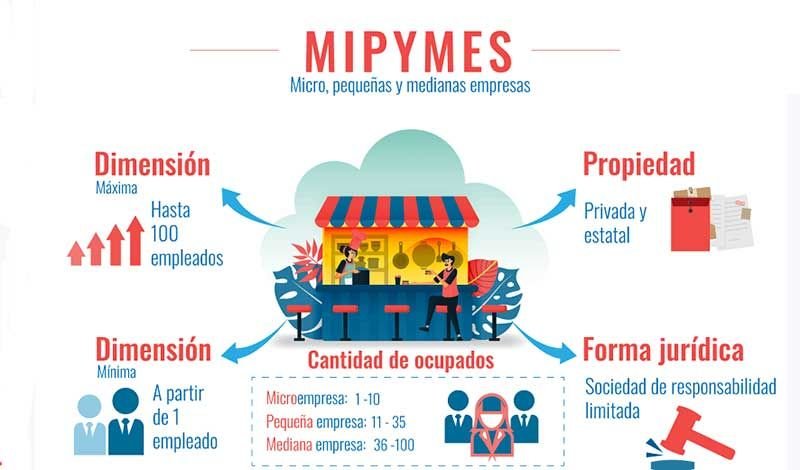
Cuba Again Expanding MSME Authorizations To Include Accessing Foreign Capital, Foreign Bank Accounts, Local Development Projects Qualify

RT America
Moscow, Russia
30 November 2021

Cuba relaxes its financial policies for the domestic market and presents a new portfolio of foreign investment businesses


Cooperatives and small and medium-sized private companies will now be able to partner with foreign capital

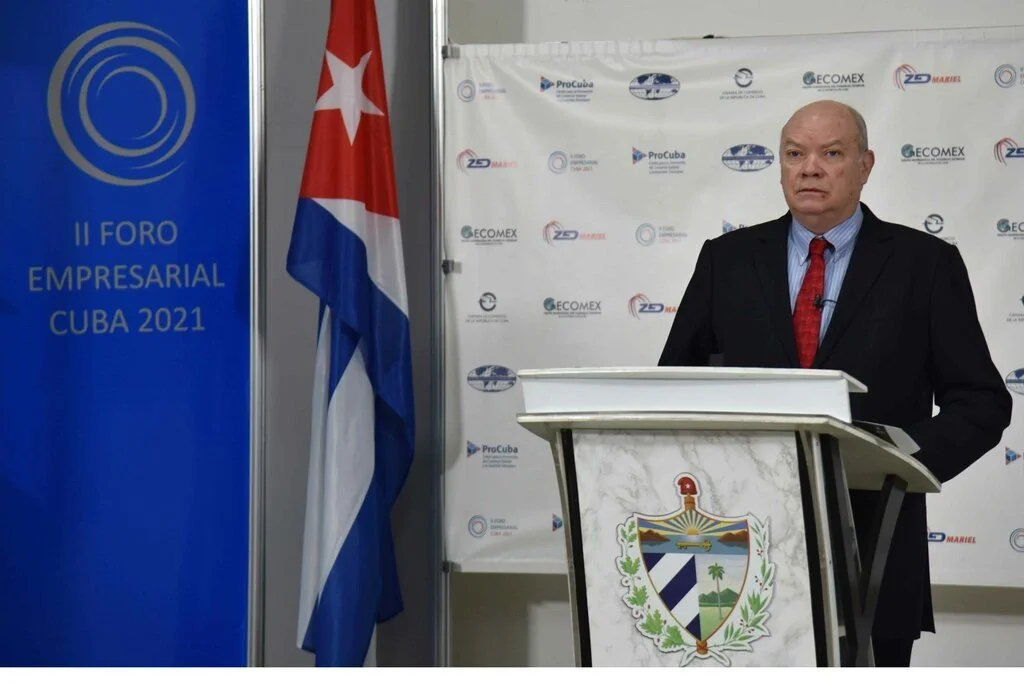
Havana eases its financial policies for the domestic market. This was reported on Tuesday by the Minister of Foreign Trade and Foreign Investment, Rodrigo Malmierca, when he presented a new business portfolio with more than 670 possibilities during the Second Cuba 2021 Business Forum. Among other novelties, now small and medium-sized private companies will be able, like cooperatives, to associate with foreign capital. This includes new flexibilities from the financial point of view, such as the possibility for entrepreneurs to open accounts in banks in other countries. The business portfolio also accommodates local development projects in the municipalities. So far, the most important investments the country has received are in the food production, tourism and pharmaceutical sectors. In total, the island receives investments from more than 40 countries, said the minister, who described as a priority the expansion and deepening of this mechanism as part of national development.

RT America
Moscow, Russia
30 November 2021

Cuba flexibiliza sus políticas financieras para el mercado interno y presenta una nueva cartera de negocios de inversión extranjera


Cooperativas y pequeñas y medianas empresas privadas podrán ahora asociarse con capital extranjero.

La Habana flexibiliza sus políticas financieras para el mercado interno. Así lo informó este martes el ministro de Comercio Exterior e Inversión Extranjera, Rodrigo Malmierca, al presentar durante el Segundo Foro Empresarial Cuba 2021 una nueva cartera de negocios con más de 670 posibilidades. Entre otras novedades, ahora las pequeñas y medianas empresas privadas podrán, al igual que las cooperativas, asociarse con capital extranjero. Esto incluye nuevas flexibilizaciones desde el punto de vista financiero, como la posibilidad para los empresarios de abrir cuentas en bancos de otros países. La cartera de negocios también da cabida a proyectos de desarrollo local en los municipios. Hasta el momento, las inversiones más importantes que ha recibido el país se encuentran en los sectores de la producción de alimentos, turismo y farmacéutico. En total, la isla recibe inversiones de más de 40 países, aseguró el ministro, quien calificó como prioridad la ampliación y profundización de este mecanismo como parte del desarrollo nacional.

US$400+ Million? Decision(s) By Judge At 14 December 2021 Hearing May Provide Roadmap For What Carnival, MSC, Norwegian, Royal Caribbean May Owe Havana Docks Corporation In Libertad Act Lawsuit

NOTE: ORDER RESETTING HEARING ON MOTIONS FOR SUMMARY JUDGMENT THIS CAUSE is before the Court upon the parties’ Joint Notice Regarding December 14th Hearing. See, e.g., Havana Docks Corp. v. Carnival Corp., No. 19-cv-21724, ECF No. [422]. Upon review, it is ORDERED AND ADJUDGED that the pending Motions for Summary Judgment are reset for hearing on Wednesday, January 12, 2022, at 9:30 a.m., before the undersigned in Courtroom 10-2, 400 North Miami Avenue, Miami, Florida 33128. The Court will allocate the morning and afternoon for the hearing. LINK To Order

From First Complaint (5/2/19): “Plaintiff is entitled to all money damages allowable under 22 U.S.C. § 6082(a), including, but not limited to, those equal to the sum of: a. The amount greater of: (i) the amount certified by the Foreign Claims Settlement Commission, plus interest; (ii) the amount determined by a special master pursuant to 22 U.S.C. § 6083(a)(2); or (iii) the “fair market value” of the Subject Property, plus interest; b. Three times the amount determined above (treble damages); and c. Court costs and reasonable attorneys’ fees.”

LINK To First Complaint (5/2/19)

LINK To Foreign Claims Settlement Commission Certification Of Loss (4/21/71)

UNITED STATES DISTRICT COURT SOUTHERN DISTRICT OF FLORIDA

HAVANA DOCKS CORPORATION, Plaintiff, v. CARNIVAL CORPORATION, Defendant.
HAVANA DOCKS CORPORATION, Plaintiff, v. MSC CRUISES SA, MSC CRUISES SA CO, and MSC CRUISES (USA) INC., Defendants.
HAVANA DOCKS CORPORATION, Plaintiff, v. ROYAL CARIBBEAN CRUISES, LTD., Defendant.
HAVANA DOCKS CORPORATION, Plaintiff, v. NORWEGIAN CRUISE LINE HOLDINGS, LTD., Defendant.

SEC. 302. LIABILITY FOR TRAFFICKING IN CONFISCATED PROPERTY CLAIMED BY UNITED STATES NATIONALS. (a) Civil Remedy.-- (1) Liability for trafficking.--(A) Except as otherwise provided in this section, any person that, after the end of the 3-month period beginning on the effective date of this title, traffics in property which was confiscated by the Cuban Government on or after January 1, 1959, shall be liable to any United States national who owns the claim to such property for money damages in an amount equal to the sum of-- (i) the amount which is the greater of-- (I) the amount, if any, certified to the claimant by the Foreign Claims Settlement Commission under the International Claims Settlement Act of 1949, plus interest; (II) the amount determined under section 303(a)(2), plus interest; or (III) the fair market value of that property, calculated as being either the current value of the property, or the value of the property when confiscated plus interest, whichever is greater; and (ii) court costs and reasonable attorneys' fees. (B) Interest under subparagraph (A)(i) shall be at the rate set forth in section 1961 of title 28, United States Code, computed by the court from the date of confiscation of the property involved to the date on which the action is brought under this subsection. (2) Presumption in favor of the certified claims.--There shall be a presumption that the amount for which a person is liable under clause (i) of paragraph (1)(A) is the amount that is certified as described in subclause (I) of that clause. The presumption shall be rebuttable by clear and convincing evidence that the amount described in subclause (II) or (III) of that clause is the appropriate amount of liability under that clause. (3) Increased liability.--(A) Any person that traffics in confiscated property for which liability is incurred under paragraph (1) shall, if a United States national owns a claim with respect to that property which was certified by the Foreign Claims Settlement Commission under title V of the International Claims Settlement Act of 1949, be liable for damages computed in accordance with subparagraph (C). (C) Damages for which a person is liable under subparagraph (A) or subparagraph (B) are money damages in an amount equal to the sum of-- (i) the amount determined under paragraph (1)(A)(ii), and (ii) 3 times the amount determined applicable under paragraph (1)(A)(i).

HAVANA DOCKS CORPORATION V. NORWEGIAN CRUISE LINE HOLDINGS, LTD. [1:19-cv-23591; Southern Florida District]
Colson Hicks Eidson, P.A. (plaintiff)
Margol & Margol, P.A. (plaintiff)
Hogan Lovells US LLP (defendant)

HAVANA DOCKS CORPORATION VS. ROYAL CARIBBEAN CRUISES, LTD. [1:19-cv-23590; Southern Florida District]
Colson Hicks Eidson, P.A. (plaintiff)
Margol & Margol, P.A. (plaintiff)
Holland & Knight (defendant)

HAVANA DOCKS CORPORATION V. MSC CRUISES SA CO, AND MSC CRUISES (USA) INC. [1:19-cv-23588; Southern Florida District]
Colson Hicks Eidson, P.A. (plaintiff)
Margol & Margol, P.A. (plaintiff)
Venable (defendant)

HAVANA DOCKS CORPORATION VS. CARNIVAL CORPORATION D/B/A/ CARNIVAL CRUISE LINES [1:19-cv-21724; Southern Florida District]
Colson Hicks Eidson, P.A. (plaintiff)
Margol & Margol, P.A. (plaintiff)
Jones Walker (defendant)
Boies Schiller Flexner LLP (defendant)
Akerman (defendant)

LINK To Libertad Act Lawsuit Filing Statistics

ORDER SETTING HEARING ON MOTIONS FOR SUMMARY JUDGMENT THIS CAUSE is before the Court upon the parties’ Joint Request for Oral Argument on Motions for Summary Judgment. See Havana Docks Corp. v. Carnival Corp., No. 19-cv-21724, ECF No. [376]; Havana Docks Corp. v. MSC Cruises, SA, et al., No. 19-cv-23588, ECF No. [260]; Havana Docks Corp. v. Royal Caribbean Cruises Ltd., No. 19-cv-23590, ECF No. [181]; and Havana Docks Corp. v Norwegian Cruise Line Holdings, Ltd., No. 19-cv-23591, ECF No. [283], (collectively, the “Motions”). Upon review of the Motions, it is ORDERED AND ADJUDGED that the Motions are GRANTED, and the pending Motions for Summary Judgment are set for hearing on Tuesday, December 14, 2021 at 9:30 a.m. before the undersigned in Courtroom 10-2, 400 North Miami Avenue, Miami, Florida 33128. The Court recognizes that we continue to be in the midst of a global pandemic. As such, to the extent that the parties would prefer to appear by video conference, the parties should promptly notify the Court. DONE AND ORDERED in Chambers at Miami, Florida, on October 25, 2021.

LINK To Order Setting Hearing On Motions For Summary Judgement (10/26/21)

LINK To Plaintiff's Motion For Permission To Use Sealed Records At The December 14th Hearing (11/19/21)

Cuba 2021 Business Forum To Be Held Virtually. Registration Now Open

Call for II Business Forum Cuba 2021

The Virtual Fair is the opportunity that the Organizing Committee of the II Cuba 2021 Business Forum has created for national and foreign companies participating in the event to showcase their main goods and services. Do not miss the space, register now! LINK

Dear Ladies and Gentlemen,

It is an honor to invite you to participate in the Second Edition of the Cuba 2021 Business Forum, which will be held virtually from November 29 to December 2 of this year, with the aim of continuing promoting foreign trade and investment.

In the context of the COVID-19 pandemic, this Forum will offer an excellent framework for discussion between national and foreign business representatives, the new actors of the Cuban economy, including those of the private sector, government officials, Chambers of Commerce and Trade and Investment Promotion Agencies, who wish to interact and exchange ideas on business and trade with the island.

This second Forum intends to provide a space for information sharing and exchange on the transformations of the Cuban economy. This will be an excellent opportunity to learn about Cuba’s main export products (both goods and services) and business opportunities in prioritized areas such as the biopharmaceutical, tourism and food and agricultural sectors.

This event will also include for the first time a virtual fair, which will allow business representatives to exhibit their products through the Business Forum platform. Another Business Forum will be held with the participation of Cubans residing abroad who have business and investment interests in the island, which will contribute to further strengthen the links between Cubans that live abroad and those that live in Cuba.

Upon registration on the Forum’s website, it will be possible to arrange work meetings with representatives of businesses from the external sector of the economy. We will be pleased if you join us in this Second Cuba 2021 Business Forum through the website www.foroempresarial.mincex.gob.cu. Registration will be open from October 4 to November 25. We look forward to your participation in the forum.

Rodrigo Malmierca Díaz
Minister of Foreign Trade and Foreign Investment
Chair of the Organizing Committee

LINK TO LETTER IN PDF FORMAT

LINK To 55-Page 2021/2022 Cuba Guide For Investment

Screenshot 2021-10-01 at 06-58-30 Home.png

Biden-Harris Administration Decision By OFAC To Extend U.S. Energy Companies Presence In Venezuela Through General License 8I Is Helpful To Cuba. Trump-Pence Administration Did The Same.

United States-based companies have continued to operate in Venezuela within provisions of licenses issued by the Office of Foreign Assets Control (OFAC) of the United States Department of the Treasury.   

United States-based Baker Hughes Company (2020 revenues approximately US$23 billion), Chevron Corporation (2020 revenues approximately US$147 billion), Halliburton Company (2019 revenues approximately US$22 billion), Schlumberger (2020 revenues approximately US$33 billion), and Weatherford International (2020 revenues approximately US$5.4 billion).  In 2014, Weatherford pleaded guilty and was fined by the OFAC for exporting oil equipment through third countries to the Republic of Cuba. 

An argument for maintaining United States-based oil field services company operations in Venezuela is the strategic importance of preserving the value of the oil fields- and revenues from oil exports account for nearly ninety percent (90%) of the gross national product (GNP) of Venezuela.  Maintaining value of the oil fields is important also for preserving assets which may be subject to claims against Venezuela for the expropriation of assets owned by United States-based oil field services companies.  There is support for not decapitating all of the United States-based commercial presence in Venezuela for fear that non-United States-based companies will replace United States-based companies.  Officials in the Biden-Harris Administration (2021- ) have discussed a re-opening of the United States Embassy in Caracas.    

With commercial, economic, and political infrastructure in Venezuela strengthening and gaining elasticity, less pressures result in Venezuela maintaining, and in some instances increasing its commercial and economic support to the Republic of Cuba. 

As the distance continues to expand from 2018 when the United States demanded that President Nicolas Maduro (2013- ) vacate the Palacio de Miraflores in Caracas and no departure is reasonably believed forthcoming, there becomes an institutionalization of the issue and a perception of intractiveness, resulting in decreased interest by relevant state actors in pursuing an outcome sought by the United States.  The status quo becomes rigid and foundational.  

China, Cuba, India, Italy, Iran, Russia, Spain, Thailand, Turkey, United Arab Emirates, and United States among others have commercial, economic, and political bilateral relationships with Venezuela and with one another.  Thus, there are interlocking relationships that need be adequately addressed for each government to agree to support any resolution to issues relating to Venezuela.

LINK To “2024 Process For Venezuela”

OFFICE OF FOREIGN ASSETS CONTROL
Venezuela Sanctions Regulations
31 CFR part 591
GENERAL LICENSE NO. 8I

Authorizing Transactions Involving Petróleos de Venezuela, S.A. (PdVSA) Necessary for the Limited Maintenance of Essential Operations in Venezuela or the Wind Down of Operations in Venezuela for Certain Entities


(a) Except as provided in paragraphs (c) and (d) of this general license, all transactions and activities prohibited by Executive Order (E.O.) 13850 of November 1, 2018, as amended by E.O. 13857 of January 25, 2019, or E.O. 13884 of August 5, 2019, each as incorporated into the Venezuela Sanctions Regulations, 31 CFR part 591 (the VSR), that are ordinarily incident and necessary to the limited maintenance of essential operations, contracts, or other agreements, that: (i) are for safety or the preservation of assets in Venezuela; (ii) involve PdVSA or any entity in which PdVSA owns, directly or indirectly, a 50 percent or greater interest; and (iii) were in effect prior to July 26, 2019, are authorized through 12:01 a.m. eastern daylight time, June 1, 2022, for the following entities and their subsidiaries (collectively, the “Covered Entities”):

Chevron Corporation
Halliburton
Schlumberger Limited
Baker Hughes Holdings LLC
Weatherford International, Public Limited Company


Note to paragraph (a): Transactions and activities necessary for safety or the preservation of assets in Venezuela that are authorized by paragraph (a) of this general license include: transactions and activities necessary to ensure the safety of personnel, or the integrity of operations and assets in Venezuela; participation in shareholder and board of directors meetings; making payments on third-party invoices for transactions and activities authorized by paragraph (a) of this general license, or incurred prior to April 21, 2020, provided such activity was authorized at the time it occurred; payment of local taxes and purchase of utility services in Venezuela; and payment of salaries for employees and contractors in Venezuela.
(b) Except as provided in paragraph (d) of this general license, all transactions and activities prohibited by E.O. 13850, as amended, or E.O. 13884, each as incorporated into the VSR, that are ordinarily incident and necessary to the wind down of operations, contracts, or other agreements in Venezuela involving PdVSA or any entity in which PdVSA owns, directly or indirectly, a 50 percent or greater interest, and that were in effect prior to July 26, 2019, are authorized through 12:01 a.m. eastern daylight time, June 1, 2022, for the Covered Entities.
(c) Paragraph (a) of this general license does not authorize: (1) The drilling, lifting, or processing of, purchase or sale of, or transport or shipping of any Venezuelan-origin petroleum or petroleum products; (2) The provision or receipt of insurance or reinsurance with respect to the transactions and activities described in paragraph (c)(1) of this general license; (3) The design, construction, installation, repair, or improvement of any wells or other facilities or infrastructure in Venezuela or the purchasing or provision of any goods or services, except as required for safety; (4) Contracting for additional personnel or services, except as required for safety; or (5) The payment of any dividend, including in kind, to PdVSA, or any entity in which PdVSA owns, directly or indirectly, a 50 percent or greater interest.
(d) This general license does not authorize: (1) Any transactions or dealings related to the exportation or reexportation of diluents, directly or indirectly, to Venezuela; (2) Any loans to, accrual of additional debt by, or subsidization of PdVSA, or any entity in which PdVSA owns, directly or indirectly, a 50 percent or greater interest, including in kind, prohibited by E.O. 13808 of August 24, 2017, as amended by E.O. 13857, and incorporated into the VSR; or (3) Any transactions or activities otherwise prohibited by the VSR, or any other part of 31 CFR chapter V, or any transactions or activities with any blocked person other than the blocked persons identified in paragraphs (a) and (b) of this general license.
(e) Effective November 24, 2021, General License No. 8H, dated June 1, 2021, is replaced and superseded in its entirety by this General License No. 8I.

LINK To OFAC General License No. 81

Why Won't Biden Administration Permit U.S. Entities To Invest/Finance MSMEs? In December, Cuba’s FIMELSA Begins Convertible Currency-Equivalent Loans At 6.5% For 120 Days; Lower For CUP.

Cubadebate
Havana, Republic of Cuba
24 November 2021

Microcredit financial institution created for new Cuban economic actors

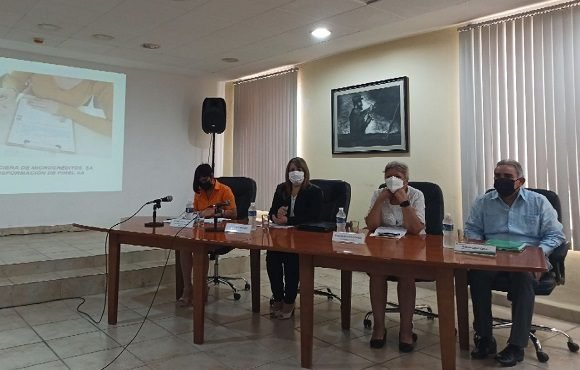
The Cuban banking system created a new financial institution to grant microcredits to newly launched MSMEs, as well as self-employed workers and cooperatives. Financiera de Microcréditos SA, legally recognized, arises in response to the need for these actors to be inserted into the country's economic scene, highlighted in a press conference Ayamis Losada García, director of the new company that was born from the transformation of the license of FIMELSA, a non-bank entity dedicated until now to financial intermediation within the national territory.

The institution, which will begin operating on December 15 with a national scope, will be able to grant credits in Cuban pesos (CUP) and in MLC, "in the form of microcredits", that is, small amounts of capital that allow to boost the production of goods and services. Losada García said that, in this first moment, self-employed workers, cooperatives and MSMEs that have demonstrated export capacity will receive financing, and only to make wholesale purchases that are in the country, as well as for payments to entities authorized to sell in the national territory in these coins.

In MLC, she said, the productions and services that have been contracted will be financed in exports, in sales to chain stores in MLC and to the Mariel Special Development Zone. "We need the money to return in the same amount and currency in which it was delivered," she emphasized and said that the financing granted will be placed entirely in the account of the provider of the services or products. According to Losada García, the microcredits will not have a maximum amount, and the minimum could be 100,000 CUP or 500 USD. For the delivery of the money, there is no distinction, whether it is for working capital or for investment, but the characteristics of the project will be evaluated, the directive specified and clarified that the loan must be returned as soon as possible: for MLC the maximum term, Initially, it will be 120 days, and in the case of the CUP it will "be negotiated."

Bárbara Mirabal, vice president of Banco Popular de Ahorro, explained that the amount of the loans and the terms for their repayment depend on the level of financing that has been achieved in foreign currency, taking into account that financial companies obtain the money from procedures business with banks. The objective, at first, is to accompany the economic actors who meet the established conditions, so that they become more dynamic, the money grows and other entrepreneurs who need to enter the market can join. The maximum period that must elapse between the request and the granting of the financing is 10 business days, counted after it is verified that all the information is correct.

The offices of the Financiera de Microcéditos are located at Inmobiliaria Caribe, at ave 47, No. 3413, between 34 and 36, Kohly district, Playa municipality, Havana. Those interested can contact by phone: 72027330 and 72026254 (blackboards), ext 111 and 113, and by email: cliente@microcredito.co.cu.

Frequently asked questions and answers:

1. Being a self-employed worker, can I access this type of financing? Yes, these financings are designed for economic actors, understand self-employed workers, non-agricultural cooperatives, state, private and mixed MSMEs.
2. Can I request microcredits in both types of currency? Yes, only in MLC at least one of the following three conditions must be met: Make sales to chain stores in MLC. Market in the Mariel Special Development Zone. Make exports.
3. What is the maximum amount I can ask for? The maximum amount is defined depending on the nature of the projects that are intended to be financed, but, in any case, it must be known that this type of financing (microcredits) is characterized by being rather small amounts with quick returns.
4. Can I request credit to buy in the network of stores in MLC? No.
5. If my business is new, can I apply for MLC credit to start the business? It will always be dependent on the project that it presents and the potential that can be seen in the business that is being started.
6. Is the credit payment in MLC or CUP? The money is returned in the same currency in which it is requested.
7. In what time can the credit be paid? The time depends on the type of currency, but in any case you should bear in mind that microcredits are characterized by being rather small amounts with quick returns.
8. Would the payment to the bank be monthly? The terms for the payment of principal and interest depend on the type of currency and what the parties agree to.
9. What interest rate does the bank charge for these credits? It depends on the currency in which the financing is requested, in the case of the MLC an interest of up to 6.5% is charged per year, while for the CUP the lowest rates established by the BCC are taken into account, according to the agreed terms .
10. In addition to the interest rate, is there a commission charged? Yes, commissions of up to 0.75% are charged in the case of MLC financing and up to 1% in the case of CUP.
11. In what currency are commissions paid? All obligations with the finance company are paid in the same currency in which the financing was received.
12. Do these credits have to be guaranteed? Yes, the guarantees can be the income session, the pledge of the accounts and the debit notes.
13. What currency would these guarantees be in? All obligations with the finance company are paid in the same currency in which the financing was received.
14. When credit is granted, is it credited to the customer's MLC account? No, one of the conditions for the granting of microcredits in MLC is that the financing granted be placed entirely in the account of the provider of the services or products.

LINKS To Relevant Analyses 

Update: More Than 700 Micro, Small And Medium-Sized Enterprises Approved In Cuba  November 25, 2021

OFAC & BIS To 107 Tech Companies? Cuba. Yes, You Can Go There, But We Dare You. "Encourage & Enable" Not The Same As "Access & Use." Memo: Donilon, Klain, Ricchetti, Richmond, Sullivan.  November 23, 2021

Will President Biden's Statement That His Is "a small business presidency” Extend To Supporting Small Businesses In Cuba?  November 22, 2021

Update On Registration Of Micro, Small & Medium-Size Enterprises In Cuba. Now More Than 600.  November 21, 2021

Cuba Continues To Report On Activity Of MSME's- The Numbers Increase.  November 06, 2021

Joint Venture Between Banco de Sabadell Of Spain And Banco International de Comercio In Cuba Will Provide Financing In Foreign Currency To MSMEs & Non-Agricultural Cooperatives  November 05, 2021

Bormey srl Among The First 35 Newly-Constituted Medium-Sized Enterprises In Cuba, Exported 5,000 Peanut Bars To Italy. Is United States Next? U.S. Department Of State Regulations Would Approve.  October 26, 2021

ProLimp Cleaning In Cuba Precisely Type Of Entrepreneurship Biden Administration Should Support. Will Cuba Permit U.S. Venture Capitalists?  March 08, 2021

Update: More Than 700 Micro, Small And Medium-Sized Enterprises Approved In Cuba

Cubadebate
Havana, Republic of Cuba
24 November 2021


More than 700 MSMEs and cooperatives approved since the process began

Today the Ministry of Economy and Planning approved 100 new applications from private micro, small and medium enterprises (MSMEs), one state and two non-agricultural cooperatives (CNA). With this decision, 718 economic actors have been approved since the process began at the end of September this year. Of the MSMEs, 686 are private, 16 are state, and there are also 16 cooperatives. Due to their origin, 57% are reconversions of pre-existing businesses and 43% correspond to new ventures. In total, it is estimated that these economic actors will generate 11 thousand 12 new jobs in the economy. Of all those approved, 42 are part of local development projects, 25 have previously carried out export operations and six are incubated in the Scientific and Technological Park of Havana.

New List Of Approvals In PDF Format

Turkey's Karpowership Adds Fourth Thermal Power Barge In Cuba. Company Generating More Than 10% Of Cuba's Electricity. Good For Turkish Companies. Reinforces Cuba's Energy Production Issues.

NOTE: On 2 December 2021, London, United Kingdom-based Reuters reported: “[In November 2021] An average of 77,000 bpd of crude, jet fuel and gasoline were shipped to Venezuela's top political ally, Cuba.” Unknown is if the four Karpowership vessels dispatched to the Republic of Cuba are accessing oil and/or natural gas produced in the Republic of Cuba.

Argus Media Group
London, United Kingdom
24 November 2021

Cuba obtains fourth power barge to ease blackouts

By Canute James

Turkish contractor Karpowership is installing a fourth thermal power barge in Cuba to help alleviate chronic outages. The barges run on fuel oil procured by the Turkish company, Cuban state-owned utility UNE said. The new barge is located off the coast of the capital Havana and in early December will begin delivering 130MW to the national grid through the Tallapiedra thermoelectric plant, UNE technical director Lazaro Guerra said in a statement.

The first three barges were installed in the bay of Mariel - 40km (24.8mi) west of Havana - since 2019, and the latest will bring total barge-based capacity to 330MW, representing 12pc of the island's current generation, UNE said.

Karpowership is part of Istanbul-based Karadeniz Energy Group. Neither has not responded to repeated requests for comment from Argus.

The additional floating plant will ease Cuba's long-standing power deficit that has worsened in recent months because of a fuel shortage and equipment breakdowns. Some of Cuba's Soviet-era plants burn domestic heavy crude and others use diesel. Cuba has 5.87GW of installed generating capacity, of which 3.2GW is operational, according to UNE. Power generation this week is 2.6GW.

Cuba's fuel deficit has gotten worse partly because of falling oil supply from traditional ally Venezuela. The island's government also blames US sanctions for blocking access credit to purchase parts and equipment to upgrade its generators. "Generation reserves are low and power cuts could get worse if there are other problems with power plants," energy minister Livan Arronte said in commenting on the arrival of the fourth power barge.

Cuba's Caribbean neighbor, the Dominican Republic, is also expanding the use of barge-mounted thermal plants through an agreement with Karpowership to install a 258MW gas-fired facility. The Dominican unit will be berthed outside Boca Chica in the country's south, the Dominican energy ministry told Argus earlier this month. This will be the country's second barge-mounted, gas-fired barge complex.

Independent power producer (IPP) Transcontinental Capital -- a subsidiary of diversified US firm Seaboard -- is installing the 145MW natural gas-fired Estrella del Mar barge to replace an older unit off the coast of the capital, Santo Domingo. Karpowership has not confirmed negotiations with Haiti's state power utility EdF for the installation of barges there.

LINK To Related Analysis

Karpowership From Turkey Extends And Expands Floating Electricity Generation In Cuba; Joining Turkey's Global Ports Holding Which Manages Cruise Ship Terminal In Havana  November 19, 2021

Dialogo Chino
London, United Kingdom
25 November 2021

Can the Belt and Road help Cuba overcome its energy woes?
Highly dependent on fossil fuels and imports, Cuba joins the BRI's energy partnership, looking to China to support its transition amid economic troubles


By Gabriel López Santana

On 18 October, Cuba joined the Belt and Road Energy Partnership (BREP) of China’s Belt and Road Initiative (BRI), which seeks to strengthen connectivity in infrastructure and energy investment, and promote cooperation in clean energy and efficiency in participating countries.
Cuba joins Venezuela, Bolivia and Suriname as the only Latin American countries among the partnership’s 31 members, including China.

Cuba’s entry into the BREP comes as the government of Raúl Castro and Miguel Díaz-Canel faces up to the need to renew the country’s ageing energy system, and deals with a considerable decrease in the daily barrels of crude oil sent from Venezuela.

Dependent on fossil fuels

Around 95% of the electricity generated in Cuba comes from fossil fuels, mostly provided by eight thermoelectric plants with an average of more than three decades in operation. Accordingly, less than 5% of the electricity generated in 2020 came from renewable sources, according to data from the national statistics office (ONEI).

But Cuba’s energy system is not only fossil-dependent – it is creaking, too. The long and repeated blackouts experienced by Cubans this summer, caused by failures in their battered electrical system, were one of the main factors for citizens coming out in historic demonstrations across the country on 11 July. According to a study by two Cuban academics, in order to lower the cost of electricity generation and reduce its emissions of polluting gases, the government aspires to have more than 2,000 megawatts (MW) available capacity from renewable sources by the year 2030, with 755 MW coming from biomass plants, 700 MW from solar parks and 633 MW from wind farms. This could also help Cuba achieve greater energy independence, given that 53% of its current electricity generation depends on imported sources. However, project financing will be the main obstacle in an economy that, between January 2020 and September 2021, contracted by 13% (GDP), and has seen a 60% inflation in retail prices – as well as a 6,900% increase in the informal foreign exchange market. Cuba’s goal of generating 24% of its electricity from renewable sources by 2030 is made difficult by its economic circumstances.

Prudent investment from China

Given its six decades of diplomatic and commercial relations with the Caribbean country, a demonstrated willingness to assist economically and beyond, and the recent incorporation of the island into the BREP, China could help set Cuba on the path to its renewable energy goals. President Xi Jinping himself has described Cuba as “a good friend, a good comrade, and a good brother.” Even before the BREP was created, China had already invested in biomass plants, solar and wind farms in Cuba. But these have all run up against obstacles.

This October, Cuba became the 31st member of the Belt and Road Energy Partnership at a conference held virtually in Qingdao, China. The Caribbean nation hopes cooperation with China can help upgrade its ageing energy system.

According to the China-Latin America Finance Database, the first of these investments – a US$60 million loan from the Chinese Export-Import Bank – was approved in May 2015 for the construction of a biomass plant that would use residues from the Jesús Rabí sugarcane mill, in the province of Matanzas. The project, initially proposed to Cuba by the British company Havana Energy, included the construction of four similar plants but ran into financing problems after one of the main investors withdrew. The biomass plant was not built, but the project in general remained afloat after the British firm agreed in 2017 to transfer a majority stake to Shanghai Electric Group, in exchange for financing, technology and labour for another plant, this time at Ciro Redondo, in the central province of Ciego de Ávila. Four years later, this biomass plant is connected to the national energy system but runs below capacity due to delays around sugar harvesting, as well as instability, breakdowns and high temperatures in areas of the factory.

The once powerful Cuban sugar industry is in a deep crisis: of 56 sugar plantations on the island, only 38 participated in the most recent harvest, the result of which was the worst yield in 130 years. The business group Azcuba, the governing body of the sugar industry on the island, declared to the Cuban parliament last year that the construction of two further biomass plants belonging to the same project has been paralysed due to a lack of financing. There are also no reports to date of new Chinese investments in plants of this type on the island, despite Cuba proposing another 18 as part of its Portfolio of Foreign Investment Opportunities 2021. The state of the Cuban sugar sector could determine the future of foreign investments in biomass plants, and endanger the 755 MW that the government aspires to generate from them by 2030.

Mixed fortunes for renewables

In 2017, Shanghai Electric received another US$60 million from the Chinese Export-Import Bank to rescue a solar photovoltaic (PV) park project, Mariel Solar, that the British company Hive Energy had proposed to the Cuban government, and which was also waiting for financing. The park only reported its first results in 2020. According to Mariel Solar’s website, its operation has allowed the Cuban government to save more than US$11 million in diesel costs, as of September 2021.

Slow progress

The park’s official site specifies that, once it has reached its maximum potential, the park could extend these savings to US$20 million a year, even after paying the company for its operations – an amount that represents a third of the Chinese investment. Despite the success of the Mariel Solar park, a total of only 72 PV parks have been built in Cuba, out of 210 planned by renewables development and investment company EDIFRE, with just 12 projects currently under construction. Elsewhere, the La Herradura wind farm in the east of the country, built with Chinese technology and labour, is experiencing delays to imports of parts, and will be put into operation with lower capacity than planned, according to local press reports.

According to Cuban government data, of the 506 MW of renewables that they should have in operation at the moment, only 302 MW is currently doing so. Thus, the dependence on finding Chinese investors to provide significant sums to the island is evident.

Cuba's situation will not change with membership of the Belt and Road Energy Partnership

Will renewables be a sector where China invests further in Cuba? For Luis Carlos Battista, a Cuban lawyer specialising in economy and international business, it should be, but investment is likely to focus on ensuring domestic electricity supply, rather than projects that provide energy to develop local industry. “That this has an impact on the development of other industries in which to invest later is more for the long term,” Battista continues, adding that, for Chinese investors, the benefits of wind and solar are “much more indirect than when they have created refineries, dams or hydroelectric plants in other Latin American countries.”

However, according to Johannes Werner, the editor of business news site Cuba Standard, finding investment to correspond with Cuba’s priorities may be a challenge. He points out that Chinese companies may be reticent to engage in the country, given their preference - and that of most international businesses - to avoid “unreasonable exposures and risks in the pursuit of profit”.

One month after Cuba’s official entry into the BREP, there are as yet no reports of future projects that might help to resolve the country’s energy difficulties. Battista believes that this is because of Cuba’s “inability to pay credit” and to the island having “little potential to become a significant socio-economic partner” due to its current economic policies. Such circumstances leave Cuba with little leverage in negotiating investment. Werner, for his part, does not forecast any dramatic short-term changes. “I do not believe that this situation will change with the Cuban membership of the Belt and Road Energy Partnership,” he concludes.

OFAC & BIS To 107 Tech Companies? Cuba. Yes, You Can Go There, But We Dare You. "Encourage & Enable" Not The Same As "Access & Use." Memo: Donilon, Klain, Ricchetti, Richmond, Sullivan.

OFAC & BIS To 107 Tech Companies? Cuba. Yes, You Can Go There, But We Dare You.
OFAC & BIS To Cuba’s 11.3 Million Citizens? Technology Is Great And Will Help You, And We Want You To Have It, But…
Encourage & Enable Are Not The Same As Access & Use
Self-Employed, Micro, Small And Medium-Sized Businesses In Cuba Need Access To Wireless Device Applications & Programs For Operations, Transactions, And Marketing
President Biden- “My Presidency… [Is] A Small Business Presidency” But Only For United States?
Memorandum To Messrs. Donilon, Klain, Ricchetti, Richmond, Sullivan... Looking For A “Win

The Obama-Biden Administration (2009-2017), Trump-Pence Administration (2017-2021), and Biden-Harris Administration (2021- ) promoted during their days in office efforts to encourage and enable the 11.3 million citizens of the Republic of Cuba to access and use the Internet and obtain and use those devices, programs, and applications required for a robust “civil society” and re-emerging self-employed and micro, small, and medium-sized enterprises. 

Members of the United States Congress- Democrats, Independents, and Republicans have also continuously weighed-in with speeches, remarks, media releases, hearings, and legislation in support of- and often further in front of efforts by each occupant of the Oval Office. The efforts have frequently been bi-partisan and tri-partisan.  

Why then, have many of the largest United States-based companies whose technologies are essential as tools for individuals to connect, individuals to be heard, and for the self-employed (and owners/managers of micro, small and medium-sized enterprises) to resurrect their foundational role within commercial, economic, and political infrastructure of the Republic of Cuba opted, through self-restraint and self-policing, to deny their tools to those 11.3 million citizens who reside on the 800-mile-long archipelago which lies ninety-three miles south of Key West, Florida?  

The answerRegulatory whiplash. The management of the companies, specifically their legal counsel and their government affairs advisors are terrified that a decision taken in the morning viewed as inspired will by the afternoon be viewed by members of the United States Congress as a “betrayal of the Cuban people” and “support for Communism” and then as “not consistent with United States policy” by the Office of Foreign Assets Control (OFAC) of the United States Department of the Treasury and Bureau of Industry and Security (BIS) of the United States Department of Commerce.  Within months could also arrive a notification that the company has been fined hundreds of thousands of dollars or millions of dollars. 

Will the government of the Republic of Cuba benefit from the unrestricted use of Internet-based programs and applications? Yes, So what. What is critical- supporting the 11.3 million citizens of the Republic of Cuba or seeking to engage in whack amole with members of and supporters of the Diaz-Canel-Valdes-Mesa Administration (2019- )? 

If The White House and members of the United States Congress want Republic of Cuba nationals to engage amongst themselves and with family, friends, acquaintances, colleagues, and commercial partners, then remove the OFAC and BIS restrictions upon the delivery of and use of each of the Internet-based programs and applications that are every minute of every day accessed by citizens of the United States.  

Politicians voice their support for the re-emergence of the self-employed in the Republic of Cuba and for those Republic of Cuba nationals who have braved enormous obstacles to create, nurture, and sustain micro, small, and medium-sized enterprises. These efforts require the unfettered access to and use of Internet-based programs and applications. 

Critical is for the OFAC and BIS to be concise in their regulatory and policy guidance. In the public sector, often sought is language that is imprecise so that it may be interpreted and re-interpreted at will. In the private sector, precision is necessary for legal counsel and government affairs advisors. 

If the Biden-Harris Administration and members of the United States Congress want a robust Internet-based landscape in the Republic of Cuba, then the decision must be to go all-in rather than focus upon seeking how to craft language that deters rather than fosters engagement. 

It is in-or-out.  

The Honorable Joseph Biden (22 November 2021): “Economists will tell you that an increase in new businesses is one of the best signs of an economy -- an economy that is becoming more innovative and more dynamic.  And that’s because small businesses aren’t just the heart and soul of America, they’re not just the bedrock of so many communities across this country -- America’s small businesses are the primary job creators, innovators, and drivers that power our economic progress.  That’s why it’s a powerful statement about -- of the faith about -- that we have in our country -- where our country and our economy is heading that small business creation is surging -- surging in America todayWhich is why I’m proud to say: If you look at my presidency so far, it’s a jobs presidency and it’s a small business presidency.” 

The Honorable Brian Nichols, Assistant Secretary of State for Western Hemisphere Affairs before United States House of Representatives Foreign Affairs Committee Subcommittee on the Western Hemisphere, Civilian Security, Migration and International Economic Policy (16 November 2021): “We will also continue to support increased exports of humanitarian goods to the Cuban people and to continue to work with the private sector and other stakeholders to identify viable options to ensure greater internet access for the Cuban people.” 

The Honorable Marco Rubio (R- Florida), United States Senate (16 November 2021): “And I don't expect a lot, frankly, when the person [The Honorable Emily Mendrala, Deputy Assistant Secretary of State, Bureau of Western Hemisphere Affairs] in charge of the Cuba portfolio in the State Department just a year and a half ago was organizing trips for members of Congress to meet with the regime. I don't expect a lot when the people [The Honorable Juan Gonzalez, Special Assistant to the President and Senior Director for Western Hemisphere Affairs] at the National Security Council who are involved in the Cuba portfolio are people who are deeply involved in negotiating a failed deal with the regime. The fact of the matter is, the people in charge of this on an hourly basis in this administration are not on the side of what we’re asking for. What they want is an understanding and an agreement with this evil regime. So I’m not expecting a lot, unless the President himself makes it a priority, which so far he has not.” 

The primary decision-makers at The White House are The Honorable Ronald Klain, Assistant to the President and Chief of Staff; The Honorable Jake Sullivan, Assistant to the President for National Security Affairs; The Honorable Michael Donilon, Assistant to the President & Senior Advisor to the President; The Honorable Steven Ricchetti, Assistant to the President & Counselor to the President; and The Honorable Cedric Richmond, Assistant to the President & Director of the Office of Public Engagement.  With respect to issues relating to the Republic of Cuba, they must view the implementation of any decision in terms of the degree of “winning” rather than degree of “losing.” 

The definition of success by the Biden-Harris Administration and members of the United States Congress must be changed from “see what we permitted, now try to figure out how to use it- because we really don’t want you to use it primarily because we don’t understand it and are afraid we might not be able to control it and then will be criticized for permitting it in the first place” to “you have developed a technology that has become ubiquitous in that it is essential for a democracy and market-based economy to develop and thrive- please now unleash those capabilities throughout the world.  If you have an issue, let us know and we will help you or get out of the way.”

LINKS To Republic Of Cuba-Google-Related Posts 

Google Global Cache Operational In Cuba... Despite No Details From The Company April 27, 2017
Google's Lack Of Transparency Harms US-Cuba Commercial Relationship December 14, 2016
Google Expands Presence In Cuba- No Payment By Cuba December 12, 2016
Google To Support Chrome Cuba-Focused Developers October 17, 2016
Google Opens Technology Center In Havana... High Speed Internet For 40 At A Time April 05, 2016

United States Department of the Treasury
Washington DC
11 August 2021

“…OFAC and BIS are issuing this fact sheet to emphasize the U.S. government’s commitment to promoting the ability of the Cuban people to seek, receive, and impart information, by highlighting the most relevant exemptions and authorizations pertinent to supporting the Cuban people through the provision of certain internet and related telecommunications services.” LINK To Complete Document In PDF Format LINK To Part 515- Cuban Assets Control Regulations (CACR)

Time Magazine (19 November 2021): “While there are exceptions for some telecommunications services that expand actual Internet access on the island and “directly benefit the Cuban people,” according to the U.S. Treasury Department’s Office of Foreign Assets Control (OFAC), this does not include most web services, which would only be able to provide services to Cuba under a special license. Confusion over how to interpret these regulations has led many U.S. platforms and companies to abruptly pull their services in recent years, rather than risk violating the embargo.”

Time Magazine (19 November 2021): “There are at least 107 popular tech sites, software and web services restricted from being used in Cuba, according to a compilation by Cuban programmers on Github, a site for sharing code. These services list restrictions on users in Cuba, Iran, North Korea and Syria on their websites, citing U.S. law.”

Some Of The 107 Companies And Their Applications Self-Restricted For Use In The Republic Of Cuba

Adobe
Android Developers
Apple App Store
Apple iCloud
Bitly
Coursera
Gitlab
Google Cloud
Google Developers
Google Drive
Google One
Google Play
Google Project Shield
IBM Software
Intel
Java
MailChimp
Microsoft Teams
OpenSea
Oracle
PayPal
VPN
WeTransfer
Zoom

LINK TO COMPLETE ANALYSIS IN PDF FORMAT

LINKS To Relevant Analyses 

Update On Registration Of Micro, Small & Medium-Size Enterprises In Cuba. Now More Than 600. November 21, 2021
Cuba Continues To Report On Activity Of MSME's- The Numbers Increase. November 06, 2021
Joint Venture Between Banco de Sabadell Of Spain And Banco International de Comercio In Cuba Will Provide Financing In Foreign Currency To MSMEs & Non-Agricultural Cooperatives November 05, 2021
Bormey srl Among The First 35 Newly-Constituted Medium-Sized Enterprises In Cuba, Exported 5,000 Peanut Bars To Italy. Is United States Next? U.S. Department Of State Regulations Would Approve. October 26, 2021
ProLimp Cleaning In Cuba Precisely Type Of Entrepreneurship Biden Administration Should Support. Will Cuba Permit U.S. Venture Capitalists? March 08, 2021

Time Magazine
New York, New York
19 November 2021

‘Give Us a Break!’ Cuban Activists Say U.S. Sanctions Are Blocking Them from Online Services

A woman surfs the Internet at a public WiFi spot in the district of Marianao in Havana.
Isaac Risco—picture-alliance/dpa/AP

By Vera Bergengruen

On Nov. 9, Cuban journalist Elaine Diaz was trying to send out a newsletter to the subscribers of Periodismo de Barrio, her watchdog news site covering human rights issues on the island, when she got an error message on her screen. The U.S.-based service she had been using, MailChimp, had suddenly and unexpectedly eliminated her account. “They did it without prior warning, for being based in Cuba,” she wrote on Twitter. “It’s not the first Cuban outlet to go through this experience. Shameful.”

As Internet access has exploded on the island, an increasing number of Cuban journalists, activists, dissidents and artists find themselves locked out of the online platforms and services used by the rest of the world—not by their communist government, but due to restrictions imposed on American companies by the broad, 60-year-old U.S. embargo. In recent years, they have been abruptly blocked from cloud services, file transfer sites, social media managers, editing software, development apps, video calling, free education platforms and NFT marketplaces. It not only shuts them out of the global digital economy, several young Cubans tell TIME, it also makes it harder to create content and reach a wider audience.

The restrictions come on top of the Cuban government’s own tight grip on Internet access for its citizens through the state-owned telecommunications monopoly, ETECSA, which blocks news websites deemed critical of the regime. The agency also restricted access to social media platforms in the wake of historic protests over food and medicine shortages in July, with some calling on President Miguel Diaz-Canel to step down. The two factors have combined to hit the heart of Cuba’s protest movement. The summer protests, as well as the San Isidro demonstrations that preceded it last year, were spearheaded by young artists who rely on digital platforms to disseminate information and express and organize themselves online. As a result, the blunt instrument of the decades-old embargo is inadvertently stifling the very freedom of expression and robust civil society that the U.S. government seeks to support in Cuba, experts say, as U.S. companies try to avoid running afoul of the law.

A group of young intellectuals and artists demonstrate at the doors of the Ministry of Culture during a protest in Havana in November 2020. Some two hundred young artists are calling for "a dialogue" with the Ministry of Culture in Havana after the police broke up a 10-day protest by the San Isidro Movement (MSI) claiming the risk of epidemiological contagion. Yamil Lage—AFP/Getty Images

“It’s a classic case of our own sanctions boomeranging and biting us in the ass,” says Ted Henken, a professor of Latin American studies at Baruch College who has written a book on Cuba’s digital revolution. “The embargo is so ill-targeted and its enforcers know little about the island’s emergent digital civil society.”

Although Mailchimp ultimately reinstated Diaz’ account after she went public, that was a rare exception, according to Cuban artists and activists who spoke to TIME. (A Mailchimp spokesman told TIME the service “operates in compliance with all applicable laws and regulations” but did not clarify how Diaz’ circumstances changed.) There are at least 107 popular tech sites, software and web services restricted from being used in Cuba, according to a compilation by Cuban programmers on Github, a site for sharing code. These services list restrictions on users in Cuba, Iran, North Korea and Syria on their websites, citing U.S. law. “As time goes by, more and more websites and services are being blocked for Cubans,” says Gabriel Guerra Bianchi, a Havana photographer and artist. Like many Cuban artists and activists who had started to build a community around digital art, he was frustrated when OpenSea, a popular website for selling digital items, blocked Cuban users in May citing the embargo, locking them out of one of the largest marketplaces for non-fungible tokens (NFTs).

“Sometimes one doesn’t even know where these [blocks] are coming from—whether from here or from there,” Bianchi said. He says he doesn’t blame services like OpenSea, which he said expressed regret to their community of Cuban users. “It’s not out of bad faith from these companies, but rather it seems to be part of their security protocols to avoid future problems with the U.S. State Department.”

Cubans have lived with the impact of the U.S. embargo for generations. President John F. Kennedy imposed a near-total trade embargo on the country in 1962 after Washington’s failed attempt to overthrow Fidel Castro, citing “the subversive offensive of Sino-Soviet Communism” the regime was aligned with. As a result, Cuba, which depended heavily on trade with the U.S., became reliant on the Soviet Union, and later Venezuela, for economic and military aid. But the embargo’s restrictions on U.S.-based services have gained new urgency as web access has expanded to more Cubans. Internet usage in Cuba grew dramatically in the wake of the historic détente in 2014, when President Barack Obama and Raul Castro agreed to re-establish diplomatic relations, leading to the easing of many restrictions on business with and travel to Cuba, as well as an influx of U.S. dollars. Although Cuba only allowed full Internet access on mobile phones in 2018, more than four million citizens on the island—over a third of the population—now access the web on their smartphones.

Cubans connecting to the internet using cellphones at a Wi-Fi hot spot in a square on the outskirts of Havana in March 2016. A mobilization of protesters in the Cuban capital in November 2020, was a rare instance of Cubans openly confronting their government -- and a stark example of how having widespread access to the internet through cellphones is testing the power balance between the Cuban regime and its citizens. Mauricio Lima—The New York Times/Redux

The relationship between the two countries deteriorated again under Trump, who promised to reverse Obama’s measures and toughened the embargo by imposing over 240 sanctions during his four years in office. President Joe Biden, despite vowing during his presidential campaign that he would restore Obama-era policies of engaging with the Cuban regime, so far has not moved to ease the restrictions.

The complicated web of regulations, trade restrictions and sanctions that comprise the embargo forbid U.S. companies from providing any type of service to Cuba. While there are exceptions for some telecommunications services that expand actual Internet access on the island and “directly benefit the Cuban people,” according to the U.S. Treasury Department’s Office of Foreign Assets Control (OFAC), this does not include most web services, which would only be able to provide services to Cuba under a special license. Confusion over how to interpret these regulations has led many U.S. platforms and companies to abruptly pull their services in recent years, rather than risk violating the embargo.

Access has been tightening for years. In 2014, Coursera, a California-based online education platform that offers free classes, suddenly blocked users from Cuba as well as other sanctioned countries from logging into their accounts. The company said in a statement at the time that while export control regulations for educational services had “been unclear,” they had received information from the State Department and OFAC that allowing users in these countries to access their services was in violation of U.S. law. Similarly, link-shortening website Bitly suddenly stopped working for Cuban users in 2016, leading to a wave of broken links across Cuban websites.

In 2017, Cuban human rights activist Rosa María Payá saw an error message for her website “Cuba Decide,” an initiative calling for a national plebiscite on free elections. She found that the site had been blocked not by the communist government but because it was using Google’s Project Shield, a DDoS protection service that works with journalists, human rights organizations and elections monitoring sites. In a tweet, Payá called it “the error with which Google joins censorship in Cuba.” Google said at the time the site was being blocked due to compliance with the U.S. embargo. “I would like to know what provision of the embargo forces Google to block an initiative to promote freedom of expression?” Payá asked the Miami Herald.

Four years later, the list of web services used to create and disseminate content and organize online communities has only grown—and with it, the sudden errors that Cuban users encounter. Google blocks access in Cuba to a variety of services that might run afoul of the embargo, such as Google Cloud, Google Developers, Google One and Google Play, according to the list compiled by Cuban programmers. Some of the other apps that are blocked are Adobe, Android Developers, Gitlab, IBM software, Intel, Java, Oracle, Zoom, and a host of payment apps that are necessary to participate in much of the digital world.

PayPal, for instance, which will allow transactions that mention the words “bomb” or “cocaine,” will block any transaction with the word ‘Cuba’ in it. (When a TIME reporter tried to send another user in the U.S. $1 with the note “Cuba Libre” on Nov. 17, PayPal immediately restricted their account and put the transaction under review.) Paypal’s terms of service note that its services may not be used by residents or nationals of “any country subject to United States embargo or UN Sanctions.”

Screenshots of web services that have been blocked for Cuban users, from left: OpenSea, VPN access, and CubaDecide. From left: Courtesy Gabriel Guerra Bianchi; Courtesy Rubén Martínez Rojas; Courtesy Rosa María Payá

One day last June, Claudio Pelaez Sordo, a Cuban photo and video-journalist who works for independent news outlets, woke up to find himself no longer able to access WeTransfer, a file transfer service that had become indispensable among many Cuban artists and content creators. Unlike Google Drive, it didn’t require users to register for an account, and allowed them to send files up to 2 GB.

“The U.S. government prohibits the provision of certain products and services to specific countries. What this means is that regrettably we are unable to provide our services to you,” the error message read. Although headquartered in Amsterdam has offices in New York and Los Angeles. WeTransfer did not respond to TIME’s request for comment. “This adds itself to the long list of sites and platforms that [we] can’t access as part of the economic blockade against Cuba,” Pelaez Sordo posted on Facebook on June 10. But “if there’s something the Cuban government has taught us, it’s how to always find a way around it,” he wrote, adding the hashtag #righttolivewithoutblockade.

Young Cubans have increasingly relied on VPNs to work around these restrictions, in order to access everything from news websites blocked by the Cuban government to online services and apps blocked by U.S. sanctions. But low-cost VPNs tend to work slowly, according to people who spoke to TIME, forcing Cubans to spend their money on expensive ones if they want to access or use services that are free to access in the rest of the world. This has especially frustrated some young artists as Havana has become an unlikely hotspot for crypto art in recent months. Cuban artists have launched several art collections through NFTs, which not only open up new sources of income in their devastated economy but serve as outlets of protest and expression.

“Oh come on!!!! Really!??” tweeted Bianchi, the Havana photographer and artist, when OpenSea blocked him in May. “Cuban artists can’t have access. We are creators! Give us a break!” (An OpenSea spokesman acknowledged to TIME the service had been blocked for Cuban users due to the U.S. sanctions). When sympathetic followers from around the world suggested VPNs to bypass the block, Bianchi explained the reality: even many slow, cheap ones are out of reach for many Cubans. “This $10 dollars a month is a 10-day salary in Cuba,” he replied on Twitter. “Not only that, we don’t have credit cards in Cuba to pay, or bank accounts.”

Men hang Cuban flags over the windows of Yunior Garcia Aguilera's home in an attempt to stop him from communicating with the outside on Nov. 14, 2021. García is a playwright and leader of Archipelago, a Cuban opposition group. Ramon Espinosa—AP

The complicated web of U.S. trade restrictions under the embargo, as well as the whiplash of the recent opening and closing of U.S.-Cuba relations during the Obama and Trump administrations, has deterred American companies and platforms from trying to find a way to operate in Cuba, experts say. “I’ve worked with a lot of clients over the years who take a very conservative approach and decide they don’t want to run that risk,” says Doreen Edelman, a partner at Lowenstein Sandler who chairs their global trade and policy practice, adding that this is especially true for the start-ups who run many of these services. “They’re not going to want to pay for legal fees for stuff like this, so they’ll just follow the embargo and be done with it.”

But while the blanket Cuba embargo dates back 60 years, the U.S. Treasury Department’s Office of Foreign Assets Control has recently been “much more surgical” in its approach to sanctions, says Laura Fraedrich, senior counsel at Lowenstein Sandler’s global trade and policy team. She points to sanctions against certain people and specific activities in countries like Russia and Venezuela. “It’s targeted at people who are in or have been in the government, and you really wonder why we couldn’t go to something like that for Cuba to mitigate some of these secondary and tertiary effects.”

Unsurprisingly, the Cuban government has used the blocking of these services as part of their broader criticism of the U.S. embargo. In a report to the U.N. Secretary-General last year, it outlined how the embargo’s impact on online communications had resulted in Cuban representatives having trouble accessing or participating in virtual U.N. meetings related to the COVID-19 pandemic, since digital platforms like Zoom and Microsoft Teams are restricted in Cuba. (The State Department referred questions to OFAC, which did not respond to TIME’s request for comment.)

It’s a rare point of agreement between the communist regime and some young Cubans. “Solidarity or just appearances?” Rubén Martínez Rojas, who lives in Havana, wrote in a Facebook post in August. “It would be interesting to know how it is possible that the U.S. is so interested in a free access internet for Cubans but prevents us from accessing digital platforms such as WeTransfer, OpenSea, Adobe and dozens of others that are accessed by the rest of the world, adding obstacles to our human development.”

A group of young activists and artists hold up lights on their mobile phones as they demonstrate at the doors of the Ministry of Culture in Havana in November 2020. Yamil Lage—AFP/Getty Images

Though a group of Republican politicians, including Florida’s Gov. Ron DeSantis and Sen. Marco Rubio, have been clamoring for the Biden Administration to do more to facilitate Internet access in Cuba to promote democratic values on the island, Rojas pointed out that goal is at direct odds with the impact of the embargo. The U.S. restrictions are preventing Cubans from creating iCloud accounts or installing applications from the App Store, necessary for anyone wanting to use an iPhone, forcing them to pay for expensive workarounds, he wrote. “No U.S. senator is worried about resolving these issues caused by this decades-long blockade which affect every inhabitant of Cuba.”

Lawmakers who have called for expanded Internet access for Cuba placed the blame squarely on the Cuban government. “The U.S. sanctions specifically do not apply to telecommunication,” a Rubio spokesperson told TIME. “It is the regime that is blocking access to it and reporting otherwise is to parrot their propaganda.” His office did not respond to the fact that many of the services in question cite the embargo as the reason for their restricting service to Cuba.

Both U.S. technology policy towards Cuba and the general policy under the embargo are beset by the same internal contradictions, says Henken, the professor at Baruch College. While their aim is to isolate or target the Cuban government, they often impact the people they are designed to support and empower, working against U.S. interests in the country, he says. “The irony is that the same U.S. politicos that support granting free and uncensored access to the internet for the Cuban people also support an embargo which puts those connections in legal and financial jeopardy,” he says.

He cites the example of Cuban opposition group Archipelago, which was behind an attempted Nov. 15 protest and relies on online activists. The November demonstrations were largely suppressed by the government, but could have easily been affected by the U.S. embargo, he says. “Just imagine if a group like Archipelago would have had one of its essential social media accounts canceled right during the planned protest, due not to the Cuban regime’s internal blockade on the free flow of information but due to the ham-handed and woefully imprecise U.S. embargo.”
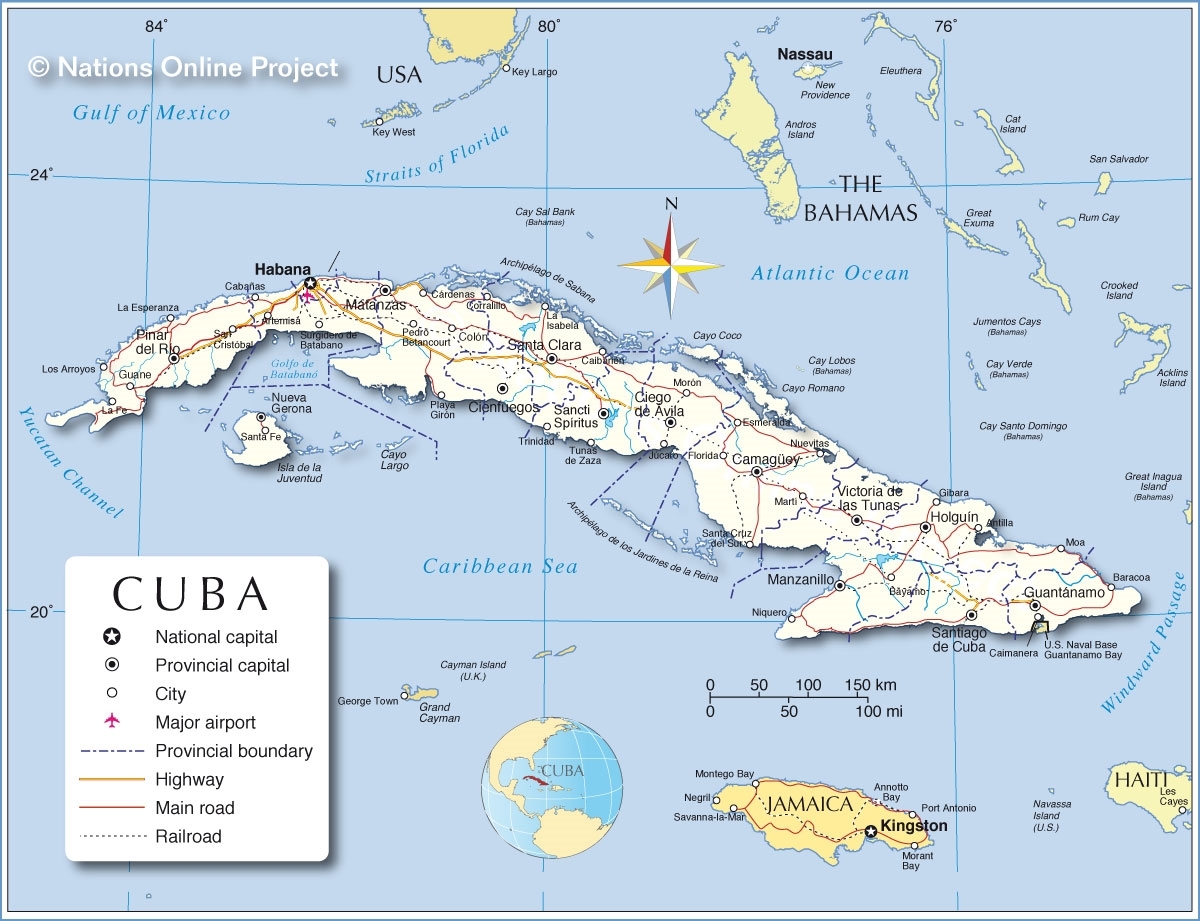
Will President Biden's Statement That His Is "a small business presidency” Extend To Supporting Small Businesses In Cuba?

The White House
Washington DC
22 November 2021

Remarks by President Biden Announcing his Nominees for Chair and Vice Chair of the Board of Governors of the Federal Reserve System


Excerpts:

The Honorable Joseph R. Biden, Jr. (22 November 2021): “Economists will tell you that an increase in new businesses is one of the best signs of an economy -- an economy that is becoming more innovative and more dynamic. And that’s because small businesses aren’t just the heart and soul of America, they’re not just the bedrock of so many communities across this country -- America’s small businesses are the primary job creators, innovators, and drivers that power our economic progress. That’s why it’s a powerful statement about -- of the faith about -- that we have in our country -- where our country and our economy is heading that small business creation is surging -- surging in America today. Which is why I’m proud to say: If you look at my presidency so far, it’s a jobs presidency and it’s a small business presidency.”

LINKS To Relevant Analyses

Update On Registration Of Micro, Small & Medium-Size Enterprises In Cuba. Now More Than 600.  November 21, 2021 

Cuba Continues To Report On Activity Of MSME's- The Numbers Increase.  November 06, 2021 

Joint Venture Between Banco de Sabadell Of Spain And Banco International de Comercio In Cuba Will Provide Financing In Foreign Currency To MSMEs & Non-Agricultural Cooperatives  November 05, 2021 

Bormey srl Among The First 35 Newly-Constituted Medium-Sized Enterprises In Cuba, Exported 5,000 Peanut Bars To Italy. Is United States Next? U.S. Department Of State Regulations Would Approve.  October 26, 2021 

ProLimp Cleaning In Cuba Precisely Type Of Entrepreneurship Biden Administration Should Support. Will Cuba Permit U.S. Venture Capitalists?  March 08, 2021

Potential Substantial Consequences For Defendants If Judge In Cruise Lines Libertad Act Lawsuit Grants Motion To Unseal Thousands Of Carnival, MSC, Royal Caribbean, And Norwegian Documents

NOTE: ORDER RESETTING HEARING ON MOTIONS FOR SUMMARY JUDGMENT THIS CAUSE is before the Court upon the parties’ Joint Notice Regarding December 14th Hearing. See, e.g., Havana Docks Corp. v. Carnival Corp., No. 19-cv-21724, ECF No. [422]. Upon review, it is ORDERED AND ADJUDGED that the pending Motions for Summary Judgment are reset for hearing on Wednesday, January 12, 2022, at 9:30 a.m., before the undersigned in Courtroom 10-2, 400 North Miami Avenue, Miami, Florida 33128. The Court will allocate the morning and afternoon for the hearing. LINK To Order

HAVANA DOCKS CORPORATION, Plaintiff, v. CARNIVAL CORPORATION, Defendant.
HAVANA DOCKS CORPORATION, Plaintiff, v. MSC CRUISES SA, MSC CRUISES SA CO, and MSC CRUISES (USA) INC., Defendants.
HAVANA DOCKS CORPORATION, Plaintiff, v. ROYAL CARIBBEAN CRUISES, LTD., Defendant.
HAVANA DOCKS CORPORATION, Plaintiff, v. NORWEGIAN CRUISE LINE HOLDINGS, LTD., Defendant.

LINK To Foreign Claims Settlement Commission Certification Of Loss (4/21/71)
LINK To Libertad Act Lawsuit Filing Statistics

Plaintiff's Motion For Permission To Use Sealed Records At The December 14th Hearing (11/19/21)

Plaintiff Havana Docks Corporation (“Havana Docks”) respectfully requests an order authorizing the use of sealed documents at the December 14th hearing.
1. Substantial discovery materials were filed as exhibits in connection with the parties’ summary judgment motions, including documents, interrogatory answers, answers to requests for admission, and deposition transcripts.
2. Because almost all of these materials were designated “confidential” or “attorneys eyes only” when produced, the protective orders required Havana Docks to seek leave to file them under seal.
3. So the parties requested, and the Court granted, leave to file these records under seal until further order of the Court. Havana Docks took no position as to the duration of any sealing.
4. Because Havana Docks’ briefs and statements of material facts cited extensively to sealed material, those documents were also filed under seal.
5. On request of the parties,1 the Court set the pending summary judgment motions for hearing on December 14, 2021.
6. Havana Docks needs to use materials filed under seal in its presentation at the December 14, 2021 hearing.
7. The standing protective order in the Royal case contains the following provision regarding the use of “confidential” and “attorneys’ eyes only” information at a hearing: Whenever … CONFIDENTIAL INFORMATION or ATTORNEYS’ EYES ONLY INFORMATION is to be referred to or disclosed at trial or a hearing, any Party claiming confidentiality may seek leave from the Court to exclude from the room any person who is not entitled to receive CONFIDENTIAL INFORMATION or ATTORNEYS’ EYES ONLY INFORMATION. Royal Case, No. 19-cv-23590, ECF No. 83 at ¶ 12.
8. The standing protective orders in the Carnival, MSC, and NCL cases do not contain a comparable provision. In paragraph 3, however, they provide that: Any use of Protected Material at trial shall be governed by a separate agreement or order. Carnival Case, No. 19-cv-21724, ECF No.229; MSC Case, No. 19-cv-23588, ECF No. 81; Norwegian Case, No. 19-cv-23591, ECF No. 154.
9. Havana Docks believes that all parties should be able to freely and fully present their arguments at the December 14, 2021 hearing, including through the use of sealed records. The only limitation should be to maintain as confidential personal identification information as provided by Fed. R. Civ. P. 5.2(a).
10. Havana Docks respectfully requests an order permitting all parties to use records that have been filed under seal at the December 14th hearing, with exception for personal identification information, which should be redacted as provided in Rule 5.2(a). See Callahan, et. al. v. United Network for Organ Sharing, --- F.4th ---- , 2021 WL 5351863, at *6 (11th Cir. Nov. 17, 2021) (“As we have long recognized, when ‘a matter is brought before a court for resolution, it is no longer solely the parties’ case, but also the public’s case.’”).
Certification Pursuant to Local Rule 7.1(a)(3)
Counsel for Havana Docks certifies that he has conferred orally and in writing with counsel for the Defendants in a good faith effort to resolve by agreement the issues raised in this motion. Specifically, counsel has conferred by email on September 25, 2021 and November 16, 2021, and by phone on multiple occasions during the week of November 15, 2021. The parties, however, have been unable to resolve the issues raised in this motion.

LINK To Plaintiff's Motion For Permission To Use Sealed Records At The December 14th Hearing (11/19/21)

ORDER SETTING HEARING ON MOTIONS FOR SUMMARY JUDGMENT THIS CAUSE is before the Court upon the parties’ Joint Request for Oral Argument on Motions for Summary Judgment. See Havana Docks Corp. v. Carnival Corp., No. 19-cv-21724, ECF No. [376]; Havana Docks Corp. v. MSC Cruises, SA, et al., No. 19-cv-23588, ECF No. [260]; Havana Docks Corp. v. Royal Caribbean Cruises Ltd., No. 19-cv-23590, ECF No. [181]; and Havana Docks Corp. v Norwegian Cruise Line Holdings, Ltd., No. 19-cv-23591, ECF No. [283], (collectively, the “Motions”). Upon review of the Motions, it is ORDERED AND ADJUDGED that the Motions are GRANTED, and the pending Motions for Summary Judgment are set for hearing on Tuesday, December 14, 2021 at 9:30 a.m. before the undersigned in Courtroom 10-2, 400 North Miami Avenue, Miami, Florida 33128. The Court recognizes that we continue to be in the midst of a global pandemic. As such, to the extent that the parties would prefer to appear by video conference, the parties should promptly notify the Court. DONE AND ORDERED in Chambers at Miami, Florida, on October 25, 2021.

LINK To Order Setting Hearing On Motions For Summary Judgement (10/26/21)

HAVANA DOCKS CORPORATION V. NORWEGIAN CRUISE LINE HOLDINGS, LTD. [1:19-cv-23591; Southern Florida District]
Colson Hicks Eidson, P.A. (plaintiff)
Margol & Margol, P.A. (plaintiff)
Hogan Lovells US LLP (defendant)

HAVANA DOCKS CORPORATION VS. ROYAL CARIBBEAN CRUISES, LTD. [1:19-cv-23590; Southern Florida District]
Colson Hicks Eidson, P.A. (plaintiff)
Margol & Margol, P.A. (plaintiff)
Holland & Knight (defendant)

HAVANA DOCKS CORPORATION V. MSC CRUISES SA CO, AND MSC CRUISES (USA) INC. [1:19-cv-23588; Southern Florida District]
Colson Hicks Eidson, P.A. (plaintiff)
Margol & Margol, P.A. (plaintiff)
Venable (defendant)

HAVANA DOCKS CORPORATION VS. CARNIVAL CORPORATION D/B/A/ CARNIVAL CRUISE LINES [1:19-cv-21724; Southern Florida District]
Colson Hicks Eidson, P.A. (plaintiff)
Margol & Margol, P.A. (plaintiff)
Jones Walker (defendant)
Boies Schiller Flexner LLP (defendant)
Akerman (defendant)

Update On Registration Of Micro, Small & Medium-Size Enterprises In Cuba. Now More Than 600.

Mr. Michel Santana García
Legal Adviser- Business & Foreign Investments
EMCOMED BIOCUBAFARMA
Havana, Republic of Cuba

21 November 2021

There are more than 600 MSMEs [micro, small and medium-sized enterprises] and Cooperatives approved since the process began at the end of last September.

The Ministry of Economy and Planning approved 89 new applications from private micro, small and medium-sized enterprises (MSMEs), four state-owned and two non-agricultural cooperatives (CNA).

With this decision, there are 615 approved economic actors since the process began at the end of September this year. Of the MSMEs, 586 are private and 15 are state-owned, and there are also 14 cooperatives.

By origin, 57% are reconversions of pre-existing businesses and 43% correspond to new ventures.

In total, it is estimated that the new economic actors will generate 9513 new jobs in the economy.

Of all those approved, 37 are part of local development projects, 23 have previously carried out export operations and six are incubated in the Science and Technology Park of Havana.