
SPIEF 2026 Included Russia-Cuba Business Dialogue, Until It Did Not. Now DPM One Of Seven Speakers In 75-Minute Russia-Latin America Business Dialogue. Ignominious Moment?
/SPIEF 2026 Included Russia-Cuba Business Dialogue, Until It Did Not
What Happened? No Comment
From A Bilateral Dialogue To One Of Seven Speakers In Seventy-Five Minutes
Speaker List Is In Alphabetical Order, So Deputy Prime Minister Listed Last- Symbolically Reinforcing His Significance
An Ignominious Moment?
Thus far in 2026, despite official rhetoric professing the opposite, the government of the Russian Federation has remained reticent to provide consistent and meaningful commercial, economic, energy, financial, military, and political support to the government of the Republic of Cuba.
The government of the Russian Federation has neither taken nor implemented decisions to confront the Trump-Vance Administration (2025-2029) in terms of attempting and then succeeding with sustained deliveries of products or services to the Republic of Cuba either by vessel or aircraft.
The official rhetoric of the government of the Russian Federation combined with the historical relationship between the U.S.S.R. and the Republic of Cuba and subsequently between the Russian Federation and the Republic of Cuba suggested a more robust response to the acute issues impacting the Republic of Cuba.
Vladimir Putin, President of the Russian Federation (2000-2008 and 2012-2030), has decided that the Republic of Cuba is not worth a confrontation with Donald Trump, President of the United States (2017-2021 and 2025-2029). The Republic of Cuba is a political commodity whose value continues to decrease.
Other countries with which the government of the Republic of Cuba has engaged during the last decades have not responded robustly to the acute issues impacting the Republic of Cuba. The governments of Brazil, Canada, China, Colombia, Iran, Mexico, North Korea, Spain, and Vietnam among others have not provided assistance whereby the impact is meaningful and sustainable for the Republic of Cuba’s current population of approximately ten (10) million, which continues to decrease due to departures and lower birth rates.
TASS- HAVANA, 10 April 2026: “The format of the Cuban delegation's participation in the St. Petersburg International Economic Forum (SPIEF) is being worked out, Russian Deputy Foreign Minister Sergey Ryabkov said in response to a question from TASS. “The format of Cubans’ participation in the SPIEF is being worked out,” he said. “It's too early to talk about final decisions, but I'm sure the level should be solid.””
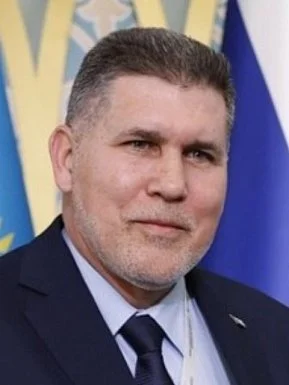
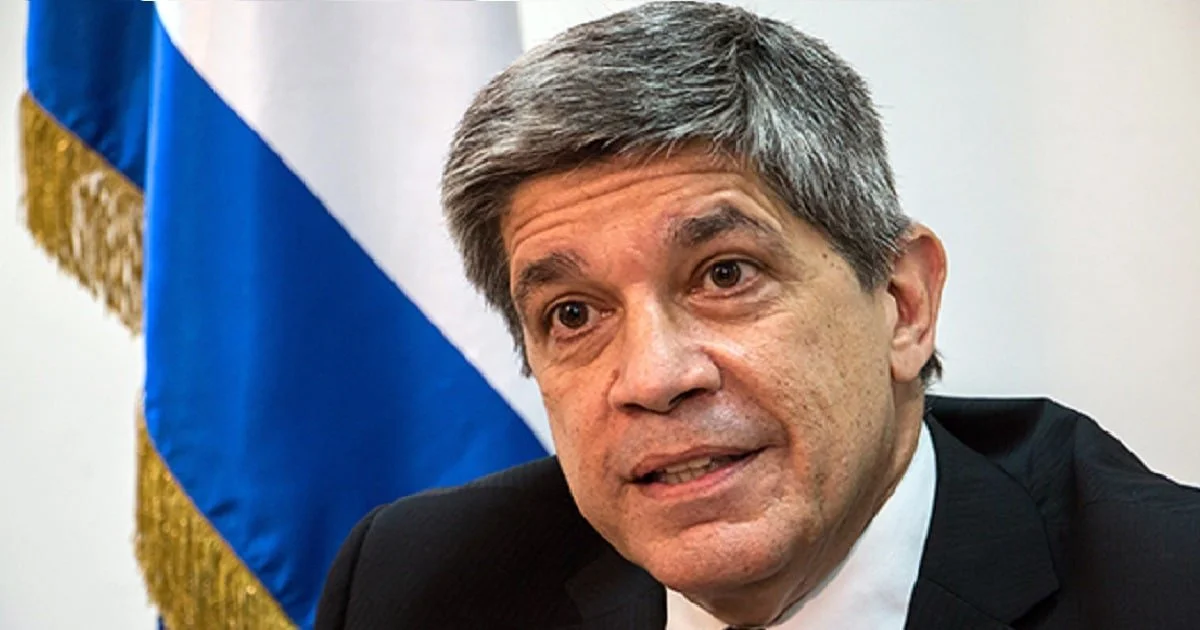
Oscar Perez-Oliva Fraga, Deputy Prime Minister, Minister of Foreign Trade and Foreign Investment of the Republic of Cuba, was until 1 June 2026 the only official of the government of the Republic of Cuba identified as participating in the annual St. Petersburg International Economic Forum (SPIEF) from 3 June 2026 to 6 June 2026. He also participated in 2025. On 1 June 2026, the SPIEF program added one other official from the government of the Republic of Cuba: Ernesto Rodriguez Hernandez, First Deputy Minister of Communications of the Republic of Cuba, participating as one of nine speakers on the panel, Technologies Shaping the Future Turnkey Digital Sovereignty: Mutually Beneficial Prospects.
Link: At SPIEF’25 Russia-Cuba Dialogue, One Side Talks Dreams, Other Talks Reality. “Reliable Partner”- “Science Fiction” Or Reality? Russia Says Entrepreneurs Important. Cuba Not So Enthusiastic June 19, 2025
Quotes from Deputy Prime Minister Fraga during the Russia-Cuba Business Dialogue on 18 June 2025:
“To pay off our debts, we need to produce and develop entrepreneurship. And in this regard, we will, of course, cooperate with Russian entrepreneurs. We are already implementing this decision and have made significant efforts to develop this area. Therefore, please continue to trust Cuba, and we will certainly fulfill all our obligations.”
“We can also cooperate in industry and transportation. A project was recently launched where Russian cars were assembled in Cuba, and this is, of course, beneficial for both sides.”
“Russia is under a ton of Western sanctions. And we're seeing fascist, Russophobic attitudes. Sanctions against Cuba are only getting stronger, so we're all going through tough times.”
“Today is a real turning point in our relations. In the coming months of this year, I believe many projects will be implemented, and we will prove that doing business in Cuba is entirely possible and can be very successful.”
Until last week, the following was in the official SPEIF 2026 program:
3 June 2026
17:15–18:30
Business Dialogue
Russia-Cuba
“Cuba is a reliable foreign policy partner and a priority ally of Russia in Latin America. The two countries maintain aligned positions on a wide range of global agenda, which is particularly significant amid rising tensions across many regions of the world. The level of trade and economic cooperation reflects the strong foundation of their political relationship. How can business and government jointly address global challenges and build effective bridges between the two countries? Which key issues require priority attention in the near term?”
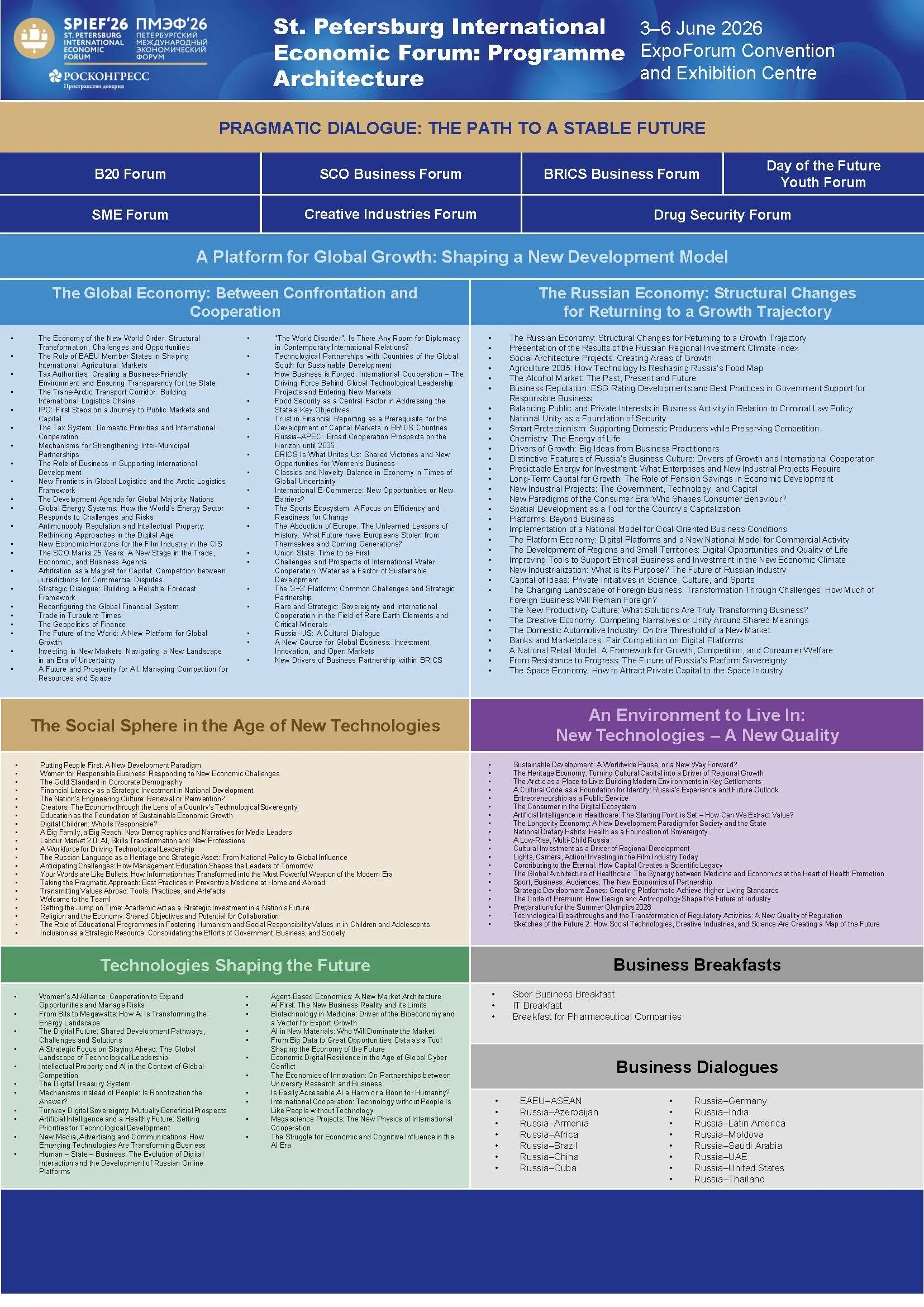
The currently available official program for SPIEF 2026 does not include a Russia-Cuba Business Dialogue. Deputy Prime Minister Fraga is listed as one of seven (7) speakers in this one hour and fifteen-minute session:
3 June 2026
17:00–18:15
Business Dialogue
Russia-Latin America
“Interregional ties are playing an increasingly important role today amidst growing geopolitical instability. Such ties serve as a tool that complements traditional diplomacy and interstate relations and makes foreign policy more attuned to real-world needs. Today, St. Petersburg is one of the leaders in terms of fostering international cooperation with the nations of Latin America. The city’s vast potential in such sectors as industry, port infrastructure, trade, transport, healthcare, and culture creates ample opportunities to intensify the international dialogue with its counterparts across Latin America. What do these bridges of cooperation between Russia’s northern capital and the countries of Latin America look like? How does St. Petersburg’s experience help reinforce the ties between Russia and Latin America? What new mechanisms and instruments for bilateral relations can St. Petersburg offer its Latin American partners?
Moderator:
• Sergey Brilev, President, The Global Energy Association
Speakers:
• Carmen Caballero, President, ProColombia
• Luis Alfredo Fratti Silveira, Minister of Livestock, Agriculture and Fisheries of the Oriental Republic of Uruguay
• Eugene Grigoriev, Member of the Government of St. Petersburg – Chairman of the Committee on External Relations of St. Petersburg
• Dmitry Khandoga, Head of Department, Gazprom; General Director, Gazprom Export
• Sergey Machekhin, Deputy General Director for Project Engineering, Sustainable Development and International Cooperation, RusHydro
• Igor Maksimtsev, Rector, Saint Petersburg State University of Economics; Honorary Consul of the Republic of Chile in Saint Petersburg
• Oscar Perez-Oliva Fraga, Deputy Prime Minister, Minister of Foreign Trade and Foreign Investment of the Republic of Cuba
Front row participants:
• Alexander Shchetinin, Director of the Latin American Department, Ministry of Foreign Affairs of the Russian Federation
• Andrey Zhukovsky, Leading Researcher, Institute of Regional Economy and Interbudgetary Relations, Financial University under the Government of the Russian Federation”
4 June 2026
09:00–10:15
Technologies Shaping the Future Turnkey Digital Sovereignty: Mutually Beneficial Prospects
Russia rightfully ranks among the top three countries in the world with genuine digital sovereignty. Despite facing over 30,000 sanctions, Russia has confidently shown the world that it is capable of independently meeting its own digital needs, ranging from applications to infrastructure. Russia has shed its dependence on foreign IT solutions and no longer fears the threat of suddenly having its access to services cut off. The country’s unique experience is actively generating interest among nations of the Global South, which currently find themselves facing a difficult choice. On one side they have well established Western corporations with their world-renowned ecosystems, while on the other is China’s Digital Silk Road, which offers relatively affordable products and infrastructure. Russia’s pragmatic approach is appealing because it does the best job of fully taking into account the specific national regulatory, cultural, and historical features of individual countries and regions. Russia offers turnkey digital sovereignty solutions with comprehensive assistance in building entire independent digital ecosystems, formulating national strategies, establishing regulatory frameworks, setting standards, developing soft law instruments, and, of course, training specialists from partner nations. How can we transform Russia’s experience from a concept of survival into a model of equitable technological partnership that is capable of bolstering the digital independence of friendly nations?
Moderator:
Moderator:
• Vadim Glushchenko, Director, Center for Global IT-Cooperation
Speakers:
• Andrey Bezrukov, President, Technological Sovereignty Export Association; Professor at the Department of Applied Analysis of International Problems, MGIMO University
• Alexey Borodin, Director General, Regional Commonwealth in the Field of Communications
• Maxim Filippov, Deputy General Director, Positive Technologies
• Pavel Gontarev, General Director, VK Tech
• Darii Khalitov, Deputy President, Chairman of the Board, Rostelecom
• Cristina Amor Maclang, Co-Founder, Secretary General, International Digital Economies Association (IDEA); Convenor, Digital Pilipinas (online)
• Kirill Menshov, Senior Vice President, Head of Technology Block, Sberbank
• Alexey Raikevich, General Director, GLONASS
• Ernesto Rodriguez Hernandez, First Deputy Minister of Communications of the Republic of Cuba
From the government of the Russian Federation: “The St. Petersburg International Economic Forum (SPIEF) is a unique event in the world of business and economics. SPIEF has been held since 1997, and since 2006, it has been held under the auspices of the President of the Russian Federation, who has also attended each event.”
SPIEF is where President Putin seeks to demonstrate the Russian Federation remains a global player and countries want to engage with it. SPIEF is signage: The Russian Federation is open for business and business is good.
However, President Putin has delivered a different message to Miguel Diaz-Canel, President of the Republic of Cuba (2019-2028) and to the Diaz-Canel-Valdes Mesa Administration (2019-2028).
If the Republic of Cuba is a historical, necessary, and strategic relationship, then why is the defense of that relationship by the government of the Russian Federation so brittle and absent of resolve?
Because the government of the Republic of Cuba continues to avoid implementing decisions that would foster its attractiveness rather than continue to embrace anachronistic ideals that depend solely upon the resources of others to function.