
Missing From Shield Of The Americas Summit Are President Trump's Two Works-In-Progress And Three Heads Of State Who Could Influence One Of Them To Do What President Trump Wants It To Do
/This morning, Donald Trump, President of the United States (2017-2021 and 2025-2029), will host at his property in Doral, Florida, the Shield of the Americas Summit for heads of state and heads of government from selected countries.
The heads of state representing his two most visible works-in-progress, one more advanced than the other, will not be participating: Delcy Rodriguez, Interim President of the Bolivarian Republic of Venezuela (2026- ), and Miguel Diaz-Canel, President of the Republic of Cuba (2019- ).
Unknown is will President Trump use the forum to seek from those in the room with him support for his efforts to re-engage commercially, economically, financially, and politically with the government of the Republic of Cuba. If he does, there is then the question as to what leverage they have in Havana and if they have leverage in Havana, to what level will they agree to use it.
Three heads of state who might have the most expansive leverage in Havana will not be participating in the Shield of the Americas Summit.
They represent the largest by Gross Domestic Product (GDP) and population, Brazil, and second-largest by GDP and population, Mexico, and the fourth-largest by GDP, and third-largest by population, Colombia.
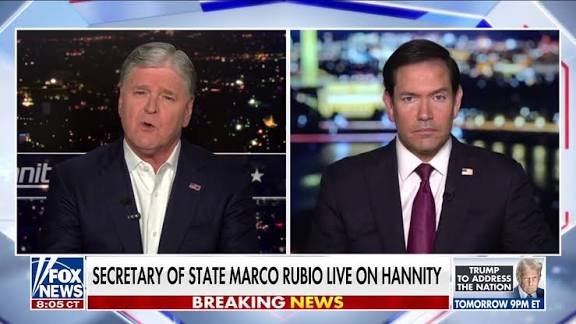
“On March 7, 2026, Secretary of State Marco Rubio will join President Donald J. Trump at the Shield of the Americas Summit in Doral, Florida. The United States will welcome our strongest likeminded allies in our hemisphere to promote freedom, security, and prosperity in our region. This historic coalition of nations will work together to advance strategies that stop foreign interference in our hemisphere, criminal and narco-terrorist gangs and cartels, and illegal and mass immigration.” United States Department of State
Expected to participate: Argentine Republic President Javier Milei; Bolivian President Rodrigo Paz Pereira; Chile President-elect José Antonio Kast; Costa Rican President Rodrigo Chaves Robles; Dominican Republic President Luis Abinader; Ecuadorian Constitutional President Daniel Noboa; El Salvadoran President Nayib Bukele; Guyanese President Mohamed Irfaan Ali; Honduran President Nasry "Tito" Asfura; Panamanian President José Raúl Mulino Quintero; Paraguayan President Santiago Peña; Trinidad and Tobago Prime Minister Kamla Persad-Bissessar.
Links To Related Analyses
Trump’s Message To Cuba To “Make A Deal” May Not Be A Bad Deal For Cuba. Witkoff And Kushner Add Another Assignment. 23 February 2026 Is Consequential. January 14, 2026
At SPIEF’25 Russia-Cuba Dialogue, One Side Talks Dreams, Other Talks Reality. “Reliable Partner”- “Science Fiction” Or Reality? Russia Says Entrepreneurs Important. Cuba Not So Enthusiastic June 19, 2025
Trump Administration Executive Order On Changes To Tariffs To Comply With SCOTUS Decision Feb 25, 2026
Transcripts And Recordings Of SCOTUS Libertad Act Title III Arguments: Havana Docks And Exxon Mobil Feb 18, 2026
Background
On 10 May 2022, the Biden-Harris Administration (2021-2025) authorized the first direct investment and the first direct financing into a privately-owned company located in the Republic of Cuba owned by a Republic of Cuba national. The expectation was the government of the Republic of Cuba would quickly embrace the opportunity for engagement.
Link: Biden-Harris Administration Approves First Equity Investment Since 1960 In A Private Cuban Company May 10, 2022
Link: With U.S. Government Authorization For First Direct Equity Investment Into A Private Company In Cuba, Here Is Important Context And Details. About The Parties; About The Message. May 16, 2022
Link: Now The Hard Part For Cuba: Implementing Quickly Transparent, Equal-For-All, MSME Investment & Financing Regulations. No Limitations. No Selectivity. No Orwellian Process. August 04, 2022
Nearing four years later, the government of the Republic of Cuba has not issued the necessary guidance and regulations.
The Diaz-Canel-Valdes Mesa Administration (2019- ) in the Republic of Cuba is not for some in the Trump-Vance Administration (2025-2029) the problem. The problem is the manner the government of the Republic of Cuba uses its chosen political system to manage its economy.
Policies, regulations, and statutes implemented by the government of the United States do impact negatively the commercial, economic, and financial functionality of the government of the Republic of Cuba.
Ironically, some of the policies, regulations, and statutes if accepted by the government of the Republic of Cuba could strengthen the government of the Republic of Cuba by providing additional capital, additional markets, and additional bilateral political connectivity.
Within those policies, regulations, and statutes are opportunities the government of the Republic of Cuba has avoided which have contributed to the corrosion and decay of the commercial, economic, and financial infrastructure in the Republic of Cuba.
The Trump-Vance Administration will permit the Diaz-Canel-Valdes Mesa Administration to implement changes to commercial, economic, and financial infrastructure while maintaining most political infrastructure.
However, the infrastructure needs to transition quickly from what did not work in the second half of the twentieth century to what can work in the beginning of the second quarter of the twenty-first century.

Cigar Emporium aruba