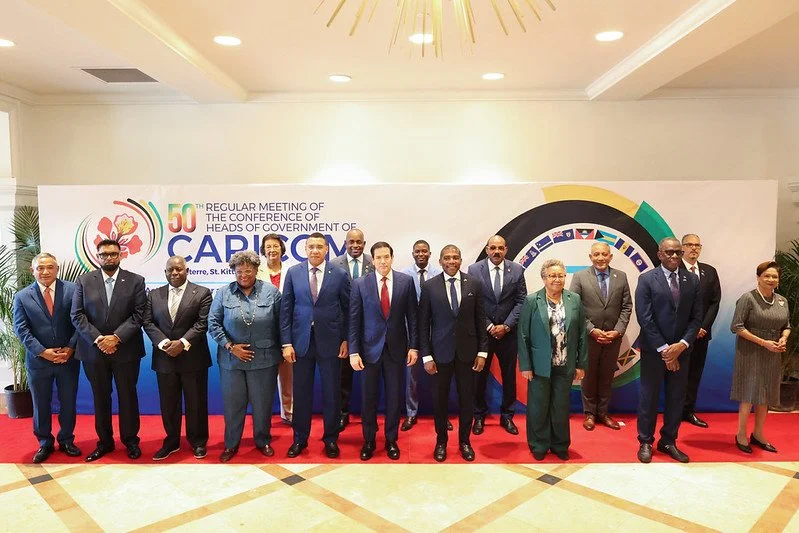

At CARICOM Meeting, U.S. Secretary Of State Rubio Discusses Cuba- Engagement Remains Focused First On Commercial, Economic, Financial Changes In Cuba
/United States Department of State
Washington DC
25 February 2026
Frigate Bay, Saint Kitts and Nevis
St. Kitts Marriott Beach Resort
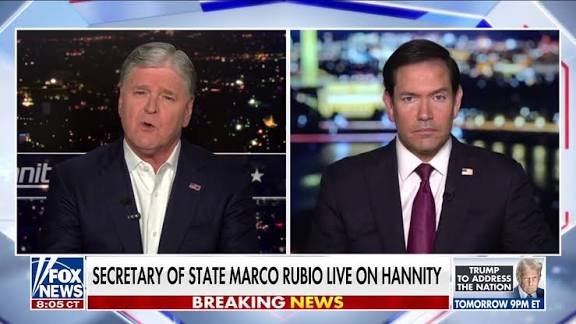
Secretary of State Marco Rubio Remarks to Press
QUESTION: Can I ask you about the oil announcement today by the Treasury Department about Venezuelan oil to Cuba that for humanitarian reasons – for private companies? Is this a shift in policy? What is the motivation?
SECRETARY RUBIO: No, it’s always been legal to sell to the private sector in Cuba, okay? These are – these would not be sales to the government. These would not be sales to the military-owned GAESA, the company. These would be sales to a very small private sector that exists in Cuba, and that’s always been legal. I mean, there are people that have a license to do that now. This would just expand to the numbers that could do it. Again, it would go to the private sector. The private sector in Cuba is quite small. It exists, but it’s small. And it certainly in and of itself does not have the capacity to deal with the scale and scope of the challenges they’re facing.
But if the Cuban economy were a functioning economy, it would have a much larger private sector. And so what’s clear is that – and I would say this, that the people of Cuba are suffering today. They’ve been suffering for a long time. They’re suffering now, perhaps more than at any time in recent memory, perhaps in the history since 1959. This is the worst economic climate that Cuba has faced, and it is the authorities there in that government who are responsible for that. They are the ones that have made decisions that have left Cuba vulnerable to the situation they’re now in.
Understand that Cuba has largely survived on the basis of subsidies. The Soviet Union gave them free things. When the Soviet Union collapsed, they went into a special period which was disastrous for them. And then along came Hugo Chávez and bailed them out for a long time. When that sort of died off a little bit, the Maduro regime was providing them fuel – or they were providing them actually crude oil. Some percentage of that was refined and used domestically, and a large percentage of that never even made it to Cuba. It was sold in the open market for cash to fund the regime and to fund the military-owned company.
So the reason why Cuba’s electricity grid was already in collapse – before Maduro was captured it was already in collapse – the reason why things are as bad as they are is because they have an economic model that does not exist, that does not work. It doesn’t exist anywhere in the world. It is not functional. And the only way Cuba is going to have a better future is if it has a different economic model. Now, if you go back to President Trump’s 2017 or 2018 executive orders on a new policy in Cuba, that policy was entirely designed in many ways to put the private sector and individual private Cubans – not affiliated with the government, not affiliated with the military – in a privileged position.
The reason why those industries have not flourished in Cuba is because the regime has not allowed them to flourish. So now that they’re in a crisis, there is an opportunity for them to import fuel – in small quantities, granted – through a private sector. If we catch the private sector there playing games and diverting it to the regime or to the military company, if we find that they’re moving that stuff around in ways that violate the spirit and the scope of these permissions, those licenses will be canceled.
But it’s the same reason why we’ve provided humanitarian assistance. We’ve provided humanitarian assistance in Cuba in the aftermath of the hurricane; we provided it through the Catholic Church, not through the government. And we’re prepared to do something similar when it comes to fuel through the private sector, the small private sector. But that alone will not solve Cuba’s very dramatic problems that have been caused by 60-some-odd years of mismanagement, ineptitude, and a failed economic model.
QUESTION: Mr. Secretary, can you confirm or comment on reports that you’ve spoken with Raúl Castro’s grandson?
SECRETARY RUBIO: I won’t comment on any conversations we’ve had. Suffice it to say that the United States is always prepared for – prepared to talk to officials from any government that have information to share with us or viewpoints they want to share with the United States, and that’s my job to do that. So whether it’s someone in Cuba or potentially one day someone in North Korea or right now in Iran, we are always open to listen. That’s different from a negotiation obviously, but we’re prepared to listen to viewpoints that other people say.
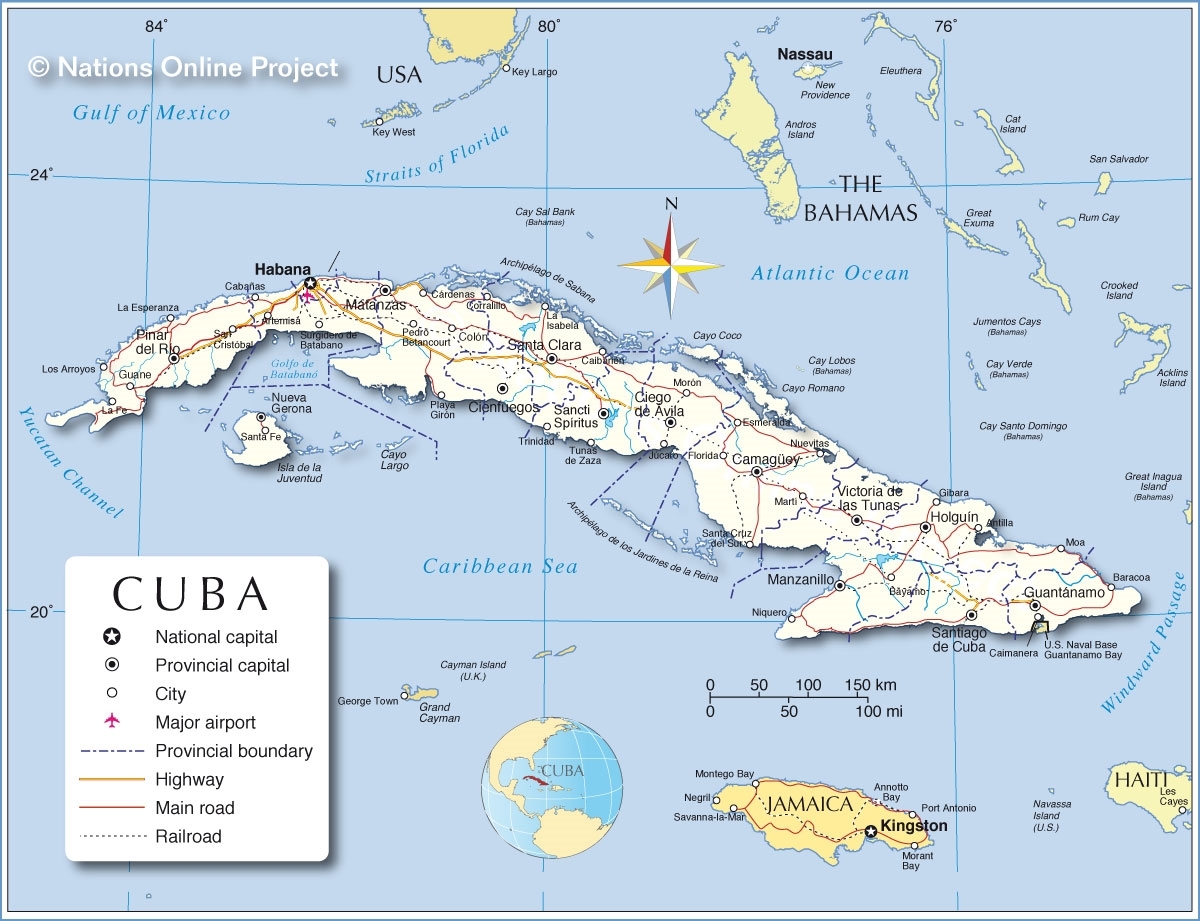
Cuba is a country located 90 miles off the coast of the United States. It has a very severe and catastrophic economic crisis on its hands. And if someone in their system has information to share with us about changes they’re open to making or moves they’re prepared to accept, we would certainly listen to that. And I would probably do that not in a setting in front of the media because I think it would be more productive that way, but ultimately actions will be important in something like that.
QUESTION: I mean, can they negotiate a new system in Cuba? I mean, are you hopeful that there might be reformists inside who could have (inaudible)?
SECRETARY RUBIO: Well, I mean, the status quo is unsustainable. I had – we had a meeting here today with all the leaders of CARICOM, and it was one of the points I raised, and I think virtually everyone in the room agreed that Cuba’s status quo is unacceptable. Cuba needs to change. It needs to change. And it doesn’t have to change all at once. It doesn’t have to change from one day to the next. Everyone is mature and realistic here. We’re seeing that process play out, for example, in Venezuela. Many in the – many of the countries represented at the CARICOM conference today were themselves countries that went through transitions at some point in their history.
But Cuba needs to change. It needs to change dramatically because it is the only chance that it has to improve the quality of life for its people and not lose 15 percent of its population since 2021. Fifteen percent of the people of Cuba have left since 2021. That is not a system that’s working. That’s a system that’s in collapse, and they need to make dramatic reforms. And if they want to make those dramatic reforms that open the space for both economic and eventually political freedom for the people of Cuba, obviously the United States would love to see that. We’d be helpful. If they decide they’re going to dig in and just continue forward, then I think they’re going to continue to experience failure and the people of the country are going to continue to suffer. It’ll be the regime’s fault.
QUESTION: To come back to Cuba, some of the countries you met today have raised concerns about spillover and instability caused by the humanitarian crisis there. Is the move today on oil sales a sort of recognition that the humanitarian crisis is getting out of hand, that the U.S. blocking oil shipments —
SECRETARY RUBIO: No – I mean, no, first of all, forget about today. The humanitarian crisis is getting out of hand because the Cubans don’t know how to run an economy. They’re incompetent. They have a military-controlled holding company named GAESA which controls 40 percent of their GDP, and none of the money that that company has generated flows to the coffers of the government. None of that money goes to schools. None of that money goes to roads. None of that money goes to feeding the population. You have a country that has fertile farmland that imports sugar. This was one of the world’s leading exporters of sugar; now they import sugar. They import almost all their food. They – it’s a dysfunction. It’s just not even an economy. It’s a total dysfunction. That’s their fault.
As far as spillover effect, they’re not more concerned than we are. We’re 90 miles away, and the U.S. has experienced mass migration from Cuba in the past, certainly in the early ’90s with the rafter crisis, but as recently as 2021 and ’22 we were having people show up in the Florida Keys and stranded in the Bahamas. So we don’t want to see it, either. And ultimately, as far as the move today with oil, this is existing – the law allows us to do business like fuel and even telecommunications with the Cuban private sector. The problem is the Cuban private sector is very small. If they want to open the gates and allow the Cuban private sector – independent of the military, independent of the government – to grow, that solution is there.
What the Cuban people should know is this: that if they are hungry and they are suffering, it’s not because we’re not prepared to help them. We are. It’s that the people standing in the way of us helping them is the regime, is the Communist Party. That’s who’s standing in the way. If they move out of the way, we’re more than happy to work with individual Cubans so they can have an opportunity to feed their families and build their economy. But we are not the impediment. They are.
Politico Canada
“CUBA — Oil and food. That’s what Cuba’s ambassador to Canada says his country needs to survive the stepped-up American pressure under President DONALD TRUMP to break the back of Cuba’s government. — Rock and a hard place: But RODRIGO MALMIERCA DÍAZ told the House of Commons foreign affairs committee on Tuesday that he gets the realpolitik countries like Canada are facing. “I understand that many friends of Cuba are trying to be, maybe discreet, about their positions. They don't want to create more trouble with the U.S. than they already have.” — Please help, anyway: “Without energy, every aspect of life in the country is affected,” the envoy said, pointing to food distribution, public health, transportation and education.”