
Melbana Energy Of Australia Determining If Trump Administration Targeting Of Cuba Energy Sector Permits Continuing Operations. Similar Strategy To Australia's Antilles Gold
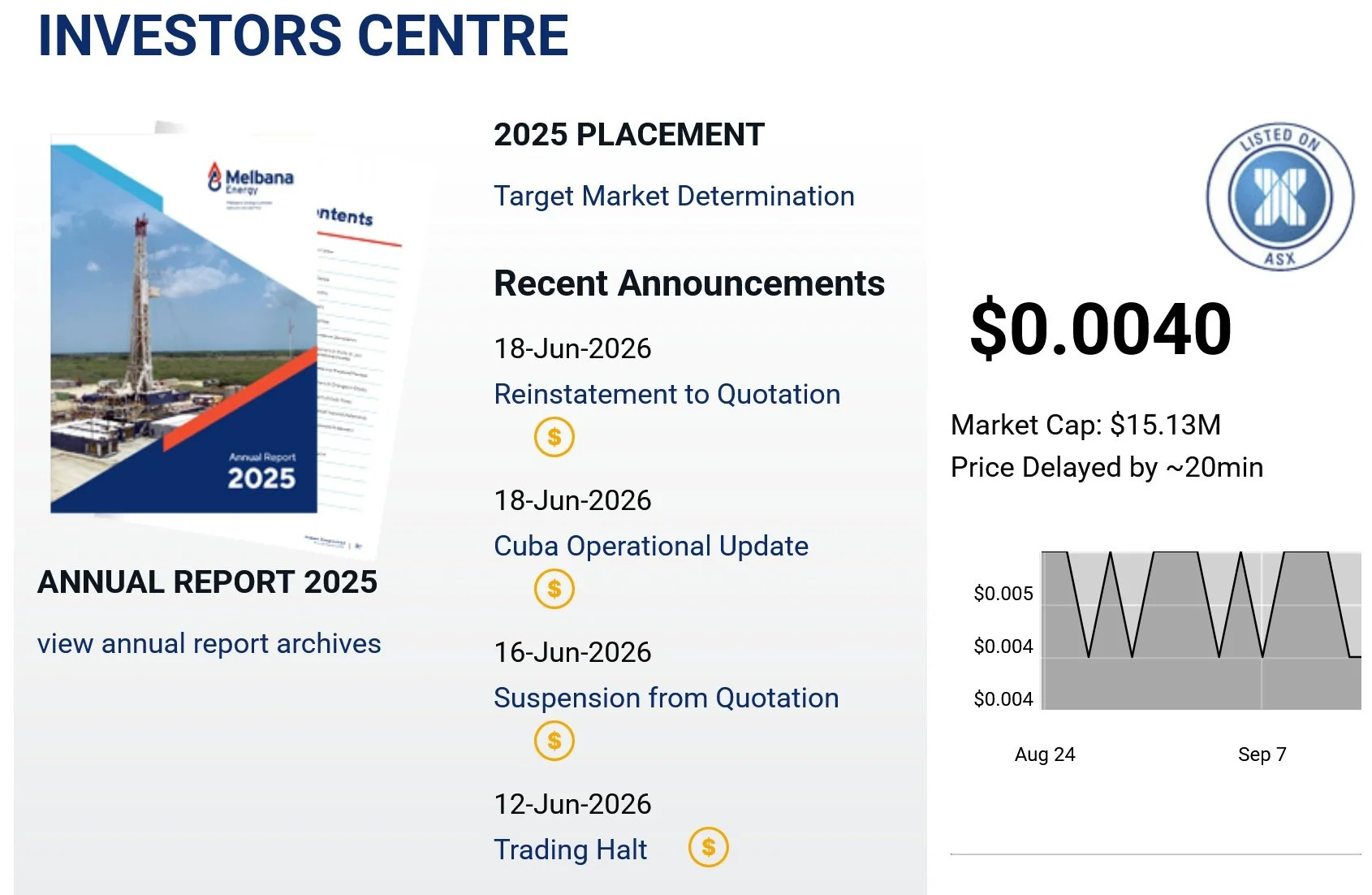
/Sydney, Australia-based Melbana Energy "is an Australian ASX listed, independent oil and gas company that has a portfolio of attractive exploration, appraisal and development stage opportunities in Cuba and Australia. Melbana Energy is listed on the Australian Securities Exchange (ASX: MAY) and is headquartered in Sydney, Australia with satellite offices in Melbourne, Havana and Varadero."
18 June 2026 Market Announcement: Melbana Energy Limited (ASX: MAY)- Reinstatement to Quotation. The suspension of trading in the securities of Melbana Energy Limited (‘MAY’) will be lifted immediately following the release by MAY of an announcement regarding an update about its Cuban operations and the United States Government sanctions against Unión Cuba-Petróleo (‘CUPET').
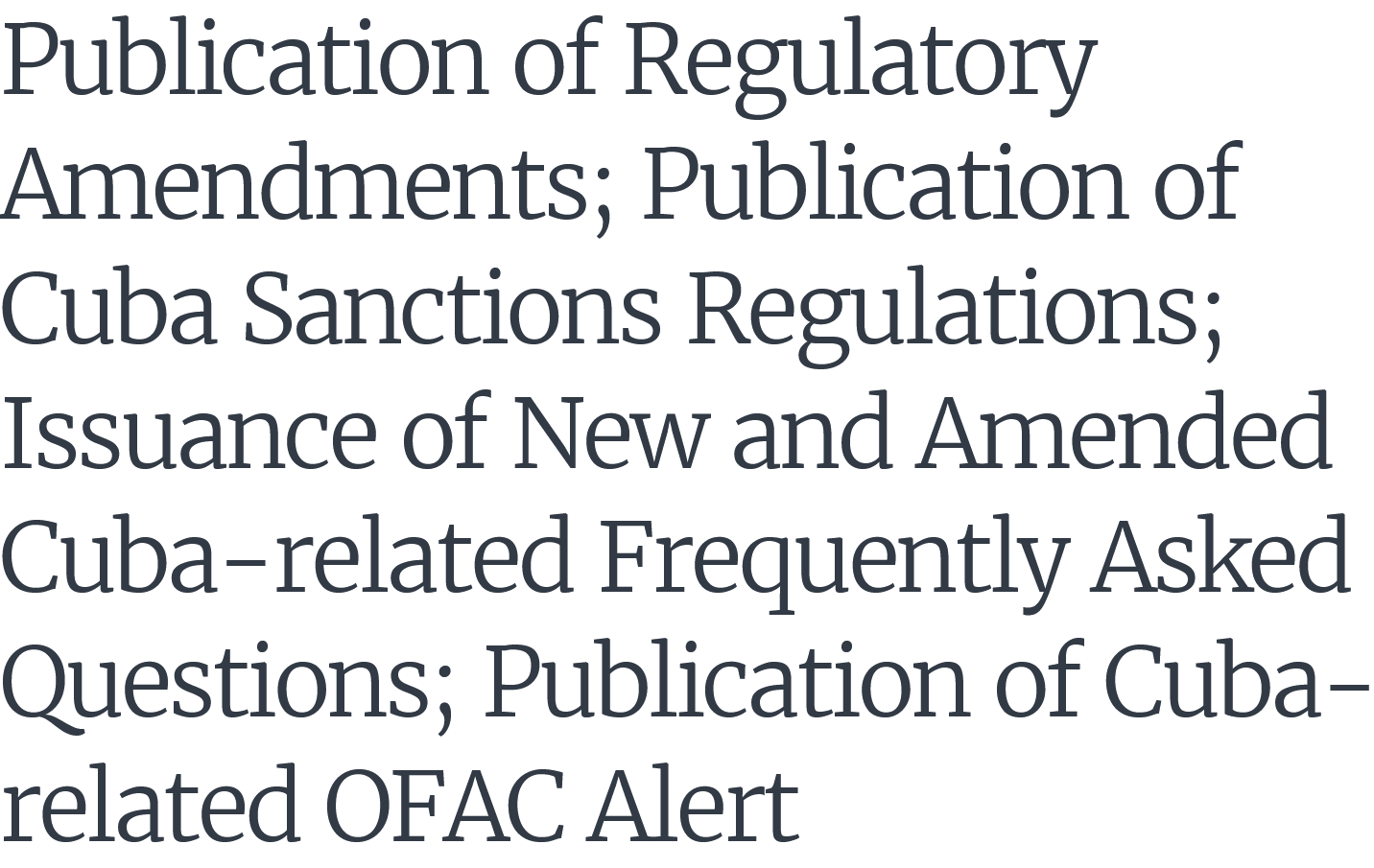
18 June 2026 Cuban Operational Update: Melbana Energy Limited (ASX: MAY) (Melbana or Company) provides this operational update regarding Block 9 Production Sharing Contract (PSC) onshore Cuba, in which it holds a 30%1 interest via a wholly owned subsidiary that is also the operator. On 11 June 2026, the U.S. Department of State designated Cuba’s state-owned oil and gas company Union Cuba-Petroleo (CUPET) as a Specially Designated National (SDN)2, pursuant to the U.S. President’s Executive Order 14404 (Executive Order) of 1 May 20263. An SDN generally prohibits a U.S. entity from transacting with it and the possibility of secondary sanctions on parties from other jurisdictions. Neither Melbana nor any of its subsidiaries has been designated as an SDN under the Executive Order or under any other applicable U.S. sanctions programme administered by the U.S. Department of the Treasury's Office of Foreign Assets Control (OFAC). CUPET is the Company’s contractual counterparty to the PSC, with the Company being responsible for funding the safe and timely execution of the agreed work program, as varied from time to time, in satisfaction of its obligations under the PSC. The PSC is in the exploration stage, and no revenue has been generated. Operations under the PSC ceased in late 2025 due to the non-payment of cash calls by its joint operations partner1,4. As a result, all the Company’s expatriate personnel and contractors were instructed late last year to leave Cuba. As Operator, the Company has continued to discharge its obligations for site safety and security by engaging Cuban contractors to provide these services. Following CUPET’s SDN designation, the Company has immediately suspended its direct participation in financial, technical or administrative support of the PSC whilst it undertakes a more detailed review of these developments and has informed CUPET of this.
The Company has been and continues to seek external advice on the implications of the Executive Order for its Cuban operations. This includes ongoing discussions with legal counsel and other subject matter experts, including sanctions and regulatory advisers, on the scope and effect of CUPET’s SDN designation on the PSC and the potential consequences for the Company’s business, operations and contractual position. The review includes consideration of the applicable OFAC sanctions framework as it relates to the Company as a non-U.S. operator, any potential secondary sanctions exposure.
Those discussions and meetings are continuing. As at the date of this announcement, the Company has not reached any conclusions or determined any definitive course of action. The Company wishes to emphasise that the applicable sanctions framework is highly technical in nature and that the legal and regulatory consequences of the Executive Order are not straightforward. The Company expects to receive further guidance from its advisers following the next scheduled meetings with its advisers and will update the market in accordance with its continuous disclosure obligations if and when there is information capable of disclosure. The Company continues to receive external advice on the steps it should take to address the implications of the Executive Order for its operations in Cuba. The Company has also requested advice on whether any available avenues exist to seek the necessary clarification from OFAC or the U.S. State Department to resume its operations in Cuba. The Company’s portfolio of exploration licences in Australia is unaffected by this Executive Order.
1 See ASX announcement dated 20 April 2026 regarding the transfer to Melbana of Sonangol’s 70% interest, subject to the receipt of Cuban regulatory approvals
2 https://www.state.gov/releases/office-of-the-spokesperson/2026/06/sanctioning-cubas-state-owned-oil-and-gas-company-union-cuba-petroleo/
3 https://www.whitehouse.gov/presidential-actions/2026/05/imposing-sanctions-on-those-responsible-for-repression-in-cuba-and-for-threats-to-united-states-national-security-and-foreign-policy/
Cuba- Block 9 PSC
Cuba Block 9- World Class Exploration Acreage
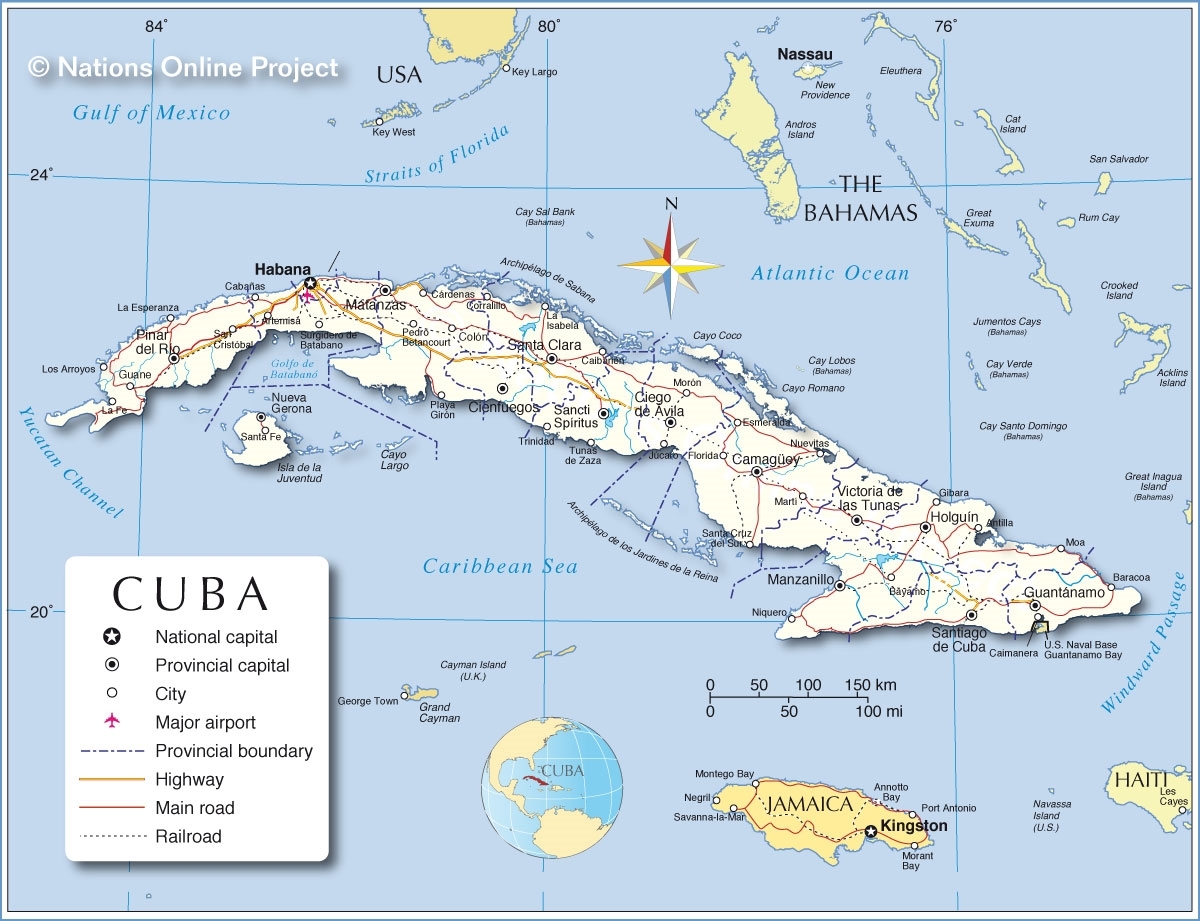
Melbana Energy was awarded a 100% participating interest in the Block 9 Production Sharing Contract (Block 9 PSC) on 3rd September 2015 and in May 2020, Melbana agreed to transfer a 70% interest in Block 9 to Sonangol (the National Oil Company of Angola) in consideration for it funding 85% of two exploration wells there. Melbana Energy, as Operator, had a 30% interest in this two well exploration drilling program that commenced in September 2021 and concluded in October 2022. The wells targeted four separate targets with a combined 235 million barrels of prospective resource (best estimate). The Block 9 PSC covers 2,344km2 onshore on the north coast of Cuba, 140 km east of Havana in a proven hydrocarbon system and along trend with the multi-billion-barrel Varadero oil field. Independent reserves and resources certifier, McDaniel & Associates, prepared an original Competent Persons Report (30 June 2018) that estimated the following resources for Block 9: Oil in Place: ~15.7 billion barrels (best estimate). Prospective resource: 676 million barrels (best estimate).
In 2022, Melbana drilled the Alameda-1 well to a total depth of 3,916mMD (April 2022). The well intersected moveable oil in three independent reservoirs for total net pay zone of 278 m TVD with strong oil shows flowing to surface. Ultimately, high formation pressures at depth resulted in the well being suspended pending testing and appraisal wells.
Reserves and Resources
In August 2022, Melbana announced a new independent assessment of the reservoirs encountered by the Alameda-1 exploration well. This assessment estimated the total resource for the three structures encountered whilst drilling the Alameda-1 well (Amistad, Alameda and Marti) at: 6.4 billion barrels of OOIP and 362 million barrels of Prospective Resource1. (1 100% Gross, Unrisked Mean Estimate)
Appraisal Drilling
In 2024, Melbana completed a two well appraisal program was designed to collect more information on the oil quality in these formations, their production and geological characteristics and the capabilities of the oil processing facilities and related oil storage and logistics.
ALAMEDA-2 (first appraisal well and also called Amistad-1). This well had the objective of testing the different sections (called Units 1, 2 and 3) of the Amistad (shallowest) structure. Highlights included: Successfully reached target total depth on time and on budget; Unit 1 shown to comprise two different productive units, Unit 1A and Unit 1B; Unit 1A: 12° API oil recovered at surface without assistance; Unit 1B: 19.8° API low (<3%) sulphur oil recovered at surface without assistance at a controlled rate of 1,235 BOPD; Unit 2: No oil encountered at the tested location; Unit 3: 16.9° API oil unable to be recovered at surface without assistance, implied flow rate of 750 BOPD; Unit 1B: Completed as a production well then shut in to allow for drilling of the Alameda-3 appraisal well. Subsequently put on extended production to better understand reservoir performance and capability of surface operations. Restarted flow of 300 BOPD suggested reservoir damage; Net Pay for the Amistad structure calculated to be 346 metres TVD (615 metres TVD when natural fracturing incorporated); Updated independent estimates of resource volumes: Unit 1A: 32 million barrels of Prospective Resource. Unit 1B: 46 million barrels of Contingent Resource. 90 million barrels of Prospective Resource.
ALAMEDA-3 (second appraisal well) had the objective of testing the two deeper reservoirs (called Alameda and Marti): Highlights included: Successfully reached target total depth but neither on time nor budget due to operational and drilling issues; Management of these issues resulted in down hole conditions unlikely to be conducive to optimum reservoir performance; Neither reservoir successfully flowed oil to surface, despite being minimally offset to Alameda-1 trajectory where extensive accumulations of energetic and moveable hydrocarbons were encountered; Cores and high-quality logs were obtained, indicating highly fractured reservoir; and The well was suspended whilst studies were undertaken to determine possible causes of unexpected results and to formulate reservoir workover strategies; and, The studies concluded that the formation was damaged by long residence time / chemical impact of high weight mud.
Development Plans
The first of the next seven new well pads were approved for construction in late 2024. Each of the pads will be permitted for two production wells. Work is underway to construct the first of these wells. A revised Basis of Well Design (BOWD) concept for the upcoming development wells incorporates learnings from Alameda-2 and Alameda-3 regarding mud weight, drilling and completion techniques to minimise costs and formation damage whilst maximising flow rates by intercepting the entire net pay zone at optimal orientation. Prior to the drilling of the next production wells, Alameda-2 was re-entered to remedy near-wellbore formation damage that was identified in Unit-1B via comparison with results from the original Drill Stem Test (DST) and Extended Production Test. The goal of the workover program is to return the well to the superior rates observed in the initial DST (stabilised flow rate of 1,235 barrels of oil per day) achieved from perforations cover only about 20% of the net pay zone. Key steps in the workover program include using a service rig (available in country) to pull the completion, add perforation intervals in the upper and lower Unit 1B and undertake an acid wash and squeeze before re-running the completion.
Commercialisation
Melbana’s engineering and commercial teams are working hard to develop and optimise their plans for the export of oil produced from the Block 9 PSC. The plan is to truck crude to receiving pits connected to oil storage tanks at the Matanzas Supertanker port which has multiple oil storage tank options before being exported to market. Melbana is in the final stages of formalising a joint marketing and sales agreement with all Block 9 stakeholders to export 100% of production. Negotiations with major international commodity traders interested in purchasing the 19.8° API and 2.7% sulphur Unit 1B crude are also at an advanced stage. Melbana continued its discussions with several potential new partners and credit providers who have demonstrated interest in participating in the development of Block 9.
Cuba – Santa Cruz
The Santa Cruz oil field is located approximately 45km from Havana between Boca de Jaruco and Canasí oil fields and approximately 150 km west of Melbana’s existing Block 9. Santa Cruz is in the northern foldbelt of Cuba – the trend that is responsible for the vast majority of Cuba’s oil and gas production. In December, 2018 Melbana finalised a long term binding incremental oil recovery contract with Cuba's national oil company, CubaPetroleo. The contract is subject to standard Cuban regulatory approvals.
In close proximity to the Santa Cruz oil field, the Cuba national oil company (Cubapetroleo or Cupet) reported to Cuban media a significant potential discovery of lighter than typical crude oil in an exploration well drilled on the Bacuranao prospect in the northern part of the western region of the island. The discovery was made late in 2017 and has been undergoing long term testing. Cupet representatives reported that the oil produced from the field has a density of 22° API, which is the highest quality oil discovered in the area and is encouraging for oil exploration activities in the area. The Bacuranao discovery is in the northern fold belt trend that continues into Melbana’s Block 9 and is in close proximity to the Santa Cruz oil field.
Link To Related Analysis: