
Issues With 2026 Vanguard Energy Transaction With Cuba Reminds Of 2018 MLB Failure And 2022 PYME Financing/Investment Success. Obvious Signals. Lack Of Engagement?
/Issues With 2026 Vanguard Energy Transaction With Cuba Reminds Of 2018 MLB Failure And 2022 PYME Financing/Investment Success
Two Obvious Issues And Signals: Payments To Cuba Company Which Is Defendant In Libertad Act Lawsuit Now Before United States Supreme Court And Logical Trajectory Of SDN Listings
Ill-Advised To Assume A Cuba-Related Transaction Is Authorized. Best Strategy Is First Directly Engage With BIS, OFAC, OCA, OLA, NSA Before Going Public
There are commonalities from June 2026, May 2022, and December 2018, where each reflects how companies, consultants, legal counsel, and organizations determined their licensing and negotiation strategies with the Bureau of Industry and Security (BIS) of the United States Department of Commerce, Office of Foreign Assets Control (OFAC) of the United States Department of the Treasury, Office of Cuban Affairs (OCA) and Office of the Legal Advisor (OLA) at the United States Department of State, and the National Security Council (NSC) in The White House.
The efforts in December 2018 and June 2026 were derailed by lack of engagement with the BIS, OFAC, OCA, OLA, and NSC.
The efforts of May 2022 were successful because of engagement with the BIS, OFAC, OCA, OLA, and NSC.
Successful strategies for Republic of Cuba-related transactions have in common the attorneys, companies, consultants, and organizations engage early and often with the BIS, OFAC, OCA, OLA, and NSC.
This engagement is critical even when there may be policy, precedent, regulation, and statutory basis not to require engagement. Meaning, portions of the transaction or the transaction itself is deemed permissible under general licenses- not requiring specific written authorization.
The June 2026 OFAC issue for Coral Gables, Florida-based Vanguard Energy compares with the December 2018 OFAC issue when New York, New York-based Major League Baseball (MLB) executed an agreement with Republic of Cuba-based Federacion Cubana de Beisbol (FCB) which included payments to FCB rather than payments-in-kind, meaning equipment, etc.
MLB retained a former NSC official in the Obama-Biden Administration (2009-2017) who should have known that potential payments of millions of United States Dollars to an instrumentality of the government of the Republic of Cuba would be problematic and a solution may be to use the funds to purchase products and then export those products to the Republic of Cuba. Upon the MLB agreement becoming public, officials within the Trump-Pence Administration (2017-2021) rejected the MLB agreement because it provided funds to the government of the Republic of Cuba. From the OFAC (19 April 2029) to attorneys for MLB:
“We are writing to update you on the applicability of a general license under the Cuban Assets Control Regulations, 31 C.F.R. Part 515 (CACR), to the activities of the Office of the Commissioner of Major League Baseball (MLB). In September 2016, the U.S. Department of the Treasury’s Office of Foreign Assets Control (OFAC) provided written guidance to MLB with respect to various proposed activities involving Cuba and the Cuban Baseball Federation.1 In particular, OFAC indicated that certain payments from MLB to the Cuban Baseball Federation were authorized by a general license found at section 515.571(e) of the CACR.”
“The CACR, administered by OFAC, prohibit all persons subject to the jurisdiction of the United States from dealing in property in which Cuba or a Cuban national has an interest except as authorized or exempt. Section 515.571(e) of the CACR authorizes transactions related to the sponsorship or hiring of a Cuban national to work in the United States in a non-immigrant status or pursuant to other non-immigrant travel authorization by the U.S. government, except that an employer may not make payments to the Cuban government in connection with the sponsorship or hiring of a Cuban national.”
“In light of facts recently brought to our attention, and after consultation with the U.S. Department of State, OFAC has determined that MLB’s payments to the Cuban Baseball Federation are not authorized by section 515.571(e) of the CACR, because a payment to the Cuban Baseball Federation is a payment to the Cuban government. Additionally, no other general license in the CACR authorizes these payments. As such, MLB’s payments to the Cuban Baseball Federation are prohibited unless specifically licensed by OFAC. If MLB would like to make these payments, it may seek a specific license from OFAC.”
One of the Members of the 115th United States Congress who opposed the MLB agreement was Marco Rubio (R- Florida), a member of the United States Senate (2011-2025).
Link: MLB Might Consider Three Options To Obtain Support For Agreement With Cuba January 11, 2019
Link: Cuba Wants Another At Bat With MLB To Resurrect 2018 Agreement. The Effort Will Struggle To Get To First Base At The White House. April 17, 2022
Link: Another Obama (Ben Rhodes) Administration Legacy Decision Harms Major League Baseball December 20, 2018
Last week, Vanguard Energy announced that the company would make payment(s) to lease fuel storage facilities from Republic of Cuba government-operated Union-Cuba Petroleo (CUPET). Soon after the announcement, the OFAC listed CUPET as a Specially Designated National (SDN). That SDN listing was anticipated. CUPET is a defendant in a case currently before the United States Supreme Court (SCOTUS) with a decision expected soon.
”UNION CUBA PETROLEO (a.k.a. CUPET), Avenida Salvador Allende No. 666, Entre Oquendo y Soledad, Havana 10300, Cuba; Organization Established Date 25 Mar 1992; Target Type State-Owned Enterprise; Entity Code 2605 (Cuba) [CUBA-EO14404].”
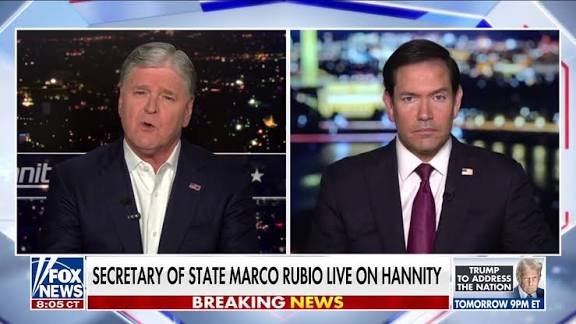
“That is why, today, I am designating Cuba’s state-owned oil and gas company Union Cuba-Petroleo (CUPET), key assets of which were unlawfully expropriated from American owners years ago, pursuant to President Trump’s Executive Order (E.O.) 14404 of May 1, 2026. CUPET is being designated pursuant to Section 2(a)(i)(A) of E.O. 14404, for operating or having operated in the energy sector of the Cuban economy.” Marco Rubio, United States Secretary of State
Payments to CUPET may have also been viewed by the Trump-Vance Administration through the Libertad Act Title III lawsuit filed in 2019 by Spring, Texas-based Exxon Mobil Corporation (2025 revenue approximately US$332 billion) against Republic of Cuba government-operated Corporacion Cimex S.A. and CUPET. Unknown if Vanguard Energy interacted with Exxon Mobil Corporation. Title III of the Liberated Act provides for private settlements by owners with those deemed to be trafficking in the asset.
Exxon Mobil Corporation has the 8th largest certified claim against the government of the Republic of Cuba: US$71,611,002.90 and US$173,157.12.
The Trump-Pence Administration on 2 May 2019 made operational Title III of the Cuban Liberty and Democratic Solidarity Act of 1996 (known as “Libertad Act”).
Title III authorizes lawsuits in United States District Courts against companies and individuals who are using a certified claim or non-certified claim where the owner of the certified claim or non-certified claim has not received compensation from the Republic of Cuba or from a third-party who is using (“trafficking”) the asset.
24-699 EXXON MOBIL CORP. V. CORPORACION CIMEX, ET AL. (CUPET): “QUESTION PRESENTED: In 1960, the Cuban government confiscated the property of American nationals and transferred it to state-owned enterprises. After years without a diplomatic resolution, Congress enacted the Helms-Burton Act, which created a damages action for American nationals against "any person ... that traffics in" such confiscated property. 22 U.S.C. § 6082(a)(1). The Act defines "person" to include "any agency or instrumentality of a foreign state," id. § 6023(11), and expressly contemplates "judgment[s] against an agency or instrumentality of the Cuban Government," id. § 6082(d). The question presented is: Whether the Helms-Burton Act abrogates foreign sovereign immunity in cases against Cuban instrumentalities, or whether parties proceeding under that Act must also satisfy an exception under the Foreign Sovereign Immunities Act. LOWER COURT CASE NUMBER: 21-7127, 22-7019, 22-7020”
Link: U.S. Supreme Court Agrees To Hear Two Cuba Libertad Act Cases. Trump Administration Supports Both Plaintiffs. October 03, 2025
The Biden-Harris Administration (2021-2025) directed the OFAC to issue the first license authorizing an entity subject to United States jurisdiction (not affiliated directly or indirectly with an individual of Cuban descent) to deliver a direct equity investment to and authorizing direct financing for an officially registered privately-owned company (in the service sector) located in the Republic of Cuba and owned by a Republic of Cuba national. Neither entity in the transaction is connected with the other in terms of commercial relationships or family relationships. The parties did not have connectivity prior to this transaction.
The inter-agency review process across the United States government required approximately one year of consultations, discussions, meetings, and negotiations. The OFAC license was issued on 10 May 2022.
Link: Biden-Harris Administration Approves First Equity Investment Since 1960 In A Private Cuban Company May 10, 2022
Link: With U.S. Government Authorization For First Direct Equity Investment Into A Private Company In Cuba, Here Is Important Context And Details. About The Parties; About The Message. May 16, 2022
Link: Now The Hard Part For Cuba: Implementing Quickly Transparent, Equal-For-All, MSME Investment & Financing Regulations. No Limitations. No Selectivity. No Orwellian Process. August 04, 2022

Paul kaye