
Thirteen New Sanctions Targets In Cuba. "New Targeting Enablers of the Cuban Regime’s Arms Imports and Foreign Military Cooperation Fact Sheet"
/United States Department of State
Washington DC
6 August 2026
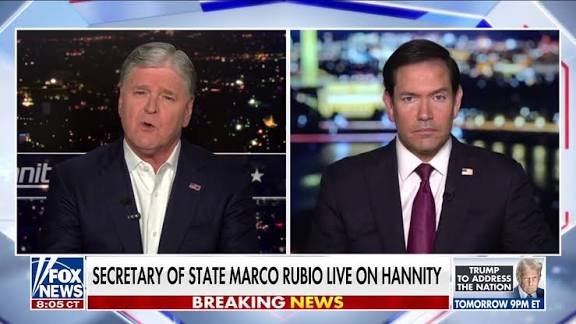
Marco Rubio, Secretary of State
Targeting Enablers of the Cuban Regime’s Arms Imports and Foreign Military Cooperation
Press Statement
The Cuban Communist regime is a state sponsor of terrorism that uses its military and intelligence apparatus to spy on the United States, provide material support to violent radicals and terrorist groups, and spread poisonous Marxist ideology within our borders and polity, all while serving as a staging ground for other U.S. adversaries such as Russia, China and Iran to conduct operations against the United States. Cuba’s military and intelligence institutions are also the key enforcers of domestic repression and nodes of kleptocracy, notably through the military-run conglomerate Grupo de Administración Empresarial S.A. (GAESA). Today, the Trump Administration is taking further action to protect our national security by sanctioning entities and individuals who facilitate Havana’s military relationships and the shipments of arms to the Cuban regime.
Pursuant to President Trump’s Executive Order (E.O.) 14404 of May 1, 2026, “Imposing Sanctions on Those Responsible for Repression in Cuba and for Threats to United States National Security and Foreign Policy,” I am designating five Cuban entities and eight individuals involved in the procurement of military equipment from abroad for the Cuban regime’s Ministry of the Revolutionary Armed Forces (MINFAR) and security forces.
The Trump Administration will continue to use every tool at our disposal to address the national security threats posed by the Cuban Communist regime, and to drive economic and political reforms to give the Cuban people a better future. As President Trump has said, his resolve is ironclad: the United States will not tolerate a rogue state harboring hostile foreign military, intelligence, and terror operations just ninety miles from the American homeland.
The Department’s actions are being taken pursuant to E.O. 14404, which authorizes sweeping sanctions on Cuba, including against persons who support the Cuban regime’s security apparatus and those responsible for repression in Cuba and other threats to U.S. national security. These actions also further both E.O. 14380, “Addressing Threats to the United States by the Government of Cuba” and National Security Presidential Memorandum 5 , which directs the Executive Branch to improve human rights, encourage the rule of law, foster free markets and free enterprise, and promote democracy in Cuba. For more information on today’s action, see the Department of State’s Fact Sheet.
United States Department of State
Washington DC
6 August 2026
Office of the Spokesperson
Targeting Enablers of the Cuban Regime’s Arms Imports and Foreign Military Cooperation Fact Sheet
Fact Sheet
Today, the Department of State is designating five entities and eight individuals to further the Trump Administration’s comprehensive push to end the Cuban regime’s malign activities, both in Cuba and across our hemisphere. These actions target state-owned entities, military enterprises, and Ministry of the Revolutionary Armed Forces (MINFAR) officials involved in foreign military cooperation and the procurement of military equipment intended for the Cuban regime.
These designations follow the Department’s July 20 report Cuba: The Capital of 21st Century Communism, which chronicles the Cuban regime’s continuing partnerships with Russia and China, both of which have supplied Cuba with military hardware, surveillance technologies, and other security capabilities. The report further discusses how the Cuban regime has positioned the island as a staging ground for a wide range of foreign adversaries to conduct operations against the United States.
All Department of State targets sanctioned today have been designated pursuant to Executive Order (E.O.) 14404, which authorizes sanctions on foreign persons determined to meet specified criteria related to repression in Cuba and other threats to U.S. national security and foreign policy.
Cuban Regime’s Arms Imports and Military Industry
The following entities and individuals are designated for their direct roles in the procurement and sustainment of weapons and military equipment from abroad intended for the Cuban regime’s military and security forces.
Pursuant to Section 2(a)(i)(A) of E.O. 14404 for operating in or having operated in the defense and related materiel sector of the Cuban economy, the Department designated:
EMPRESA CUBANA IMPORTADORA Y EXPORTADORA DE PRODUCTOS TECNICOS (TECNOIMPORT) is a Cuba-based subsidiary entity of Grupo de Administración Empresarial S.A. (GAESA) involved in the import of technical products to Cuba, including military equipment on behalf of the Cuban Ministry of Revolutionary Armed Forces (MINFAR). MINFAR and GAESA were designated by the Department of State on June 4, 2026 and on May 7, 2026, respectively. Additionally, TECNOIMPORT has been involved in the procurement of military-related equipment from China and Russia for Cuba.
SOCIEDAD MERCANTIL DUNA SA (DUNA SA) is a Cuba-based company involved in the import of products to Cuba. Additionally, DUNA SA has been involved in the import of military-related equipment from China and Russia to Cuba.
UNION DE INDUSTRIA MILITAR (UIM) is a Cuba-based military holding company responsible for the production and repair of weapons and military equipment for the Revolutionary Armed Forces (FAR). Additionally, UIM has been involved in efforts to modernize Russian-origin weapons systems in cooperation with Russian defense entities.
EMPRESA MILITAR INDUSTRIAL YURI GAGARIN (EMI YURI GAGARIN) is a Cuba-based military enterprise that repairs military helicopters and fixed-wing aircraft. Additionally, EMI YURI GAGARIN is involved in the maintenance and repair of Cuba’s fleet of Russia-origin military aircraft.
Pursuant to Section 2(a)(i)(B) of E.O. 14404 for being owned or controlled by, or having acted or purported to act for or on behalf of, directly or indirectly, the Government of Cuba, the Department designated:
EMPRESA CUBANA EXPORTADORA E IMPORTADORA DE SERVICIOS, ARTICULOS Y PRODUCTOS TECNICOS ESPECIALIZADOS SA (TECNOTEX) is a Cuba-based subsidiary entity of GAESA involved in the import and export of equipment, technology, construction materials and other goods to Cuba and is an entity directly serving the Cuban defense and security sectors. Additionally, TECNOTEX has been involved in efforts to refurbish Cuba’s Russian-origin helicopter fleet and has previously been involved in cooperation with the Democratic People’s Republic of Korea.
Pursuant to Section 2(a)(i)(E) of E.O. 14404 for being or having been a leader, official, senior executive officer, or member of the board of directors of UIM, an entity whose property or interests in property are blocked pursuant to this order, the Department designated:
ROBERTO JESUS VICIANA MOUSSET (VICIANA MOUSSET) is the Director General of UIM and a Brigadier General in the FAR.
Pursuant to Section 2(a)(i)(E) of E.O. 14404 for being or having been a leader, official, senior executive officer, or member of the board of directors of TECNOIMPORT, an entity whose property or interests in property are blocked pursuant to this order, the Department designated:
HERIBERTO SANCHEZ ALLEYNE (SANCHEZ) is the Director General of TECNOIMPORT. Additionally, SANCHEZ has been involved in the procurement of military-related equipment and services for Cuba from China and Russia.
Cuban Military Cooperation with U.S. Adversaries
The following individuals are designated for their direct roles in facilitating the Cuban MINFAR’s cooperation with U.S. adversaries and imports of foreign arms and military equipment to Cuba.
Pursuant to Section 2(a)(i)(E) of E.O. 14404 for being or having been a leader, official, senior executive officer, or member of the board of directors of the Government of Cuba, the Department designated:
ALVARO VICTORIANO LOPEZ MIERA (LOPEZ MIERA) is the Minister of the Cuban MINFAR. LOPEZ MIERA was previously designated by the Department of the Treasury on July 22, 2021 pursuant to E.O. 13818, which builds upon and implements the Global Magnitsky Human Rights Accountability Act. Additionally, LOPEZ MIERA has worked to advance the Cuban regime’s foreign military cooperation.
ROBERTO LEGRA SOTOLONGO (LEGRA) is the Chief of the General Staff of the Revolutionary Armed Forces and First Deputy Minister of the Cuban MINFAR. LEGRA was previously designated by the Department of the Treasury on August 19, 2021 pursuant to E.O. 13818. Additionally, LEGRA has been involved in efforts to procure weapons systems from Russia.
JOSE ANTONIO REMON RODRIGUEZ (REMON) is the head of the Foreign Relations Directorate of the Cuban MINFAR and is responsible for foreign military cooperation. Additionally, REMON has been involved in the transfer of military-related equipment from China and Russia to Cuba.
OSCAR ENRIQUE BIOSCA GALLEGO (BIOSCA) is the head of the Economic Directorate of the Cuban MINFAR and is responsible for financial issues. Additionally, BIOSCA has been involved in efforts to procure military-related equipment from Russia and China.
MONICA MILIAN GOMEZ (MILIAN) is a Cuban MINFAR official and the Cuban military attaché to Russia. Additionally, MILIAN has been involved in the transfer of military-related equipment from Russia to Cuba.
WALDO PEREZ CORTES (PEREZ) is a Cuban MINFAR official and the Cuban military attaché to China. Additionally, PEREZ has been involved in the procurement of military-related equipment from China to Cuba.
Sanctions Implications
As a result of today’s sanctions actions, and in accordance with E.O. 14404 of May 1, 2026, “Imposing Sanctions on Those Responsible for Repression in Cuba and for Threats to U.S. National Security and Foreign Policy,” all property and interests in property of the designated persons described above that are in the United States or in possession or control of U.S. persons are blocked and must be reported to the Department of the Treasury’s Office of Foreign Assets Control (OFAC). Additionally, all entities that are owned individually or in the aggregate, 50 percent or more by one or more blocked persons are also blocked.
All transactions and dealings by U.S. persons or persons within (or transiting) the United States that involve any property or interests in property of designated or otherwise blocked persons are prohibited unless authorized by a general or specific license issued by OFAC or exempt. These prohibitions include the making of any contribution or provision of funds, goods, or services by, to, or for the benefit of any blocked person and the receipt of any contribution or provision of funds, goods, or services from any such person. Foreign persons that engage in transactions with persons designated pursuant to E.O. 14404—or that operate or have operated in the energy, defense and related materiel, metals and mining, financial services, or security sector of the Cuban economy, as identified in E.O. 14404— are themselves at risk of sanctions. Non-U.S. persons, including foreign financial institutions, should proceed with caution in any dealings with a party sanctioned under this authority. Actions to return assets to a sanctioned party or transfer them to another jurisdiction for potential use by the target expose non-U.S. persons to significant sanctions risk. All property and interests in property of persons that are blocked pursuant to the Cuban Assets Control Regulations (CACR) continue to be blocked. The CACR prohibits persons subject to U.S. jurisdiction from dealing in property in which Cuba or a Cuban national has an interest, unless authorized or exempt.
The power and integrity of U.S. government sanctions derive not only from the U.S. government’s ability to designate and add persons to the Specially Designated Nationals and Blocked Persons (SDN) List, but also from its willingness to remove persons from the SDN List consistent with the law. The ultimate goal of sanctions is not to punish, but to bring about a positive change in behavior.
Petitions for removal from the SDN List may be routed through OFAC’s Reconsiderations Portal. Petitioners may also refer to the Department of State’s Delisting Guidance page.