
Turkish Airlines Re-Engagement With Route-Of-Comfort From Moscow To Havana May Impact Russia-Based Companies
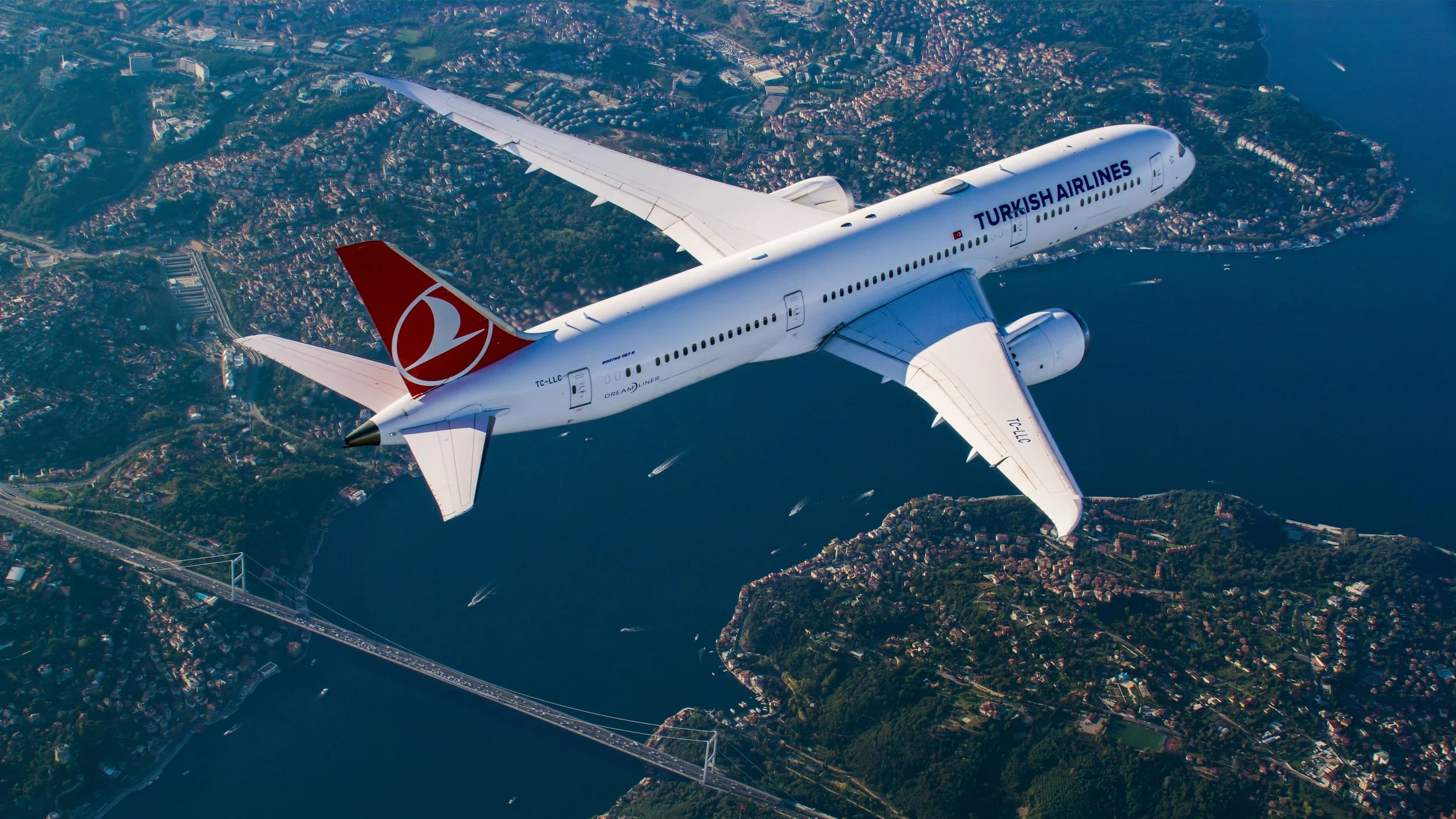
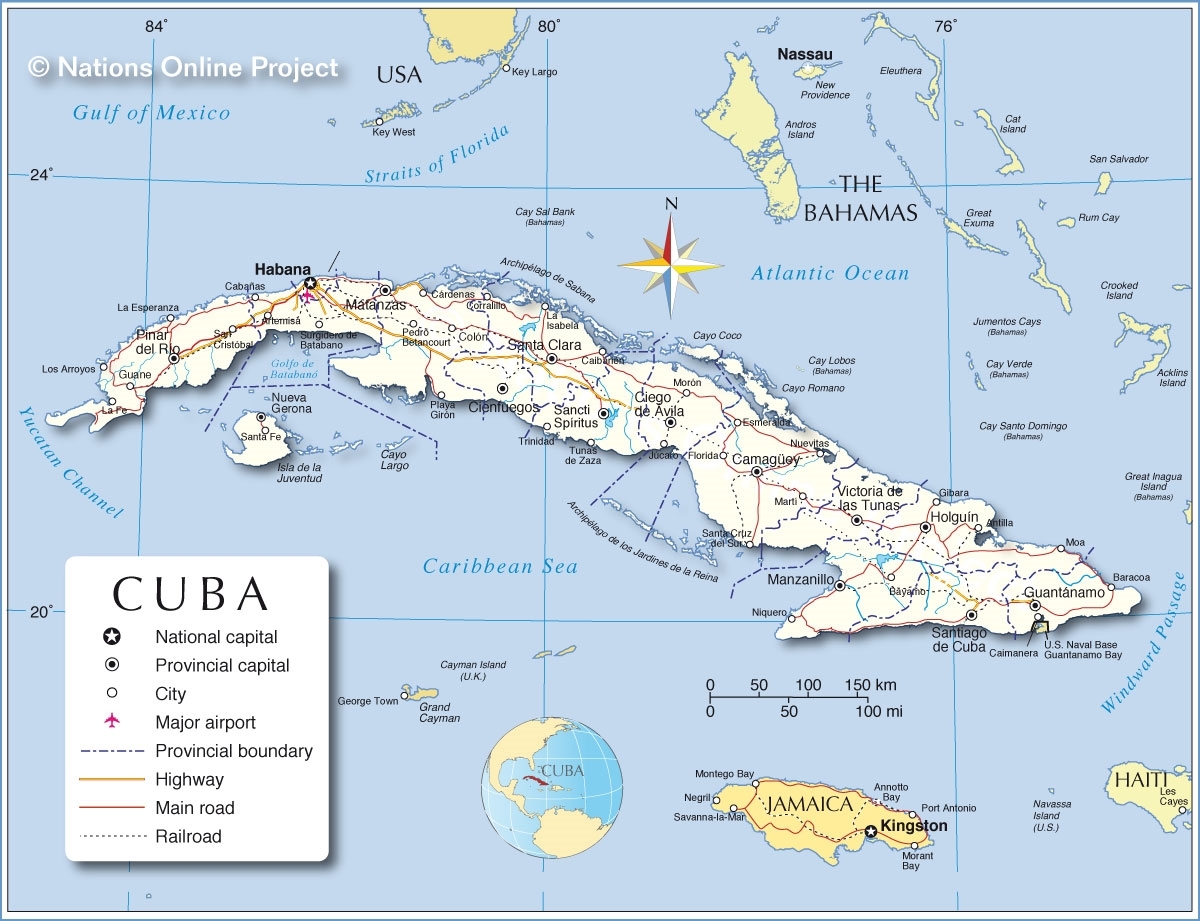
/On 27 October 2026, Istanbul, Turkiye-based Türk Hava Yolları Anonim Ortaklığı (Turkish Airlines) (2025 revenue approximately US$24 billion) will expand re-engagement with the Republic of Cuba with two-segment service from Vnukovo International Airport (VKO) in Moscow, Russian Federation, with connection through İstanbul Havalimanı (IST) to Jose Marti International Airport (HAV).
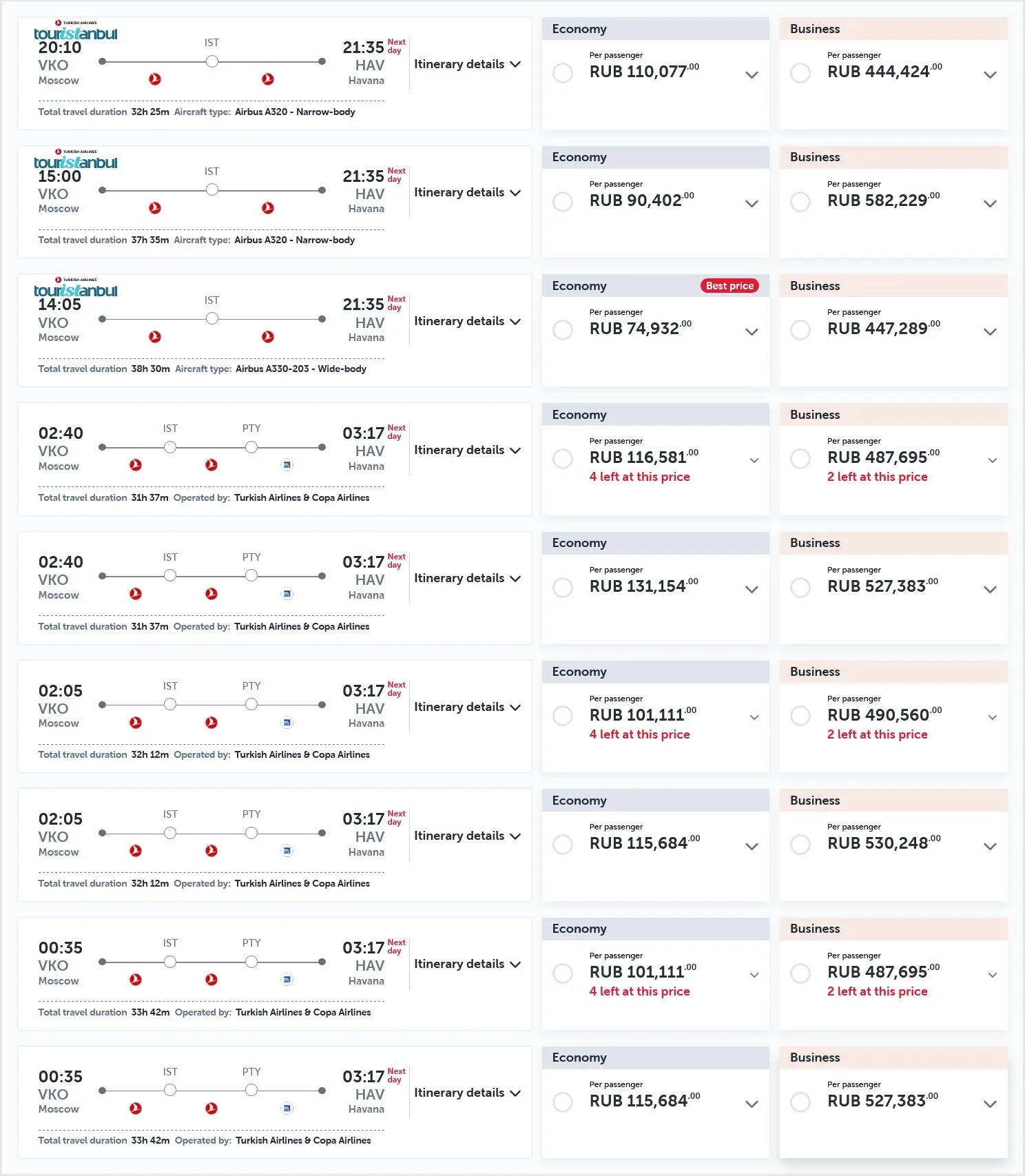
For a departure on 27 October 2026, one-way airfare ranges from approximately US$1,309.28 (economy class) to approximately US$5,286.06 (business class).
NOTE: Total travel time may be reduced by using VKO to IST flights with nearer connectivity to IST-HAV flights.
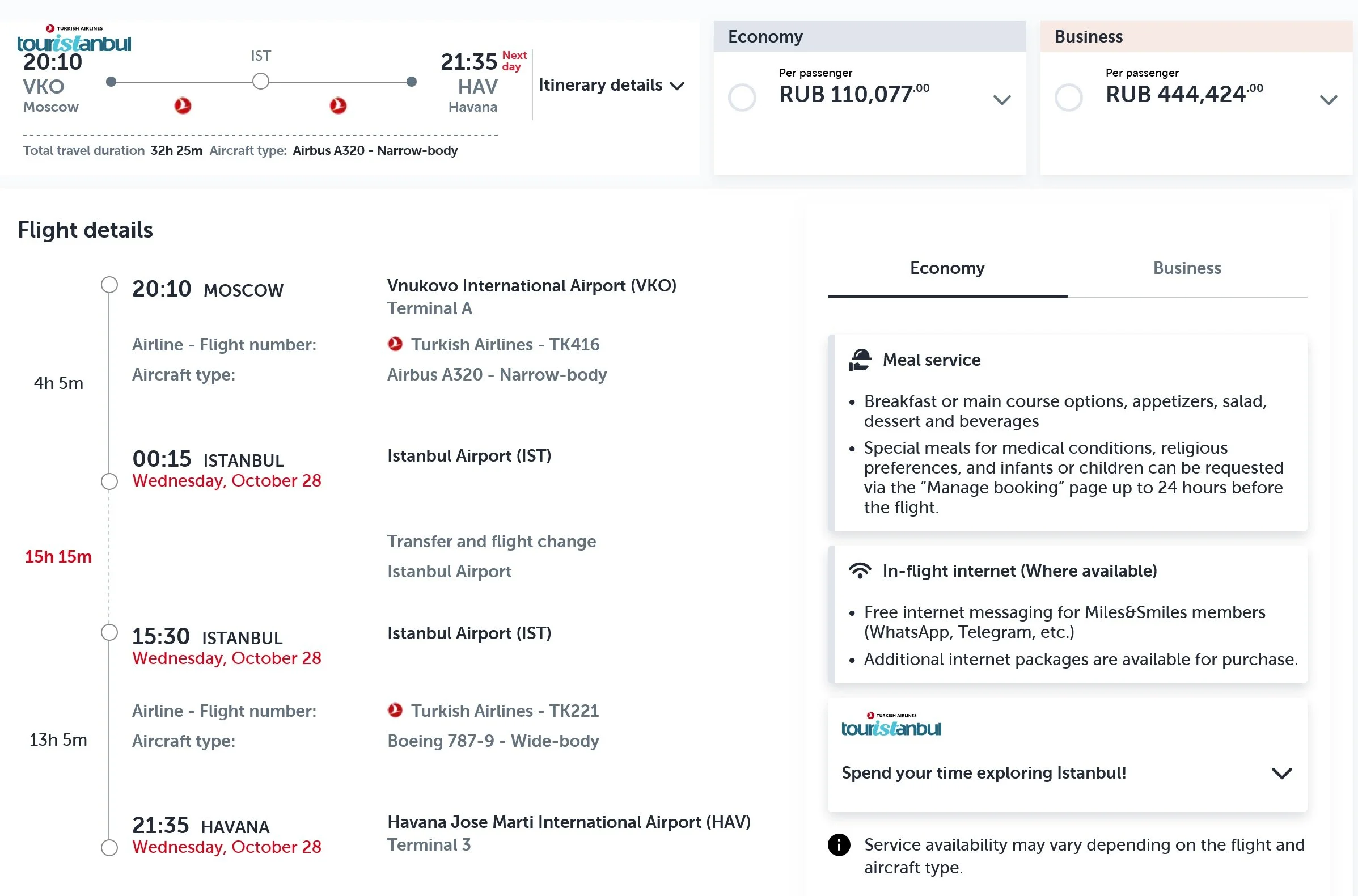
Turkish Airlines will use Airbus A320 aircraft and Airbus A330 aircraft for the VKO to IST segment and Boeing 787-9 aircraft for IST to HAV segment.
If the government of the Russian Federation seeks to re-engage with the government of the Republic of Cuba, with Russian Federation-based companies publicly leading that re-engagement, the routes-of-comfort provided by Turkish Airlines will be a primary, and welcomed, component of that re-engagement.
CubaHeadlines (13 August 2026)
excerpt
Starting October 27, Turkish Airlines is once again offering tickets for flights to Cuba, as reported by Diario de Cuba referencing the airline's official website.
The decision to resume ticket sales comes months after the airline halted its Cuban operations at the end of March. This suspension was attributed to the aviation fuel crisis impacting the island and a significant drop in tourism demand.
Round-trip economy class tickets start at 137,565 rubles, which is approximately $1,660 per passenger. The fare includes four pieces of luggage: a small bag up to four kilograms to fit under the seat, a carry-on bag of eight kilograms, and two checked bags of 23 kilograms each.
Currently, the airline's booking system shows no available flights for August or September; October remains the sole month with active flights on the Moscow–Havana route.
Presently, Turkish Airlines operates flights to Havana with a layover in Panama, requiring passengers to transfer to Copa Airlines or another carrier still flying to the island.
Diario de Cuba notes uncertainty regarding where the airline plans to refuel for return flights from Havana, a challenge that has forced other carriers to make technical stops in the Dominican Republic or to carry extra fuel from their point of origin.
The Moscow–Istanbul–Havana route was crucial for Russian tourism to Cuba. When Turkish Airlines suspended this service, Russian tour operators and agencies had to refund customers or offer alternative destinations during the peak season.
At that time, the airline stated that "the resumption of Turkish flights to Cuba will depend on regional developments and the evolution of the fuel supply situation."
Turkish Airlines' suspension was part of a broader aviation crisis. Following the shortage of Jet A-1 fuel at Cuban airports, eleven international airlines suspended or reduced operations to the island in 2026, including Air France, Iberia, LATAM Perú, Air Canada, WestJet, and Air Transat.
Turkish Airlines' return comes during one of the worst moments for Cuban tourism outside the pandemic. Between January and June 2026, Cuba received only 387,591 foreign tourists, a 60.7% decrease compared to the same period in 2025, according to data from the National Office of Statistics and Information (ONEI) cited by Diario de Cuba.
This decline represents a loss of 598,015 visitors in just one year. Major source markets experienced severe drops: Canada fell by 70.3%, Russia by 66.8%, and the United States by 53.8%.