US Secretary Of HHS To Visit Cuba- Twenty Staff Already In Havana; Cuba Reports Before HHS

Once again, the government of the Republic of Cuba announces a visit by an official of the United States Government before the United States Government releases the information...

HAVANA, October 18, 2016. The Secretary of Health and Human Services of the United States, Sylvia Burwell will pay a working visit to Cuba between 20 and 22 October 2016.

During her stay, the Secretary will pursue issues of bilateral cooperation, covered by the framework Memorandum of Understanding between the Ministry of Public Health of Cuba (MINSAP) and the United States Department of Health and Human Services, signed last June in the context of the visit by Dr. Roberto Morales Ojeda, Minister of Public Health, Washington.

The Secretary, in addition to a meeting with his Cuban counterpart and other officials of the Ministry of Public Health, will visit health institutions and medical, biotech and pharmaceutical industry. It will participate in the Regional Meeting for Surveillance and Control Strategy of airborne viruses, which will take place on 20 and 21 October in Havana. (Cubaminrex)

From the Ministry of Foreign Affairs of the Republic of Cuba:

LA HABANA, 18 de octubre de 2016.  La secretaria de Salud y Servicios Humanos de los Estados Unidos, Sylvia Burwell, realizará una visita de trabajo a Cuba entre el 20 y el 22 de octubre de 2016.

Durante su estancia, dará continuidad a temas de la colaboración bilateral, amparados por el Memorando de Entendimiento marco entre el Ministerio de Salud Pública de Cuba (MINSAP) y el Departamento de Salud y Servicios Humanos de los Estados Unidos, firmado el pasado mes de junio en el contexto de la visita realizada por el Dr. Roberto Morales Ojeda, ministro de Salud Pública, a Washington.

La Secretaria, además de sostener un encuentro con su homólogo cubano y otros directivos del MINSAP, visitará instituciones de la salud y de la industria médico, biotecnológica y farmacéutica. Además, participará en la Reunión Regional para la Estrategia de Vigilancia y Control de las Arbovirosis, que tendrá lugar el 20 y 21 de octubre, en La Habana. (Cubaminrex)

June 13, 2016

HHS Engages in Historic Health Collaboration with Cuba

"Today, U.S. Department of Health and Human Services Secretary Sylvia M. Burwell signed a Memorandum of Understanding (MOU) - PDF with Cuba’s Ministry of Public Health, an important milestone between the two countries since the re-establishment of diplomatic relations in 2015.

The MOU [CLICK HERE FOR LINK TO DOCUMENT] establishes coordination across a broad spectrum of public health issues, including global health security, communicable and non-communicable diseases, research and development, and information technology. The signing also kicks off a two-day visit to HHS from Cuba’s Minister of Health, Dr. Roberto Tomás Morales Ojeda.

“Cuba has made significant contributions to health and science, as evidenced by their contribution to the Ebola response in West Africa and becoming the first country to eliminate mother-to-child HIV transmission. This new collaboration is a historic opportunity for two nations to build on each other’s knowledge and experience, and benefit biomedical research and public health at large,” Secretary Sylvia M. Burwell said.

The U.S. and Cuba share an interest in detecting and responding to emerging infectious diseases such as dengue and chikungunya, serious mosquito-borne viral diseases. Both countries also have an aging population, necessitating an increased focus on responding to the increasing burden of neurodegenerative and non-communicable diseases, including cancer, which is the leading cause of death in Cuba and second in the U.S."

Several U.S. delegations have already traveled to Cuba, and Cuba’s vice minister for Public Health spent a week at HHS in April.

Natbank Of Florida Confirms Its Mastercard Is Valid For Use In Cuba

Natbank, a wholly-owned subsidiary of National Bank of Canada that has operated in Florida for more than twenty years, confirms that its Mastercard credit card is valid for use in the Republic of Cuba.  Natbank has locations in Boynton Beach, Hollywood and Pompano Beach.

Pompano Beach, Florida-based Stonegate Bank and San Juan, Puerto Rico-based Banco Popular of Puerto Rico have authorization from the Office of Foreign Assets Control (OFAC) of the United States Department of the Treasury and from the Central Bank of the Republic of Cuba to have their Mastercard-branded credit cards and debit cards valid for use in the Republic of Cuba.  

Mastercard International has removed its restriction for the Republic of Cuba on the use of its branded products in the Republic of Cuba.

Google To Support Chrome Cuba-Focused Developers

Google has informed registered Chrome developers that the company will support free extensions, themes, and apps will be extended to the Republic of Cuba commencing on 19 October 2016.

Chrome Apps

"The default language for the Cuban Chrome Store and any content with multi-language support published there will be Spanish, and any app, theme, or extension currently published to "All Regions" will be automatically published to Cuba's Chrome Web Store.

If content is not marked for All Regions it will be excluded from the Cuban store by default. Developers are encouraged to check and adjust their publishing settings as needed, as well as internationalize their store listings if they intend to distribute to multiple regions or with multiple language options.

Relaxation of U.S. export controls and sanctions towards Cuba allowed Google to distribute Chrome in late 2014, and as relations continue to improve between the two countries we should see more companies providing their services for the people of Cuba as public internet access continues to grow."

Has The Obama Administration Called It Quits? Leaving United States Companies With More Than Was Expected... But Far Less Than Was Needed

Has The Obama Administration Called It Quits? Leaving United States Companies With More Than Was Expected... But Far Less Than Was Needed

U-Turns Do Not Equate With Straight Lines

Why Does The Obama Administration Want To Send Money To Panama?

US$339 Million In Transfer Fees Paid To Other Countries Could Have Been Used For Additional Exports

From the perspective of the United States business community, that The Honorable Susan Rice, Assistant to the President for National Security Affairs, in remarks delivered on 14 October 2016 included media-friendly-headline-friendly (meaning likely to be quoted) statements about cigars and rum, reinforced a lack of focus upon what should have been priorities towards the Republic of Cuba during the remaining 95 days of the Obama Administration.

The statements by Ambassador Rice, in junction with statements by senior-level officials of the Office of Foreign Assets Control (OFAC) of the United States Department of the Treasury, Bureau of Industry and Security (BIS) of the United States Department of Commerce, and National Security Council (NSC) during a 14 October 2016 background conference call coordinated by The White House, re-confirmed either a lack of appreciation or a lack of comprehension as to the practical requirements of the United States business community.

During the conference call, the senior-level official from the NSC shared "With respect to our regulatory changes, I think this -- we certainly don't rule anything out.  We are mindful of the clock.  And this is certainly likely the last significant tranche of changes."  That is not what the United States business community wanted to hear... The comment was astonishing- so with 97 days remaining on-the-job... the Obama Administration basically closes-up shop?

During the conference call, the senior-level official from the BIS shared "Since the President's announcement, we at Commerce have authorized over $6 billion of potential exports to Cuba under the new policy.  And that number has increased percentage-wise from 2015 to 2016 very significantly."

Let's focus on that US$6 billion in potential exports.  Since 17 December 2014, exports from the United States to the Republic of Cuba under provisions of the 2000 Trade Sanctions Reform and Export Enhancement Act (TSREEA) and 1992 Cuban Democracy Act (CDA)- agricultural commodity/food products and healthcare products (medical equipment, medical instruments, medical supplies, pharmaceuticals), respectively, total US$314,919,198.00 as of August 2016.... So, what does the remaining US$5,685,080,802.00 represent? 

And, most importantly, if this value represents potential exports, all of the funds received as payment would need to be transferred through third country financial institutions because the OFAC will not permit direct correspondent banking... That's approximately US$180 million in fees for financial institutions domiciled in other countries.  Which leads to the most egregious disconnect between statements and reality by the Obama Administration.

The most important, tangible, operationally significant change to OFAC regulations was, again, not included on 14 October 2016- authorizing Republic of Cuba government-operated financial institutions to have correspondent accounts with United States-based financial institutions.

Without a change to this OFAC regulation, the payment process for funds from the United States to the Republic of Cuba and from the Republic of Cuba to the United States remains triangular rather than a straight line- which would be more efficient, more timely (same day versus two or more days), and less costly.  During the 14 October 2014 conference call, the senior-level official from the OFAC refused to answer a question from a newspaper reporter as to why the regulation had not yet been changed.

An efficient means to make payment and receive payment for goods and services is a foundation of commerce and, thus of a market-based economy.  The absence, by choice, of a straight line to send and receive payments for goods and services, when a straight line is available, is commercial malpractice.

In 2015, the OFAC authorized Pompano Beach, Florida-based Stonegate Bank (2015 assets approximately US$2.5 billion) to have an account with Republic of Cuba government-operated Banco Internacional de Comercio SA (BICSA).  There is also Republic of Cuba government-operated Banco Financiero Internacional SA (BFI) which handles international payments.  Unfortunately, because BICSA (and BFI) are not permitted to have an account with Stonegate Bank, funds are sent and received through Panama City, Panama-based Multibank, which has extensive dealings with the Republic of Cuba. 

Additional effort.  Additional time.  Additional expense.  And, additional reasons for the government of the Republic of Cuba to avoid United States-based companies.

Why should Stonegate Bank, which on 13 October 2016 reported having sixty (60) United States-based companies that are or would like to engage in commercial transactions with Republic of Cuba-based entities, need to share its business (and lessen benefits to its shareholders) with a financial institution located in Panama?

Perversely, and, certainly, conspiratorial, would believe that the Obama Administration is retaining the triangular payment process as a means to inject funds into those countries within which financial institutions have been subject to substantial fines by the OFAC; thus, lessening, a bit, the financial and political sting of the penalties.   

For perspective, since December 2001, more than US$5.3 billion has been paid by the government of the Republic of Cuba to United States-based companies for agricultural commodities, food products, and healthcare products... and those funds had to be sent (and continue to be sent) through third countries (Canada, France, Spain, United Kingdom, Mexico, Germany, Panama, among others) rather than directly from the Republic of Cuba to the United States.  That's approximately US$159 million in fees paid to financial institutions located outside of the United States.  

As a result, financial institutions in other countries gained (and continue to gain) revenues from the transfers... and the government of the Republic of Cuba has both an excuse to limit their purchases from United States-based companies and a justification for aggravation as they know the triangular requirement is a policy, subject to change, rather than a law, which the Obama Administration can do nothing about.

The absurdity of the logic used by the Obama Administration is best expressed referencing the words of the officials who made them:

“QUESTION: The Cubans are trying to have correspondent accounts in U.S. banks, that this is not part of the regulation.  I wonder if that's now legally possible, or is it risky….?

SENIOR ADMINISTRATION OFFICIAL:  Just so I have the question clear, am I clear that you're asking about correspondent accounts opened by Cuban financial institutions?

QUESTION:    Yes.

SENIOR ADMINISTRATION OFFICIAL:  At the present time, our regulations don’t generally authorize Cuban financial institutions to open up account relationships here in the United States.  But we have authorized a tremendous amount in prior regulatory rounds that allow Cuban financial institutions to engage with the U.S. financial system.  Most notably, we issued what's called the Cuban U-turn transaction, which allows the Cuban-related transaction to clear through the United States.  That would be a transaction that moves offshore, to one country to another, through the United States, involving a Cuban financial institution.  The only restriction is neither the beneficiary nor the originator can be a person subject to U.S. jurisdiction.

We've issued frequently asked questions and talked at a number of banking workshops, and talked about all the availability and all the great many authorizations we've introduced so that Cuban financial institutions can engage and can offload any surplus of dollars they may have accumulated through different trade -- on your first question.

SENIOR ADMINISTRATION OFFICIAL:   The only other thing I'd add is, as my colleague mentioned, we have made significant regulatory changes over the course of the last year and a half to include the change that [was] referenced with respect to the U-turn, which allows for the use of the dollar in certain international financial transactions.  At the same time, what we've seen with regulatory changes is it takes time for businesses and firms and individuals to fully understand the scope of what the authorized activity is.  And so we've seen over time the impacts grow with time as people gain a better understanding of what is now indeed authorized.”

Yes, that is a transcript… and it was painful to read… Simply put, the Obama Administration believes that United States companies have not, in 670 days, had time to fully appreciate, fully comprehend, “fully understand” the non-impact of not having direct correspondent banking agreements- because there are U-turn transactions… which do not address the issue.

One reason, although not offered during the 14 October 2016 conference call, is funds sent from a Republic of Cuba government-operated financial institution to its account at a financial institution in the United States could be subject to efforts by attorneys representing clients with Florida-granted civil judgements (approximately US$4 billion at last count) to seize funds in the account. 

Legal counsel for United States-based companies are generally unified in their position that the private sector should sort out any issues- it is not for the United States government to prevent normal bilateral financial activities.  If the OFAC authorizes the accounts and for whatever reason(s) financial institutions and United States-based companies do not choose to engage, that’s not helpful, but it should not be because the OFAC says it should not be. 

On 14 October 2016, the Obama Administration reinforced, again, to the government of the Republic of Cuba that "choices" remain rather than "prohibitions."

The Obama Administration can change regulations; it cannot change statutes- the government of the Republic of Cuba understands the difference and responds accordingly. 

Note- A surcharge (approximately 13%) placed by the government of the Republic of Cuba during the George W. Bush Administration (as a response to OFAC actions restricting the government of the Republic of Cuba from using United States Dollars for international transactions) upon converting United States Dollars into Convertible Pesos for travelers visiting the Republic of Cuba remains in place…many months after the OFAC changed regulations to permit the government of the Republic of Cuba to again use United States Dollars for international transactions and engage in U-turn transactions.  The government of the Republic of Cuba maintains that financial institutions outside of the United States are not complying with the new OFAC regulations.  This too is a problem that makes easier for the government of the Republic of Cuba to avoid engagement with United States-based companies.

The CDA's 180-day provision relating to vessels visiting the Republic of Cuba becoming a general license for all vessels is immensely helpful to the US$682 million Port at Mariel in the Republic of Cuba; and will further develop the normal (and essential) competitive relationship between United States ports, ports in the Republic of Cuba, and ports within Caribbean Sea-area countries.  That's overdue.

The new regulations relating to healthcare products are of value, but they are not landscape-changing.  They do, however, prepare a foundation for a visit (cancer treatment products and research cooperation) to the Republic of Cuba by the Honorable Joseph Biden, Vice President of the United States.

What has yet to be accomplished:

  • No expansion of agricultural imports from the Republic of Cuba;
  • No significant expansion of exports to the Republic of Cuba where the focus is not upon licensed independent businesses, but to government-operated companies;
  • Nothing on certified claims- announcing a focus on the issue;
  • Nothing on seeking the dismissal of certain civil judgements;

If the last 670 days has been President Obama adding layers to a cake, the cake representing changes to the relationship with the Republic of Cuba, then on 14 October 2016 he added more layers.... the final part, the tough part, is knowing when to add the frosting... that completes the cake... This cake needs more layers… with 95 days remaining in office, the frosting can wait.

The Obama Administration has again chosen a less-then-dynamic regulatory path, and, as a result, challenged his legacy-building efforts with the Republic of Cuba.  Legacy is about doing what's difficult, and the Obama Administration has, thus far, decided to leave, yet again, “choices” for its successor rather than only statutes that need be changed.

COMPLETE TEXT IN PDF FORMAT
Booking.com Now Has 9 Hotels In Cuba- Can Prepay Online Using US Credit Cards

As of 17 October 2016, the following nine (9) properties are available for booking using the reservation system of Amsterdam, Netherlands-based www.booking.com, which is owned by Norwalk, Connecticut-based The Priceline Group (US$55 billion in gross bookings in 2015):

1.       Hotel Playa Coco All-Inclusive
2.       NH Capri La Habana
3.       Hotel Playa Costa Verde All-Inclusive
4.       Hotel Playa Pesquero All-Inclusive
5.       Playa Coco Santa Maria All-Inclusive
6.       Hotel El Bosque
7.       Hotel Kohly
8.       Hotel Playa Pesquero Premium All-Inclusive – Adults Only
9.       Casa Teresa Un Santiago De Cuba

According to the company, "Our team is working each and every day with our hotel partners throughout Cuba to expand Booking.com’s offering of bookable properties."

"Regarding your question of our payment process in Cuba, for U.S. travelers booking a Cuban stay, Booking.com collects payment from the guests through our platform at the time the reservation is made and then transfers payment to the hotel partner."

U.S.-Cuba Human Rights Dialogue... One Party Is More Vocal Than The Other.

Media Note
Office of the Spokesperson
Washington, DC

October 13, 2016

Assistant Secretary for the Bureau of Democracy, Human Rights, and Labor Tom Malinowski and Acting Assistant Secretary for Western Hemisphere Affairs Mari Carmen Aponte will travel to Havana, Cuba, October 13-15, to co-chair the U.S. delegation for the U.S.-Cuba Human Rights Dialogue.

The U.S.-Cuba Human Rights Dialogue will take place on October 14 in Havana, where officials will discuss the protection of universal human rights in Cuba and the United States. The U.S. delegation will include Ambassador-at-Large for International Religious Freedom David Saperstein, Special Representative for International Labor Affairs Sarah Fox, Deputy Assistant Secretary for Western Hemisphere Affairs John Creamer, U.S. Embassy Havana Charge d’Affaires Jeffrey DeLaurentis, and interagency representatives from the U.S. Department of Justice and the U.S. Election Assistance Commission. Ambassador Pedro Luis Pedroso Cuesta, Ministry of Foreign Relations Deputy General Director of Multilateral Affairs and International Law will lead the Cuban delegation.

From the Ministry of Foreign Affairs of the Republic of Cuba:

Havana, October 14th 2016. On Friday, October 14th, the second round of the dialogue on human rights between Cuba and the United States took place. Delegations were headed by Ambassador Pedro Luis Pedroso Cuesta, Deputy Director General of the Multilateral Affairs and International Law Division of the Ministry of Foreign Affairs of Cuba, and Tomasz Malinowski, Assistant Secretary, Bureau of Democracy, Human Rights, and Labor of the Department of State of the United States.

The dialogue, in which both parts addressed matters of their interest, was held in a professional and respectful climate, marked by profound differences.

Cuban representatives defended the universality, indivisibility and interdependency of all human rights, and ratified that economic, social and cultural rights should be equally addressed as civil and political rights. They also reaffirmed the need to develop this kind of exchange in full respect for sovereign equality, independence and non-interference in internal affairs.

The Cuban delegation outlined its national reality on the matters under discussion, including the achievements in the promotion and protection of human rights, not only in the benefit of its own people, but also the peoples of many other nations in the world.

As an example of Cuba’s commitment to the protection of human rights, its representatives underscored the high level of ratification of international human rights instruments by the country, being State party to 44 out of 61 of these instruments. They remarked the contrast with the fact that the United States has assumed obligations only towards 18 of these instruments.

Also, Cuban representatives stressed that the economic, commercial and financial blockade suffered and endured by the Cuban people for more than 50 years constitutes a mass, flagrant and systematic violation of its human rights. They stated that if the US Government really intends to promote policies to help Cubans, the imperative is to eliminate the standing restrictions in order to contribute with determination to dismantle this persistent and unjust policy.

The Cuban part also conveyed its concerns regarding the respect for and guarantees to human rights in the United States, including the documented violations to the right to life in light of the deaths by firearms and the police brutality and abuse, in particular against the African American population, and the growing citizen insecurity.

The Cuban delegation mentioned other concerning phenomena in the United States reality. For example: salary inequality between men and women; discrimination against migrants and minorities; low level of unionization and the restrictions therefor; absence of access to social security, health care and education services of many Americans; child labor; and increasing and gross manifestations of racism and racial discrimination.

The Cuban delegation highlighted the human rights violations perpetrated by the United States in other parts of the world, especially in the context of the so-called war on terrorism. In this regard, the delegation emphasized on the acts of torture committed in secret detention centers operated by U.S. forces and the extrajudicial executions, including civilian deaths by the use of drones. The delegation was particularly critical on the topic of the detention center maintained by the U.S. in the illegally occupied territory of the Naval Base in Guantánamo and the tortures and gross violations perpetrated there.

The Cuban delegation drew attention on the double standards and selectivity that prevails in the review and the importance of the right to development, peace and other rights that are indispensable for a comprehensive exercise of all human rights, on which prevails a complicit silence by the mass media.

Even though the exchange of views demonstrated once again that there are profound differences between both governments regarding visions and the exercise of human rights, Cuba ratified its willingness for both countries to relate to each other in a civilized manner within the acknowledgement of and respect to those differences, and to address any subject on the basis of equality, respect, and reciprocity.  (Cubaminrex)

US Food/AG Exports To Cuba Increase 664%, But Remain Off 10% Thus Far In 2016

ECONOMIC EYE ON CUBA©
October 2016

July Food/Ag Exports Increased 664%- 1
Decreased 10% For First Eight Months Of 2016- 1
Healthcare Product Exports- 2
Humanitarian Donations- 2
American Airlines Imports Equipment To Cuba From Jamaica- 13
U.S. Port Export Data- 13
Updated Speaking Schedule- 15

August FOOD/AG EXPORTS INCREASED 664%- Exports of food products & agricultural commodities from the United States to the Republic of Cuba in August 2016 were US$17,227,971.00 compared to US$2,254,957.00 in August 2015 and US$14,369,461.00 in August 2014.  

Exports in August 2016 consisted of poultry, corn, soybeans, cookies, beer, and chocolate.

An outbreak of Avian Flu had restricted United States poultry exports to the Republic of Cuba in 2015.  In June 2015, July 2015, and September 2015, Republic of Cuba government-operated Empresa Cubana Importadora Alimentos (Alimport), under the auspice of the Ministry of Foreign Trade of Cuba (MINCEX), used a credit facility to purchase frozen poultry from Brazil.  Poultry prices were high in 2014, low in 2015 and are expected to remain low throughout 2016.  Alimport is expected to purchase between 8,400 metric tons and 12,000 metric tons of frozen poultry per month from United States-based companies in 2016.

The Trade Sanctions Reform and Export Enhancement Act (TSREEA) of 2000 re-authorized the direct commercial (on a cash basis) export of food products (including branded food products) and agricultural products (commodities) from the United States to the Republic of Cuba, irrespective of purpose.  The TSREEA does not include healthcare products, which remain authorized by Cuban Democracy Act (CDA) of 1992.

Total exports since December 2001 from the United States to the Republic of Cuba under provisions of the TSREEA are US$5,219,556,384.00

Complete report in PDF Format.

New Cuba Regulations From The OFAC And BIS

LINK To New Regulations- OFAC

LINK To New Regulations- BIS

U.S. Treasury Department
Office of Public Affairs
 
Embargoed UNTIL 9:00 AM EDT:  October 14, 2016
Contact:   Jamie Obal, Treasury Public Affairs, (202) 622-2960
Eugene Cottilli, Commerce Public Affairs, (202) 482-2721

Treasury and Commerce Announce FURTHER Amendments to Cuba Sanctions Regulations

Amendments Expand Venues for Scientific Collaboration, Facilitate Increased Humanitarian Support, and Bolster Trade and Commercial Opportunities

WASHINGTON – Today, the Department of the Treasury’s Office of Foreign Assets Control (OFAC) and the Department of Commerce’s Bureau of Industry and Security (BIS) are announcing new amendments to the Cuban Assets Control Regulations (CACR) and Export Administration Regulations (EAR), respectively.  These amendments help create more economic opportunity for Cubans and Americans, further implementing the direction toward Cuba that President Obama laid out in December 2014.  The changes will take effect on October 17, 2016, when the regulations are published in the Federal Register.

“President Obama’s historic announcement in December 2014 charted a new course for a stronger, more open U.S.-Cuba relationship,” said Treasury Secretary Jacob J. Lew.  “The Treasury Department has worked to break down economic barriers in areas such as travel, trade and commerce, banking, and telecommunications.  Today’s action builds on this progress by enabling more scientific collaboration, grants and scholarships, people-to-people contact, and private sector growth.  These steps have the potential to accelerate constructive change and unlock greater economic opportunity for Cubans and Americans.”

“These amendments will create more opportunities for Cuban citizens to access American goods and services, further strengthening the ties between our two countries,” said U.S. Secretary of Commerce Penny Pritzker. “More commercial activity between the U.S. and Cuba benefits our people and our economies.”

These changes are intended to expand opportunities for scientific collaboration by authorizing certain transactions related to Cuban-origin pharmaceuticals and joint medical research; improve living conditions for Cubans by expanding existing authorizations for grants and humanitarian-related services; increase people-to-people contact in Cuba by facilitating authorized travel and commerce; facilitate safe travel between the United States and Cuba by authorizing civil aviation safety-related services; and bolster trade and commercial opportunities by expanding and streamlining authorizations relating to trade and commerce.  These amendments also implement certain technical and conforming changes.  OFAC and BIS are making these amendments in support of the process of normalizing bilateral relations with Cuba.

To see the Treasury regulations, which can be found at 31 Code of Federal Regulations (CFR), part 515, please see here.  To see the Commerce regulations, which can be found at 15 CFR parts 730-774, please see here.  Significant changes in the revised Treasury and Commerce regulations are outlined below:

Health-related Transactions –

Expanding Opportunities for Scientific Collaboration and Access to Medical Innovations

·       Joint medical research.  OFAC is issuing a new authorization that will allow persons subject to U.S. jurisdiction to engage in joint medical research projects with Cuban nationals.  This authorization will encompass both non-commercial and commercial research.

·       Cuban-origin pharmaceuticals.  OFAC is issuing a new authorization that will allow transactions incident to obtaining U.S. Food and Drug Administration (FDA) approval of Cuban-origin pharmaceuticals.  An additional authorization will allow the importation into the United States, and the marketing, sale, or other distribution in the United States, of FDA-approved Cuban-origin pharmaceuticals.

·       Bank accounts.  Persons subject to U.S. jurisdiction engaging in the aforementioned health-related activities will also be authorized to open and maintain bank accounts in Cuba for use in conducting the authorized business.

Humanitarian-related Transactions –

Providing Additional Grant Opportunities and Strengthening Cuban Infrastructure

·       Grants, scholarships, and awards.  OFAC is expanding the authorization for grants, scholarships, and awards to Cuba or Cuban nationals to include grants, scholarships, and awards related to scientific research and religious activities.

·       Services related to Cuban infrastructure.  OFAC is adding a new authorization that will allow persons subject to U.S. jurisdiction to provide services to Cuba or Cuban nationals related to developing, repairing, maintaining, and enhancing certain Cuban infrastructure in order to directly benefit the Cuban people.

Travel-related Transactions –

Supporting People-to-People Contact by Facilitating Authorized Travel and Commerce

·       Importation of Cuban-origin merchandise as accompanied baggage for personal use. OFAC is removing the monetary value limitations on what authorized travelers may import from Cuba into the United States as accompanied baggage.  This includes the value limitation on alcohol and tobacco products.  Persons subject to U.S. jurisdiction will be further authorized to import Cuban-origin merchandise acquired in third countries into the United States as accompanied baggage, again without value limitations.  OFAC is also removing the prohibition on foreign travelers importing Cuban-origin alcohol and tobacco products into the United States as accompanied baggage.  In all cases, the Cuban-origin goods must be imported for personal use, and normal limits on duty and tax exemptions will apply.  

·       Remittances.  Persons subject to U.S. jurisdiction will be authorized to make remittances to third-country nationals for travel by third-country nationals to, from, or within Cuba, provided the travel would be authorized by general license for a person subject to U.S. jurisdiction.

Civil Aviation –

Supporting International Aviation and Passenger Safety

·       Safety-related services.  OFAC is adding a new authorization that will allow persons subject to U.S. jurisdiction to provide civil aviation safety-related services to Cuba and Cuban nationals aimed at promoting safety in civil aviation and the safe operation of commercial aircraft.

Trade and Commerce –

Bolstering Trade and Commercial Opportunities and the Growth of Cuba’s Private Sector

·       Export-related transactions.  OFAC is amending its general license authorizing certain transactions incident to exports and reexports authorized by the BIS to eliminate references to “100% U.S.-origin items.”  This is intended to minimize and clarify the circumstances in which an export or reexport authorized by BIS requires additional licensing by OFAC.

·       Consumer goods for personal use.  BIS will generally authorize exports of certain consumer goods that are sold online or through other means directly to eligible individuals in Cuba for their personal use.  

·       Imports of previously exported items.  OFAC is adding an authorization that will allow the importation into the United States or a third country of items that were previously exported or reexported to Cuba pursuant to a BIS or OFAC authorization.  This authorization will also permit persons subject to U.S. jurisdiction to service and repair such items.  Exporting or reexporting replacement items or items that have been repaired or serviced must be separately authorized by OFAC and/or BIS as appropriate.

·       Contingent contracts.  OFAC is adding an expanded general license that will authorize persons subject to U.S. jurisdiction to enter into certain contingent contracts for transactions currently prohibited by the embargo, provided that contract performance is made expressly contingent on prior authorization by OFAC and any other relevant Federal agency, or on authorization no longer being required.  Transactions ordinarily incident to negotiating and entering into such contracts will also be authorized.

·       Financing.  OFAC is making a technical correction to clarify that agricultural items, such as pesticides and tractors, authorized by BIS for export or reexport to Cuba are not subject to restrictions on payment terms.  As required by the Trade Sanctions Reform and Export Enhancement Act, authorized exports and reexports to Cuba of agricultural commodities, such as poultry and corn, remain subject to the limited payment and financing terms of cash in advance or third country financing.

·       Certain vessel transactions.  OFAC is issuing a general license that will waive the restriction prohibiting foreign vessels from entering a U.S. port for purposes of loading or unloading freight for 180 days after calling on a Cuban port for trade purposes if the items the vessel carried to Cuba would, if subject to the EAR, be designated as EAR99 or controlled on the Commerce Control List for anti-terrorism reasons only.

·       Transit of cargo.  BIS will generally authorize air cargo to transit Cuba, complementing an existing general authorization for cargo transiting Cuba aboard vessels.

Starwood Has A Problem With Mastercard, Cuba's Central Bank, Stonegate Bank & Banco Popular De Puerto Rico

UPDATED....

On 13 October 2016, New York-based Mastercard Worldwide informed Stamford, Connecticut-based Starwood Hotels & Resorts Worldwide, which manages the Four Points Sheraton Havana, that the company was incorrect in stating on its Internet site that credit cards issued in the United States were not permitted to be used at the property.

Mastercard Worldwide also informed the Central Bank of the Republic of Cuba, which responded that it was not aware of the situation, but would contact the management of the Four Points Sheraton Havana.

In addition, Pompano Beach, Florida-based Stonegate Bank and San Juan, Puerto Rico-based Banco Popular of Puerto Rico, each of which has authorization from the Office of Foreign Assets Control (OFAC) of the United States Department of the Treasury and from the Central Bank of the Republic of Cuba to have their Mastercard-branded credit cards and debit cards valid for use in the Republic of Cuba, are contacting Starwood Hotels & Resorts Worldwide to learn why the information on the Internet site of the company is incorrect.

Mastercard has removed its restriction for the Republic of Cuba on the use of its branded products in the Republic of Cuba.

As of 5:23 am on 14 October 2016, the Internet site retains the incorrect information.

From 10 October 2016

From Starwood Hotels & Resorts Worldwide in June 2016... "We expect to be able to offer additional options in the near future."

In 2016, the Office of Foreign Assets Control (OFAC) of the United States Department of the Treasury granted a license(s) to Stamford, Connecticut-based Starwood Hotels & Resorts Worldwide (2015 revenues exceeded US$5.7 billion) to manage properties owned by Republic of Cuba government-operated entities located in the city of Havana, Republic of Cuba.  The properties are Gran Caribe-owned Hotel Inglaterra; Habaguanex-owned Hotel Santa Isabel and Hotel Quinta Avenida (re-branded as Four Points by Sheraton Havana).

In September 2016, Bethesda, Maryland-based Marriott International (2015 revenues exceeded US$14 billion) acquired Starwood Hotels & Resorts Worldwide and confirms its discussions with Republic of Cuba government-operated companies to identify property-management opportunities within the Republic of Cuba.

Four Points by Sheraton Havana
Avenida 5ta A 76 - 80,
Miramar District
Havana, Cuba

SPG Category 6

10 October 2016
Payment and Cancellations

"Reservations for this hotel are prepaid and there are NO REFUNDS for changes or cancellation for any guests, including SPG members. Additional charges at the Hotel are NOT payable with US credit cards and must be paid in CASH or with non US issued credit cards."

30 June 2016
Payment and Cancellations

“Reservations for this hotel are prepaid and there are NO REFUNDS for changes or cancellation. Additional charges at the Hotel are NOT payable with US credit cards and must be paid in CASH or with non US issued credit cards.” LINK TO SCREEN SHOT IN PDF FORMAT

30 June 2016
Blog Post

Why Did Starwood Initiate A Reservations Policy More Restrictive Than French & Spanish Competitors In Cuba?

For the Four Points By Sheraton Havana property, which commenced operations on 27 June 2016, the following statement is on its reservations portal:

http://www.starwoodhotels.com/fourpoints/property/overview/index.html?language=en_US&propertyID=4531

“Reservations for this hotel are prepaid and there are NO REFUNDS for changes or cancellation. Additional charges at the Hotel are NOT payable with US credit cards and must be paid in CASH or with non US issued credit cards.”

According to Stamford, Connecticut-based Starwood Hotels & Resorts Worldwide (2015 revenues exceeded US$5.7 billion), "The current reservation policies are the result of Starwood’s assessment of market conditions.  We are conscious of the issues resulting from cash requirements and the limitations on payment methods. Thus, we are working to accept as many payment methods as possible based on what has been made available under the current regulatory framework.  We expect to be able to offer additional options in the near future."

When making a reservation at a property located within the Republic of Cuba using the online portal of the management company, for example Spain-based Melia Hotels International (2015 revenues exceeded US$2 billion) and France-based AccorHotels (2015 revenues exceeded US$5 billion), a reservation may be changed or cancelled and may be prepaid using a non-United States-based financial institution-issued credit/debit card, but may not (yet) be prepaid using a credit card/debit card issued by a United States-based financial institution.

Regulations Do Not Require

There are no regulations issued by the Office of Foreign Assets Control (OFAC) of the United States Department of the Treasury that prevent prepayment or require prepayment, that prevent refunds for changes or cancellation.  The OFAC has authorized credit cards and debit cards issued by United States-based financial institutions (including American Express, VISA, MasterCard, Discover, Diners Club, etc.) for use in the Republic of Cuba.

Are the Four Points by Sheraton Havana payment policies a reflection of requirements by Republic of Cuba government-operated Gaviota (controlled by the Revolutionary Armed Forces of the Republic of Cuba), the Central Bank of the Republic of Cuba, the Ministry of Tourism of the Republic of Cuba?

Pompano Beach, Florida-based Stonegate Bank is authorized by the OFAC and Central Bank of the Republic of Cuba to have its MasterCard credit/debit card valid for use in the Republic of Cuba.  San Juan, Puerto Rico-based Banco Popular of Puerto Rico has announced plans [now operational] to have its MasterCard credit/debit card valid for use in the Republic of Cuba.

In 2016, the OFAC granted a license(s) to Starwood Hotels & Resorts Worldwide to manage properties owned by Republic of Cuba government-operated entities located in the city of Havana, Republic of Cuba.  The properties are Gran Caribe-owned Hotel Inglaterra; Habaguanex-owned Hotel Santa Isabel and Hotel Quinta Avenida (re-branded as Four Points by Sheraton Havana).

Bethesda, Maryland-based Marriott International (2015 revenues exceeded US$14 billion) is acquiring Starwood Hotels & Resorts Worldwide and confirms its discussions with Republic of Cuba government-operated companies to identify property-management opportunities within the Republic of Cuba.

To Stem Decline In Hotel Restaurant Revenues... Might Hotels In Havana Sub-contract With Paladares?

There may be an interesting development on the horizon…. Hotels in the Republic of Cuba, specifically those located in the city of Havana which are managed by non-Republic of Cuba government-operated companies, have noticed a consistent decrease in guests at their restaurants- with visitors generally only eating those meals (usually breakfast) that are included in their rate…  They will then seek to dine in private restaurants (paladares) where the food, service and experience are generally far superior. 

A solution?  Some of the non-Republic of Cuba-based hotel management companies are reviewing the possibility of bringing privately-owned restaurants into the hotels, in a similar way that hotels do within an increasing number of cities. This could be a component of a pilot project.

Of course, the government of the Republic of Cuba may not be too interested in promoting a non-government-controlled solution to a decreasing revenue problem.

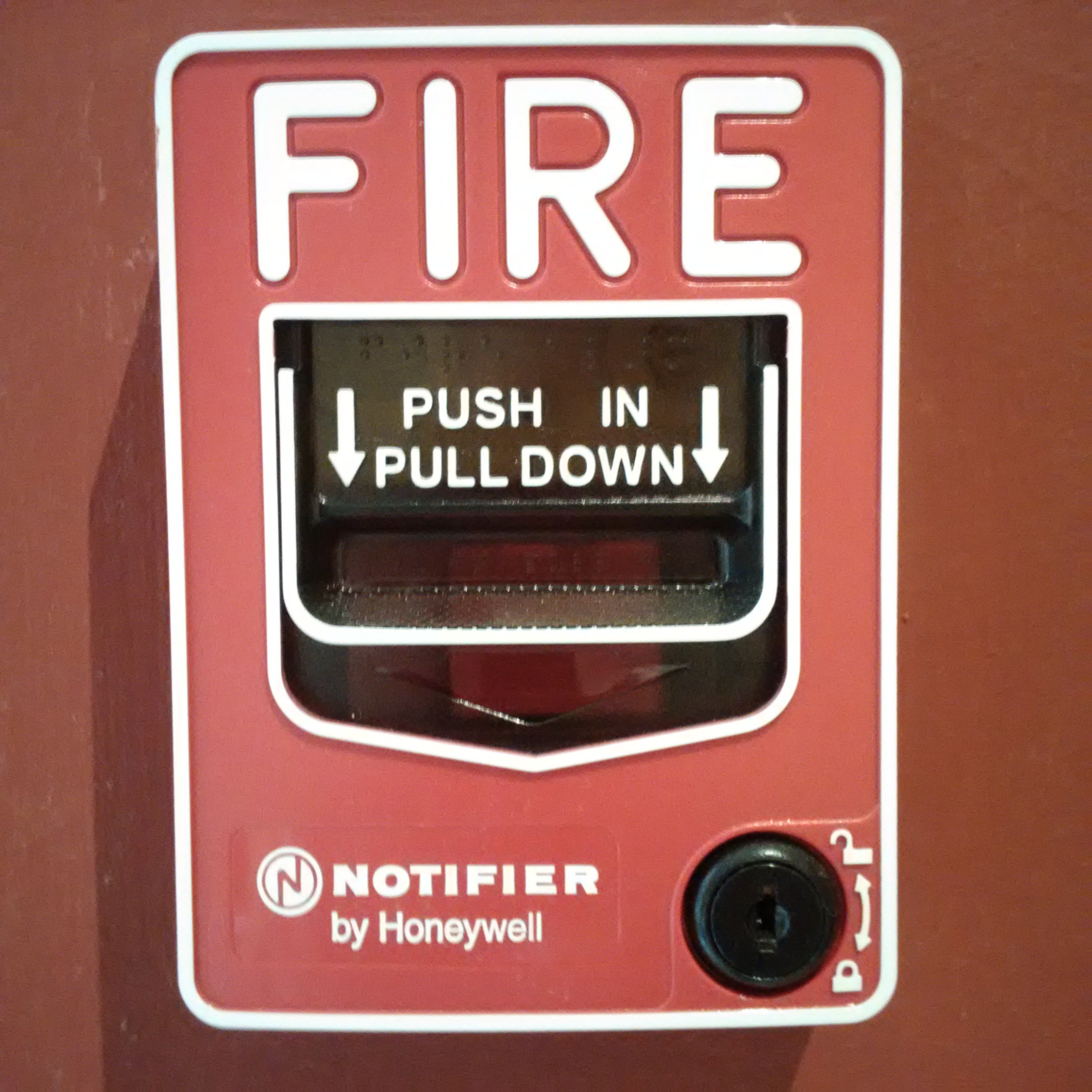
Honeywell Fire Notifier Protecting Guests At Hotel Mercure Sevilla In Havana

This Notifier (priced at approximately US$45.00) manufactured in Northford, Connecticut by Morris Plains, New Jersey-based Honeywell International, Inc. (2015 revenues exceeded US$38 billion) is installed on the 7th floor of the Hotel Mercure Sevilla (owned by the government of the Republic of Cuba and managed by France-based AccorHotels) in Havana.

A representative of Honeywell reported that the company had no knowledge of the product being exported to the Republic of Cuba; and that likely a third-party sold the Notifier(s) to the Republic of Cuba.

Honeywell International "trusts commercial barriers will soon be lifted so that we can actively pursue the Cuban market."

This Notifier by Honeywell is installed on the 7th floor of the Mercure Sevilla Hotel in Havana

UPDATE: USTR Ambassador & Deputy Visit Cuba... MINREX Provides More Information Than US Government... Why?

Why is the government of the Republic of Cuba more transparent about it discussions with officials of the government of the United States?  They reported who the meetings were with, what was discussed, and issued an image (see below).... 

On 4 October 2016, the Office of the U.S. Trade Representative (USTR) announced that USTR Ambassador Michael Froman will visit Havana, Republic of Cuba, from 5 October 2016 to 8 October 2016 for “bilateral meetings.”  The Honorable Matthew Vogel, Acting Deputy U.S. Trade Representative will also participate. 

Not identified as participating were support staff and John Melle, Assistant U.S. Trade Representative for the Western Hemisphere; Matthew McAlvanah, Assistant U.S. Trade Representative for Public and Media Affairs.

The delegation traveled using regularly-scheduled commercial airlines.

The visit was not announced in USTR's regularly-scheduled calendar issued on Friday, 30 September 2016.

Ambassador Froman was the seventh (7th) member of President Barack Obama's Cabinet to visit the Republic of Cuba since 17 December 2014.

From the Ministry of Foreign Affairs of the Republic of Cuba

"CUBA, October 7, 2016.- On 6 and 7 October, made an official visit to Cuba Ambassador Michael Froman, Office of the United States Trade Representative, during which he was received by ministers Bruno Rodriguez Parrilla, Foreign Affairs; and Rodrigo Malmierca, Foreign Trade and Foreign Investment.

He also met with Deputy Ministers of the Ministries of Communications, Agriculture and Science, Technology and Environment.

At the meetings they were discussed issues of interest to both related to the field of trade parties. Ambassador Froman and his delegation visited the Special Area Development Mariel, an agricultural cooperative and the Historic Center of Old Havana. (Cubaminrex)"

NOTE: Mrs. Josefina de la Caridad Vidal Ferreiro, the Director General (since 2013) of the Department of the United States at the Ministry of Foreign Affairs of the Republic of Cuba, reported that from October 2016 through December 2016 seven high-level visits by both officials of the government of the Republic of Cuba and delegations from the United States were scheduled to be held in Washington, DC, and in Havana.  The United States Department of State has not mentioned the number of visits.

NOTE: There remains a continuing issue with the Obama Administration relating to the transparency for visits to the Republic of Cuba by senior-level officials. 

NOTE: The United States business community would be better served by having advance notification of meetings that will impact the United States business community.

106 Days Since Opening Of Four Points By Sheraton Havana... Still Has Most Restrictive Reservation Rule; No US Credit Cards- Even Stonegate. Why?

According to company in June 2016... "We expect to be able to offer additional options in the near future."

In 2016, the Office of Foreign Assets Control (OFAC) of the United States Department of the Treasury granted a license(s) to Stamford, Connecticut-based Starwood Hotels & Resorts Worldwide (2015 revenues exceeded US$5.7 billion) to manage properties owned by Republic of Cuba government-operated entities located in the city of Havana, Republic of Cuba.  The properties are Gran Caribe-owned Hotel Inglaterra; Habaguanex-owned Hotel Santa Isabel and Hotel Quinta Avenida (re-branded as Four Points by Sheraton Havana).

In September 2016, Bethesda, Maryland-based Marriott International (2015 revenues exceeded US$14 billion) acquired Starwood Hotels & Resorts Worldwide and confirms its discussions with Republic of Cuba government-operated companies to identify property-management opportunities within the Republic of Cuba.

Four Points by Sheraton Havana
Avenida 5ta A 76 - 80,
Miramar District
Havana, Cuba

SPG Category 6

10 October 2016
Payment and Cancellations

"Reservations for this hotel are prepaid and there are NO REFUNDS for changes or cancellation for any guests, including SPG members. Additional charges at the Hotel are NOT payable with US credit cards and must be paid in CASH or with non US issued credit cards."

30 June 2016
Payment and Cancellations

“Reservations for this hotel are prepaid and there are NO REFUNDS for changes or cancellation. Additional charges at the Hotel are NOT payable with US credit cards and must be paid in CASH or with non US issued credit cards.” LINK TO SCREEN SHOT IN PDF FORMAT

30 June 2016
Blog Post

Why Did Starwood Initiate A Reservations Policy More Restrictive Than French & Spanish Competitors In Cuba?

For the Four Points By Sheraton Havana property, which commenced operations on 27 June 2016, the following statement is on its reservations portal:

http://www.starwoodhotels.com/fourpoints/property/overview/index.html?language=en_US&propertyID=4531

“Reservations for this hotel are prepaid and there are NO REFUNDS for changes or cancellation. Additional charges at the Hotel are NOT payable with US credit cards and must be paid in CASH or with non US issued credit cards.”

According to Stamford, Connecticut-based Starwood Hotels & Resorts Worldwide (2015 revenues exceeded US$5.7 billion), "The current reservation policies are the result of Starwood’s assessment of market conditions.  We are conscious of the issues resulting from cash requirements and the limitations on payment methods. Thus, we are working to accept as many payment methods as possible based on what has been made available under the current regulatory framework.  We expect to be able to offer additional options in the near future."

When making a reservation at a property located within the Republic of Cuba using the online portal of the management company, for example Spain-based Melia Hotels International (2015 revenues exceeded US$2 billion) and France-based AccorHotels (2015 revenues exceeded US$5 billion), a reservation may be changed or cancelled and may be prepaid using a non-United States-based financial institution-issued credit/debit card, but may not (yet) be prepaid using a credit card/debit card issued by a United States-based financial institution.

Regulations Do Not Require

There are no regulations issued by the Office of Foreign Assets Control (OFAC) of the United States Department of the Treasury that prevent prepayment or require prepayment, that prevent refunds for changes or cancellation.  The OFAC has authorized credit cards and debit cards issued by United States-based financial institutions (including American Express, VISA, MasterCard, Discover, Diners Club, etc.) for use in the Republic of Cuba.

Are the Four Points by Sheraton Havana payment policies a reflection of requirements by Republic of Cuba government-operated Gaviota (controlled by the Revolutionary Armed Forces of the Republic of Cuba), the Central Bank of the Republic of Cuba, the Ministry of Tourism of the Republic of Cuba?

Pompano Beach, Florida-based Stonegate Bank is authorized by the OFAC and Central Bank of the Republic of Cuba to have its MasterCard credit/debit card valid for use in the Republic of Cuba.  San Juan, Puerto Rico-based Banco Popular of Puerto Rico has announced plans [now operational] to have its MasterCard credit/debit card valid for use in the Republic of Cuba.

In 2016, the OFAC granted a license(s) to Starwood Hotels & Resorts Worldwide to manage properties owned by Republic of Cuba government-operated entities located in the city of Havana, Republic of Cuba.  The properties are Gran Caribe-owned Hotel Inglaterra; Habaguanex-owned Hotel Santa Isabel and Hotel Quinta Avenida (re-branded as Four Points by Sheraton Havana).

Bethesda, Maryland-based Marriott International (2015 revenues exceeded US$14 billion) is acquiring Starwood Hotels & Resorts Worldwide and confirms its discussions with Republic of Cuba government-operated companies to identify property-management opportunities within the Republic of Cuba.

An Update From Airbnb About Its Operations In Cuba... 10,000 Listings

As of 3 October 2016, Airbnb had approximately 10,000 listings throughout the Republic of Cuba.

1) What is the total value of the rental revenue paid to the owners of the residences since Airbnb commenced operations in the Republic of Cuba?

Our typical fee structure from around the world applies in Cuba, details here: https://www.airbnb.com/help/article/384/what-are-the-service-fees. From there, Airbnb hosts in Cuba will be expected to follow the same rules that apply to all owners of casas particulares in Cuba. Currently, those who use the system of private houses in Cuba must pay 10% of what is earned per month to the government.

2) What is the average per night rate for the properties in the Republic of Cuba?  In Havana?

We don’t disclose average per night rate as that can vary greatly depending on the type of listing (entire house, private room, shared room, etc) and won’t give an accurate picture. However, we can confirm that the average booking in Cuba is about US $250, that’s game-changing income for ordinary Cubans.

3) How are the funds delivered from Airbnb to the owners of the properties in the Republic of Cuba?

Through intermediaries we are able to deposit funds into many of our Cuban hosts’ bank accounts. For hosts who aren’t able to accept funds this way we have partnered with a 3rd party to remit payments in the manner that our Cuban hosts select including door-to-door delivery of payments. As banking infrastructure in Cuba evolves we will reevaluate our payment procedures to suit the needs of our Cuban host community.

Guest service fee

We add a percentage-based service fee to guest payments every time a reservation is booked. This helps cover the cost of running our site and services.

The exact percentage depends on the subtotal of the reservation. The higher the subtotal, the lower the percentage so you can save money when booking large reservations. You'll see the exact amount in the price breakdown on the checkout page before you confirm and pay, and on your billing receipt.

If you cancel a reservation you booked as a guest, the service fee is non-refundable. If your reservation is canceled by the host and you choose to be refunded, the service fee is refunded in full.

To help cover the costs of running Airbnb, we charge guests a service fee every time a reservation is confirmed. The amount of this service fee varies and is based on a percentage of the reservation subtotal (before fees and taxes).

The exact amount of the service fee is displayed before guests confirm a booking. Guest service fees are typically 6-12% but can be higher or lower depending on the specifics of the reservation. The higher the subtotal, the lower the percentage so you can save money when booking large reservations.

We also charge hosts a host service fee to cover the cost of processing payments.

Host service fee

We deduct a 3% service fee from host payouts every time a reservation is booked at their listing. This helps cover the cost of processing guest payments.

You can see the exact amount by clicking on the reservation code in your Transaction History from the desktop version of Airbnb.
VAT
Depending on the country of residence of the host or guest, VAT on the service fees may be included as an additional amount over and above the total Airbnb service fee. Your guest or host service fee includes VAT, when applicable.
Conversion fee

For guests paying in a currency different from the default currency of the country where the listing is located, a 3% currency conversion fee applies in addition to any system wide base exchange rate in effect.

UPDATE: Dr. Jill Biden To Visit Cuba... Don't Be Surprised If Her Husband Visits Too

From The White House

DR. BIDEN TO TRAVEL TO THE REPUBLIC OF CUBA AND THE DOMINICAN REPUBLIC

From The White House:
 
"Dr. Jill Biden is traveling to Havana and Camaguey, Cuba, from Thursday, October 6 through Sunday, October 9, 2016. Dr. Biden is joined by Catherine M. Russell, United States Ambassador-at-Large for Global Women’s Issues, and Evan Ryan, United States Assistant Secretary of State for Educational and Cultural Affairs. Together, they will meet with government officials and engage with a diverse range of Cubans on topics related to culture, education, and health.

On Thursday evening, upon arrival in Havana, Cuba, Dr. Biden will attend a welcome reception at the U.S. Chief of Mission’s residence in Havana, hosted by Ambassador Jeff DeLaurentis, Chargé d’Affaires at the U.S. Embassy. This event is closed press.

On Friday morning, Dr. Biden will visit the Universidad de Ciencias Pedagógicas "Enrique José Varona" and participate in a discussion with students, school administrators, and professors focused on teaching. This event is pooled press.

Dr. Biden will then visit Old Havana to view cultural performances and engage with students at a local trade school. In addition, Dr. Biden will attend a performance by the female chamber orchestra Camerata Romeu at the Basílica Menor de San Francisco de Asis. The visit will be pooled press.
 
In the afternoon, Dr. Biden will have lunch with Cuban women leaders. This event will be closed press.

After lunch, Dr. Biden will attend the first friendly soccer match between the U.S. Men’s National Team and the Cuban Men’s National Team since 1947 at the Estadio Pedro Marrero. This event will be open press.

On Saturday morning, Dr. Biden will participate in a discussion with Cuban entrepreneurs. This event is closed press.  She will then attend a cultural performance by Habana Compás Dance company.  This event will be pooled press.

Afterwards, Dr. Biden will depart Havana, Cuba en route to Camaguey, Cuba. Upon arrival, Dr. Biden will visit the Camaguey Ballet and view a rehearsal of the dancers from the company. This event is open press.

In the evening, Dr. Biden will visit the art gallery and workshop of Camaguey artist Martha Jiménez Pérez. This event is official photographers only.

On Sunday, Dr. Biden will visit historic central Camaguey, recognized as a World Heritage Site by UNESCO, during which she will visit Camaguey’s Casa de la Diversidad Cultural and view a cultural performance. This event is pooled press.

In the afternoon, Dr. Biden will visit the Casa de Cultura Amalia Simoni, a museum and women’s center, allowing her to meet with women from Camaguey. This event is pooled press.

Afterwards, Dr. Biden will depart Cuba en route to Santo Domingo, Dominican Republic."

NOTE: Not surprising would be a visit to the Republic of Cuba by Vice President Joseph Biden before 20 January 2016.  The purpose of a visit would be to discuss efforts by Republic of Cuba government-operated companies to develop treatments for cancer.  Another purpose of a visit would be to attempt to bring operational more of the Obama Administration initiatives that the government of the Republic of Cuba has yet to authorize.

NOTE: Dr. Biden stayed and employees of the United States government stayed at the Parque Central Hotel, managed by Spain-based Iberostar Hotels & Resorts rather than at the residence of the United States Charges d'Affaires or at the Four Points by Sheraton Habana, managed by Stamford, Connecticut-based Starwood Hotels & Resorts Worldwide, a subsidiary of Bethesda, Maryland-based Marriott International.

By The End Of This Week, 7 Members Of President Obama's Cabinet Will Have Visited Cuba

For the period 17 December 2014 through 5 October 2016, seven (7) members of President Barack Obama's Cabinet (including those with Cabinet-rank) have visited the Republic of Cuba.

From The White House:

Established in Article II, Section 2 of the Constitution, the Cabinet's role is to advise the President on any subject he may require relating to the duties of each member's respective office.

The tradition of the Cabinet dates back to the beginnings of the Presidency itself. Established in Article II, Section 2, of the Constitution, the Cabinet's role is to advise the President on any subject he may require relating to the duties of each member's respective office.

The Cabinet includes the Vice President and the heads of 15 executive departments — the Secretaries of Agriculture, Commerce, Defense, Education, Energy, Health and Human Services, Homeland Security, Housing and Urban Development, Interior, Labor, State, Transportation, Treasury, and Veterans Affairs, as well as the Attorney General.

In order of succession to the Presidency:

Vice President of the United States
Joseph R. Biden

Department of State (2015/2016)
Secretary John Kerry
state.gov

Department of the Treasury
Secretary Jack Lew
treasury.gov

Department of Defense
Secretary Ashton Carter
defense.gov

Department of Justice
Attorney General Loretta E. Lynch
usdoj.gov

Department of the Interior
Secretary Sally Jewell
doi.gov
 
Department of Agriculture (2015/2016)
Secretary Thomas J. Vilsack
usda.gov
 
Department of Commerce (2015/2016)
Secretary Penny Pritzker
commerce.gov

Department of Labor
Secretary Thomas E. Perez
dol.gov

Department of Health and Human Services
Secretary Sylvia Mathews Burwell
hhs.gov
 
Department of Housing and Urban Development
Secretary Julián Castro
hud.gov
 
Department of Transportation (2016-2)
Secretary Anthony Foxx
dot.gov
 
Department of Energy
Secretary Ernest Moniz
energy.gov
 
Department of Education
Secretary John King
ed.gov
 
Department of Veterans Affairs
Secretary Robert McDonald
va.gov
 
Department of Homeland Security
Secretary Jeh Johnson
dhs.gov

The following positions have the status of Cabinet-rank:
 
White House Chief of Staff
Denis McDonough

Environmental Protection Agency (2016)
Administrator Gina McCarthy
epa.gov

Office of Management & Budget
Director Shaun L.S. Donovan
whitehouse.gov/omb

United States Trade Representative (2016)
Ambassador Michael Froman
ustr.gov

United States Mission to the United Nations
Ambassador Samantha Power
usun.state.gov

Council of Economic Advisers
Chairman Jason Furman
whitehouse.gov/administration/eop/cea
 
Small Business Administration (2016)
Administrator Maria Contreras-Sweet
sba.gov

Secretary Kerry To Visit Cuba This Month.... Trying To "Close The Deal"

The Honorable John Kerry, United States Secretary of State, will visit the Republic of Cuba in October 2016, probably 12 October 2016 to 14 October 2016.

Mrs. Josefina de la Caridad Vidal Ferreiro, the Director General (since 2013) of the Department of the United States at the Ministry of Foreign Affairs of the Republic of Cuba, reported that from October 2016 through December 2016 seven high-level visits by both officials of the government of the Republic of Cuba and delegations from the United States were scheduled to be held in Washington, DC, and in Havana.  The United States Department of State has not mentioned the number of visits.

A goal will be to discuss how to implement as many of the Obama Administration initiatives as possible by 20 January 2017... explain the new regulations that are expected to be announced, and attempt to conclude agreements relating to, among other topics, certified claims.

Secretary Kerry may establish the foundation for a visit by Vice President Joseph Biden.

For 50 CUC's Per Day... You Too Can Be A Taxi Driver In Havana

Republic of Cuba nationals can rent a vehicle for approximately 50 CUC's per day (approximately US$56.00) from Republic of Cuba government-operated Agencia de TAXI and earn from ferrying passengers throughout the city of Havana. 

The vehicles are from China and South Korea, clean, air conditioned, and not too pricey (for Republic of Cuba standards today). 

There are no meters, but the fares are generally consistent.  Always remember to agree on the fare before getting into the vehicle.