The Miami Herald- Cuba denies it's negotiating with U.S. on compensation claims

The Miami Herald
Miami, Florida
5 August 2016


Cuba denies it's negotiating with U.S. on compensation claims

By Nora Gámez Torres

A Cuban government official has denied that a recent meeting with U.S. representatives to discuss mutual compensation claims amounts to a negotiation, raising doubts about Havana's willingness to settle the issue anytime soon.

A senior U.S. State Department official who recently briefed journalists on the compensation talks said the two sides held “very substantial discussions” despite the nine months between the first and second meetings.  But the Cuban government's public version of the talks was quite different.

Deputy Foreign Minister Abelardo Moreno told a news conference in Havana on Monday that “we are not negotiating yet. … We are now engaged in informational talks.” A transcript of the news conference was published by Cubadebate.

Moreno said the U.S. representatives “have stated the need to resolve the issue as quickly as possible, but … these are going to be extremely complex negotiations from all points of view … and we cannot rush things.”

Jason Poblete, a lawyer who specializes in Cuba claims with PobleteTamargo LLP in Washington D.C., said that although Moreno's statements are typical of negotiations, the discussions “are negotiations, because they're sitting at a table and talking about the issue,” he said, adding that Moreno’s statements point to a decision by Cuba to delay the process.

“These statements show they are not interested in finding a solution, that there is a tactic to delay,” Poblete said. He believes the Cuban government may be waiting to see if the U.S. president elected in November “will offer them something better.” The delays also would maintain the status quo until 2018, when Cuban ruler Raúl Castro has said he will surrender the presidency.

That could be a mistake, said John Kavulich, director of the US-Cuba Trade and Economic Council: “Cuba will never have a more compliant negotiating partner than it does in the Obama Administration, for whom [improved relations with Havana] … is a visceral component of a legacy construct,” he said.

Moreno's comments in fact could be “an indirect message that they are not interested in solving this issue. I am speculating, but perhaps they want to win the elimination of all sanctions before they pay” compensation, said Poblete.

The State Department official told journalists that the U.S. side seeks $1.9 billion in compensation for Cuba's seizure of properties owned by U.S. citizens in the early 1960s; $2.2 billion of judgments outstanding against Cuba; and a “hundred to a couple hundred millions of dollars” that relate to interests that the U.S. government had in mining on the island.

Cuba seeks nearly $300 billion as compensation for the economic and human damages caused by the U.S. trade embargo and other policies and activities against the Castro governments since 1959.

The State Department official said there is “nothing different in these negotiations from our experience negotiating claims with other countries,” and added that both sides “are committed to trying to resolve this in a mutually satisfactory manner.”

The Cuban official, however, has linked the payment of compensations to the U.S. embargo, which Havana calls a “blockade.”

“The solution to the issue of compensations … is obviously directly linked to the blockade. I believe that all of you understand that the normalization of relations between the two countries will be very difficult, if not impossible, while the blockade against Cuba remains in place,” Moreno declared.

U.S. negotiators have considered the possibility of signing a bilateral agreement with a one-time payment to resolve the issue. But Moreno, asked if the Cuban side would accept such a deal, said the island's claims are not negotiable.

“The claims of the Cuban people were approved by the courts, and claims are not negotiated,” he said. “I can't say, 'Cuba claimed X amount of money — which was approved by the courts — but now we're going to change it to another amount.' No. Those are judicial rulings that must be obeyed by our government officials.”

The two sides ended the second meeting, held in Washington, without agreement on the date for the next meeting. The first meeting, held in Havana, also ended without agreement on the date for the second.

Kavulich said the key challenge for the Cuban government is to recognize that there will be no specific monetary reparations from the U.S. side.

“The negotiators will need to ask whether the imagery of seeking what will not be given is more important for the 11.3 million citizens of the Republic of Cuba than removing a significant impediment to … immediate multilateral benefits,” he said.

Poblete agreed: “If the Cubans are interested in having the U.S. sanctions removed, they would pay the claims, which would help the groups in Washington that are pushing for the elimination of sanctions” on Havana, he said.

Kavulich also questioned whether the Obama Administration views the compensation issue as a priority.

“Two meetings in 599 days. No further meetings scheduled, and the Obama Administration ends in 175 days. And this is defined as a high priority of the Obama Administration. The certified claimants have been concerned, and now that concern is magnified,” he said.

“Claimants have not seen the effort they deserve,” Kavulich added. “A legacy is not built by focusing on the relatively easy issues, but on the difficult issues.”

If Hillary Clinton Wins In November, Who Might Cuba Appoint As Its Ambassador To Washington?

If The Honorable Hillary Rodham Clinton (D) is elected President of the United States on 8 November 2016, not unreasonable to expect that the government of the Republic of Cuba will appoint a woman to lead the Embassy of the Republic of Cuba located in Washington, DC.

Mrs. Josefina de la Caridad Vidal Ferreiro, the Director General (since 2013) of the Department of the United States at the Ministry of Foreign Affairs of the Republic of Cuba, and a member (since 2011) of the Central Committee of the Communist Party of the Republic of Cuba, would be a likely replacement for H.E. José Ramón Cabañas Rodríguez, who has served Ambassador of the Republic of Cuba to the United States since November 2012.

With the election of the first female as President of the United States, many countries will dramatically increase the number of women in their mid-level and senior-level diplomatic positions as a means to be better positioned to prominently engage with a Clinton Administration (where women will have prominence) and to more effectively engage with United States media- which will have a focus upon women in the workplace. 

Mrs. Vidal served as Director of the United States Department (2012-2013), Director of North America (2006-2013), Deputy Director of North America (2004-2006), Senior Specialist and Coordinator of the Group of Analysis on the United States (2003-2004 and 1997-1999).

From 1999 to 2003, Mrs. Vidal served as First Secretary at the Interests Section of Cuba in Washington, DC.; and from 1991 to 1997, as an analyst at the Embassy of the Republic of Cuba in Paris, France.  Before that, Mrs. Vidal was an Assistant Researcher in the Center of Studies of the United States at the University of Havana.

Mrs. Vidal has a Bachelor of International Relations from the International Relations State Institute of Moscow, Russia (then U.S.S.R.), where she had studied from 1979 to 1984.  Mrs. Vidal is proficient in English, French and Russian.  Born on 18 February 1961.

Despite Reports, Kempinski Hotels Does Not Have A Management Contract For A Property In Cuba... Yet

Since 2014, there have been reports by media outside the Republic of Cuba and media inside the Republic of Cuba that Geneva, Switzerland-based Kempinski Hotels SA had signed a management contract with Republic of Cuba government-operated Habaguanex SA and/or Republic of Cuba government-operated Gaviota SA.; both entities under the control of Republic of Cuba government-operated Grupo de Administracion Empresarial S.A. (Enterprise Management Group), or GAESA, which is, in turn, controlled by the Revolutionary Armed Forces of the Republic of Cuba (FAR). 

Kempinski Hotels SA has not (yet) signed a management contract with any Republic of Cuba government-operated entity.
 
From media reports:

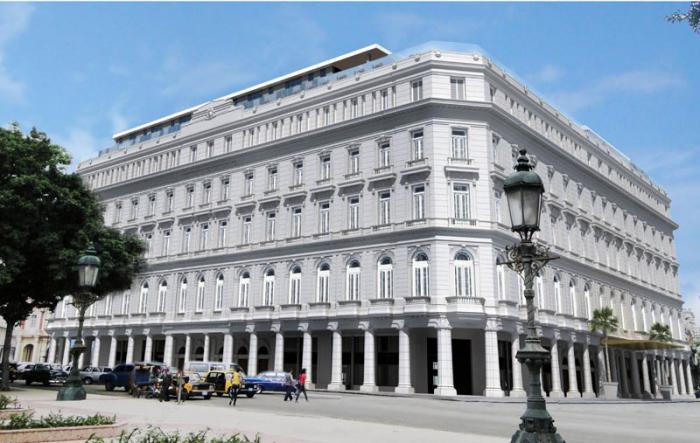
2016: "Cuba's approval for a French company to import Indian workers to build a Havana hotel has been met with disbelief, anger and complaints about a policy that usually requires foreign companies to hire local workers through state labor agencies.  About 200 workers from India hired by the French Bouygues company are renovating the Manzana de Gómez, an iconic building that was Havana's first shopping mall, the Reuters news agency reported. The Swiss Kempinski chain will run the luxury hotel in a deal with GAESA, a holding company controlled by the Cuban military."

2014: "It hasn’t opened its doors yet, but the Manzana Hotel in Havana is currently undergoing round-the-clock renovations to restore it to its former grandeur. Scheduled to completed and opened by late the end of this year, it will offer ultra-deluxe accommodations managed by the Swiss hotel group Kempinski.

In the early 20th century, the building was known as the Manzana de Gómez Block. The Manzana covers an entire city block in Havana on the streets Zulueta, Monserrate, Neptuno and San Rafael. It’s in an ideal location in Old Havana, next door to the Hotel Plaza, facing the Parque Central across from the Hotel Inglaterra.

The original construction of the building began in 1890, but the project ran into problems and was not completed until about 1918. In its earlier days, it was once a shopping mall and offices, owned by the wealthy businessman José Gómez-Mena Vila. Gómez added four floors to the structure and completed it around 1918.

Habaguanex and Gaviota S.A. are currently managing the project of restoring the building. Renovations and reconstruction, which began in early 2014, go on 24 hours a day, seven days a week.

When completed, the 5 Star luxury Manzana Hotel will offer over 200 suites. It will be managed by the luxury Swiss hotel chain Kempinski. Project plans for the Hotel include a selection of luxury boutiques on the ground floor."

The original condition of the building (From Granma)
What is expected after the completion of renovations (From Granma)

Does The Government Of Cuba Desire A Certified Claims Settlement?

Cuba says talks with U.S. over claims cannot be rushed

1 August 2016: HAVANA | By Sarah Marsh

Cuba said on Monday it was not willing to rush talks with the United States over multibillion-dollar claims and counter-claims and would agree only to an accord that addressed the grievances of both sides.

Washington is seeking upward of $10 billion, mainly for properties nationalized in Communist-run Cuba after its 1959 revolution. Havana, meanwhile, wants at least $300 billion for economic damage wrought by the U.S. trade embargo and for the harm caused by acts of what it describes as U.S. aggression.

Settling the claims is key to normalizing relations between the former Cold War foes. The two sides held their second round of talks on the matter last week, after a first round last December.

A State Department official told reporters the United States wanted to resolve the issue as quickly as possible and the two sides had agreed to hold more regular meetings.

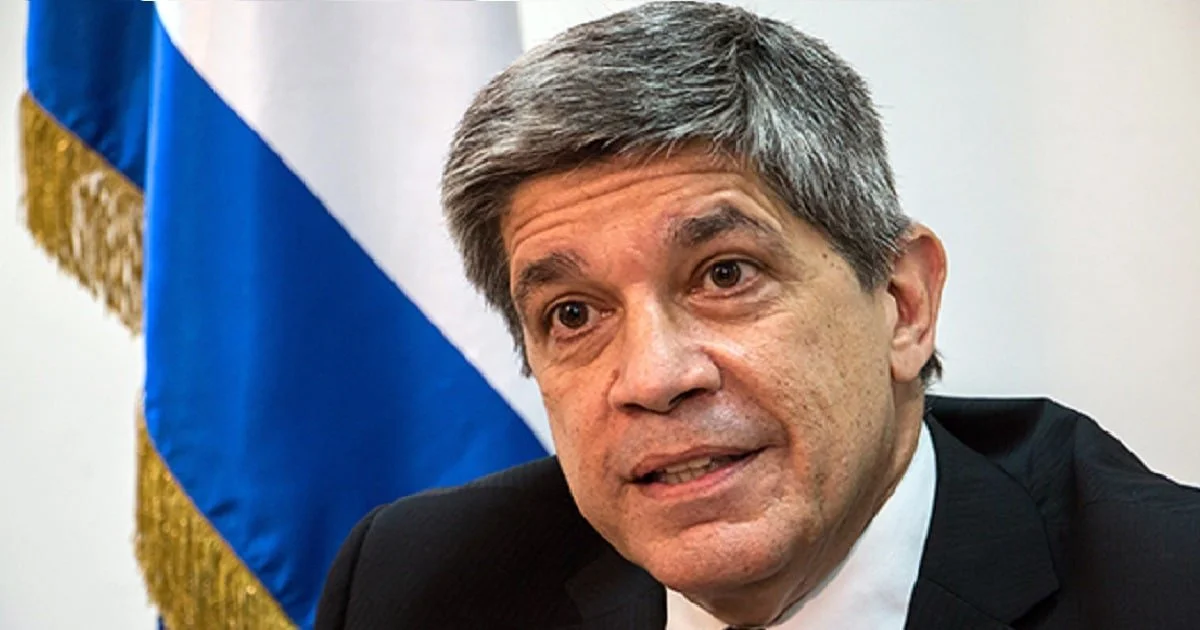
Cuban Deputy Foreign Minister Abelardo Moreno [in photograph below] told reporters this likely was an "aspiration" of the State Department, given there had been no actual agreement on future meetings.

"We have to follow the appropriate timetable. We cannot force it," Moreno said in a briefing on the talks in the Foreign Ministry.

Cuba and its northern neighbor re-established diplomatic relations a year ago after decades of hostility and have since signed deals on the environment, postal services and direct flights.

The two countries were not yet negotiating their respective claims, Moreno said, but were holding informative talks on a matter of "highly elevated complexity."

The Cuban government has reached settlements with other countries for expropriated assets. But it cut off negotiations with the United States when bilateral relations soured in the 1960s.

Moreno said the claims talks with the United States were much more complex than they had been with Canada and European countries because of the need to address damages caused by the trade embargo.

"We are talking about a process in two directions," Moreno said. "Cuba will not accept unilateral solutions."

COMPLETE ANALYSIS IN PDF FORMAT

US Department Of State & Government Of Cuba Report On Claims "Discussion"

From The United States:

United States and Cuba Hold Claims Discussion

Media Note
Office of the Spokesperson
United States Department of State
Washington, DC
July 28, 2016

The United States and Cuba held a government-to-government claims discussion in Washington, D.C., on July 28, 2016. The U.S. delegation was led by Brian Egan, the Legal Adviser for the U.S. Department of State. The meeting allowed the countries to exchange further details on outstanding claims and build upon the previous claims discussion in Havana, Cuba. It also allowed for an exchange of views on historical claims settlement practices and processes going forward.

Outstanding U.S. claims include claims of U.S. nationals that were certified by the Foreign Claims Settlement Commission, claims related to unsatisfied U.S. court judgments against Cuba, and claims of the United States Government. The United States continues to view the resolution of these claims as a top priority for normalization.


From The Republic Of Cuba:

Second Meeting on Cuba-USA Mutual Compensations
Washington
July 28, 2016
Prensa Latina

Cuban and US officials are holding, today and tomorrow, the second informative meeting on mutual compensations between Cuba and the United States.  In the meeting, planned for two days, Cuban experts and representatives of the US departments of State, Justice and the Treasury are participating.

The meeting that begins today will put on the table the options for economic compensation, according to the demands by each side, because the United States is demanding compensation for the nationalized companies after 1959, while Cuba is demanding compensation for the damage caused by the criminal economic blockade imposed from 1962 to the present date, with damage exceeding $121 billion USD.

Se celebra segunda reunión informativa sobre compensaciones mutuas entre Cuba y Estados Unidos
Enviado por editor en Vie
July 29, 2016

El 28 de julio de 2016 se celebró en Washington la segunda reunión informativa entre representantes de los gobiernos de Cuba y los Estados Unidos sobre el tema de las compensaciones mutuas. La delegación cubana estuvo presidida por Abelardo Moreno Fernández, viceministro de Relaciones Exteriores y la estadounidense, por Brian J. Egan, asesor legal principal del Departamento de Estado.
 
En este encuentro, que dio continuidad al realizado en La Habana en diciembre de 2015, las delegaciones siguieron intercambiando información sobre las reclamaciones de ambos Estados, en particular sus antecedentes, características y bases jurídico-legales, con el objetivo de preparar el proceso de negociación sobre este tema.
 
Los representantes de ambos gobiernos reconocieron la importancia y utilidad de continuar estos intercambios. (Cubaminrex)

Second briefing on trade-offs between Cuba and the United States held
Submitted by editor on Fri
July 29, 2016

On 28 July 2016 the second information meeting between representatives of the governments of Cuba and the United States on the issue of trade-offs was held in Washington. The Cuban delegation was led by Abelardo Moreno Fernández, Deputy Foreign Minister and the US, by Brian J. Egan, principal legal adviser to the State Department.
 
In this meeting, which continued the held in Havana in December 2015, delegations continued to exchange information on the claims of both States, particularly its history, characteristics and legal and legal bases, with the aim of preparing the negotiation process about this theme.

Representatives of both governments recognized the importance and usefulness of continuing these exchanges. (Cubaminrex)


Transcript Of State Department Briefing About US-Cuba Claims "Discussion"

From an individual who represents certified claimants: "Remarkable that the State Department did not schedule a third meeting and a fourth meeting... with less than 180 days remaining in the Obama Administration.  And, the process thus far is not a negotiation, regardless of the spin otherwise.  The focus should be singular- resolving the certified claims, not other types of claims."

Senior State Department Official on Cuba Claims Discussions
Special Briefing- Via Teleconference
July 29, 2016

MODERATOR: Good morning, everyone. Thank you for joining our background call on the U.S.-Cuba claims discussion which took place here in Washington, D.C. yesterday. Today we’re going to have a briefing by [name and title withheld], who from this point forward will be known as a senior State Department official. As a reminder, I just want to note that today’s call is on background, attributable to our senior State Department official.

Without further ado, I’ll go ahead and turn it over to our official, who will make brief remarks and then turn it over to you for questions.

SENIOR STATE DEPARTMENT OFFICIAL: Good morning. As you – most of you probably know, we began our bilateral claims dialogue with Cuba last December in Havana. We noted after that first round that the reestablishment of diplomatic relations allowed us to more effectively represent U.S. interests in Cuba, and to have a more concerted dialogue with the Cuban Government on a variety of topics that are of importance to the United States. That very much continues to be the case as regards the matter of outstanding claims of the United States and U.S. nationals against Cuba. Yesterday, we concluded a second meeting with the Cuban Government on claims. That meeting occurred in Washington. While at the first meeting the two sides exchanged information on the various claims each side was bringing to the table, the second meeting was more substantive in nature, both in exploring more of the details about the claims that need to be resolved, but also in reviewing the practices of both countries in resolving claims with other countries and how those practices could provide options for resolving these claims that we’re discussing now.

The claims being discussed include claims of U.S. nationals that were certified by the Foreign Claims Settlement Commission many years ago, claims related to unsatisfied U.S. court judgments against Cuba, and claims of the U.S. Government. The Government of Cuba also provided further details about claims that it has against the United States. They relate to the embargo and to human damages that have been adjudicated by its courts.  And with that introduction, I’d be happy to take questions.

OPERATOR: And if you have a question at this time, please press * followed by 1. And we have a question from Arshad Mohammed with Reuters. Please go ahead.

QUESTION: Good morning. Just a couple of quick practical matters. When do you expect the next round of negotiations to take place and will they be in Havana? Is there any way of characterizing such progress, to the extent that there has been any, that you’ve made in these first two rounds of talks? And are there any particular paradigms, ways in which Cuba has settled claims with other nations or ways – or specific countries with whom the United States has previously settled claims, that you think will be useful to resolving these claims, if indeed they can be resolved?

SENIOR STATE DEPARTMENT OFFICIAL: Let me begin by noting that we do not currently have a scheduled meeting for the next round. The U.S. delegation expressed its desire to resolve the claims as quickly as possible, and we indicated that we were willing to dedicate a substantial amount of time and energy towards trying to get to resolution. I think both sides agreed that we would have more regular meetings and that we would continue to pursue this matter in the established diplomatic channels.

That said, I think we’re just – it will just be a matter of trying to schedule the next meeting according to available time. The meeting will occur in Havana. Our normal practice is to alternate between capitals. So we began in Havana, we had this last meeting in Washington, and we would expect to go to Havana for the next meeting.

In terms of prior settlements that the two governments have entered into, we know that – and Cuba provided some background on this – we know that Cuba has resolved outstanding expropriation claims with several countries in the last two decades, and we note, though, however, that they were much, much smaller in scope than what we have here. We certainly also have lots of practice in claims settlement involving expropriation claims, involving outstanding court judgments and government-to-government claims. I think the – we all recognize that the complexity and the scope of the claims that we bring to the table will have to allow us to draw on all those examples, but that we’ll probably have to figure out something that is unique to this particular claims matter.

OPERATOR: Okay. And our next question comes from the line of Karen DeYoung, Washington Post. Please go ahead.

QUESTION: Yes, thank you. I wonder if you could give us the total amounts in each of the categories that you outlined – the, I guess, three or four categories of U.S. claims and the two categories of Cuban claims.

SENIOR STATE DEPARTMENT OFFICIAL: For the U.S. claims, there are claims of U.S. nationals relating to expropriations that date back to the late 1950s and 1960s. Those were adjudicated by the Foreign Claims Settlement Commission in two separate programs, and the total principal of what they negotiated was $1.9 billion. And the commission then also awarded 6 percent interest on that. So we have indicated that obviously that’s part of it. We also know that in terms of U.S. court judgments, there are approximately $2.2 billion of judgments outstanding against Cuba. That include – that’s compensatory damages and a number punitive damages have been awarded as well. In terms of the U.S. Government claims, these are in the hundred to couple hundred millions of dollars and relate to interests that the U.S. Government had in mining interests in Cuba back in the ’50s.

And from the perspective of Cuba, what we understand, their embargo claims and their human damages claims relate to two judgments, outstanding judgments that they described against the United States rendered by Cuban courts. The human damages claim – the judgment was for $181 billion. We understand that that number could be higher. And for the economic damages judgment, we understand that that judgment was for $121 billion, but again, that number might be higher. Those are essentially – Cuba also has a claim for blocked assets, but there hasn’t really been, from what I would say, a solid number that’s been discussed with respect to that, because the amount of blocked assets has fluctuated over time.

OPERATOR: And next we have the line of Nora Gamez with El Nuevo Herald. Please go ahead.

QUESTION: Hi, hello. Thank you for doing this. Could you comment on which are the kind of model for negotiation or resolving these claims that the U.S. is putting onto the table, if this was discussed in this meeting?

SENIOR STATE DEPARTMENT OFFICIAL: The – I would just say at the outset that these negotiations or discussions on claims are very much along the lines of what we have experienced in the past. We have – as I mentioned in my opening, we have gotten to a more substantive discussion now that we know what’s on the table. In looking at the past claims settlements that both sides have embarked on, the most traditional type of claim settlement in – for claims of this nature would be a bilateral agreement that sets out the scope of the claims that are to be resolved with releases for those claims from the other government. Sometimes a lump sum of money is then provided in settlement of the claims.

Here, both claim – both governments have claims that they’ve put on the table, and so that would all have to be worked out. We know that in the past, some of Cuba’s claim settlements have related to perhaps not payment of a lump sum of money, but sometimes the liquidation of various products that are provided or bonds that are provided. But we’re looking at everything at this point and trying to figure out what might be the most appropriate way forward in light of, again, the large numbers of types of claims and the complexities that some of these claims raise.

OPERATOR: And ladies and gentlemen, as a reminder, if you have a question, please press * then 1. Once again, for any questions or comments, press * then 1. And we have Serena Marshall with ABC News. Please go ahead.

QUESTION: Sorry, I was muted there. Thank you for doing this call. I was just wondering, with respect to the Cuba claims, how the issue of the embargo would play into that. Because even if this gets resolved, the embargo still remains in effect, and obviously, that plays into the Cuba claims’ numbers.

SENIOR STATE DEPARTMENT OFFICIAL: I don’t think we’re really in a position to address that kind of question at this point. Again, while we are into a much more substantive discussion, at this point, we haven’t really penetrated how things would play out because we’re not just there yet. We are just looking at what kinds of framework, what kinds of options there are for looking at all of these claims, whether we can try to resolve some subset of claims, whether it would be easier to do that at the outset, whether we want to follow the full traditional model of a full lump sum settlement of everything.

But we know that there are kind of pros and cons on both sides, but in terms of factoring in how Cuba’s claims – and particularly with regard to the embargo – would play into all this, I think it’s very premature to say at this point.

OPERATOR: And next we have Luis Alonso with AP. Please go ahead. You’re open.

QUESTION: Thank you – good morning – for doing this. I would like to ask whether there has been previous claims that U.S. has received in the same dollar amount order. If I understood correctly, Cuba’s claims amount to at least 200 billion. Are there similar examples in the past? And if you could please talk about it. Thanks.

SENIOR STATE DEPARTMENT OFFICIAL: There – I don't know that there’s anything exactly comparable to this particular situation regarding Cuba’s claims. It’s fair to say that traditionally, claims come up in normalization. And obviously, as part of normalization, there are frictions or claims that accrue on both sides. Where there has been a blocking of assets, there have traditionally been claims for actions by the United States to block assets and take those kinds of measures and those kinds of issues have been dealt with in prior claims settlements. But again, it’s much more related to the blocking of assets.

OPERATOR: And next we have the line of Patrick Oppmann, CNN Havana. Please go ahead.

QUESTION: Yeah, hi, good morning. I was wondering if Cuban officials detailed how they got to those numbers, if they sort of broke down the damages and how they reached those sums. And as well, if there’s any precedent of the U.S. ever paying a country back, compensating a country that the U.S. had an economic embargo against.

SENIOR STATE DEPARTMENT OFFICIAL: In terms of Cuba’s breakdown, I think what we heard this time in terms of more substance was that – the claims were raised in December. But what we did hear was an explication about the way these judgments came into place, the Cuban laws that gave rise to the jurisdiction for the courts to hear these kinds of claims. There was a general description of the types of elements that went into the economic damages or the human damages types of claims. But we didn’t hear any specific breakouts of numbers on those categories. It was more a broad-brush description of that.

I think that with regard to the Cuban embargo, this is kind of a unique situation or an unprecedented set of issues with regard to our relations with Cuba over all these years. So it’s not clear to me that there is an absolutely comparable situation that we can point to.

OPERATOR: And next we have the line of Lucia Leal with EFE. Please go ahead.

QUESTION: Hi, good morning. Do you know if you can give an estimate of how long do you expect this process to last? Could it take years? Because you’re mentioning very complex negotiations. And do the Cubans accept this idea of having, in the end, a bilateral agreement to settle this all.

SENIOR STATE DEPARTMENT OFFICIAL: I’m smiling as I hear this question because on every – whenever we embark on a claims settlement negotiation process, the question is always, “How much time do you expect this will take?” And it’s very, very difficult to say. What I can – because we just can’t predict what kind of turns the discussion will take. And even when it takes those turns, those elements of the discussion can be very constructive in reaching an overall resolution, and my experience has been that it is worth taking the time to have that discussion so that one can eventually reach a mutually satisfactory resolution.

That said, I would – from right now, I think there’s nothing about this negotiation that is any different from our experiences in dealing with claims with other countries. We seem to be – there may have been a little bit more of a gap in time between our first and second meeting, but one, we’re already at the second meeting. We are having very substantive discussions. Two, both sides seem to agree that we need to have more regular meetings. And we’re – three, I think both sides are committed to try to resolve this in a mutually satisfactory manner, drawing on the experiences of claims resolution by both governments.

MODERATOR: Okay, ladies and gentlemen. I think after this we’ve got time for maybe two more questions.

OPERATOR: Next is Frances Robles, New York Times. Please go ahead.

QUESTION: Hi, good morning. I wanted to know – and maybe you sort of touched on this in your last answer, but do they seem at all inclined to make a real settlement in their claims given how far the two sides are?

SENIOR STATE DEPARTMENT OFFICIAL: Again, I would say that we certainly have not heard anything that there is an unwillingness to settle claims. And in the substantive discussion that we’ve had, we’ve heard some very – very kind of helpful questions seeking additional clarifications and on substance and about what the U.S. practice has been. And I would think that’s a positive element of these discussions and that would indicate that they on their side as well as on our side are processing what we’ve got on the table together, what our practices have been, and how we might be able to rely on that practice for considering realistic options for coming to some resolution.

OPERATOR: And our final question will come from the line of David Adams, Univision. Please go ahead.

QUESTION: Hello, thanks very much. You mentioned that one possible solution is lump sum payment. Given the extraordinary difference in the size of the claims by both countries, how do you see a lump sum – it would appear to be that the Cubans have rather a large advantage in terms of the amount of money being claimed.

And secondly, just could you tell us a little bit about what other negotiations you’ve been involved in on behalf of the United States – say, perhaps ongoing and in the recent past?

SENIOR STATE DEPARTMENT OFFICIAL: So on the first question, again, if you look at prior settlements with Vietnam or China that involved – there was some blocking of assets, there was expropriations, and there was normalization, and there were adjudications of claims by the Foreign Claims Settlement Commission – those were resolved then finally in a bilateral agreement providing for a lump sum payment. There are different ways in which the payments can be made. They can be made in one lump sum, blocked assets can be factored into that, and payments can be made over time in installments.

So those are the kind of practices that were the examples – the historical examples that we have. I think that we’ll – I think it’s still premature to understand how that element of it might play out at the end, and if we even go to some kind of overall lump sum settlement. We’re, again, at the very early stages of this. We’ve provided some ideas to the Cuban Government based – drawing on our practice. And they had no immediate response, but again, it was I think a fair amount to digest and they have indicated that they will get back to us.

The other question – let’s see, I forget now.

PARTICIPANT: How many things have you worked on.

SENIOR STATE DEPARTMENT OFFICIAL: Oh, how many other things. So I’ve been doing claims for most of my career, and have been involved in – there was a settlement of judgment claims with the Libyan Government in 2008, I believe it was – I was involved in that; the settlement with Iraq in 2009; and most recently, we reached an agreement with France in December of 2014 on claims. And there are a number of other things over the course of my career, but those are probably the most recent.

PARTICIPANT: How many years.

MODERATOR: Okay, everyone. I want to thank our senior state Department official for joining us today, and thank you for joining our call. And right now we’ll go ahead and conclude. Everybody have a great day.
28-29 July 2016... Final Opportunity For U.S. Certified Claimants To Force Negotiations?

28-29 July 2016

Final Opportunity For U.S. Claimants To Force Negotiations?
No “Details” In 233 Days
Two Meetings In 599 Days
A Wasted 18 Months?
Let The Claimants Negotiate Directly?

Representatives from the government of the Republic of Cuba, United States Department of State, United States Department of Justice and United States Department of the Treasury will meet in Washington DC, on 28 July 2016 and 29 July 2016 to discuss the 5,913 claims registered with the United States Foreign Claims Settlement Commission (USFCSC), which is under the administration of the United States Department of Justice.  This will be the second meeting.

Important for this meeting and discussion to transform, and quickly, into a negotiation.  There is no more time for the airing of grievances and rehashing of positions.

This is a moment for PowerPoint presentations, realistic expectations, compromise, acceptance, and attorneys to draft agreements.

The Obama Administration has professed that a settlement of the certified claims is a priority- a top priority.  Yet, during a 20 July 2016 background briefing by a senior official of the United States Department of State, it was clear settlement negotiations have not commenced- and many of the certified claimants were concerned:
REPORTER QUESTION (Miami Herald):  My question has to do with the property rights issue. I wonder if you could give us any details there.  And two, whether Cuba still has outstanding property rights issues with any other countries, and is there a target number we’re looking for, like settling on 20 cents on the dollar, 10 cents on the dollar, whatever?  
SENIOR STATE DEPARTMENT OFFICIAL:  As I mentioned, property claims is one of our top priorities.  We had an initial – or first-round meeting with the Cubans on this issue last December in Havana.  We will have a second round of talks here in Washington at the end of this month.  We certainly have not laid out any kind of – the details which you’ve described.  That will emerge from the negotiations, but we’re committed to pursuing all of the registered claims, as well as other claims that U.S. citizens have against Cuba.  So it’s a process.  We had a good round last December.  We hope to make further progress this month in moving forward on the issue.

From one representative of certified claimants, “If two meetings in 599 days about an issue defined as ‘a priority,’ I cringe at the prospect of learning how the State Department defines an issue that is not ‘a priority,’ would it be 1,000 days?”  The representative added, “If they can’t do better than they’ve done so far, the State Department should stand aside and authorize a claimant committee to directly negotiate a settlement.”

CLICK HERE FOR THE COMPLETE ANALYSIS IN PDF FORMAT

ECONOMIC EYE ON CUBA- JULY 2016

ECONOMIC EYE ON CUBA©
July 2016

May Food/Ag Exports Decreased 27%-
Beer, Whisky, Bourbon, Vodka & Tequila Exported- 2
-24% Thus Far For 2016 Compared To 2015- 2
Healthcare Product Exports- 2
Humanitarian Donations- 2
U.S. Port Export Data- 13
Updated Speaking Schedule- 15

MAY FOOD/AG EXPORTS DECREASED 27%- Exports of food products & agricultural products from the United States to the Republic of Cuba in May 2016 were US$19,384,881.00 compared to US$26,420,677.00 in May 2015.  For the period January-May 2016 compared to January-May 2015, exports decreased by 24%. 

Exporters included: Coral, Gables, Florida-based Bunge Latin America (bread, cereal, gain, malt, flour); Atlanta, Georgia-based Globex International (poultry); New York, New York-based Intervision Foods (poultry); Atlanta, Georgia-based AJC International (poultry); Chattanooga, Tennessee-based Koch Foods (poultry); Bedford, Massachusetts-based Sellari Enterprises (poultry); Wayzata, Minnesota-based Cargill (bread, cereal, grain, malt, flour).

 CLICK HERE FOR COMPLETE REPORT


OFAC Issues Updated FAQ's: Record-Keeping For Cuba Travel

Office of Foreign Assets Control (OFAC) of the United States Department of the Treasury has Issued Updates- Record Keeping

Publication of New Cuba-Related Frequently Asked Questions

Today, the Department of the Treasury's Office of Foreign Assets Control (OFAC) updated its Frequently Asked Questions regarding the Republic of Cuba to issue two new FAQs (#38 and #39) regarding record-keeping.

CLICK HERE FOR FAQ'S IN PDF FORMAT

United States And Cuba To Discuss Certified Claims This Week In Washington

Representatives of the government of the Republic of Cuba, United States Department of State, United States Department of Justice, and United States Department of the Treasury will meet in Washington, DC, on 28 July 2016 and 29 July 2016 to discuss a resolution to the 5,913 claims registered with the United States Foreign Claims Settlement Commission (USFCSC), which is under the administration of the United States Department of Justice.

Certified Claims Overview

List Of Certified Claimants

What The 2016 Democratic Platform Says About Cuba....

2016 Democratic Party Platform

"In Cuba, we will build on President Obama’s historic opening and end the travel ban and embargo.  We will also stand by the Cuban people and support their ability to decide their own future and to enjoy the same human rights and freedoms that people everywhere deserve."

Complete Text (Page 50 For Cuba References- ironically the same page as in the Republican Party Platform)

Will Rum Be Among The Next Products From Cuba Authorized For Import?

Owners of restaurants and bars in the United States that serve recipes from the Republic of Cuba are reporting an increase in the number of customers inquiring if the establishment has rum from the Republic of Cuba.

Mr. Adolfo Mendez, who is of Cuban descent and the owner of Cubano's restaurant located in Silver Spring, Maryland, near Washington, DC, shared that approximately fifteen (15) to twenty (20) of every one hundred (100) customers ask if his restaurant serves rum sourced from the Republic of Cuba. 

Restaurants and bars located in Las Vegas, Nevada, are reporting customers increasingly asking for rum sourced from the Republic of Cuba. 

In some instances, bar owners and bartenders have been keeping bottles of rum sourced from the Republic of Cuba out of sight- and for the use by "regular customers" or "those who want to leave a good tip."

Currently, regulations administered by the Office of Foreign Assets Control (OFAC) of the United States Department of the Treasury prohibit the commercial sale of alcohol products imported from the Republic of Cuba, although the importation of alcohol products from the Republic of Cuba for personal use is authorized.  Individuals subject to the jurisdiction of the United States are permitted to return from the Republic of Cuba to the United States with up to US$100.00 worth of alcohol products for their personal use.

In April 2016, the United States Department of State added coffee to the list of authorized products that may be imported from the Republic of Cuba to the United States for commercial purposes.  Textiles (with sourcing restrictions) may also be imported for commercial purposes.

There is an expectation that the Obama Administration will be adding to the list of authorized (with sourcing restrictions) products before 20 January 2017, perhaps to include tropical fruits, charcoal, sugar, honey, alcohol, and seafood.

A challenge will be for Members of Congress who support the removal of restrictions upon United States exports to the Republic of Cuba potentially being impacted by the interests of companies located in their respective districts/states who will have a concern about additional imports becoming threats to their domestic market share.

Counternarcotics Arrangement Signed Between United States and Cuba

Counternarcotics Arrangement Signed During Third Counternarcotics Technical Exchange Between the United States and Cuba

Media Note- United States Department of State
Office of the Spokesperson
Washington, DC
July 22, 2016

The United States and Cuba held their third Counternarcotics Technical Exchange July 21 in Havana. The U.S. delegation included working-level representatives from the U.S. Drug Enforcement Administration (DEA), U.S. Coast Guard (USGC), Immigration and Customs Enforcement-Homeland Security Investigations (ICE/HSI), and the Department of State. The delegations signed a Counternarcotics Arrangement, which will facilitate further cooperation and information sharing between Cuba and the United States in our common effort against illegal narcotics trafficking. Counternarcotics cooperation is part of the broader Law Enforcement Dialogue between the United States and Cuba.

The "El Floridita Daiquiri"

The "El Floridita Daiquiri"

Courtesy Manuel Carbajo Aguiar, cantinero, El Floridita, Havana

Compared to a traditional daiquiri, which would be strained into coupe glasses or served on the rocks, this slushy version is a refreshing change of pace. In general, cocktails in Cuba are less sweet than American-style drinks. You can add another half-tablespoon of sugar, if you prefer.

  • 1 teaspoon Demerara (light brown, partially-refined) sugar
  • 1½ ounces white rum, like Havana Club 3 year
  • ½ ounce lime juice
  • ⅓ teaspoon maraschino liqueur
  • 1 cup ice

Add all ingredients into a blender. Run for about 1 minute, or until slushy. Pour into martini glass. Serve with a straw.

Cuba's Ambassador To Russian Federation Reminds Everyone That History Is Not Easily Erased....

McClatchy News
Washington, DC
20 July 2016

A top Cuban diplomat accused the Obama administration of not doing enough to dismantle the U.S. trade embargo against Cuba and said the United States wants to turn Cuba into an “appendix” of the United States.

In a half-hour interview held in conjunction with the one-year anniversary of resumed U.S.-Cuban diplomatic relations, Emilio R. Garcia Lozada, the Cuban ambassador in Russia, told Russian television that dialog between U.S. and Cuban leaders may have been restored, but that the “major obstacles” behind two generations of hostility remain the same.

“The United States has changed its methods, but its objectives remain the same,” Lozada told Russian television station, RT.  “Destroy the Cuban revolution and convert Cuba into an appendix of the United States.” 

The strong language reflects the lingering tensions between the two nations. Both Lozada and U.S. leaders said they always knew rapprochement would be long and difficult, but Lozada’s strong language – particularly on such a momentous occasion such as the one year anniversary – reflects just how tough and unpredictable the road ahead is for the two nations that have yet to put their differences behind them.

In addition to the U.S. embargo, or blockade as Cubans refer to it, Lozada cited the Guantanamo Bay naval base, which he described as “illegally occupied territory,” and the U.S. financing of opposition forces inside Cuba.

The U.S. State Department didn’t immediately respond to questions about Lozada’s comments, but a senior state department official said Wednesday on a call to commemorate the anniversary that the administration remains convinced that a shift from a policy of isolation to engagement is “the best course for supporting the aspirations of the Cuban people.”

One Year Anniversary Since Re-Establishment Of Diplomatic Relations.... What Are The Results?

On 20 July 2015, the United States and the Republic of Cuba re-established formal diplomatic relations.

More than one hundred sixty (160) representatives of the United States Government have visited the Republic of Cuba.

More than eighty (80) representatives of the government of the Republic of Cuba have visited the United States.

During the last twelve months, four (4) governors, eleven (11) members of the United States Senate and forty-two members of the United States House of Representatives have visited the Republic of Cuba.

President Barack Obama visited the Republic of Cuba in March 2016.

One year into the change in relationship, there have been structural changes in the commercial, economic and political relationship.

One year into the change in relationship, there have been symbolic changes in the commercial, economic and political relationship.

REPORT: What Have The Governments Of The United States And Republic Of Cuba Agreed To Or Done, Or Not (Yet) Done Since 17 December 2014

What The 2016 Republican Platform Says About Cuba.....

2016 Republican Platform

"We want to welcome the people of Cuba back into our hemispheric family — after their corrupt rulers are forced from power and brought to account for their crimes against humanity.

We stand with the Women in White and all the victims of the loathsome regime that clings to power in Havana. We do not say this lightly: They have been betrayed by those who are currently in control of U.S. foreign policy. The current Administration’s “opening to Cuba” was a shameful accommodation to the demands of its tyrants. It will only strengthen their military dictatorship.

We call on the Congress to uphold current U.S. law which sets conditions for the lifting of sanctions on the island: Legalization of political parties, an independent media, and free and fair internationally-supervised elections.

We call for a dedicated platform for the transmission of Radio and TV Martí and for the promotion of internet access and circumvention technology as tools to strength Cuba’s pro-democracy movement.

We support the work of the Commission for Assistance to a Free Cuba and affirm the principles of the Cuban Adjustment Act of 1966, recognizing the rights of Cubans fleeing Communism."

Complete Text (Page 50 For Cuba References)

Bangor Maine Airport Receives License From The OFAC To Provide Cuba Refueling, Catering, De-Icing & Crew Services

Bangor International Airport (BGR) in Maine has received a license from the Office of Foreign Assets Control (OFAC) of the United States Department of the Treasury to provide services for non-United States aircraft seeking to make non-traffic transit stops (re-fueling, catering, deicing, crew services).  BGR used the services of Washington, DC-based Kirstein & Young PLLC to prepare the OFAC license application.

From the OFAC license (click here for the complete text):

SECTION 1 – AUTHORIZATION: Subject to the conditions and limitations stated herein, Bangor International Airport (the “Licensee”) is hereby authorized to engage in all transactions necessary to provide services in connection with non-traffic transit stops to non-Cuban foreign airlines operating flights to and from Cuba, as described in the Application.

Authority:  31 C.F.R. § 515.801.

SECTION 2 – WARNINGS: (a) This License authorizes the provision of services only to aircraft engaged in non-traffic transit stops. This License does not authorize the provision of services to any aircraft that takes on new passengers or whose passengers enter the United States for immigration purposes.

According to The Honorable Susan Collins (R- Maine) and The Honorable Angus King (I- Maine), "...not permitting transit stops, the U.S. is out of compliance with several international transportation agreements, including the Chicago Convention and the U.S.-EU Open Skies Agreement."

On 25 May 2016, Senators Collins and King introduced legislation (S.2990) to remedy the issue; on 26 April 2016, The Honorable Bruce Poliquin (R- Maine) and The Honorable Chellie Pingree (D- Maine) introduced legislation (H.R. 5071) to remedy the issue.

From Senator Collins:
25 May 2016

Washington, D.C.—U.S. Senators Susan Collins (R-ME) and Angus King (I-ME) introduced legislation today (S.2990) that would permit foreign air carriers traveling to or from Cuba to make non-traffic, transit stops in the United States.

“Under the current travel ban, foreign air carriers are forced to make transit stops in Canada rather than the United States, and any potential profit for U.S. airports flies right across the border along with the planes,” said Senators Collins and King in a joint statement.  “Our bill would provide American airports and workers the opportunity to compete with Canadian airports and would align U.S. policy with existing international air travel agreements.”

“This amendment will ensure the U.S. abides by its bilateral and international transport agreements and help to bring business back to Central Maine,” said Anthony Caruso Jr., Airport Director of Bangor International Airport.  “This will allow us to compete on a fair and level playing field with Canadian airports.”

During these transit stops, passengers do not disembark the plane and no new passengers board the aircraft.  Yet, these stops are valuable for airports and their employees who can offer fuel, de-icing, catering, and crew services.  By not permitting transit stops, the U.S. is out of compliance with several international transportation agreements, including the Chicago Convention and the U.S.-EU Open Skies Agreement.

In addition, the current restriction on transit stops means that U.S. airports, such as Bangor International Airport, not only lose revenue related to flights to or from Cuba, they are also passed over by foreign carriers traveling to or from other destinations in North America, Central America, and the Caribbean.

Permitting these stops would not result in any incremental benefits to Cuba because these flights currently make transit stops in Canada.  The Collins-King legislation would simply allow U.S. airports to compete on a fair and level playing field with Canadian airports that currently provide this service without restriction by the Canadian government.

114th CONGRESS
2d Session
S. 2990
IN THE SENATE OF THE UNITED STATES
May 25, 2016

Ms. Collins (for herself and Mr. King) introduced the following bill; which was read twice and referred to the Committee on Banking, Housing, and Urban Affairs
A BILL
To prohibit the President from preventing foreign air carriers traveling to or from Cuba from making transit stops in the United States for refueling and other technical services based on the Cuban Assets Control Regulations.
1.
Air travel between the United States and Cuba permitted
(a)
In general
Notwithstanding section 102(h) of the Cuban Liberty and Democratic Solidarity (LIBERTAD) Act of 1996 (22 U.S.C. 6032(h)) and section 910(b) of the Trade Sanctions Reform and Export Enhancement Act of 2000 (22 U.S.C. 7209(b)), and except as provided in subsection (b), the President may not directly or indirectly prohibit the provision of technical services otherwise permitted under an international air transportation agreement in the United States for an aircraft of a foreign air carrier that is en route to or from Cuba based on the restrictions set forth in part 515 of title 31, Code of Federal Regulations (commonly known as the "Cuban Assets Control Regulations").
(b)
Exceptions
This section shall not apply— (1) if— (A) the United States is at war with Cuba; (B) armed hostilities between the United States and Cuba are in progress; or (C) there is imminent danger to the public health or physical safety of United States citizens; or (2) to foreign air carriers that— (A) are owned by the Government of Cuba; or (B) are based in Cuba.

114th CONGRESS
2d Session
H. R. 5071
IN THE HOUSE OF REPRESENTATIVES
April 26, 2016

Mr. Poliquin (for himself and Ms. Pingree) introduced the following bill; which was referred to the Committee on Transportation and Infrastructure
A BILL
To prohibit the President from regulating the provision of certain technical services in the United States for an aircraft of a foreign air carrier that is en route to or from another country, and for other purposes.
1.
Short title
This Act may be cited as the "Insourcing American Airport Jobs Act of 2016".
2.
Prohibition on regulation of provision of technical services for aircraft
(a)
In general On and after the date of enactment of this Act, and subject to subsection (b)— (1) the President may not regulate or prohibit, directly or indirectly, the provision of technical services, otherwise permitted under an international air transportation agreement, in the United States for an aircraft of a foreign air carrier that is en route to or from another country; and (2) any regulation in effect on such date of enactment that regulates or prohibits the provision of technical services described in paragraph (1) shall cease to have any force or effect with respect to such services.  
(b)
Exceptions
Subsection (a) shall not apply— (1) if the country concerned is a state sponsor of terrorism; or (2) in a case in which— (A) the United States is at war with the country concerned; (B) armed hostilities between the United States and the country concerned are in progress; or (C) there is imminent danger to the public health or the physical safety of travelers to the country concerned.
(c)
State sponsor of terrorism defined
In this section, the term "state sponsor of terrorism" has the meaning given that term in section 1605A(h)(6) of title 28, United States Code.
(d)
Applicability
This section applies to actions taken by the President before the date of enactment of this Act that are in effect on such date of enactment, and to actions taken on or after such date.

DOT Approves FedEx For First Scheduled All-Cargo Service to Cuba

15 July 2016

DOT Approves First Scheduled All-Cargo Service to Cuba. 

The U.S. Department of Transportation (DOT) approved FedEx’s uncontested application to become the first all-cargo airline to provide scheduled flights to Cuba. 

FedEx has thus far been the only all-cargo carrier to seek scheduled authority to Cuba.  FedEx will begin once-daily Monday through Friday service between Miami, Florida and Matanzas, Cuba, beginning January 15, 2017. 

On February 16, 2016, Secretary Foxx signed an arrangement with the Cuban government to re-establish scheduled air service between the two countries after more than 50 years.  Under the new arrangement, each country has the opportunity to operate up to 20 daily roundtrip flights between the U.S. and Havana, and up to 10 daily roundtrip flights between the U.S. and each of Cuba’s other nine international airports.  DOT’s award of non-Havana authority to FedEx is in addition to DOT’s June 10th approval of six U.S. airlines to begin scheduled combination services to Cuban cities outside Havana.  All of these non-Havana applications were uncontested.  DOT’s proceeding on the award of Havana authority is ongoing. 

The Department’s decision and other documents in the U.S.-Cuba case are available online at regulations.gov, docket DOT-OST-2016-0021.