Cuba Included Again In U.S. Deparment Of State Country Reports On Terrorism (CRT).

Release of the 2021 Country Reports on Terrorism

Office of the Spokesperson 

Today, the Department of State issued the 2021 Country Reports on Terrorism (CRT), which provide a detailed look at the counterterrorism environment in 2021.  Each year, the CRT provides insight on important issues in the fight against terrorism and helps the United States make informed decisions about policies, programs, and resource allocations as we seek to build counterterrorism capacity and resilience around the globe.  The 2021 CRT is available on the Department’s website. 

On January 12, 2021, the Department of State designated Cuba as a State Sponsor of Terrorism. The Secretary determined that the Cuban government repeatedly provided support for acts of international terrorism in granting safe harbor to terrorists. 

Cuba was previously designated as a State Sponsor of Terrorism in 1982 because of its long history of providing advice, safe haven, communications, training, and financial support to guerrilla groups and individual terrorists. 

Cuba’s designation was rescinded in 2015 after a thorough review found that Cuba met the statutory criteria for rescission.  In 2021, the Secretary of State determined that Cuba had repeatedly provided support for acts of international terrorism since its State Sponsor of Terrorism designation had been rescinded in 2015.  Citing peace negotiation protocols, Cuba refused Colombia’s request to extradite 10 ELN leaders living in Havana after that group claimed responsibility for the 2019 bombing of a Bogotá police academy that killed 22 people and injured 87 others. 

The Cuban government did not formally respond to the extradition requests for ELN leaders Victor Orlando Cubides (aka “Pablo Tejada”) and Ramírez Pineda (aka “Pablo Beltrán”) filed by Colombia. 

Cuba also harbors several U.S. fugitives from justice wanted on charges related to political violence, many of whom have resided in Cuba for decades.  For example, the Cuban regime refused to return Joanne Chesimard, aka Assata Shakur, a fugitive on the FBI’s Most Wanted Terrorists List, who was convicted of murdering New Jersey State Trooper Werner Foerster. 

Cuba also refused to return William “Guillermo” Morales, a fugitive bomb maker for the Armed Forces for National Liberation, who is wanted by the FBI and escaped detention after his conviction on charges related to domestic terrorism; Ishmael LaBeet, aka Ishmael Muslim Ali, who received eight life sentences after being convicted of killing eight persons in the U.S. Virgin Islands in 1972 and hijacking a plane to flee to Cuba in 1984; Charles Lee Hill, who has been charged with killing New Mexico State Policeman Robert Rosenbloom in 1971;  Ambrose Henry Montfort, who used a bomb threat to hijack a passenger aircraft and fly to Cuba in 1983; and Víctor Manuel Gerena, a Puerto Rican militant who stole $7 million in a bank heist. 

LINK TO COMPLETE REPORT IN PDF FORMAT

Misleading Tweet By Biden-Harris Department Of State Emulates Trump-Pence Department Of State.  So Much For Wanting To Be Different.  Channeling Michael Kozak.

Misleading Tweet By Biden-Harris Department Of State Emulates Trump-Pence Department Of State.  So Much For Wanting To Be Different.  Channeling Michael Kozak.

The commercial export from the United States to the Republic of Cuba of agricultural commodities, food products, and healthcare products (medical equipment, medical instruments, medical supplies, pharmaceuticals) is not an act of benevolence by the Biden-Harris Administration (2021- ).  To suggest so is a lie.  These commercial exports are specifically authorized by statutes (1992 and in 2000), legislation approved by the United States Congress and then signed into law by the president of the United States. The primary goals are to provide new markets to United States exporters.”

Tweet Published By The Embassy of the United States, Havana, Republic of Cuba (22 February 2023): “En 2021, Estados Unidos autorizó más de 4.200 millones de dólares en exportaciones humanitarias a Cuba. En 2022, autorizamos 7.600 millones de dólares de exportaciones humanitarias. Estas exportaciones tienen como objetivo ayudar directamente al pueblo cubano.” 

English Translation (Google): “In 2021, the United States authorized more than $4.2 billion in humanitarian exports to Cuba. In 2022, we authorize $7.6 billion of humanitarian exports. These exports are intended to directly help the Cuban people.” 

Follow-Up Email From The United States Department of State: “The 2022 figure is 7.6 billion dollars, the 2021 figure is 4.2 billion.  These are figures reflect the combined value of all goods authorized for export from the US to Cuba including food, medicine, and everyday goods.  These are not strictly confined to purchases from US companies but include humanitarian donations by individuals and organizations.  The authorized figure does not necessarily reflect actual exports or donations.” 

For perspective:  

Agricultural Commodity/Food Commercial Exports Delivered To Cuba
2022- US$328,536,988.00
2021- US$304,774,413.00

For the period 2001 through 2022, from when the first agricultural commodity and food products were exported from the United States to the Republic of Cuba under provisions of the Trade Sanctions Reform and Export Enhancement Act (TSREEA) of 2000, the value delivered was US$6,903,726,366.00.   

Healthcare Products Commercial Exports Delivered To Cuba
2022- US$9,226,763.00
2021- US$487,886.00

For the period 2003 through 2022, the value of healthcare products (medical equipment, medical instruments, medical supplies, pharmaceuticals) delivered from the United States to the Republic of Cuba under provisions of the Cuban Democracy Act (CDA) of 1992 was US$36,419,340.00

Donations Delivered To Cuba
2022- US$30,083,306.00
2021- US$11,074,090.00

For the period 2014 through 2022, the value of humanitarian donations delivered from the United States to the Republic of Cuba was US$68,682,418.00

Why did the United States Department of State not include the details, the context, in its initial tweet?  Because the intention was to deliberately mislead to the benefit of the Biden-Harris Administration (2021- ) and to the detriment of the Diaz-Canel-Valdes Mesa Administration (2019- ).   

  • The message was designed to embarrass, humiliate the government of the Republic of Cuba.  That objective is perfectly acceptable when using facts to support the goal.  That objective is profoundly objectionable when using the imperator, the credibility of the government of the United States government. 

  • The misuse of data in this manner permits the government of the Republic of Cuba to justifiably respond- it is accused by the United States Department of State of lying and misusing statistics and here the United States Department of State engages in equally egregious behavior. 

This official statement from the United States Embassy in Havana, Republic of Cuba, is a repeat of what previous administrations have done- be reckless with the facts, and present information that they know fully is misleading.  It’s disrespectful.  It's disgraceful. 

The Biden-Harris Administration knows that the Bureau of Industry and Security (BIS) of the United States Department of Commerce has since the Bush-Cheney Administration (2001-2009) and during the Obama-Biden Administration (2009-2017), and Trump-Pence Administration (2017-2021) encouraged companies, organizations, and individuals who are exporting products from the United States to the Republic of Cuba- whether commercial (sold) or donated, not be required to seek a BIS license (if one is required) for the precise U.S. Dollar value of a particular shipment.   

Rather, to reduce paperwork, the exporter is encouraged to bundle expectations.  For example, if a company has an order for US$2 million in poultry, then the exporter might seek a license value of US$75 million or more or less so that if there are subsequent orders within the validity of the BIS license (usually three years to four years) additional BIS licenses are not required.  Same is true for donations- if an organization is hopeful to have US$10 million, then include US$100 million or more or less in the BIS license application.  

One example of how the data in the Tweet published on 22 February 2023 by the United States Department of State is misleading- the US$7.6 billion value is more than the value of all agricultural commodity, food product, healthcare product, and donations since December 2001.  

LINK TO STATISTICS IN PDF FORMAT 

Related Tweets From United States Department Of State 

Two Tweets From US Assistant Secretary Of State Michael Kozak Devoid Of Important Context And Details; He's Done It Before April 11, 2020 

Clarification To Tweet From Michael Kozak, US Assistant Secretary Of State About U.S. Exports To Cuba September 24, 2019 

“On 23 September 2019, The Honorable Michael G. Kozak, Acting Assistant Secretary of State for Western Hemisphere Affairs “retweeted” a “tweet” from the Embassy of the United States in Cuba.  LINK: https://twitter.com/WHAAsstSecty/status/1176240454104473601  

The publication of a US$12 billion “authorized” value since January 2018 is misleading and unnecessarily reinforces questions of credibility for statements by the United States Department of State.  Context is important.  Thus far in 2019, approximately US$186,114,479.00 (through 30 July 2019) in ag/food products have been exported from the United States to Cuba. Thus far in 2019, Cuba ranks 50th among 229 United States ag/food export markets.  Exports in 2018 were US$224,910,413.00 and exports in 2017 were US$268,800,005.00.  

Since December 2001, more than US$6,061,327,697.00 (through 30 July 2019) in ag/food products have been exported to Cuba.  Link To monthly report: https://www.cubatrade.org/blog/2019/9/6/us-ag-exports-to-cuba-increased-1002-in-july-remain-up-10-year-to-year  

For many years, through the Bush-Cheney Administration, Obama-Biden Administration and thus far through the Trump-Pence Administration, United States exporters have been encouraged by the United States Department of Commerce to submit export license requests with gross estimates, often aspirational, so that they would not need to repeatedly seek licenses.  Most licenses are valid for two years.    

During the Bush-Pence Administration, the process was initiated at the recommendation of United States exporters to lessen often repetitive paperwork and was enthusiastically accepted by the United States Department of Commerce.  

Important to note that the values placed in the license applications often are done without any input from the Cuba-based importer.  As a result, the overall authorized values are often inflated.  This is not the first time an administration has misused the data- and previous administrations have corrected the context by which they have used the data.”

LINK TO COMPLETE ANALYSIS IN PDF FORMAT

Cuba Updates Regulations On Import, Sale, Transfer Of Vehicles, Including Electric Vehicles, For MSMEs And Individuals. Two Years And Waiting... No MSME Investment/Financing Delivery Regulations

Sale and import of motor vehicles in Cuba expanded.  Sales will be made through wholesalers and the price will be based on the acquisition cost and with up to 30% of commercial margin. 

OnCuba News
Miami, Florida
24 February 2023

Excerpts: 

At the Mesa Redonda TV program this Wednesday, Minister of Transportation Eduardo Rodríguez Dávila explained the new authorization for wholesalers to sell in freely convertible currency new and second-hand motor vehicles to all Cuban and foreign legal entities: the same for state enterprises, foreign firms, cooperatives, MSMEs or any other form of management.  Decree 83 [which takes effect on 1 March 2023], published in the Gaceta Oficial Extraordinaria 16, announced these new regulations on the transfer of ownership of motor vehicles, trailers and semi-trailers, as well as their import and sale. 

These sales will be made through wholesalers and the price will be based on the acquisition cost and with up to a 30% commercial margin.  As explained by the minister, prices will be updated every six months and will be adjusted as wholesale trade progresses.  Another novelty is that the current power restriction of up to 1,000 watts in imported electric motorcycles is eliminated and individuals are authorized to directly import sidecars and motorcycles with sidecars.  Electric vehicles will benefit from price incentives, both for wholesale and retail.  Revenues from taxes related to vehicle sales will go to a Fund for the Development of Public Transportation. 

Through purchase, sale or donation, Decree 83 authorizes Cuban and foreign individuals residing in the country to transfer between themselves the ownership of motor vehicles, trailers and semi-trailers. It may also occur from individuals to Cuban and foreign legal entities.  Cuban and foreign legal entities with commercial representation in the country may also transfer ownership of motor vehicles between themselves. In the case of state enterprises, they will require the approval “of the highest-ranking authority of the governing body that directs or oversees it.”  The Decree establishes that non-state legal entities can only transfer ownership of vehicles to individuals who previously transferred that property to the legal entity in question. 

Parts 

In relation to the transfer of ownership, among themselves or between them, of motors, bodies, cabins, chassis and frames of motorcycles for replacement, Decree 83 establishes the authorization for individuals and legal entities, Cuban or foreign and residents, provided that these parts are of the same make and model as the one being replaced, unless technical compatibility is established by the corresponding authorities.  Article 28.2 prohibits the transfer of ownership of these parts from legal entities, Cuban or foreign, to individuals. Individuals can acquire these parts and pieces, by replacement, in authorized trading entities. 

Electric vehicles 

Although it does not detail them, Decree 83 establishes the promotion of the import of totally electric vehicles or of other renewable energy sources, as well as their charging infrastructures, through incentives that favor their acquisition and exploitation. And it excludes the authorization for the installation of internal combustion engines from fossil fuels in electric vehicles or of other renewable energy sources. 

This regulation authorizes Cuban individuals and foreign residents to import, without a commercial nature, electric motors and their accessories, for replacement or remotorization in order to convert them to electric.  Article 37 establishes that legal entities that acquire fleets of electric vehicles or of other renewable energy sources have to guarantee the creation of charging infrastructures that use these same sources, maintenance, repairs and final destinations when they are no longer technically viable, in accordance with the specific regulations in force. 

Traders (authorized entities) 

IMPEXPORT, S.U.R.L.; SERLOVEM, S.U.R.L.; MCV COMERCIAL, S.A.; CIMEX Corporation, S.A.; Central Enterprise for the Supply and Sale of Heavy Transportation Equipment and Parts (TRANSIMPORT); Trading Enterprise for Industrial Objectives, Machinery, Equipment and Hardware Items (MAQUIMPORT); Divep Trading and Export Company, (COMERCIAL DIVEP); and General Transportation Provider Company, (TRADEX).

Link To Decree 83/2023 In PDF Format
Link To Complete Post In PDF Format

EV-Related Related Analyses Links 

Home Delivery For Electric Scooters To Cuba: As Biden-Harris Administration Expands U.S. Export Opportunities, A U.S. Company Responds Quickly To Customer Requests. Next Correspondent Banking? Dec 4, 2022

Eleven Months After Denial, Biden-Harris Administration Approves Four-Year License To Export Electric Vehicles To Micro, Small & Medium-Size Enterprises (MSME's) In Cuba  November 21, 2022

First “Made In USA” Electric Scooter Delivered To Female Customer From Holguin, Cuba.  Customer Traveled By Bus 12 Hours To Havana.  E-Scooter Traveled By Air: Miami-Toronto-Havana. Nov 21, 2022

Biden-Harris Administration Re-Engagement With Cuba’s Re-Emerging Private Sector Brings Urgency To Re-Authorization Of Direct Correspondent Banking, U-Turn Transactions. One-Way Does Not Work.  October 06, 2022 

Ten Months After Denial, Biden-Harris Administration Approves Exports Of Electric Motorcycles, Electric Scooters To Cuba Nationals And To Privately-Owned Companies In Cuba October 05, 2022 

BIS "Returned Without Action" License Application To Donate EV Chargers To U.S. Embassy In Havana Because "Ultimate Consignee" Cancelled Transaction March 07, 2022  

U.S. Department Of State Appoints "Chief Sustainability Officer"- Mandate Text Includes Focus On "Electrifying Fleet" And "Host Partners" Does This Mean EVs For Cuba? President Biden Supports?  February 10, 2022   

While Promoting EV Use In The United States, Biden-Harris Administration Refuses To Permit Exports Of EVs To Cuba For Use By Re-Emerging Private Sector- And U.S. Embassy In Havana Does Not Want One.  February 08, 2022   

Surprise Decision: Biden-Harris Administration Renews Trump-Pence Administration License To Export EVs To Embassies In Cuba. Company Offers To Donate EV Chargers To U.S. Embassy/Ambassador Residence  January 25, 2022    

President Biden Rejects BIS License Application To Export Electric Vehicles/Chargers To Cuba's Self-Employed, MSME's. Reversal Of "General Policy Of Approval." President Trump Authorized EV Exports.  December 20, 2021    

Beginning Today Residents Of Cuba May Purchase And Install Residential Solar Systems. Cost 55,000.00 Pesos (US$2,300.00). Call 7833-3333.  November 04, 2021    

Cuba Has Nickel And Cobalt. Vehicle Electric Batteries Use Nickel And Cobalt. Cuba Should Benefit.  September 25, 2021     

Cuba Owes Partner Canada's Sherritt International Corporation Tens Of Millions Of US Dollars. But, Both Cuba & Patient Company (And Shareholders) Anticipate Profitable Role With Electric VehiclesJuly 03, 2021   

Restriction On Sale Of Premium Gasoline May Benefit Electric Vehicles & Solar Panels; Embassies ConcernedApril 07, 2017    

Florida Company Receives License To Export Electric Vehicles To Cuba; Charging Stations From New Jersey-Based CompanyJanuary 25, 2017 

Florida Company Receives License To Export Electric Vehicles To Cuba; Charging Stations From New Jersey-Based Company January 25, 2017  

Cuban Coffee In Ukraine… This Afternoon In Kharkiv, The First City Attacked By The Armed Forces Of The Russian Federation On 24 February 2022, СІЛЬПО Supermarket Has 225 Grams For US$5.42.

Today in Kharkiv, Ukraine, the country’s second-largest city, at supermarket СІЛЬПО (pronounced Silpo)- think Austin, Texas-based Whole Foods (a subsidiary of Bellevue, Washington-based Amazon.com Inc.) but a larger footprint and more visually impressive with larger selection of brands and lower prices, can be found Buco brand “Cuban Coffee.”  The price for 225 grams is US$5.42. 

This location of СІЛЬПО is on Pushkinska Street in the Nikolsky Mall.  LINK: https://silpo.ua/stores/vul-pushkinska-2a  Before recently re-opening its front entrance which had been severely damaged by projectiles delivered by the armed forces of the Russian Federation, guests (the manager shared the company prefers the word “guests” rather than the word “customers”) of СІЛЬПО and other retail stores used a rear entrance. 

  • On 24 February 2022, the armed forces of the Russian Federation invaded and further invaded the territory of Ukraine in what Vladimir Putin, President of the Russian Federation (2000-2008 and 2012- ), defined as a Special Military Operation [SMO] then on 22 December 2022 he redefined as a war.  The initial invasion by the armed forces of the Russian Federation was in part from the territory of the Republic of Belarus.   

  • The war between the Russian Federation and Ukraine did not commence on 24 February 2022.  The roots began their trajectories on 20 February 2014 when the armed forces of the Russian Federation invaded the Crimean Peninsula and the area known as the Donbas Region (Donetsk Oblast and Luhansk Oblast). 

СІЛЬПО is Ukraine’s largest chain of large supermarkets and operated by Kyiv, Ukraine-based Fozzy Group.  СІЛЬПО has 241 locations in sixty cities in Ukraine. 

Prior to 24 February 2022, this СІЛЬПО location had approximately 300 employees.  Today, it has approximately 150 employees.  Revenues are slowly rebounding to pre-24 February 2022 levels.

LINK TO COMPLETE POST IN PDF FORMAT

The White House Continues National Emegency With Respect To Cuba

NOTICE
 
CONTINUATION OF THE NATIONAL EMERGENCY WITH RESPECT TO CUBA AND OF THE EMERGENCY AUTHORITY RELATING TO THE REGULATION OF THE ANCHORAGE AND MOVEMENT OF VESSELS


On March 1, 1996, by Proclamation 6867, a national emergency was declared to address the disturbance or threatened disturbance of international relations caused by the February 24, 1996, destruction by the Cuban government of two unarmed, United States-registered civilian aircraft in international airspace north of Cuba.  On February 26, 2004, by Proclamation 7757, the national emergency was expanded to deny monetary and material support to the Cuban government.  On February 24, 2016, by Proclamation 9398, and on February 22, 2018, by Proclamation 9699, the national emergency was further modified based on continued disturbances or threatened disturbances of the international relations of the United States related to Cuba.  The Cuban government has not demonstrated that it will refrain from the use of excessive force against United States vessels or aircraft that may engage in memorial activities or peaceful protest north of Cuba.

Further, the unauthorized entry of any United States-registered vessel into Cuban territorial waters continues to be detrimental to the foreign policy of the United States because such entry could facilitate a mass migration from Cuba.  It continues to be United States policy that a mass migration from Cuba would endanger United States national security by posing a disturbance or threatened disturbance of the international relations of the United States.

Therefore, in accordance with section 202(d) of the National Emergencies Act (50 U.S.C. 1622(d)), I am continuing the national emergency with respect to Cuba and the emergency authority relating to the regulation of the anchorage and movement of vessels set out in Proclamation 6867, as amended by Proclamation 7757, Proclamation 9398, and Proclamation 9699.  This notice shall be published in the Federal Register and transmitted to the Congress.

JOSEPH R. BIDEN JR.
THE WHITE HOUSE,
February 17, 2023.

Dear Mr. Speaker:   (Dear Madam President:)
 
Section 202(d) of the National Emergencies Act (50 U.S.C. 1622(d)) provides for the automatic termination of a national emergency unless, within 90 days prior to the anniversary date of its declaration, the President publishes in the Federal Register and transmits to the Congress a notice stating that the emergency is to continue in effect beyond the anniversary date.  In accordance with this provision, I have sent to the Federal Register for publication the enclosed notice stating that the national emergency with respect to Cuba that was declared on March 1, 1996, in Proclamation 6867, as amended by Proclamation 7757 on February 26, 2004, Proclamation 9398 on February 24, 2016, and Proclamation 9699 on February 22, 2018, is to continue in effect beyond March 1, 2023.
 
There remains a need to continue this national emergency, based on a disturbance or threatened disturbance of the international relations for the United States related to Cuba.  The unauthorized entry of any United States-registered vessel into Cuban territorial waters continues to be detrimental to the foreign policy of the United States.
 
The unauthorized entry of vessels subject to the jurisdiction of the United States into Cuban territorial waters is currently a violation of Federal law.  Further, the unauthorized entry of United States-registered vessels into Cuban territorial waters continues to be detrimental to United States foreign policy and counter to the purpose of Executive Order 12807, which is to ensure, among other things, safe, orderly, and legal migration.  The possibility of large-scale unauthorized entries of United States-registered vessels into Cuban territorial waters would disturb the international relations of the United States regarding Cuba by allowing for or providing the means to facilitate a mass migration of Cuban nationals and threatening our national security.
 
Sincerely,
JOSEPH R. BIDEN JR.

U.S. Department Of Commerce Requesting Comments: "Effectiveness of Licensing Procedures for the Export and Reexport of Agricultural Commodities to Cuba"

AGENCY: Bureau of Industry and Security, Commerce.
ACTION: Request for comments.
SUMMARY: The Bureau of Industry and Security (BIS) is requesting public comments on the effectiveness of its licensing procedures as defined in the Export Administration Regulations (EAR) for the export and reexport of agricultural commodities to Cuba. BIS will include a description of any comments it receives in its biennial report to the Congress, as required by the Trade Sanctions Reform and Export Enhancement Act of 2000, as amended (TSRA).
DATES: Comments must be received by March 20, 2023.
ADDRESSES: Comments on this notice may be submitted via the Federal rulemaking portal: https://www.regulations.gov
—you can find this notice by searching on its regulations.gov docket number, which is BIS-2023-0004.  Comments may also be submitted by mail or delivery to Regulatory Policy Division, Bureau of Industry and Security, U.S. Department of Commerce, Room 2099B, 14th Street and Pennsylvania Avenue NW, Washington, DC 20230. Refer to RIN 0694-XC095.  All comments (including any personally identifying information) will be made available for public inspection and copying.
FOR FURTHER INFORMATION CONTACT: Jerry Huang, Office of Nonproliferation and Treaty Compliance, Telephone: (202) 482-4252. Additional information on BIS procedures and previous biennial reports under TSRA is available at //www.bis.doc.gov/​index.php/​policy-guidance/​country-guidance/​sanctioned-destinations/​13-policy-guidance/​country-guidance/​426-reports-to-congress.  Copies of these materials may also be requested by contacting the Office of Nonproliferation and Treaty Compliance.
SUPPLEMENTARY INFORMATION: Pursuant to section 906(a) of the Trade Sanctions Reform and Export Enhancement Act of 2000 (TSRA) (22 U.S.C. 7205(a)), the Bureau of Industry and Security (BIS) authorizes exports and reexports of agricultural commodities, as defined in part 772 of the Export Administration Regulations (EAR), to Cuba. Requirements and procedures associated with such authorization are set forth in § 740.18 of the EAR (15 CFR 740.18). These are the only licensing procedures in the EAR currently in effect pursuant to the requirements of section 906(a) of TSRA.  Under the provisions of section 906(c) of TSRA (22 U.S.C. 7205(c)), BIS must submit a biennial report to the Congress on the operation of the licensing system implemented pursuant to section 906(a) for the preceding two-year period. This report must include the number and types of licenses applied for, the number and types of licenses approved, the average amount of time elapsed from the date of filing of a license application until the date of its approval, the extent to which the licensing procedures were effectively implemented, and a description of comments received from interested parties during a 30-day public comment period regarding the effectiveness of the licensing procedures. Consistent with TSRA's requirements, BIS is currently preparing a biennial report on the operation of the licensing system for the two-year period from October 1, 2020 through September 30, 2022.

Request for Comments: By this notice, BIS requests public comments on the effectiveness of the licensing procedures for the export and reexport of agricultural commodities to Cuba set forth under § 740.18 of the EAR. Parties submitting comments are asked to be as specific as possible. All comments received by the close of the comment period will be considered by BIS in developing the report to Congress.  All comments must be in writing and will be available for public inspection and copying. Any information that the commenter does not wish to be made available to the public should not be submitted to BIS.

Matthew S. Borman, Deputy Assistant Secretary for Export Administration.

[FR Doc. 2023-03359 Filed 2-16-23; 8:45 am] BILLING CODE 3510-33-P

LINK TO FEDERAL REGISTER DOCUMENT

LINK TO U.S. AGRICULTURAL COMMODITY AND FOOD PRODUCT EXPORTS TO CUBA STATISTICS

Cuba Was 55th Largest Agricultural Commodity/Food Export Market In 2022. Increased 7.7% From 2021 To 2022; Up 40.2% In December 2021. Surprise: US$288,000.00 In Cigarettes From Tampa, Florida. Feb 9, 2023

Better Informed, Richard Branson Could Provide Essential Value To MSMEs In Cuba, To Diaz-Canel-Valdes Mesa Adminstration In Havana, And To Biden-Harris Administration In Washington

Entrepreneurship is Cuba’s best way forward
14 February 2023
By Richard Branson
Founder of Virgin Group

Excerpt: "The US must also rise to the occasion by allowing American investment in these start-ups and allowing Cuban entrepreneurs to access tools such as cloud-based services and APIs. It is tough enough to be an entrepreneur as it is. Now imagine the struggle of these Cuban entrepreneurs who must run their businesses without access to capital, no means of digital payment, and little infrastructure support or mentorship. The international business community must do its part and help cultivate Cuba’s startup ecosystem." LINK: https://www.virgin.com/branson-family/richard-branson-blog/entrepreneurship-is-cubas-best-way-forward 

Mr. Branson is unaware that on 10 May 2022 the Biden-Harris Administration (2021- ) authorized the first direct investment in and direct financing to a privately-owned company in the Republic of Cuba owned by a Republic of Cuba national.  Links to posts:  

Unfortunately, the government of the Republic of Cuba has yet to specifically authorize and publish regulations for the delivery of direct investment in and direct financing to a privately-owned company in the Republic of Cuba owned by a Republic of Cuba national.   

Mr. Branson is correct that the absence of efficient banking for micro, small, and medium-size enterprises (MSMEs) constrains their operational efficiencies and their potential.  The Biden-Harris Administration continues to refuse to re-authorize direct correspondent banking.  Incredulously, the Obama-Biden Administration (2009-2017) had authorized United States-based financial institutions to have correspondent accounts at financial institutions located in the Republic of Cuba, but did not authorize Republic of Cuba-based financial institutions to have correspondent accounts with financial institutions located in the United States.  Absent direct correspondent banking and re-establishment of U-turn transactions for financial institutions located in the United States and in the Republic of Cuba, transactions relating to the export from the United States of authorized agricultural commodities, food products, healthcare products, and for authorized services- including the delivery of MSME investment and financing, continue to require use of a financial institution located in a third country which adds time, cost, and lacks transparency.  Links to posts:   

Helpful indeed if Mr. Branson would advocate to the government of the Republic of Cuba about the lack of MSME investment/financing regulations which, if issued, would address one of the items on Mr. Branson’s to-do list for the Biden-Harris Administration and provide an incentive for the Biden-Harris Administration to re-authorize direct correspondent banking and U-turn transactions.

Spain: New Court Filings From Central Santa Lucia L.C. "Unjust Enrichment" Lawsuit Against Spain's Melia Hotels International

The Latest Pleadings In The “Unjust Enrichment” Lawsuit Filed In Spain by Central Santa Lucia L.C. Against Palma de Mallorca, Spain-based Melia Hotels International S.A.   

Spain trial court’s second dismissal of the lawsuit based upon the government of the Republic of Cuba and Republic of Cuba government-operated Gaviota S.A. as “necessary parties” opted not to appear.   

Link To Document A (27 January 2023)
Link To Document B (27 January 2023)

Plaintiff Appeal to the Audiencia Provincial (which previously ruled in favor of the Plaintiff) of the trial court’s second dismissal of the lawsuit. 

Link To Document (6 February 2023) 

Background   

On 12 March 2002, Palma de Mallorca, Spain-based Meliá Hotels International (2019 revenues approximately US$2.1 billion) reportedly offered US$5 million to the descendants of Mr. Rafael Lucas Sanchez Hill as payment to prevent the United States Department of State from using Title IV relating to the Sol Rio de Oro Hotel in response to enactment in 1996 of the Cuban Liberty and Democratic Solidarity Act of 1996 (known as "Libertad Act").  

Title IV of the Libertad Act restricts entry into the United States by individuals who have connectivity to unresolved certified claims or non-certified claims.  Employees of one Canada-based company is currently known to be subject to this provision based upon a certified claim.    

On 26 March 2002, Sol Melia International, reportedly believing the [George W. Bush Administration; 20 January 2001 to 20 January 2009] United States Department of State would neither implement Title III nor Title IV of the Libertad Act, Melia Hotels International withdrew the offer of US$5 million and proposed US$3,197.75 representing a value (.06%) based upon the twenty-nine (29) acres of land occupied by the Sol Rio de Oro Hotel of the approximately 120,000 acres of land claimed by the descendants of the owners of the property. The US$3,197.75 was determined by Melia Hotels International as the corresponding percentage of the US$5 million tax loss carry-forward amount with the Internal Revenue Service (IRS) in the 1960's.    

On 29 May 2019, descendants of Mr. Rafael Lucas Sanchez Hill, acting as Central Santa Lucia L.C., filed a lawsuit in Spain seeking US$10 million from Meliá Hotels International seeking damages for the use of land upon which a hotel is located in the Republic of Cuba. The lawsuit is not using provisions of Title III of the Libertad Act.   

Title III of the Libertad Act authorizes lawsuits in United States District Courts against companies and individuals who are using a certified claim or non-certified claim where the owner of the certified claim or non-certified claim has not received compensation from the Republic of Cuba or from a third-party who is using (“trafficking”) the asset. 

Related Sanchez Hill Lawsuit Analyses By The USCTEC 

Latest 16 Pleadings In “Unjust Enrichment” Lawsuit Filed In Spain Against Melia Hotels Including If Government Of Cuba And Gaviota Are “Indispensable Parties” And/Or Subject To Spain Jurisdiction. November 27, 2022

In Lawsuit Filed In Spain Against Melia Hotels, Plaintiff Argues That Government Of Cuba Is Not Required To Be A Defendant; Melia Hotels Says Otherwise February 10, 2021

Lawsuit Against Spain's Melia Hotels International Takes Another Turn... Government Of Spain Never Served Cuba. Repeat. Start Again. July 06, 2021

Judge Rules Against Plaintiffs In Non-Libertad Act Title III Lawsuit Against Spain's Melia Hotels; Lawsuit Will Continue May 04, 2021

Court In Spain Requires Government Of Cuba And Gaviota Tourism Company Be Included In "Unjust Enrichment" Lawsuit Against Melia Hotels International January 16, 2021

Court In Spain Rules Against Melia Hotels Effort To Obtain Ruling By Court Of Justice Of the European Union July 09, 2020

Spanish Appellate Court Rules Sánchez Hill (non-Libertad Act) Lawsuit Against Meliá Hotels International Has Jurisdiction to Proceed; Discovery Begins April 28, 2020

Spain's Melia Hotels International CEO Confirms He Is Restricted From Entering United States Due To Libertad Act Title IV Letter; Says 50 Other Companies Impacted February 05, 2020

Melia Hotels International Presents In Spain Its Response To Appeal By Plaintiffs Of Case Dismissal; Company Reportedly Receives Title IV Letter November 23, 2019

Plaintiffs Appeal Dismissal Of Lawsuit In Spain Against Melia Hotels; Plaintiffs Sue In U.S.; Why Did Melia Hotels Offer US$5 Million Then US$3,197.75? October 05, 2019

Court In Spain Dismisses Lawsuit Against Melia Hotels International Relating To Operations In Cuba; Plaintiffs Now Expected To Sue In U.S. Using Libertad Act September 04, 2019

Recent Court Filings In Spain (Not United States) Lawsuit Against Melia Hotels International July 23, 2019

Melia Hotels International Sued In Spain By United States Descendants Of Property Owner June 17, 2019

Why No Advance Or Post Visit Mention On State Of Delaware Internet Sites For Visit To Cuba By Secretaries Of Agriculture And State? Under-The-Radar Visits Are Not Helpful.

Although there was a media event in the city of Havana, Republic of Cuba, during the end of January 2023 visit by Jeffrey Bullock, Secretary of State of the State of Delaware, and Michael Scuse, Secretary of Agriculture of the State of Delaware, the Internet sites and social media sites connected with their respective offices did not share information in advance of the visit or subsequent to the visit. No media release. No posts to Twitter or Facebook.

Unhelpful when officials of states visit the Republic of Cuba and do not publicize in advance their visit- the purpose, the costs, sources of funding, meeting agenda.

17 February 2023- From the Delaware Department of Agriculture: “We did not have a Comms [Communications] staff member on the trip, hence the reason why there was no social media during the visit to Cuba. Secondly, it is not our practice to share media out related to trips the Secretary is on or has come back from. If a media outlet requests an interview following a trip, we will set that up.” 

The Trade Sanctions Reform and Export Enhancement Act (TSREEA) of 2000 re-authorized the direct commercial (on a cash basis) export of food products (including branded food products) and agricultural commodities from the United States to the Republic of Cuba, irrespective of purpose. Since the first deliveries in December 2001, more than US$6.9 billion in agricultural commodities and food products have been exported from the United States to the Republic of Cuba.

27 January 2023: “The Secretaries of State and Agriculture of the state of Delaware (USA), Jeffrey Bullock (d) and Michael Scuse, during a press conference in Havana. Photo: Ernesto Mastrascusa / EFE”

Cuba Was 55th Largest Agricultural Commodity/Food Export Market In 2022. Increased 7.7% From 2021 To 2022; Up 40.2% In December 2021. Surprise: US$288,000.00 In Cigarettes From Tampa, Florida.

ECONOMIC EYE ON CUBA©
February 2023

December 2022 Ag/Food Exports To Cuba Increase 40.2% - 1
50th Of 227 December 2022 U.S. Food/Ag Export Markets- 2
2021 To 2022 Year-To-Year Exports Increase 7.7%- 2
Cuba Ranked 55th Of U.S. 2022 Ag/Food Export Markets- 2
December 2022 Healthcare Product Exports US$1,502,216.00- 2
December 2022 Humanitarian Donations US$2,112,309.00- 3
Obama Administration Initiatives Exports Continue- 3
U.S. Port Export Data- 16

DECEMBER 2022 FOOD/AG EXPORTS TO CUBA INCREASE 40.2%- Exports of food products and agricultural commodities from the United States to the Republic of Cuba in December 2022 were US$39,393,828.00 compared to US$28,091,304.00 in December 2021 and US$14,145,158.00 in December 2020.

2022 exports of agricultural commodities and food products were US$328,536,988.00 compared to 2021 exports of US$304,774,413.00, representing an increase of 7.7%.

December 2022 Exports Included among other items: Cigarettes (US$288,000.00); Turkeys; Soybeans; Woodpulp; Corn Flour; Caramel Corn Chips; Peas; Yeasts; Syrup; Quarters (Frozen); Chicken Meat (Frozen); Chicken Legs (Frozen); Meat of Bovines; Meat of Swine; Woodpulp; Preserved Chicken Meat; Beans; Coffee; Beer; Non-Alcoholic Beverages; Deodorants; Soap; Shampoo; Dentifrices; Disinfectants; Dermatological Agents; Beauty & Skin Care Preparations; and Detergents.

Healthcare Product exports in calendar year 2022 were US$9,226,763.00 representing the highest value since 2003 when the data was first evaluated. The next nearest value was US$6,121,425.00 in 2006. Healthcare products were first authorized for direct export to the Republic of Cuba in 1992 by the Cuban Democracy Act (CDA).

Humanitarian Donations in calendar year 2022 were US$30,083,306.00 compared to US$11,074,090.00 in calendar year 2021.

LINK TO COMPLETE ANALYSIS IN PDF FORMAT

LINK TO CHARTS IN PDF FORMAT

This report contains information on exports from the United States to the Republic of Cuba- products within the Trade Sanctions Reform and Export Enhancement Act (TSREEA) of 2000, Cuban Democracy Act (CDA) of 1992, and regulations implemented (1992 to present) for other products by the Office of Foreign Assets Control (OFAC) of the United States Department of the Treasury and Bureau of Industry and Security (BIS) of the United States Department of Commerce.

The TSREEA re-authorized the direct commercial (on a cash basis) export of food products (including branded food products) and agricultural commodities from the United States to the Republic of Cuba, irrespective of purpose. The TSREEA does not include healthcare products, which remain authorized and regulated by the CDA.

Click here for a list of agricultural commodities eligible for export to Cuba under Section 902(1) of the Trade Sanctions Reform and Export Enhancement Act of 2000

COMPLETE REPORT IN PDF FORMAT AVAILABLE SOON (awaiting port data)

Florida-Based Company To Operate Two Weekly Cargo Flights To Cuba. FedEx Tried And Ultimately Failed To Commence Operations. UPS Never Entered Marketplace.

Global Crossing Airlines to Operate over 100 Cargo Flights per year to Cuba 

MIAMI, Feb. 08, 2023 (GLOBE NEWSWIRE) -- Global Crossing Airlines Group, Inc. ( JET: NEO; JET.B: NEO; JETMF: OTCQB ) (the “ Company ” or “ GlobalX ”) is pleased to announce it will operate all cargo flights with its A321 Freighter to Havana, Cuba on behalf of OFAC approved operator CubaMax.  

“We are delighted to be working with CubaMax to provide two weekly cargo flights from Miami to Havana, starting February 21st ,” said Ed Wegel, Chairman and CEO. “We are the first airline in the Americas to operate the A321F and we believe this aircraft is well suited to provide this much needed life line service to Havana,” he continued.  

Currently GlobalX has one A321F aircraft and is expecting the second A321F to arrive by mid-March, with the third A321F to be delivered in May. GlobalX currently is scheduled to take delivery of additional three (3) A321F aircraft in 2023 for a total of six (6), and two (2) in 2024. Additionally, GlobalX is working to finalize leases on lessor commitments for another five (5) A321F aircraft to be delivered in the 2024-2025 time frame and is working on LOIs for two (2) additional A321F aircraft.  

About the A321 P2F

The A321 P2F features a capacity of fourteen (14) upper deck and ten (10) lower deck containers, which is fifty-five percent (55%) more containerized volume than the Boeing 737-800 freighter and fourteen percent (14%) more containerized volume than the Boeing 757-200 freighter. Additionally, it boasts an estimated nineteen percent (19%) lower fuel burn than the Boeing 757-200 freighter. The capacity and fuel economy of the aircraft is poised to position the A321 freighter as the dominant player in the narrowbody cargo market.  

About CubaMax  

CubaMax is a well known company with fourteen (14) offices servicing the state of Florida and leader in the cargo and travel industry between US and Cuba since being founded in 2001.  

About Global Crossing Airlines  

GlobalX is a US 121 domestic flag and supplemental Airline flying the Airbus A320 family aircraft. GlobalX flies as a passenger ACMI and charter airline serving the US, Caribbean, European and Latin American markets. In 2023, GlobalX will enter ACMI cargo service flying the A321 freighter. For more information, please visit www.globalxair.com .

Global Crossing Airlines Receives FAA Approval to Commence Cargo Operations --will be first A321 Freighter operator in the Americas --will take delivery of six A321 Freighters this year and up to nine in 2024/2025  

MIAMI, Feb. 06, 2023 (GLOBE NEWSWIRE) -- Global Crossing Airlines Group, Inc. ( JET: NEO; JET.B: NEO; JETMF: OTCQB ) (the “ Company ” or “ GlobalX ”) is pleased to announce that is has received approval from the US FAA for cargo operations and will commence revenue cargo flights with the A321 Passenger to Freighter (P2F) aircraft (“A321F”) this week (pending final FAA approved documentation).  

“This is a tremendously significant milestone for GlobalX on our path to being one of the leading narrow body charter operators for both passengers and freight in North America. Our expansion into cargo has always been a key aspect of our growth strategy to diversify our revenue streams and maximize the use of all of our assets,” said Ed Wegel, Chair and CEO. “We are also particularly honored to be the first airline in the Americas to operate the A321F and we believe this aircraft is a game changer in the narrowbody freighter market and we thank ST Engineering for their total support during the conversion and delivery of this aircraft,” he continued.  

Currently GlobalX has one A321F aircraft and is expecting the second A321F to arrive by mid-March, with the third A321F to be delivered in May. GlobalX currently is scheduled to take delivery of an additional three (3) A321F aircraft in 2023 for a total of six (6), and two (2) in 2024. Additionally, GlobalX is working to finalize leases on lessor commitments for another five (5) A321F aircraft to be delivered in the 2024-2025 time frame and is working on letters of intent for two (2) additional A321F aircraft.  

About the A321 P2F  

The A321 P2F features a capacity of 14 upper deck and 10 lower deck containers, which is fifty-five percent (55%) more containerized volume than the Boeing 737-800 freighter and fourteen percent (14%) more containerized volume than the Boeing 757-200 freighter. Additionally, it boasts an estimated nineteen percent (19%) lower fuel burn than the Boeing 757-200 freighter. The capacity and fuel economy of the aircraft is poised to position the A321 freighter as the dominant player in the narrowbody cargo market.  

About Global Crossing Airlines  

GlobalX is a US 121 domestic flag and supplemental Airline flying the Airbus A320 family aircraft. GlobalX flies as a passenger ACMI and charter airline serving the US, Caribbean, European and Latin American markets. In 2023, GlobalX will enter ACMI cargo service flying the A321 freighter, subject to DOT and FAA approvals. For more information, please visit www.globalxair.com .  

Global Crossing Airlines Group Inc. (JET: NEO; JET.B: NEO; JETMF: OTCQB), also known as GlobalX, has received approval from the U.S. Federal Aviation Administration (FAA) to commence revenue cargo flights with its A321 passenger to freighter (P2F) aircraft, pending final FAA-approved documentation.

Links To Related Analyses 

FedEx Abandons 3-Year Negotiations For Direct Service To Cuba January 03, 2019 

Failure Of Agreement Between FedEx & Cuba Is A Problematic And Oft-Repeated Symbol December 15, 2018 

FedEx Seeks Another Delay From USDOT To Initiate Services To Cuba June 16, 2018 

FedEx Seeking Authorization For Monday-Friday MIA-HAV All-Cargo Service May 10, 2017 

FedEx Requests Extension From April To October To Begin Cuba Operations; USPS Began Operations In 2016 March 06, 2017 

Air Canada & UPS Deliver 1st Cancer Vaccine For Use In FDA-Approved Clinical Trial; RPCI Seeks US Carrier November 22, 2016 

Who Will Provide Cargo Services For Roswell Park? UAL, DEL, AA, FDX Or JBU November 14, 2016 

DOT Approves FedEx For First Scheduled All-Cargo Service to Cuba July 19, 2016 

FedEx Seeks Cargo Flights To Cuba; UPS Not Yet March 06, 2016

Defining Anemic: In Five Years, 2018 Farm Bill USDA Provision For Cuba Had No Use Of FMD And Two Uses Of MAP. Approximately 90 U.S.-Based Entities Could Have Participated. That’s A 2.2% Use Rate.

Defining Anemic: In Five Years, 2018 Farm Bill USDA Provision For Cuba Had No Use Of FMD And Two Uses Of MAP.  Approximately 90 United States-Based Entities Could Have Participated.  That’s A 2.2% Use Rate.

In 2018, legislative advocates maintained that inserting a Market Access Program (MAP) and Foreign Market Development (FMD) provision in H.R. 2, the five-year Agriculture Improvement Act, known as the Farm Bill signed into law on 20 December 2018 by Donald Trump, 45th President of the United States was critical to “laying the groundwork” for increasing exports of agricultural commodities and food products to the Republic of Cuba.  Statements from members of the United States Congress included: “… an important first step to regaining our presence in Cuba.”    

  • Approximately seventy United States-based entities (primarily trade promotion organizations) annually are identified by the United States Department of Agriculture (USDA) as receiving funding for MAP and approximately twenty entities are identified as receiving funding for FMD.   

Leading to the enactment of the 2018 Farm Bill, most observers reasonably concluded that legislative advocates- within the United States Congress and organizations in Washington DC and outside of the beltway would have prominently teed-up at least one high-profile applicant to publicize in advance they would use the provision if it became law or at least one high-profile applicant to immediately and publicly request funding when the 2018 Farm Bill became law on 21 December 2018.    

The most significant impact of an anemic number of MAP/FMD requests and usage in 2018, 2019, 2020, 2021, 2022, and 2023 is what the lack of interest portends for other legislative efforts in the United States Congress relating to the Republic of Cuba, particularly those focused upon changes to cash-in-advance payment terms for agricultural commodity and food product exports from the United States to the Republic of Cuba required by the Trade Sanctions Reform and Export Enhancement Act of 2000 (TSREEA).  The question opponents will ask: “If authorizing MAP/FMD for Cuba was so important, why have so few organizations used it?”   

The cash-in-advance terms were supported by United States-based exporters while opposed by United States-based agricultural commodity and food product trade promotion organizations.  United States-based exporters were concerned in 2000 and remain concerned in 2023 that with Republic of Cuba government-operated entities maintaining a chronic inability to abide by payment terms other than cash-in-advance, more prudent to retain a perhaps smaller market share with no payment issues rather than a larger market share with endemic, and necessarily publicly-disclosed payment issues.    

Source: USDA- February 2023

The USDA reports that since enactment of the 2018 Farm Bill, no entities have used FMD funding in the Republic of Cuba and two entities have used MAP funding in the Republic of Cuba.  The USDA reported no applications were rejected.   

According to the USDA in early 2021, “Although the table indicated nine expressions of interest over two years, these represent fewer than nine organizations as some of the organizations applied in multiple years.  The earlier table only included those entities that expressed interest in Cuba directly, not anyone that sought to add Cuba to a regional program.”   

That some entities applied more than once, but did not ultimately use MAP in the Republic of Cuba is more consequential because it begs the question- why did the entities apply, but not choose to use MAP and/or FMD in the Republic of Cuba?   

Only one entity has been public about using MAP funding (US$60,000.00) in the Republic of Cuba.  Denver, Colorado-based Potatoes USA which in November 2020 delivered to the Republic of Cuba 33,118 pounds of potato seeds valued at US$44,760.00.  Sample costs are ineligible for MAP or FMD funding.  From the USDA, “… any unspent funds would normally remain in participants’ agreements, available for the agency to approve for plans a participant submits in a future year.”   

From the USDA in early 2021, “Most MAP programs operate on a January to December year, however, some run on a July to June year.  The regulations allow groups to continue already approved activities up to thirty days after the end of the program year.  Thus, the latest a participant could continue an activity funded by MAP 21 would be July 30, 2022, if their MAP 21 program began June 1, 2021.  A participant would have until the end of January 2022, if their MAP program began January 1, 2021.  The MAP regulations allow a participant to file claims up to six months after the end of the program year.”    

From the USDA: “In 2021, FAS is transitioning FMD program funding from a fiscal year basis to a calendar year basis to better meet the administrative needs of recipient organizations.”  

  • Under the Market Access Program, USDA provides competitive, cost-share assistance to U.S. exporters and agricultural, fish, and forest product trade organizations for international marketing and promotion of U.S. commodities and products. More information about the program and the funding opportunity is available at: https://www.fas.usda.gov/programs/market-access-program-map.  

  • Under the Foreign Market Development Program, USDA partners with nonprofit agricultural and forest product trade associations to build longer-term international demand for U.S. commodities. More information about the program and the funding opportunity is available at: https://www.fas.usda.gov/programs/foreign-market-development-program-fmd.”  

What Is FMD & MAP?  

The USDA does not provide any payments to selected applicants in advance of the applicant making disbursements. The USDA provides payment upon receipt of an invoice from the applicant. The invoices are audited by the USDA and a claw back of payments is permitted.  

Any Republic of Cuba-related invoice remains likely to receive additional scrutiny due to an amendment to the 2018 Farm Bill submitted and approved by Marco Rubio (R- Florida), a member of the United States Senate.  That amendment required that any entity using MAP/FMD funds in the Republic of Cuba do not use funds for services which managed by Republic of Cuba government-operated companies connected to the Revolutionary Armed Forces (FAR) of the Republic of Cuba.   

MAP: “Through the Market Access Program (MAP), Foreign Agricultural Service (FAS) partners with U.S. agricultural trade associations, cooperatives, state regional trade groups and small businesses to share the costs of overseas marketing and promotional activities that help build commercial export markets for U.S. agricultural products and commodities.”   

  • “MAP reaches virtually every corner of the globe, helping to build markets for a wide variety U.S. farm and food products. FAS provides cost-share assistance to eligible U.S. organizations for activities such as consumer advertising, public relations, point-of-sale demonstrations, participation in trade fairs and exhibits, market research and technical assistance. When MAP funds are used for generic marketing and promotion, participants must contribute a minimum 10-percent match. For promotion of branded products, a dollar-for-dollar match is required. Each year, FAS announces the MAP application period and criteria in the Federal Register. Applicants apply for MAP through the Unified Export Strategy (UES) process, which allows eligible organizations to request funding from multiple USDA market development programs through a single, strategically coordinated proposal. FAS reviews the proposals and awards funds to applicants that demonstrate the potential for effective performance based on a clear, long-term strategic plan.”   

FMD: “The Foreign Market Development (FMD) Program, also known as the Cooperator Program, helps create, expand and maintain long-term export markets for U.S. agricultural products. Under the program, FAS partners with U.S. agricultural producers and processors, who are represented by non-profit commodity or trade associations called “cooperators,” to promote U.S. commodities overseas. 

  • The FMD program focuses on generic promotion of U.S. commodities, rather than consumer-oriented promotion of branded products. Preference is given to organizations that represent an entire industry or are nationwide in membership and scope.   

  • FMD-funded projects generally address long-term opportunities to reduce foreign import constraints or expand export growth opportunities. For example, this might include efforts to: reduce infrastructural or historical market impediments, improve processing capabilities, modify codes and standards, or identify new markets or new uses for the agricultural commodity or product.   

Each year, FAS announces the FMD application period and criteria in the Federal Register. Organizations apply for the FMD program through the Unified Export Strategy (UES) process, which allows applicants to request funding from multiple USDA market development programs through a single, strategically coordinated proposal. FAS reviews the proposals and awards funds to applicants that demonstrate the potential for effective performance based on a clear, long-term strategic plan.”  

Value Of MAP/FMD   

For the United States business community, the MAP/FMD amendment to the Farm Bill was significant, but more likely to provide greater financial value to the government of the Republic of Cuba than to United States food product and agricultural commodity exporters using provisions of the TSREEA.   

The likelihood of a value to United States taxpayers, as members of the United States Senate have posited, of US$28.00 returned for every US$1.00 in expenditures of MAP/FMD throughout the world, and now including the Republic of Cuba, will be challenging to measure- but it remains important to measure and the USDA should focus upon the cost-benefit analysis.

LINK TO COMPLETE ANALYSIS IN PDF FORMAT

Links To Related Analyses 

Ag Delegations Traveling To Cuba Must Know What Is Possible, Advocate To Government Of Cuba To Permit All That Is Permissible- Direct Export Of Coffee, Cacao, Honey. Complaining Not Constructive. April 14, 2022 

USDA Updates Usage In Cuba Of MAP And FMD Funding Authorized By 2018 Farm Bill. In Four Funding Periods In Four Years, Two Uses Of MAP; No Uses Of FMD. Anemic Response By Export Advocates. November 11, 2021 

USDA Accepting MAP/FMD Applications For Funding Use In Cuba; Since 2018, Only 8 Applications And 1 Use May 05, 2021  

USDA Received Zero MAP/FMD Program Applications For Cuba in 2019 Or 2020; Will Any Group Request For FY2021? May 21, 2020

Turkiye’s Karadeniz Holdings Now Eight “Karpowerships” In Cuba Providing Approximately 25% Of Island’s Electricity. Company Has 22.2% Of Its 36-Vessel Fleet In Cuba. Already Payment Issues.

Turkiye’s Karadeniz Holdings Now Has Eight “Karpowerships” In Cuba Providing Approximately 25% Of Island’s Electricity.  In 53 Months, Company Now Has 22.2% Of Its 36-Vessel Fleet In Cuba- And There Have Already Been Payment Issues.

From Istanbul, Turkiye-based Karadeniz Holdings: “For the last 74 years Karadeniz Holding has been one of the most innovative companies leading the energy sector not only in Turkey but in the world, as well as having operations in the finance, real estate, and shipbuilding industries.”

“In 2007, the company began the production of the first floating power plant “Powership” fleet with the vision of illuminating the world and becoming the pioneers of the global energy market. For the past 15 years, with its global brand “Karpowership”, Karadeniz Holding has been vesting Turkey's strength and technology to other countries. As of 2022 Karpowership owns and operates world’s largest floating power plant fleet of 36 Powerships with an installed capacity exceeding 6,000 MW. We have a pipeline of 6,000 MW in the works at our shipyards. Karadeniz Holding, which manages the Powership fleet under its international brand Karpowership, produces electricity from Africa to Asia at 15 different locations today. Karpowership covers 10 to 100 percent of electricity production in countries such as Indonesia, Ghana, Mozambique, Gambia, Sierra Leone, Guinea, Guinea Bissau, Senegal and Lebanon.”  

“Since 2010, 36 Powerships have been completed reaching 6,000 MW installed capacity. 6,000 MW are in the pipeline to be added to the Karpowership fleet in the next few years. Powerships have been supplying 60% of Gambia, 23% of Ghana, 100% of Guinea Bissau, 10% of Guinea, 25% of Lebanon, 23% of Mozambique, 15% of Senegal, 7,5% of Ivory Coast, 80% of Sierra Leone, 30% of Northern Sulawesi, Indonesia, 55% of East Nusa Tenggra, Indonesia, 80% of Ambon, Indonesia, and 10% of Medan, Indonesia's total electricity generation. By 2018, it has met 15% of Iraq’s and 16% of Zambia’s energy needs.” 

“Powerships have a range starting from 30 MW up to 470 MW and they are delivered ready to operate in less than 60 days. Starting from the design, and ending with delivery of electricity, Karpowership fully executes all activities in-house including construction, site preparation, commissioning, and fuel supply. Powerships are designed, constructed and engineered to be deployed to various corners of the world on a short, medium and long-term basis, adding base load, mid-merit or peak shaving electricity generation capacity to the host country’s grid.  The Powership solution has brought a new aspect to the power business by utilizing proven technology in fully integrated, ready to deliver, mobile floating power plants. Powerships provide highest efficiency, reliable and economical power supply with fast-track delivery under various commercial structures. Unlike other fast-track power solution providers, Karpowership offers not only the speed of delivery, but also high efficiency and competitive prices.  With more than 2,600 employees globally; Karpowership is operational in four continents across the world.” 

“In October 2018, Karpowership signed a contract with Unión Eléctrica de Cuba (UNE), the state electricity company of Cuba, to deploy three Powerships of 110 MW in total for a period of 51 months. Karadeniz Powership Barış Bey and Karadeniz Powership Esra Sultan started operation in Port de Mariel in July 2019 and Karadeniz Powership Ela Sultan started operations in November 2019.  In November 2019, the contract capacity was increased to 184 MW.  In November 2021, a new Addendum Agreement was signed to increase the capacity to 300 MW and extend the contract term 18 years. Karpowership currently has 6 Powerships with an installed capacity of 420 MW in the country. Cuba is Karpowership’s first project in Western Hemisphere.” 

There is speculation that all or a portion of payments from the government of the Republic of Cuba to Karadeniz Holding may be guaranteed by the government of the Bolivarian Republic of Venezuela and/or government of the Russian Federation. And, that the government of the Republic of Turkiye may be providing a guarantee to Karadeniz Holding or requesting the company be patient with accounts receivable.

TW Newsdesk (2 February 2023):  Turkish floating power plant has reportedly arrived in Havana Harbor to help ease electricity shortages in Cuba, the Caribbean nation’s Energy and Mines Ministry stated on February 1.  That 240 MW plant, known as a powership, is the eighth of its kind that Cuba has leased from Turkish energy company Karadeniz Holding. Powerships complement Cuba’s thermoelectric power plants (CTEs), which is set to generate more than half of the electricity consumed on the island. 

EFE (1 February 2023): A Turkish floating power plant has arrived in Havana Harbor to help ease electricity shortages in Cuba, the Caribbean nation’s Energy and Mines Ministry said Wednesday.  That 240 MW plant, known as a powership, is the eighth of its kind that Cuba has leased from Turkish energy company Karadeniz Holding.  Powerships complement Cuba’s thermoelectric power plants (CTEs), which generate more than half of the electricity consumed on the island.  Most of Cuba’s eight CTEs have been in operation for more than 40 years, even though the average useful life for those facilities is 30 years.  A 110 MW floating power plant, housed on the MV Karadeniz Powership Irem Sultan, arrived in Havana in November.  Cuban President Miguel Diaz-Canel traveled to Turkey in November as part of an international tour that also took him to Algeria, China and Russia.  During the trip, “essential matters” for the island were addressed, “primarily related to the electric power sector,” the head of state said then.  Blackouts caused by the malfunctioning of antiquated power plants, a lack of fuel and scheduled maintenance have occurred regularly for the past several months, although they have been less frequent since the end of 2022.  The government says more power outages can be expected during the first few months of this year but that they will be shorter in duration.  Last year, blackouts lasted more than 10 hours a day in some parts of the Communist-ruled island.  

LINK TO COMPLETE ANALYSIS IN PDF FORMAT

LINKS To Related Analyses 

President of Cuba Visiting President Of Turkiye. Number One Agenda Item: Paying Istanbul's Karpowership For Providing Nearing 20% Of Cuba's Electricity. What Will He Trade Away? November 22, 2022 

Turkey's Karpowership Delivering Fifth Electric Generation Vessel; More Than 15% Of Cuba's Current Electricity Usage. Company Won't Comment. Contracts Profitable. April 03, 2022 

Turkey's Karpowership Adds Fourth Thermal Power Barge In Cuba. Company Generating More Than 10% Of Cuba's Electricity. Good For Turkish Companies. Reinforces Cuba's Energy Production Issues. November 25, 2021  

Karpowership From Turkey Extends And Expands Floating Electricity Generation In Cuba; Joining Turkey's Global Ports Holding Which Manages Cruise Ship Terminal In Havana. November 19, 2021  

Turkey's Karadeniz Holding May Add To “Karpowership” Fleet In Cuba. December 02, 2020  

Karadeniz Holding Of Turkey Update On "Karpowership" Operations In Cuba. March 09, 2020  

Karadeniz Of Turkey Delivering Floating Power Plant To Cuba For 51-Month Contract. April 23, 2019  

Turkey's Karpowership Delivering Fifth Electric Generation Vessel; More Than 15% Of Cuba's Current Electricity Usage. Company Won't Comment. Contracts Profitable. April 03, 2022 

Turkey's Karadeniz Holding Reports Electricity Contract With Cuba In October 2018; But, No Contract Signed Five Months Later. April 01, 2019

London Cuba Debt Jurisdiction Trial Transcripts And Court Documents.

On 23 January 2023 in London, United Kingdom, commenced a Jurisdiction Trial, scheduled to conclude on 2 February 2023, with pre-reading for two days, 18 January 2023 and 19 January 2023.  The trial is at the High Court of Justice, City Court House, Rolls Building, 7 Rolls Buildings, Fetter Ln, London EC4A 1NL. Presiding: Mrs. Justice Sara Cockerill.

CRF I Limited (Cayman Islands), V. Banco Nacional de Cuba, The Republic of Cuba.  High Court of Justice, Business And Property Courts Of England And Wales, Queen’s Bench Division, Commercial Court [Part 7 Claim- General Commercial Contracts], Royal Courts of Justice. [CL-2020-000092 Filed 18 February 2020; Court Filing Fee £10,000.00 (approximately US$13,000.00].

From Court Filing: “CRF is a company incorporated under the laws of the Cayman Islands. It was established to invest in defaulted Cuban sovereign debt.  CRF gradually acquired a portfolio of Cuban sovereign debt which was valued in the total principal sum of EUR189 million by 31 March 2016, and EUR1,200 million by 26 November 2017.  The majority of that portfolio, and the part that is relevant to these proceedings, was settled by way of risk participation at ICBC.  That is a common arrangement in the sovereign debt market.”  

Rosenblatt (plaintiff)
Memery Crystal (plaintiff- firm merged with Rosenblatt)
7 King’s Bench Walk (plaintiff)
Gibson, Dunn & Crutcher UK LLP (previously for plaintiff)
PCB Byrne LLP (defendant)
Essex Court Chambers (defendant)
Uria Menendez (defendant)


LINKS To Court Documents (added as available)

Claimant's Closing Submissions At The Jurisdiction Hearing (1/31/23)

Defendant's Skeleton Argument (1/12/23)
Timetable For The Jurisdiction Trial
Order (1/23/23)
Amended Defence (1/23/23)
Order (12/9/22)
Consent Order (12/12/22)

LINKS To Trial Transcripts (added as available)
Day 1
Day 2
Day 3
Day 4
Day 5
Day 6
Day 7
Item
Item
Item
Item

Links To Related Analyses

Judge In London Lawsuit Against National Bank Of Cuba And Cuba Government: Why? "defendants’ sudden and late abandonment, without explanation, of their case that bribery in fact occurred." Jan 18, 2023

Four Convicted Cubans Are Defense Witnesses In London Bank Trial; One From Prison. Actual Bribery No Longer Defense Strategy; Allegation Of Bribery Remains. Skeletons Tell All? Jan 18, 2023

36 Months Of Litigation; US$5.8 Million On Attorneys By Cayman Islands-Based Plaintiff And Havana-Based Defendants, Now London Trial. KCs Lead Sides. Issues: Interpol Red Notice, Jurisdiction, Bribery Jan 13, 2023  

Why Unpublicized Visit By Buffalo's RPCCC Leadership To Cuba? Why Nearing Six Years And Continuing Refusal To Provide Clinical Trial Data For Cuba Cancer Vaccine? OFAC License Extended.

Unpublicized Visit By RPCCC Leadership To Cuba This Week
Why Nearing Six Years And Roswell Park Comprehensive Cancer Center In Buffalo, New York, Continues To Refuse To Provide Information About Clinical Trials Results For Cuba Cancer Vaccine, CIMAvax-EGF?
OFAC License Recently Extended To 2027

Prensa Latina News Agency
Havana, Republic of Cuba
24 January 2023
Cuban authorities meet with US scientists

Cuban Deputy Prime Minister Jorge Luis Perdomo met on Tuesday with US scientists from the Roswell Park Cancer Institute (RPCI), who are visiting Havana to expand collaboration with local institutions.  

It is a very important visit because collaboration between the Roswell Park Cancer Institute and the Molecular Immunology Center (CIM) in Cuba is an example of what both countries can advance despite the blockade policy against the Caribbean island, Perdomo said during the meeting.  The government official welcomed the fact that the Office of Foreign Assets Control (OFAC) of the United States Department of Treasury recently extended a license to continue cooperation until 2027.  RPCI President and CEO Candace Johnson stressed that in recent years, a long journey has been covered in this project that has built a relationship of trust between the two institutions.  She added that Cuban scientists are very innovative and develop different approaches to problem solving, so this cooperation can produce many good things for both parties.  Since 2011, the RPCI and the CIM have collaborated in carrying out clinical studies of various products developed by the Cuban institution for the treatment of cancer.  The RPCI was founded in 1898 as the first center of its kind in the United States and today is a leader in cancer research in the world.  The CIM is a closed-cycle biotechnological institution in charge of research, development, production and commercialization of scientific projects, especially for the treatment of cancer and other autoimmune diseases.  

Roswell Park-CIM Study Shows Novel Agent Can Overcome Immune Dysfunction in Cancer, October 06, 2022  
Preclinical/clinical findings on VSSP in metastatic kidney cancer support development of new treatment approach

Collaborators in U.S. and Cuba conducted preclinical and clinical studies
VSSP reduced immune dysfunction in patients with advanced kidney cancer
Research provides insights on how the agent overcomes immune suppression

BUFFALO, N.Y. — A collaborative effort between investigators at Roswell Park Comprehensive Cancer Center and the Center for Molecular Immunology (CIM) in Havana, Cuba, has revealed a new strategy for correcting immune dysfunction in cancer patients. Findings from this research, which involved both laboratory studies and an early-phase clinical trial, show that a novel immune modulator known as VSSP can significantly reduce myeloid-derived suppressor cells (MDSCs) among individuals with advanced kidney cancer.  This work, recently published in the Journal for ImmunoTherapy of Cancer, opens the door for the development of an immune-modulating therapy that could overcome immune dysfunction — in this case, an overproduction of MDSCs that can aid the progression of cancer — creating more favorable conditions for generating an antitumor response.  “While it is well-appreciated that the immune system can be effective against cancer, we also know that the effectiveness of existing therapies may be hampered by counter networks of immune suppression,” says Scott Abrams, PhD, senior author on the new work and Distinguished Member and Professor of Oncology in the Department of Immunology and Co-Leader of the Cancer Center Support Grant (CCSG) Tumor Immunology and Immunotherapy Program at Roswell Park. 

Previous research has shown that antitumor immune responses can be improved by blocking MDSCs — a prominent cell type that drives immune suppression. Those approaches have shortcomings, though, because they address limited aspects of MDSC biology.  The investigators sought to find an alternative method for targeting MDSCs using VSSP, which stands for “very small size particle,” and is a novel immune modulator developed by the CIM team. VSSP is a nanoparticle that has been in clinical development in Cuba for more than 10 years and has been incorporated into the formulation of three different cancer vaccine candidates currently at different stages of clinical testing, including phase 3 trials. 

The team focused on the concept of differentiation, which enables cells to mature. Since MDSCs comprise populations of immature cell types, the team tested whether this agent drives MDSC maturation as a means to reduce their burden. In the new publication, the investigators demonstrate that the administration of VSSP in preclinical models drove MDSCs in the bone marrow to become monocytes and dendritic cells — an outcome that carries potential merit for treating cancer patients with high MDSC burden. 

As part of the new study, investigators at the CIM also completed an early-phase clinical trial of VSSP in 15 patients with metastatic kidney cancer. Following treatment with VSSP, the number of MDSCs in patients’ blood was significantly reduced, accompanied by increased levels of monocytes and dendritic cells, as observed in the preclinical studies.  “Together, these clinical and preclinical findings strengthen the evidence that VSSP can be used to correct myeloid dysfunction in cancer, and also provide a rationale for combining VSSP with other immuno-oncology agents,” says study co-senior author Jason Muhitch, PhD, Assistant Professor of Oncology in the Department of Immunology and Co-Leader of the Genitourinary Cancer Translational Research Group at Roswell Park.   

“Our findings also suggest that the mechanism by which VSSP is interfering with the immunosuppressive signals coming from the tumor is at early stages of the generation of the myeloid dysfunction,” adds Circe Mesa, PhD, of the Department of Immunoregulation, Immunology and Immunotherapy Direction at the CIM. “This may position VSSP as a first-in-class immune-modulating therapy to combine with antitumor therapies dampened by a dysfunctional myeloid compartment.”  As part of this unique collaboration between Roswell Park and CIM, two graduate students from Dr. Mesa’s laboratory, Liliana Oliver, PhD, and Rydell Alvarez Arzola, MS, trained at Roswell Park with Dr. Abrams to perform the preclinical experiments. The two institutions continue to work together to advance the knowledge and development of this novel immune-modulating therapy.  

Links To Related Analyses 

Roswell Park Comprehensive Cancer Center References Its Clinical Trials For Cuba's CIMAvax-EGF. After Five Years Of Activity, RPCCC Continues Refusal To Provide Data/Comment On Joint Venture Status. November 02, 2021 

Will Cuba Seek EUA From United States FDA? Not Required, But Politically Might Be Prudent Marketing Strategy To Reinforce What Cuba Can Do Under Sanctions June 23, 2021 

Could Buffalo, New York-based Roswell Park Comprehensive Cancer Center Be A Defendant In A Libertad Act Lawsuit? Is This What Title III Intended? December 24, 2020

ZED Mariel Has 16 Companies Operating; One Approved By U.S. Government Not Yet Operational. Might All Be Potential Defendants In Libertad Act Lawsuits? December 24, 2020 

Roswell Park In Buffalo, New York, Has Unique Partnership With Cuba; Has It Explored COVID-19 Treatment? June 15, 2020 

Roswell Park Announces Joint Venture In Cuba For Healthcare Product Development September 26, 2018 

Air Canada & UPS Deliver 1st Cancer Vaccine For Use In FDA-Approved Clinical Trial; RPCI Seeks US Carrier November 22, 2016 

Who Will Provide Cargo Services For Roswell Park? UAL, DEL, AA, FDX Or JBU November 14, 2016 

From The Atlantic: How FedEx (Might Have) Helped Commence A Cancer Vaccine Clinical Trial November 08, 2016

Will Special Presidential Advisor for the Americas Dodd Meet This Week With Cuba's President Miguel Diaz-Canel At The SCLACS In Buenos Aires? Focus On Cuba Private Sector Investment Regulations?

United States Department of State
Washington DC
23 January 2023

Special Presidential Advisor for the Americas Dodd’s Travel to Argentina
Office of the Spokesperson

Special Presidential Advisor for the Americas Christopher J. Dodd will travel to Buenos Aires, Argentina, January 23-25, to attend the Summit of the Community of Latin American and Caribbean States as an observer on behalf of President Joseph R. Biden, Jr.  SPA Dodd will meet with several heads of state and cabinet-level officials attending the summit, as well as the host, President Alberto Fernandez of Argentina.  This visit reflects the Biden-Harris Administration’s commitment to engaging with our neighbors as we work together to encourage inclusive economic growth, confront shared challenges, and promote democracy, human rights, and rule of law in our hemisphere.  Consistent with the Biden-Harris Administration’s engagement with relevant regional mechanisms on these critical goals, the U.S. government reaffirms the value of strengthening regional collaboration through the Organization of American States, the premier multilateral forum in the Western Hemisphere.

First Since 2018: United States-Cuba Law Enforcement Dialogue Held In Havana.

United States Department of State
Washington DC
19 January 2023

United States and Cuba Resume Law Enforcement Dialogue
Office of the Spokesperson

On January 18-19, U.S. and Cuban officials met in Havana to discuss topics of bilateral interest on law enforcement matters under the U.S.–Cuba Law Enforcement Dialogue.

This type of dialogue enhances the national security of the United States through improved international law enforcement coordination, which enables the United States to better protect U.S. citizens and bring transnational criminals to justice. These dialogues strengthen the United States’ ability to combat criminal actors by increasing cooperation on a range of law enforcement matters, including human trafficking, narcotics, and other criminal cases.  Enhanced law enforcement coordination is in the best interests of the United States and the Cuban people.  This dialogue does not impact the administration’s continued focus on critical human rights issues in Cuba, which is always central to our engagement.

The Departments of State, Homeland Security, and Justice co-chaired the dialogue for the United States.  The U.S. delegation included representatives from the Department of State’s Bureaus of Western Hemisphere Affairs and Office of the Legal Adviser; the Department of Homeland Security’s Office of Strategy, Policy, and Plans, U.S. Immigration and Customs Enforcement, U.S. Customs and Border Protection, and U.S. Coast Guard; and the Department of Justice’s Office of International Affairs, and Federal Bureau of Investigation.  Officials from the U.S. Embassy in Havana also participated.

These discussions marked the first Law Enforcement Dialogue between the United States and Cuba since 2018.  The United States and Cuba held four Law Enforcement Dialogues from 2015 to 2018. Engaging in these talks underscores our commitment to pursuing constructive discussions with the Government of Cuba where appropriate to advance U.S. interests.

The NDAA Includes Another Reason For United States Financial Institutions To Avoid State Sponsors Of Terrorism (Cuba On The List): More Reporting Means More Costs And More Scrutiny.

On 23 December 2022, Joseph Biden, President of the United States, signed into law the National Defense Authorization Act (NDAA) for Fiscal Year 2023 (P.L. 117-263) which includes provisions relating to United States export controls and sanctions. 

Banking Transparency for Sanctioned Persons Act of 2022- Section 5706 of the NDAA incorporates the Banking Transparency for Sanctioned Persons Act, which requires the United States Secretary of the Treasury, not later than one year after enactment, to issue an annual report detailing specific licenses issued by the United States Department of the Treasury in the preceding year that authorize United States financial institutions to provide financial services to the government of a country listed by the United States Department of State as “State Sponsor of Terrorism”, or persons sanctioned by the Office of Foreign Assets Control (OFAC) of the United States Department of the Treasury under Global Magnitsky Act sanctions.  These licenses typically authorize the facilitation of transactions including humanitarian (medical equipment, medical instruments, medical supplies, pharmaceuticals), agricultural commodities and food products, and farming supplies.

Judge In London Lawsuit Against National Bank Of Cuba And Cuba Government: Why? "defendants’ sudden and late abandonment, without explanation, of their case that bribery in fact occurred."

Although the defendants’ position that they potentially seek to maintain the allegations for other purposes is extremely unattractive, or appears extremely unattractive, it is not a position which I can force the defendants to change at this stage.”  Justice Henshaw 

On Monday, 23 January 2023, at 10:00 am in London, United Kingdom, an estimated eight-day Jurisdiction Trial will commence with pre-reading for two days, 18 January 2023 and 19 January 2023.  The trial will be held at the High Court of Justice, City Court House, Rolls Building, 7 Rolls Buildings, Fetter Ln, London EC4A 1NL. Presiding: Mrs. Justice Sara Cockerill

CRF I Limited (Cayman Islands), V. Banco Nacional de Cuba, The Republic of Cuba.  High Court of Justice, Business And Property Courts Of England And Wales, Queen’s Bench Division, Commercial Court [Part 7 Claim- General Commercial Contracts], Royal Courts of Justice. [CL-2020-000092 Filed 18 February 2020; Court Filing Fee £10,000.00 (approximately US$13,000.00]. 

From Court Filing: “CRF is a company incorporated under the laws of the Cayman Islands. It was established to invest in defaulted Cuban sovereign debt.  CRF gradually acquired a portfolio of Cuban sovereign debt which was valued in the total principal sum of EUR189 million by 31 March 2016, and EUR1,200 million by 26 November 2017.  The majority of that portfolio, and the part that is relevant to these proceedings, was settled by way of risk participation at ICBC.  That is a common arrangement in the sovereign debt market.”  

Rosenblatt (plaintiff)
Memery Crystal (plaintiff- firm merged with Rosenblatt)
7 King’s Bench Walk (plaintiff)
Gibson, Dunn & Crutcher UK LLP (previously for plaintiff)
PCB Byrne LLP (defendant)
Essex Court Chambers (defendant)
Uria Menendez (defendant)

LINK: 6-Page Approved Judgement 

Text Of Approved Judgement 

MR JUSTICE HENSHAW : 1. I am going to keep my reasons very short on this point, because I am very conscious of the time and we still have another substantive issue to deal with. I am going to grant permission to make these amendments. They are amendments to withdraw allegations. It seems to me that, first of all, nothing would be achieved by seeking in some way to force the defendants to maintain the allegations at trial unless they were willing to comply with certain conditions. Although the defendants’ position that they potentially seek to maintain the allegations for other purposes is extremely unattractive, or appears extremely unattractive, it is not a position which I can force the defendants to change at this stage. Whether the defendants would be allowed to maintain the allegations at a later date will be a matter for that stage rather than something for me to seek to dictate in advance.  

2. So far as the costs are concerned, it seems to me that if there were not the state immunity issue, the claimant would have a compelling case for an order that their costs be paid on the indemnity basis under ordinary principles. As it is, however, I do not think I can or should make a costs order today, for two reasons.

3. First, I am not persuaded that the court at the moment has the power to make a costs order, or necessarily even to make payment of costs a condition of the grant of permission to amend, because of the pending sovereign immunity challenge. The defendants have fully reserved their position as to sovereign immunity, and did so in clear and comprehensive terms at the hearing before Mr Salter QC earlier in this case; and I am not persuaded that the court can avoid that problem or circumvent it by attaching a costs payment condition to a grant of permission to amend. Even if the court were to do that, it would still potentially lead back to the same problem: namely, that if the defendants were to fail or decline to make the costs payment, one would have the very unsatisfactory position at trial of allegations that remained part of the defendants’ statement of case but which they had indicated they did not propose to advance.  

4. The second point is that I would, in any event, think it more appropriate for the trial judge to deal with this costs issue as part of the overall costs decision following trial. The trial judge will be better placed to form an overview not only of the merits of the costs application – although, as I have said, it seems to me at the moment to be clearly in the claimant’s favour – but also to take a better view of the overall quantum of costs and the proportion of costs which can fairly be said to be attributable to the allegations being withdrawn.  

5. So for all those reasons, I will grant permission to amend and reserve the issues of costs arising from that to the trial judge. (For proceedings after judgment see separate transcript)  
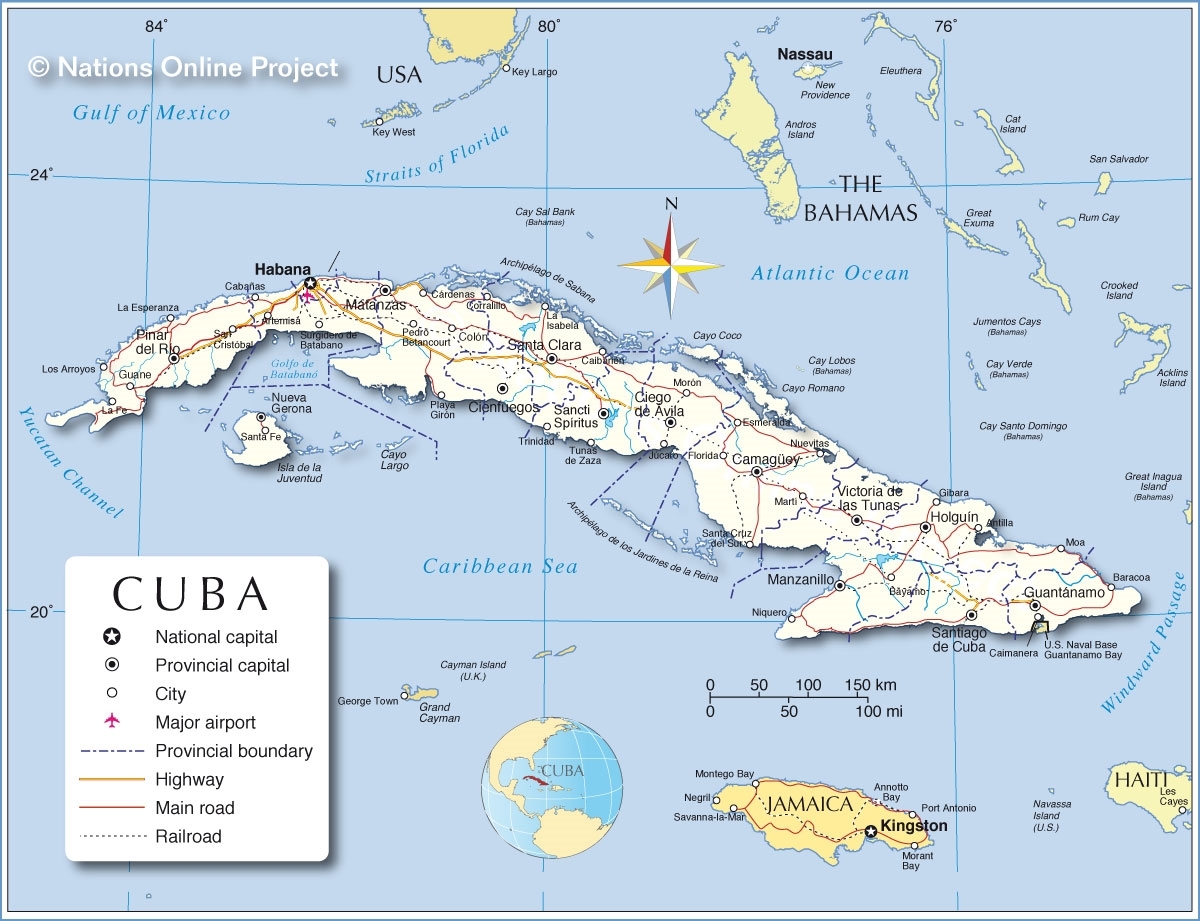
6. This ruling deals with the claimant’s application to serve a witness summary of Mr Don Stevenson out of time, and for relief from sanctions.  

7. The background is that the case concerns debts allegedly due to the claimant by the first defendant and guaranteed by the second defendant, which the claimant claims Mr Justice Henshaw Approved Judgment CRF I Ltd v Banco Nacional de Cuba & Anor 09/12/2022 were assigned to it by ICBC with the consent of the defendants. Whether such consent was given is at the heart of the dispute.  

8. Until the amendments for which I have given permission today, the defendants’ pleaded case included the allegation that the alleged consent to assignment, on which the claimant’s claim is based, was induced by the bribery of its official, Mr Lozano, by the claimant in October 2019: that having been orchestrated by a Mr Stevenson, formerly of ICBC (the assignor of the debts). I hasten to add, though, that the Defence did not make reference to Mr Stevenson save in the particular respect I shall identify shortly.  

9. The Defence alleged also that the defendants were justified in refusing applications for consent to assign made in 2019 and 2020, for reasons including the alleged bribery.  

10. The defendants’ solicitors, Byrne, wrote a letter on 23 November 2020 in relation to the 2020 request for consent to assign. That letter set out reasons why it was reasonable for consent to be withheld. As part of that letter, reliance was placed on evidence said to be emerging from an ongoing public prosecutor investigation that implicated Mr Lozano in a bribery arrangement, which the evidence said had been pre-arranged with Mr Stevenson. Thus, the evidence said to have emerged from the ongoing investigation made Mr Stevenson an integral part of the alleged bribery scheme.  

11. The Defence itself, in paragraph 21(d), relied on Mr Lozano having by then been convicted in July 2021 of bribery in relation to this matter. The Cuban criminal judgment in fact stated that Mr Stevenson had been involved in the bribery, although that was not alleged in this part of the defendants’ Defence. The claimant in its Reply said there was no fair trial leading to that conviction and related convictions; that the judiciary was not independent of the executive; and that there was no adequate due process safeguards in criminal prosecutions. The Reply alleged that the case was an example of Cuba seeking to avoid its liabilities by prosecuting and convicting foreign parties and/or Cuban officials, and that the bribery allegations were a concoction.  

12. In the context of the 2020 request for consent to assign, paragraph 40 of the Defence relied on the Byrne letter of 23 November 2020, incorporating it by reference, and thus including in that particular context the alleged evidence of Mr Stevenson’s involvement.  

13. Notwithstanding that, in November 2021 the defendants confirmed in response to a Further Information request that they did not in their pleaded case, including in paragraph 40 of their Defence, allege that Mr Stevenson was involved in the bribery and corruption: although they reserved the right to amend in due course after disclosure and witness statements.  

14. As a result, the claimant say it did not, at the time, obtain a witness statement from Mr Stevenson, with whom it appears the claimant had been in contact since at least September 2021, although another of the claimant’s witnesses does say that Mr Stevenson could have had no involvement in the matter because he retired in 2015 and had no further involvement. Mr Justice Henshaw Approved Judgment CRF I Ltd v Banco Nacional de Cuba & Anor 09/12/2022  

15. Notwithstanding the contents of the Further Information I have just mentioned, the defendants on 19 July 2022, as part of the overall first round of exchange of witness evidence, served a statement from Mr Lozano which made express allegations to the effect that Mr Stevenson was heavily involved in bribery and corruption in relation to this matter. His statement refers to events said to have happened at the end of 2018 or early 2019, and states that Mr Lozano believed Mr Stevenson to have been acting on behalf of the claimant in this regard. It is also alleged by Mr Lozano that, in a conversation with Mr Gordhandas of the claimant, Mr Gordhandas had referred to a bribe as being a gift from Mr Stevenson.  

16. This all led the claimant to resume contact with Mr Stevenson and his solicitors, but on 24 August 2022 the solicitors said Mr Stevenson would not give evidence or provide a statement.  

17. That led the claimant in due course, on 27 September 2022, to tell Mr Stevenson’s solicitors that the claimant would serve a witness summons. The claimant’s evidence is that that was done in a further attempt, to persuade Mr Stevenson to provide a witness statement. The claimant accept that it could, in principle, at this stage have served a witness summary on the defendants. On the other hand, it may be fairly said that, given the contents of the Lozano witness statement, there was now some doubt about the position the defendants were in fact taking, having previously disavowed any allegations against Mr Stevenson, including in the context of Defence paragraph 40 relating to the 2020 request for consent to assign.  

18. The claimant on 29 September 2022 asked the defendants whether, in the light of Mr Lozano’s witness statement, the defendants now proposed to amend their statements of case so as formally to allege that Mr Stevenson was involved, asking for a response by 3 October. That date was four days before the date for supplemental witness statements to be exchanged. The defendants did not in fact respond until 7 October 2022, i.e. the day on which supplemental witness statements were exchanged. The defendants said they had no current intention to amend so as formally to allege involvement by Mr Stevenson.  

19. The claimant on 10 October 2022 pressed the matter, asking whether the defendants were going to allege, formally or otherwise, that Mr Stevenson was involved and whether they would disavow the allegations in Mr Lozano’s witness statement about this, reserving the right to obtain evidence from Mr Stevenson if that was not confirmed.  

20. The defendants’ response came two weeks later, on 24 October, saying the defendants had repeatedly explained that their pleaded case did not involve alleging that Mr Stevenson was party to the alleged bribery. The defendants noted that the claimant’s evidence included what they called “impermissible” commentary on the July 2021 criminal judgment, including Mr Stevenson’s supposed involvement which was, the defendants repeated, not part of the defendants’ pleaded case. The defendants did not make clear whether they would rely on Mr Lozano’s witness statement allegations in this regard. In my view, the point made about the defendants’ pleaded case could reasonably be regarded as still being somewhat confusing, given that paragraph 40 of the Defence continued to rely on the contents of the Byrne 23 November 2020 letter, seemingly in its totality. Mr Justice Henshaw Approved Judgment CRF I Ltd v Banco Nacional de Cuba & Anor 09/12/2022  

21. As a result the claimants eventually, on 31 October 2022, served a draft witness summary on the defendants, i.e. three weeks after the date for supplemental witness statements. They then served a witness summons on 3 November 2022, which Mr Stevenson’s solicitors have acknowledged, and on 8 November 2022 issued an application for relief from sanctions.  

22. The witness summary says, in brief, that Mr Stevenson will say at trial that he was made redundant in December 2015, that he had no further involvement or relevant contact, and that he did not even know that the assignments were happening.  

23. Then, two days before this pre-trial review, the defendants served a draft ReAmended Defence which deletes the allegations that Mr Lozano was involved in bribery and deletes the reference to his conviction, although it maintains reliance on the Byrne 23 November 2020 letter and, hence, the information the defendants say they received from the public prosecutor in 2020 about the involvement of both Mr Lozano and Mr Stevenson in the alleged bribery.  

24. The defendants now adopts the position that, whilst they no longer allege actual bribery, they are still entitled to rely on the information they had in 2020 from the public prosecutor investigation about Mr Lozano’s involvement in bribery. The defendants maintain that Mr Stevenson’s evidence about his alleged lack of involvement is irrelevant and, indeed, say that the paragraphs of Mr Lozano’s witness statement referring to the alleged bribery and Mr Stevenson’s involvement are also irrelevant following the amendments for which I have today given permission. The defendants accordingly say that the witness summary should be excluded because the evidence is irrelevant, and that relief from sanctions should be refused in any event on the grounds that there has been delay and the proposed evidence is too late.  

25. As to relevance, first of all, the court is not in a position today to draw any particular inference from the defendants’ sudden and late abandonment, without explanation, of their case that bribery in fact occurred. One inference which the claimant may invite the court to draw at trial is that that change of tack supports the allegation the claimant has pleaded in its Reply, namely that the investigation and prosecution of Mr Lozano and others never had any real foundation, and that the whole process was simply an example of Cuba seeking to avoid its liabilities by bringing criminal prosecutions. The evidence proposed to be obtained from Mr Stevenson, if true, to the effect that he had retired four years earlier, and could have had no possible involvement, may be relied on by the claimant at trial as supporting the inference that the investigation process had no real foundation.  

26. Bearing in mind that the defendants are, like the public prosecutor, emanations of the Cuban state, and on the claimant’s case would be the beneficiaries of any such modus operandi, the proposed evidence from Mr Stevenson could thus be relevant to whether the defendants had a reasonable belief in the bribery allegations so as to make it reasonable to withhold consent to assign.  

27. There may be an issue at trial about the extent to which the court, in deciding the question of whether consent was reasonably withheld, is confined to the knowledge and information specifically available to whichever individuals within the defendants took the decision to refuse consent. However, an alternative analysis might be that if the defendants (as such) were aware, as the claimant will ask the court to infer, that Mr Justice Henshaw Approved Judgment CRF I Ltd v Banco Nacional de Cuba & Anor 09/12/2022 the investigation process was essentially fabricated, then it was not possible for the defendants to have a reasonable belief that it was proper to withhold consent on the grounds of bribery. That is a potential question of law for trial, and it is not a question which I can attempt to address today: but it does seem to me that there is a realistic possibility that the latter analysis is the correct one and, therefore, that Mr Stevenson’s evidence could be relevant to issues to be determined at trial.  

28. As to relief from sanctions, the claimant accepts that failing to meet the date for service of witness statements and supplementary witness statements was a serious matter. However, the claimant says, in short, that its approach to this matter was not unreasonable in circumstances where they only realised following service of the defendants’ witness statements that Mr Lozano’s evidence made allegations against Mr Stevenson; and they then spent time trying both to persuade Mr Stevenson (again) to give evidence and to clarify the defendants’ position as to their case. As I have indicated, the latter attempts did not result in any response from the defendants as to whether they would now disavow Mr Lozano’s evidence about Mr Stevenson’s involvement. It is not unfair to say that it is really only now, following service of the defendants’ skeleton argument yesterday, that it has become clear exactly what the defendants are saying on this matter: viz that the defendants no longer allege that there was bribery in fact, but they maintain that in 2020 they had a reasonable belief that bribery had occurred based on the matters set out in the Byrne letter of 23 November 2020.  

29. As the claimant rightly accepts, there are periods of time during the last few weeks where it could, in principle, have acted more expeditiously; but viewing the matter in the round, and bearing in mind the lack of any demonstrated prejudice and the comparative narrowness of the scope of Mr Stevenson’s evidence, it seems to me that it would be justifiable to grant relief from sanctions. When the matter is viewed in its totality, it would be unsatisfactory in my view for the allegation of reasonable belief in bribery to be maintained and yet for the court not to receive evidence from Mr Stevenson that might – I put it no higher – help undermine the credibility of the whole criminal process, which may in turn call into question the defendants’ state of knowledge and their claimed reliance on it when withholding consent to assign.  

I therefore conclude that relief from sanctions should be granted and the witness summary admitted. (For proceedings after judgment see separate transcript)