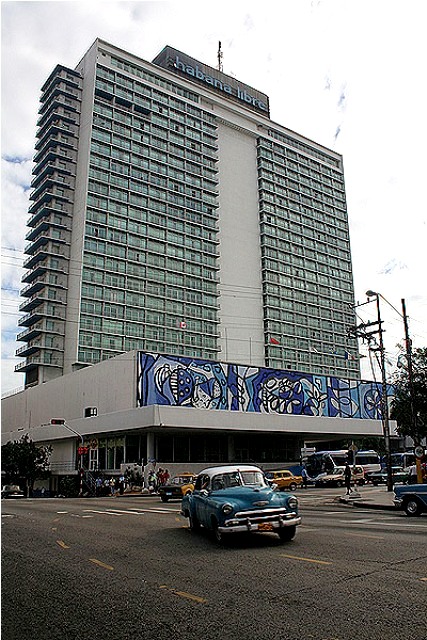
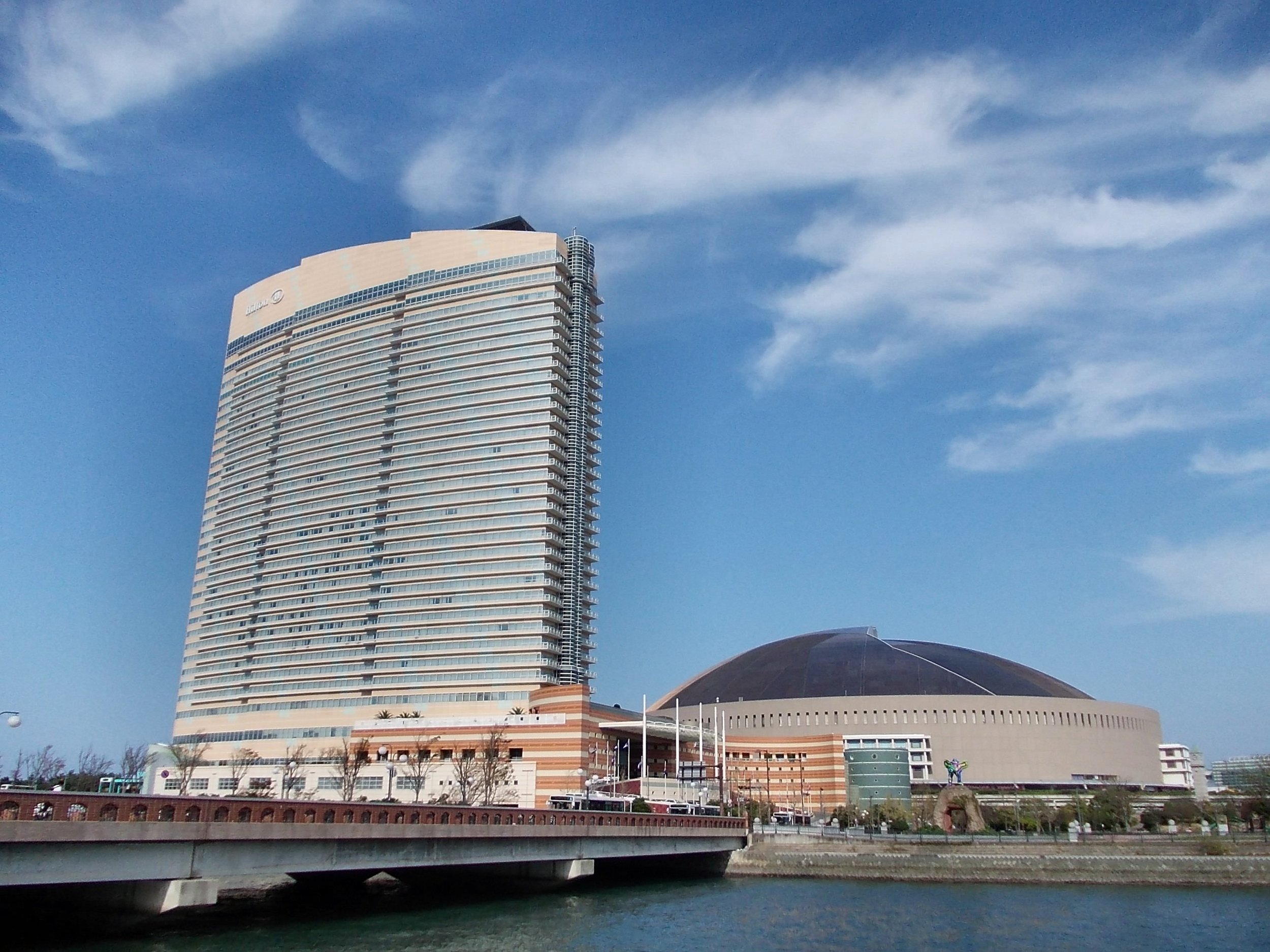
A Hilton Hotel, Again, Refuses To Accommodate Ambassador From Cuba Citing U.S. Regulations

McLean, Virginia-based Hilton Worldwide Holdings, Inc. (NYSE: HLT) had global revenues of approximately US$9 billion in 2017. 

Hilton Worldwide Holdings, Inc., has a claim against the government of the Republic of Cuba certified with the United States Foreign Claims Settlement Commission (CU-2965) in the amount of US$1,854,574.60.  LINK: https://www.justice.gov/fcsc/cuba/documents/1501-3000/2965.pdf

United States statutes, regulations and policies impacting the Republic of Cuba are managed by the Office of Foreign Assets Control (OFAC) of the United States Department of the Treasury, Bureau of Industry and Security (BIS) of the United States Department of Commerce, and Office of Legal Advisor (OLA) of the United States Department of State. LINK to: https://www.state.gov/e/eb/tfs/spi/cuba/index.htm

BBC

London, United Kingdom

14 November 2018 

US hotel in Japan refuses Cuba ambassador

Reuters

A US-owned hotel in Japan has been criticised by Japanese authorities after it denied the Cuban ambassador a room over fears it would violate US sanctions on Cuba. 

The Hilton Fukuoka Sea Hawk told Ambassador Carlos Pereria he could not stay last month because it could not accommodate Cuban government guests.  That prompted a Cuban complaint. 

Japanese officials in the city have since told the hotel it was illegal to refuse rooms based on nationality. 

The Cuban embassy booked the room through a travel agency, which informed the hotel of the guests' identity, the Asahi Shimbun newspaper reported.  However when Mr Pereira arrived in the south-western city on a trip to visit Cubans playing for the city's baseball team he was told he could not stay. 

In its subsequent complaint, the Cuban argued that applying US law in Japan encroached on Japan's sovereignty, the Asahi Shimbun said.  But a Hilton representative in the Japanese capital Tokyo told the Kyodo news agency that the firm had to comply with US law because it was based in the US. 

In 2006, the Mexican authorities fined a US-owned Sheraton hotel for expelling a 16-person Cuban delegation from a hotel in Mexico City. 

In 2007 a Norwegian hotel, the Scandic Edderkoppen, refused to let a delegation of 14 Cuban officials stay as it was part of a chain that had been bought by Hilton since the Cubans last visited.  Then Norwegian deputy foreign minister Raymond Johansen told Reuters that it was "totally unacceptable".

The Mainichi

Tokyo, Japan

14 November 2018 

FUKUOKA (Kyodo) -- The Cuban ambassador to Japan was denied a room at a Hilton hotel in southwestern Japan last month, the U.S. hotel group said Wednesday, citing Washington's economic sanctions against the Latin American country.  

The local government has instructed the hotel in Fukuoka to correct the practice as Japanese law prohibits hotels from rejecting guests based on nationality.  

Hilton Fukuoka Sea Hawk told Kyodo News that it refused the ambassador's stay to comply with U.S. laws as an American company.  

The Tokyo travel agency that made the reservation for Oct. 2 for Ambassador Carlos Pereira and embassy officials said it received a phone call from the hotel the same day saying the group could not stay there.  

The agency later received a document that said the hotel "cannot accommodate guests representing the Cuban government."  

The ambassador was visiting Fukuoka to meet with Cuban players belonging to the professional baseball club SoftBank Hawks, the Cuban Embassy said.  

The Japanese law on hotel business stipulates that hotels should not reject guests except for cases involving infectious diseases or illegal activities.  

The health ministry said a rejection based on nationality breaches the law and hotels in Japan should abide by the law.  

A public relations official of the Hilton hotel said, "We are declining stays by government officials and those related to state-run companies from countries subjected to U.S. economic sanctions such as North Korea, Iran and Syria."  

But the official added that the company will discuss the issue based on instructions from the Japanese government.  

The United States has maintained an economic embargo against Cuba since the 1960s following the Cuban Revolution and the nationalization of American-owned properties.

U.S. Ag/Food Exports To Cuba Decrease 42% In September; Decrease 12% For Year

ECONOMIC EYE ON CUBA©

November 2018


September 2018 Food/Ag Exports To Cuba Decrease 42.6%- 1

12.2% Decrease Year-To-Year-5

Cuba Ranks 54th Of 224 U.S. Food/Ag Export Markets- 2

September 2018 Healthcare Product Exports US$962,509.00- 2

September 2018 Humanitarian Donations US$366,907.00- 3

Obama Administration Initiatives Exports Continue To Increase- 3

U.S. Port Export Data- 15

 SEPTEMBER 2018 FOOD/AG EXPORTS TO CUBA DECREASE %- Exports of food products & agricultural commodities from the United States to the Republic of Cuba in September 2018 were US$12,226,970.00 compared to US$21,329,099.00 in September 2017 and US$32,170,530.00 in September 2016.   

January 2018 through September 2018 exports were US$187,930,881.00 compared to US$214,122,226.00 for the same period in 2017.

For 2017, exports were US$268,800,005.00 compared to US$170,551,329.00 in 2016.

Agricultural product and food product exports from the United States to the Republic of Cuba since December 2001 exceed US$5,746,022,091.00 through September 2018 under provisions of the Trade Sanctions Reform and Export Enhancement Act of 2000.

LINK To Complete Report

1489002423793.png

Cuba & The 116th U.S. Congress: Who’s Who; Could Farm Bill Provision Be In Jeopardy?

The Democratic Party controls the United States House of Representatives:  

The Honorable Eliot Engel (D- New York) will be chairman of the Foreign Affairs Committee of the United States House of Representatives. Representative Engel was supportive of Obama Administration initiatives relating to the Republic of Cuba.

The Honorable Albio Sires (D- New Jersey) will likely be chairman of the Western Hemisphere subcommittee of the Foreign Affairs Committee.  Mr. Sires is the ranking Democratic member of the sub-committee.  He is of Cuban descent and was not supportive of Obama Administration initiatives relating to the Republic of Cuba.   

The Honorable Christopher Smith (R- New Jersey) will be ranking Republican on the Foreign Affairs Committee; Representative Smith was not supportive of Obama Administration initiatives relating to the Republic of Cuba.   

The Honorable Carlos Curbelo (R- Florida), who is of Cuban descent, was defeated in his re-election effort on 6 November 2018.  

The Republican Party controls of the United States Senate:  

The Honorable James Risch (R- Idaho), will become Chairman of the United States Senate Committee on Foreign Relations.  Senator Risch was not supportive of Obama Administration initiatives relating to the Republic of Cuba. 

One member of the United States Senate remains the most influential Member of the United States Congress relating to the Republic of Cuba- The Honorable Marco Rubio (R-Florida).  He is of Cuban descent.  He will become the ranking member of the Committee on Foreign Relations.  He will remain chairman of the Subcommittee on Western Hemisphere, Transnational Crime, Civilian Security, Democracy, Human Rights, and Global Women's Issues of the Committee on Foreign Relations of the United States Senate.  He is thinking about the next opportunity to run for president of the United States; his first effort in 2016 having been unsuccessful.   

The second-most influential member of the United States Senate with respect to the Republic of Cuba is The Honorable Robert Menendez (D- New Jersey), who is also of Cuban descent.  Senator Menendez will remain the ranking minority member of the Committee on Foreign Relations.   

The third-most influential member of the United States Senate with respect to the Republic of Cuba is The Honorable Ted Cruz (R- Texas), who is also of Cuban descent.  They represent three percent (3%) of the one hundred (100)-member United States Senate.  

NOTE: An amendment passed by the United States Senate to what is known as the “Farm Bill” remains expected to be enacted into law during the remaining days of the 115th Congress.   

The amendment, authored by The Honorable Heidi Heitkamp (D- North Dakota), a member of the United States Senate (who lost her re-election effort on 6 November 2018), was made likely (and ironically) to be included in the legislation specifically due to efforts by Senator Marco Rubio.  The amendment will permit United States taxpayer funds to be used for United States Department of Agriculture (USDA) programs managed by independent organizations for agricultural commodity and food product promotion in the Republic of Cuba.  Senator Rubio added language to prohibit any of the USDA funds from being directed to any Revolutionary Armed Forces of the Republic of Cuba (FAR)-owned/controlled/affiliated entity.   

There remains a possibility that the United States Senate-approved amendment may be removed by members of the “Farm Bill” conference committee representing the House of Representatives in its current party configuration. 

The Next Months (Or Years) …  

After 6 November 2018, regardless of which political party controls which chamber of the United States Congress, the Trump Administration (with assistance from some members of the United States Congress) will continue to pursue commercial, economic and political policies and regulations designed to promote “regime change” in the Republic of Cuba.  However, according to a senior-level official of the Trump Administration, “the phrase ‘regime change’ will focus upon changing the behavior of the leadership of the regime as we are unlikely to replace those who lead the regime.”   

The Trump Administration’s term ends in 805 days… 

Rules and policies for the United States House of Representatives tend to make easier inserting and retaining a legislative measure while rules and policies for the United States Senate tend to make easier preventing and removing a legislative measure. 

Republic of Cuba-focused legislation is generally hostage to members of the United States Congress believing: 1) a perception that the legislation will benefit the Republic of Cuba and 2) a perception that the legislation will harm the Republic of Cuba.  Both 1 and 2 are not necessarily mutually-exclusive to one another. 

Legislative history has shown the Republic of Cuba to be a low-value commodity; to be traded away in most instances because it lacks importance.  The legislative calendar is littered with Members of Congress pronouncing they would not permit legislation unrelated to the Republic of Cuba to proceed unless issues relating to the Republic of Cuba were resolved.  In the end, no Member of Congress was going to seek to hold appropriation or other legislation of national importance because of the Republic of Cuba. 

Prudent to remember that the last change in United States law relating to the Republic of Cuba was more than 6,585 days ago- nearly eighteen (18) years. 

The Senior Director for Western Hemisphere Affairs at the National Security Council (NSC) in The White House is The Honorable Mauricio Claver-Carone, a highly competent and skilled political operative… who is of Cuban descent.  His role in shaping the United States relationship with the Republic of Cuba and his relationships with members of the United States Congress should not be undervalued and ignored at one’s peril. 

The Office of Foreign Assets Control (OFAC) of the United States Department of the Treasury, the Bureau of Industry and Security (BIS) of the United States Department of Commerce, and the Office of Legal Adviser (OLA) at the United States Department of State will continue to be weaponized for use towards the Republic of Cuba.

LINK to complete analysis

capitol-diagram.jpg

8 Days Later, Despite Statement Of Ambassador Bolton, Still No Changes To Cuba Restricted List

On 8 November 2017, the United States Department of State published its List of Restricted Entities and Subentities Associated with Cuba (RESAC).  There have been no changes since. 

Changes to the RESAC have not been published on the Internet site of the United States Department of State (https://www.state.gov/e/eb/tfs/spi/cuba/cubarestrictedlist/275331.htm).

In an unpublished restricted draft of prepared remarks by The Honorable John Bolton, Assistant to the President and National Security Advisor, on 1 November 2018 at Miami Dade College (MDC) in Miami, Florida, the text included “Further, today, the State Department added over two dozen additional entities owned or controlled by the Cuban military and intelligence services to the restricted list of entities with which financial transactions by U.S. persons are prohibited.”   

In the published text of the delivered remarks by Ambassador Bolton, the present tense in terms of publication of additions to the RESAC was replaced with the future tense: “In this respect, I believe that within days the administration will add over two dozen additional entities owned or controlled by the Cuban military and intelligence services to the restricted list of entities with which financial transactions by U.S. persons are prohibited. And I believe even more will come as well.  The Cuban military and intelligence agencies must not profit from the United States, its people, its travelers, or its businesses.” 

https://www.cubatrade.org/blog/2018/11/1/text-of-remarks-by-national-security-advisor-john-bolton-in-florida 

If the United States Department of State was not prepared to release an update to the RESAC, then Ambassador Bolton should not have included the reference in his remarks.

B6.jpg

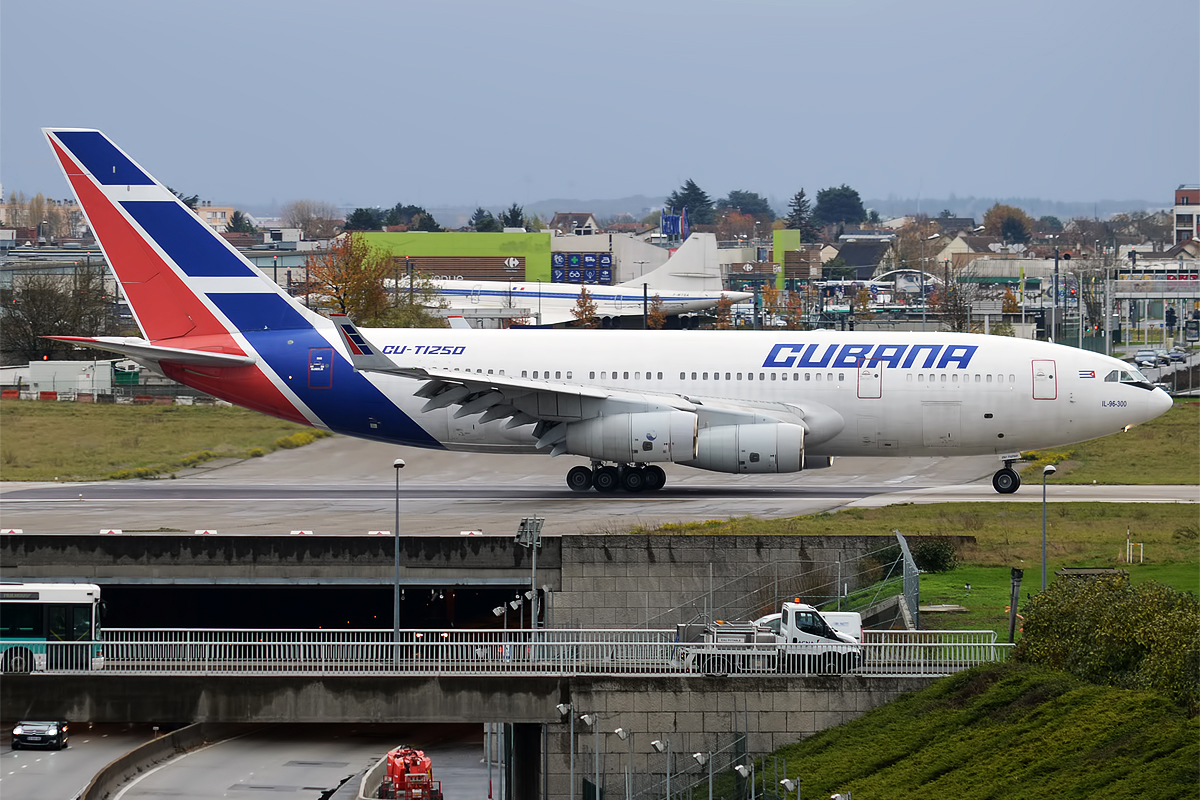
President Diaz-Canel Using Ilyushin 96-300 Aircraft For Official Travel

BBC News

3 March 2006

London, United Kingdom 

Castro buys new presidential jet

Cuba is buying one of Russia's most up-to-date airliners, carefully crafted for President Fidel Castro's personal comfort.  

The purchase is part of an initial Cuban order for two brand new Ilyushin planes worth $110 million (£63 million) which Russian officials say is a shot in the arm for their struggling airline industry.  

To head off criticism that a new presidential jet is an expensive luxury in austere times, Cuba says one of its new planes is being used to ferry workers to and from Venezuela.  

To finance the deal, Cuba has paid 15% of the total sum up front, the rest coming from a 10-year loan from Russian banks.  

Creature comforts  

Russian NTV Mir television said the designers at Ilyushin had worked hard to give Mr Castro as smooth and secure a journey as possible.  

"This is a sofa bed on which he can spend his hours of rest or read a book from his own library. Everything has been designed to be as ergonomic as possible, with a personal reading lamp," designer Aleksandr Kuchukhidze told the channel.  

Principal interior designer Anton Nikolayev added: "Beige colours will predominate. Business meetings and talks can be held here."  

The station showed the little luxuries the president could expect: a DVD player, drinks bar and leather seats. But security is paramount too: the plane comes with armoured cockpit doors and a system for making bombs safe.  

Export breakthrough  

The report showed the Ilyushin Il-96-300, built in Voronezh, being handed over at Havana's Jose Marti airport. It said the order was one of the biggest the Voronezh Ilyushin plant had secured this decade.  

"These are the first Russian civilian aircraft to have been exported in the last 15 years," Ilyushin finance director Aleksandr Rubtsov said.  

"We are convinced that Cuba can become a springboard for exporting our planes, above all in the countries of Latin America."  

Russia and Cuba plan to sign another contract in Cuba on 10 March for the supply of a further five airliners, for an undisclosed sum.  

Cuba has been a key customer of Soviet-built aircraft - whether civilian Ilyushins or military MiGs - since the Cold War era.  

Even today, Cuban pilots for the newest Ilyushins are being trained in Russia, and Ilyushin engineers are in to Havana to school ground crews on maintaining the planes.  

From Wikipedia: 

Transportation for the Cuban President is the responsibility of Cubana de Aviación, one of Cuba's state-owned airlines. Although the entire fleet is available for presidential use, the most commonly used aircraft are 2 Ilyushin Il-96.  

The government of Cuba operated a Ilyushin Il-62 and Ilyushin Il-96 in 2015. 

The Ilyushin Il-96 (Russian: Илью́шин Ил-96) is a Russian four-engined long-haul wide-body airliner designed by Ilyushin in the former Soviet Union and manufactured by the Voronezh Aircraft Production Association in Russia. It is powered by four Aviadvigatel PS-90 two-shaft turbofan engines

The Il-96-300 is the initial variant and is fitted with Aviadvigatel (Soloviev) PS-90A turbofans with a thrust rating of 16,000 kgf (157 kN, 35,300 lbf). Development started in the mid-80s while the first prototype flew on 28 September 1988. The first Il-96 entered service with Aeroflot in 1993.  

Range with 262 passengers and fuel reserves (for holding 75 minutes at an altitude of 450 m) in a two-class configuration is about 11,000 km (5,940 nmi), allowing flights from Moscow to US west coast cities, a great improvement over the Ilyushin Il-86. A highly customized version of the Il-96-300, called Il-96-300PU is used as the primary aircraft in the Russian presidential aircraft fleet. Four were used by Russian president Vladimir Putin, and by Dmitry Medvedev as VIP planes. The VIP aircraft is operated by Russia State Transport Company. The Cuban leadership use the IL-96-300.

With Ambassador Bolton's Speech, Trump Administration Did Not Project Preparedness

The Dog That Didn’t (yet) Bite

Trump Administration Did Not Project Preparedness

OFAC Is Feared Because It’s Unpredictable With Its SDN List

State Department Has Become Predictable With Its RESAC List

U.S. Companies Prefer Predictability

Trump Administration Seems To Be Accommodating 

An important component of the Trump Administration’s strategy towards the Republic of Cuba is the creation and maintenance of uncertainty.  Absence of predictability is an essential tool for reducing and eliminating commercial interest toward any marketplace. 

On 8 November 2017, the United States Department of State published its List of Restricted Entities and Subentities Associated with Cuba (RESAC).  There have been no changes since. 

In an unpublished restricted draft of prepared remarks by The Honorable John Bolton, Assistant to the President and National Security Advisor, on 1 November 2018 at Miami Dade College (MDC) in Miami, Florida, the text included “Further, today, the State Department added over two dozen additional entities owned or controlled by the Cuban military and intelligence services to the restricted list of entities with which financial transactions by U.S. persons are prohibited.”   

In the published text of the remarks by Ambassador Bolton, released by The White House in the late evening of 2 November 2018, the present tense in terms of publication of additions to the RESAC was replaced with the future tense: “In this respect, I believe that within days the administration will add over two dozen additional entities owned or controlled by the Cuban military and intelligence services to the restricted list of entities with which financial transactions by U.S. persons are prohibited. And I believe even more will come as well.  The Cuban military and intelligence agencies must not profit from the United States, its people, its travelers, or its businesses.” 

Changes to the RESAC have not been published on the Internet site of the United States Department of State (https://www.state.gov/e/eb/tfs/spi/cuba/cubarestrictedlist/275331.htm).  If the United States Department of State was not prepared to release an update to the RESAC, then Ambassador Bolton should not have included the reference in his remarks. 

Additionally, neither the prepared nor delivered text of Ambassador Bolton’s remarks was not released by The White House in advance; and were not released on 1 November 2018. 

During the event, Ambassador Bolton shared that “And I believe even more will come as well….  We're going to make sure that we put as much pressure on as we can.” 

Ambassador Bolton confirmed that the Trump Administration has discussed (using a term to create and maintain uncertainty and fear) with members of the United States Congress to permit the implementation of Title III of the Libertad Act of 1996 which would authorize lawsuits in United States Federal Courts for assets expropriated by the government of the Republic of Cuba from individuals who were not United States citizens at the time of expropriation.   

The 5,913 certified claimants (those who were United States citizens at the time of expropriation) oppose the implementation of Title III on the basis that the interests of United States citizens should not be subjugated to the interests of non-United States citizens; and that the certified claimants, whose expropriated assets represent the foundation for United States policies, regulations and laws impacting the Republic of Cuba should remain the primary focus of The White House.  The implementation of Title III has been suspended by the occupant of The White House every six months since 1996.  

While uncertainty can be an effective political tool, when a statement is made about the availability of material information that is critical to real-time decision-making by individuals and companies subject to United States jurisdiction, important for the material information to be available in real-time.   

Normally, when a text is subjected to a thorough multi-week or multi-day inter-agency review, particularly in advance of a high-profile address such as that of Ambassador Bolton, the three (3) primary departments: United States Department of State, United States Department of the Treasury and United States Department of Commerce have their respective notifications issued simultaneously and/or immediately following the high-profile address.  That did not happen on 1 November 2018 or thus far on 2 November 2018.  The event at MDC was in the planning process from at least 18 October 2018 and had been scheduled for 30 October 2018.   

When The Honorable Donald Trump, President of the United States, delivered remarks in Miami, Florida, on 16 June 2017, the United States Department of the Treasury, United States Department of Commerce and United States Department of State each published corresponding regulatory and policy changes on their respective Internet sites.  

A primary reason for the effectiveness of the Office of Foreign Assets Control (OFAC) of the United States Department of the Treasury is the absence of predictability when publishing changes to the list of Specially Designated Nationals And Blocked Persons List (SDN). 

If the Trump Administration genuinely wanted to discourage individuals and companies subject to United States jurisdiction from interest towards the Republic of Cuba, it would instruct the United States Department of State to adopt the unpredictability of the OFAC.   

However, when a public statement is delivered, particularly by a senior official at The White House, the information should be immediately available.   

The United States Department of State should announce that changes to the RESAC may be published at any time and then add one or more every month. 

Doing so would then require constant monitoring of the RESAC; and that would require time and money to be allocated by interested parties.  The result would be exhaustion by some individuals and companies. 

OFAC is powerful and feared because it is unpredictable. 

The United States Department of State has become predictable which lessens its power. 

Thus far, for United States companies, the restraint shown through what the Trump Administration has chosen not to do, the bite, is an indication of the limits to which its bark need be feared.

LINK To Complete Text

1 9PQ10SH9TJHgvfo0Yc814Q.jpeg

DHS Reports 92 Students From Cuba Studied In U.S. In 2017; No Data Yet For 2018

From The United States Department of Homeland Security (DHS): 

1 November 2018 

“Last week, ICE launched a series of data sets on ICE.gov about the international student population. Here’s a link to that data, https://www.ice.gov/sevis/whats-new#tab2, as well as a link to the news release announcing the data library, https://www.ice.gov/news/releases/sevp-publishes-2017-international-student-data. Per the data, in calendar year 2017, there were 92 international students from Cuba studying at U.S. schools.” 

From The DHS Report 

“North America 

North America saw the largest proportional decline of students coming into the United States to study.  Specifically, the decline in the number of Mexican (-1,120) and Canadian (-357) students accounted for the overall continental trend.  However, there were marginal gains in the number of students from some Latin American and Caribbean countries.  Honduras sent 155 more students, which is a 7 percent increase from last year, and Cuba more than doubled its international student population by sending 25 more students.”

18_0524_DHS-Brand-OG.jpg

Text of Remarks By National Security Advisor John Bolton In Florida

Assistant to the President and National Security Advisor Ambassador John R. Bolton Delivers Remarks on the Trump Administration’s Policies in Latin America

at

Miami Dade College in Miami, Florida

Thursday, November 1, 2018

NOTE: The White House initially refused to release the text of the delivered remarks by Ambassador Bolton. According to The National Security Council (NSC) on 1 November 2018, the text of the delivered remarks is expected to be released in the afternoon; they were published late in the evening of 2 November 2018. The White House did not provide a reason(s) for not releasing the delivered text in a timely manner.

LINK To Embargoed Text

LINK To Delivered Text

105120954-GettyImages-943941264.530x298.jpg

Permitting Other Than U.S. Certified Claimants- Think Texaco & Marriott, To Bring Actions To U.S. Courts Is Self-Defeating

Permitting Other Than U.S. Certified Claimants- Think Texaco & Marriott, To Bring Actions To U.S. Courts Is Self-Defeating

The soil upon which United States policy, regulations and laws sprouted since 1961 was created by the seizure of assets by the government of the Republic of Cuba.

There are 8,821 claims of which 5,913 awards have been certified by the United States Foreign Claims Settlement Commission (USFCSC- https://www.justice.gov/fcsc) at the United States Department of Justice which are valued at US$1,902,202,284.95.

Of these claims, thirty (30) United States-based companies hold 56.85% of the total value. The USFCSC permitted interest to be accrued in the amount of 6% per annum; with the current value ranging from US$6 billion to US$9 billion.

Posts About Certified Claims & Trump Administration

31 August 2018

https://www.cubatrade.org/blog/2018/8/29/ouktsdg4gyrblq7zudchikvdd6abdo?rq=certified%20claims

June 14 2018

https://www.cubatrade.org/blog/2018/6/14/trump-administration-may-be-focusing-upon-certified-claims-unlike-obama-administration?rq=certified%20claims

17 July 2017

https://www.cubatrade.org/blog/2017/7/11/memo-from-nsc-to-potus-this-week-for-title-iii-suspension-capitulate-incapacitate-or-negotiate?rq=certified%20claims

29 May 2017

https://www.cubatrade.org/blog/2017/5/29/0t6ts1bv3by20ot3mi9bydvdqv3e86?rq=certified%20claims

1 January 2017

https://www.cubatrade.org/blog/2017/1/12/h2uudthnn6be8hfgxifqsrdo4aqpb0?rq=certified%20claims

1 December 2016

https://www.cubatrade.org/blog/2016/12/1/zigs56x0gme3a9rqg7aecx9vf2gqgk?rq=certified%20claims

13 September 2016

https://www.cubatrade.org/blog/2016/8/6/obama-administration-wont-seek-dismissal-of-civil-judgements-against-cuba-to-help-certified-claimants?rq=certified%20claims

LINK to complete post text

Settlement.jpg

What U.S. Does Towards Venezuela & Cuba Impacts Colombia, Brazil, Peru, Chile, Ecuador

Can Venezuela be repaired without jeopardizing the financial benefits received by Cuba? 

Does Cuba benefit from a crisis-infused Venezuela which creates systemic commercial, economic and political issues for Colombia? 

The government of the Republic of Cuba has no incentive to provoke measures that would replace the Maduro Administration when those measures will result in economic and financial pain for the Republic of Cuba and require the Republic of Cuba to make commercial and economic changes that it does not want to make and has not had to make because other countries (Venezuela, China, Russia, among others) have provided resources to forestall those decisions.   

Since 2000, Venezuela has, beginning with the Chavez Administration and continuing through the Maduro Administration provided the Republic of Cuba with more than US$1 billion to upwards of US$4 billion annually in discounted oil (with multi-year repayment terms), import financing, loans, grants, and employment for thousands of Republic of Cuba nationals. 

The United States government believes that the Maduro Administration remains in place due in large measure to efforts by the government of the Republic of Cuba.   

The United States government believes the Revolutionary Armed Forces of the Republic of Cuba (FAR) and the Ministry of Interior of the Republic of Cuba (MININT) have the capability to organize the replacement of the Maduro Administration which would accelerate a stabilization and subsequent repair to the commercial, economic and political infrastructure within Venezuela. 

The United States government believes that the exodus primarily to Colombia of more than 2 million citizens from Venezuela is a responsibility of the government of the Republic of Cuba.  During the last two years, the exodus has increased the population of Colombia and created employment stresses (decreasing wages and increasing unemployment) and increased crime.  

The government of the Republic of Cuba has a role in the peace process between the Revolutionary Armed Forces of Colombia (FARC) and the government of Colombia; some FARC members are attending educational workshops in the Republic of Cuba. 

Venezuela & Oil & Cuba: Decisions Have Consequences For The United States

Increasing oil production in the United States creates employment opportunities.  Consistent oil prices are good for United States consumers.  Lower oil prices are good for United States consumers.

 If oil prices become too low and remain too low, there is negative impact upon United States oil producers, particularly those involved in fracking. 

Higher oil prices can permit oil-producing countries to increase their imports.  However, oil prices need be below a level(s) that will decrease the consumption by importers. 

Higher oil prices can increase revenues of United States-based oil producers, but at the potential expense of United States-based oil consumers.  Oil producers prefer to export product when prices are higher rather than direct production within the United States. 

A challenge is how to seek a price level for oil that is low enough to maintain and, if necessary, stimulate economic activity- spending by consumers and companies where oil is a significant input cost, and high enough to retain exploration expenditures and fund purchases by oil-producing countries whose revenues would be strained to manage imports.  

Lower oil prices assist countries with limited or without domestic oil production including China and Republic of Cuba. 

Lower oil prices are challenging for oil-producing countries (OPEC-members, Russia, Iran, Venezuela among others).  Members of the Organization of the Petroleum Exporting Countries (OPEC): Algeria, Angola, Congo, Ecuador, Equatorial Guinea, Gabon, Iran, Iraq, Kuwait, Libya, Nigeria, Qatar, Saudi Arabia, United Arab Emirates and Venezuela.  OPEC Observers include Egypt, Mexico, Norway, Oman and Russia among other countries. 

Lower oil prices can stimulate a focus upon inefficiencies in oil-producing countries, particularly where governments lack transparency, accountability and democratic institutions.  Those governments will adapt to survive; they are not typically suicidal.  They may refocus on the non-oil-dependent sectors of their economies. 

Higher oil prices can insulate countries considered autocratic or not-ideal democracies to continue behavior deemed detrimental to the interests of democracies.  Venezuela will continue to assist the Republic of Cuba. 

Lower oil prices would lessen revenues for Venezuela, which would complicate the ability for Venezuela to repay loans to China and Russia among others.  Higher oil prices would accelerate the ability of Venezuela to repay China and Russia among others, but higher oil prices negatively impact the economy of China and the Republic of Cuba by increasing the cost of an important import.  

If China and Russia choose not to continue their support the Maduro Administration, Venezuela will need to make survival choices- and a primary one is the elimination financial support to the Republic of Cuba and to other Caribbean Sea-area countries.   

Russia and Saudi Arabia among other OPEC members may desire a hobbled Venezuela as the result is a lessening of oil supplies which assist to maintain higher oil prices. 

The Trump Administration must balance the impact of lessening oil production from Iran, which the Trump Administration supports, with a decrease in global oil production, which may result in higher oil prices.  There is value in an increase in countries contributing oil to the global marketplace- lower and consistent oil prices.   

However, if Venezuela increases its oil production, there could be downward pricing, which would benefit the United States- and allies and foes.  Increasing oil production by Venezuela could also stabilize the Maduro Administration- which would result in the Republic of Cuba continuing to receive financial support from Venezuela.

A stabilized Venezuela may also positively impact Colombia, which would likely see a lessening of migration from Venezuela.   

The impact of decisions by the United States government to influence commercial, economic and political outcomes in Venezuela and the Republic of Cuba cannot today be siloed from collateral impact towards allies and towards foes.

LINK to complete post text

impact-balls-2016-Jun06.jpg

Crowley Reports Approximately 10% Decline In Business With Cuba

Jacksonville, Florida-based Crowley Marine Corporation’s subsidiary Crowley Liner Services, reported that its “business” with the Republic of Cuba (Link To Shipping Page) thus far in 2018 had declined approximately 10% compared to 2017.

United States agricultural commodity and food product exports from the United States to the Republic of Cuba have declined approximately 8.8% thus far in 2018 compared to 2017.

Crowley Liner Services transports products from the United States to the Republic of Cuba including agricultural commodities (poultry- which represents approximately 61% of all agricultural commodity/food product exports to Cuba thus far in 2018), food products, Obama initiative shipments, and shipments for the United States Embassy in Havana. Crowley Liner Services has also transported charcoal from the Republic of Cuba to the United States for sale by Hialeah, Florida-based Fogo Premium Hardwood.

About Crowley
”Jacksonville-based Crowley Holdings Inc., a holding company of the 126-year-old Crowley Maritime Corporation, is a privately held family and employee-owned company that provides marine solutions, energy and logistics services in domestic and international markets. Crowley operates under four business units: Crowley LOGISTICS, a singular ocean liner and logistics supply chain division; Crowley SHIPPING, which encompasses ownership, operations and management of vessels, including tankers, container ships, tugboats and barges; Crowley FUELS, a fuel transportation, distribution and sales division that also provides liquefied natural gas (LNG) and related services; and Crowley SOLUTIONS, which focuses on government services, including vessel management for government agencies, as well as engineering, project management, naval architecture through its subsidiary Jensen Maritime, and marine salvage and emergency response through its 50 percent ownership in Ardent Global. Additional information about Crowley, its subsidiaries and business units may be found at  www.crowley.com.”

Anchor-El-Coqui-launch-Hero-11.jpg

Capsugel/Lonza Exports Capsules From New Jersey To Cuba; On Behalf Of Customer In Europe

Morristown, New Jersey-based Capsugel (2017 revenues US$1 billion), a subsidiary since 2017 of Basel, Switzerland-based Lonza Group (2017 revenues US$5.5 billion) exported gelatin capsules valued at US$25,826.00 (.84 metric tons) from the United States to the Republic of Cuba in August 2018; the first reported shipment valued at US$3,914.00 was in April 2018.  Capsugel reported that the export was licensed on behalf of a Europe-based company. 

From Capsugel

Were the capsules were manufactured in the United States? Yes.  

Who was the purchaser? Lonza sold empty capsules to a purchaser in Europe with the knowledge that the capsules could be re-sold to an end-user in Cuba. Due to such knowledge, Lonza obtained all necessary export licenses for such a sale.  

What use(s) the capsules would have for the healthcare system(s) in the Republic of Cuba? Our Coni-Snap® Hard Gelatin Capsules – are used for numerous pharma and nutritional applications. (https://www.capsugel.com/knowledge-center/coni-snap-capsules-brochure)  

Exports of healthcare products (medical equipment, medical instruments, medical supplies, pharmaceuticals) to the Republic of Cuba are subject to provisions of the Cuban Democracy Act (CDA) of 1992, which require end use-verification, but are not subject to cash-in-advance payment requirements.   

Triangular transactions are not prohibited; and the initial Europe-based purchaser likely provided payment terms on behalf of the Republic of Cuba end-user. 

Capsugel reported no transactional issues with the Office of Foreign Assets Control (OFAC) of the United States Department of the Treasury, Bureau of Industry and Security (BIS) of the United States Department of Commerce, or Office of Legal Adviser (OLA) at the United States Department of State. 

There are United States-based companies who have declined to export healthcare products to the Republic of Cuba.  Reasons have included, but have not been limited to ideological position of the company, the export licensing process, belief that transactions with the Republic of Cuba may invite scrutiny from local, state and federal agencies/departments and issues relating to the image of the company, particularly in the State of Florida marketplace. 

Since 1992, successive presidential administrations have generally sought not to impede healthcare product-related transactions, including the licensing for organizing events in the Republic of Cuba; and for United States-based companies to participate in events organized by the government of the Republic of Cuba.  One Westport, Connecticut-based company received licenses to organize the first U.S. Healthcare Exhibition in January 2000 followed by a United States Pavilion at the bi-annual “Salud Para Todos” (Health for All) Exhibition and a second U.S. Healthcare Exhibition in January 2002.  

U.S. HEALTHCARE PRODUCT EXPORTS- Exports of healthcare products have included, but not been limited to: Medicaments (penicillin and insulin); Dentifrices (toothpastes); Laboratory regents; Ultrasonic scanning equipment; Artificial limbs; Medical appliances; Surgical appliances (dental); Ophthalmic (eye); Cannulae (tubing) and gelatin capsules. 

2018- US$2,045,272.00

2017- US$5,663,254.00

2016- US$6,121,425.00

2015- US$5,003,169.00

2014- US$879,267.00

2013- US$2,155,024.00

2012- US$234,718.00

2011- US$103,771.00

2010- US$226,563.00

2009- US$85,408.00

2008- US$320,420.00

2007- US$436,773.00

2006- US$814,866.00

2005- US$404,001.00

2004- US$468,485.00

2003- US$9,416.00

Total- US$24,631,246.00

LINK to complete post text

166_main.jpg

Who Might Influence The Next U.S. Congress On Cuba Issues?

The Next Months (Or Years) …  

After 6 November 2018, regardless of which political party controls which chamber of the United States Congress, the Trump Administration (with assistance from some members of the United States Congress) will continue to pursue commercial, economic and political policies and regulations designed to promote “regime change” in the Republic of Cuba.  However, according to a senior-level official of the Trump Administration, “the phrase ‘regime change’ will focus upon changing the behavior of the leadership of the regime as we are unlikely to replace those who lead the regime.”   

The Trump Administration’s term ends in 813 days… 

Rules and policies for the United States House of Representatives tend to make easier inserting and retaining a legislative measure while rules and policies for the United States Senate tend to make easier preventing and removing a legislative measure. 

Republic of Cuba-focused legislation is generally hostage to members of the United States Congress believing: 1) a perception that the legislation will benefit the Republic of Cuba and 2) a perception that the legislation will harm the Republic of Cuba.  Both 1 and 2 are not necessarily mutually-exclusive to one another. 

Legislative history has shown the Republic of Cuba to be a low-value commodity; to be traded away in most instances because it lacks importance.  The legislative calendar is littered with Members of Congress pronouncing they would not permit legislation unrelated to the Republic of Cuba to proceed unless issues relating to the Republic of Cuba were resolved.  In the end, no Member of Congress was going to seek to hold appropriation or other legislation of national importance because of the Republic of Cuba.

Prudent to remember that the last change in United States law relating to the Republic of Cuba was more than 6,575 days ago- nearly eighteen (18) years. 

If the Republican Party retains control of the United States Senate: The Honorable James Risch (R- Idaho), will likely become Chairman of the United States Senate Committee on Foreign Relations.  Senator Risch was not supportive of Obama Administration initiatives relating to the Republic of Cuba.  One member of the United States Senate remains the most influential Member of the United States Congress relating to the Republic of Cuba- The Honorable Marco Rubio (R-Florida).  He is of Cuban descent.  He is chairman of the Subcommittee on Western Hemisphere, Transnational Crime, Civilian Security, Democracy, Human Rights, and Global Women's Issues of the Committee on Foreign Relations of the United States Senate.  He is thinking about the next opportunity to run for president of the United States; his first effort in 2016 having been unsuccessful.  The second-most influential member of the United States Senate with respect to the Republic of Cuba is The Honorable Robert Menendez (D- New Jersey), who is also of Cuban descent.  The third-most influential member of the United States Senate with respect to the Republic of Cuba is The Honorable Ted Cruz (R- Texas), who is also of Cuban descent.  They represent three percent (3%) of the one hundred (100)-member United States Senate.    

If the Democratic Party gains control of the United States Senate: Senator Robert Menendez likely (should he be re-elected one 6 November 2018) will become chairman of the Committee on Foreign Relations of the United States Senate.  Senator Menendez was not supportive of Obama Administration initiatives relating to the Republic of Cuba.  The Honorable Benjamin Cardin (D- Maryland) would likely become chairman of the Subcommittee on Western Hemisphere, Transnational Crime, Civilian Security, Democracy, Human Rights, and Global Women's Issues of the Committee on Foreign Relations of the United States Senate.  Senator Cardin supported Obama Administration initiatives relating to the Republic of Cuba. 

If the Republican Party retains control of the United States House of Representatives: The Honorable Christopher Smith (R- New Jersey) would likely become the chairman of the Foreign Affairs Committee; Representative Smith was not supportive of Obama Administration initiatives relating to the Republic of Cuba.  The Honorable Paul Cook (R- California) will likely remain chairman of the Western Hemisphere subcommittee; Representative Cook was not supportive of Obama Administration initiatives relating to the Republic of Cuba.  

If the Democratic Party gains control of the United States House of Representatives: The Honorable Ed Royce (R- California) chairman of the Foreign Affairs Committee of the United States House of Representatives, who is retiring, would likely be replaced by The Honorable Eliot Engel (D- New York), the ranking Democratic member who was supportive of Obama Administration initiatives relating to the Republic of Cuba.  The Honorable Paul Cook (R- California), chairman of the Western Hemisphere subcommittee would likely be replaced by The Honorable Albio Sires (D- New Jersey), the ranking Democratic member who is of Cuban descent and was not supportive of Obama Administration initiatives relating to the Republic of Cuba.  The Honorable Christopher Smith (R- New Jersey) would likely become the ranking Republican on the Foreign Affairs Committee; Representative Smith was not supportive of Obama Administration initiatives relating to the Republic of Cuba.   

An amendment to what is known as the “Farm Bill” is expected to soon be enacted into law.  The amendment, authored by The Honorable Heidi Heitkamp (D- North Dakota), a member of the United States Senate (who polls indicate may lose her re-election effort on 6 November 2018), was made likely (and ironically) to be included in the legislation specifically due to efforts by Senator Marco Rubio.  The amendment will permit United States taxpayer funds to be used for United States Department of Agriculture (USDA) programs managed by independent organizations for agricultural commodity and food product promotion in the Republic of Cuba.  Senator Rubio added language to prohibit any of the USDA funds from being directed to any Revolutionary Armed Forces of the Republic of Cuba (FAR)-owned/controlled/affiliated entity.   

The Office of Foreign Assets Control (OFAC) of the United States Department of the Treasury, the Bureau of Industry and Security (BIS) of the United States Department of Commerce, and the Office of Legal Adviser (OLA) at the United States Department of State will continue to be weaponized for use towards the Republic of Cuba. 

A new Senior Director for Western Hemisphere Affairs at the National Security Council (NSC) in The White House is The Honorable Mauricio Claver-Carone, a highly competent and skilled political operative… who is of Cuban descent.  His role in shaping the United States relationship with the Republic of Cuba and his relationships with members of the United States Congress should not be undervalued and ignored at one’s peril.

LINK to Complete Analysis In PDF Format

in-charge.jpg

Cubana Again Commences Flights; Will U.S. Tour Operators/Travel Agents Embrace?

Johannesburg, South Africa-based Solenta Aviation (www.solenta.com) will be wet-leasing one (1) 68-passenger ATR72-500 to Republic of Cuba government-operated Cubana de Aviacion for two weekly flights from Jose Marti International Airport (HAV) to Mariana Grajales Airport (GAO) in Guananamo, one weekly flight from HAV to Gustavo Rizo Airport (BCA) in Baracoa and one weekly flight from HAV to Ignacio Agramonte International Airport (CMW) in Camaguey. The flights commence on 28 October 2018.

Established in 2000, Solenta Aviation, which confirms a presence in eighteen (18) countries- nineteen (19) with the Republic of Cuba, shares that "... first class service is the primary focus of the people that make up Solenta Aviation. Our staff have a wealth of experience in the aviation field and are hand-picked for their excellent track records in the industry." The company manages ten (10) different types of aircraft, from single-engine propeller 9-passenger C208B Caravan to twin-jet engine aircraft 106-passenger EMB 190.

According to the company, clients include DHL, BP/Shell, Exxon, GE Energy, International Committee of the Red Cross (ICRC), and World Food Program (WFP).

Critical to the sustainability of the flights, and for Cubana de Aviacion to re-establish a robust domestic route network, will be an embrace by tour operators and travel agents to use the flights for internal transportation of their customers to locations throughout the Republic of Cuba.

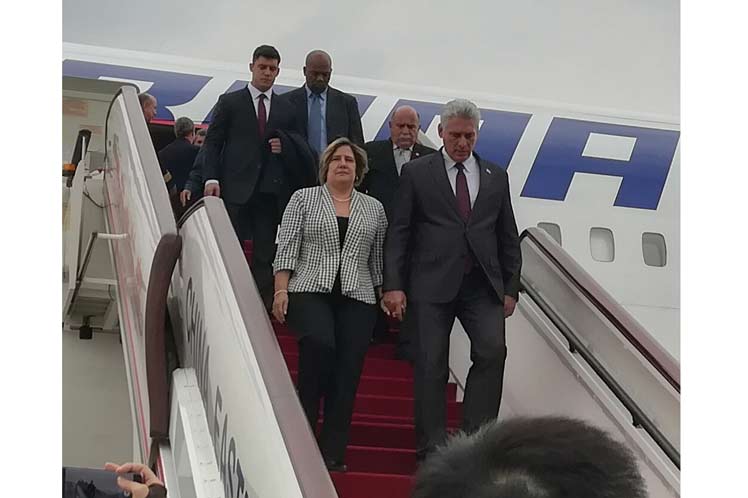
President Diaz-Canel To Visit France, Russia, China, Vietnam, Laos and North Korea

The Government of the Republic of Cuba reported that H.E. Miguel Diaz-Canel, President of the Republic of Cuba, will depart Jose Marti International Airport (HAV) on 31 October 2018 to Paris, France and then on 1 November 2018 in Moscow, Russian Federation, and then travel to Beijing (6-8), People’s Republic of China; Hanoi (8-11), Socialist Republic of Vietnam; Vientiane, Lao People’s Democratic Republic; and Pyongyang, Democratic People’s Republic of Korea.

According to a senior-level official of one of the governments whose representatives will meet with President Diaz-Canel, “… he is coming to ask us to help him not do what Cuba needs to do; he wants us to defend Cuba against the changes that the United States wants Cuba to make- and, I might add, we and others want Cuba to make. Everyone can’t continue to loan Cuba money to make purchases and loan them money in solidarity when everyone knows that the loans are unlikely to be repaid or we will be required to write them down or write them off. Cuba needs to grow-up and make changes so that it can be a better importer, exporter and partner.”

Panama Welcomes Cuba's Self-Employed To Shop, Shop, Shop; Cuba Doesn't Object

Why Does This Make Sense?


Need A Blender, Fabric, Paint, Spices For Your Business? Get A Passport

5 Hours Round-Trip, US$400.00+ Airfare & Hotel

Two Days Of Flights Could Be Worth US$3 Million To Panama

For 12 Months, US$100 Million?

A Tax On The Self-Employed?

Mexico, Panama & United States Benefit Financially So Cuba May Restrain Self-Employed 

Will the decision by the H.E. Juan Carlos Varela, President of Republic of Panama, to specifically (and publicly) designate a purchasing pathway for self-employed Republic of Cuba nationals convince H.E. Miguel Diaz-Canel, President of the Republic of Cuba, to establish a legitimate and sustainable wholesale marketplace for the self-employed? 

Was the decision by the Varela Administration, likely designed with the cooperation of the Diaz-Canel Administration, a marketing effort to increase the number of self-employed in the Republic of Cuba, but permit the Diaz-Canel Administration not to be perceived as substantially supporting the self-employed?  Permit the self-employed to travel far and spend much for the products they desire, but not provide the necessary purchasing infrastructure within the Republic of Cuba. 

The Government of the Republic of Cuba reports approximately 593,000 Republic of Cuba nationals as having licenses permitting self-employment, representing approximately 13% of the workforce.  The Republic of Cuba has a population of approximately 11.3 million.   

The Government of Panama will issue a tourist card valid for a visit of thirty (30) days and at a cost of US$20.00 with a focus upon Republic of Cuba nationals who are self-employed. Link to Government of Panama Announcement: https://www.mire.gob.pa/index.php/es/noticias-mire/13663-gobierno-adopta-medidas-migratorias-para-promover-turismo-de-compras-y-facilitar-solicitudes-humanitarias-de-reagrupacion-familiar 

Panama City, Panama-based Copa Airlines (CM) has up to seven (7) flights per day from Jose Marti International Airport (HAV) to Panama City, Tocumen International (PYT) using primarily 160-passenger Boeing 737-800 aircraft.  Round-trip airfares range from approximately US$398.50.  On an annual basis, currently-scheduled Copa Airlines flights from HAV to PYT can transport approximately 350,000+ passengers.  Bogota, Colombia-based Avianca Airlines (AV) has one-stop flights from HAV to PYT from US$380.00 round-trip. 

If 2,000, for example, self-employed Republic of Cuba nationals, representing .33% of the total registered self-employed in the Republic of Cuba, were to obtain the tourist card and travel to Panama City, Panama, the Government of Panama would earn US$20,000.00; Copa Airlines could earn US$800,000.00 (plus likely substantial excess baggage charges); hotels in Panama City could earn US$200,000.00 (if double-occupancy for two-nights); and taxis could earn US$25,000.00.   

If each of those 2,000 travelers were to spend US$1,000.00 on purchases from wholesale/retail establishments in Panama City, Panama, the gross revenue from those purchases could be US$2,000,000.00.  Panama also has a 7% Value Added Tax (VAT), so the government of Panama could receive US$140,000.00.   

A representative of the Colon Free Trade Zone in Panama reported that approximately 3,000 Republic of Cuba nationals received visas in the first sixty (60) days of the inauguration of the tourist card program.

A 1,990 mile, five-hour round-trip from Havana to Panama with a total visit cost likely exceeding US$500.00 is a tax upon the self-employed, a voluntarily-accepted tax, but an unnecessary expense for the self-employed to absorb in the pursuit of providing a product and/or a service.   

Current laws and regulations and policies adopted by the government of the Republic of Cuba suggest a preference to enrich other countries rather than authorize a critical component required to develop and sustain a private sector- the availability of an import/export wholesale marketplace from which self-employed may purchase products, add a value mark-up, and then price for retail whether through a kiosk, store, gift shop, café, restaurant, beauty salon, rental residence or among the other 123 authorized self-employed categories. 

Absence of an import/export wholesale marketplace, the self-employed price their products (and services using the products) above what their customers may pay for the products at a Republic of Cuba government-operated retail entity.   

A successful private sector represents a pathway to inequality amongst a population.  The self-employed, the small business, the private sector consist of owners and those who work for the owners.  Some earn more than others.  Some want to earn more than others.  The government of the Republic of Cuba has struggled with defining success and to what level an individual may be successful.  

Many self-employed Republic of Cuba nationals also travel to Mexico (Cancun (CUN) and Mexico City (MEX)) to purchase products using regularly-scheduled flights operating multiple times per day priced from approximately US$120.00 to US$250.00 round-trip with round-trip flight times of three hours (CUN) to seven hours (MEX).  Mexico has a Sales Tax (ST) of 16%.  

For comparison, round-trip flights from HAV to Miami International Airport (MIA) or Fort Lauderdale-Hollywood International Airport (FLL) have a duration of approximately one (1) hour and are generally priced from US$150.00.  Because of the frequency of flights (using various aircraft types), not unreasonable for a passenger to arrive to MIA/FLL in the morning, visit retail/wholesale establishments, and return to HAV in the evening.  The State of Florida has ST ranging from 6% to 8%. 

If the government of the Republic of Cuba were to establish a membership-based wholesale warehouse operation, and charge US$500.00 per membership, and if 2,000 Republic of Cuba nationals were to join, representing .33% of reported self-employed in the Republic of Cuba, revenue of US$1,000,000.00 would fund the construction of the warehouse and provide a provisional inventory and provide employment opportunities for Republic of Cuba nationals. 

If 5% of the licensed self-employed traveled once from HAV to PYT or MIA or FLL or CUN or MEX and spent U$1,000.00, the purchases would be valued at US$29,650,000.00, plus VAT and ST. 

A representative of the Colon Free Trade Zone in Panama reported that individuals from the Republic of Cuba spent approximately US$308 million in 2017; and revenues are expected to increase approximately 8% in 2018.

Uncertain is how General Customs of the Republic of Cuba (http://www.aduana.gob.cu/index.php/valor-en-aduanas-3) will manage any collection of duty on imported product from Panama.    

Since 2015, Tampa, Florida-based Florida Produce of Hillsborough County has sought approval from the government of the Republic of Cuba to manage a wholesale marketplace in the city of Havana for the benefit of self-employed Republic of Cuba nationals. 

Link to article: https://www.tampabay.com/news/business/Tampa-company-won-t-give-up-on-its-dream-to-build-a-warehouse-in-Cuba_171447164

LINK To Complete Analysis

United States Represents 1 In 5 Visitors To Cuba, But Are Most Profitable

Agence France-Presse:

"In 2017, Cuba welcomed 619,523 American tourists, up 217 percent over 2016, while 453,905 Cubans living in the United States visited their native country, an increase of 138 percent over a year."

Thus, 1,073,428 individuals subject to United States jurisdiction ("American tourists" and "Cubans living in the United States") visited the Republic of Cuba in 2017.

The Ministry of Tourism of the Republic of Cuba (MINTUR) reported visitor arrivals of 4,689,894 in 2017.

Thus, 22% of visitors to Cuba in 2017 were from United States.

Visitors from the United States have the highest net-profit margin to the Republic of Cuba compared to visitors from other countries as visitors from the United States are not purchasing highly-discounted all-inclusive holidays at tourist-focused resorts.

1-in-5-blue-orange.jpg

Cuba Imports Sugar From France

https://www.channelnewsasia.com/news/world/bitter-taste-for-cuba-as-it-imports-sugar-for-the-first-time--10858752 

Bitter taste for Cuba as it imports sugar for the first time  

Cubans quickly noticed the change in the sugar - when produced from cane, it tends to be brownish, but the French version comes from beets so it is whiter - and the granules are finer. (Photo: AFP/Yamil Lage)  

24 Oct 2018 

HAVANA: Sugar - it's so quintessentially Cuban that even a young, machete-wielding Fidel Castro used to hack away at the cane stalks vital to the Caribbean island's economy.

Now, the long-time world leader in sugar production is importing the stuff for the first time, and in large amounts, from France after another bad harvest. 

Sugar used to account for the vast majority of Cuba's exports. But the fall of its big brother, the Soviet Union - a key, hungry customer - changed everything, as did a lack of investment in seeds, fertiliser and pesticides. 

To wit: in the early 1990s, Cuba produced about eight million tons of sugar a year. A decade later, it stopped reaching two million a year. 

A woman buys sugar produced in France at a grocery store in the Cuban capital Havana - experts are hoping the sector can rebound on the island, possibly with some foreign investment. (Photo: AFP/Yamil Lage)  

Back then, sugar accounted for almost 75 per cent of Cuban exports. In 2015, it was only 13 per cent, with other products like nickel and tobacco making up some of the difference. 

The 2017-2018 harvest suffered badly after Hurricane Irma ravaged the country, followed by a long rainy season.  So Cuba is importing sugar from France. 

WHITER SUGAR 

On the island, residents quickly caught wind of the somewhat counter-intuitive development.  Here, sugar from cane tends to be brownish. But the French version comes from beets so it is whiter, and the granules are finer. And that is what Cubans started receiving with their "libreta" - their ration book. 

Sugar produced in France is weighed at a grocery store in Havana - Cuba, long the world leader in sugar production, is importing the sweetener in huge quantities. (Photo: AFP/Yamil Lage)  

"The sugar we get now is very good. It is very sweet, not very different. The only difference is the color," said Felicia Navarro, a 40-year-old homemaker. 

The French government farm and seafood export agency FranceAgriMer said that from 2001 to 2017, Cuba had imported just three tons of sugar from France.  But in just three summer months this year - June, July and August - that number ballooned to 40,000 tons.  "This is the first time in history that Cuba is importing significant amounts of sugar from France," FranceAgriMer said. 

Cuba imports most of the food it consumes. Yearly, it imports 400,000 tons of wheat. 

"THE GOLDEN AGE IS OVER" 

These new numbers are humiliating for Cuba, given its past as the world's largest producer of sugar and one of the biggest exporters. Until 1960, the US was one of its main customers.

Then came the Soviets, who bought Cuban sugar at a discounted price. These days, sugar production here is disappointing. 

Sugar imported from France is somewhat of a humiliation for Cuba, which once was one of the world's top suppliers. (Photo: AFP/Yamil Lage)  

The expected annual amount is 1.6 million tons, but it is actually just 1.1 million. And it is no surprise that Cuba has to import because it has export contracts with China to fulfill, said FranceAgriMer. 

A British farm consultancy called FO Licht said it expects Cuban output to improve next season and reach 1.5 million tons - even if that is far from the big numbers it used to post in the 1980s. 

Cuba's government blames the US trade embargo, which since 1962 has blocked imports of badly needed farm and industrial equipment.  "The main obstacle to the development of the island is the embargo imposed by the United States," Cuban President Miguel Diaz-Canel said recently, adding his people were "condemned to die of hunger." 

The island nation lacks resources and hard currency, but there are also structural and logistical factors at play, said Cuban economist Omar Everleny Perez.  Cuba has been obsessed with diversifying its economy and making it less dependent on sugar exports, he said, but that has led to underinvestment - and the sector's worst harvest in a century.  "The Golden Age is over because production capacity is not what it was," said Perez.   

There used to be 150 factories in Cuba for processing sugar cane. Now there are only around 50.  Cuba should turn over 15 or so to foreign investors who have shown interest, he added. 

A new draft national constitution that will be voted on February should make things easier because it acknowledges that foreign investment is important to Cuba's development.  Otherwise, said Perez, Cuba runs the risk of being short on sugar in the next few years. 

Source: AFP/zl