28-29 July 2016... Final Opportunity For U.S. Certified Claimants To Force Negotiations?

28-29 July 2016

Final Opportunity For U.S. Claimants To Force Negotiations?
No “Details” In 233 Days
Two Meetings In 599 Days
A Wasted 18 Months?
Let The Claimants Negotiate Directly?

Representatives from the government of the Republic of Cuba, United States Department of State, United States Department of Justice and United States Department of the Treasury will meet in Washington DC, on 28 July 2016 and 29 July 2016 to discuss the 5,913 claims registered with the United States Foreign Claims Settlement Commission (USFCSC), which is under the administration of the United States Department of Justice.  This will be the second meeting.

Important for this meeting and discussion to transform, and quickly, into a negotiation.  There is no more time for the airing of grievances and rehashing of positions.

This is a moment for PowerPoint presentations, realistic expectations, compromise, acceptance, and attorneys to draft agreements.

The Obama Administration has professed that a settlement of the certified claims is a priority- a top priority.  Yet, during a 20 July 2016 background briefing by a senior official of the United States Department of State, it was clear settlement negotiations have not commenced- and many of the certified claimants were concerned:

REPORTER QUESTION (Miami Herald):  My question has to do with the property rights issue. I wonder if you could give us any details there.  And two, whether Cuba still has outstanding property rights issues with any other countries, and is there a target number we’re looking for, like settling on 20 cents on the dollar, 10 cents on the dollar, whatever?  

SENIOR STATE DEPARTMENT OFFICIAL:  As I mentioned, property claims is one of our top priorities.  We had an initial – or first-round meeting with the Cubans on this issue last December in Havana.  We will have a second round of talks here in Washington at the end of this month.  We certainly have not laid out any kind of – the details which you’ve described.  That will emerge from the negotiations, but we’re committed to pursuing all of the registered claims, as well as other claims that U.S. citizens have against Cuba.  So it’s a process.  We had a good round last December.  We hope to make further progress this month in moving forward on the issue.

From one representative of certified claimants, “If two meetings in 599 days about an issue defined as ‘a priority,’ I cringe at the prospect of learning how the State Department defines an issue that is not ‘a priority,’ would it be 1,000 days?”  The representative added, “If they can’t do better than they’ve done so far, the State Department should stand aside and authorize a claimant committee to directly negotiate a settlement.”

CLICK HERE FOR THE COMPLETE ANALYSIS IN PDF FORMAT

ECONOMIC EYE ON CUBA- JULY 2016

ECONOMIC EYE ON CUBA©
July 2016

May Food/Ag Exports Decreased 27%-
Beer, Whisky, Bourbon, Vodka & Tequila Exported- 2
-24% Thus Far For 2016 Compared To 2015- 2
Healthcare Product Exports- 2
Humanitarian Donations- 2
U.S. Port Export Data- 13
Updated Speaking Schedule- 15

MAY FOOD/AG EXPORTS DECREASED 27%- Exports of food products & agricultural products from the United States to the Republic of Cuba in May 2016 were US$19,384,881.00 compared to US$26,420,677.00 in May 2015.  For the period January-May 2016 compared to January-May 2015, exports decreased by 24%. 

Exporters included: Coral, Gables, Florida-based Bunge Latin America (bread, cereal, gain, malt, flour); Atlanta, Georgia-based Globex International (poultry); New York, New York-based Intervision Foods (poultry); Atlanta, Georgia-based AJC International (poultry); Chattanooga, Tennessee-based Koch Foods (poultry); Bedford, Massachusetts-based Sellari Enterprises (poultry); Wayzata, Minnesota-based Cargill (bread, cereal, grain, malt, flour).

 CLICK HERE FOR COMPLETE REPORT


OFAC Issues Updated FAQ's: Record-Keeping For Cuba Travel

Office of Foreign Assets Control (OFAC) of the United States Department of the Treasury has Issued Updates- Record Keeping

Publication of New Cuba-Related Frequently Asked Questions

Today, the Department of the Treasury's Office of Foreign Assets Control (OFAC) updated its Frequently Asked Questions regarding the Republic of Cuba to issue two new FAQs (#38 and #39) regarding record-keeping.

CLICK HERE FOR FAQ'S IN PDF FORMAT

United States And Cuba To Discuss Certified Claims This Week In Washington

Representatives of the government of the Republic of Cuba, United States Department of State, United States Department of Justice, and United States Department of the Treasury will meet in Washington, DC, on 28 July 2016 and 29 July 2016 to discuss a resolution to the 5,913 claims registered with the United States Foreign Claims Settlement Commission (USFCSC), which is under the administration of the United States Department of Justice.

Certified Claims Overview

List Of Certified Claimants

What The 2016 Democratic Platform Says About Cuba....

2016 Democratic Party Platform

"In Cuba, we will build on President Obama’s historic opening and end the travel ban and embargo.  We will also stand by the Cuban people and support their ability to decide their own future and to enjoy the same human rights and freedoms that people everywhere deserve."

Complete Text (Page 50 For Cuba References- ironically the same page as in the Republican Party Platform)

Will Rum Be Among The Next Products From Cuba Authorized For Import?

Owners of restaurants and bars in the United States that serve recipes from the Republic of Cuba are reporting an increase in the number of customers inquiring if the establishment has rum from the Republic of Cuba.

Mr. Adolfo Mendez, who is of Cuban descent and the owner of Cubano's restaurant located in Silver Spring, Maryland, near Washington, DC, shared that approximately fifteen (15) to twenty (20) of every one hundred (100) customers ask if his restaurant serves rum sourced from the Republic of Cuba. 

Restaurants and bars located in Las Vegas, Nevada, are reporting customers increasingly asking for rum sourced from the Republic of Cuba. 

In some instances, bar owners and bartenders have been keeping bottles of rum sourced from the Republic of Cuba out of sight- and for the use by "regular customers" or "those who want to leave a good tip."

Currently, regulations administered by the Office of Foreign Assets Control (OFAC) of the United States Department of the Treasury prohibit the commercial sale of alcohol products imported from the Republic of Cuba, although the importation of alcohol products from the Republic of Cuba for personal use is authorized.  Individuals subject to the jurisdiction of the United States are permitted to return from the Republic of Cuba to the United States with up to US$100.00 worth of alcohol products for their personal use.

In April 2016, the United States Department of State added coffee to the list of authorized products that may be imported from the Republic of Cuba to the United States for commercial purposes.  Textiles (with sourcing restrictions) may also be imported for commercial purposes.

There is an expectation that the Obama Administration will be adding to the list of authorized (with sourcing restrictions) products before 20 January 2017, perhaps to include tropical fruits, charcoal, sugar, honey, alcohol, and seafood.

A challenge will be for Members of Congress who support the removal of restrictions upon United States exports to the Republic of Cuba potentially being impacted by the interests of companies located in their respective districts/states who will have a concern about additional imports becoming threats to their domestic market share.

Counternarcotics Arrangement Signed Between United States and Cuba

Counternarcotics Arrangement Signed During Third Counternarcotics Technical Exchange Between the United States and Cuba

Media Note- United States Department of State
Office of the Spokesperson
Washington, DC
July 22, 2016

The United States and Cuba held their third Counternarcotics Technical Exchange July 21 in Havana. The U.S. delegation included working-level representatives from the U.S. Drug Enforcement Administration (DEA), U.S. Coast Guard (USGC), Immigration and Customs Enforcement-Homeland Security Investigations (ICE/HSI), and the Department of State. The delegations signed a Counternarcotics Arrangement, which will facilitate further cooperation and information sharing between Cuba and the United States in our common effort against illegal narcotics trafficking. Counternarcotics cooperation is part of the broader Law Enforcement Dialogue between the United States and Cuba.

The "El Floridita Daiquiri"

The "El Floridita Daiquiri"

Courtesy Manuel Carbajo Aguiar, cantinero, El Floridita, Havana

Compared to a traditional daiquiri, which would be strained into coupe glasses or served on the rocks, this slushy version is a refreshing change of pace. In general, cocktails in Cuba are less sweet than American-style drinks. You can add another half-tablespoon of sugar, if you prefer.

  • 1 teaspoon Demerara (light brown, partially-refined) sugar
  • 1½ ounces white rum, like Havana Club 3 year
  • ½ ounce lime juice
  • ⅓ teaspoon maraschino liqueur
  • 1 cup ice

Add all ingredients into a blender. Run for about 1 minute, or until slushy. Pour into martini glass. Serve with a straw.

Cuba's Ambassador To Russian Federation Reminds Everyone That History Is Not Easily Erased....

McClatchy News
Washington, DC
20 July 2016

A top Cuban diplomat accused the Obama administration of not doing enough to dismantle the U.S. trade embargo against Cuba and said the United States wants to turn Cuba into an “appendix” of the United States.

In a half-hour interview held in conjunction with the one-year anniversary of resumed U.S.-Cuban diplomatic relations, Emilio R. Garcia Lozada, the Cuban ambassador in Russia, told Russian television that dialog between U.S. and Cuban leaders may have been restored, but that the “major obstacles” behind two generations of hostility remain the same.

“The United States has changed its methods, but its objectives remain the same,” Lozada told Russian television station, RT.  “Destroy the Cuban revolution and convert Cuba into an appendix of the United States.” 

The strong language reflects the lingering tensions between the two nations. Both Lozada and U.S. leaders said they always knew rapprochement would be long and difficult, but Lozada’s strong language – particularly on such a momentous occasion such as the one year anniversary – reflects just how tough and unpredictable the road ahead is for the two nations that have yet to put their differences behind them.

In addition to the U.S. embargo, or blockade as Cubans refer to it, Lozada cited the Guantanamo Bay naval base, which he described as “illegally occupied territory,” and the U.S. financing of opposition forces inside Cuba.

The U.S. State Department didn’t immediately respond to questions about Lozada’s comments, but a senior state department official said Wednesday on a call to commemorate the anniversary that the administration remains convinced that a shift from a policy of isolation to engagement is “the best course for supporting the aspirations of the Cuban people.”

One Year Anniversary Since Re-Establishment Of Diplomatic Relations.... What Are The Results?

On 20 July 2015, the United States and the Republic of Cuba re-established formal diplomatic relations.

More than one hundred sixty (160) representatives of the United States Government have visited the Republic of Cuba.

More than eighty (80) representatives of the government of the Republic of Cuba have visited the United States.

During the last twelve months, four (4) governors, eleven (11) members of the United States Senate and forty-two members of the United States House of Representatives have visited the Republic of Cuba.

President Barack Obama visited the Republic of Cuba in March 2016.

One year into the change in relationship, there have been structural changes in the commercial, economic and political relationship.

One year into the change in relationship, there have been symbolic changes in the commercial, economic and political relationship.

REPORT: What Have The Governments Of The United States And Republic Of Cuba Agreed To Or Done, Or Not (Yet) Done Since 17 December 2014

What The 2016 Republican Platform Says About Cuba.....

2016 Republican Platform

"We want to welcome the people of Cuba back into our hemispheric family — after their corrupt rulers are forced from power and brought to account for their crimes against humanity.

We stand with the Women in White and all the victims of the loathsome regime that clings to power in Havana. We do not say this lightly: They have been betrayed by those who are currently in control of U.S. foreign policy. The current Administration’s “opening to Cuba” was a shameful accommodation to the demands of its tyrants. It will only strengthen their military dictatorship.

We call on the Congress to uphold current U.S. law which sets conditions for the lifting of sanctions on the island: Legalization of political parties, an independent media, and free and fair internationally-supervised elections.

We call for a dedicated platform for the transmission of Radio and TV Martí and for the promotion of internet access and circumvention technology as tools to strength Cuba’s pro-democracy movement.

We support the work of the Commission for Assistance to a Free Cuba and affirm the principles of the Cuban Adjustment Act of 1966, recognizing the rights of Cubans fleeing Communism."

Complete Text (Page 50 For Cuba References)

Bangor Maine Airport Receives License From The OFAC To Provide Cuba Refueling, Catering, De-Icing & Crew Services

Bangor International Airport (BGR) in Maine has received a license from the Office of Foreign Assets Control (OFAC) of the United States Department of the Treasury to provide services for non-United States aircraft seeking to make non-traffic transit stops (re-fueling, catering, deicing, crew services).  BGR used the services of Washington, DC-based Kirstein & Young PLLC to prepare the OFAC license application.

From the OFAC license (click here for the complete text):

SECTION 1 – AUTHORIZATION: Subject to the conditions and limitations stated herein, Bangor International Airport (the “Licensee”) is hereby authorized to engage in all transactions necessary to provide services in connection with non-traffic transit stops to non-Cuban foreign airlines operating flights to and from Cuba, as described in the Application.

Authority:  31 C.F.R. § 515.801.

SECTION 2 – WARNINGS: (a) This License authorizes the provision of services only to aircraft engaged in non-traffic transit stops. This License does not authorize the provision of services to any aircraft that takes on new passengers or whose passengers enter the United States for immigration purposes.

According to The Honorable Susan Collins (R- Maine) and The Honorable Angus King (I- Maine), "...not permitting transit stops, the U.S. is out of compliance with several international transportation agreements, including the Chicago Convention and the U.S.-EU Open Skies Agreement."

On 25 May 2016, Senators Collins and King introduced legislation (S.2990) to remedy the issue; on 26 April 2016, The Honorable Bruce Poliquin (R- Maine) and The Honorable Chellie Pingree (D- Maine) introduced legislation (H.R. 5071) to remedy the issue.

From Senator Collins:
25 May 2016

Washington, D.C.—U.S. Senators Susan Collins (R-ME) and Angus King (I-ME) introduced legislation today (S.2990) that would permit foreign air carriers traveling to or from Cuba to make non-traffic, transit stops in the United States.

“Under the current travel ban, foreign air carriers are forced to make transit stops in Canada rather than the United States, and any potential profit for U.S. airports flies right across the border along with the planes,” said Senators Collins and King in a joint statement.  “Our bill would provide American airports and workers the opportunity to compete with Canadian airports and would align U.S. policy with existing international air travel agreements.”

“This amendment will ensure the U.S. abides by its bilateral and international transport agreements and help to bring business back to Central Maine,” said Anthony Caruso Jr., Airport Director of Bangor International Airport.  “This will allow us to compete on a fair and level playing field with Canadian airports.”

During these transit stops, passengers do not disembark the plane and no new passengers board the aircraft.  Yet, these stops are valuable for airports and their employees who can offer fuel, de-icing, catering, and crew services.  By not permitting transit stops, the U.S. is out of compliance with several international transportation agreements, including the Chicago Convention and the U.S.-EU Open Skies Agreement.

In addition, the current restriction on transit stops means that U.S. airports, such as Bangor International Airport, not only lose revenue related to flights to or from Cuba, they are also passed over by foreign carriers traveling to or from other destinations in North America, Central America, and the Caribbean.

Permitting these stops would not result in any incremental benefits to Cuba because these flights currently make transit stops in Canada.  The Collins-King legislation would simply allow U.S. airports to compete on a fair and level playing field with Canadian airports that currently provide this service without restriction by the Canadian government.

114th CONGRESS
2d Session
S. 2990
IN THE SENATE OF THE UNITED STATES
May 25, 2016

Ms. Collins (for herself and Mr. King) introduced the following bill; which was read twice and referred to the Committee on Banking, Housing, and Urban Affairs
A BILL
To prohibit the President from preventing foreign air carriers traveling to or from Cuba from making transit stops in the United States for refueling and other technical services based on the Cuban Assets Control Regulations.
1.
Air travel between the United States and Cuba permitted
(a)
In general
Notwithstanding section 102(h) of the Cuban Liberty and Democratic Solidarity (LIBERTAD) Act of 1996 (22 U.S.C. 6032(h)) and section 910(b) of the Trade Sanctions Reform and Export Enhancement Act of 2000 (22 U.S.C. 7209(b)), and except as provided in subsection (b), the President may not directly or indirectly prohibit the provision of technical services otherwise permitted under an international air transportation agreement in the United States for an aircraft of a foreign air carrier that is en route to or from Cuba based on the restrictions set forth in part 515 of title 31, Code of Federal Regulations (commonly known as the "Cuban Assets Control Regulations").
(b)
Exceptions
This section shall not apply— (1) if— (A) the United States is at war with Cuba; (B) armed hostilities between the United States and Cuba are in progress; or (C) there is imminent danger to the public health or physical safety of United States citizens; or (2) to foreign air carriers that— (A) are owned by the Government of Cuba; or (B) are based in Cuba.

114th CONGRESS
2d Session
H. R. 5071
IN THE HOUSE OF REPRESENTATIVES
April 26, 2016

Mr. Poliquin (for himself and Ms. Pingree) introduced the following bill; which was referred to the Committee on Transportation and Infrastructure
A BILL
To prohibit the President from regulating the provision of certain technical services in the United States for an aircraft of a foreign air carrier that is en route to or from another country, and for other purposes.
1.
Short title
This Act may be cited as the "Insourcing American Airport Jobs Act of 2016".
2.
Prohibition on regulation of provision of technical services for aircraft
(a)
In general On and after the date of enactment of this Act, and subject to subsection (b)— (1) the President may not regulate or prohibit, directly or indirectly, the provision of technical services, otherwise permitted under an international air transportation agreement, in the United States for an aircraft of a foreign air carrier that is en route to or from another country; and (2) any regulation in effect on such date of enactment that regulates or prohibits the provision of technical services described in paragraph (1) shall cease to have any force or effect with respect to such services.  
(b)
Exceptions
Subsection (a) shall not apply— (1) if the country concerned is a state sponsor of terrorism; or (2) in a case in which— (A) the United States is at war with the country concerned; (B) armed hostilities between the United States and the country concerned are in progress; or (C) there is imminent danger to the public health or the physical safety of travelers to the country concerned.
(c)
State sponsor of terrorism defined
In this section, the term "state sponsor of terrorism" has the meaning given that term in section 1605A(h)(6) of title 28, United States Code.
(d)
Applicability
This section applies to actions taken by the President before the date of enactment of this Act that are in effect on such date of enactment, and to actions taken on or after such date.

DOT Approves FedEx For First Scheduled All-Cargo Service to Cuba

15 July 2016

DOT Approves First Scheduled All-Cargo Service to Cuba. 

The U.S. Department of Transportation (DOT) approved FedEx’s uncontested application to become the first all-cargo airline to provide scheduled flights to Cuba. 

FedEx has thus far been the only all-cargo carrier to seek scheduled authority to Cuba.  FedEx will begin once-daily Monday through Friday service between Miami, Florida and Matanzas, Cuba, beginning January 15, 2017. 

On February 16, 2016, Secretary Foxx signed an arrangement with the Cuban government to re-establish scheduled air service between the two countries after more than 50 years.  Under the new arrangement, each country has the opportunity to operate up to 20 daily roundtrip flights between the U.S. and Havana, and up to 10 daily roundtrip flights between the U.S. and each of Cuba’s other nine international airports.  DOT’s award of non-Havana authority to FedEx is in addition to DOT’s June 10th approval of six U.S. airlines to begin scheduled combination services to Cuban cities outside Havana.  All of these non-Havana applications were uncontested.  DOT’s proceeding on the award of Havana authority is ongoing. 

The Department’s decision and other documents in the U.S.-Cuba case are available online at regulations.gov, docket DOT-OST-2016-0021.

Cuba's Visitors Increase- Tourists & Non-Tourists.... And Their Money Is Welcomed

The Ministry of Tourism of the Republic of Cuba (MINTUR) reported a total of 3,524,779 visitors in 2015 compared to 3,002,745 tourist arrivals in 2014, representing an increase of 17%. 

Jose Marti International Airport (HAV) in the city of Havana, Republic of Cuba, received 1,685,381 arrivals in 2015, representing an increase of 21% compared to 2014.

HAV received 48% of all arrivals in 2015, with passengers originating primarily from the countries of the United States, France, Italy, Mexico, Spain, the United Kingdom and Germany.

According to MINTUR, more than 450,000 United States citizens/United States residents (presumably meaning individuals of Cuban descent visiting family in the Republic of Cuba) were among the 3,524,779 total visitors to the Republic of Cuba in 2015.   According to the United States Department of State, there were approximately 700,000 "United States visitors" to the Republic of Cuba in 2015 (540,000 individuals of Cuban descent and 160,000 not related to family-visits).

In 2015, MINTUR reported 161,233 visitors from the United States; this number excluded individuals of Cuban descent (with or without Republic of Cuba-issued passports) who visited the country.

For The First Four Months Of 2016

From 1 January 2016 to 9 May 2016, 51,458 United States citizens (not including individuals of Cuban descent visiting family) visited the Republic of Cuba, compared to 37,459 during the same period in 2015. 

From 1 January 2016 to 9 May 2016, 38,476 United States citizens (not including individuals of Cuban descent visiting family) visitors traveled directly from the United States to the Republic of Cuba, compared to 29,213 during the same period in 2015.

From 1 January 2016 to 9 May 2016, 12,982 United States citizens (not including individuals of Cuban descent visiting family) arrived to the Republic of Cuba through third countries, compared to 8,246 during the same period in 2015.  Transit countries included Mexico, the Bahamas, Jamaica and the Cayman Islands.

MINTUR reports that there are approximately three hundred (300) hotels within the Republic of Cuba, ranging from one star to five star with most being one star to three star, with a approximately 62,000 to 66,000 rooms (an inconsistent number of rooms are often out of service due to maintenance issues).

For The First 6 Months Of 2016

United States citizens (not including individuals of Cuban descent visiting family) visiting the Republic of Cuba increased 84% (also reported as 89.3%) for the period 1 January 2016 to 31 June 2016 compared to the same period in 2015.

Total global visitor arrivals for the period 1 January 2016 to 31 June 2016 were 2,147,600, an increase of 11.7% compared to the same period in 2015.  Significant increases were reported from countries including Germany, Italy, Poland and Spain.

Total United States citizens (including individuals of Cuban descent visiting family) visiting the Republic of Cuba for the period 1 January 2016 to 31 June 2016 were approximately 304,000, representing an increase of 24% compared to the same period in 2015.  United States citizens represented the second-largest country source of visitors (after Canada) thus far in 2016.  The Ministry of Foreign Affairs of the Republic of Cuba reported 138,000 "Americans" visited the Republic of Cuba during the period 1 January 2016 through 31 June 2016.

US$660 Million Impact

For calendar year 2016, visitors (excluding individuals of Cuban descent with or without Republic of Cuba-issued passports) from the United States to the Republic of Cuba could exceed 301,000 with the introduction of regularly-scheduled commercial flights which will increase frequency, destinations, and lower pricing and continuation of cruise ship operations (which are expected to increase).

The gross economic impact to the Republic of Cuba by the 301,000 visitors would exceed US$660 million (landing fees, cruise ship fees, cruise ship passenger expenditures, baggage fees, visa fees, ground transportation, hotels, meals, tours, sundries, gifts, gratuities, etc.).

Update: Cuba Opens Zona+ Store- A [Sort-Of Wholesale] Version Of Costco & Sam's Club; Florida Company Proposal Seems Finished

Update.....

In 2015, Tampa, Florida-based Florida Produce of Hillsborough County, which has exported food products to the Republic of Cuba, proposed to the Ministry of Foreign Affairs of the Republic of Cuba (Minrex) and the Ministry of Foreign Trade of the Republic of Cuba (Mincex) to lease a warehouse of up to 70,000 square feet in central Havana, where food products and agricultural commodities grown, manufactured, processed, and distributed in the United States and then exported from the United States to the Republic of Cuba would be available, on a wholesale basis, to registered independent businesses and Republic of Cuba government-operated entities.  

The Obama Administration supports the proposal.  However, despite numerous meetings and indications of interest, in 2015 and in 2016, no decision has been taken by the government of the Republic of Cuba.  

Now, Republic of Cuba government-operated Cimex has created a business model similar to that proposed by Florida Produce of Hillsborough County.  From an executive of a Canada-based company that exports products to the Republic of Cuba, "If you give them an idea, they will do everything possible to do it themselves- even if that means doing it with less efficiency than if they permitted someone else to do it and then learn from that experience.  This is especially true with anything involving the United States.... They will 'yes' them to the point of exhaustion."

Articles & Images From Reuters and Associated Press

From Reuters (11 July 2016)

Cuba has opened a shop in Havana that could eventually operate as the Communist-ruled island's first wholesale store for the fledgling private sector, offering products in bulk at lower prices than in expensive retail outlets.

So far, Zona+, where produce is piled up to the ceiling like in a warehouse, is offering only a handful of goods in large quantities at slightly discounted rates. Shop employees said that was an experiment.

They said the plan was for Zona+ to sell everything in bulk at a discount, catering in particular to the small businesses that have flourished since President Raul Castro started reforming the Soviet-style command economy.

Officials at CIMEX, the state commercial corporation that owns Zona+, declined to comment and the store manager said he had been asked to give no more interviews, after he told local media the aim was to become a wholesale store. Cuban authorities are often secretive about their economic plans.

"Some products already have a 20 percent discount, not all," said shop employee Ulysses Abreu, 26, pointing to the 2.5-kg (5-pound) tins of tomatoes. "But they are studying whether to sell all products at 20 percent in the future."

One employee, who declined to be named for fear of retribution, said one idea was to offer a 10 percent discount on purchases worth between $500 and $1,000, and a 20 percent discount on purchases above $1,000.

Shoppers at Zona+ said it already had an advantage on other stores because it was uncharacteristically well-stocked.

Cuba's supermarkets are often half-empty and supply problems look set to increase as the government said last week it would cut planned imports this year by 15 percent.

Cuba's new entrepreneurs have long complained that a gaping hole in Castro's reforms is the lack of a wholesale market. Restaurant owners, hairdressers and snack-store owners have to buy their produce in supermarkets at the same marked-up prices as consumers.

The government announced in April that some cooperatives would be able to buy supplies directly from government producers and wholesale outlets for the first time but it did not say the reform would extend to the private sector.

Cuba often likes to experiment with measures before making them official and extending them across the country. Reforms can also be reversed.

Cuba decided at a secretive Communist Party congress earlier this year to eliminate licenses for private wholesale agricultural food distribution.

From Associated Press (11 July 2016)

Cuba has quietly opened a first-of-its-kind store specializing in bulk goods in Havana: Zona +, a high-ceiling space with racks stacked with large tins of tomato sauce, toilet paper and cooking oil by the gallon.

It's not quite Costco, and it falls short of satisfying longstanding calls for a wholesale market to support the growing class of small-restaurant and-cafeteria owners who have set up shop under President Raul Castro's economic reforms begun six years ago.

But it could help relieve the pressure that those entrepreneurs have been putting on other retail stores by snapping up huge quantities of goods, leaving regular customers in the lurch.

On a recent afternoon, Naidi Carrazana pushed a shopping cart loaded with cases of beer, bottled water and soft drinks she needs to stock her small cafeteria nearby. She acknowledged that business owners like her who make big purchases have been emptying market shelves of things like flour, chicken and tomato paste, and said the new store can help with that.

"A place like this allows you to buy in bulk, and that's a benefit for us and a benefit for the people," Carrazana said.

Located in the upscale western suburb of Miramar, Zona + launched a little over a week ago with zero fanfare. Manager Javier Munoz said shoppers are allowed to buy unlimited quantities, but he declined to comment further because he was not authorized to do so by the store's state-run parent company.

Employees said business has been good despite the lack of publicity, as word of the opening spread mouth-to-mouth. One customer showed up in a car and bought 50 3-kilogram (6.6-pound) cans of tomatoes to supply a restaurant.  Similar stores are being planned for other parts of the city, they added.

In Cuba, government entities are the only ones able to import and acquire goods at wholesale, and wholesale access has been a crucial demand of the 500,000 or so small-business owners and their employees, many of them working in the food-service sector.

The government has promised to set up wholesale markets for private entrepreneurs, but that has yet to materialize and their only option has been the same retail stores where the general population shops.

Although goods at Zona + are bulk, that doesn't entail a price break. For example, a kilogram of high-end Serrano coffee costs $14.45 there, while the same kilo was $14.40 on the same day at a regular store elsewhere in Havana.

"The place is pretty, the service is good, but it's still the same price as retail. In truth, it doesn't resolve our problems," Carrazana said. "I hope this is like a seed for a wholesale market where we entrepreneurs can buy at a different price."
Might DOT & TSA Need To Delay Implementation Of Commercial Flights To Cuba?

From Politico (7.15.2016)

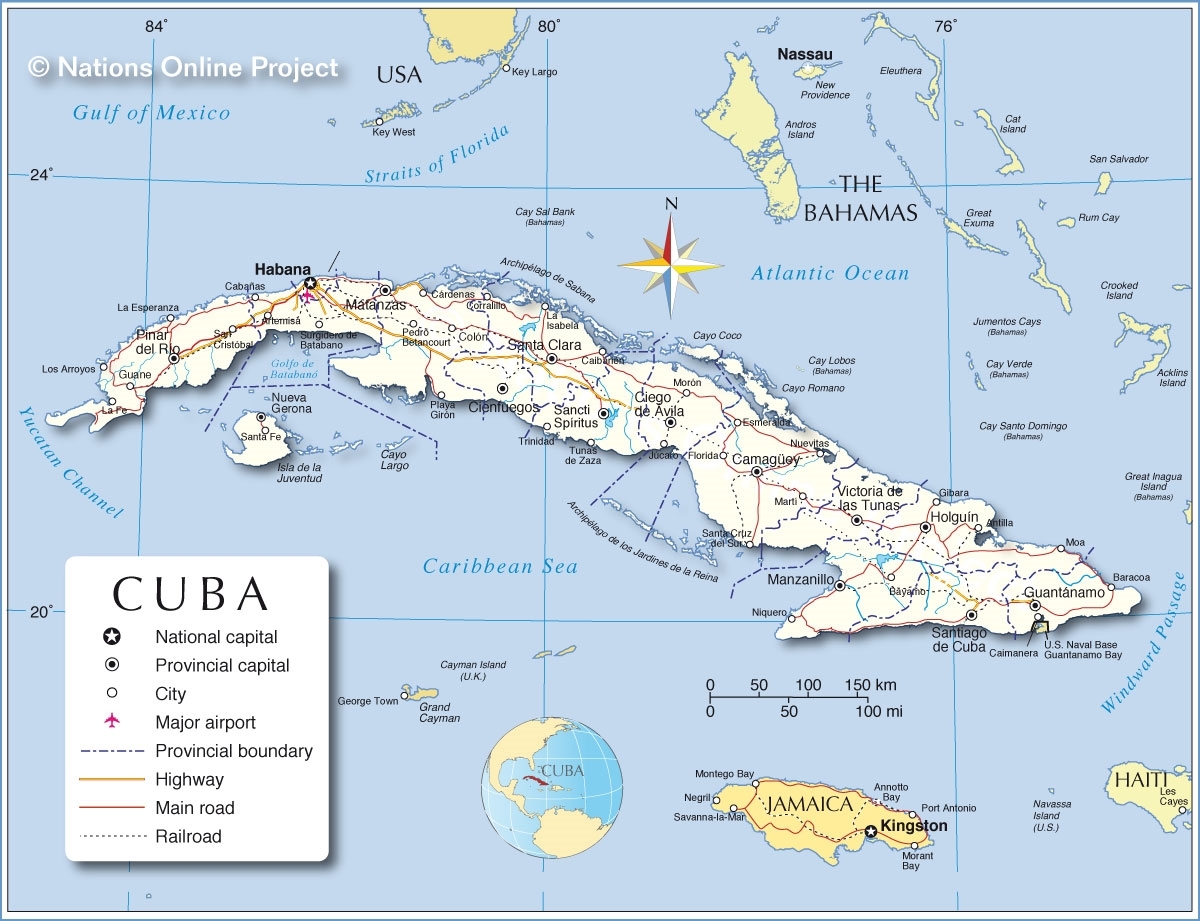
"CUBAN FLIGHTS AND SECURITY FIGHTS: Commercial flights from Cuba to the U.S. are scheduled for takeoff in eight weeks, but it appears the Obama administration is still trying to make sure airport security is up to snuff at the 10 Cuban hubs cleared for U.S. service.

Homeland Security Secretary Jeh Johnson says he has asked TSA [Transportation Security Agency] to give him assurances that those airports meet U.S. security standards, not just the bar ICAO [International Civil Aviation Organization] has set.

No help: The secretary also let on that he tried to call in a favor for the very lawmakers who have been fighting the White House on this issue. Johnson said the administration attempted, and failed, to get the Cuban government to approve visas for House Homeland Security Committee lawmakers who wanted to check out the country's aviation security protocols.

Can't stop, won't stop: Rep. John Katko [R- New York] has been relentless in trying to call attention to his Cuban security concerns. Besides introducing a bill (H.R. 5728) earlier this week to try to block flights until TSA certifies that the U.S.-bound flights will be adequately protected, he's written a letter asking Transportation Secretary Anthony Foxx to delay Cuban service."

UPDATE: “Hecho En Cuba” Has Value…. Obama Administration Will Help & Accept Certification From Cuba

Editor's Note: This was an important event, milestone, etc., when first discussed in June 2016.  Since that time, additional, and important information became available from the companies involved, from the United States government and from the government of the Republic of Cuba which, in some aspects, contradicts information contained in our previous writings. 

The positive is our revised analysis portrays a greater texture and depth... and, most importantly, provides additional reasoning as to the significance of the transaction for United States companies.

“Hecho En Cuba” Has Value….
Obama Administration Will Help & Accept Certification From Cuba

Excerpts......

On 26 June 2016, New York, New York-based Nestle Nespresso USA, Inc., a subsidiary of Vevey, Switzerland-based Nestle SA (2015 revenues approximately US$94 billion), placed a full-page color advertisement featuring its new Cuban Nespresso Grand Cru Cafecito de Cuba capsule on page 24 (the back of the first section) in the national edition of The New York Times.  The cost was approximately US$175,110.54 to reach an audited circulation of 1,140,015 readers.

***

Nestle Nespresso purchased a container of approximately eighteen (18) tons of green coffee beans through London, United Kingdom-based Cubana Coffee & Roastery (www.cubana.co.uk), the established bar-restaurant and coffee roasting group, and London, United Kingdom-based The Cuba Mountain Coffee Company Ltd (www.almacuba.com).  

***

The green coffee beans were sourced from the 2015-2016 harvest in the Republic of Cuba; the value was approximately US$5,000.00 per metric ton, or approximately US$90,000.00.  

***

The beans will be roasted at Nestle Nespresso facilities (valued at US$500 million) in Avenches and nearby Orbe, Switzerland.  With approximately 20% lost during the roasting process, the result will be approximately 180,000 capsules per ton- 3,240,000 limited edition Cafecito de Cuba capsules (approximately 5 to 6 grams each or .17 to .21 ounces).  The price for a limited edition capsule has been US$1.10, so potential total revenue could be approximately US$3,564,000.00.

***

Significant that the advertisement placed in The New York Times was not to promote a service, it was to promote a product.  The date of 26 June 2016 commenced a rebranding of the Republic of Cuba- from primarily a visitor destination to an origin of consumer products.

***

For any United States-based company, the words "Hecho en Cuba" (Made in Cuba) will have greater perceived marketing value due to the marketing expenditures in the United States by Nestle Nespresso USA, Inc.

***

Not lost on management of United States-based companies is a preference by the government of the Republic of Cuba to permit a non-United States-based company to do first what the Obama Administration has authorized a United States-based company to do with respect to the direct importation of agricultural commodities (thus far only coffee) from the Republic of Cuba.

***

For the Nestle Nespresso USA transaction, the OFAC accepted letters from the Ministry of Agriculture of the Republic of Cuba; Nestle Nespresso USA; London, United Kingdom-based Cubana Coffee & Roastery; and London, United Kingdom-based The Cuba Mountain Coffee Company Ltd (CMC) certifying that all of the coffee was sourced from private farmers in the Republic of Cuba and the OFAC accepted that for the 18-ton transaction, the exporter of record would be a Republic of Cuba government-operated entity, Cubaexport.  For future transactions, CMC expects to also be a Republic of Cuba-authorized exporter.  

***

The Obama Administration is focused upon creating commercial activity rather than with the immediate and direct impact of that commercial activity upon the individual (independent) actors in the Republic of Cuba.  

***

This focus is based upon a belief that with 190 days remaining for the Obama Administration, the existence of a [hopefully] bi-bilateral commercial landscape, even if a consequence is acquiescence to more-than-desired involvement by Republic of Cuba government-operated entities, if preferable to nothing.

***

This rationale, which the United States business community supports, is based upon a recognition that absent acceptance of the role of the government of the Republic of Cuba in most sectors of the economy, there will be few meaningful commercial opportunities for United States-based companies.  The goal is to seek any means to authorize components of President Obama’s legacy initiatives.  

***

Which transitions to a question: Why is the Obama Administration creating sometimes constrictive regulations if known the regulations will likely be supplanted during the licensing process?

***

The Obama Administration determined that generating the first license from the OFAC to a United States-based subsidiary of one of the fifty (50) largest companies in the world (30th largest company in Europe) will result in a ginning up of interest (and advocacy) for greater market access to the Republic of Cuba for United States-based companies.  The calculation was correct.  

COMPLETE ANALYSIS IN PDF FORMAT

Compare The Statements..... US Gives Far Less Information; What Does That Mean?

From The United States Department of State:

United States and Cuba Held Third Regulatory Dialogue

Media Note
Office of the Spokesperson
Washington, DC
July 13, 2016

The third U.S.-Cuba Regulatory Dialogue took place in Havana July 12-13, 2016. The U.S. delegation included officials from the Departments of Commerce, the Treasury, and State, and continued discussions from previous dialogues held in October 2015 and February 2016.

U.S. officials described regulatory changes that were announced on March 16 related to Cuba-related travel, commerce, and financial transactions. The delegations addressed ways the two nations can work together within existing U.S. laws and regulations.


From The Ministry Of Foreign Affairs Of The Republic Of Cuba:

CUBA, July 13, 2016.- Representatives of Cuba and the United States held, on 12 and 13 July in Havana, the third meeting of the Dialogue on Regulatory Issues, a mechanism established in October 2015 between government entities of both countries to assess the extent and impact of the changes introduced by the Government of the United States in implementing some aspects of the embargo on economic, trade and financial linkages, constraints and remaining obstacles to its implementation, as well as regulations force in Cuba for trade and financial relations.

The opening of the meeting was led by Cuban Deputy Minister of Foreign Trade and Foreign Investment, Ileana Nunez Mordoche, and Coordinator of the Office of Cuban Affairs, Department of State, Mark Wells.  In the two-day exchange included officials of the Ministry of Foreign Trade and Foreign Investment, and the Central Bank of Cuba, as well as, the Ministries of Foreign Affairs, and Economy and Finance and Prices.  For the United States were present officials of the Departments of Treasury, Commerce and State. (Cubaminrex)

United States, Cuba, and Mexico: Resolving Maritime Boundaries; US Refuses To Name Participants

United States, Cuba, and Mexico: Resolving Maritime Boundaries

Media Note
Office of the Spokesperson
Washington, DC
July 7, 2016

Delegations from the United States, Cuba, and Mexico met, July 5-7, in Mexico City to discuss unresolved maritime boundaries in the eastern Gulf of Mexico, commonly referred to as the “Eastern Gap.” Government representatives discussed delimiting maritime boundaries in areas of the continental shelf that are more than 200 nautical miles from each country’s shore. The multilateral meeting added to previous bilateral efforts between the United States and both Mexico and Cuba to promote maritime safety.

Since re-establishing diplomatic relations on July 20, 2015, the United States and Cuba have cooperated on several environmental issues, including releasing a joint statement on environmental protection cooperation and sharing hydrographic information for nautical charting.

NOTE: The United States Department of State has refused to provide the names of the departments and agencies of the United States government that participated in the meetings.