Will Israel Shipping Company About To IPO In U.S. Become 33rd Libertad Act Lawsuit? Project For Jared Kushner?

Will Israel Shipping Company About To IPO In U.S. Become 33rd Libertad Act Lawsuit?
Will Trump Administration Intervene?
Jared Kushner’s Possible Final Project

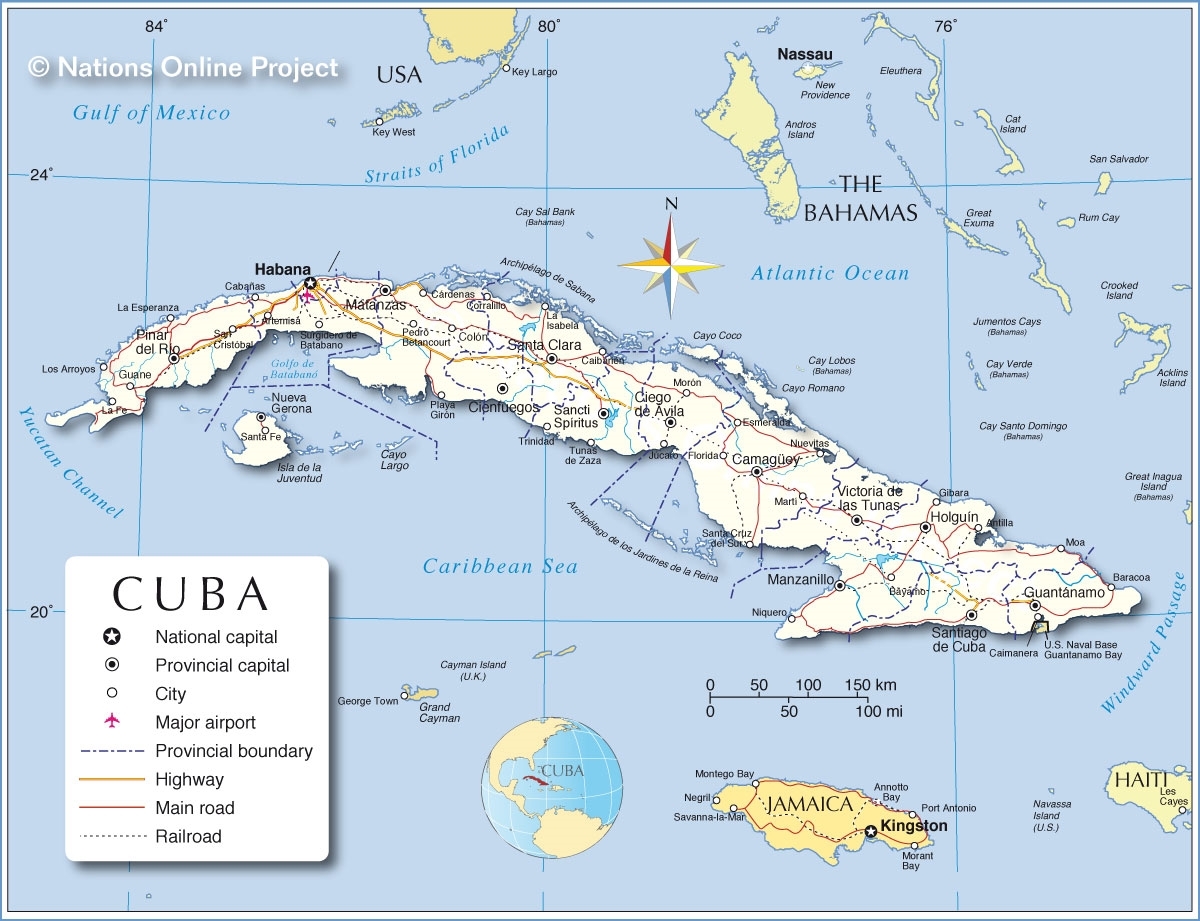
Haifa, Israel-based ZIM Integrated Shipping Services Ltd. (2019 revenues US$3.3 billion) which owns one vessel and charters sixty-nine vessels, provides services from the United States to the Republic of Cuba including to Terminal de Contanedores de Mariel SA (TC Mariel).   

On 30 December 2020, ZIM Integrated Shipping Services Ltd. filed with the United States Securities and Exchange Commission (SEC) a registration statement on Form F-1 for an Initial Public Offering (IPO) in the United States.  The company expects to raise US$300 million to US$500 million providing the company with a market capitalization of US$1.5 billion.   

New York, New York-based Citigroup Inc., New York, New York-based Goldman Sachs & Co., LLC., and London, United Kingdom-based Barclays plc are global coordinators and New York, New York-based Jefferies Group LLC and Oslo, Norway-based Clarksons Platou Securities AS act as joint bookrunners for the proposed offering.  

Mr. Eyal Ofer, a member of the family that controls ZIM Integrated Shipping Services Ltd., has since 1995 served as a Director of Miami, Florida-based Royal Caribbean Group (2019 revenues US$10.9 billion).  Ofer family members have been major shareholders of Royal Caribbean Group.  From the 2019 Form 10-K filing: “On August 27, 2019, two lawsuits were filed against Royal Caribbean Cruises Ltd. in the U.S. District Court for the Southern District of Florida under Title III of the Cuban Liberty and Democratic Solidarity Act, also known as the Helms-Burton Act.”

On 20 December 2020, Jacksonville, Florida-based Crowley Maritime Corporation (2019 revenues approximately US$2.5 billion) and Miami, Florida-based Seaboard Marine, a wholly-owned subsidiary of Merriam, Kansas-based Seaboard Corporation (2019 revenues of US$6.8 billion) were named as defendants in separate lawsuits filed using Title III of the Cuban Liberty and Democratic Solidarity Act of 1996 (known as “Libertad Act”).  Both companies provide services to the Republic of Cuba including to TC Mariel.   

Title III authorizes lawsuits in United States District Courts against companies and individuals who are using a certified claim or non-certified claim where the owner of the certified claim or non-certified claim has not received compensation from the Republic of Cuba or from a third-party who is using (“trafficking”) the asset.  Thus far, thirty-two Title III lawsuits have been filed in jurisdictions throughout the United States. 

The Revolutionary Armed Forces (FAR) of the Republic of Cuba-controls Grupo de Administración Empresarial S.A. (GAESA), which has interests in the tourism, financial investment, import/export, and remittance sectors.  The Special Development Zone of Mariel (ZEDM) is managed by Republic of Cuba government-operated Almacenes Universales S.A., a subsidiary of GAESA.  Almacenes Universales S.A. focuses upon “professional, technical and skilled workers linked to logistics activities, warehousing, transportation and port activities.”   

GAESA is on the State Department’s List of Restricted Entities and Subentities Associated with Cuba (“Cuba Restricted List” or “CRL”).  The CRL is a list of entities and subentities “under the control of, or acting for or on behalf of, the Cuban military, intelligence, or security services or personnel with which direct financial transactions would disproportionately benefit such services or personnel at the expense of the Cuban people or private enterprise in Cuba.” 

GAESA is on the List of Specially Designated Nationals and Blocked Persons by the OFAC pursuant to the Cuban Assets Control Regulations (CACR), 31 C.F.R. part 515. 

Since 2013, vessels from the United States and other countries have been calling at TC Mariel, located approximately forty (road) miles from the city of Havana.  TC Mariel is managed by Singapore-based PSA International Pte Ltd (2019 revenues approximately US$4 billion).  The container terminal is within the 180-square-mile ZEDM.  The facility has 2,300 feet of jetty and four quay cranes which can accommodate 13,000 TEU Neo-Panamax vessels.   

Salvador, Brazil-based Odebrecht (2016 revenues approximately US$30 billion; now in bankruptcy) was the primary contractor for TC Mariel and ZEDM.  Approximately US$683 million in primary financing was provided by Brasilia, Brazil-based National Bank of Economic and Social Development (BNDES) of Brazil.  Institutions in China and Venezuela also provided financing.   

Companies servicing TC Mariel include: Brooklyn Park, Minnesota-based MM Shipping & Freight Forwarding LLC; Copenhagen, Denmark-based Maersk A/S; Geneva, Switzerland-based Mediterranean Shipping Company S.A.; Haifa, Israel-based ZIM Integrated Shipping Services Ltd.; Hamburg Germany-based Hamburg Sud; Hamburg, Germany-based Hapag-Lloyd AG Jacksonville, Florida-based Crowley Maritime Corporation; Marseille, France-based CMA CGM S.A.; Rotterdam, The Netherlands-based W.E.C. Lines B.V.; Shanghai, China-based China Shipping (Group) Company; Shanghai, China-based COSCO Shipping Lines Co.’ Ltd. South Holland, Netherlands-based Nirint Shipping B.V.; and Taipei, Taiwan-based Evergreen Marine Corporation. 

Title III Lawsuits Against Crowley Maritime And Seaboard Marine 

On 2 May 2019, the Trump Administration made operational Title III of the Cuban Liberty and Democratic Solidarity Act of 1996 (known as “Libertad Act”).  Title III authorizes lawsuits in United States District Courts against companies and individuals who are using a certified claim or non-certified claim where the owner of the certified claim or non-certified claim has not received compensation from the Republic of Cuba or from a third-party who is using (“trafficking”) the asset.  Thus far, thirty-two Title III lawsuits have been filed in jurisdictions throughout the United States.   

Libertad Act Title III exceptions to the definition of “trafficking” include “transactions and uses of property incident to lawful travel to Cuba, to the extent that such transactions and uses of property are necessary to the conduct of such travel; or transactions and uses of property by a person who is both a citizen of Cuba and a resident of Cuba, and who is not an official of the Cuban Government or the ruling political party in Cuba.”  There is no visible exception for non-travel-related activity.

The Trade Sanctions Reform and Export Enhancement Act (TSREEA) of 2000 re-authorized the direct commercial (on a cash basis) export of food products (including branded food products) and agricultural commodities from the United States to the Republic of Cuba, irrespective of purpose. The TSREEA does not include healthcare products, which remain authorized and regulated by the Cuban Democracy Act (CDA) of 1992.  For the period December 2001, the first exports using the TSREEA, through October 2020 (latest data), total exports using the TSREEA exceed US$6,270,742,423.00.  In twelve of nineteen years, poultry (transported in containers) was the largest U.S. Dollar value export.  

Currently, United States TSREEA exporters receive control of payment from the Republic of Cuba prior to product departing United States ports.  Previously, United States exporters received control of payment when the vessel arrived to the Republic of Cuba, but had not yet been unloaded. 

From the two recent (31st and 32nd) lawsuit filings: “The fact of the confiscation of the Blanco Rosell Siblings’ property in Cuba was so well known that, on April 18, 2019, the day after the Trump Administration announced that it would allow Helms-Burton Act lawsuits under Title III to go forward, stories published on both Radio Marti and TV Marti identified Plaintiff’s claims to the Mariel Special Development Zone as one of the top 10 potential Helms-Burton Claims: The Mariel Special Development Zone, the star Cuban project to attract investment, was built on nationalized land where the Carranza-Bernal, Carbonell-González and Blanco-Rosell families owned sugar and hemp processing plants.” 

For plaintiffs, there are three focuses:  Do they have standing to file a lawsuit.  Does the court have jurisdiction over the lawsuit.  Does the defendant have assets accessible using a court judgement.   

ODETTE BLANCO DE FERNANDEZ née BLANCO ROSELL, Plaintiff, v. CROWLEY MARITIME CORPORATION, Defendant. [3:20-cv-01426]; Middle District Florida  

Murphy & Anderson, P.A. (plaintiff)
Berliner Corcoran & Rowe LLP (plaintiff)
Fields PLLC (plaintiff)
Law Offices of John S. Gaebe P.A. (plaintiff)

LINK To Complaint (12/20/20)
LINK To Libertad Act Lawsuit Filing Statistics
LINK To Mariel Special Economic Zone

Jacksonville, Florida-based Crowley Maritime Corporation (2019 revenues approximately US$2.5 billion).  “Crowley, founded in 1892, is a privately-held, U.S.-owned and operated logistics, government, marine and energy solutions company headquartered in Jacksonville, Florida. Services are provided worldwide by four primary business units – Crowley Logistics, Crowley (Government) Solutions, Crowley Shipping and Crowley Fuels.” 

ODETTE BLANCO DE FERNANDEZ née BLANCO ROSELL, Plaintiff, v. SEABOARD   MARINE, LTD., Defendant. [1:20-cv-25176; Southern Florida District]  

Horr, Novak & Skipp, P.A. (plaintiff)
Law Offices of John S. Gaebe (plaintiff)
Berliner Corcoran & Rowe (plaintiff)
Fields (plaintiff) 

LINK To Complaint (12/20/20)
LINK To Libertad Act Lawsuit Filing Statistics
LINK To Mariel Special Economic Zone

Miami, Florida-based Seaboard Marine is a wholly-owned subsidiary of Merriam, Kansas-based Seaboard Corporation (2019 revenues of US$6.8 billion). Butterball Turkey is a subsidiary of Seaboard Corporation. Seaboard Corporation 2019 Annual Report: "At Seaboard Marine, our container line operating throughout the Americas surpassed $1 billion in revenues despite fierce competition for market share by both regional and global carriers. We run multiple routes from six U.S. ports to 26 countries in the Caribbean, Central and South America."   

ZIM ANNOUNCES FILING OF F-1 REGISTRATION STATEMENT FOR THE ISSUANCE OF ITS ORDINARY SHARES 

31 December 2020: (Haifa, Israel) ZIM Integrated Shipping Services Ltd. (the "Company"), announces that it filed on December 30, 2020, a registration statement on Form F-1 with the US Securities and Exchange Commission (SEC) for an initial public offering of its ordinary shares.  

The amount of ordinary shares to be offered and the price per share has not yet been determined. Citigroup, Goldman Sachs & Co., LLC., and Barclays act as global coordinators and Jefferies and Clarksons Platou Securities act as joint bookrunners for the proposed offering.  

The proposed offering will be made only by means of a prospectus. Copies of the preliminary prospectus relating to the proposed offering, when available, may be obtained from: Citigroup Global Markets Inc., c/o Broadridge Financial Solutions, 1155Long Island Avenue, Edgewood, New York 11717, by telephone at 1-800-831-9146; Goldman Sachs & Co. LLC, Attention: Prospectus Department, 200 West Street, New York, NY 10282, by telephone at 1-866-471-2526 or by email at prospectus-ny@ny.email.gs.com; and Barclays Capital Inc., c/o Broadridge Financial Solutions, 1155 Long Island Avenue, Edgewood, NY 11717, by telephone at 1-888-603-5847 or by email at barclaysprospectus@broadridge.com. 

From The Company 

“ZIM was established in 1945 by the Jewish Agency, Histadrut labor federation, and the Israel Maritime League. The company's first ship, the Kedmah, was purchased in 1947. The early fleet included ships that were refitted to carry immigrants from Europe and to bring much-needed supplies during the 1948 War of Independence, and the difficult early years of statehood. 

In 1969, approximately 50% of ZIM was acquired by the Israel Corporation. By ZIM’s 25th anniversary in 1970, the company owned 77 ships, chartered 70 ships, and operated 19 major cargo lines, carrying 4.3 million tons of cargo annually.  Next, ZIM made the bold move into container shipping. ZIM was a pioneer in this area, one of the first carriers in the world to adopt the technology that was new at the time, yet destined to dominate the shipping industry in the decades to come. To this end, the company acquired six specialized container ships, in addition to containers and shore equipment 

In 1972, ZIM introduced the innovative ZCS. The “ZIM Container Service” was a three-continent line, with a scheduled 100-day journey that originated in Israel and included ports of call in the Far East, Asia, America and Europe. During this period, ZIM also deployed tankers to carry crude oil from Iran to Israel, and finished goods from Israel to Europe.  During the late 1980s, ZIM embarked on a massive fleet renovation and expansion project. From 1990 to 1997, ZIM built 15 modern ships, enabling the company to offer a weekly fixed-day sailing schedule, positioning ZIM among the world’s top-ranking shipping companies. 

In response to the global shipping crisis in 1997, a result of the financial crisis in Asia, ZIM launched a new effort to optimize the company’s operations through increased efficiency and focused expansion. The company added 13 new 5,000 TEU container ships to its fleet, increasing ZIM’s cargo capacity by a remarkable 50% within two years. 

In 1999, the Ofer Brothers Group became the controlling shareholder of the Israel Corporation. In 2004, the Israel Corporation acquired the remaining ZIM shares held by the government, completing ZIM's privatization process. The current ownership structure was established following a large-scale financial restructuring in 2014.  ZIM's shareholders include Kenon Holdings Ltd. (32%) as well as a number of financial institutions and ship owners (68%).  This stable backing constitutes a solid foundation from which to expand ZIM's activities, along with the strong support needed in order to take ZIM to new heights, as we continue to provide outstanding shipping services and solutions to diverse clients worldwide.

Facts & Figures
Annual turnover 2019: US$3,299.8 million
TEU's Carried in 2019: 2,821,000
Total TEU Capacity (owned and chartered vessels): about 384,000 TEU's
Containers: about 630,000 TEUs of various types
About 81 operated vessels
Ports of Call: 310 throughout the world, with 10 strategically located hubs
Services: Over 100 lines and services, mostly on a weekly, fixed-day basis, covering major trade routes with regional connections
Employees: ~3,800
Agents: ZIM has more than 200 offices and representatives in over 100 countries throughout the world
China: Strong presence in China with 20 offices and branches and hundreds of employees”

Maritime Executive
Fort Lauderdale, Florida
2 January 2021
Zim Files for Initial Stock Offering on the NYSE

Zim filed a preliminary prospectus with the U.S. Securities Exchange Commission on December 31, 2020, for its long-anticipated initial public offering. The container and logistics company plans to trade its shares on the New York Stock Exchange becoming only the second container line after Matson to be listed on the Big Board. 

Terms of the offering are not included in a preliminary filing, which is submitted to the SEC for review and approval, but the Israeli news outlet Globes reports that Zim is targeting raising between $300 and $500 million in the offering, which would give the company a market value of $1.5 billion. The offering, which is being led globally by Barclays, Goldman Sachs, and Citigroup, would provide Zim with funds to support long-term growth initiatives. The prospectus highlights that they do not have specific plans for the proceeds, but that its uses would include investing in vessels, containers, and other digital initiatives, strengthening the capital structure, fostering financial flexibility, or possibly to service or repay certain outstanding debt. 

Zim has been openly discussing its goal of running an IPO for months. The company had taken several steps to improve its financials, including the early repayment of $55 million in debt in September. The timing of the offer, which is expected to be completed by late January, is seen as a move to leverage the strength of the global container and logistics markets.  

Zim's most recent financial results show a strong performance with revenues up more than six percent in the first nine months of 2020 to over $2.6 billion. The adjusted net profit for the first nine months of the year was nearly $176 million versus a $10 million loss in 2019. 

The draft prospectus lays out the investment case for Zim highlighting what they call their “asset-light model,” along with a flexible structure focused on niche routes and markets. The global network includes 66 weekly lines calling at 310 ports in more than 80 countries.  

Zim highlights that it currently only owns one vessel while it charters 69 vessels, which they compare to competitors which they report own 44 percent of their fleets. Zim says that nearly 99 percent of its TEU capacity, which is approximately 359,00 TEU, is chartered. The majority of the vessels they operate are mid-sized with a capacity of between 3,000 and 10,000 TEUs, giving it the ability to service niche routes not fully serviced by competitors. In 2019, Zim reports it carried a total of 2.8 million TEU. 

By operating with a charter fleet, Zim contends that it can quickly adjust capacity in anticipation or in response to changing market conditions. Currently, nearly 80 percent of the fleet is under leases having a remaining charter duration of one year or less.  

Found in 1945, Zim says that it currently services five trade zones. The Transpacific is the largest, accounting for 39 percent of the TEUs carried, followed by the Atlantic, Cross Suez, Intra-Asia, and Latin America. Examples of the niche routes they highlight are the US East Coast and Gulf to the Mediterranean, the eastern Mediterranean and Black Sea to the Far East, and the Far East to the US East Coast. They also highlight their new premium high-speed services which move freight from China to Los Angeles and Australia. Focused on time-sensitive cargo, they believe these services provide an alternative to airfreight. 

One area of growth that Zim highlights is on its Transpacific routes. The company says it is currently exploring long-term lease arrangements for vessels that could reach 15,000 TEU. They would replace smaller vessels on the route, expanding the capacity as well as being among the largest ships in Zim’s fleet.

LINK To Complete Analysis In PDF Format

U.S. Secretary Of State Pompeo Again Telegraphs Returning Cuba To List Of State Sponsors Of Terrorism

United States Department of State
Washington DC
5 January 2021

Secretary Michael R. Pompeo With David Rubenstein of Bloomberg News

Excerpts:

QUESTION: Okay. Let’s talk about some other things that have been in the news recently in your area of domain. It is said that you are considering labeling Cuba a terrorist nation on our State Department watchlist, I guess it is. Is that something you can comment on? Is that likely to happen?

SECRETARY POMPEO: We don’t get out in front of decisions that will be made on designations, but the world knows Cuba’s evil hand in so many places. I’ll give you the perfect example. We’ve been working to create democracy for the people of Venezuela for our entire four years, and it is Cuban efforts, Cuban security operations, Cubans controlling the security apparatus inside of Venezuela that has inflicted massive pain on the Venezuelan people. It is completely appropriate for us to consider whether Cuba is in fact sponsoring terrorism. And if so, just like any other nation that is providing material support to terrorists, they too should be designated such and treated in a way that’s consistent with that behavior that they’re undertaking.

QUESTION: I have been always wondering how Venezuela survives given the fact that its oil production is way down. It doesn’t seem to have an economy that’s – that’s very productive right now. How do you think Venezuela and the government in power there has been able to survive over all these years since Chavez died?

SECRETARY POMPEO: David, you’ve seen this – rogue regimes who inflict massive pain on their people can often survive well past their sell-by date. They do it by stealing. They do it by oppression. They do it by having control of the military or the capacity to inflict kinetic harm on people. They put their people in information fear as well – that is, they have the apparatus that can communicate to their people and impose real emotional burdens on them. They threaten them. Regimes often can survive far longer than the people who are being harmed by them would prefer.

And we’ve done everything we can to deliver for the Venezuelan people a better outcome. It’s tragic that Maduro continues to hang on and inflict so much harm. I think – I think now, David, we’re up to 12 to 15 percent of the Venezuelan people have fled their country. That’s a very telling statistic when that many people decide they just can’t hang in there. They can’t stay where they want to be; they can’t be home. We are very hopeful that the Venezuelan people under President – acting President – excuse me – President Guaido will see the light of day, and we hope that day comes soon.

morse_telegraph_key.jpg

On New Years Day, Anniversary Of Defeat Of Batista, Trump Administration Sanctions Another Military-Controlled Bank In Cuba. More To Come?

United States Department of State
Washington DC

Removing the Cuban Military’s Grip from Cuba’s Banking Sector
01/01/2021 09:40 AM EST

Michael R. Pompeo, Secretary of State 

“Today, the Department of State is announcing the addition of Banco Financiero International S.A. (BFI) to the Cuba Restricted List, effective upon publication in early January. BFI is a Cuban military-controlled commercial bank that benefits directly from financial transactions at the expense of the Cuban people. The Cuban military uses BFI’s key role in foreign exchange to give military and state companies preferential access, secure advantageous exchange rates, and finance government-controlled projects that enrich the regime. The profits earned from these operations disproportionately benefit the Cuban military rather than independent Cuban entrepreneurs, furthering repression of the Cuban people and funding Cuba’s interference in Venezuela. President Trump has made it clear that he stands with the Cuban people in their longstanding struggle for freedom and against the communist regime in Havana. Adding BFI to the Cuba Restricted List furthers the Administration’s goal of preventing the Cuban military from controlling and benefiting from financial transactions that should instead benefit the Cuban people.” 

Grupo de Administración Empresarial S.A. (GAESA) is a Revolutionary Armed Forces (FAR) of the Republic of Cuba-controlled umbrella enterprise with interests in the tourism, financial investment, import/export, and remittance sectors. GAESA’s portfolio includes businesses incorporated in Panama. 

Financiera Cimex S.A. (FINCIMEX) is a financial investment and remittance company owned by GAESA and incorporated in Panama.  FINCIMEX is authorized by the Central Bank of Cuba to finance export operations, conduct financial leasing operations, and handle commercial distribution of remittance cards.  FINCIMEX was the distribution partner in the Republic of Cuba for Denver, Colorado-based Western Union Company (2020 revenues approximately US$5.5 billion) which electronically delivered annually transfers of reportedly valued in the hundreds of millions of dollars from the United States to the Republic of Cuba.   

GAESA and FINCIMEX are already listed on the State Department’s List of Restricted Entities and Subentities Associated with Cuba (“Cuba Restricted List” or “CRL”).  The CRL is a list of entities and subentities “under the control of, or acting for or on behalf of, the Cuban military, intelligence, or security services or personnel with which direct financial transactions would disproportionately benefit such services or personnel at the expense of the Cuban people or private enterprise in Cuba.” 

GAESA and FINCIMEX are already on the List of Specially Designated Nationals and Blocked Persons by Office of Foreign Assets Control (OFAC) of the United States Department of the Treasury pursuant to the Cuban Assets Control Regulations (CACR), 31 C.F.R. part 515. 

Credit Card Usage  

Purchase, New York-based Mastercard Incorporated removed its restriction for the Republic of Cuba on 1 March 2015.  Financial institutions which authorized their Mastercard products (credit card and debit card) for use in the Republic of Cuba: Pompano Beach, Florida-based Stonegate Bank (2017 assets approximately US$2.9 billion); San Juan, Puerto Rico-based Banco Popular of Puerto Rico; and Fort Lauderdale, Florida-based Natbank.  Unknown is how usage of Mastercard products within the Republic of Cuba have are impacted by United States government decisions relating to FINCIMEX and BFI. 

Cuba Government Decisions 

The Republic of Cuba will need to continue to evaluate options relating to FINCIMEX and now BFI, including the sale or transfer of the subsidiary to a non-FAR-controlled Republic of Cuba government-operated entity, such as a financial institution (Banco de Crédito y Comercio S.A. (BANDEC), Banco Popular de Ahorro S.A. (BPA), Banco Internacional de Comercio S.A. (BICSA), and Banco Metropolitano S.A.(BM)) each of which could seamlessly absorb and maintain Fincimex operations.    

There is history for one Republic of Cuba government-operated financial institution transferring operations to another Republic of Cuba government-operated financial institution. 

From Banco Metropolitano S.A.: “(“BM”) is a Cuban commercial bank that has presence only in Havana.  Its corporate object is the pursuit of banking businesses, including but not limited to financial intermediation activities.  BM started its operations in 1996 with a Havana branch office specialized in the provision of banking services solely to the diplomatic community, as well as the foreign natural and legal persons who were residents in Cuba.  By resolution of Banco Central de Cuba (the Cuban Central Bank of “BCC,” for its Spanish acronym), BM’s corporate object, customer base, product portfolio and services were expanded effectively 2004 when BM acquired 30 offices hitherto held by Banco de Crédito y Comercio (“BANDEC,” for its Spanish acronym) and more than 50 offices hitherto held by Banco Popular de Ahorro (“BPA,” for its Spanish acronym), all located in Havana.  As a result, BM established a representative presence in every municipality of the province of Havana.”  

In 2015, BICSA, a member of Republic of Cuba government-operated Grupo Nuevo Banca SA, created by Corporate Charter No. 49 on 29 October 1993 and commenced operation on 3 January 1994, was vetted by the OFAC and approved for a correspondent banking relationship with Conway, Arkansas-based Home BancShares (2020 assets approximately US$14 billion) through its subsidiary Centennial Bank which in 2017 purchased Pompano Beach, Florida-based Stonegate Bank.   

Stonegate Bank  

In 2015, the OFAC authorized Pompano Beach, Florida-based Stonegate Bank (2017 assets approximately US$2.9 billion) to have an account with BICSA.  In 2017, Home BancShares through its Centennial Bank subsidiary purchased Pompano Beach, Florida-based Stonegate Bank.  

However, because the Obama Administration would not authorize BICSA under a license from the OFAC to have an account with Stonegate Bank, United States export-related funds were sent and received through Panama City, Panama-based Multibank, which had, but no longer has extensive dealings with the Republic of Cuba.    

From Bogota, Colombia-based Grupo Aval on 16 June 2020: “On May 25th, Banco de Bogotá, through its subsidiary Leasing Bogotá S.A. Panamá, acquired 96.6% of the ordinary shares of Multi Financial Group. As part of the acquisition process, MFG’s operation in Cuba was closed and as part of the transaction. Grupo Aval complies with OFAC regulations and doesn't have transactional relationships with Cuba.”

OFAC Releases 2019 Terrorist Asset Report- Cuba Not Included

United States Department of the Treasury
Washington DC

TERRORIST ASSETS REPORT (Calendar Year 2019)

Twenty-eighth Annual Report to the Congress on Assets in the United States Relating to Terrorist Countries and Organizations Engaged in International Terrorism

LINK To:
2020 Report (not yet available)
2019 Report
2018 Report
2017 Report
2016 Report
2015 Report (Republic Of Cuba Included)

Reports 2006-2016

Reports 1994-2005

Screenshot_2020-12-31 Inbox - Mail - John Kavulich - Network Solutions Webmail.png

OFAC Sanctions California-Based BitGo, Inc., For Cuba Digital Wallet Management Service

Enforcement Release: December 30, 2020 OFAC Enters Into $98,830 Settlement with BitGo, Inc. for Apparent Violations of Multiple Sanctions Programs Related to Digital Currency Transactions BitGo, Inc. (“BitGo”), a technology company based in Palo Alto, California, that implements security and scalability platforms for digital assets and offers non-custodial secure digital wallet management services, has agreed to remit $98,830 to settle its potential civil liability for 183 apparent violations of multiple sanctions programs (the “Apparent Violations”).

As a result of deficiencies related to BitGo’s sanctions compliance procedures, BitGo failed to prevent persons apparently located in the Crimea region of Ukraine, Cuba, Iran, Sudan, and Syria from using its non-custodial secure digital wallet management service. BitGo had reason to know that these users were located in sanctioned jurisdictions based on Internet Protocol (IP) address data associated with devices used to log into the BitGo platform. At the time of the transactions, however, BitGo failed to implement controls designed to prevent such users from accessing its services. OFAC determined that BitGo did not voluntarily self-disclose the Apparent Violations and that the Apparent Violations constitute a non-egregious case.

This action emphasizes that OFAC sanctions compliance obligations apply to all U.S. persons, including those involved in providing digital currency services. As part of a risk-based approach, OFAC encourages companies that provide digital currency services to implement sanctions compliance controls commensurate with their risk profile.

LINK To OFAC Settlement Document

bitgo_owler_20191016_033145_original.jpg

Analyses By Two Cuba Analysts Are Wrong: Biden Administration Will Not Abandon Florida & Title III Not Yet In Play

Miami Herald
Miami, Florida
29 December 2020

Will Biden restore ties with Cuba? Debate swirls over next steps as Florida loss muddies plans  

Article Excerpts [bold italics added]: 

Some analysts reject concerns about a political fallout from a new thaw in Cuba relations.  “Biden doesn’t owe anything to Cuban Americans,” said Richard Feinberg, a University of California professor and former diplomat. “Florida is now a red state.” 

But there are smaller moves the administration could take.  The new administration could try “trust-building” steps such as suspending Title III’s right to sue companies accused of trafficking in property seized by the Fidel Castro government and engaging the Cuban government in a new round of negotiations of pending U.S. claims, said Ric Herrero, the executive director of the Cuban Study Group, an organization that has promoted U.S. engagement with the island.  While reversing Trump’s executive orders would be fairly easy, he said making deeper progress on normalization will take time.  “So much depends on the Cubans,” Herrero said. “If they line up all the economic reforms they have announced, that opens up a lot of opportunities.” 

UPDATE: On 9 January 2021, the Democratic Party of the State of Florida elected as chairman The Honorable Manny Diaz, a former mayor of Miami, Florida. Mr. Diaz is of Cuban descent. LINK To Article

Commentary: 

Mr. Feinberg 

Mr. Feinberg shares that Florida “is now a red-state,” suggesting the [Joseph] Biden Administration should not believe it encumbered by appeasing its 2020 population of 21.48 million residents (14.5 million registered voters) where the Republican Party has 5,219,015 and the Democratic Party has 5,335,965; and 3,790,478 have no party affiliation.  Is Florida “a red-state?”   

In the 2020 Presidential Election, Florida voted 51.2% Republican to 47.9% Democratic; in 2016, 49.0% Republican to 47.8% Democratic; in 2012, 50.0% Democratic to 49.1% Republican; and in 2008, 51.0% Democratic to 48.2% Republican.  These statistics would likely not have a political consultant avoiding a paid position an election contest in Florida. 

Do the following changes from the 116th United States Congress to the 117th United States Congress reinforce Mr. Feinberg’s opinion that Florida is enduringly lost to the Democratic Party?  

For 116th Congress:
Senate- 2 R
House- 13 R and 14 D

For 117th Congress:
Senate- 2 R
House- 15 R and 12 D

20 July 2020: “Successful politics is about addition and multiplication, not subtraction and division. If we're gonna win as a party, we're gonna have to appeal to more people and not shrink the base.”  Governor Larry Hogan (R- Maryland).  A valid statement too for the Democratic Party.

Does Mr. Feinberg suggest the Biden Administration not be concerned about the number of Democrats in the United States House of Representatives where the Democratic Party will in the 117th United States Congress have perhaps a majority of single digits?  

The 2020 Census is expected to deliver to Florida two (2) additional seats in the United States House of Representatives.   

The state legislature in Florida is controlled by Republican Party.  In 2021, the Florida Senate (24- R and 16- D) and the Florida House of Representatives (78- R and 42- D) will expectantly seek to craft favorably the two new districts for the United States House of Representatives.  There will likely too be court challenges. 

Lastly, there are the unknowns which can influence future elections (2022 and 2024) in Florida: H.E. Nicolas Maduro, President of Venezuela, is removed from office.  H.E. Daniel Ortega, President of Nicaragua, is removed from office.  The government of the Republic of Cuba decides to robustly engage with the Biden Administration; the certified claims are resolved.  

Neither the Biden Administration nor the Democratic Party headquarters in Washington DC will abandon Florida. 

Mr. Herrero 

There are no pressing reasons, there is no pressure upon President-elect Biden to suspend again Title III of the Libertad Act.   

There are thirty-two lawsuits filed: some dismissed, others in courts of appeals.  There is no meaningful Florida-based constituency advocating for another suspension; there is no meaningful national political constituency advocating for another suspension; there is no meaningful national business constituency advocating for another suspension.  

Regardless of which political party in the 117th United States Congress controls the United States Senate, the margin will be 50-50, 51-49 or 52-48.  Close enough for the Biden Administration to be required to negotiate with the minority, regardless of which political party is in the minority as there are Democrats and Republicans who will oppose another suspension of Title III and the decision to do so could impact support for other Republic of Cuba-related and non-Republic of Cuba-related issues important to the Biden Administration.    

President-elect Biden, along with his incoming foreign policy staff, is known for process, for negotiation.  There has been no final court judgement (award) against any defendant during the 607 days since the implementation of Title III.  Only when there are final court rulings, final judgements, would the Biden Administration probably again look to suspend Title III.  At present, there is nothing the Biden Administration can point to linking the implementation of Title III with preventing a specific domestic policy or foreign policy goal.  There is no you-did-this-and-so-that-did-not-happen moment.  There might be in 2021, but there is not now.  

As for “trust building,” the implementation of Title III has far more meaning to the European Union (EU) than to the Republic of Cuba.  Only two (2) Republic of Cuba government-controlled companies have been sued, while eight (8) companies in the EU are defendants.  The EU will be expected to seek from the Biden Administration another suspension of Title III.  The Biden Administration will be expected to respond with a question- what will the EU do to assist the United States with a resolution of the 5,913 certified claims against the Republic of Cuba?  Quid-pro-quo.  

The government of the Republic of Cuba had during the Obama Administration (2009-2017) numerous opportunities to negotiate- or at least initiate formal, bilateral negotiations for a settlement of the certified claims (and only the certified claims) and chose on multiple occasions not to do so.  There also existed, perhaps less so, opportunities during the Trump Administration (2017-2021). A grave miscalculation by the Obama Administration for not making conditional progress on resolving the certified claims with progress on other bilateral commercial, economic, and political issues.  There has been a substantial cost to United States companies for the failure of leadership by the Obama Administration and then [Raul] Castro Administration with respect to resolving the certified claims.  Beginning on 20 January 2021, the Biden Administration can correct that missed opportunity. 

xgigbgzgw2h2.png

Could Buffalo, New York-based Roswell Park Comprehensive Cancer Center Be A Defendant In A Libertad Act Lawsuit? Is This What Title III Intended?  

Buffalo, New York-based Roswell Park Comprehensive Cancer Center
Is This What Title III Of The Libertad Act Was Intended To Deliver To Claimants?
Location Of Joint Venture May Become An Issue

In April 2015, Buffalo, New York-based Roswell Park Comprehensive Cancer Center (RPCCC) signed an agreement with the Republic of Cuba government-operated Center for Molecular Immunology (CIM) to develop a lung cancer vaccine with a clinical trial in the United States.  

In August 2016, RPCCC received authorization from the United States Food and Drug Administration (FDA) to commence a Phase One Clinical Trial of the lung cancer treatment vaccine CIMAvax-EGF® to a limited number of patients.  

In October 2016, RPCCC received authorization from the Office of Foreign Assets Control (OFAC) of the United States Department of the Treasury in Washington DC to establish a commercial joint venture with CIM, to be located in the Mariel Special Development Zone (ZEDM) and which will be the first commercial joint venture with a United States-based entity in the Republic of Cuba licensed to research, develop, manufacture and market biotech products in the Republic of Cuba.  

In September 2018, RPCCC created a joint venture biotech company located in the Republic of Cuba, Innovative Immunotherapy Alliance S.A., operated by CIM commercial affiliate, CIMAB S.A., and by GBCT II LLC, a wholly-owned subsidiary of RPCCC.  

Libertad Act Title III Lawsuits Involving ZEDM 

ODETTE BLANCO DE FERNANDEZ née BLANCO ROSELL, Plaintiff, v. CROWLEY MARITIME CORPORATION, Defendant. [3:20-cv-01426 Middle District Florida]

Murphy & Anderson, P.A. (plaintiff)
Berliner Corcoran & Rowe LLP (plaintiff)
Fields PLLC (plaintiff)
Law Offices of John S. Gaebe P.A. (plaintiff)

LINK To Lawsuit Filing: Crowley Maritime Corporation Is 32nd Libertad Act Lawsuit- Plaintiffs Target Use Of ZEDM Port

ODETTE BLANCO DE FERNANDEZ née BLANCO ROSELL, Plaintiff, v. SEABOARD MARINE, LTD., Defendant. [1:20-cv-25176; Southern Florida District]

Horr, Novak & Skipp, P.A. (plaintiff)
Law Offices of John S. Gaebe (plaintiff)
Berliner Corcoran & Rowe (plaintiff)
Fields (plaintiff)

LINK To Lawsuit Filing: Seaboard Marine Is 31st Libertad Act Lawsuit- Plaintiff Targets Mariel Special Economic Zone Operations

LINK To Previous Posts About RPCCC

ZED Mariel Background 

“Mariel Special Development Zone is the first of its type in Cuba and enjoys a privileged geographic location, in the center of the Caribbean Sea, at the crossroads of the main maritime commercial traffic routes in the Western Hemisphere. The Office of Mariel Special Development Zone is the entity attached to the Council of Ministers, in charge of managing the Zone, controlling its activities, elaborating and conducting its Development and Business Program.

ZED Mariel provides a world class production and logistics platform which will enable an increase in national production levels, reduce import costs, boost growth, create jobs and facilitate direct foreign investment. It is an area of the national territory, located in the north of Artemisa province, 45 km west of Havana, regulated by special regimes and policies, designed to attract investment in the production of goods and the provision of services with added value, using knowledge and innovation, as well as clean technologies, generating industrial concentration to replace imports, boost exports and generate new sources of employment. Goods and services generated in ZED Mariel can be traded with all legal entities established in the country, inside or outside Mariel. Exports from Cuba are exempted from customs tariffs.”

Contact information
Pelícano Business Center, 3rd floor, Zone A-5, Sector A.
Email: ventanillaunica@zedmariel.co.cu
Telephone: (53-47) 397360 to 63

LINK To ZED Mariel Internet Site

LINK To List Of Companies Operating Within ZED Mariel (as of 24 December 2020) 

Largest Companies With Operations In ZED Mariel
Paris, France-based Bouygues Construction (Bouygues S.A. 2019 revenues approximately US$40 billion)
Marseille, France-based CMA CGM S.A. (2019 revenues approximately US$33 billion)
Vevey, Switzerland--based Nestle S.A. (2019 revenues approximately US$94 billion)
London, United Kingdom-based Unilever (2019 revenues approximately US$59 billion) 

Libertad Act 

The Trump Administration has made operational Title III and further implemented Title IV of the Cuban Liberty and Democratic Solidarity Act of 1996 (known as “Libertad Act”). Title III authorizes lawsuits in United States District Courts against companies and individuals who are using a certified claim or non-certified claim where the owner of the certified claim or non-certified claim has not received compensation from the Republic of Cuba or from a third-party who is using (“trafficking”) the asset.   

LINK To Libertad Act Title III Lawsuit Statistics

After Nearing 700 Days Since Farm Bill Authorized Use Of USDA FMD/MAP Funding In Cuba, 1st Request Is Reported- For Potatoes

According the United States Department of Agriculture (USDA), no request was made in Fiscal Years 2019 or 2020 to use the Republic of Cuba provision in H.R. 2, the five-year Agriculture Improvement Act, known as the “Farm Bill” signed into law on 20 December 2018 by The Honorable Donald J. Trump, President of the United States.  No requests in the more than 700 days since the Republic of Cuba became eligible for funding. The USDA has since revised their statements. 

According to Denver, Colorado-based Potatoes USA, the organization applied to the USDA for the use of MAP (Market Access Program) funding in May 2019. The amount of the request was US$60,000.00. In November 2020, 33,118 pounds (15,022 kilos or 21.04 metric tons) of potato seeds valued at US$44,760.00 were shipped to the Republic of Cuba in a container by ocean freight.

From AndNowUKnow:

Potatoes USA Sends First Shipment of U.S. Seed Potatoes to Cuba
23 December 2020

“DENVER, CO - A new fresh produce adventure recently began for the team at Potatoes USA. The company has bolstered its operations once again by sending its first seed potatoes shipment to Cuba. Ten different varieties were included in the trial, which will be headed up by the Ministry of Agriculture in Cuba. Once the trial is completed, Potatoes USA may begin the shipment of commercial U.S. seed potatoes.  [Potatoes expected for harvest in March 2021.] 

John Toaspern, Chief Marketing Officer, Potatoes USA“The U.S. potato industry appreciates the efforts by USDA APHIS and FAS staff to secure market access for U.S. seed potatoes to Cuba,” said John Toaspern, Chief Marketing Officer. “This is a natural market for U.S. seed potato exporters and we look forward to continuing to work with USDA to develop and build the market. We also appreciate the cooperation of the Cuban Ministry of Agriculture in both the market access protocol and the initial trials of U.S. seed potatoes. We believe that it will be a real benefit for Cuban potato producers to have access to high quality U.S. seed potatoes.” 

According to a press release, the USDA and Ministry of Agriculture signed a market access protocol for these seeds to enter Cuba. The details of the shipping requirements will be posted to the USDA APHIS PCIT export database and available on the Global Trade Regulations Database. 

The process of finalizing this shipment began six years ago when Potatoes USA leaders and industry experts visited Cuba. The company received approval to utilize USDA Market Access Program (MAP) funds in Cuba for the July 2020/June 2021 marketing year.” 

Previous Posts About USDA FMD/MAP 

USDA Received Zero MAP/FMD Program Applications For Cuba in 2019 Or 2020; Will Any Group Request For FY2021?

USDA Has Up To US$201 Million Available For Cuba- Why Doesn't Any Organization Want To Use It?

ZED Mariel Has 16 Companies Operating; One Approved By U.S. Government Not Yet Operational. Might All Be Potential Defendants In Libertad Act Lawsuits?

Largest Companies With Operations In ZED Mariel
Paris, France-based Bouygues Construction (Bouygues S.A. 2019 revenues approximately US$40 billion)
Marseille, France-based CMA CGM S.A. (2019 revenues approximately US$33 billion)
Vevey, Switzerland--based Nestle S.A. (2019 revenues approximately US$94 billion)
London, United Kingdom-based Unilever (2019 revenues approximately US$59 billion)

“Mariel Special Development Zone is the first of its type in Cuba and enjoys a privileged geographic location, in the center of the Caribbean Sea, at the crossroads of the main maritime commercial traffic routes in the Western Hemisphere. The Office of Mariel Special Development Zone is the entity attached to the Council of Ministers, in charge of managing the Zone, controlling its activities, elaborating and conducting its Development and Business Program.

ZED Mariel provides a world class production and logistics platform which will enable an increase in national production levels, reduce import costs, boost growth, create jobs and facilitate direct foreign investment. It is an area of the national territory, located in the north of Artemisa province, 45 km west of Havana, regulated by special regimes and policies, designed to attract investment in the production of goods and the provision of services with added value, using knowledge and innovation, as well as clean technologies, generating industrial concentration to replace imports, boost exports and generate new sources of employment. Goods and services generated in ZED Mariel can be traded with all legal entities established in the country, inside or outside Mariel. Exports from Cuba are exempted from customs tariffs.”

Contact information
Pelícano Business Center, 3rd floor, Zone A-5, Sector A.
Email: ventanillaunica@zedmariel.co.cu
Telephone: (53-47) 397360 to 63


LINK To ZED Mariel Internet Site
LINK To List Of Companies Operating Within ZED Mariel (as of 24 December 2020)

LINK To Lawsuit Filing: Seaboard Marine Is 31st Libertad Act Lawsuit- Plaintiff Targets Mariel Special Economic Zone Operations
LINK To Lawsuit Filing: Crowley Maritime Corporation Is 32nd Libertad Act Lawsuit- Plaintiffs Target Use Of ZEDM Port

Companies Listed As Operating In ZED Mariel (as of 24 December 2020)

Terminal de contenedores Mariel S.A.
Operation of containerized cargo.

Servicios logísticos Mariel S.A.
Logistics and transport services.

Banco Financiero Internacional S.A
Banking services.

Financiera Iberoamericana S.A.
Financial services.

Logística Hotelera del Caribe S.A.
Logistics.

UNILEVER SUCHEL S.A.
Production of toiletries and cleaning products.

NESCOR S.A
Food production.

CARILOG
Logistics services.

PROFOOD SERVICE S.A.
Production of drinks and juices.

BDC LOG S.A.
Logistics and transport services.

DEVOX CARIBE S.A.
Production of paints.

WOMY EQUIPMENT RENTAL b.v.
Heavy equipment rental, repairs and maintenance.

BOUYGUES CONSTRUCCIÓN CUBA S.A.
Engineering and construction.

ENGIMOV CARIBE S.A.
Engineering, construction and production of construction materials.

BDC TEC S.A.
Electronics.

RESA CARIBE S.A.
Multi-directional scaffolding equipment, electrical access platforms, industrial and...

Not Listed Among Companies With Operations In ZED Mariel:

Buffalo, New York-based Roswell Park Comprehensive Cancer Center (RPCCC) 

In April 2015, RPCCC signed an agreement with the Republic of Cuba government-operated Center for Molecular Immunology (CIM) to develop a lung cancer vaccine with a clinical trial in the United States.  

In August 2016, RPCCC received authorization from the United States Food and Drug Administration (FDA) to commence a Phase One Clinical Trial of the lung cancer treatment vaccine CIMAvax-EGF® to a limited number of patients.  

In October 2016, RPCCC received authorization from the Office of Foreign Assets Control (OFAC) of the United States Department of the Treasury in Washington DC to establish a commercial joint venture with CIM, to be located in the Mariel Special Development Zone (ZEDM) and which will be the first commercial joint venture with a United States-based entity in the Republic of Cuba licensed to research, develop, manufacture and market biotech products in the Republic of Cuba.  

In September 2018, RPCCC created a joint venture biotech company located in the Republic of Cuba, Innovative Immunotherapy Alliance S.A., operated by CIM commercial affiliate, CIMAB S.A., and by GBCT II LLC, a wholly-owned subsidiary of RPCCC.

Crowley Maritime Corporation Is 32nd Libertad Act Lawsuit- Plaintiffs Target Use Of ZEDM Port

Jacksonville, Florida-based Crowley Maritime Corporation (2019 revenues approximately US$2.5 billion).  “Crowley, founded in 1892, is a privately-held, U.S.-owned and operated logistics, government, marine and energy solutions company headquartered in Jacksonville, Florida. Services are provided worldwide by four primary business units – Crowley Logistics, Crowley (Government) Solutions, Crowley Shipping and Crowley Fuels.” 

ODETTE BLANCO DE FERNANDEZ née BLANCO ROSELL, Plaintiff, v. CROWLEY MARITIME CORPORATION, Defendant. [3:20-cv-01426]; Middle District Florida 

Murphy & Anderson, P.A. (plaintiff)
Berliner Corcoran & Rowe LLP (plaintiff)
Fields PLLC (plaintiff)
Law Offices of John S. Gaebe P.A. (plaintiff)

LINK To Complaint (12/20/20)
LINK To Libertad Act Lawsuit Filing Statistics

LINK To Mariel Special Economic Zone

Excerpts:

CUBA’S CONFISCATION OF THE CONFISCATED PROPERTY 46. On September 29, 1960, per Resolution 436, the Cuban Government announced the confiscation without compensation of all assets and rights, whatever their nature, then owned by the Blanco Rosell Siblings and which are herein defined as the Confiscated Property. Such Confiscated Property includes, inter alia, Maritima Mariel, the 70-year Concession, Central San Ramón, Azucarera Mariel, as well as all the “all shares or stock certificates representing capital of the entities listed in the [other] Whereas of [Resolution 436], ” which included, inter alia, the 70-Year Concession and all the lands owned by these entities. See Resolution 436 at 23406. 

The fact of the confiscation of the Blanco Rosell Siblings’ property in Cuba was so well known that, on April 18, 2019, the day after the Trump Administration announced that it would allow Helms-Burton Act lawsuits under Title III to go forward, stories published on both Radio Marti and TV Marti identified Plaintiff’s claims to the Mariel Special Development Zone as one of the top 10 potential Helms-Burton Claims: The Mariel Special Development Zone, the star Cuban project to attract investment, was built on nationalized land where the Carranza-Bernal, Carbonell-González and Blanco-Rosell families owned sugar and hemp processing plants.1 

THE CUBAN GOVERNMENT INCORPORATED THE CONFISCATED PROPERTY INTO THE ZONA ESPECIAL DE DESAROLLO MARIEL (“ZEDM”) (a/k/a MARIEL SPECIAL ECONOMIC ZONE) 54. The Zona Especial de Desarollo Mariel (“ZEDM”) (a/k/a Mariel Special Economic Zone) is an agency or instrumentality of the Cuban Government.  Created by statute, the ZEDM is a special economic zone in Cuba with its own legal structure.  55. As stated above, the ZEDM has been referred to in the media as “the star Cuban project to attract investment.” See supra, ¶ 51. Starting in or around 2009, the Government of Cuba and various non-Cuban corporate partners rebuilt the Port of Mariel and constructed a container terminal in the ZEDM.  58. The ZEDM’s container terminal subsumes the Blanco Rosell Siblings’ 70-Year Concession rights, pursuant to which they possessed the right, among other things, “to plan, study, execute, maintain, and exploit public docks and warehouses in the Bay of Mariel, province of Pinar del Rio, and the construction of new buildings and works…” See Decree 2367 at 13865. 

CROWLEY’S TRAFFICKING 63. For several years, Crowley has trafficked in the Confiscated Property, by purposefully directing container ships from the port of Jacksonville, Florida to Mariel, Cuba, either directly or by causing, directing, participating in, or profiting from trafficking by or through another person. When in Mariel, the container ships dock at, and/or otherwise use, benefit, and profit from the container terminal in the ZEDM including the ZEDM’s ports, docks, warehouses, and facilities. Crowley also engages in commercial activities using or otherwise benefitting from the ZEDM and Plaintiff’s Confiscated Property.  64. According to one of Crowley’s Cuba-related business websites: Crowley is the only U.S. company that has provided efficient, dependable liner shipping service from the U.S. directly to Cuba since 2001. …. With our partner in Cuba, we offer assistance with Customs clearance and timely delivery to the doors of destinations across Cuba. 

Crowley is therefore trafficking in Plaintiff’s Confiscated Property and benefits or profits from the trafficking of the ZEDM and/or the trafficking of others in Plaintiff’s Confiscated Property.  67. On August 27, 2020, Plaintiff, through counsel, sent Crowley a letter (“Notice Letter”) pursuant to 22 U.S.C. § 6082(a)(3)(D) notifying Crowley that Crowley is trafficking in confiscated property as defined in the Helms-Burton Act, the claims to which are owned by Plaintiff, without the authorization of Plaintiff.  On September 28, 2020, a process server delivered the Notice Letter to Crowley.  68. In an email dated September 18, 2020, Crowley’s counsel acknowledged receipt of Plaintiff’s Notice Letter and requested an introductory call with Plaintiff’s counsel.

Even after Defendant Crowley received Plaintiff’s Notice Letter, giving Crowley actual notice of Plaintiff’s claims, Defendant Crowley continued to traffic in the Confiscated Property.  70. On or about December 3, 2020, the ship TUCANA J, International Marine Organization (“IMO”) number 9355472, navigated from the Port of Jacksonville to the Bay of Mariel arriving on or about December 5, 2020 for the benefit and/or profit of Crowley.

future-vessel-small-class.jpg

Seaboard Marine Is 31st Libertad Act Lawsuit- Plaintiff Targets Mariel Special Economic Zone Operations

Miami, Florida-based Seaboard Marine is a wholly-owned subsidiary of Merriam, Kansas-based Seaboard Corporation (2019 revenues of US$6.8 billion). Butterball Turkey is a subsidiary of Seaboard Corporation. Seaboard Corporation 2019 Annual Report: "At Seaboard Marine, our container line operating throughout the Americas surpassed $1 billion in revenues despite fierce competition for market share by both regional and global carriers. We run multiple routes from six U.S. ports to 26 countries in the Caribbean, Central and South America."  

ODETTE BLANCO DE FERNANDEZ née BLANCO ROSELL, Plaintiff, v. SEABOARD   MARINE, LTD., Defendant. [1:20-cv-25176; Southern Florida District] 

Horr, Novak & Skipp, P.A. (plaintiff)
Law Offices of John S. Gaebe (plaintiff)
Berliner Corcoran & Rowe (plaintiff)
Fields (plaintiff)

LINK To Complaint
LINK To Libertad Act Lawsuit Filing Statistics

LINK To Mariel Special Economic Zone

Excerpts:

THE CONFISCATED PROPERTY 38. Plaintiff, a U.S. national as defined by 22 U.S.C. § 6023(15)(A), owns claims to the Confiscated Property, which includes a 70-year Concession to develop docks, warehouses and port facilities on Mariel Bay.  A. Maritima Mariel SA and the 70-Year Concession 39. Maritima Mariel SA (“Maritima Mariel”) was a Cuban corporation set up in 1954 and owned in equal parts by the Blanco Rosell Siblings, including Plaintiff. 

The fact of the confiscation of the Blanco Rosell Siblings’ property in Cuba was so well known that on April 18, 2019, the day after the Trump Administration announced it would allow Helms-Burton Act lawsuits under Title III to go forward, stories published on both Radio Marti and TV Marti identified Plaintiff’s claims to the Confiscated Property, that comprise the current Mariel Special Development Zone, as one of the top 10 potential Helms-Burton Claims: The Mariel Special Development Zone, the star Cuban project to attract investment, was built on nationalized land where the Carranza-Bernal, Carbonell-González and Blanco-Rosell families owned sugar and hemp processing plants.1 

THE CUBAN GOVERNMENT INCORPORATED THE CONFISCATED PROPERTY INTO THE ZONA ESPECIAL DE DESAROLLO MARIEL (“ZEDM”) (a/k/a MARIEL SPECIAL ECONOMIC ZONE) 54. The Zona Especial de Desarollo Mariel (“ZEDM”) (a/k/a Mariel Special Economic Zone) is an agency or instrumentality of the Cuban Government. Created by statute, the ZEDM is a special economic zone in Cuba with its own legal structure.  55. As stated above, the ZEDM has been referred to in the media as “the star Cuban project to attract investment.” See supra, ¶ 51. 

SEABOARD MARINE’S TRAFFICKING 63. Seaboard Marine has, since at least May 2019, trafficked in the Confiscated Property, by purposefully directing container ships from the port of New Orleans, Louisiana to Mariel, Cuba, either directly or by causing, directing, participating in, or profiting from trafficking by or through another person. When in Mariel, the container ships dock at, and/or otherwise use, benefit, and profit from the container terminal in the ZEDM including the ZEDM’s ports, docks, warehouses, and facilities. Seaboard Marine also engages in commercial activities using or otherwise benefitting from the ZEDM and Plaintiff’s Confiscated Property. 

Even after Defendant Seaboard Marine and non-party Seaboard Corp. received Plaintiff’s Notice Letters, giving them actual notice of Plaintiff’s claims, Defendant Seaboard Marine and non-party Seaboard Corp. continued to traffic in the Confiscated Property.  69. By way of example, on or about November 17, 2020, the container ship NORD BALTIC, International Marine Organization (“IMO”) number 9241475, navigated from the Napoleon Container Terminal in New Orleans to the container terminal in the ZEDM on or about November 21, 2020 for the benefit and/or profit of Seaboard Marine.

unnamed.jpg

Cuba Expected To Install New Ambassador In Washington- First Woman

United States Department of State
Washington DC

Diplomatic Corps Order of Precedence: In accordance with relevant Articles of the Vienna Convention on Diplomatic Relations, heads of diplomatic missions appear on the Diplomatic Corps Order of Precedence list in their respective classes and in the order of the date and time of assuming their duties.

ORDER OF PRECEDENCE: Reported to the Office of the Chief of Protocol as of January 18, 2021
CHARGE D’AFFAIRES AD INTERIM FOR BILATERAL MISSIONS
Rodney Amaury Gonzalez Maestrey (12/21/20)

The Washington Diplomat
Washington DC
22 December 2020

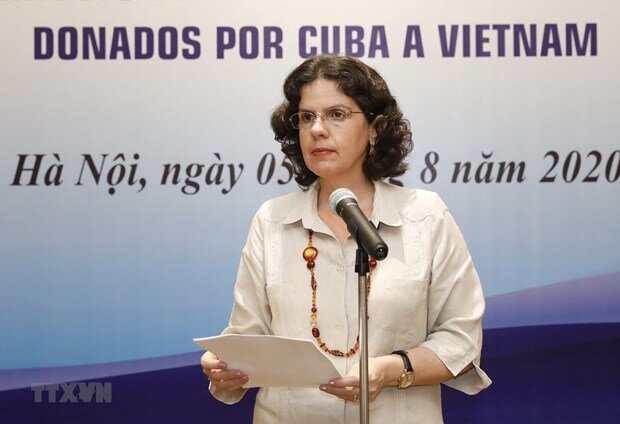
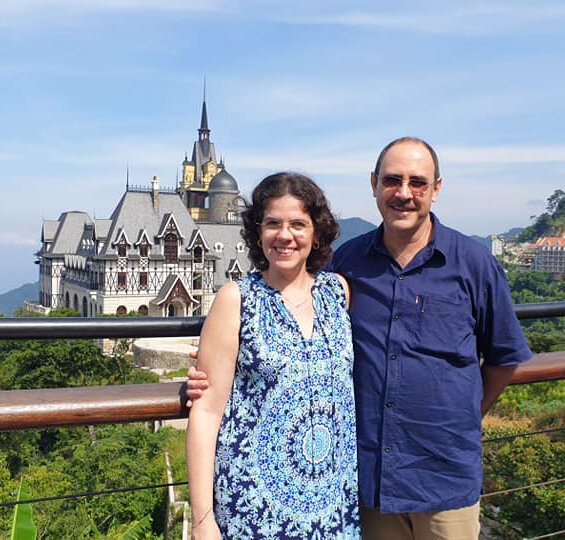
“New appointments: After eight years as Cuba’s top diplomat in the United States- a period that saw the dramatic re-establishment of diplomatic ties between Washington and Havana after a 54-year hiatus- José Ramón Cabañas Rodríguez is going home. He will be replaced by Lianys Torres Rivera, Cuba’s current ambassador to Vietnam.  Torres, the first woman ever to head Cuba’s mission in Washington, will take up her new post as chargé d’affaires upon approval of her visa, and once international flights resume. Torres graduated from Havana’s Instituto Superior de Relaciones Internacionales in 1994 and has been posted in Hanoi since September 2017. As ambassador there, Torres has been instrumental in securing Vietnamese aid to Cuba to help fight COVID-19.” 

The Biden Administration will promptly approve in 2021 H.E. Lianys Torres Rivera, Ambassador of the Republic of Cuba to Vietnam, as Ambassador of the Republic of Cuba to the United States with the designee included in the first groups to the Oval Office at The White House to present their credentials to The Honorable Joseph Biden, President of the United States.   

The decision by the Biden Administration to accept and to accept promptly a replacement to manage the Embassy of the Republic of Cuba in Washington DC should not be mischaracterized, misunderstood by those who support a return to the commercial, economic, and political bilateral landscape in existence prior to 20 January 2017. 

The symbolism will represent more about what can be rather than what was in the bilateral relationship.  The Biden Administration message- there can and should be official dialogue, but that dialogue needs to amount to more than more dialogue and, critically, the Republic of Cuba must address internal issues and issues relating to Venezuela. 

United States companies, who have been predictably sidelined since 2017 by Trump Administration decisions, remain hopeful for a change in bilateral atmospherics, telemetry and, importantly, for the government of the Republic of Cuba to continue with its commercial, economic, and political transformation which will provide opportunities for United States companies to have more than a presence in the incoming visitor marketplace.   

There remain from 2015 commercial opportunities for product and service importation, product and service exportation, and product and service offerings authorized during the Obama Administration which the government of the Republic of Cuba neither encouraged nor approved.   

Crucial for the new Ambassador of the Republic of Cuba to the United States to embark upon a structured outreach to those who do not support a functioning bilateral relationship between the United States and the Republic of Cuba.  Resist the natural gravitational pull to engage solely with individuals (public sector and private sector) and companies and organizations who provide positive messaging reinforcement.  The following statements remain instructive to projecting the baselines for Biden Administration commercial, economic and political policies relating to the Republic of Cuba:  

The Miami Herald
Miami, Florida
29 October 2020

Biden also made direct appeals to Cubans and Venezuelans, many of whom live in South Florida after fleeing their countries. “We have to vote for a new Cuba policy as well,” Biden said. “Trump is the worst possible standard-bearer for democracy in places like Cuba, Venezuela, North Korea. Cuba is no closer to freedom and democracy today than it was four years ago. Trump loves to talk tough, but he doesn’t care about the Cuban and Venezuelan people. He won’t even grant Temporary Protected Status to Venezuelans fleeing the oppressive Maduro regime. I will, but we have to vote.”

The Miami Herald
Miami, Florida
9 September 2020

“It’s fair to say that everybody shares a little bit of disappointment about the direction that the government in Cuba chose to go” after the normalization of U.S.-Cuba ties, [The Honorable John] Kerry [United States Secretary of State 2013-2017] told me. He added that, “Cuba seemed to harden down after the initial steps were taken.”  Kerry said that while almost six decades of U.S. trade sanctions on the island failed to bring about democratic changes, and Trump’s recent sanctions should be reversed, a Biden presidency would probably “re-invigorate” America’s human-rights policies on Cuba.  “I think the vice president, as president, will very much want to make it clear that human rights is at the forefront of American foreign policy, that Cuba will need to be called out on some of the human-rights abuses,” Kerry told me. 

Diplomatic Background 

Ambassador Cabanas had since 2012 served as Chief of the Cuban Interests Section in Washington DC.  He retained the title of ambassador due to posting in Austria from 2001 to 2005.  On 17 September 2015, he presented credentials to The Honorable Barack Obama (D), President of the United States (2019-2017) and became Ambassador Extraordinary and Plenipotentiary of the Republic of Cuba to the United States.   

The last United States ambassador to the Republic of Cuba was The Honorable Philip Bonsal (1903-1995) who arrived 3 March 1959 and departed 28 October 1960.  There had been twenty ambassadors from 1902 to 1960. 

Since 1960, according to the United States Department of State, there has been one Chargé d’Affaires ad interim, fourteen Principal Officers, and two Chargé d’Affaires. 

There are approximately 11.3 million Republic of Cuba nationals residing on 780-mile-long archipelago ninety-three miles south of from Key West, Florida.  There are approximately 2.1 million individuals of Cuban descent residing in the United States with the majority in Florida and New Jersey.

U.S. Secretary Of State Pompeo: "... disrupting Cuba’s malign support for the illegitimate Maduro regime in Venezuela."

Additions of Cuban Military-Owned Companies to the Specially Designated Nationals and Blocked Persons List

12/21/2020 11:43 AM EST

Michael R. Pompeo, Secretary of State

Today, the Department of the Treasury’s Office of Foreign Assets Control (OFAC) added three Cuban military-owned companies to its Specially Designated Nationals and Blocked Persons List (SDN List).  All property and interests in property of these entities that are in the United States or in the possession or control of persons subject to U.S. jurisdiction continue to be blocked and must be reported to OFAC.

The companies are Grupo de Administración Empresarial SA (GAESA), FINCIMEX, and Kave Coffee S.A.  GAESA is the Cuban military’s largest company, which controls large portions of Cuba’s economy for the military’s benefit.  Cuban military-controlled FINCIMEX funnels remittances through channels that disproportionately benefit the Cuban military.  Kave Coffee S.A., a coffee company domiciled in Havana and incorporated in Panama, is part of an international network of Cuban-owned companies maintained by the Cuban military and used to evade the U.S. embargo.

The revenue generated from the Cuban military’s economic activities is used to entrench the Cuban military’s control, prop up the Cuban Communist Party’s power, oppress the Cuban people, and fund Cuba’s interference in Venezuela.  Today’s action demonstrates the United States’ long-standing commitment to ending economic practices that disproportionately benefit the Cuban government or its military, intelligence, and security agencies or personnel, at the expense of the Cuban people.  It also demonstrates the United States’ commitment to disrupting Cuba’s malign support for the illegitimate Maduro regime in Venezuela.

The United States will continue to support the Cuban people in their desire for a democratic government and respect for human rights, including freedom of religion, expression, and association.  Until these rights and freedoms are respected, we will continue to hold the regime accountable.

maxresdefault.jpg

OFAC Adds Fincimex, GAESA, Kave Coffee (Panama) To SDN List- Biden Administration Will Weigh Carefully Any Reversal

Washington – Today, the U.S. Department of the Treasury’s Office of Foreign Assets Control (OFAC) identified three entities controlled by the Cuban military with strategic roles in the Cuban economy. Two of the entities, Financiera Cimex S.A. and Kave Coffee, S.A., are subsidiaries of the third entity, the large Cuban government enterprise Grupo de Administración Empresarial S.A., and use their Panamanian incorporation to subvert international trade restrictions. “The Trump administration remains committed to targeting the Cuban regime for its malign behavior and attempts to circumvent United States sanctions,” said Secretary Steven T. Mnuchin. The following entities are being identified on the List of Specially Designated Nationals and Blocked Persons by OFAC pursuant to the Cuban Assets Control Regulations (CACR), 31 C.F.R. part 515.

GRUPO DE ADMINISTRACIÓN EMPRESARIAL S.A.

Grupo de Administración Empresarial S.A. (GAESA) is a Cuban military-controlled umbrella enterprise with interests in the tourism, financial investment, import/export, and remittance sectors of Cuba’s economy. GAESA’s portfolio includes businesses incorporated in Panama to bypass CACR-related restrictions.

FINANCIERA CIMEX S.A.

Financiera Cimex S.A. (FINCIMEX) is a financial investment and remittance company owned by GAESA and incorporated in Panama. FINCIMEX is authorized by the Central Bank of Cuba to finance export operations, conduct financial leasing operations, and handle commercial distribution of remittance cards.

KAVE COFFEE, S.A.

Kave Coffee, S.A. (Kave) is a coffee company domiciled in Havana, Cuba, and incorporated in Panama. Kave is an indirect subsidiary of GAESA and serves as a leading commodity company based around the nationalized “Cubita” coffee brand.

For more information on Cuba sanctions, click here.

STATE DEPARTMENT INFORMATION

GAESA and FINCIMEX are also listed on the State Department’s List of Restricted Entities and Subentities Associated with Cuba (“Cuba Restricted List” or “CRL”).  The CRL is a list of entities and subentities under the control of, or acting for or on behalf of, the Cuban military, intelligence, or security services or personnel with which direct financial transactions would disproportionately benefit such services or personnel at the expense of the Cuban people or private enterprise in Cuba.

For more information on the additional restrictions on GAESA, FINCIMEX, and other entities and subentities by virtue of their listing on the CRL, please see 31 C.F.R. part 515.209.

“As part of its enforcement efforts, OFAC publishes a list of individuals and companies owned or controlled by, or acting for or on behalf of, targeted countries. It also lists individuals, groups, and entities, such as terrorists and narcotics traffickers designated under programs that are not country-specific. Collectively, such individuals and companies are called "Specially Designated Nationals" or "SDNs." Their assets are blocked and U.S. persons are generally prohibited from dealing with them.”

There are eighty-two (82) Republic of Cuba-affiliated entities on the SDN List. LINK

The following entities have been added to OFAC's SDN List:

FINANCIERA CIMEX S.A (a.k.a. FINCIMEX), Calle 8, Entre 3ra Y 5ta Ave, 319 Playa, Havana, Cuba; Panama; RUC # 12555-91-124494 (Panama) [CUBA].

GRUPO DE ADMINISTRACION EMPRESARIAL S.A. (a.k.a. GAESA; a.k.a. "GRUPO GAE"), Edificio de la Marina, Avenida Del Puerto Y Brapia, Havana, Cuba; Organization Established Date 28 Feb 1999; Organization Type: Activities of holding companies [CUBA].

KAVE COFFEE S.A. (a.k.a. KAVE COFFEE S A), Panama; Calle A No. 310 entre 3ra y 5ta, Municipio Playa, Havana, Cuba; RUC # 22044-123-197519 (Panama) [CUBA].


KAVE COFFEE, S.A.
Company Number: 197519
Native Company Number: 197519S
Status: Vigente
Incorporation Date: 7 August 1987 (over 33 years ago)
Company Type: SOCIEDAD ANONIMA
Jurisdiction: Panama
Registered Address: PROVINCIA PANAMÁ, Panama
Agent Name: MORGAN Y MORGAN
Directors / Officers
DOLORES GAEZ, suscriptor
EL PRESIDENTE GONZALO BERNAZA, Y EN SU AUSENCIA EL VICEPRESIDENTE-VICTOR VIZQUERRA, representante
HECTOR OROZA BUSUTIL, presidente
HECTOR OROZA BUSUTIL, director
JOSE ROBERTO LUTTRELL, suscriptor
MALI SURIS VALMAÑA, secretario
MALI SURIS VALMAÑA, director
MORGAN Y MORGAN, agent
ROSARIO FERRER SAN EMETERIO, director
ROSARIO FERRER SAN EMETERIO, vicepresidente

15 Candidates For President-elect Biden: U.S. Ambassador To Cuba. Job Description Requirement: Negotiator

The Honorable Joseph Biden (D), the 46th President of the United States as of 12:00 pm on 20 January 2021, should after his inauguration submit promptly to the United States Senate a nominee for United States Ambassador to the Republic of Cuba.   

The Biden Administration would be rewarded by selecting as ambassador a high-profile fluent (preferably or lesson-accepting) Spanish-speaking high-level individual retired from the elected public sector (United States Congress or Governor) or private sector (corporate executive) whose stature will result in a voice respected by the government of the Republic of Cuba- and represent a “leak-proof back channel to The White House.”   

A career foreign service officer, currently employed or former, as ambassador at this time will neither possess the gravitas to confront the government of the Republic of Cuba nor be respected by the government of the Republic of Cuba nor have an ability to connect with a global network of relationships, particularly governments, companies, and media.    

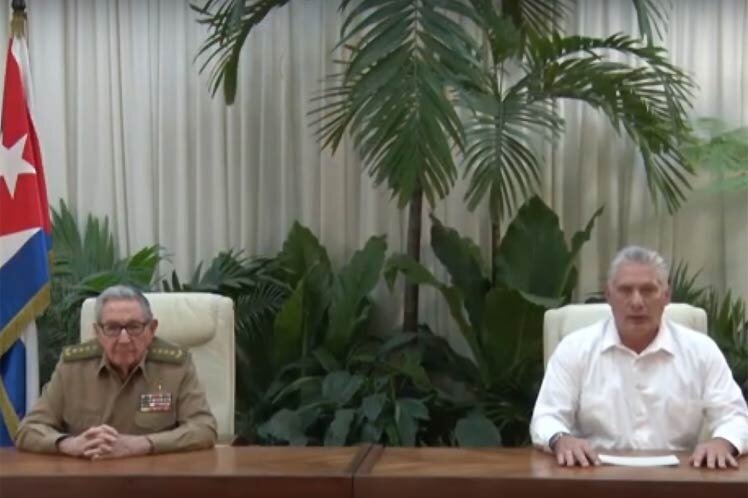
If there exist opportunities for a United States-Republic of Cuba rapprochement, particularly regarding reaching a settlement for the 5,913 certified claims against the Republic of Cuba, and gain assistance from the Republic of Cuba to resolve issues relating to Venezuela, when the United States ambassador shares with H.E. Miguel Diaz-Canel, President of the Republic of Cuba, “I will discuss with President Biden; I give you my word,” President Diaz-Canel needs to have confidence in those words.  

What is required and what has been thus far absent is a negotiator rather than a diplomat.  Private sector executives and those elected to public office are by definition negotiators.   

The next United States Ambassador to the Republic of Cuba, even if the individual would commit only to a limited tenure, must be an individual whom President Biden considers a friend and a confidant and someone whose judgement he trusts.   

In alphabetical order 

Mr. G. Allen Andreas (Florida)
Chairman and Chief Executive Officer- ADM (1997-2006)

Mr. Micky Arison (Florida)
Chairman- Carnival Corporation & plc (2013-Present)

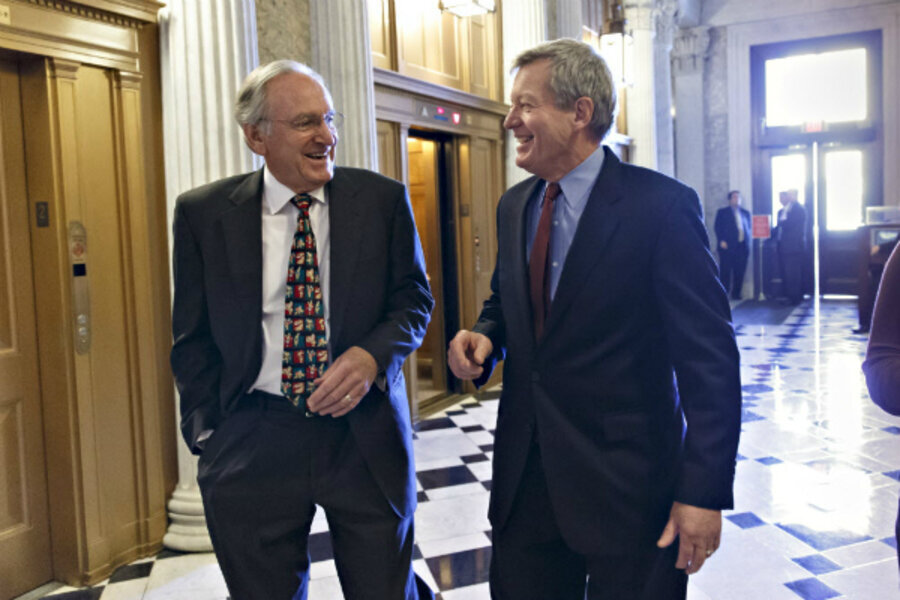
The Honorable Max Baucus (D- Montana)
United States Ambassador to China (2014-2017)
United States Senate (1978-2014)
United States House of Representatives (1975-1978)

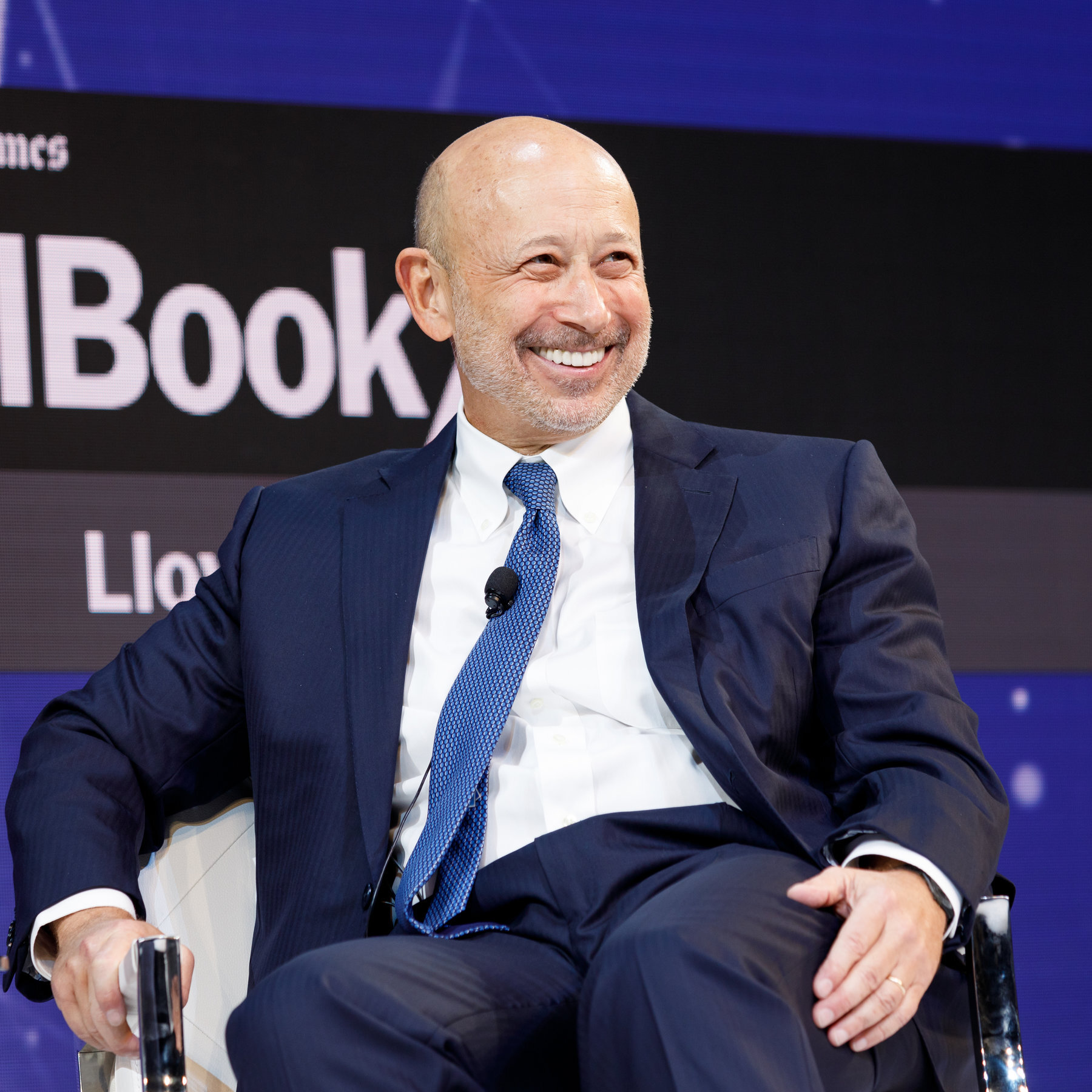
Mr. Lloyd Blankfein (New York)
Senior Chairman- Goldman Sachs (2019-Present)
Chairman and Chief Executive Officer- Goldman Sachs (2006-2018)

The Honorable Bob Corker (R- Tennessee)
United States Senate (2007-2019)

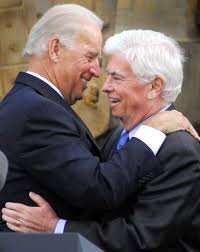
The Honorable Christopher Dodd (D- Connecticut)
Motion Picture Association of America (2011-2017)
United States Senate (1981-2011)
United States House of Representatives (1975-1981)

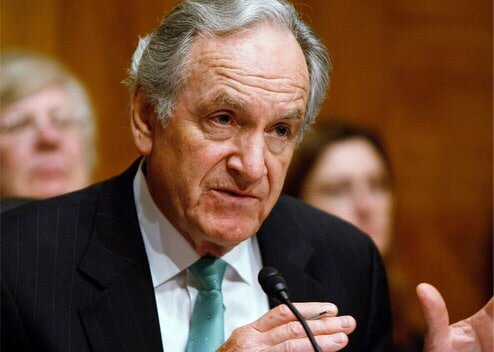
The Honorable Tom Harkin (D- Iowa)
United States Senator (1985-2015)
United States House of Representatives (1975-1985)

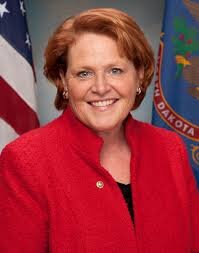
The Honorable Heidi Heitkamp (D- North Dakota)
United States Senate (2013-2019)

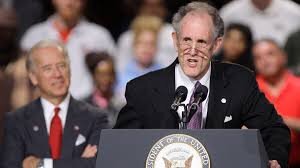
The Honorable Ted Kaufman (D- Delaware)
Head- Biden Transition (2020)
United States Senator (2009-2010)
Office of Senator Biden (1976-1995)

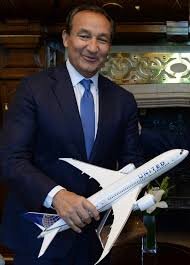
Mr. Oscar Munoz (Illinois)
Chairman and Chief Executive Officer- United Airlines (2015-2020)

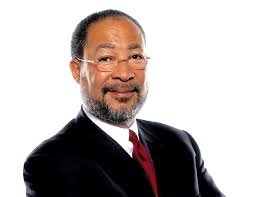
Mr. Richard Parsons (New York)
President- Time Warner (1995-2002)
Chairman and Chief Executive Officer- AOL Time Warner (2002-2008)
Chairman- Citigroup (2009-2012)
Interim Chairman- Los Angeles Clippers (2014)
Interim Chairman- CBS (2018)

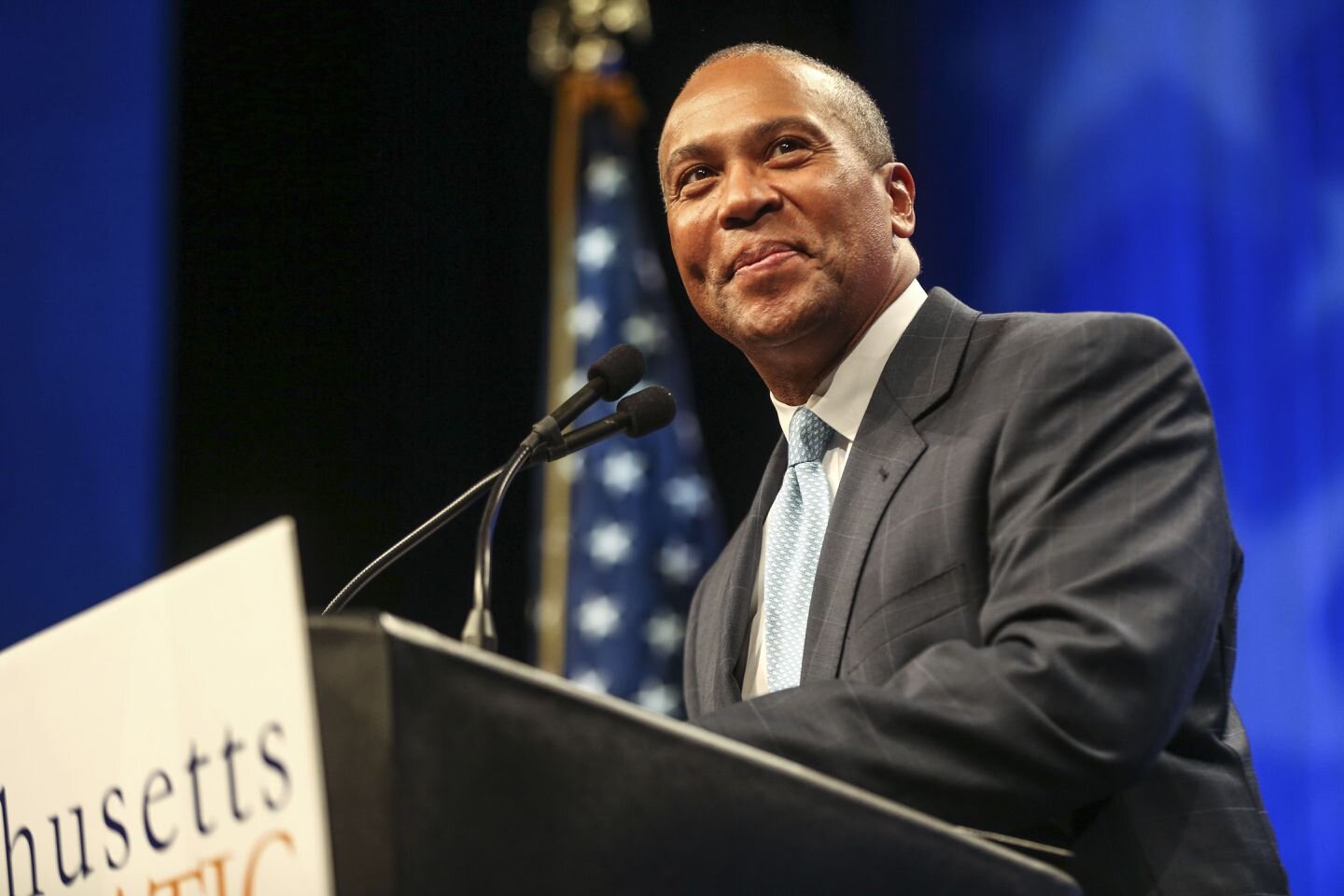
The Honorable Deval Patrick (D- Massachusetts)
Governor (2007-2015)

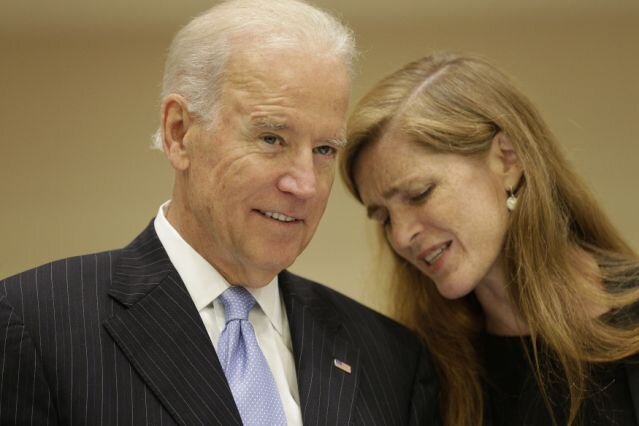
The Honorable Samantha Power (D- Massachusetts)
Permanent Representative of the United States to the United Nations (2013-2017)

The Honorable Jose Serrano (D- New York)
United States House of Representatives (1990-2021)

The Honorable Jim Webb (D- Virginia)
United States Senate (2007-2013)

The last United States ambassador to the Republic of Cuba was The Honorable Philip Bonsal (1903-1995) who arrived 3 March 1959 and departed 28 October 1960.  There had been twenty ambassadors from 1902 to 1960. 

Since 1960, according to the United States Department of State, there has been one Chargé d’Affaires ad interim, fourteen Principal Officers, and two Chargé d’Affaires. 

H.E. Jose Ramon Cabanas Rodriguez, Ambassador Extraordinary and Plenipotentiary of the Republic of Cuba to the United States, has served in Washington DC since 17 September 2015.  It is time to even-up the diplomatic bilateral landscape.  

There are approximately 11.3 million Republic of Cuba nationals residing on 780-mile-long archipelago ninety-three miles south of from Key West, Florida.  There are approximately 2.1 million individuals of Cuban descent residing in the United States with the majority in Florida and New Jersey. 

The nomination of an ambassador to the Republic of Cuba is not a reward for the Republic of Cuba.  In fact, the full-time presence of a high-profile ambassador in Havana could be irritating for the government of the Republic of Cuba as an ambassador using their official status can create cringe-worthy or greater controversy.  An ambassador has an inherent position from which to advocate, officially and unofficially, where a lesser ranking diplomat lacks standing.  The appointment of an ambassador represents strength, not weakness or fecklessness. 

For the incoming Biden Administration, an ambassador to the Republic of Cuba is re-energizing the United States Department of State, an oft-stated goal of candidate former Vice President (and before that United States Senator) Biden and President-elect Biden, as well as thus far from those he intends to appoint and those he intends to nominate for foreign policy-focused positions in the United States government. 

An ambassador to the Republic of Cuba will provide the United States with every level of diplomatic representation, every tool to use throughout a country that has, is and will remain consequential directly to the United States, but particularly relevant currently with respect to resolving issues relating to Venezuela. 

A high-profile ambassador to the Republic of Cuba would challenge H.E. Miguel Diaz-Canel, President of the Republic of Cuba, as he would need to accept the credentials of an ambassador knowing the ambassador would have far greater official and unofficial communicative outlets, particularly ambassador-to-ambassador engagement with the approximately one hundred other country and organization diplomatic missions.   

Those who espouse the appointment of a United States Ambassador to the Republic of Cuba is rewarding the malign behavior of the government of the Republic of Cuba and provides legitimacy to the government of the Republic of Cuba do have an argument, but not the argument.  If appropriate, for example in a dispute, an ambassador may be recalled for consultations- a high-profile rebuke.  There is also the potential spectacle of the government of the Republic of Cuba refusing to accept the credentials of the individual selected by President Biden.  

Far better for the United States to have in place a formidable diplomatic presence with a protocol-protected voice to focus upon issues of importance to the United States, particularly the unresolved health issues impacting United States diplomats.

On 19 July 2015, the United States had a seven-story structure in Havana built in 1953 formerly designated as the United States Embassy, but since 1977 served as the United States Interests Section whose senior diplomat, The Honorable Jeffrey DeLaurentis, was “Principal Officer [Chief] of the Cuban Interests Section.”

On 20 July 2015, the same seven-story structure reverted to its original status, United States Embassy, whose senior diplomat was now “The Honorable Jeffrey DeLaurentis, Chargé d’Affaires.”   

Ambassador Cabanas had since 2012 served as Chief of the Cuban Interests Section in Washington DC.  He retained the title of ambassador due to posting in Austria from 2001 to 2005.  On 17 September 2015, he presented credentials to The Honorable Barack Obama (D), President of the United States (2019-2017) and became Ambassador Extraordinary and Plenipotentiary of the Republic of Cuba to the United States.   

On 27 September 2016, President Obama nominated Ambassador DeLaurentis [title due to previous United States Senate confirmation as United States Ambassador to the United Nations for Special Political Affairs from 2001-2004] to be United States Ambassador to the Republic of Cuba.  At the time, the United States Senate was not controlled by the Democratic Party, so Ambassador DeLaurentis would not likely have been confirmed.  There may have been an opportunity for a recess appointment. 

Unfortunate that President Obama arrived at Jose Marti International Airport (HAV) in Havana on 20 March 2016 and was not met by the United States Ambassador to the Republic of Cuba at the bottom of the staircase with red carpet brought to Air Force One. 

President Biden will not make a mission of becoming another President of the United States to visit the Republic of Cuba, but he can have in Havana an Ambassador Extraordinary and Plenipotentiary as his personal representative… locked and loaded.  

Whichever party is in control of the United States Senate on 20 January 2021 should not be a factor for President Biden- he should submit a nomination and permit the United States Senate to “advise and consent” as provided in Article II Section 2 of the United States Constitution.  If rejected, the responsibility will be with its 100 members.

COMPLETE ANALYSIS IN PDF FORMAT

President Biden Should Appoint An Ambassador To Cuba- Not As Reward, But As Weapon 

The Honorable Joseph Biden (D), the 46th President of the United States as of 12:00 pm on 20 January 2021, should after his inauguration submit promptly to the United States Senate a nominee for United States Ambassador to the Republic of Cuba.   

The last United States ambassador to the Republic of Cuba was The Honorable Philip Bonsal (1903-1995) who arrived 3 March 1959 and departed 28 October 1960.  There had been twenty ambassadors from 1902 to 1960. 

Since 1960, according to the United States Department of State, there has been one Chargé d’Affaires ad interim, fourteen Principal Officers, and two Chargé d’Affaires. 

H.E. Jose Ramon Cabanas Rodriguez, Ambassador Extraordinary and Plenipotentiary of the Republic of Cuba to the United States, has served in Washington DC since 17 September 2015.  It is time to even-up the diplomatic bilateral landscape.  

There are approximately 11.3 million Republic of Cuba nationals residing on 780-mile-long archipelago ninety-three miles south of from Key West, Florida.  There are approximately 2.1 million individuals of Cuban descent residing in the United States with the majority in Florida and New Jersey. 

The nomination of an ambassador to the Republic of Cuba is not a reward for the Republic of Cuba.  In fact, the full-time presence of a high-profile ambassador in Havana could be irritating for the government of the Republic of Cuba as an ambassador using their official status can create cringe-worthy or greater controversy.  An ambassador has an inherent position from which to advocate, officially and unofficially, where a lesser ranking diplomat lacks standing.  The appointment of an ambassador represents strength, not weakness or fecklessness. 

For the incoming Biden Administration, an ambassador to the Republic of Cuba is re-weaponizing the United States Department of State, an oft-stated goal of candidate former Vice President (and before that United States Senator) Biden and President-elect Biden, as well as thus far from those he intends to appoint and those he intends to nominate for foreign policy-focused positions in the United States government. 

The nomination of an ambassador to the Republic of Cuba will provide the United States with every level of diplomatic representation, every tool to use throughout a country that has, is and will remain consequential directly to the United States, but particularly relevant currently with respect to resolving issues relating to Venezuela.   

Installing a high-profile ambassador to the Republic of Cuba would challenge H.E. Miguel Diaz-Canel, President of the Republic of Cuba, as he would need to accept the credentials of an ambassador knowing the ambassador would have far greater official and unofficial communicative outlets, particularly ambassador-to-ambassador engagement with the approximately one hundred other country and organization diplomatic missions. 

Those who espouse the appointment of a United States Ambassador to the Republic of Cuba is rewarding the malign behavior of the government of the Republic of Cuba and provides legitimacy to the government of the Republic of Cuba do have an argument, but not the argument.  If appropriate, for example in a dispute, an ambassador may be recalled for consultations- a high-profile rebuke.  There is also the potential spectacle of the government of the Republic of Cuba refusing to accept the credentials of the individual selected by President Biden.  

Far better for the United States to have in place a formidable diplomatic presence with a protocol-protected voice to focus upon issues of importance to the United States, particularly the unresolved health issues impacting United States diplomats.   

A career foreign service officer, currently employed or former, as ambassador at this time will neither possess the gravitas to confront the government of the Republic of Cuba nor be respected by the government of the Republic of Cuba.   

The Biden Administration should select as ambassador a high-profile fluent Spanish-speaking individual retired from the public sector (United States Senator or Governor) or private sector (corporate executive) whose stature will result in a voice respected by the government of the Republic of Cuba- and represent a “leakproof back channel to The White House.”   

If there exist opportunities for a United States-Republic of Cuba rapprochement, particularly regarding reaching a settlement for the 5,913 certified claims against the Republic of Cuba, and gain assistance from the Republic of Cuba to resolve issues relating to Venezuela, then when the United States ambassador shares with H.E. Miguel Diaz-Canel, President of the Republic of Cuba, “I will discuss with President Biden; I give you my word,” President Diaz-Canel needs to have confidence in those words.   

The next United States Ambassador to the Republic of Cuba, even if the individual would commit only to a two-year tenure, must be an individual whom President Biden considers a friend and a confident and someone whose judgement he trusts.   

Having a high-profile diplomatic bull in the diplomatic china shop will also have value at receptions within the five-acre residence compound of the United States Ambassador- homecourt advantage to advocate for issues of importance to President Biden.   

  • On 19 July 2015, the United States had a seven-story structure in Havana built in 1953 formerly designated as the United States Embassy, but since 1977 served as the United States Interests Section whose senior diplomat, The Honorable Jeffrey DeLaurentis, was “Principal Officer [Chief] of the Cuban Interests Section.” 

  • On 20 July 2015, the same seven-story structure reverted to its original status, United States Embassy, whose senior diplomat was now “The Honorable Jeffrey DeLaurentis, Chargé d’Affaires.”   

Ambassador Cabanas had since 2012 served as Chief of the Cuban Interests Section in Washington DC.  He retained the title of ambassador due to posting in Austria from 2001 to 2005.  On 17 September 2015, he presented credentials to The Honorable Barack Obama (D), President of the United States (2019-2017) and became Ambassador Extraordinary and Plenipotentiary of the Republic of Cuba to the United States.   

On 27 September 2016, President Obama nominated Ambassador DeLaurentis [title due to previous United States Senate confirmation as United States Ambassador to the United Nations for Special Political Affairs from 2001-2004] to be United States Ambassador to the Republic of Cuba.  At the time, the United States Senate was not controlled by the Democratic Party, so Ambassador DeLaurentis would not likely have been confirmed.  There may have been an opportunity for a recess appointment. 

Unfortunate that President Obama arrived at Jose Marti International Airport (HAV) in Havana on 20 March 2016 and was not met by the United States Ambassador to the Republic of Cuba at the bottom of the staircase with red carpet brought to Air Force One. 

President Biden will not make a mission of becoming another President of the United States to visit the Republic of Cuba, but he can have in Havana an Ambassador Extraordinary and Plenipotentiary as his personal representative… locked and loaded.  

Whichever party is in control of the United States Senate on 20 January 2021 should not be a factor for President Biden- he should submit a nomination and permit the United States Senate to “advise and consent” as provided in Article II Section 2 of the United States Constitution.  If rejected, the responsibility will be with its 100 members.

LINK TO COMPLETE ANALYSIS IN PDF FORMAT

Cuba Promoting Minority Shareholding By Government In Operations With Foreign Entities

Havana Times
Manaugua, Nicaragua
16 December 2020

Cuba Ends Majority Owner Requirement in Joint Ventures
Cuba’s Foreign Trade and Investment Minsiter Rodrigo Malmierca Diaz.
This requirement will only remain in force for the extraction of natural resources and public services sectors.


By Cubaencuentro

HAVANA TIMES – Cuba’s Foreign Trade and Investment minister, Rodrigo Malmierca, announced that the State will no longer require to be a majority share of joint business ventures in the tourism, biotechnology, and wholesale trade sectors. He said this will lift an important barrier for foreign investment, EFE news agency reports.

This majority ownership requirement will only remain in force for the extraction of natural resources and public service sectors. The minister spoke during the recently concluded 2020 Business Forum held online in Havana. Malmierca explained that in tourism, biotechnology, pharmaceuticals and wholesale trade, “projects can be 50-50 or the Cuban State can hold a minority share.” He didn’t clarify whether this new directive is already in force or whether it will happen soon.

Cuba authorized mixed companies in the 1990s. These included hotel resorts belonging to the State and run by Spanish companies such as Melia or Iberostar. Those joint ventures acted as an important engine of the economy. To date, the Cuban government’s share has always been more than a 50% interest. Malmierca highlighted the need for “more active” foreign participation in the Cuban economy and said that businesses with lesser scope and investment but focused more on exports to encourage local development, are in the works.

Mariel Special Development Zone

The Cuban minister also announced that the Mariel Special Development Zone (ZEDM), Cuba’s main project to attract foreign investment, has brought in over 730.5 million USD (some 605.5 million euros at the current exchange rate) in investment in 2020. A modern business project and trade port to the west of the capital, ZEDM has 55 approved projects, eight of which are funded with Cuban capital alone, 30 funded 100% by foreign capital, 15 mixed companies and two international economic associations. Founded in 2013, this project and port was the government’s way of encouraging comprehensive proposals that allow the country to substitute imports, encourage exports of national produce with greater added value and to generate jobs. ZEDM occupies an area of 465.4 km2 in an important strategic area for maritime transport. Mariel is one of the main ports on Cuba’s north-western coast.

New business portfolio

Malmierca presented a new business portfolio on the island that has 503 projects seeking foreign investment. This is 43 more than the previous portfolio. The total requires an estimated 12.07 billion USD in investment (more than 10 billion euros).

Considered the locomotive of the Cuban economy, the tourism sector has the greatest number of opportunities, with 131 ventures. According to official estimates, Cuba needs over 2 billion USD (1.657 billion euros) per year in foreign investment for strategic sectors to generate exports, replace imports and promote productive chains.

Between 2018 and 2019, the country brought in over more than 1.7 billion USD (1.409 billion euros) with 25 new foreign investment ventures. The Business Forum held online because of COVID-19, included business people from 93 countries, to push for foreign capital investment in Cuba. Cuba’s chronic economic crisis was greatly intensified because of the pandemic, which hit tourism particularly hard. Moreover, tougher commercial and financial sanctions from the US in the past two years only worsened the situation.

el-ministro-de-comercio-exterior-y-la-inversion-extranjera-de-cuba-rodrigo-malmierca-diaz.jpg

Secretary Of State Pompeo To Biden Administration: "Ultimate Fruit" Can Be Borne

United States Department of State
Washington DC

Secretary Michael R. Pompeo With Alex Marlow of Breitbart News Radio on SiriusXM Patriot
12/14/2020 10:43 AM EST


Michael R. Pompeo, Secretary of State

Excerpt…

QUESTION:  What’s your biggest fear for the United States for the next four years when it comes to international relations? 

SECRETARY POMPEO:  I’ll – I haven’t really given too much thought to it.  I know this:  The work that we’ve done – we talked about China, we’ve now talked about the Middle East and Iran – the work that we’ve done with respect to Venezuela and Cuba to maintain our efforts to prevent them from falling further down the socialist hole, and to say that we are not going to permit the kinds of activities that Maduro and the Cuban regime are taking, have been incredibly important for the Western Hemisphere as well.  Those efforts have not yet borne the ultimate fruit, but I’m very confident that if we continue the policies that President Trump has laid down with respect to Venezuela and Cuba, Americans will be safer.

1200px-Breitbart_News.svg.png

Cuba To Unify Currencies; Result Could Present Opportunities For Biden Administration And U.S. Companies

If President Miguel Diaz-Canel of the Republic of Cuba had to select one item from a list of priorities for his term in office, it would be merging of the currencies and implementation of a single floating exchange rate.  While the necessary pain to the population would not be avoidable, the result would revive the interest by companies in Cuba's marketplace.  

If the Diaz-Canel Administration can successfully implement a unification and devaluation, sources for Direct Foreign Investment (DFI) will be supportive, as will governments; and United States companies will remain idled, but ready when opportunities emerge.  

As the Republic of Cuba implements commercial, economic and political changes, particularly those which it would rather not accept- those identified as lessening the control of the government, specifically the military, the incoming Biden Administration will have increased opportunities to respond and to initiate supportive measures.  

The decision by President Diaz-Canel to merge the currencies and eliminate multiple exchange rates may result in him serving a single term due to the pain inflicted upon the population- if so, this decision would be worth it for the country and helpful for his legacy.  

Prensa Latina
Havana, Republic of Cuba
10 December 2020

“Havana, Dec 10 (Prensa Latina) The regular Cuban peso (CUP) will remain as the island's official currency at an exchange rate initially of 24 to one US dollar as part of an overhaul of the economy, President Miguel Diaz-Canel announced today in a special message to the nation.

In a radio and television hookup tonight, Diaz-Canel accompanied by Army General and First Secretary of the Cuban Communist Party, Raul Castro, said that the plan to unify the Cuban currency will kick off on January 1, 2021.

For a little more than 20 years Cubans have had two currencies, the CUP and the convertible peso (CUC) that was introduced in the late 90's for all national transactions, but this two-teer monetary system became a burden for the necessary boosting of the economy, economists and officials have been upholding for some time.  To cushion the impact on the people of the monetary unification, State officials have been telling the nation lately that the process to do away with the CUC will take six months.  The President assured that people's resources in CUC either in hand or in saving bank accounts will be respected at the current exchange rate, which is 24 CUPs to one CUC.

Faced with a tough economic and financial crisis due to the effects of the Covid-19 pandemic, worsened by a hardened US blockade, the Cuban Government opened retail shops in hard currency with the use of personal banking cards in an effort to collect foreign monetary assets.  The monetary unification is part of a broader program, known as economic reordering, that envisions, too, a wage rise, price hike, tariff increase, change in subsidy plans, among other economic measures designed to respond to Cuba's reality and boost the economy and development.

Diaz-Canel stressed that the Cuban State will not neglect any of the country's citizens, asserting welfare programs and social plans will be in place to help those with less monetary income.  He further said tough sanctions will be imposed on those who manipulate and speculate with prices and illicit money changing.  Before winding down his message, the President announce that further information will be provided to the nation from ministers in coming days.”

11 December 2020: HAVANA (Reuters) - The Cuban government announced on Thursday it would start a long-awaited monetary reform in January, unifying its dual currency and multiple exchange rate system in a bid to bring more dynamism to its centrally planned economy.  The reforms were first adopted by the Communist Party a decade ago as it moved toward a more market driven system and closer links with the international economy but foundered thanks to bureaucracy and internal divisions.  

HOW DOES CUBA’S MONETARY SYSTEM WORK?  

For nearly three decades, two currencies have circulated in Cuba: the peso and the convertible peso (CUC), both officially valued at one-to-one with the dollar. Neither are tradable outside the country.  

The currencies are exchanged at various rates: one-to-one for state-owned businesses, 24 pesos for 1 CUC for the public and others for joint ventures, wages in the island’s special development zone and transactions between farmers and hotels.  

Cuba created the system as part of a package of measures to open up its economy after the collapse of the Soviet Union.  While the system helped Cuba get through the shock of the Soviet collapse, it ended up also hiding the real economic situation.  

WHAT CHANGES NOW?  

The CUC will be eliminated. President Miguel Diaz-Canel said it would leave the peso at a single fixed rate of 24 to the dollar, scrapping other more favorable rates in the first official devaluation of the peso since Cuba’s 1959 revolution.  

GOODBYE CUC, HELLO DOLLAR!  

The government has also begun opening stores that sell consumer goods for dollars and other traded currencies, though only with a bank card.  Havana says this is a temporary measure but the partial dollarization will also provide some stability, especially for families who receive remittances.  Meanwhile, state and private companies can now keep tradable currency accounts with up to 80% of their export earnings instead of handing them over to the state.  

SHOCK THERAPY?  

Devaluation is inflationary, while ending subsidies leads to layoffs, yet the Cuban government says it expects to avoid any “shock therapy” in the economy where the state sets most prices and wages.  

Economists expect triple digit inflation, and the government has said the initial devaluation will be accompanied by a five-fold increase in average state wages and pensions even as many state-controlled prices also may rise.  But the wage increase does not apply to around 2 million of the 7 million plus labor force in the private sector, informal sector or who simply do not work.  Meanwhile the government says state-run companies, as a rule, will no longer be subsidized. 

Cuban economists estimate around 40% of state companies operate at a loss and though some will benefit with the reform, others will go under.  Still, the government says some companies will be given a year to get their books in order before ending subsidies.  

The government says residents will be given 180 days to exchange convertible pesos once they are taken out of circulation.  

WHY NOW?  

Cuba is seeking to reverse its worst crisis since the fall of the Soviet Union, with growth seen plummeting more than 8% this year by boosting business conditions and productivity.  The country is dependent on imports for more than 50% of food and fuel, plus inputs for agriculture and pharmaceuticals. Yet a combination of U.S. sanctions, local economic blunders and the COVID-19 pandemic have gutted Cuba’s ability to earn tradable currency.  Cuba has been rapidly piling up debt in recent years, while still being plagued by a scarcity of basic goods, from food and personal hygiene products to medicine and fuel.

Radio Cadena Agramonte
Camaguey, Republic of Cuba
11 December 2020

Havana, Dec 11. - In accordance with the new economic context of the country as of January 1, 2021, the Ministry of Finance and Prices modified the country's salary scale, setting the minimum wage at 2,100 Cuban pesos.

Resolution 29 of the body, published this Thursday in the Extraordinary Gazette 69, establishes for complexity group I a scale salary of 2,100 pesos for those who work 44 hours a week and 1,910 for those who do 40 hours.

In the case of those who are in the last group of complexity (XXXII), they will charge 9,510 pesos and 8,645, respectively.

The occupations of service workers will be located from group I to VI (from two thousand one hundred / thousand 910 pesos to two thousand 660 / two thousand 415 pesos); those of administrative workers, from groups III to VII (from 2,300 / 2,090 to 2,810 / 2,555 pesos); and the workers, from groups II to VIII (from 2,200 / 2,000 to 2,960 / 2,690 pesos).

In the case of technical positions, they will be from group VII to XXV (from two thousand 810 / two thousand 555 pesos to six thousand 610 / six thousand 010 pesos); and the positions of cadres from group XVII to XXXII (from 4,610 / 4,190 to 9,510 / 8,645 pesos).

It is established that recent graduates during the period of fulfillment of the Social Service, when they do not occupy places, will receive, if they have a Middle Upper level, two thousand 810 / two thousand 555 pesos; with a Superior Technician, 3,610 / 3,280; and university graduates, three thousand 810 / three thousand 465 pesos.

The regulations regulate that additional monthly payments for abnormal working conditions (CLA) are maintained, as regulated in specific regulations; for working night and mixed shifts; for holding the category of Master's Degree or equivalent Specialty recognized by the Ministry of Higher Education (440 pesos) and for the scientific degree of Doctor (825 pesos), which are received for a single degree, provided that the professionals hold a position with college level requirements.

In addition, the coefficient of social economic interest of 30% of the basic salary for workers who work in the municipality of Caimanera, province of Guantánamo continues; for professions that are internationally certified (685 pesos) and for teaching Public Health, for doctors, stomatologists and other professionals who do not occupy teaching positions.

The payment systems that apply to all workers in the budgeted sector, with the exception of those approved for the production and realization of Radio and Television programs, animation studios and in the process of making audiovisual works, are annulled. those that are adapted, according to specific standards.

Likewise, the payment for irregular hours is maintained for a day of 240 hours per month for drivers, who, due to the characteristics of the work they perform, regularly work more than eight hours a day.

Income received by workers in amounts greater than those resulting from the increase provided, while they remain in the position they hold at the time of the application of the general wage reform, are exceptionally maintained.

Resolution 30, for its part, establishes the salary system for workers of the local organs of People's Power and their assigned and subordinate budgeted units; number 31, for those who work in branch schools and training centers; and 32 fixes the complexity groups of the technical positions of the National Audit System.

Regulation 34 specifies the salary organization for those who work in journalistic positions in the press organs and in other publications not considered as such; section 35 refers to these aspects in the general and secondary education system; 36, in Higher Education; and 37, in the National Health System.

Resolution 38 organizes the payment of the basic monthly income to the High Performance athletes of the national sports preselection, members of the participating teams of the National Baseball Series and their reserves, hired according to the sports category established by the National Sports Institute., Physical Education and Recreation; while 39 is aimed at workers in the Science, Technology and Innovation activity.

The salary of the artists subsidized in the manifestations of music, shows, theater, dance, circus, cinema and animation, who have a working relationship in the systems of Culture, Radio and Television, Tourism, Public Health and other authorized entities, is found regulated in provision 43.

Meanwhile, 45, establishes the salaries of the personnel that are part of the endowments of ships and vessels for international voyage navigation, cabotage and those that carry out their activities near the coast and in inland waters, owned or operated by the companies, budgeted units and other entities of the organisms of the Central State Administration and the local organs of the People's Power.

They will increase pensions in Cuba

The Cuban Government increased to 1,528 the minimum pension for age and total disability of the General Social Security Regime, as of January 1, 2021, as part of the transformation in the distribution of the population's income in relation to wages, pensions and social assistance benefits in the context of the country's monetary system.

The Official Gazette of the Republic of Cuba in its extraordinary edition number 69 publishes resolution 28 of the Ministry of Labor and Social Security, which establishes an increase of 5.45 times to the current amount of the minimum pension for age and total disability of the General Social Security Regime, and special regimes of the Ministries of the Revolutionary Armed Forces and the Interior.

The legal norm specifies that the increase in pensions for death granted prior to the entry into force of this Resolution, is made on the amount of the deceased, and the beneficiary is granted the part that belongs to him, as established in the Law 105 "On Social Security", of December 27, 2008.  

It adds that for pensioners who are entitled to more than one social security pension, the increase is made on the amount of the unified pension.

The pensions granted by the General Social Security Scheme are increased in correspondence with the following scale:

Amount of General Regime
Amount of current pension
Pension amount

Up to 160 pesos
280-300 pesos
1528

From 161 to 210 pesos
320 pesos
1578

From 211 to 250 pesos
350 pesos
1628

From 251 to 399 pesos
385-445 pesos
1678

From 401 to 499 pesos
446-500 pesos
1733