New Filings In American Airlines Libertad Act Lawsuit- Case Dismissal Request, Judge Recusal Request, Discovery Arguments

"Defendant American Airlines, Inc. (“American”), respectfully files this Notice of Supplemental Authority in support of its Motion to Dismiss, Dkt. 28. On March 11, Judge Robert Scola entered an Order dismissing a claim under the Helms-Burton Act. Gonzalez v. Amazon.com, Inc., No. 19-23988-Civ-Scola, 2020 WL 1169125 (S.D. Fla. Mar. 11, 2020). The Order resolves certain issues that are identical to those presented in American’s Motion to Dismiss. The Order is attached as Exhibit A."

JOSE RAMON LOPEZ REGUEIRO V. AMERICAN AIRLINES INC. AND LATAM AIRLINES GROUP, S.A. [1:19-cv-23965; Southern Florida District]

Rivero Mestre LLP (plaintiff)
Manuel Vazquez, P.A. (plaintiff)
Jones Day (defendant)
Akerman (defendant)

LINKS:

Defendant American Airlines Inc.’s Notice Of Supplemental Authority (16 March 2020)

Lopez Regueiro’s Motion To Compel American Airlines Inc.’s Responses To Discovery Requests (13 March 2020)

Motion For Leave To Amend Complaint (13 March 2020)

Defendant’s Unopposed Motion For Disqualification Of Magistrate Judge Under 28 U.S.C. § 455(b) (4 March 2020)

Airplane-1.png

With New USAID Acting Director, 3 Men Of Cuban Descent Will Implement Their Visions Of US Policies For Cuba, Venezuela; A Furthering Ideological Concentration 

With New USAID Acting Director, Three Male Officials Of Cuban Descent Will Implement Their Visions Of US Policies For Cuba, Venezuela; A Furthering Generational Change & Ideological Concentration 

The Trump Administration leadership change at the United States Agency for International Development (USAID) which has a 2019/2020 budget of US$39.3 billion will result in more robust advocacy for further expansion of constrictive policies towards the Republic of Cuba, Venezuela and Nicaragua among other countries- as the new Acting Administrator of USAID will create a USAID-NSC-State Department triangular power structure of three middle-aged white males of Cuban descent.   

This absence of diversity may result in decisions lacking complete perspective.  The concentration of commonality may result in decisions absent of fulsome debate. 

Expect an increasingly strident, antagonistic, zero-sum, and masculine theme particularly nearer to the 3 November 2020 presidential election in the United States- if the Maduro Administration in Venezuela remains in office. 

The three officials are expected to track closely with the objectives of a fourth individual of Cuban descent, The Honorable Marco Rubio (48 years old), a member of the United States Senate from Florida.  Senator Rubio is Chairman of the Committee on Foreign Relations Subcommittee on Western Hemisphere, Transnational Crime, Civilian Security, Democracy, Human Rights, and Global Women’s Issues.   

The Honorable John Barsa (52 years old), to be appointed Acting Administrator of USAID.  The legislative calendar for the United States Senate during the remaining days of 2020 is presumably a primary reason Mr. John Barsa was not nominated to be Administrator, although the Trump Administration has shown an affinity for installing acting personnel rather than submitting nominations for consideration by the United States Senate. 

The Honorable Carlos Trujillo (37 years old), nominated on 17 March 2020 to be Assistant Secretary of State, Bureau of Western Hemisphere Affairs (WHA).  Ambassador Trujillo is replacing The Honorable Michael Kozak (74 years old), since 2019 the Acting Assistant Secretary of State, Bureau of Western Hemisphere Affairs. 

The Honorable Mauricio Claver-Carone (45 years old), Senior Director- Western Hemisphere Affairs at the National Security Council (NSC) in The White House. 

The White House
Washington DC
17 March 2020

“President Donald J. Trump Announces Intent to Designate Individual to a Key Administration Post

Today, President Donald J. Trump announced his intent to designate the following individual to a key position in his Administration:

John Barsa, of Florida, to be the Acting Administrator of the United States Agency for International Development.  Mr. Barsa currently serves as the Assistant Administrator for the United States Agency for International Development’s Bureau for Latin America and the Caribbean, working to support democracy related programs in Venezuela, Nicaragua, and Cuba. 

Mr. Barsa previously served in the Department of Homeland Security in a variety of leadership roles and in the United States Army Reserves for nearly a decade, serving as a member of the 11th Special Forces Group and the 450th Civil Affairs Battalion.  Mr. Barsa also worked for United States Representative Lincoln Diaz-Balart of Florida and also served in external engagement roles within the National Aeronautics and Space Administration and the Department of Homeland Security.  He is a graduate of Florida International University.” 

Mr. Barsa’s biography from USAID: 

“John Barsa was sworn in on June 10, 2019, as the Assistant Administrator for USAID’s Bureau for Latin America and the Caribbean.  To this role, Barsa brings considerable experience from decades of service in the public and private sectors. 

Mr. Barsa comes to USAID from the Department of Homeland Security (DHS), where he led the DHS Office of Partnership and Engagement (OPE) as the Acting Assistant Secretary and later as the Principal Deputy Assistant Secretary.  In these roles he oversaw DHS’s coordination and collaboration with governors, mayors and other intergovernmental partners, the private sector, the law enforcement community, and other key stakeholders. His leadership was also critical in the successful efforts by OPE’s Blue Campaign in combatting the scourge of human trafficking.   

Mr. Barsa began his career at DHS in the Trump Administration as Special Assistant to Secretary John Kelly, a position he took after serving on President Trump’s DHS landing team during the Administration’s transition. During the historic 2017 hurricane season, he deployed to South Florida to assist with Hurricane Irma preparation and response.  Later, in the immediate aftermath of Hurricane Maria, he deployed to Puerto Rico where he designed and led one of the most complex and challenging intergovernmental affairs efforts in FEMA history. 

John Barsa’s civilian experience in the Executive Branch extends back to the Administration of President George W. Bush, when he was appointed to lead senior level coordination with the private sector and support legislative affairs efforts for the National Aeronautics and Space Administration (NASA).   Soon after the creation of the Department of Homeland Security, he was asked to create and lead the DHS Office of Public Liaison. In this role, he successfully coordinated all DHS outreach to key critical stakeholders under the leadership of Secretaries Tom Ridge and Michael Chertoff. 

Barsa first entered public service as a member of the U.S. Army Reserves, initially with the 11th Special Forces Group and later with the 450th Civil Affairs Battalion.  While still in the Reserves, he started working in the U.S. House of Representatives for Congressman Lincoln Diaz-Balart (R-FL).  In this capacity, much of his work focused on defense and other issues related to national security. Part of his portfolio included support for democracy and human rights in Cuba, Nicaragua, and throughout the Western Hemisphere.  He also played an active role in the passage of the Nicaraguan Adjustment Central American Relief Act (NACARA), which modified U.S. immigration laws. 

In the private sector, he has held key positions with a premier defense trade association, small businesses and large businesses including a leading Fortune 100 company. 

The son of a Cuban refugee, Mr. Barsa grew up in a fully bi-lingual and bi-cultural family in Miami, Florida.  He has a bachelors degree in International Affairs from Florida International University and is a graduate of Syracuse University’s National Security Management Fellows Program.” 

Mr. Barsa’s biography from The Republican National Hispanic Assembly Of Virginia: 

John Barsa is the founder and principal of Barsa Strategies, a firm providing a full spectrum of consulting and lobbying services within the homeland and national security environments.  Mr. Barsa has extensive political and legislative experience spanning the past fifteen years where he both served in, and worked along with, the U.S. Congress and Executive Branch on national and homeland security issues. 

Mr. Barsa served within the U.S. Department of Homeland Security (DHS) as its original Director of the Office of Public Liaison, managing DHS interaction with the public as well as private and public organizations.  As Director, Mr. Barsa worked with both Secretaries Tom Ridge and Michael Chertoff as DHS developed and grew during its formative years.  He was a senior-level participant in several national exercises such as Top Off and Pinnacle and he led a team in JFO New Orleans in the immediate aftermath of hurricane Katrina.  Mr. Barsa created the DHS Speakers Bureau, which matches senior DHS officials with strategic conferences and meetings, in order to promote the Department’s overall goals.  He has a national array of contacts in the homeland security environment and an intimate knowledge of the current DHS decision-making processes and organization.  Further, Mr. Barsa is sought by current and former government officials for his advice on the complex interactions between the public/private sector, state and local governments, the U.S. Congress and the Executive branch.  He is proud to serve as a Senior Fellow at the George Washington University Homeland Security Policy Institute. 

Prior to working at DHS, Mr. Barsa served at the National Aeronautics and Space Administration (NASA) for Administrator Sean O’Keefe, re-establishing a permanent, formal industry-liaison function.  When Mr. Barsa was recruited to NASA’s Legislative Affairs team, he was able to leverage his strong bi-partisan relationships in both the U.S. House of Representatives and Senate not only to help ensure the passage of crucial appropriations and authorizing legislation, but also to improve Congressional communications and institutional relationships in general.  

Mr. Barsa arrived at NASA from the Aerospace Industries Association (AIA) where he served as a senior lobbyist and Manager for International Relations.  AIA represents the nation's leading manufacturers and suppliers of civil, military, and business aerospace products.  As a lobbyist for AIA, Mr. Barsa’s skill in working with various member-companies to coordinate coherent and unified legislative strategies was crucial to AIA’s many successes within the U.S. Congress. 

In the U.S. House of Representatives, Mr. Barsa worked for an influential Member of Congress who served as Assistant Majority Whip, as well as on the powerful House Rules Committee and Homeland Security Committee.  Mr. Barsa’s strength in coalition-building and coordinating both legislative and political strategies were integral to many of the Congressman’s international and national security-related victories, including the successful campaign to re-locate the U.S. Southern Command to Miami, Florida.  Mr. Barsa’s ability to work across the aisle has earned him the respect and long-lasting friendship of many Congressional Republicans and Democrats alike. 

Mr. Barsa served his country for a decade as a Member of the U.S. Army Reserves.  He spent seven of those years with the 11th Special Forces Group where he was a communications specialist.  After his time with the Special Forces, Mr. Barsa served as a member of the 450th Civil Affairs Battalion, a Special Forces unit attached to the 82nd Airborne Division.  The ability to develop and execute successful relationship-building strategies has led to his achievements both within these elite units as well as the civilian world. 

 A native of Miami, Florida, Mr. Barsa received his B.A. in International Relations from Florida International University.  He is a native Spanish-speaker and a former Chairman of the Republican National Hispanic Assembly of Virginia.  In addition, Mr. Barsa is an active participant in numerous other political and social organizations within his adopted state of Virginia.  He resides in Alexandria with his wife and two young daughters.

JohnBarsaFinal.jpg

US Department Of State Replacing A 74 Year-Old With A 37 Year-Old Which Will Benefit A 45 Year-Old At The National Security Council

A Baby Boomer Replaced With A Generation Y Which Will Be Of Value To A Generation X

The Trump Administration is making a change at the United States department of State that will result in a more robust advocacy for further expansion of constrictive policies towards the Republic of Cuba, Venezuela and Nicaragua among other countries- with policy managed by two politically-tuned and media-savvy men. 

The change not only represents a substantive change in level of experience, but a generational change which will benefit the advocacy of The Honorable Mauricio Claver-Carone (45 years old), Senior Director- Western Hemisphere Affairs at the National Security Council (NSC) in The White House, who will now have a colleague in Foggy Bottom who is nearer in age than The Honorable Michael G. Kozak (74 years old), Acting Assistant Secretary, Bureau of Western Hemisphere Affairs, United States Department of State.

Likely given the legislative calendar for the United States Senate for the remaining days of 2020, Ambassador Carlos Trujillo will be a recess appointment or serve in an acting capacity through the 3 November 2020 election.

The White House
Washington DC
17 March 2020

“President Donald J. Trump Announces Intent to Nominate and Appoint the Following Individuals to Key Administration Posts

Carlos Trujillo [37 years old], of Florida, to be an Assistant Secretary of State (Western Hemisphere Affairs) as well as a Member of the Board of Directors of the Inter-American Foundation.

Mr. Trujillo currently serves as the Permanent Representative of the United States of America to the Organization of American States, with the rank of Ambassador.  He was a Special Advisor to the United States Mission to the United Nations during the United Nations General Assembly in 2017.

Mr. Trujillo also served in the Florida House of Representatives as the Representative for the 105th District.  He is a founding partner of Trujillo, Vargas, Gonzalez & Hevia, LLP of Coral Gables, Florida, and a former Assistant State Attorney at the Miami Dade County State Attorney’s office in Miami.

Mr. Trujillo earned a B.S. degree from Spring Hill College in Mobile, Alabama, and a J.D. from Florida State College of Law in Tallahassee.”  

Ambassador Trujillo Is Replacing The Honorable Michael G. Kozak, Acting Assistant Secretary, Bureau of Western Hemisphere Affairs, United States Department of State 

From United States Department of State: “Ambassador Michael Kozak is a charter member of the career Senior Executive Service of the United States Government. As such, he has served in a number of senior positions in the U.S. Executive Branch: 

Acting Assistant Secretary for Western Hemisphere Affairs (13 September 2019-Present). Senior Bureau Official for Democracy, Human Rights and Labor (2017-2019).

Senior Adviser to the Assistant Secretary for Democracy, Human Rights and Labor (2009-2017). Negotiated a UN resolution to replace “Defamation of Religions” that respected freedom of expression. Served as Acting Special Envoy for Monitoring and Combatting Anti-Semitism. 

Senior Director on the National Security Council staff (2005-2009) with responsibility for Democracy, Human Rights, International Organizations, Migration and Detainee issues. In this capacity, he chaired interagency policy coordinating committees and proposed and coordinated the implementation of events for the President of the United States. He conceived and implemented a system for achieving interagency agreement on democracy promotion strategies and prioritizing resource allocation to implement them. He authored the first National Security Presidential Directive on Democracy and Human Rights since the Carter administration. 

Principal Deputy Assistant Secretary of State level positions in three bureaus of the Department of State. (Democracy, Human Rights and Labor 2003-2005; Inter-American Affairs 1988-1991; Legal Adviser 1982-88). 

Acting Assistant Secretary of State for extended periods. (Democracy, Human Rights and Labor 2004-5; Inter-American Affairs January 1989-July 1989.) As Acting Assistant Secretary for Democracy, Human Rights and Labor, he organized passage of a resolution on human rights in Cuba in the UN Commission on Human Rights by the largest margin in over a decade. As Acting Assistant Secretary for Inter-American Affairs, he assisted Secretary Baker in negotiating and implementing the Bipartisan Accord on Central America which was decisive in bringing a democratic end to the conflict in Nicaragua. 

Ambassador in Minsk, Belarus (2000-2003), and Chief of Mission in Havana, Cuba (1996-1999).

Awards: State Department Superior Honor Award, Younger Federal Lawyer Award, Presidential Ranks of Distinguished and Meritorious Executive, Order of Balboa (presented by the president of Panama). 

Education: Juris Doctor, University of California at Berkeley, 1971 (Assistant Managing Editor, Law Review), A.B., Political Science, University of California at Berkeley, 1968.”

Judge Dismisses, But Provides Plaintiff An Option In Libertad Act Lawsuit Against Amazon/Fogo Charcoal

DANIEL A. GONZALEZ VS. AMAZON.COM, INC., AND SUSSHI INTERNATIONAL, INC., D/B/A/ FOGO CHARCOAL [1:19-cv-23988; Southern Florida District]

Cueto Law Group, P.L. (plaintiff)
Wicker Smith O’Hara McCoy & Ford (defendant- Susshi International)
Morgan, Lewis & Bockius (defendant- Amazon)

Excerpts From The Judge:

“First, the Court agrees that Gonzalez did not sufficiently allege that he had an actionable ownership interest because he did not allege that a United States citizen owned the claim on March 12, 1996.” 

“Second, the Court agrees that Gonzalez did not sufficiently allege that the Defendants knowingly and intentionally trafficked in the property.” 

“Third, the Court does not agree that Susshi’s general license to sell charcoal requires the Court to dismiss the Complaint…. In his Complaint, Gonzalez need not refute every basis on which the Court could ultimately decide that the Defendants’ conduct was lawful. Instead, Susshi must establish that its conduct constituted lawful licensed activity and is thus exempt from liability under the Helms-Burton Act. Dismissal of the suit due to Susshi’s general license is inappropriate at this time.” 

“In sum, the Court grants the Defendants’ motions to dismiss (ECF Nos. 13, 14) without prejudice and with leave to amend. The Plaintiff may file an amended complaint by March 24, 2020, provided he complies with this order, Federal Rule of Civil Procedure 8(a), and the Iqbal/Twombly standard.” 

LINK To Order On Motions To Dismiss

LINK To Defendant Fogo's Reply To The Motion To Dismiss With Prejudice (10 January 2020)

LINK To Defendant Amazon.com, Inc.'s Reply In Support Of Motion To Dismiss Plaintiff's Complaint (10 January 2020)

amazon_dkblue_noto_email_v2016_us-main._CB468775337_.png

January 2020 Ag/Food Exports To Cuba Decrease 43.8% Year-To-Year

ECONOMIC EYE ON CUBA©
March 2020

January 2020 Food/Ag Exports To Cuba Decrease 43.8%- 1
58th In January 2020 Of 207 U.S. Food/Ag Export Markets- 2
January 2020 Healthcare Product Exports US$228,765.00- 2
January 2020 Humanitarian Donations US$128,586.00- 3
Obama Administration Initiatives Exports Continue To Increase- 3
U.S. Port Export Data- 16

JANUARY 2020 FOOD/AG EXPORTS TO CUBA DECREASE 43.8%- Exports of food products and agricultural commodities from the United States to the Republic of Cuba in January 2020 were US$13,421,660.00 compared to US$23,884,686.00 in January 2019 and US$18,680,345.00 in January 2018.    

The data is for exports from the United States to the Republic of Cuba- products within the Trade Sanctions Reform and Export Enhancement Act (TSREEA) of 2000, Cuban Democracy Act (CDA) of 1992, and regulations implemented (1992 to present) for other products by the Office of Foreign Assets Control (OFAC) of the United States Department of the Treasury and Bureau of Industry and Security (BIS) of the United States Department of Commerce.

The TSREEA re-authorized the direct commercial (on a cash basis) export of food products (including branded food products) and agricultural commodities from the United States to the Republic of Cuba, irrespective of purpose. The TSREEA does not include healthcare products, which remain authorized and regulated by the CDA.

TSREEA exports from the United States to the Republic of Cuba since December 2001 (first shipments) are: US$6,146,294,356.00.

LINK To Report

index.png

Plaintiff Dismisses Libertad Act New York Lawsuit Case Against Spain's NH Hotel Group

On 26 February 2020, the day the response of the plaintiff was due to the defendant’s Motion to Dismiss, they invoked their right to voluntarily dismiss their lawsuit using the Title III provision of the Cuban Liberty and Democratic Solidarity Act of 1996 (known as “Libertad Act”) in United States District Court Southern District of New York, against New York, New York-based NH Hotels USA, Inc., and Madrid, Spain-based NH Hotel Group (2019 revenues approximately US$1.9 billion).

NH Hotel Group is 94.13% owned by Bangkok, Thailand-based Minor International Public Company Limited (2018 revenues approximately US$2 billion).  LINK: https://www.minor.com/en 

NH Hotel Group manages through subsidiaries two properties in the Republic of Cuba: 220-room NH Capri La Habana and 31-room NH Collection Victoria La Habana and one property in the United States: 288-room NH Collection New York Madison Avenue.  In 2017, the United States Department of State reported that two rooms located on the 15th floor and 17th floor of the Capri Hotel were locations within which employees of the United States government reported as yet unidentified and unresolved health-related issues. 

“Plaintiff, JOHN S. SHEPARD FAMILY TRUST, through John S. Shepard and Lawrence Jaffe, as Co-Trustees, by and through undersigned counsel, hereby gives notice of the voluntary dismissal of this action without prejudice pursuant to Rule 41(a)(1)(A)(i), Fed. R. Civ. P.”

LINK To Notice Of Voluntary Dismissal Without Prejudice

JOHN S. SHEPARD FAMILY TRUST, THROUGH JOHN S. SHEPARD AND LAWRENCE JAFFE, AS CO-TRUSTEES, V. NH HOTELS USA, INC., NH HOTEL GROUP, S.A., AND JOLLY HOTELS U.S.A., INC. [1-19-cv-09026; Southern District New York].  Case dismissed by plaintiff without prejudice on 26 February 2020.

Aronovitz Law (plaintiff)
Kantrowitz, Goldhamer, & Graifman (plaintiff)
Bird & Bird (defendant)
Bracewell (defendant)

LINK To Libertad Act Lawsuit Filing Statistics 

Previous Posts: 

NH Hotels Of Spain Files Motion To Dismiss In Capri Hotel Libertad Act Lawsuit 

https://www.cubatrade.org/blog/2020/2/1/xhvdg9ihwnv9chly7841b40moauog9?rq=NH%20Hotels 

If NH Hotel Group Of Spain Is Sued Using Libertad Act, One Defendant Would Be Former U.S. Citizen Who Now Controls Company 

https://www.cubatrade.org/blog/2019/10/3/if-nh-hotel-group-is-sued-using-libertad-act-one-defendant-would-be-former-us-citizen-who-now-controls-company?rq=NH%20Hotels

case-dismissed.jpg

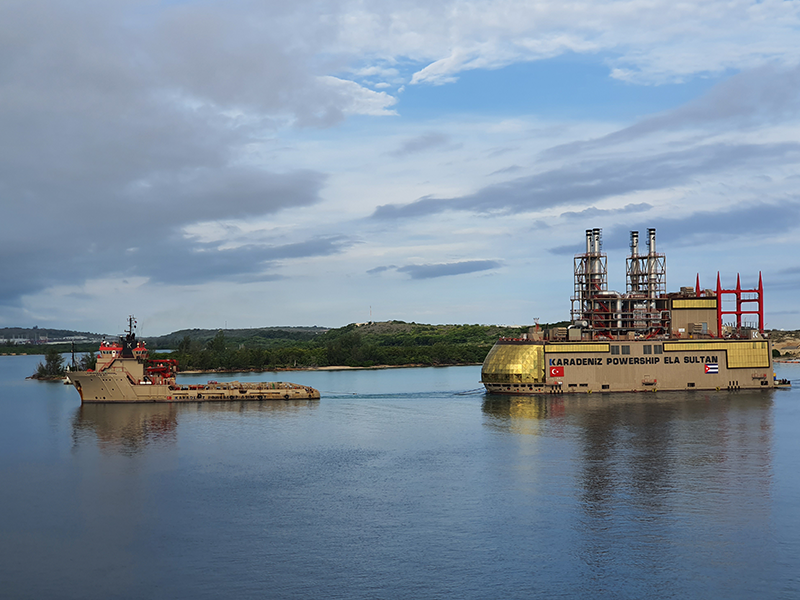
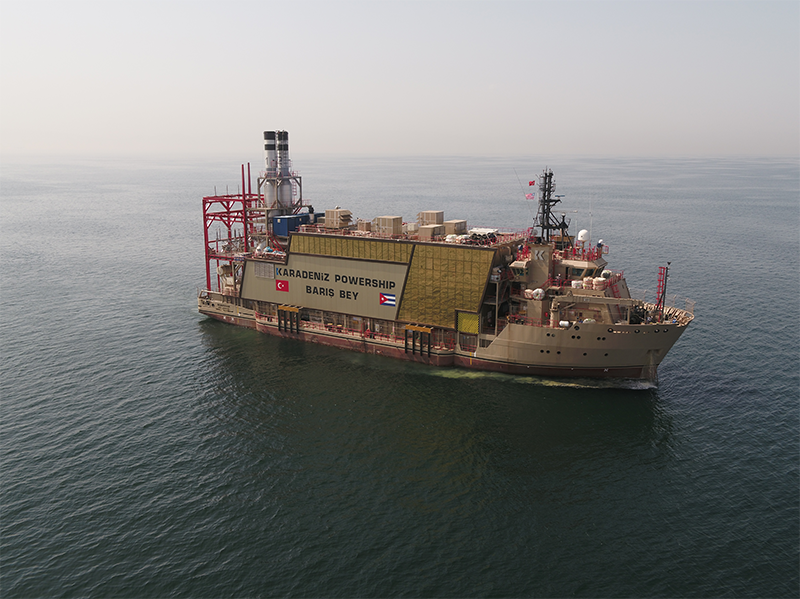
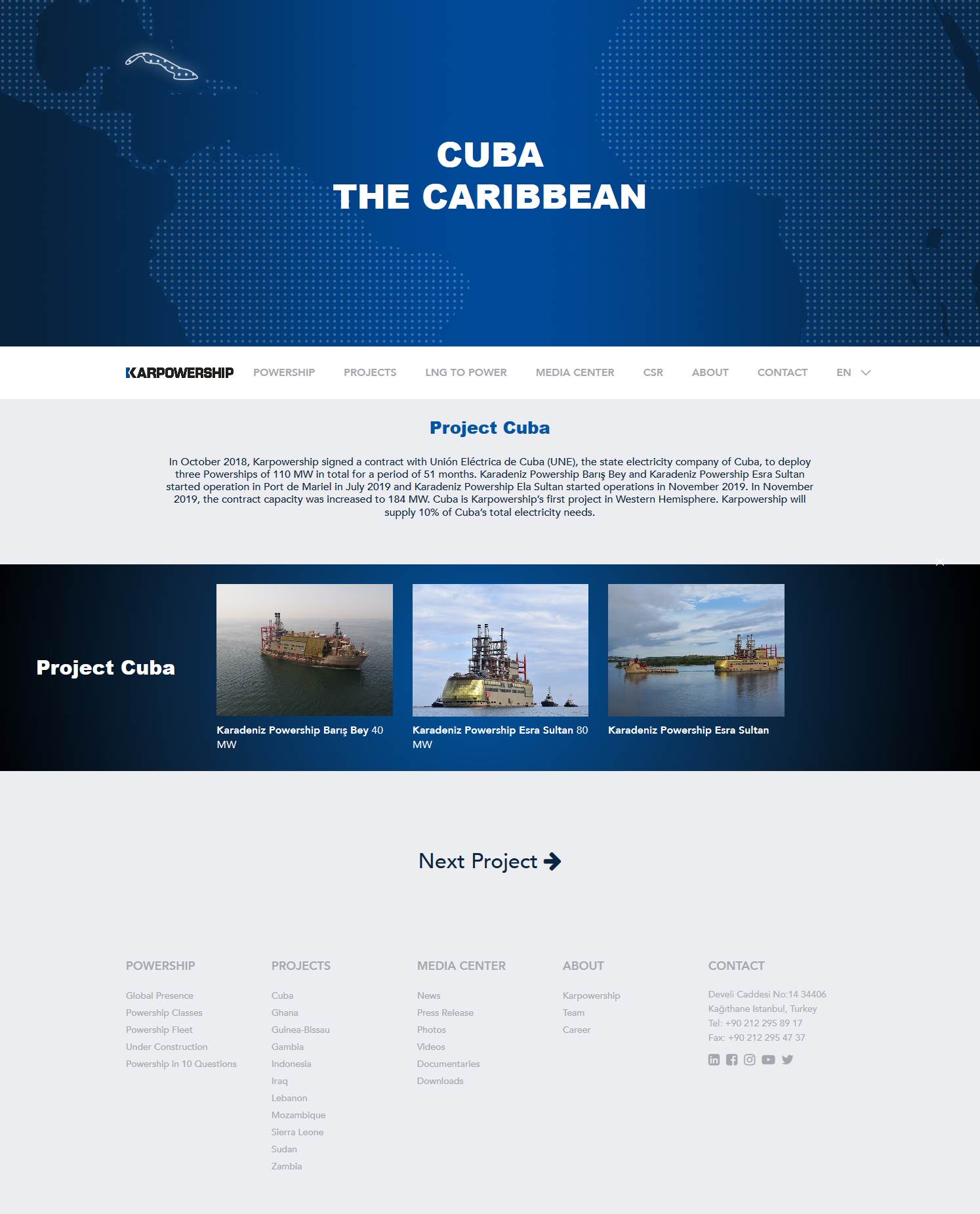
Karadeniz Holding Of Turkey Update On "Karpowership" Operations In Cuba

NOTE: As of September 2021, the Republic of Cuba reported that Karpowership is providing approximately 3% of electricity to the country.

Istanbul, Turkey-based Karadeniz Holding AS has reported: “In October 2018, Karpowership signed a contract with Unión Eléctrica de Cuba (UNE), the state electricity company of Cuba, to deploy three Powerships of 110 MW in total for a period of 51 months. Karadeniz Powership Barış Bey and Karadeniz Powership Esra Sultan started operation in Port de Mariel in July 2019 and Karadeniz Powership Ela Sultan started operations in November 2019. In November 2019, the contract capacity was increased to 184 MW. Cuba is Karpowership’s first project in Western Hemisphere. Karpowership will supply 10% of Cuba’s total electricity needs.” 

From Karadeniz Holding: “As of 2019 Karpowership owns and operates world’s largest floating power plant fleet of 25 Powerships with an installed capacity exceeding 4,100 MW. We have a pipeline of 4,400 MW in the works at our shipyards. Karadeniz Holding, which manages the Powership fleet under its international brand Karpowership, produces electricity from Africa to Asia at 15 different locations today. Karpowership covers 10 to 100 percent of electricity production in countries such as Indonesia, Ghana, Mozambique, Gambia, Sierra Leone, Guinea, Guinea Bissau, Senegal and Lebanon.  Today, Karadeniz Holding, with operations in 19 countries, continues its investments with 2,600 employees.” 

Previous Posts: 

Karadeniz Of Turkey Delivering Floating Power Plant To Cuba For 51-Month Contract (23 April 2019)

https://www.cubatrade.org/blog/2019/4/23/8fh54pumnbz6wd4dd6harn6ioaei1f?rq=karadeniz 

Turkey's Karadeniz Holding Reports Electricity Contract With Cuba In October 2018; But, No Contract Signed Five Months Later (1 April 2019)

https://www.cubatrade.org/blog/2019/3/31/rbvjp97hn81sa5mgnqmg3m9t8yq75p?rq=karadeniz

Cuba Statements By Senator Sanders Will Complicate Vice President Biden, Democratic Party Efforts In Florida

On Tuesday, 17 March 2020, the state of Florida will hold its Presidential Preference Primary Election.  Early voting is 7 March 2020 to 14 March 2020. 

Comments about the Republic of Cuba by The Honorable Bernie Sanders (I-Vermont), a member of the United States Senate, will require his remaining opponent, The Honorable Joe Biden, Vice President of the United States (2009-2017) and member of the United States Senate (1973-2009) to more robustly defend decisions relating to the Republic of Cuba taken during the Obama Administration (2009-2017) and create distance from Senator Sanders, without perhaps necessarily condemning the comments by Senator Sanders.   

If Vice President Biden is the presidential nominee of the Democratic Party, he will need support of those who support Senator Sanders in Florida and other states- along with Senator Sanders himself. 

In 2016, then Mr. Donald Trump defeated Secretary Hillary Clinton in Florida by 112,911 votes out of 9,122,861.  As of 31 January 2020, active registered voters in Florida: Republican- 4,793,897; Democratic- 5,039,757; Minor- 149,740 and No Party Affiliation- 3,633,003. 

The Honorable Marco Rubio (R- Florida) and The Honorable Rick Scott (R- Florida), members of the United States Senate, along with perhaps all twenty-seven (27) members of the United States House of Representatives from the state of Florida- fourteen (14) Republicans and thirteen (13) Democrats, will pummel, condemn Senator Sanders or at minimum reinforce their already publicly stated disagreement with Senator Sanders.   

There has already been bipartisan condemnation from both United States Senators and from members of the United States House of Representatives, including from The Honorable Donna Shalala (D- 27th), a United States Secretary of Health and Human Services (1993-2001) during the Clinton Administration and The Honorable Debbie Wasserman Schultz (D- 23rd), chair of the Democratic National Committee (2001-2016) during the Obama Administration.  

Unknown is how (tonality, empathy) Senator Sanders will defend his comments while campaigning in Hialeah, Miami, and Tampa where the large populations of individuals of Cuban descent reside.  Thus far, he has not retreated from his comments.  Will he be argumentative?  Will he be dismissive?  History would suggest he will. 

There will be demonstrations wherever Senator Sanders campaigns in Florida- and those demonstrations will include registered democrats, registered republicans, and independents- with each group being an essential constituency for the presidential nominee of the Democratic Party when voting on Tuesday, 3 November 2020 with early voting from 24 October 2020 to 31 October 2020.  There will likely be demonstrators at events featuring Vice President Biden seeking to pressure him to be on-the-record condemning Senator Sanders. 

Vice President Biden will have enormous pressure to robustly condemn the comments by Senator Sanders particularly when visiting Miami and Tampa; and when interacting in town hall events and the customary visit to the Versailles Restaurant located in Miami to meet individuals of Cuban descent and share a café Cubano, tres leches cake, or ropa viejo. 

Along with determining how Vice President Biden will respond to the comments by Senator Sanders will be how he layers disagreements with the Trump Administration dismantling Obama Administration bilateral initiatives with the Republic of Cuba and what, if any of Trump Administration bilateral and multilateral decisions relating to Venezuela he supports.  Many of the Trump Administration decisions targeting Venezuela are by design impacting the Republic of Cuba. 

There are approximately 425,000 individuals of Venezuelan descent residing in the United States, with approximately 220,000 residing in Florida, with a majority of those residing in South Florida, and approximately 42,000 residing in the state of Texas.  

How Vice President Biden manages questions relating to the Republic of Cuba and Venezuela while campaigning in Florida during March 2020 will provide an important indicator for his prospects in November 2020 and to President Donald Trump for how he messages his campaign in Florida.   

One certainty: The words by Senator Sanders about the Republic of Cuba will be front and center during speeches by President Trump not only when traveling in Florida, but throughout the United States.

flcolor.gif

Dan Burton, Co-Author Of Libertad Act (Helms-Burton), & Former Senator Robert Torricelli (Cuban Democracy Act) File Brief Against Carnival Corporation

On 24 February 2020, a former member of the United States House of Representatives, The Honorable Dan Burton (R- Indiana from 1983 to 2013), and a former member of the United States House of Representatives and the United States Senate, The Honorable Robert Torricelli (R- New Jersey from 1983 to 1997 and 1997 to 2003), filed a twenty-seven (27) page Amici Curiae in support of the plaintiffs in a Libertad Act lawsuit filed against Miami, Florida-based Carnival Corporation.

Mr. Burton is co-author of the Cuban Liberty and Democratic Solidarity Act of 1996 (known as “Libertad Act” and “Helms-Burton”) with The Honorable Jesse Helms (R- North Carolina), a member of the United States Senate from 1973 to 2003. Senator Torricelli is the author of the Cuban Democracy Act of 1992.   

JAVIER GARCIA-BENGOCHEA V. CARNIVAL CORPORATION D/B/A/ CARNIVAL CRUISE LINE, A FOREIGN CORPORATION [1:19-cv-21725-JLK; Southern Florida District] 

Colson Hicks Eidson, P.A. (plaintiff)
Margol & Margol, P.A. (plaintiff)
Jones Walker (defendant)
Boies Schiller Flexner LLP (defendant)
Akerman (defendant)

MOTION OF FORMER CONGRESSMEN DAN BURTON AND ROBERT TORRICELLI FOR LEAVE TO FILE AMICUS CURIAE BRIEF IN SUPPORT OF PLAINTIFF AND SUPPORTING MEMORANDUM OF LAW 

Excerpt: 

Dan Burton and Robert Torricelli, former Members of the United States Congress, hereby move, pursuant to Rule 7.1 of the Local Rules of the U.S. District Court for the Southern District of Florida, to file an Amicus Curiae Brief in support of the Plaintiffs Opposition to the Defendant Carnival's Motion for Judgment on the Pleadings.   

Mr. Burton is a former Republican Member of the U.S. House of Representatives, and was the lead House co-sponsor of the Helms-Burton law, also known as the Cuban Liberty and Democratic Solidarity (Libertad) Act of 1996 ("Helms-Burton Act").  He was also the Chairman of the Western Hemisphere Subcommittee of the House Committee on International Relations at the time the law was enacted.   

Mr. Torricelli is a former Democratic Member of the House and U.S. Senate, who was an original co-sponsor and floor leader for the Helms-Bur ton Act in the House in 1995-96.  Amici have unique insights and perspectives that will aid the Court in interpreting the statute and discerning Congressional intent with respect to the defense argument that the Plaintiff cannot pursue his claim under Title III because he inherited it after March 12, 1996. The proposed Amicus Curiae Brief is attached as Exhibit A. 

LINK To Filing 

CARNIVAL CORPORATION’S RESPONSE IN OPPOSITION TO MOTION OF FORMER CONGRESSMEN DAN BURTON AND ROBERT TORRICELLI FOR LEAVE TO FILE AMICUS CURIAE BRIEF IN SUPPORT OF PLAINTIFF

Excerpt: 

The Brief of the Proposed Amici is untimely, fails to comply with basic requirements of federal rules governing amicus briefs, is inappropriate under the circumstances, and does nothing to aid the Court in understanding the position of Plaintiff Javier Garcia-Bengochea (“Bengochea”), on whose behalf it is being filed. This Court should deny the motion. 

LINK To Filing 

LINK To Messrs. Burton And Torricelli Request For Delay To Respond To Response By Carnival Corporation

LINK To Previous Post: Former Rep. Dan Burton, Co-Author Of “Helms-Burton” & “Libertad Act” May Again Take The Stage 

https://www.cubatrade.org/blog/2019/6/1/former-rep-dan-burton-co-author-of-helms-burton-amp-libertad-act-may-again-take-the-stage?rq=Dan%20Burton

LINK To Libertad Act Lawsuit Filing Statistics

If U.S. Group Purchases German Elevator Company, Cuba’s Buildings And Hotels Could Have Problems Obtaining Parts; Another Issue For EU & Canada

UPDATE TO NOTE: On 27 February 2020 Thyssenkrupp AG selected a non-United States-led consortium to purchase its elevator division for approximately US$19 billion. Boston, Massachusetts-based Advent International Corporation (assets under management approximately US$57 billion); London, United Kingdom-based Cinven Partners LLP (assets under management approximately US$29 billion); Essen, Germany-based RAG-Stiftung Foundation (assets approximately US$11 billion). Advent International Corporation and Cinven Partners LLP will have equal “majority equity stake” while RAG-Stiftung Foundation will have a “substantial minority” and Thyssenkrupp AG will have a “substantial minority stake” in consideration of its approximately US$1.4 billion investment.

If two United States-based financial companies are successful this week, hundreds of buildings, including hotels, in the Republic of Cuba may no longer have access to parts for elevators.  And building plans and those under construction may need revise their architectural decisions. 

Of particular consequence could be reputational damage to the Republic of Cuba from tourists at hotels knowing the elevators they are using have not been re-certified by the manufacturer and the manufacturer is no longer providing spare parts. 

The world’s largest investment management company, New York, New York-based Blackstone Group Inc. (2019 revenues approximately US$5.7 billion; assets under management US$554 billion), Washington DC-based The Carlyle Group (2019 revenues approximately US$3.4 billion; assets under management approximately US$223 billion) and Toronto, Canada-based Canada Pension Plan Investment Board (2019 assets approximately US$410 billion) are seeking to purchase the elevator division (2019 revenues approximately US$9 billion) of Essen, Germany-based Thyssenkrupp AG. (2019 revenues approximately US$52 billion).  A decision is expected within the next seven days.  

Espoo, Finland-based KONE Oyj (2019 revenues approximately US$10 billion), which reportedly submitted a proposal valued at approximately US$19 billion, is no longer participating in the process.  Havana-based Tecneco N.V. represents KONE in the Republic of Cuba. 

In 1994, the Office of Foreign Assets Control (OFAC) of the United States Department of the Treasury issued the opinion that a United States business or individual subject to United States law may make a secondary market investment in a third-country business which has commercial dealings within the Republic of Cuba provided that the investment does not result in control-in-fact of the third-country business by the United States investor and the third-country company does not derive a majority of its revenues from business activity within the Republic of Cuba.  Secondary market investment that falls short of a controlling interest in such a business is not prohibited.   

The Thyssenkrupp elevator division does not obtain a majority of its revenues from the Republic of Cuba; the value of new elevator installations and delivery of spare parts is substantially less than 1% of global revenues.  Unknown if Blackstone Group and/or Carlyle will have control-in-fact of the Thyssenkrupp elevator division. 

However, the Trump Administration, assisted by members of the United States Congress, could pressure a United States-controlled Thyssenkrupp elevator to cease exports to the Republic of Cuba.  

The Brussels, Belgium-based European Union (EU) may attempt to include a provision in the transaction documentation requiring the Thyssenkrupp elevator division to maintain all existing sales and service contracts with the Republic of Cuba prior to the transfer of ownership. 

The government of Canada with its meaningful commercial, economic and political relationship with the Republic of Cuba may seek to pressure the new owners, particularly the Canada Pension Plan Investment Board, to continue exports to the Republic of Cuba, specifically through Canada-based entities. 

Elevators in the Republic of Cuba include those manufactured by KONE, Thyssenkrup (Iberostar Parque Central in Havana; Gran Hotel in Camaguey; Casa Grande in Santiago de Cuba among others). 

Elevators manufactured by Farmington, Connecticut-based Otis Elevator (2019 revenues US$13 billion) remain in service in the Republic of Cuba, but the company has neither sold nor serviced equipment since the 1992 Cuban Democracy Act prohibited foreign subsidiaries of United States companies from operating in the Republic of Cuba.   

Other elevator manufacturers, some of whom have equipment in the Republic of Cuba include: Ebikon, Switzerland-based Schindler Group; Tokyo, Japan-based Mitsubishi Electric Corporation; Hikone, Japan-based Fujitec Co., Ltd.; Tokyo, Japan-based Hitachi, Ltd.; Seoul, South Korea-based Hyundai Elevator Co. Ltd; Tokyo, Japan-based Toshiba Elevator and Building Systems Corporation; and Rison LeZion, Israel-based Electra Elevators.

Unknown is whether two properties affiliated with second-largest certified claimant, Bethesda, Maryland-based Marriott International, Inc. (2019 revenues approximately US$20 billion) and its subsidiary, Stamford, Connecticut-based Starwood Hotels and Resorts Worldwide LLC, have elevators which would be impacted if the United States company-led group purchases the Thyssenkrupp elevator division. 

Both properties (one currently through Starwood Hotels and Resorts Worldwide LLC) are in the city of Havana, the 186-room Four Points by Sheraton Havana and 83-room Hotel Inglaterra (delayed opening without public explanation from December 2016 to December 2017 to December 2019 to “sometime” in 2020).  Both properties are owned by entities controlled by the Revolutionary Armed Forces of the Republic of Cuba (FAR).  Marriott International has a series of two-year licenses from the OFAC to manage the two properties located in the Republic of Cuba.  The OFAC licenses were first issued in 2015 during the Obama Administration and were renewed during the Trump Administration.  Marriott International reported that the OFAC-authorized management contract for at least one of the properties requires the investment of millions of United States Dollars; unstated as to the shared responsibility for that investment.

After Resisting For More Than One Year, USDA Confirms No Requests From US Groups For MAP Or FMD For Use In Cuba

The U.S.-Cuba Trade and Economic Council has sought since 2018 information relating to MAP/FMD funding for the Republic of Cuba. Despite numerous requests, on 19 December 2019, the United States Department of Agriculture (USDA) notified by email that no information would be released. A Freedom of Information Act (FOIA) request for the information was filed on 22 December 2019 and a response was received on 26 February 2020.

USDA- 26 February 2020

“This is the final response to the December 22, 2019, Freedom of Information Act (FOIA) request submitted to the U.S. Department of Agriculture (USDA), Foreign Agricultural Service (FAS). Your request sought records from the Market Access Program (MAP) and Foreign Market Development program (FMD), regarding funding in the Republic of Cuba, specifically:

The total amount of FY 2020 FMD funding approved for use in Cuba;
The total amount of FY 2020 MAP funding approved for use in Cuba;
The total number of FY 2020 participants approved for FMD funding for use in Cuba;
The total number of FY 2020 participants approved for MAP funding for use in Cuba.

A search for responsive records was conducted by the FAS Office of Program Operations, which administers the FMD and MAP programs. The Office of Program Operations conducted a search of the Unified Export Strategy (UES) database. UES is the integrated planning system used by U.S. agricultural trade groups to apply for FAS market development and export promotion programs. The search did not identify any responsive records. For this reason, this office is not able to provide any records that are responsive to your request. The Office of Program Operations specified that:

The total amount of FY 2020 FMD funding approved for use in the Republic of Cuba is: $0
The total amount of FY 2020 MAP funding approved for use in the Republic of Cuba is: $0
The total number of FY 2020 participants approved for FMD funding for use in the Republic of Cuba is: 0
The total number of FY 2020 participants approved for MAP funding for use in the Republic of Cuba is: 0”

The Honorable Sonny Perdue, United States Secretary of Agriculture, had been requested to make public the names of participants (or number of participants) and the amount of funding per participant (or total amount of funding) approved to use USDA Fiscal Year 2020 MAP (Market Access Program) and FMD (Foreign Market Development) funding in the Republic of Cuba.

Total MAP/FMD for Fiscal Year 2020 is US$203,811,813.00 compared to US$201,697,191.00 in 2019. There were 87 approved applicants in Fiscal Year 2020 and 87 approved applicants in Fiscal Year 2019.

According the USDA, no request was made in Fiscal Year 2019 to use the Republic of Cuba provision in H.R. 2, the five-year Agriculture Improvement Act, known as the “Farm Bill” signed into law on 20 December 2018 by The Honorable Donald J. Trump, President of the United States. Unknown if there was a request or requests for Fiscal Year 2020 funding.

In 2018, advocates maintained that the Farm Bill provision was critical to “laying the groundwork” for increasing exports of agricultural commodities and food products to the Republic of Cuba. Statements from members of Congress included: “… an important first step to regaining our presence in Cuba.” Yet, there was not one request to the USDA for Fiscal Year 2019.

Most observers reasonably concluded that legislative advocates- within the United States Congress and organizations located in Washington DC and located outside of the beltway would have prominently teed-up at least one high-profile applicant to request funding on 21 December 2018- regardless of whether the USDA was expected to approve including the Republic of Cuba in Fiscal Year 2019 allocations.

The most significant impact of not having any MAP/FMD requests for Fiscal Year 2019 to use the Republic of Cuba provision in the Farm Bill is what the lack of interest portended for other legislative efforts in the United States Congress to rescind prohibitions upon the provision of payment terms for agricultural commodity and food product exports from the United States to the Republic of Cuba.

There has yet to be a United States agricultural commodity exporter or United States financial institution who has publicly stated that they would today provide payment terms and/or financing and what those payment terms and financing terms would be for Republic of Cuba government-operated entities. That absence- which has remained consistent since 2000, is a massive legislative hurdle. Lacking pressure, why would the Trump Administration do anything that it does not want to do?

From USDA

On 3 August 2018, the USDA wrote to the USCTEC: “Per the 2019 MAP NOFA (Federal Register Notices attached), All applications must be received by 5 p.m. Eastern Daylight Time, on Friday, June 8, 2018. Applications received after this date will not be considered. FAS anticipates that the initial funding selections will be made by the end of October 2018, with the initial award dates estimated to be by the end of December 2018. Hence, groups are not able to submit additional applications. Groups can request to make changes to their Unified Export Strategy in order to reallocate funding from one approved project to another. These modifications are routine and groups work with their FAS Marketing Specialist to submit changes for approval.”

In 2018, the Foreign Agricultural Service (FAS) of the USDA reported none of the applications for Fiscal Year 2019 submitted by the 8 June 2018 deadline included funding requests for MAP/FMD to be allocated for use in the Republic of Cuba.

That none of the applications included the Republic of Cuba was not unexpected as the Republic of Cuba was not eligible for MAP/FMD funding and applicants may not have known on 8 June 2018 that an amendment would be introduced in the United States Senate on 13 June 2018 to authorize MAP/FMD funds to be available for the Republic of Cuba and whether that amendment would become a statute and when it would become a statute.

According to the USDA in 2018, if the Republic of Cuba was included among Fiscal Year 2019 eligible countries for MAP/FMD funding, applications submitted by 8 June 2018 would be authorized by the USDA to be amended. The FMD Year began in October 2018 and the MAP Year began in January 2019.

According to the USDA in 2018, absent changes to the then-existing USDA application process by Secretary Perdue, applications submitted by 8 June 2018 would have only been permitted to be amended- not to seek additional USDA funding, but reallocate previously-submitted funding requests from one country to another country, in this instance the Republic of Cuba.

The USDA reported in 2018 that it recognized there were unplanned events that impact an applicant’s ability to use previously-requested or previously-authorized MAP/FMD funds. For example, the People’s Republic of China and members of the Brussels, Belgium-based European Union (EU) implemented tariffs on certain food products and agricultural commodities after 8 June 2018, so an applicant might not want or might have been precluded from using requested or allocated funds towards activities in the People’s Republic of China and EU; so, the applicant might have wanted to submit a request to the USDA to reallocate all or a portion of funds towards use within another country.

According to the USDA in 2018, there may also have been impacting events that remained unknown through 2018 and became known in 2019, after the USDA had allocated all MAP/FMD funds to applicants, so then an entity having received a MAP/FMD funding allocation could request a reallocation from the USDA.

On 20 March 2019, the USDA wrote to the USCTEC: “Applications for FY19 MAP/FMD funds were made in 2018 when Cuba was not an eligible country. USDA is not allowing those funds to shift to Cuba. USDA will consider proposals for FY20 MAP/FMD funds for Cuba projects.”

On 5 April 2019, the USDA wrote to the USCTEC: “For FY 2019, FMD and MAP are being operated according to the NOFAs [Notice of Funding Availability] published in May 2018, at which time Cuba was ineligible. At this time FAS has no plans, nor has it received any requests, to authorize the redirection of already allocated funds to Cuba this fiscal year. For FY 2020, the NOFAs are currently under development and FAS program managers are working to ensure that the funding solicitations reflect the intent of Congress as expressed in the Farm Bill vis-à-vis Cuba.”

What Is FMD & MAP?

The USDA does not provide any payments to selected applicants in advance of the applicant making disbursements. The USDA provides payment upon receipt of an invoice from the applicant. The invoices are audited by the USDA and a claw back of payments is permitted. Any Republic of Cuba-related invoice is likely to receive additional scrutiny due to an amendment to the Farm Bill submitted by The Honorable Marco Rubio (R- Florida), a member of the United States Senate.

MAP: “Through the Market Access Program (MAP), FAS partners with U.S. agricultural trade associations, cooperatives, state regional trade groups and small businesses to share the costs of overseas marketing and promotional activities that help build commercial export markets for U.S. agricultural products and commodities.”

For Fiscal Year 2020, the USDA allocated US$176,849,915.00 in taxpayer funds to 65 participants under the MAP compared to US$174,600,000.00 to 65 participants in Fiscal Year 2019 and US$173,802,447.00 to 66 participants in Fiscal Year 2018.

“MAP reaches virtually every corner of the globe, helping to build markets for a wide variety U.S. farm and food products. FAS provides cost-share assistance to eligible U.S. organizations for activities such as consumer advertising, public relations, point-of-sale demonstrations, participation in trade fairs and exhibits, market research and technical assistance. When MAP funds are used for generic marketing and promotion, participants must contribute a minimum 10-percent match. For promotion of branded products, a dollar-for-dollar match is required.

Each year, FAS announces the MAP application period and criteria in the Federal Register. Applicants apply for MAP through the Unified Export Strategy (UES) process, which allows eligible organizations to request funding from multiple USDA market development programs through a single, strategically coordinated proposal. FAS reviews the proposals and awards funds to applicants that demonstrate the potential for effective performance based on a clear, long-term strategic plan.”

FMD: “The Foreign Market Development (FMD) Program, also known as the Cooperator Program, helps create, expand and maintain long-term export markets for U.S. agricultural products. Under the program, FAS partners with U.S. agricultural producers and processors, who are represented by non-profit commodity or trade associations called “cooperators,” to promote U.S. commodities overseas.”

For Fiscal Year 2020, the USDA allocated US$26,961,898.00 to 22 participants under the FMD compared to US$27,097,191.00 in taxpayer funds to 22 participants in Fiscal Year 2019 and US$26,484,947.00 to 23 participants in Fiscal Year 2018.

“The FMD program focuses on generic promotion of U.S. commodities, rather than consumer-oriented promotion of branded products. Preference is given to organizations that represent an entire industry or are nationwide in membership and scope.

FMD-funded projects generally address long-term opportunities to reduce foreign import constraints or expand export growth opportunities. For example, this might include efforts to: reduce infrastructural or historical market impediments, improve processing capabilities, modify codes and standards, or identify new markets or new uses for the agricultural commodity or product.

Each year, FAS announces the FMD application period and criteria in the Federal Register. Organizations apply for the FMD program through the Unified Export Strategy (UES) process, which allows applicants to request funding from multiple USDA market development programs through a single, strategically coordinated proposal. FAS reviews the proposals and awards funds to applicants that demonstrate the potential for effective performance based on a clear, long-term strategic plan.”

Value Of MAP/FMD

For the United States business community, the MAP/FMD amendment to the Farm Bill was significant, but more likely to provide greater financial value to the government of the Republic of Cuba than to United States food product and agricultural commodity exporters using provisions of the Trade Sanctions Reform and Export Enhancement Act (TSREEA) of 2000.

The likelihood of a value to United States taxpayers, as members of the United States Senate have posited, of US$28.00 returned for every US$1.00 in expenditures of MAP/FMD throughout the world, and now including the Republic of Cuba, will be challenging to measure- but it will be important to measure and the USDA should focus upon the cost-benefit analysis.

FMD Participant FY 2020 Allocation

Almond Board of California $192,819
American Hardwood Export Council, APA - The Engineered Wood Association, Softwood Export Council, and Southern Forest Products Association $2,578,929
American Peanut Council $461,575
American Seed Trade Association $187,182
American Sheep Industry Association $119,814
American Soybean Association $6,993,963
Cotton Council International $4,084,667
Cranberry Marketing Committee $162,365
Mohair Council of America $29,094
National Renderers Association $591,347
National Sunflower Association $162,360
North American Millers Association $50,679
U.S. Dairy Export Council $523,346
U.S. Dry Bean Council $99,367
U.S. Grains Council $2,754,371
U.S. Hide, Skin and Leather Association $700,675
U.S. Livestock Genetics Export, Inc. $373,044
U.S. Meat Export Federation $1,154,347
U.S. Wheat Associates $3,472,254
USA Dry Pea and Lentil Council $31,819
USA Poultry and Egg Export Council $890,505
USA Rice Federation $1,347,376
Total: $26,961,898

https://www.fas.usda.gov/programs/foreign-market-development-program-fmd/fmd-funding-allocations-fy-2020

MAP Participant FY 2020 Allocation

Alaska Seafood Marketing Institute $4,226,181
American Hardwood Export Council, APA - The Engineered Wood Association, Softwood Export Council, and Southern Forest Products Association $8,413,475
American Peanut Council $2,438,722
American Pecan Council $596,856
American Pistachio Growers/Cal-Pure Produce, Inc. $1,717,957
American Seed Trade Association $331,757
American Sheep Industry Association $441,441
American Soybean Association $4,402,578
American Sweet Potato Marketing Institute $212,565
Blue Diamond Growers/Almond Board of California $4,959,208
Brewers Association, Inc. $650,770
California Agricultural Export Council $981,458
California Cherry Marketing and Research Board $490,309
California Fresh Fruit Association $394,319
California Olive Committee $131,864
California Pear Advisory Board $363,530
California Prune Board $2,796,257
California Strawberry Commission $290,446
California Table Grape Commission $3,246,556
California Walnut Commission $3,927,959
Cherry Marketing Institute $290,296
Cotton Council International $14,454,482
Cranberry Marketing Committee $1,603,192
Distilled Spirits Council of the United States $489,298
Florida Department of Citrus $3,368,994
Florida Tomato Committee $246,201
Food Export Association of the Midwest USA $9,842,666
Food Export USA NE $8,602,188
Ginseng Board of Wisconsin $416,017
Hop Growers of America $378,030
Intertribal Agriculture Council $716,965
Mohair Council of America $77,685
National Association of State Depts. of Agriculture $2,744,277
National Confectioners Association $1,167,993
National Potato Promotion Board $4,610,157
National Renderers Association $972,413
National Sunflower Association $948,772
National Watermelon Promotion Board $193,136
New York Wine and Grape Foundation $411,447
Northwest Wine Coalition $1,029,921
Organic Trade Association $812,786
Pear Bureau Northwest $2,693,703
Pet Food Institute $1,401,529
Raisin Administrative Committee $2,680,808
Southern United States Trade Association $6,761,723
Sunkist Growers, Inc $1,653,152
Synergistic Hawaii Agriculture Council $306,400
The Popcorn Board $318,362
U.S. Apple Export Council $473,152
U.S. Dairy Export Council $4,641,021
U.S. Dry Bean Council $967,689
U.S. Grains Council $8,886,830
U.S. Hide, Skin and Leather Association $316,633
U.S. Highbush Blueberry Council $196,836
U.S. Livestock Genetics Export, Inc. $1,479,906
U.S. Meat Export Federation $12,954,232
U.S. Wheat Associates $5,869,104
USA Dry Pea and Lentil Council $1,022,920
USA Poultry and Egg Export Council $5,400,208
USA Rice Federation/U.S. Rice Producers Association $2,733,761
Washington Apple Commission $4,734,994
Washington State Fruit Commission $1,665,504
Welch Foods Inc. $864,644
Western U.S. Agricultural Trade Association $8,136,536
Wine Institute $6,299,144
Total: $176,849,915

https://www.fas.usda.gov/programs/market-access-program-map/map-funding-allocations-fy-2020

Previous Posts:

USDA Requested To Publish Organizations/Funding Amounts Approved For FY2020 FMD/MAP Funds In Cuba
December 13, 2019
https://www.cubatrade.org/blog/2019/12/13/6jb1gv4vgdyxybaom3w2nf0f2jxzlq?rq=MAP

Why Is USDA Stonewalling Response To Follow-Up About FMD/MAP Funding For Which It Previously Provided Answers?
October 09, 2019

https://www.cubatrade.org/blog/2019/10/9/why-is-usda-stonewalling-response-to-follow-up-about-fmdmap-funding-for-which-it-previously-provided-answers?rq=MAP

USDA Has Up To US$201 Million Available For Cuba- Why Doesn't Any Organization Want To Use It?
May 12, 2019

https://www.cubatrade.org/blog/2019/5/12/2abai1pugt44khnn3wps4pt0f0wvcl?rq=MAP

Farm Bill: No Fiscal Year 2019 MAP/FMD Applications Submitted To USDA Included Cuba
August 13, 2018

https://www.cubatrade.org/blog/2018/8/12/h68z2i1k5qc3eizw28z10rg3hfthv2?rq=MAP
unnamed.jpg

Western Union May Cease Money Transfers From Outside Of The United States To Cuba

UPDATE NOTE: “Due to the unique challenges of operating remittance services from countries outside of the United States to Cuba, Western Union is unable to operate money transfer services to Cuba from countries other than the United States, effective February 26, 2020. We understand the impact this will have on our customers and will follow-up with them directly if we are able to reactivate transactions from outside the U.S. to Cuba in the future.”

“Due to the unique challenges of operating remittance services from countries outside of the United States to Cuba, Western Union may lose its ability to operate money transfer services to Cuba from countries other than the United States. If this change occurs, it will be effective February 26, 2020. 

Customers in the U.S. will be able to continue sending money through the Western Union mobile app, online at WU.com, or retail locations. 

We understand the impact this may have on our customers and will follow-up with them directly as the situation unfolds.”

image002.png

Mauricio Claver-Carone May Depart NSC For IDB Having Been At IMF; His Replacement? Ask Senator Marco Rubio

NOTE: On 16 June 2020, The United States Department of the Treasury reported that Mr. Claver-Carone would be nominated to be president of the Inter-American Development Bank. LINK To Statement

Trump National Security Official Eyed for Latin America Bank Job

By Eric Martin and Ben Bartenstein

Bloomberg
February 13, 2020

Claver-Carone considered for number two position at IAD Bank
U.S. by tradition nominates lender’s executive vice president

President Donald Trump’s administration is considering nominating a top official on the National Security Council for the No. 2 job at the Inter-American Development Bank, according to two people familiar with the process. 

Mauricio Claver-Carone, the senior director of the NSC for Western Hemisphere Affairs, is being considered for the executive vice president’s job at the IDB, as the Washington-based lender is known. John Scott, a career employee of the bank, is serving in the job on an interim basis after Brian O’Neill, who started in the position in January 2019, died in December. 

The bank is the top development institution dedicated to Latin America and the Caribbean, providing loans and technical assistance to countries in a region with chronic infrastructure and economic shortages. By tradition, the president of the multilateral lender comes from one of the Latin American countries, with the U.S. choosing its executive vice president. 

The press office of the IDB declined to comment and referred questions to the U.S. Treasury Department. Treasury didn’t respond to a request for comment. Claver-Carone and a spokesman at the NSC declined to comment. 

Claver-Carone, one of the Trump administration’s staunchest critics of Venezuelan President Nicolas Maduro, has played a key role in shaping U.S. policy toward the South American nation since he began his current job a year and a half ago. That included rallying international support behind opposition leader Juan Guaido and dialing up sanctions against the Maduro regime. 

Claver-Carone, a Cuban American, ideally would like to stay at the NSC until Maduro leaves power, according to a person familiar with his thinking. But it isn’t clear if and when that might happen, nor how soon the IDB job needs to be filled. Claver-Carone previously served as the U.S. executive director for the International Monetary Fund, leading support for a $56 billion loan to Argentina under President Mauricio Macri. Before that, he was a senior adviser for international affairs at the Treasury Department. 

The IDB also will choose its next president this year. The current leader, Luis Alberto Moreno, a former Colombian ambassador to the U.S., was first elected in 2005 and re-elected twice. The next head will start a five-year term in October after a selection process scheduled to start in coming months. Argentina is expected to nominate Gustavo Beliz, President Alberto Fernandez’s secretary for strategic affairs, with support from Mexico.

1200x-1.jpg

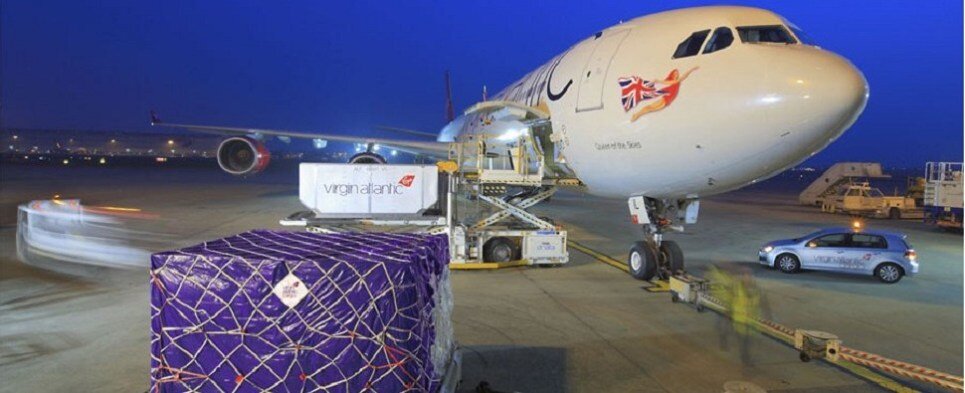
Virgin Atlantic Expanding Services From UK To Cuba; Certified Claimant Delta Air Lines Owns 49% Of Company

Since 2012, Atlanta, Georgia-based Delta Air Lines (2019 revenues approximately US$47 billion) has held a 49% shareholding in London, United Kingdom-based Virgin Atlantic Airways (2019 revenues approximately US$2.8 billion). London, United Kingdom-based Virgin Group (2019 revenues approximately US$20 billion) retains a 51% shareholding.   

Virgin Atlantic Airways operates Boeing 787-9 aircraft from the United Kingdom (London Heathrow and London Gatwick) to the Jose Marti International Airport (HAV) in the Republic of Cuba. 

Virgin Atlantic Airways subsidiary, Virgin Atlantic Cargo (2019 revenues approximately US$287 million), reports shipments to the Republic of Cuba include, but are not limited to, general cargo, pharmaceuticals and life science products. 

In 1994, the Office of Foreign Assets Control (OFAC) of the United States Department of the Treasury issued an opinion which stated that a United States business or individual subject to United States law may make a secondary market investment in a third-country business which has commercial dealings within the Republic of Cuba provided that the investment does not result in control-in-fact of the third-country business by the United States investor and the third-country company does not derive a majority of its revenues from business activity within the Republic of Cuba.  Secondary market investment that falls short of a controlling interest in such a business is not prohibited. 

On 26 September 2019, Delta Air Lines reported the intention to acquire a 20% shareholding in Santiago, Chile-based LATAM Airlines Group (2019 revenues approximately US$10 billion) which has operated flights to the Republic of Cuba.  Delta Air Lines will become the third-largest shareholder in LATAM Airlines Group. 

Delta Air Lines New Shareholding In LATAM Airlines Group Could Become Complicated With Libertad Act Lawsuit(s): https://www.cubatrade.org/blog/2019/9/27/z02bbqsyp3orcavev7k7gv2r2f8bzm?rq=Delta%20Air%20Lines 

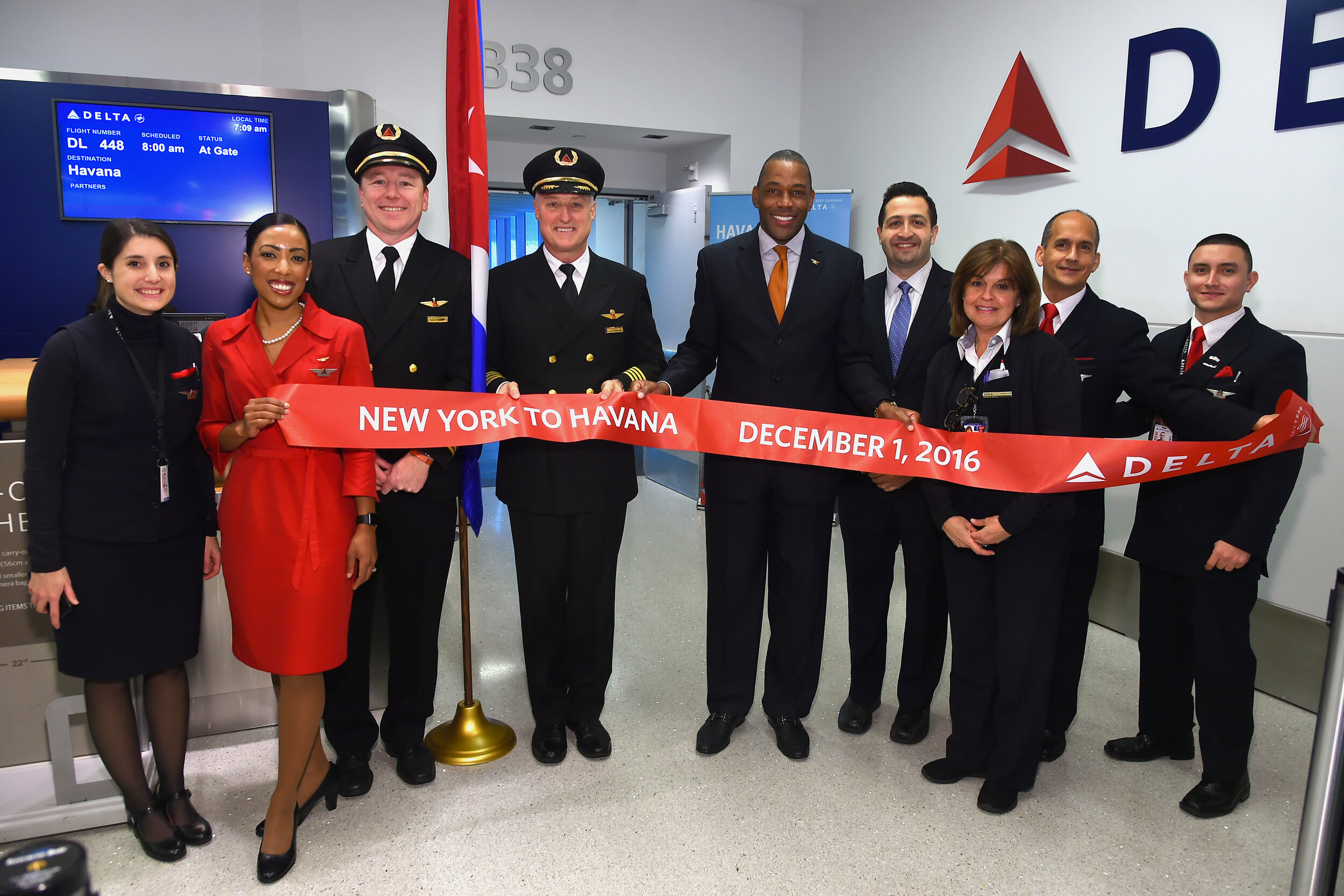
Delta Air Lines has since December 2016 operated regularly-scheduled flights from Atlanta, Georgia, and Miami, Florida, to Havana, Republic of Cuba.  

On 25 September 2019, LATAM Airlines Group and Fort Worth, Texas-based American Airlines Group (2019 revenues approximately US$44 billion) were sued in United States District Court by an individual who claims ownership of HAV.  The law firm representing the plaintiff confirmed that approximately forty-nine (49) other airlines (potentially including Delta Air Lines) may have been notified that they may be subject to litigation.  Link to post:  https://www.cubatrade.org/blog/2019/9/25/rivero-mestre-files-helms-burton-act-lawsuit-against-american-airlines-on-behalf-ofnbsprightful-owner-ofnbspjos-mart-international-airport-seeks-treble-damages 

Delta Air Lines has a certified claim (12 January 1962) for US$212,296.08 (or approximately US$964,278.20 with 6% annual permitted interest) against the Republic of Cuba certified by the United States Foreign Claims Settlement Commission. [Link To Claim].  The landing fees for approximately 3,400 flights paid by Delta Air Lines to HAV for flights since December 2016 have exceeded the value of the certified claim. 


VIRGIN ATLANTIC CARGO TO LAUNCH DAILY HEATHROW-CAPE TOWN FLIGHTS AND EXPAND CAPACITY TO CUBA FROM OCTOBER 2020  

12 February 2020: Virgin Atlantic Cargo will launch a new daily Heathrow-Cape Town service from October 2020 and increase capacity to Cuba as part of their winter flying programme.

As Virgin Atlantic celebrates 24 years of services to South Africa, the introduction of Cape Town flights from Heathrow for the winter season will offer new export and import opportunities for customers already supporting Virgin Atlantic’s existing double daily services from Heathrow to Johannesburg. The 787-9 service will commence on 25th October. South Africa is one of Virgin Atlantic’s most popular cargo routes, attracting regular shipments of pre-packed fruit salads, vegetables, stone fruits and fish as well as car parts, computer and electrical components, mining equipment, pharmaceuticals, books and magazines.  

In March, Johannesburg will also be the first non-US route to begin services with the airline’s new Airbus A350-1000.The VS478 will operate as a night flight departing Heathrow at 16:20 arriving into Cape Town at 05:55 whereas the inbound, the VS479, will depart at 08:00 landing later that day at 18:00. 

Virgin Atlantic will also reinforce its position as the only airline flying directly to Havana from London Heathrow by adding another weekly service to the city. Flights will depart Heathrow every Tuesday, Friday and Sunday on a 787-9 aircraft.  

The winter flying enhancements are in addition to Virgin Atlantic’s new daily services from Heathrow to Sao Paulo, second daily Delhi flights and increased Heathrow-San Francisco flights, which all take-off at the end of March. Virgin Atlantic Cargo is also marketing the cargo capacity of Virgin Australia’s new daily Brisbane-Tokyo Haneda flights, which start on 29 March.  

Dominic Kennedy, Managing Director of Virgin Atlantic Cargo, said: “This year, with the growth of our flying programme and our new expanded joint venture with Air France-KLM and Delta, we’re giving our cargo customers unprecedented access to new markets, new gateways in existing markets and extra frequencies. South Africa is a great cargo market and the addition of Cape Town to our network, alongside the launch of A350 flights on Johannesburg, will increase the choice we can offer our customers in the UK and South Africa as well as those in the US who trade with South Africa via our London hub.  

We are also pleased to be offering more capacity for customers moving goods to and from Havana. 2020 is an exciting year for Virgin and our customers. 

About Virgin Atlantic Cargo: Cargo has been an important part of Virgin Atlantic’s business ever since the airline was founded by entrepreneur Sir Richard Branson 34years ago. Today, the airline carries over 240 million kilos of cargo annually and, with a strong commitment to innovation and customer service at its core, Virgin Atlantic Cargo is recognised as one of the world’s most customer-focused and service-oriented airlines, earning 14 international Cargo Airline of the Year awards.

Headquartered in London, Virgin Atlantic Cargo trades in 37 countries and sells services to destinations in over 60 countries worldwide.

Alongside joint venture partner Delta Cargo, they operate a leading transatlantic network, offering a choice of 38 flights a day between the UK and US which, in 2018, carried over a quarter of total trans-Atlantic air cargo volumes. Virgin Atlantic Cargo is also the long-haul international cargo sales and management partner for Virgin Australia, connecting the two airline’s networks over Los Angeles and Hong Kong.

In 2019, Virgin Atlantic Cargo is also benefiting from the increased cargo payload of the airline’s new Airbus A350-1000 aircraft as well as the launch of new Tel Aviv and Mumbai routes, which commenced in September and October respectively. Investment in new technologies will make the airline even easier to do business with, while in Q4, Virgin Atlantic Cargo and Delta Cargo moved into a new state-of-the-art Export Facility at London Heathrow, part of an expansion to double the size of their joint Heathrow operation.

On May 15, 2018, Air France-KLM, Delta Air Lines and Virgin Atlantic Limited signed definitive agreements to combine the existing trans-Atlantic joint ventures. Closer cooperation between Delta Cargo, Air France KLM Cargo and Virgin Atlantic Cargo across the trans-Atlantic is subject to regulatory approvals and the receipt of anti-trust immunity (ATI) from the US Department of Transportation (DOT). Once ATI is received, the cargo divisions will be able to start working together giving customers more choice across a broad network of passenger flights with joint trucking options and tailored products and services.

For more information, go to virginatlanticcargo.com

Is It Time For President Trump To Appoint A Special Representative For Cuba?

Is It Time For President Trump To Appoint A Special Representative For Cuba?
Jared Kushner? A Retired Executive?

The Trump Administration has identified and continues to seek to identify verifiable linkages between the survival of the Nicolas Maduro Administration in Caracas, Venezuela, and its support from the Miguel Diaz-Canel Administration in Havana, Republic of Cuba.

The Trump Administration argues the Republic of Cuba is integral to both preventing and permitting changes in Venezuela.  Pressure upon the Republic of Cuba, directly and indirectly, has yet to displace the Maduro Administration. 

For the Trump Administration, regardless of a universally-accepted marketable success from its desired process to incur changes in Venezuela, there will remain issues relating to the Republic of Cuba- and resolving those issues may become more challenging absent the Maduro Administration. 

If oil exports from Venezuela to the Republic of Cuba were to cease immediately (as Interim President Juan Guaido has proffered with the support of the Trump Administration), there would be an immediate commercial and economic crisis in the Republic of Cuba- where approximately 11 million Republic of Cuba nationals have emotional (and political) connectivity with approximately 2 million individuals of Cuban descent residing in Florida and New Jersey.

Logic would support the appointment of a Special Representative for the Republic of Cuba.

In January 2019, the United States Department of State appointed a United States Special Representative for Venezuela.  There is no United States Special Representative for the Republic of Cuba.  There needs to be two; not one with two portfolios.

There is a triangulation of interests- United States, Venezuela and Republic of Cuba.  Debatable as to the shape of the triangle, but likely an Isosceles with two points nearer to one another and third point an equal distance from the other two points.  Venezuela and Republic of Cuba at the base and the United States a significant distance from either one.

Given the extraordinary complexity of the United States-Republic of Cuba relationship, particularly the significance of a domestic political component residing in South Florida, critical to any success will be the credentials of the appointee as Special Representative for the Republic of Cuba.

Most importantly, the Special Representative for the Republic of Cuba should be appointed by The White House and report directly to The Honorable Donald J. Trump, President of the United States, rather than reporting to the United States Department of State.

Reporting to the President will demonstrate to the Republic of Cuba (and Maduro Administration) a seriousness for direct discussions to resolve issues, particularly intractable ones.  The Diaz-Canel Administration may reject a meaningful overture.  If so, the Trump Administration will believe it further unleashed to target the Republic of Cuba.       

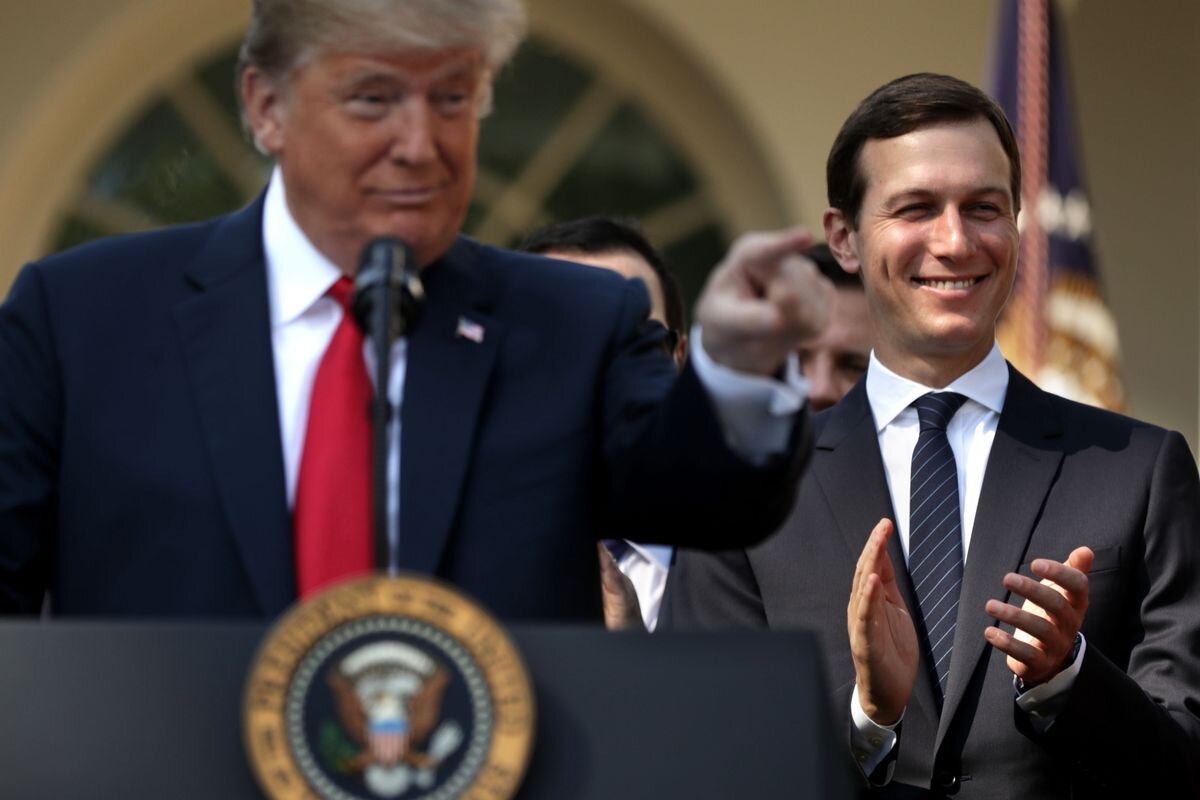
Mr. Jared Kushner, Senior Advisor to the President & Director- Office of American Innovation, is the obvious candidate for United States Special Representative for Cuba given his roles in negotiations relating to Canada, Mexico, Asia and Middle East.  President Trump has confidence in him.  If Mr. Kushner did not accept the role, he should supervise whoever is appointed.

If not Mr. Kushner, then the individual needs to be highly visible, with a global business background, well-traveled, without substantial connectivity to political parties, political philosophies, and partisan activities; an elder statesperson who will be welcomed in Havana, Moscow, Beijing, New Delhi, Madrid, Abu Dhabi, and Ankara.  A deal maker.  A negotiator.  Someone who will have the cellular telephone numbers for The President and for Mr. Kushner.

If resolving the 5,913 certified claims against the Republic of Cuba become a component of discussions with the Republic of Cuba, the United States Special Representative for the Republic of Cuba could be assisted by Mr. Kenneth Feinberg, the Washington DC-based attorney specializing in mediation and alternative dispute resolution, who served as Special Master for the September 11th Victim Compensation Fund and TARP Executive Compensation; Administrator of the BP Deepwater Horizon Disaster Victim Compensation Fund; retained to assist in the General Motors recall response and compensation for Volkswagen owners.  Mr. Feinberg appreciates the importance of deadlines and knows how to negotiate settlements.  Mr. Feinberg previously confirmed his interest in assisting with settlement negotiations relating to the Republic of Cuba.
Important that two tracks operate simultaneously.  One is focused upon the United States-Venezuela bilateral relationship.  One is focused upon the United States-Republic of Cuba bilateral relationship.

History

On 23 January 2019, H.E. Juan Guaido, President of National Assembly of Venezuela, assumed the role as Interim President of Venezuela. 

On 23 January 2019, from The White House: “Today, I am officially recognizing the President of the Venezuelan National Assembly, Juan Guaido, as the Interim President of Venezuela.  In its role as the only legitimate branch of government duly elected by the Venezuelan people, the National Assembly invoked the country’s constitution to declare Nicolas Maduro illegitimate, and the office of the presidency therefore vacant.  The people of Venezuela have courageously spoken out against Maduro and his regime and demanded freedom and the rule of law.  I will continue to use the full weight of United States economic and diplomatic power to press for the restoration of Venezuelan democracy.  We encourage other Western Hemisphere governments to recognize National Assembly President Guaido as the Interim President of Venezuela, and we will work constructively with them in support of his efforts to restore constitutional legitimacy.  We continue to hold the illegitimate Maduro regime directly responsible for any threats it may pose to the safety of the Venezuelan people.  As Interim President Guaido noted yesterday: “Violence is the usurper’s weapon; we only have one clear action: to remain united and firm for a democratic and free Venezuela.””

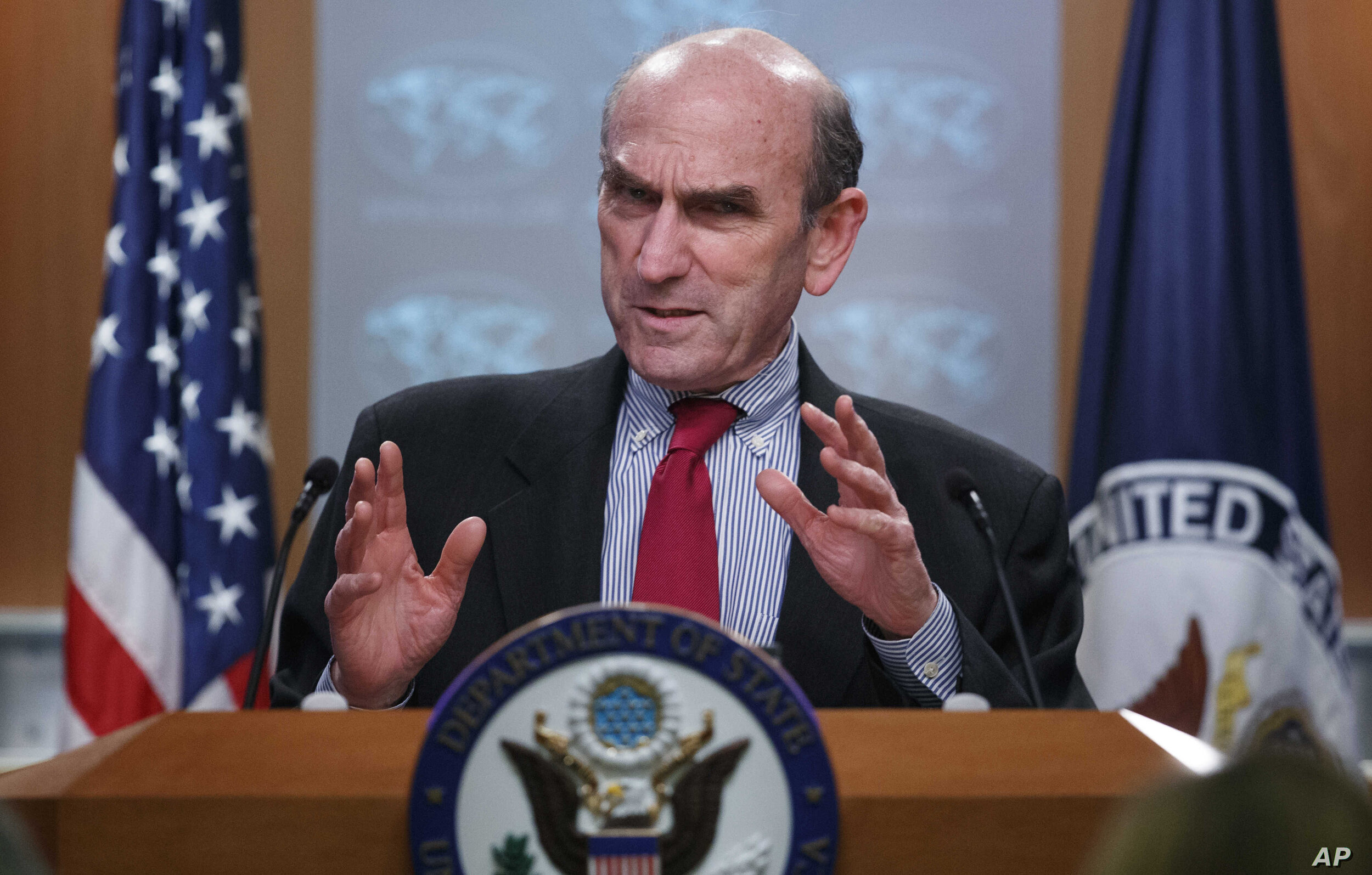
On 25 January 2019, The Honorable Mike Pompeo, United States Secretary of State, appointed The Honorable Elliott Abrams as United States Special Representative for Venezuela at the United States Department of State.

The Trump Administration reports that fifty-nine (59) countries recognize Interim President Juan Guaido.  There are 193-members of the United Nations.

In 2016, the Obama Administration, Diaz-Canel Administration and Maduro Administration did not model for an election outcome other than for a [Hillary] Clinton Administration. 

In 2020, every government is modeling for a re-election of President Trump.  There is logic for governments engaging or re-engaging with the Trump Administration- and for the Trump Administration to be proactive towards the country it maintains is a key to unlocking solutions for Venezuela: The Republic of Cuba.

LINK To Post

Previous Posts:

Troika To Negotiate Settlement Of Certified Claims Against Cuba? Kushner, Greenblatt & Feinberg
https://www.cubatrade.org/blog/2018/11/18/lojx6s6oe5epgonh6mub855d5ak143?rq=Jared%20Kushner

Jared Kushner's Importance Reinforced By How President Trump (And Others) Recognize Him
https://www.cubatrade.org/blog/2018/11/30/yr7hp1sxibnu85bzl173l7djgg3f39?rq=Jared%20Kushner

2019 US Ag/Food Exports To Cuba Increased 14.5%; Healthcare Exports Decreased 31.1%; Donations Decreased 20.5%

ECONOMIC EYE ON CUBA©
February 2020

December 2019 Food/Ag Exports To Cuba Decrease 65.7%- 1
95th In December 2019 Of 223 U.S. Food/Ag Export Markets- 2
US$257.6 Million In 2019 Compared To US$224.9 Million In 2018- 2
Year-To-Year Exports Increase 14.5%; Cuba Ranks 56th - 2
December 2019 Healthcare Product Exports US$34,918.00- 2
December 2019 Humanitarian Donations US$1,506,113.00- 3
Obama Administration Initiatives Exports Continue To Increase- 3
U.S. Port Export Data- 16


DECEMBER 2019 FOOD/AG EXPORTS TO CUBA DECREASE 65.7%- Exports of food products and agricultural commodities from the United States to the Republic of Cuba in December 2019 were US$4,371,126.00 compared to US$12,775,779.00 in December 2018 and US$11,963,399.00 in December 2017.

United States exports in 2019 were US$257,659,479.00 compared to US$224,910,413.00 in 2018, representing an increase of 14.5%.

The following are the ten largest (U.S. Dollar value) food product/agricultural product exports from the United States to the Republic of Cuba for 2001 through 2019 under provisions of TSREEA:

2019 (Ranking; Product; U.S. Dollar Value; % Of Total U.S. Exports To Cuba)

Chicken Leg Quarters (Frozen)
US$131,667,577.00
51.1%

Chicken Meat (Frozen)
US$35,768,471.00
13.9%

Soybean Oil Cake
US$32,852,225.00
12.8%

Chicken Legs (Frozen)
US$18,079,528.00
7.0%

Soybeans
US$15,275,733.00
5.9%

Corn
US$9,855,157.00
3.8%

Calcium Phosphates
US$8,833,684.00
3.4%

Chicken Sausage
US$1,261,260.00
.50%

Articles Of Wood
US$80,000.00
.03%

Flour Meal & Pellets Of Fish
US$61,071.00
.02%

Total Value Of 10 Largest Exports To Cuba US$253,734,706.00
Total U.S. Exports To Cuba US$257,659,479.00
10 Largest As % of Exports To Cuba 98.5%

Total agricultural commodity and food product exports to the Republic of Cuba since the first shipments in December 2001 exceed US$6,132,872,696.00.

Healthcare Product Exports in 2019 were US$1,096,505.00 compared to US$3,492,553.00 in 2018, representing a decrease of 31.3%.

Humanitarian Donations in 2019 were US$7,150,989.00 compared to US$8,998,855.00 in 2018, representing a decrease of 20.5%.

The contains information on exports from the United States to the Republic of Cuba- products within the Trade Sanctions Reform and Export Enhancement Act (TSREEA) of 2000, Cuban Democracy Act (CDA) of 1992, and regulations implemented (1992 to present) for other products by the Office of Foreign Assets Control (OFAC) of the United States Department of the Treasury and Bureau of Industry and Security (BIS) of the United States Department of Commerce.

The TSREEA re-authorized the direct commercial (on a cash basis) export of food products (including branded food products) and agricultural commodities from the United States to the Republic of Cuba, irrespective of purpose. The TSREEA does not include healthcare products, which remain authorized and regulated by the CDA.

The data represents the U.S. Dollar value of product exported from the United States to the Republic of Cuba under the TSREEA. The data does not include transportation charges, bank charges, or other costs associated with exports; the government of the Republic of Cuba reports unverifiable data that includes transportation charges, bank charges, and other costs.

LINK To COMPLETE REPORT

15Savings.jpg

Elliott Abrams Press Briefing About Venezuela At US Department Of State: Will President Trump Confront President Putin, Prime Minister Modi, President Erdogan?

Briefing With Special Representative for Venezuela Elliott Abrams
02/06/2020 07:27 PM EST

Elliott Abrams, U.S. Special Representative for Venezuela
Washington, D.C.
Press Correspondents' Room


MS ORTAGUS: Hello, everybody. Okay, we’re going to jump right in. It’s going to be fully on the record. He’s got some opening remarks, and then we’ll go into Q&A. Per usual, try to give everybody a chance to ask a question, so please be respectful of your colleagues. And when I say last question, that means last question, so that way we don’t – avoid what happened yesterday with the confusion about what was off and what was on. Okay?

MR ABRAMS: Okay. To begin with, the safety and health of Americans is always a top concern for the Department of State. We’ve learned that the Citgo 6 have been taken from house arrest by the regime’s intelligence agency, SEBIN, and we believe they are now detained at its Helicoide prison.

QUESTION: Could you spell that?

MR ABRAMS: Yes. H-e-l-i-c-o-i-d-e.

QUESTION: Sorry, one more time?

MR ABRAMS: H-e-l-i-c-o-i-d-e. We condemn this cruel and indefensible action and demand that their long, unjust detention come to an end and they be allowed to leave Venezuela. We urge the regime to release unconditionally all persons who are being detained for political reasons, including National Assembly deputies Juan Requesens – he’s been held for 548 days, Gilber Caro, and Ismael Leon.

The past few weeks of meetings, from a meeting with Secretary Pompeo in Bogota on January 20th to those held this week with the Vice President and with Secretary Pompeo and, of course, most significantly the Oval Office meeting with the President, should make clear the commitment of the United States to support Juan Guaido as interim president of Venezuela and support the restoration of democracy to Venezuela.

The reception Juan Guaido received at the State of the Union speech was a reminder that support for him and for this cause remains an entirely bipartisan effort in Washington, and that display of support in the United States comes after Guaido’s visit to Europe and Canada, where strong support was demonstrated by a series of leaders of democratic nations. Our message to those nations is that increased and strengthened travel and financial sanctions on key figures in and around the Maduro regime will accelerate their abandonment of the regime and help to end it. But as Treasury always states, when imposing sanctions, sanctions need not be permanent for those who want to contribute to Venezuela’s democratic future.

As several administration officials have noted, the Russians may soon find that their continued support of Maduro will no longer be cost-free. Others who continue to profit from or support Maduro should take warning. And more generally, you will see steps unfold in the coming weeks that demonstrate the seriousness of our intentions in Venezuela.

What’s happening there is a great tragedy for the people of Venezuela and has imposed enormous costs on their neighbors as well. Venezuelans have the right to live in freedom, and we would be – will be taking additional actions to support them.

As Secretary Pompeo explained in his statement several weeks ago – I’m quoting here – “A swift negotiated transition to democracy is the most effective and sustainable route to peace and prosperity in Venezuela… 2020 presents the opportunity to provide the Venezuelan people with what they have been demanding for years: genuinely free and fair Presidential and National Assembly elections to choose their leadership and begin the long process of renewal.”

Thank you.

MS ORTAGUS: Go ahead, Matt.

QUESTION: So on the Citgo 6, can I just ask – I realize you can’t speak for Maduro and his people, but is it your sense or do you get the idea at all that this, that their return to prison, is at all like a retaliation for the State of the Union, the White House meeting, the kind of reception that he’s been getting?

MR ABRAMS: I would not speculate on that. I don’t know.

QUESTION: Okay. Well, the timing is interesting.

MR ABRAMS: The timing —

QUESTION: And how long have they been in house arrest? I mean, it’s been months, right? So—

MR ABRAMS: House arrest is —

MS ORTAGUS: Longer than that. Oh, house arrest.

MR ABRAMS: House arrest is not that long. It’s probably just a couple of months. The timing is suspicious, but I can’t speculate as to why it happened now.

QUESTION: Thanks.

MS ORTAGUS: Go ahead, Nick.

QUESTION: Elliott, two questions. One, you talk about Russia will find its support is not cost-free. So what are you going to do to the Russians? Would that include possibly sanctioning Rosneft, or is that even on the table despite the turmoil that it would cause?

And second, it just looks more and more like Maduro is entrenched in power. There is some indication that the economy is coming back a little bit. What are the – what are the pressure points? What do you – what do you do about the fact that he is more and more entrenched? Guaido looks further from the office of the presidency.

MR ABRAMS: That, of course, is not the way we see it. Nicolas Maduro is the successor of, the heir to, Hugo Chavez, and yet we see significant abandonment of Chavismo. All of a sudden, he decides dollarization is just fine. There is report after report of privatization of PDVSA or parts of PDVSA, of turning over joint ventures to the foreign oil company partner. This is a complete abandonment of Chavismo.

Why is this happening? It’s happening because their backs are against the wall. A lot of attention is paid, rightly, to what’s going on on the opposition side; but when we look at the regime side, we see that sanctions have had and are having a significant impact, and sanctions will increase. Every time I meet with the press, people say, “You’ve run out of sanctions,” and every time I say, “No, we haven’t.”

QUESTION: No, that’s North Korea. (Laughter.)

MR ABRAMS: So we – we’ll be taking – I have no announcement to make.

QUESTION: Embargoed until the end?

MS ORTAGUS: Yeah. Sorry.

MR ABRAMS: I think I’ve discussed Rosneft with the press previously and drawn attention to its growing role in Venezuela. The national security advisor mentioned them, I think, yesterday. When we have an announcement to make, we’ll make it, and that’s not today.

MS ORTAGUS: One quick thing. I forgot to say this at the beginning, but can we keep this embargoed till the end? Okay, great. Carol, go ahead.

QUESTION: I have a timing question, too. With the high-profile visits that Guaido has had here with the Secretary, the Vice President, the President, the State of the Union, and some of the strong language of the Secretary and the – the Secretary of State and the President both saying they hope that this will lead to a transitional government, are you more concerned? What’s going to happen to him when he goes back to Venezuela? Is he more in danger now by the very warm reception he got here? Doesn’t this put him at greater risk?

MR ABRAMS: He got a very warm reception from Trudeau and Johnson and Merkel and Macron and Mark Rutte. It’s a very broad international coalition. I can’t speculate as to what’s in Nicolas Maduro’s mind. Every day that he is in Venezuela, Juan Guaido is at risk. So are all the members of the opposition. And all you have to do is to read the report of Michelle Bachelet to read that people are actually executed – they are murdered – by the regime.

So we do not underestimate the risks to Guaido, and that is why many people, starting with the President, have called him brave. It’s true. We, needless to say, hope that, as happened last time he left the country, he will be able to return unmolested, and we hope that the regime makes the calculation, particularly after this trip, that the support for Guaido is strong and that the counter-reaction to any move against him would make it a mistake for the regime. I won’t appeal to them morally because I think that would be an extremely foolish appeal. But we’re very concerned about it and we hope that he will return safely.

QUESTION: And if anything happens to him, is the U.S. prepared to do anything?

MR ABRAMS: We are prepared. I’m not going to discuss it today because we would – we wouldn’t want to discuss it publicly anyway, and of course, we strongly hope that it will not be necessary to face that.

MS ORTAGUS: Robbie.

QUESTION: Last month there was a small scandal in Spain that seemed to indicate the new government there is softening its support for Guaido. Have you been in contact with any of your Spanish colleagues since then, and is there any indication that their support for Guaido might be wavering?

MR ABRAMS: Have we been in contact, first? Yes. You would expect that. I mean, we were in touch with the European governments all the time about Venezuela among many other issues.
We are – we think it’s unfortunate that President Sanchez did not agree to meet with Guaido. We have received a number of assurances that Spain’s commitment to the restoration of democracy in Venezuela remains firm.

MS ORTAGUS: Humeyra.

QUESTION: Two questions. Alejandro Betancourt is someone under federal investigation here in the U.S., but he met with Guaido’s father, and Rudy Giuliani was also there. I am wondering if you are aware of this meeting, because this meeting has to do with Guaido’s finances, and I am wondering if you know where Guaido’s finances are coming from and whether you’ve got any worries about his funding.

And my second question is with regards to the warning to the oil companies. Did the U.S. Government at any point told Rosneft outright that it would be okay to lift Venezuelan crude if it’s only to pay for the debts of PDVSA?

MR ABRAMS: On the second point, let me say we have sanctions. If you’re not violating the sanctions, then what you’re doing is not contrary to the rules that the United States is trying to set out. And there are a number of companies – we can start with Chevron – that remain in Venezuela and that are clearly not violating U.S. sanctions today. The rules about sanctions can always change. The licenses that are given can be withheld; those that are withheld can be given. So the rules of the game can change.

As to private conversations with Rosneft officials, they’re private so I don’t want to answer that part of it.

The first part – we’ve been told by the Venezuelan embassy and by Venezuelan officials, and by that I mean legitimate officials not regime officials, that the facts as stated in the press are not correct and that Guaido’s father was not at that meeting. I don’t really know much more about it than I know in the press, except we’ve asked and been told he was not there.

QUESTION: Do you know —

QUESTION: You’ve been assured he wasn’t there? Because we’ve – if there was a videotape of him there, would that surprise you?

MR ABRAMS: We’ve been told he was not there. I get surprised by things every day.

QUESTION: That’s what – the videotape, would it surprise you? And also —

MS ORTAGUS: Wait, wait, wait. I’m sorry. I don’t know who you are, but this is not how we do things here. Thank you. Lara, go ahead.

QUESTION: Thank you. Could you talk a little bit more about the Citgo 6, what kind of steps the United States is preparing to take if they are not released from the prison, what kind of conditions are in that prison, if you’ve had any kind of communications with them either directly or indirectly since they were taken from house arrest?

MR ABRAMS: We had – first, we have had communications with some family members, and indeed the first information we had about their being taken from house arrest – they’re not – I should say they are not in one place. They were in their houses where they didn’t all live together. So we heard first from one family member saying this had happened. And then, of course, the question was: Why this individual? Why this one of the six? We very quickly learned it’s not one of the six, it’s all of the six. Then the question was: Where are they? We think we know where they are.

The conditions of house arrest, while terrible in comparison with freedom, were better, obviously, than the conditions in the prison. We had real concerns about the health of all of the men in prison, questions about their access to doctors, their access to medicine, their diet, unsurprisingly, also their mood. And you can imagine that being returned to prison will raise in each of their minds, “How long will I be here?”

So we take this very seriously. And we’ve taken – we’ve made a number of efforts today that, for obvious reasons, I’m not going to talk about to find out more about what’s going on and to get them released from prison.

QUESTION: And they were moved exactly when? When did you first find out from that family member?

MR ABRAMS: Yesterday.

QUESTION: Okay.

MS ORTAGUS: Kylie.

QUESTION: With regard to Rosneft, what would be a tangible benefit of actually sanctioning them? I know you won’t talk about if you’re going to or not, but why would that be an effective measure? And then on the flipside of that, you’ve often discussed getting funding to those who are supporting Guaido in Venezuela. Is there any success on that front? Do you see anything coming?

MR ABRAMS: Yes. On the latter, I can start with that. Money did not flow immediately when Congress approved it, because we wanted to make sure we had a system in place. Actually, this goes through AID, and AID wanted to make sure that it had a system in place that would be fully accountable to Congress and could count for every penny, because it was obvious that the regime would start telling lies about this money. And they are, and you can read regime accusations about how millions and millions of dollars have gone into Guaido’s pocket, for example. These are all lies. No money goes to Juan Guaido; not one penny goes to Juan Guaido.

The money is being used – just to give you an example of something that happened recently, we – in one of the embassies of interim President Guaido there was no office. That is, he had appointed an ambassador, the ambassador was in that country, but they literally didn’t have an office at which they could do work, serve Venezuelans who happened to be in that country. And one of the things we can do with that money is rent an office. That is the kind of thing that’s being done. For more details, probably AID is the most up-to-date place to go.

I guess I will not answer the first part of the question. If sanctions are imposed on Rosneft, then – or as always happens with anybody, Treasury would make an announcement. They would explain what they were doing. We would have further explanations. So if and when it happened that we imposed additional sanctions, come back to us.

MS ORTAGUS: Okay.

QUESTION: Any update on the status of the U.S. embassy, the status of the protecting power being worked out for that? And can you give us kind of a summary of what the – for lack of a better term, the embassy in exile in Bogota is doing? I forget the name of the unit, the facility over there.

MR ABRAMS: Yeah. We call it the VAU, the Venezuelan Affairs Unit, V-A-U. They’re at work.

QUESTION: Doing?

MR ABRAMS: They keep in close touch with Venezuelans in the opposition, in civil society more broadly in the country. As you know, we have to have a certain minimal contact with the regime for things like UN affairs. They do that. They —

QUESTION: Who do they deal with in the regime? Lower-level guys like —

MR ABRAMS: They deal with people in the ministry of foreign affairs, as they did in Caracas. And they analyze. I mean, they offer cables, as any normal embassy unit would do. They send cables to Washington describing what they think is going on in Venezuela.
The first part?

QUESTION: The protecting power for the embassy, is that any —

MR ABRAMS: Yes. No change. I would like to thank the Swiss – because they are not our protecting power; the agreement did not go through – but they have been willing when we’ve asked them to undertake some tasks to protect Americans or to help the interests of the United States informally, and they have always been willing to do that. The reason the agreement has not gone through is that the Maduro regime is unwilling to accept the agreement, and I don’t expect that will change.

MS ORTAGUS: Go ahead.

QUESTION: Do you know how President Guaido paid for his travels around the world? Is any U.S. aid money being used to fund those travels? And then on the Citgo 6, one of their lawyers said he had raised concerns about their safety under house arrest to stakeholders. Do you know if the State Department had heard any of those concerns, and was anything done to try to address that before they were taken last night?

MR ABRAMS: They’re under – they were under constant surveillance. There were varying numbers of spies, of intelligence agents, constantly around the – their houses. It would not be unreasonable to assume that they’re being bugged, that they’re being eavesdropped on. So it’s a quite stressful situation in addition to being kept from their families by not being allowed to leave Venezuela.

So we’ve been aware of this, and the regime obviously has not been – has not been willing to let them leave the country or to improve their situation. Now we regress to their being in jail.

QUESTION: And then on the first, how is —

MR ABRAMS: Oh, sorry.

QUESTION: How are they funding the travels?

MR ABRAMS: In principle, paying for travel is a legitimate expense. Again, AID can tell you more, but in principle, this is something that we are able to do. Whether we did it for this particular travel, I don’t know.
MS ORTAGUS: Go ahead, Shaun.

QUESTION: Sure. Could I ask you about the talks with Guaido, whether there was any discussion about Venezuelans here in the United States, the issue of protected status for the Venezuelans? Was it something that he has raised – that he raised? Was that a discussion that you had? What message did you give on whether Venezuelans can actually stay and be protected?

MR ABRAMS: The Venezuelan officials, President Guaido, Ambassador Vecchio, Foreign Minister Borges always raise that question. And members of Congress raise it too, particularly those who have a lot of Venezuelans living in their districts, that is, to say – in mostly parts of Florida. Since I last talked to you, that situation has not changed. There is a – I wouldn’t say there is a complete freeze on the deportation of Venezuelans, but the number of deportations is extremely low. But no further steps have been taken with respect to regularizing their presence.

QUESTION: And why is that that no further steps have been taken? Is there an interest in doing that?

MR ABRAMS: Well, as I said previously, I would say the administration view is that TPS has been changed by the courts. And they have essentially removed the “T,” which makes it very unattractive, I would say, not only for this administration, but for its successors to grant TPS if it’s going to be permanent, because it’s not supposed to be. It’s supposed to be temporary. So we continue to discuss what the other options are.

MS ORTAGUS: Last one. You had your hand raised.

QUESTION: Oh, yes. I wanted to ask you: So, to follow up on Humeyra’s question before, do you have much insight into how Guaido and the opposition is funded and who funds them, and do you have some concerns about who funds them and how they’re funded and a lack of transparency?

MR ABRAMS: Well, I wouldn’t call it a lack of transparency. This is, as far as we’re concerned, a foreign government. You saw the treatment of President Guaido in Washington. It’s exactly the same treatment that any foreign head of state would get. I don’t remember ever asking a Mexican diplomat, “Tell me how your president funds himself, tell” – or a Spanish diplomat or a German diplomat. So I —

QUESTION: But they don’t control the government.

MR ABRAMS: I know that —

QUESTION: It’s a little different here, isn’t it?

MR ABRAMS: I know that we will be in a better – we are already in a better position, and we’ll continue to be in an increasingly good position to help them in ways that they need help. But I would – I hear all the time from ambassadors representing President Guaido who tell me, “I’m going to have to leave in two weeks or four weeks because there is no salary and I am running out of money.” I hear from Guaido representatives who say, “I don’t have an office. I’m working out of my bedroom, out of my living room.” So for anybody who thinks there’s a lot of money sloshing around, that’s completely, completely false.

MS ORTAGUS: Okay. Thank you.

MR ABRAMS: Thank you.

QUESTION: Thanks.

QUESTION: Thank you.

Elliott_Abrams_Speaks_on_Venezuela_(45970132725).jpg