New Economic Eye On Cuba Newsletter

ECONOMIC EYE ON CUBA©

November 2015


USCTEC Has New Design For Internet Site- 1

Restrictions Upon Cuba’s Use Of The U.S. Dollar For International Transactions To Be Altered- 1

United States Secretary Of Agriculture Visits Cuba- 1

Article In The WSJ About Delegation Importance Requires Clarification- 1

U.S. Lobbyists Now Have A Hard Target Date- 839 Days… Saturday, 24 February 2018- 2

Food/Ag Exports For September Increase 42%; Year To Date 38% Decrease- 3

Cuba Ranks 59th of 227 Food/Ag Export Markets Thus Far In 2015- 3

US$721,272.00 Increase In Healthcare Product Exports- 4

U.S. Port Export Data- 13

Updated Speaking Schedule- 14


Restrictions Upon Cuba's Use Of The U.S. Dollar For International Transactions To Be Altered

Representatives from the Office of Foreign Assets Control (OFAC) of the United States Department of the Treasury, Bureau of Industry and Security (BIS) of the United States Department of Commerce, United States Department of State, United States Department of Justice, and The White House (National Security Council) are discussing (individually and collectively) ways to implement changes to regulations that restrict the use of the U.S. Dollar by the government of the Republic of Cuba for international transactions. 

The changes are likely to be implemented by the end of 2015.  

With increasing examples of United States-based financial institutions blocking and/or delaying payments received from the Republic of Cuba or sent to the Republic of Cuba, the Obama Administration has determined that a change is required both to correct the current issues and to further create national and international pressure(s) upon the government of the Republic of Cuba to authorize the implementation of the regulations issued thus far in 2015 by the BIS and OFAC.

The decision has been made; the focus now is to determine the scope of the regulatory changes- will all restrictions be removed, will there be sector-by-sector changes, or will there be a stepped-approach dependent upon reciprocity (i.e. commence and/or increase purchases of exports from the United States, provision of services, etc.) by the government of the Republic of Cuba.

The efforts by the Obama Administration continue to be energized by the desire for a visit in 2016 by President Obama to the Republic of Cuba.

United States Secretary of Agriculture Thomas Vilsack To Visit Cuba

The Honorable Thomas Vilsack, United States Secretary of Agriculture, will visit the Republic of Cuba from 11 November 2015 to 14 November 2015.  He will be accompanied by United States Senator Jeff Merkley (D- Oregon), and three Members of the United States House of Representatives- Terri Sewell (D- Alabama), Susan DelBene (D- Washington) and Kurt Schrader (D- Oregon).

“This trip will be an opportunity to support the administration’s commitment to normalizing relations and empowering the Cuban people through bilateral agricultural engagement,” Vilsack says in a news release.

“Food and agricultural goods are the dominant U.S. exports to Cuba and agriculture can serve as a bridge to foster cooperation, understanding and the exchange of ideas," he says. "Expanding markets for American agriculture has been a priority for this administration, and relationships like the one we aim to build with Cuba are crucial to continuing the momentum we have seen over the past six years."

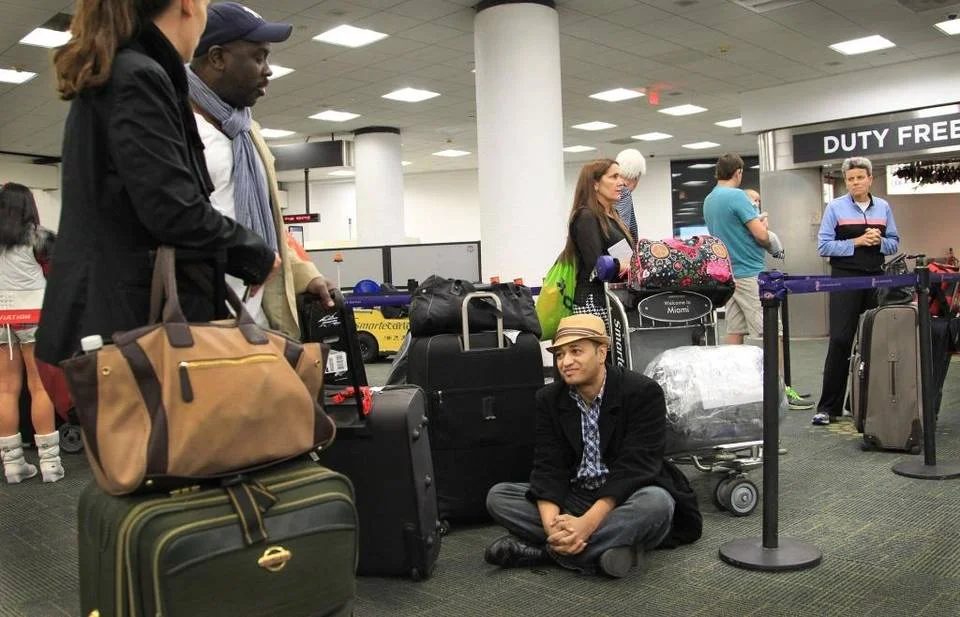
Banking Woes Ground Some Charter Flights To Cuba- Miami Herald (11/9/15)

Banking Woes Ground Some Charter Flights To Cuba- Miami Herald (11/9/15)

By Mimi Whitefield

Last month as it always does, Island Travel & Tours, which offers air charter service between three Florida cities and Cuba, asked its local bank to request a $35,000 wire transfer to pay the Cuban government $194 per passenger for landing fees and for mandatory health insurance for travelers.

Although the route of the money is a bit circuitous because of the embargo — the local bank asks a major correspondent bank to transfer the money to a Cuban account in a third country — it’s a procedure that Bill Hauf, president of the charter company, has been following for years. The money, he said, generally arrives in a day or two at most.

But this time, he said, four, then five days passed and the wire transfer still hadn’t been completed. Because he had other flights coming up and the Cuban government wants payment in full before a charter flight lands, he also requested transfers of $65,000, $100,000 and $50,000 to cover them. Those transfers also were delayed.

Hauf said it took numerous phone calls to the U.S. Treasury’s Office of Foreign Assets Control, his local bank and Chase — the correspondent bank that handles the transfers — before the problem was resolved. While he was waiting for a solution, he had to cancel a week of flights to Cuba because his payments hadn’t arrived in time.

And he is not alone. Other companies that need to transfer money to Cuban accounts to pay for flights, hotels, guides and rental cars also complain that since the rapprochement between the United States and Cuba, their wire transfers to Cuba have slowed to a snail’s pace and they have been peppered with extraneous questions about passengers, flights and itineraries that can further delay money transfers.

Under the opening toward Cuba outlined in December by President Barack Obama, Americans who fall into 12 categories ranging from those on educational and humanitarian activities to those taking part in sports and cultural events are allowed to visit Cuba without seeking prior approval from OFAC. (Cuban Americans are allowed to travel freely to the island as long as the Cuban government approves their visas.)

The onus of deciding whether Americans were authorized travelers used to fall to the air carriers. Under the new rules, the burden of proof as to whether travelers fit into the 12 categories falls on them — although all they have to do is check off a box on a form certifying which category they are traveling under.

But now Daniel French, general manager of Blanco International, a Miami charter company that had two of its Cuba flights canceled because of a delay in wire transfers, says that with all the questions they ask, it seems like the banks are taking it upon themselves to decide who is authorized to travel to Cuba.

“I keep telling myself [restoration of diplomatic relations with Cuba] is really great; we’ve been working for it for a long time. But what’s going on with the banks is very contradictory, and it’s a potential stumbling block in the process of normalization,” said Bob Guild, vice president of New Jersey-based Marazul Charters, which offers charters from Miami to various Cuban cities.

Guild said that Marazul has “certainly had similar problems” with wire transfer delays but that it has never reached a point where a Marazul flight had to be canceled. “We call up the banks and try to find out what’s going on and then we call the attorneys and ask them to intervene,” he said. “The last couple weeks have been relatively smooth for us. Will it happen again? I wouldn’t bet against it.

“Under the opening toward Cuba, the administration advised us that we would be able to make direct payments to Cuba and use U.S.-issued credit cards in Cuba. All those things have been talked about but it hasn’t happened,” Guild said.

Only Pompano Beach-based Stonegate Bank, which signed a correspondent banking deal with a Cuban bank in July, has availed itself of the new possibilities.

“Obama may have changed the banking and travel regulations but I don’t think the word has gotten down the pipeline to the banks,” said Vivian Mannerud, who books travel services to Cuba. She said she’s even heard of banks asking for a travel provider’s OFAC license number before transferring money. Under the new rules, specific licenses are no longer required and no one has a license number.

French, of Blanco International, which has been offering charter flights to Cuba for the past 20 years, said wire transfers involving Cuba have always been slow. What has changed in his view is the Cubans’ attitude toward tardy payments.

Cuba used to be more accepting about wire transfer delays, he said, and as long as Havanatur Celimar knew a payment was in progress, there wasn’t a problem with landing rights. But now, French said, “The Cuban goodwill has run out; they are enforcing the contracts.”

During a United Nations speech on Oct. 27, just before the U.N. overwhelmingly voted to support a resolution condemning the U.S. embargo, Cuban Foreign Minister Bruno Rodríguez mentioned not only U.S. banks’ holding up payments by charter companies but also said that the first payment to Cuba by Sprint to begin direct roaming service on the island had been delayed and that SWIFT, a global messaging network that financial institutions use to transmit instructions and information securely, had recently canceled its contract with Cuba.

Even though the United States has removed Cuba from its list of state sponsors of terrorism, which eliminates some financial sanctions against the island, and Obama has said he wants to work with Congress to lift the embargo, Rodríguez said: “We shouldn’t confuse reality with the desires and expressions of goodwill. Matters such as these can only be judged by actions. Ten months after the announcement of Dec. 17, there hasn’t been any tangible, substantial modification in the application of the blockade.”

The day after Rodríguez’s U.N. speech, French said he received an email from the Cuban Embassy letting him know that payments had to be made on a timely basis. “Cuba’s position is they won’t provide services if money doesn’t arrive on time,” he said. At 5 p.m. Oct. 30, French was informed that Blanco International’s landing rights for its Sunday flight had been canceled. His Monday flight was canceled for the same reason.

“I’ve seen Chase hold up a lot of our clients’ monies,” said Augusto Maxwell, a Miami lawyer who heads Akerman’s Cuba practice. “But they usually release them in a few days after they get a greater degree of certainty.”

Hauf said other banks also are asking charter companies questions that aren’t on point, delaying wire transfers. Chase, he said, asked for passengers’ itineraries in Cuba. “We take many Cuban Americans on our flights. We don’t ask them where they are having breakfast with their families,” Hauf said. “Every question can hold up the payments four or five days at a time.”

Cuban authorities canceled the first Island Travel flight on Oct. 21 and the payment problem wasn’t resolved until Oct. 28 when the company’s flights resumed.

Blanco International also is back in the air, but French said he’s now trying to send money 15 to 20 days in advance and is exploring doing business with a bank that doesn’t use Chase as its correspondent bank.

“Our reputation is being affected by this wire transfer problem,” French said. Not all of his U.S.-bound passengers could immediately be rebooked, leaving some stranded in Havana for a few days, he said. “The panic happens in Havana when people are trying to get home.”

When Hauf informed travelers at Miami International Airport that their Island Travel flights had been canceled, he had a police escort. “People were very upset; they were angry,” he said. “I sold them the tickets, so I had to try to make it right — even though it wasn’t our fault.”

Island scrambled to get passengers booked on other charters — no easy task because many flights are full during the high season, or refund their fares. Also adding to his costs were attorney fees and putting up out-of-town passengers at hotels until their rebooked flights departed.

“Why are the banks doing this when OFAC has told them this travel is legal?” Hauf said. “It’s a serious problem.”

JPMorgan Chase declined to comment.

“The challenge for banks is two-fold,” Maxwell said. “On one hand, they’ve been so drilled to avoid Cuba because the fines against some banks have been so staggering. Then on the other hand, the rules are brand-new and somewhat open-ended, giving some banks vertigo.”

In some cases, he said, bank software set to flag Cuba transactions and bank staff still need to be updated on the new regulations governing banking and commerce with Cuba.

“I’m not really terribly surprised [that banks’ are holding up wire transfers],” said Fernando Capablanca, managing director at Whitecap Consulting Group. “Once a bank starts to prevent something from happening, it’s very difficult to unwind.”

The volume of money being sent to Cuban accounts and the number of companies making payments also have increased, perhaps adding to banks’ queasy factor, Maxwell said.

Meanwhile, analysts said perhaps the biggest reason banks are wary of Cuba business are the huge — and recent — fines aimed at banks that have done business with sanctioned countries. Just last month, France’s Crédit Agricole bank paid nearly $800,000 to U.S. state and federal agencies to settle allegations it tried to hide or obscure references to transactions involving U.S.-sanctioned nations, including Cuba.

Maxwell said it is his understanding that the ongoing settlements have to do “with egregious violations that occurred in the past. These are long-standing investigations that are working their way through the system.”

In 2011, Chase agreed to pay more than $88 million to settle an OFAC investigation into wire transfers to Cuban nationals in late 2005 and early 2006 that totaled around $178.5 million.

“The banks are scared and I don’t blame them either,” French said. But in the meantime, he said, OFAC needs to provide very clear instructions on how banks should proceed with matters related to Cuba travel and payments.

“We continue to work with financial institutions and industry to clarify our regulations so that they can appropriately comply with our regulations,” the Treasury said in response to a Miami Herald inquiry. “In line with the president’s policies, OFAC’s regulatory changes over the past year underscore our commitment to empowering the Cuban people. As part of this, we are focused on facilitating authorized travel and commerce, to enhance engagement between Americans and Cubans, and improve the lives of the Cuban people. As with all of our regulations, it is our priority to make them as effective as possible.”

In his recent remarks at the United Nations, Ronald Godard, U.S. senior area adviser for Western Hemisphere Affairs, said progress had been made in the U.S.-Cuba relationship. Still, he said, “fully normalizing our bilateral relationship will require years of persistence and dedication on both sides.”


Read More
U.S. Lobbyists Now Have A Hard Target Date- 839 Days... Saturday, 24 February 2018

On 7 November 2015, Venezuela-based teleSUR reported that 84-year-old H.E. Raul Castro, President of the Republic of Cuba, will retire on 24 February 2018, upon completion of his current term in office:

 I will not become the great-grandfather nor the great-grandson as then the Cubans would get bored of me… I will step down on February 24, 2018,” President Castro said, as quoted by El Financiero.

The Obama Administration’s new and revised regulations issued on 18 September 2015 by the Office of Foreign Assets Control (OFAC) of the United States Department of Commerce and Bureau of Industry and Security (BIS) of the United States Department of Commerce resulted in an evisceration of legislative efforts to change statutes and regulations and policy using the United States Congress; and a reallocation of funding resources away from Washington, DC-based advocacy organizations working in support of legislative efforts

United States-based companies are again viewing the “end the embargo” landscape during the remaining months of the Obama Administration as exclusively a focused exercise upon the issuance of new regulations and the revision of existing regulations. 

There is little value in funding legislative efforts when there is unlikely to be legislation enacted into law before 20 January 2017.  Some advocacy groups have begun tacking their focus (while blaming the Obama Administration) from the 114th United States Congress to the 115th United States Congress and to the next occupant of The White House; that’s not going to work- too many unknowns and too few resources better directed elsewhere.  Members of Congress may see their efforts to obtain contributions from United States-based companies lessen or evaporate.

There are unlikely to be changes in United States law relating to the Republic of Cuba until at minimum 2018, the retirement of President Castro as that moment fulfills a provision of the Libertad Act which conditions a government which does not include President Castro or former President Fidel Castro.  This could change, but that would require the government of the Republic of Cuba to not only authorize, but embrace initiatives offered by the Obama Administration. 

Another intended or unintended consequence of the 18 September 2015 regulatory changes was Members of Congress and advocacy groups reversed their pre-September 2015 mantra that the United States must do more to obtain more from the government of Cuba and re-adopted the 2001 through 2014 perspective that the government of the Republic of Cuba needs change its policies and its laws and its regulations to authorize United States-based companies to commercially engage; and reverse the decline of food product and agricultural product cash-only imports permitted by the TSREEA- made more efficient through regulatory changes and revisions since December 2014. 

In October 2015 at the United Nations in New York City, H.E. Bruno Rodriguez, Minister of Foreign Affairs of the Republic of Cuba, said “We should not confuse reality with wishful thinking or expressions of goodwill,”…  “We can only judge based on facts.” Since December 2014, there has been “no tangible, substantial modification.”

If the government of Cuba continues to respond in this way to each overture from the Obama Administration, the result will be a continued period of expectation, rather than implementation.   

When Retaining An Attorney....

When you retain the services of an attorney, make certain that your attorney knows more than you do... A client should not pay to educate a law firm....  That's their responsibility.

Ask for examples of their working on licensing issues (and obtaining licenses when required) with the Office of Foreign Assets Control (OFAC) of the United States Department of the Treasury, Bureau of Industry and Security (BIS) of the United States Department of Commerce, Office of Cuban Affairs at the United States Department of State.

Ask for examples of their working on commercial issues, and obtaining a result, with the government of the Republic of Cuba- Ministry of Foreign Affairs, Ministry of Foreign Trade, etc.


Article In The Wall Street Journal About Size Of US Chamber Delegation Not Correct

From The Wall Street Journal (11/6/15)

"The Chamber of Commerce group included more than 60 representatives from 32 companies such as Boeing Co. BA -0.02 % , Amway, Sprint Corp., American Airlines Group, AAL -0.57 % Caterpillar, Morgan Stanley MS 4.52 % and others. It was the largest U.S. business group to travel to the island at least since the 1959 revolution."

The statement is not correct.

In 2002, 923 representatives of United States companies visited the Republic of Cuba to attend the U.S. Food & Agribusiness Exhibition organized by Connecticut-based PWN Exhibicon International.  The licensing process took more than three years.  The statistics from the event:

Number of product export licenses processed by United States Department of Commerce Bureau of Industry and Security (BIS): 225

Amount of cargo transported to Cuba (dry, chilled, frozen): 154,000 pounds

Cargo aircraft: 4

Exhibitors: States, District of Columbia, Commonwealth of Puerto Rico: 35

Exhibitors receiving contracts/agreements: States and Commonwealth of Puerto Rico: 21

Exhibition booths: 218

Exhibitors: 291

Individual representatives of exhibitors: 923

Visitors: 16,000

Non-Republic of Cuba-based media representatives with accreditation: 92

Governor (Minnesota): 1

Lieutenant Governor (North Dakota): 1

Secretary/Commissioners of Agriculture (Georgia, Kentucky, Iowa, Maryland, Minnesota, North Dakota, Virginia).  The Departments of Agriculture of Illinois, Missouri, North Carolina, and Texas were also represented: 7

It was much more of an effort to make that event happen in 2002 than it was in 2015....


Reuters: U.S. Might Take More Steps To Relax Embargo, Official Says

By Daniel Trotta

HAVANA Nov 3 (Reuters) - U.S. President Barack Obama could further relax the U.S. trade embargo of Cuba, a senior State Department official said on Tuesday, adding that Washington would not first demand human rights progress from Havana.

Obama has twice used executive authority to ease the embargo as part of his opening to Cuba, and more such regulatory changes could come if Cuba can absorb those made to date, said David Thorne, a senior adviser to Secretary of State John Kerry.

"We are making progress. We are making regulatory changes. We'll make more," Thorne told Reuters in an interview.

Obama has eased travel restrictions on Americans, authorized telecommunications companies to operate in Cuba, and permitted trade with Cuba's small but growing private sector, among other measures.

But Cuba has been slow to embrace U.S. business, citing its inability to use dollars or receive U.S. credits under the embargo. In one notable exception, Cuban state telecommunications monopoly Etecsa on Monday signed a roaming agreement with U.S. carrier Sprint Corp.

"The pace is really going to be set by the Cubans and we are satisfied with how they want to do this," said Thorne, who did not specify what changes might come.

Obama reversed the course of 10 previous presidents last December when he agreed with Cuban President Raul Castro to end Cold War-era animosity and restore diplomatic relations.

Obama has also called on the Republican-controlled U.S. Congress to end the trade embargo, in place since 1962, but legislation to lift it has stalled.

Opponents of detente say the United States should continue to pressure Cuba over its one-party political system and repression of political opponents.

Thorne said Washington was not expecting rapid change on human rights.

"As in other parts of the world, we are really trying to also say: Let's find out how we can work together and not always say that human rights are the first things that we have to fix before anything else," Thorne said.

"We have to figure out how we can help each other, work together, create a sense of shared prosperity. And then we think that what comes along with that is an increasingly open environment for the discussion on human rights," he added.

Cuban police held 1,093 political activists in short-term detention in October, the highest monthly total this year, according to the dissident Cuban Commission of Human Rights and National Reconciliation.

Thorne, on a three-day visit to Havana, met with Foreign Trade Minister Rodrigo Malmierca and Cubans working in the private sector as small business owners or in cooperatives. He also attended the inaugural meeting of the U.S.-Cuba Business Council, an initiative of the U.S. Chamber of Commerce.

What To Watch For Next

Cuentapropista/Private Cooperative-Only Stores In Cuba?

United States companies potentially benefiting: Illinois-based Grainger, Wisconsin-based ABC Supply, Georgia-based Home Depot, North Carolina-based Lowe’s, Texas-based Sysco, Ohio-based Sherwin-Williams, New York-based Restaurant Depot, Texas-based Sally Beauty Supply, Tennessee-based Tractor Supply Company, Virginia-based Advance Auto Parts, Wisconsin-based SC Johnson, Missouri-based Graybar and California-based Square amongst others. 

Republic of Cuba nationals have one of the highest awareness and highest preference for United States brands of any country.

To accommodate one of President Obama’s regulatory initiatives, the government of the Republic of Cuba would establish stores, owned and managed by a Republic of Cuba government-operated company, which would sell products on a wholesale basis exclusively to Republic of Cuba nationals registered within the (current) 201 categories of cuentapropistas and to members of private cooperatives.  To access the stores, a cuentapropista/private cooperative representative would present his/her license when entering and again at check-out.

The Office of Foreign Assets Control (OFAC) of the United States Department of the Treasury and Bureau of Industry and Security (BIS) of the United States Department of Commerce currently authorize United States-based companies to export directly products to cuentapropistas and to private cooperatives. 

The government of the Republic of Cuba does not permit cuentapropistas and private cooperatives to directly import products; requiring products be purchased through Republic of Cuba government-operated wholesale/retail channels. 

With wholesale-only cuentapropista/private cooperative-only stores, the OFAC and BIS might authorize direct exports to the Republic of Cuba government-operated company managing the wholesale-only cuentapropista/private cooperative-only stores because the products sold would be solely destined for use by the Cuentapropistas/private cooperatives.  The government of the Republic of Cuba would maintain its requirement to manage product imports.

Creation of the stores would provide opportunities for another Obama Administration initiative, United States-based companies engaging in, depending upon credit worthiness, payment terms, loans and leases to cuentapropistas/private cooperatives because there will exist specific products to match with opportunities.

Since the products offered by wholesale-only cuentapropista/private cooperative-only stores would be restricted, perhaps the OFAC and BIS would also permit United States-based companies to provide payment terms (including consignment), loans and leases directly to the Republic of Cuba government-operated company that is managing the wholesale-only cuentapropista/private cooperative-only stores provided that the products are sold exclusively to cuentapropistas/private cooperatives.

The Republic of Cuba government-operated company managing the wholesale-only cuentapropista/private cooperative-only stores should have an account with Republic of Cuba government-operated Banco Internacional de Comercio SA (BICSA), a member of Republic of Cuba government-operated Grupo Nuevo Banca SA.

Pompano Beach, Florida-based Stonegate Bank has a Direct Correspondent Banking Agreement with BICSA permitting a more cost-effective and efficient means of receiving payments for, payments from and payments to United States-based companies.  To enable greater transactional efficiencies, BICSA should have OFAC authorization to establish an operating account with Stonegate Bank.

Currently, many products for cuentapropistas/private cooperatives are imported to the Republic of Cuba by individuals traveling on the charter flights operating from the United States to the Republic of Cuba; the government of the Republic of Cuba is not preventing these deliveries.

With wholesale-only cuentapropista/private cooperative-only stores, friends and relatives of Republic of Cuba nationals who reside outside of the Republic of Cuba, particularly within the United States, will have an efficient means of directing remittances and loans in support of cuentapropistas/private cooperatives.